A tribute to the man, his music and living where he was king
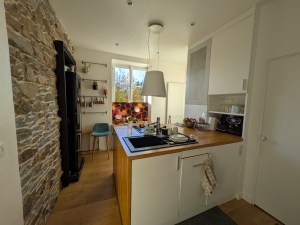
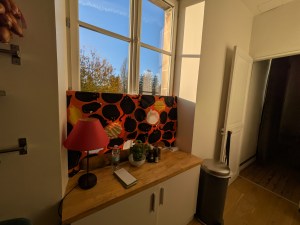
I haven’t made a post in a minute. I’ve been wholly and solely focused on finding permanent housing. And after what seems to be forever, filled with stress, panic, self doubt and loss of hope… I found a miraculously funky, weird little spot that is a good home for the forseeable future. And after 5 days, with almost all the boxes unpacked, my brain is free to wander and ponder obscure thoughts once again.
It’s coming back to when we first landed in France, 3 months ago.
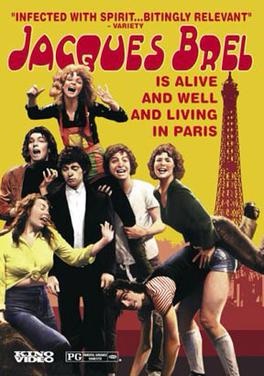
We wanted to listen to some French music, the classic stuff. To be honest, the only French singer I knew was Edith Piaf, of La Vie En Rose and that marvelously r-trilling Rein de Rien. But wait, I thought, there’s Jacques Brel. The name that rolled out of my subconscious was Jacques Brel is Alive and… something or other.
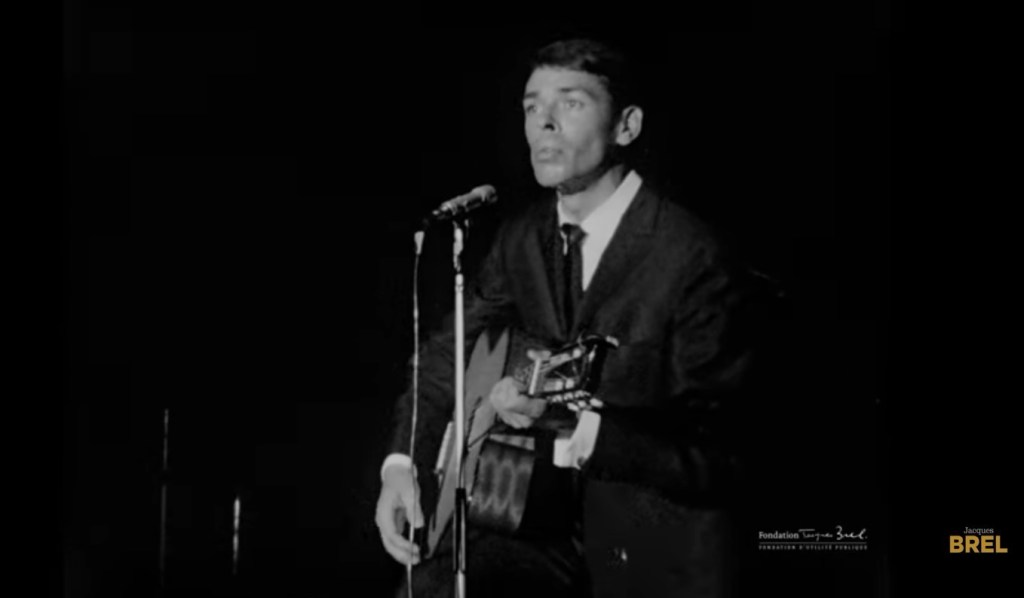
What? Where did that come from? Jacques Brel , Jacques Brel…. turns out he’s Belgian, but still, the French speaking kind, and very appropo for living in Normandy/Flanders. (The history here is complicated!) Brel is probably the most legendary singer to come out of Belgium, if not this entire region. He was a monumental storyteller, composer and actor. Terry hadn’t heard of him, so I played what is probably his most famous song, Ne Me Quitte Pas. Listen here and weep:
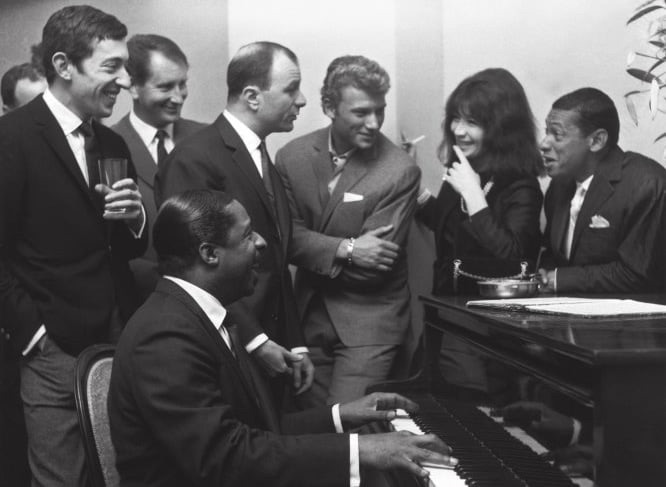
I have talked a lot about how 1959, the year of my birth, was monumental in the arena of jazz and the classic chanson. It turns out that Brel hit his big break in that very year, signing with Phillips Records and touring Belgium and France with the likes of Serge Gainsbourg. This launched him onto the international stage and wide fame.
This means he was everywhere when the black & white TV variety shows were big… these were the years when I was first exposed to music in our living room. The year of Ne Me Quitte Pas, I would have been 15.
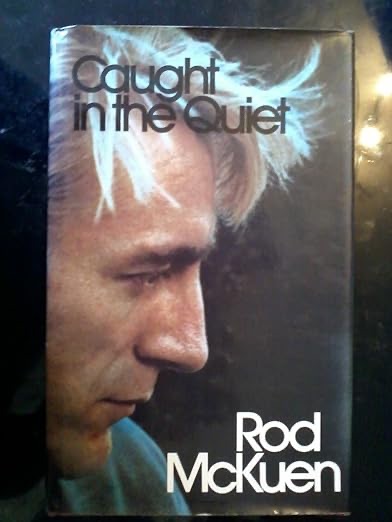
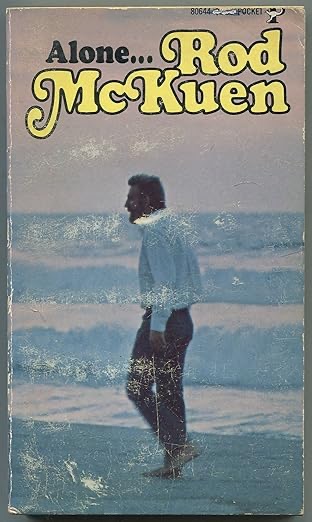
Another big influence at this time in America was the poet and composer Rod McKuen. I don’t think young people today can understand the power and popularity of poets during those years. Rod McKuen was the equivalent of any of today’s big music stars. I had several of his books, and my friends and I dreamily devoured each page.
So, after weeks of listening to the Belgian legends songbook in French, I woke up this morning with this English song from my childhood in my head and made the connection for the first time. If You Go Away.
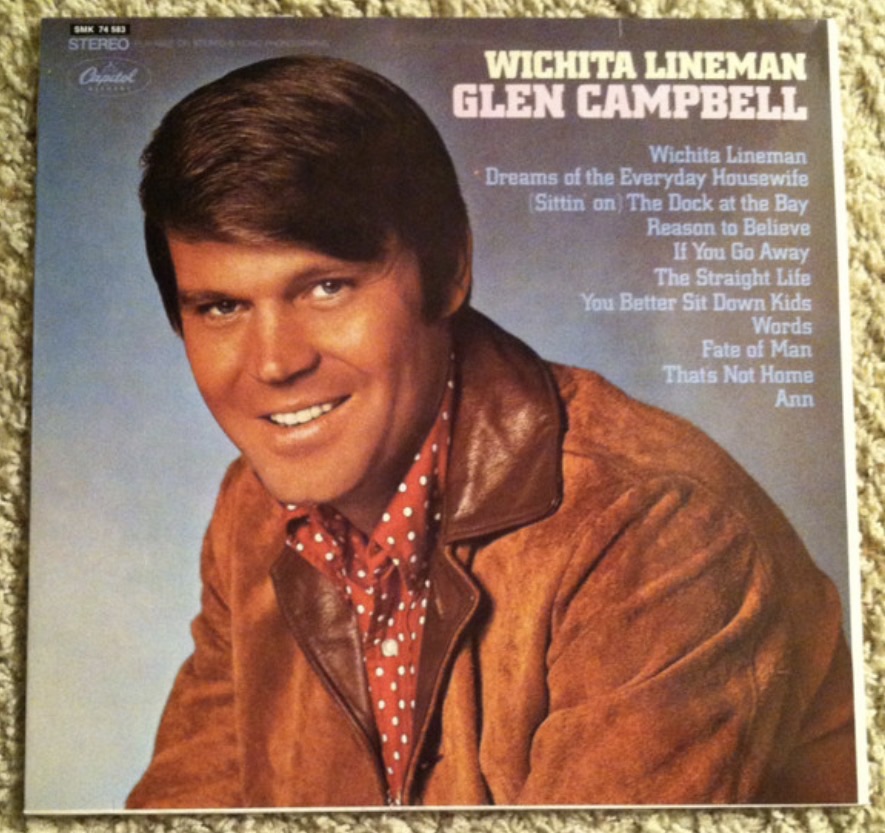
After listening to countless artists who covered this song, I am pretty sure the version I would have first heard was by Glenn Campbell, whose album was played constantly by my mom. And me too! I have to admit I was a big fan of his and still am in love with so many of his songs.
In 1964, Rod McKuen began a years long project of translating Brels songs into English. This made them available to the American audience and instantly songs like If You Go Away, Seasons in the Sun, The Dove, and If We Only Have Love became hits. This was the era of singers being pure singers and song writers being song writers. Stars like Shirley Bassey, Frank Sinatra, Barbara Streisand, Johnny Mathis and others filled auditoriums singing other people’s songs. It wasn’t anything to be ashamed of. And so they did, and the names of Jacques Brel and Rod McKuen were beloved in every American home. If We Only Have Love was sung by every high school chorus and it was a most requested song by our church choir.
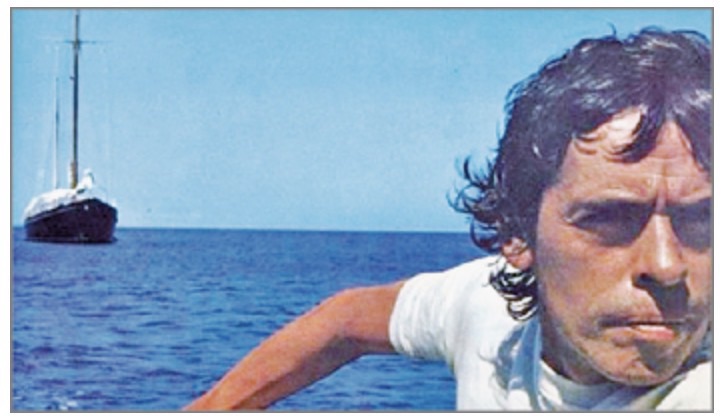
Jacques Brel died in 1978, at the young age of 42, of lung cancer. A few years earlier, he knew he was dying and chose to embark on a 3 year sail around the world, settling in the French Polynesian Islands. He died the year I graduated from high school and I remember the whole world mourning the loss of this great man.
Life is full of open circles that eventually close. Of time as a spiral. And meanings we never see until decades after our initial exposure. These discoveries aren’t random. I truly believe our subconscious mind makes these connections long before it leaks them into our consciousness, and has guided us to these moments.
May the small mysteries of life never cease to amaze us.
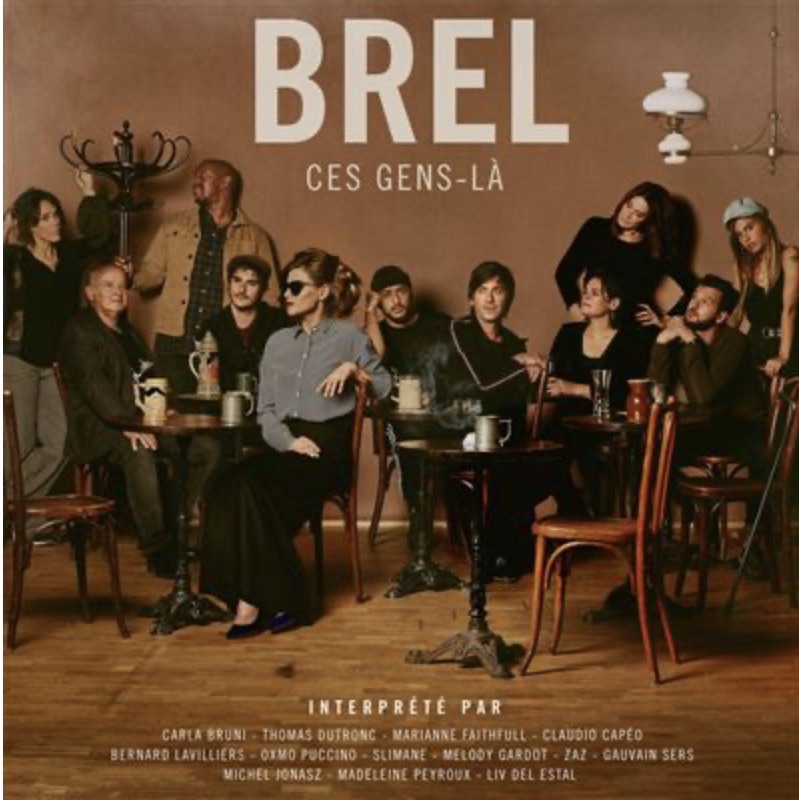
I can recommend this tribute album. I mean, hearing Marianne Faithfull sing Amsterdam is not to be missed!
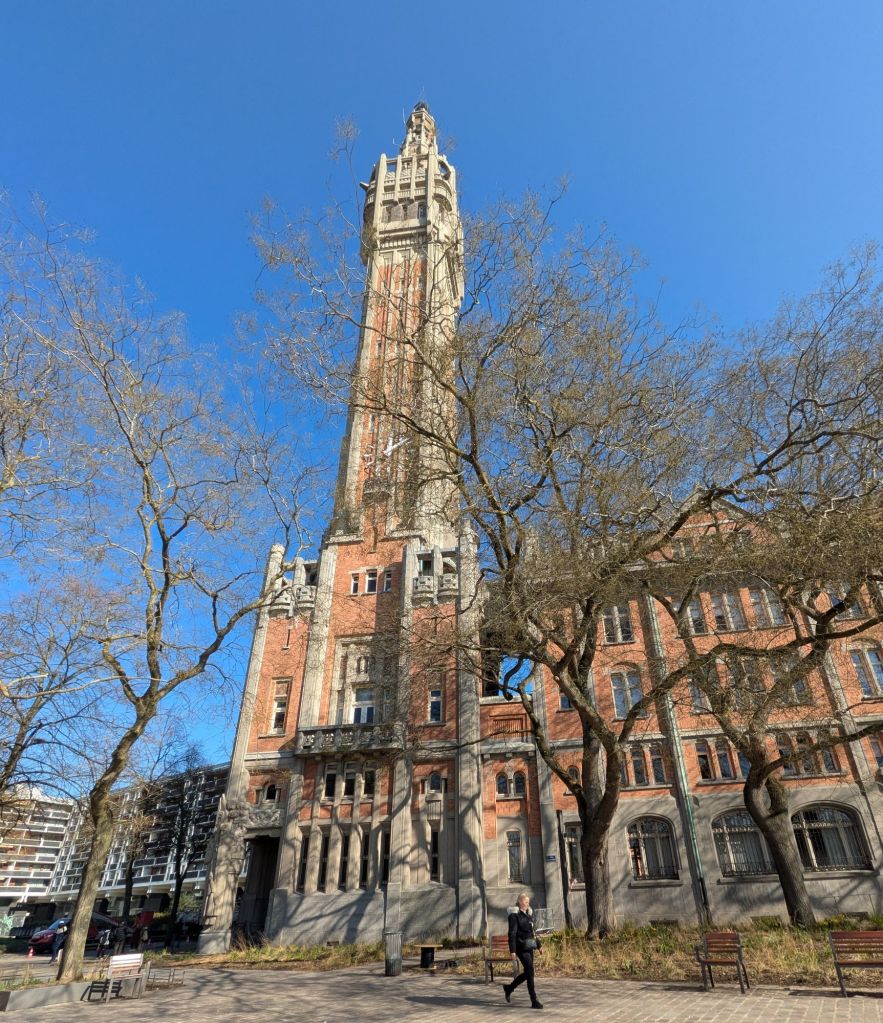
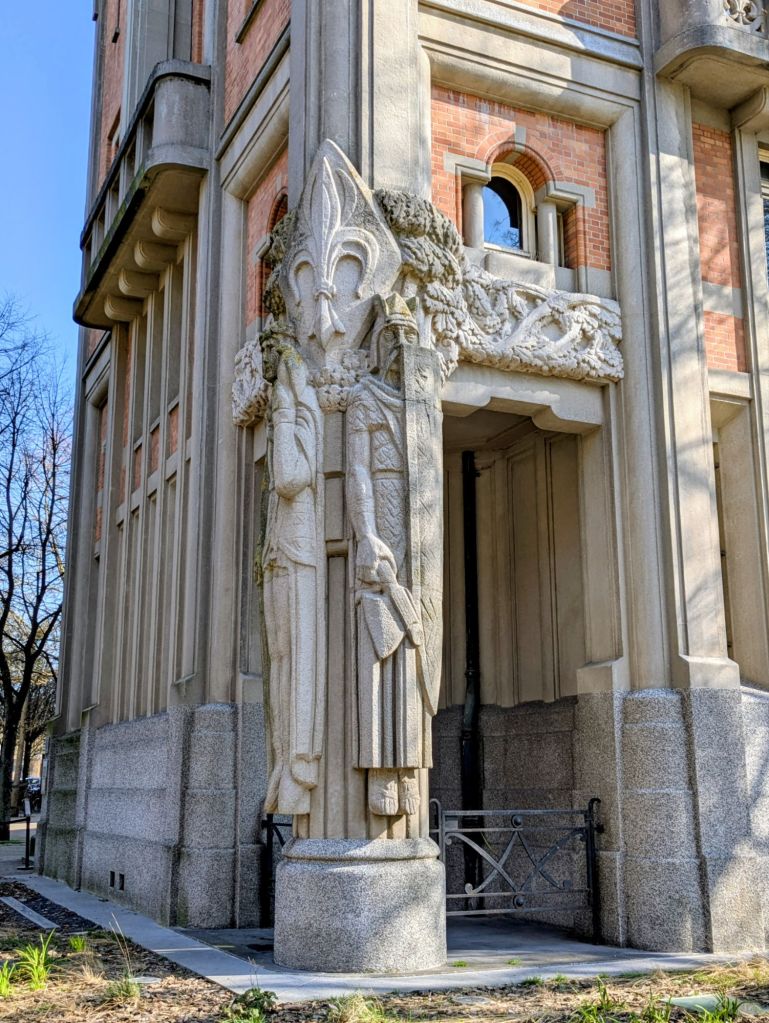
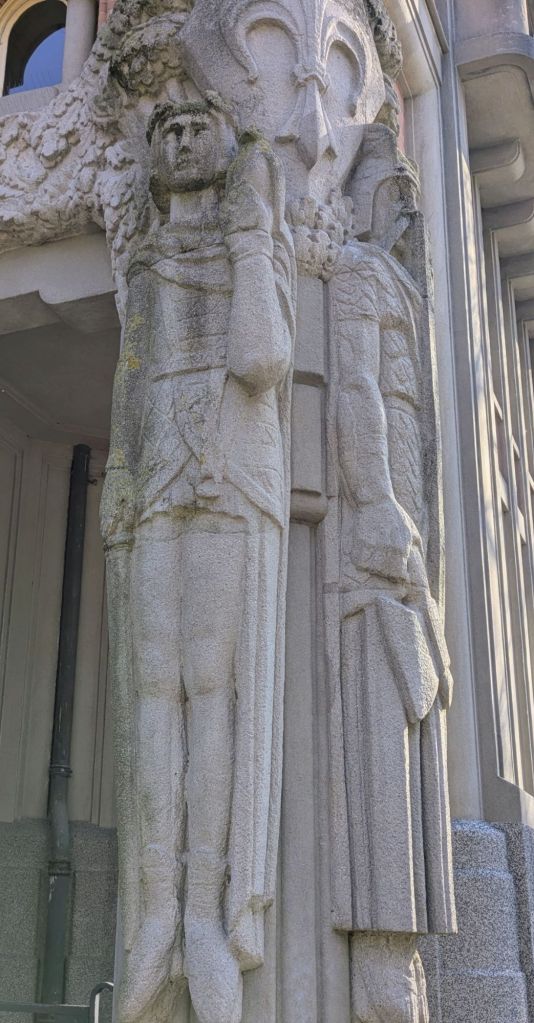
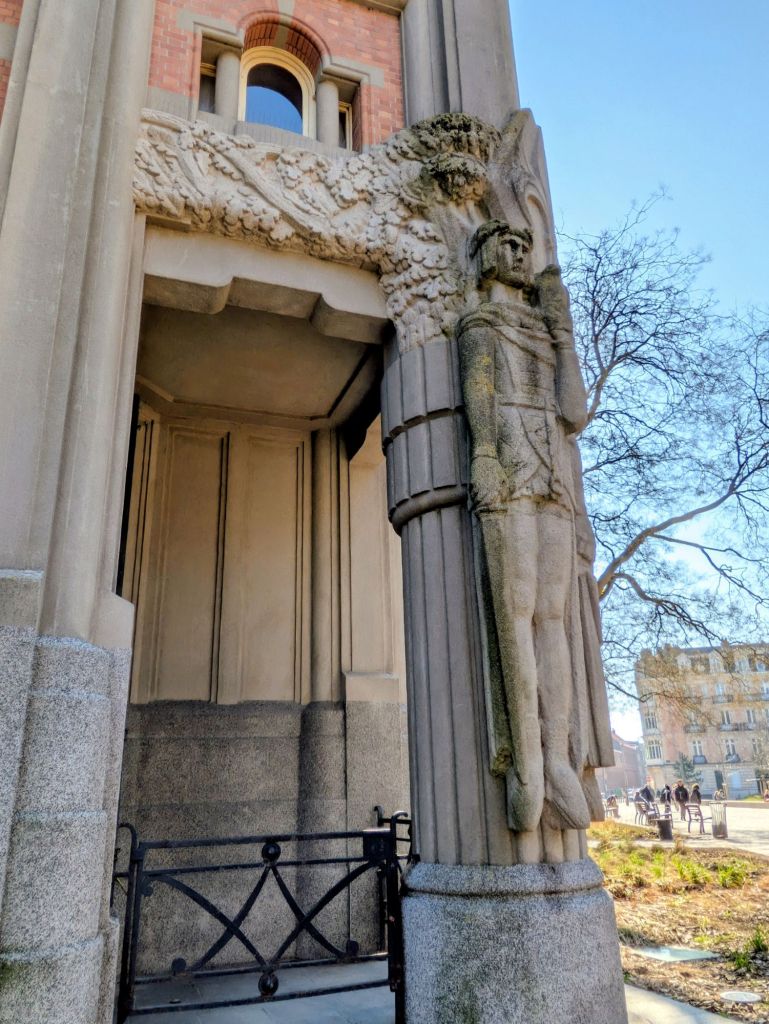
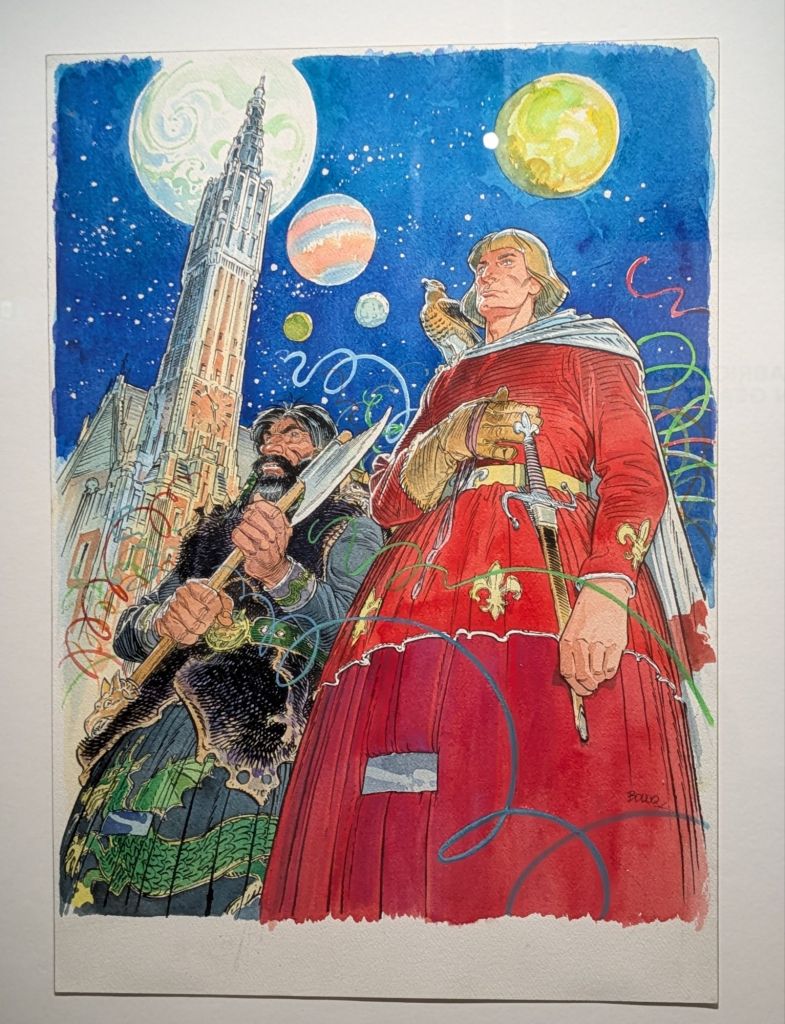
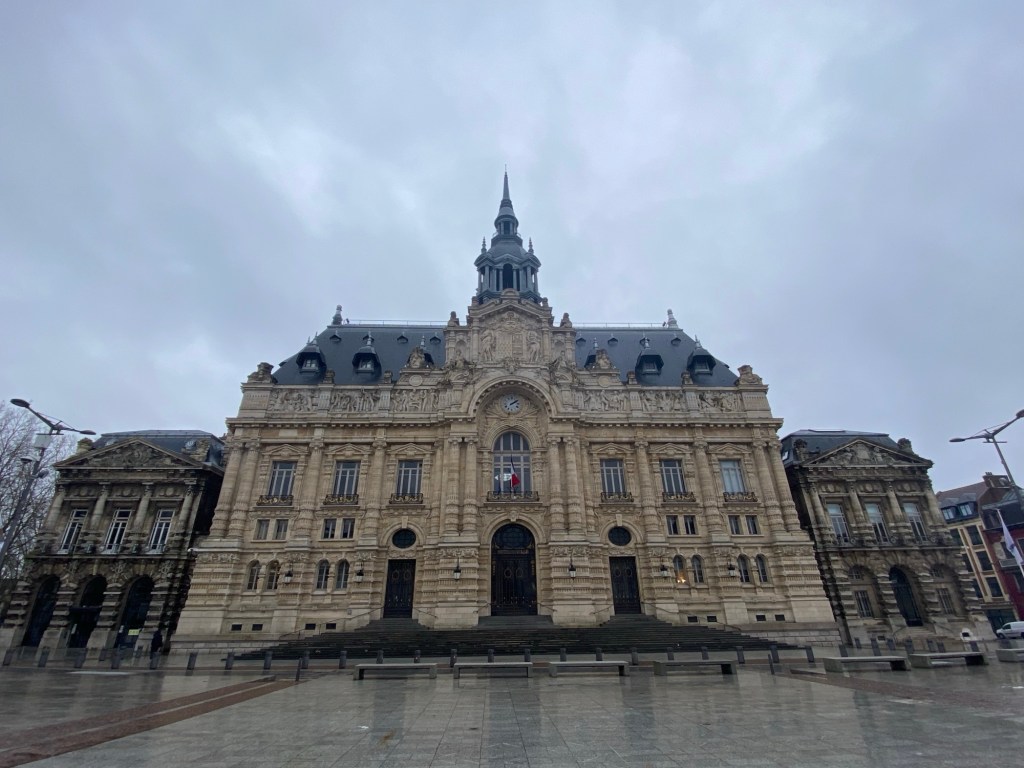
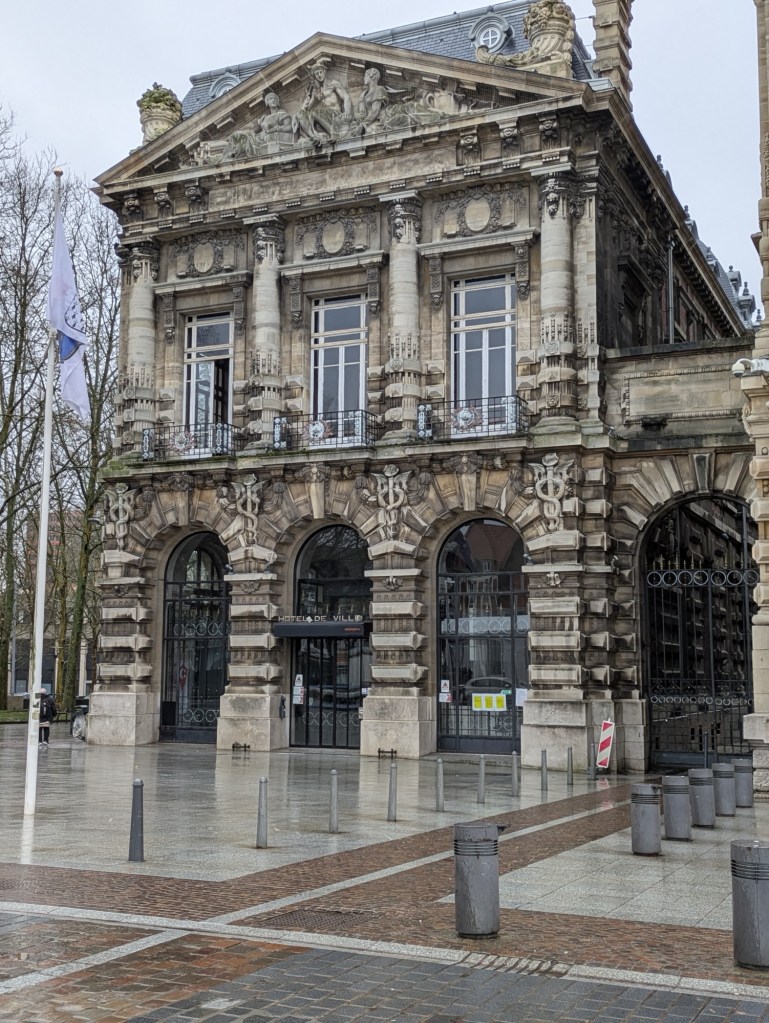
Today I went on a quest to find the statues of Lydéric and Phinaert that are carved on a corner of the Hôtel de Ville (City Hall) of Lille.
This building was started in 1924, a few years after the original City Hall burned down in 1916. After WWI ended, the city decided to build a new city hall as a symbol of new beginnings. The soaring belfry was added in 1929.
During WWII, the partially built hall was seized by the Germans and used as their local headquarters until the town was liberated in 1944. After the war there was little money to complete the building, so only two of the three wings were completed.
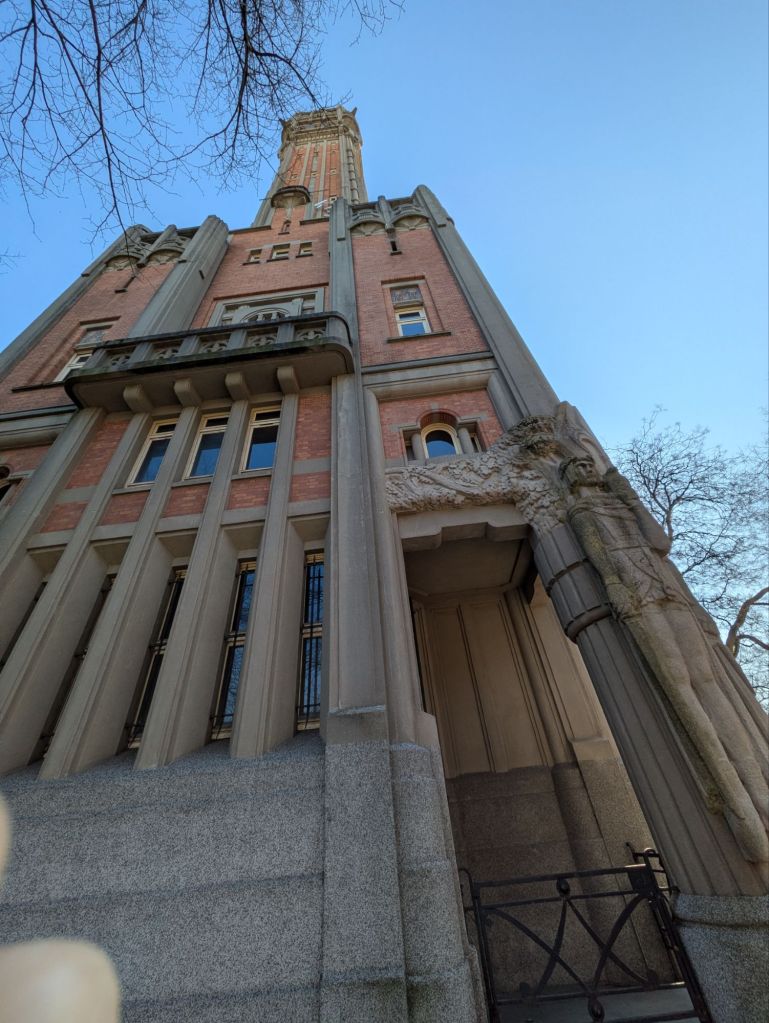
Sorry about the thumb
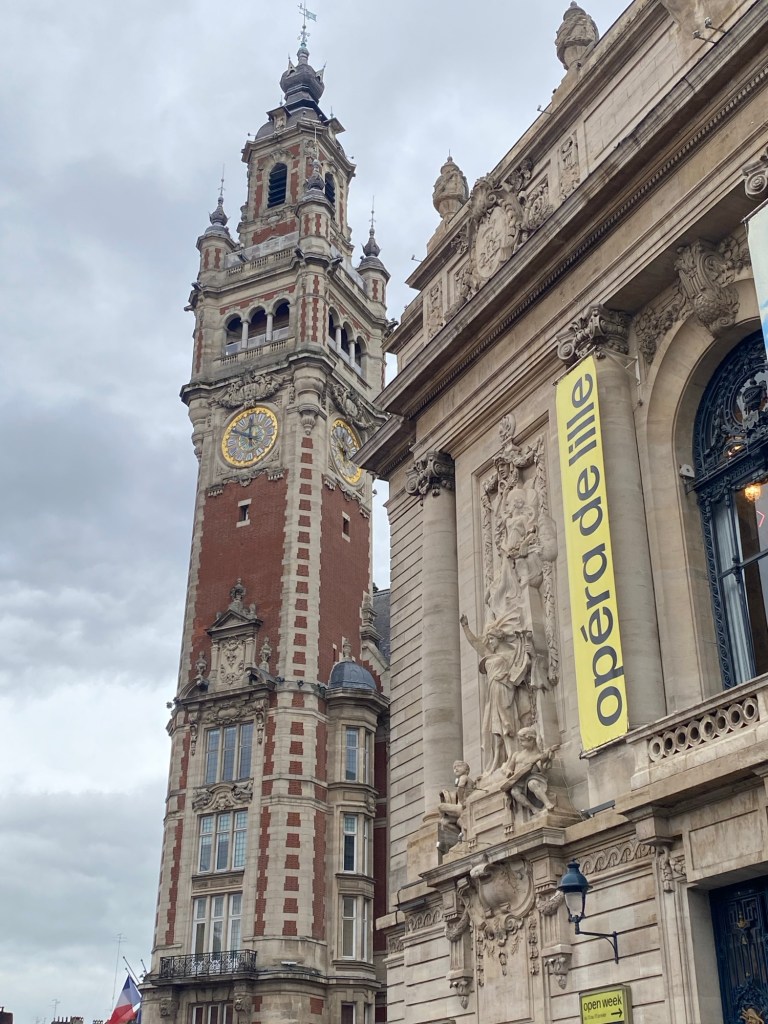
Finally in 1992 the entire design was realized. The belfry is a Flemish traditional structure, and it is the tallest of the numerous UNESCO designated belfries around French Flanders and Belgium.
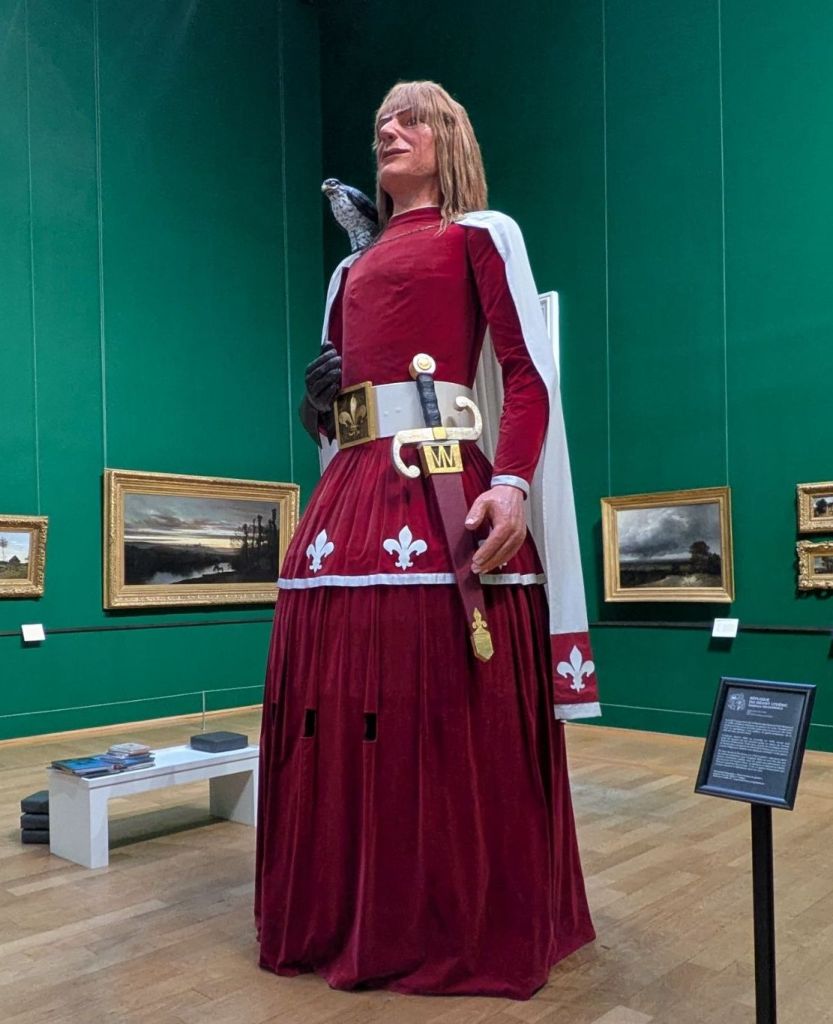
Lydéric with his hawk
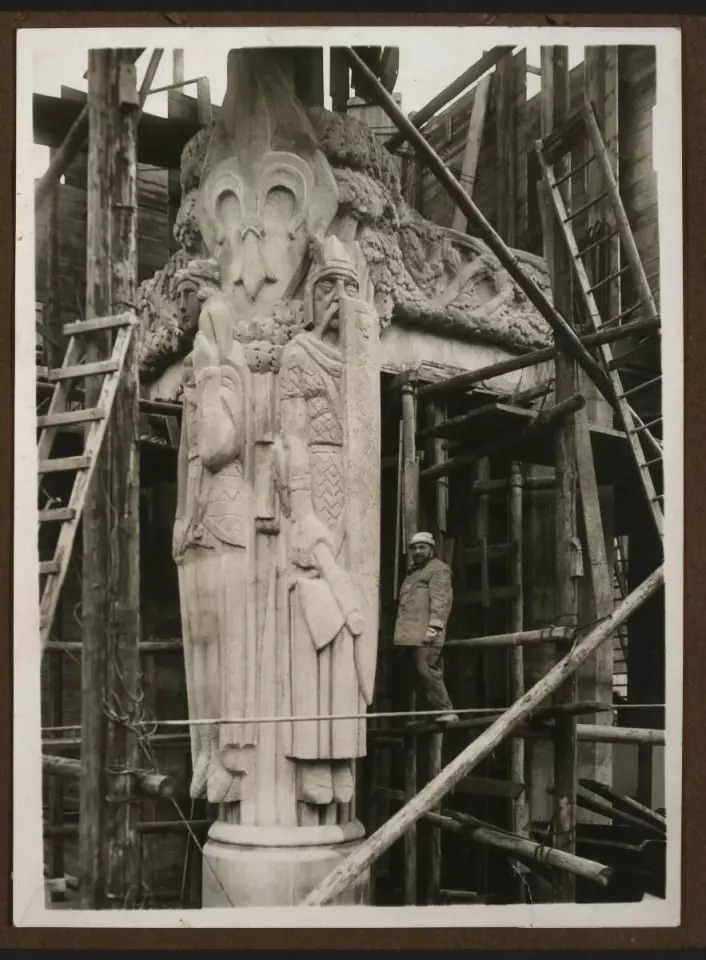
The statues of Lydéric and Phinaert are actually directly carved concrete, by the French sculptor Carlo Sarrabezolles (1888-1971) He constructed the Giants in 1929, all the more poignant because he had been held prisoner in Germany during WWI, and not knowing that this building would soon be occupied.
There is a square in Paris that bears his name.
The artist during construction in 1929. Archives Municipales de Lille
I spent a few hours wandering about in the impressive Museum Beaux Arts in Lille.
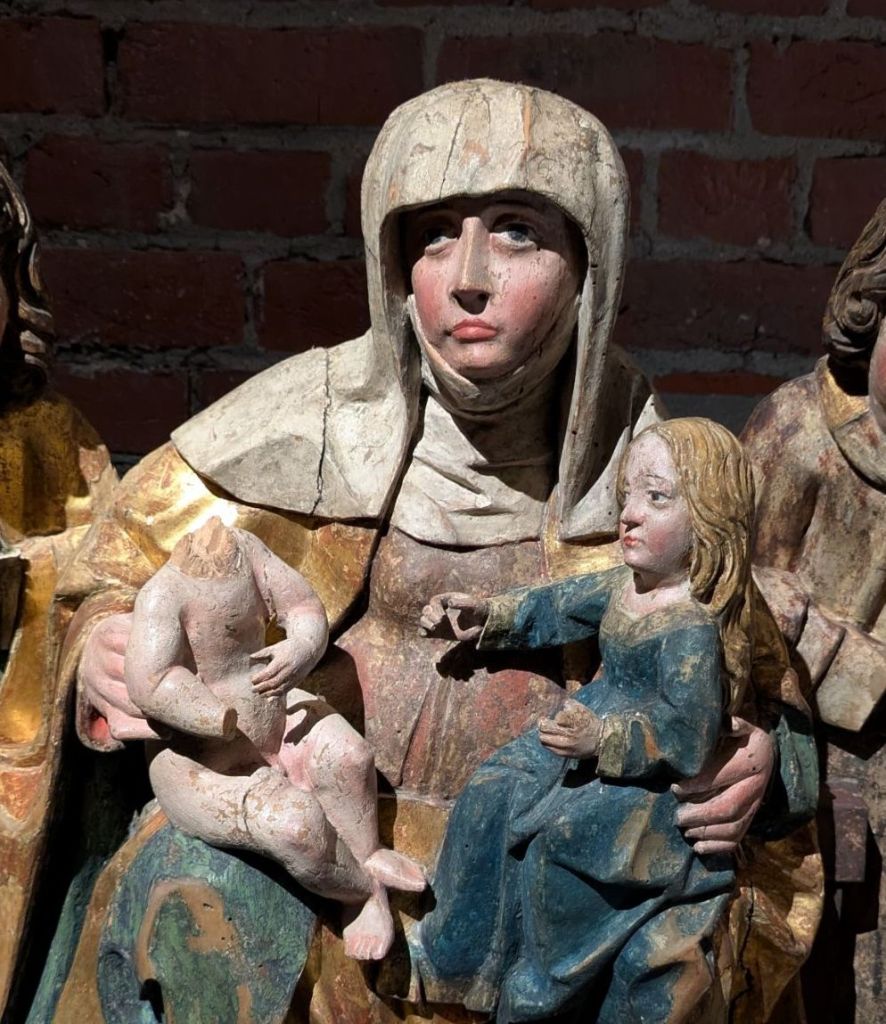
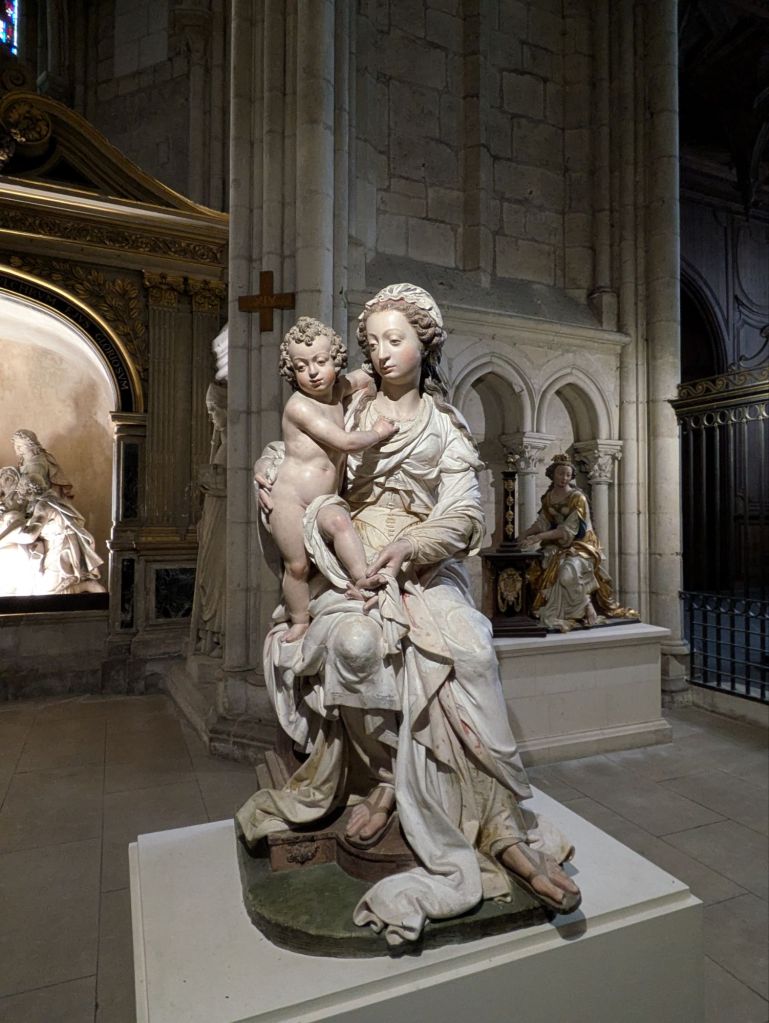
Saint Anne carrying her daughter Mary and her grandson Jesus and thinking, can’t they just leave us the fuck alone?
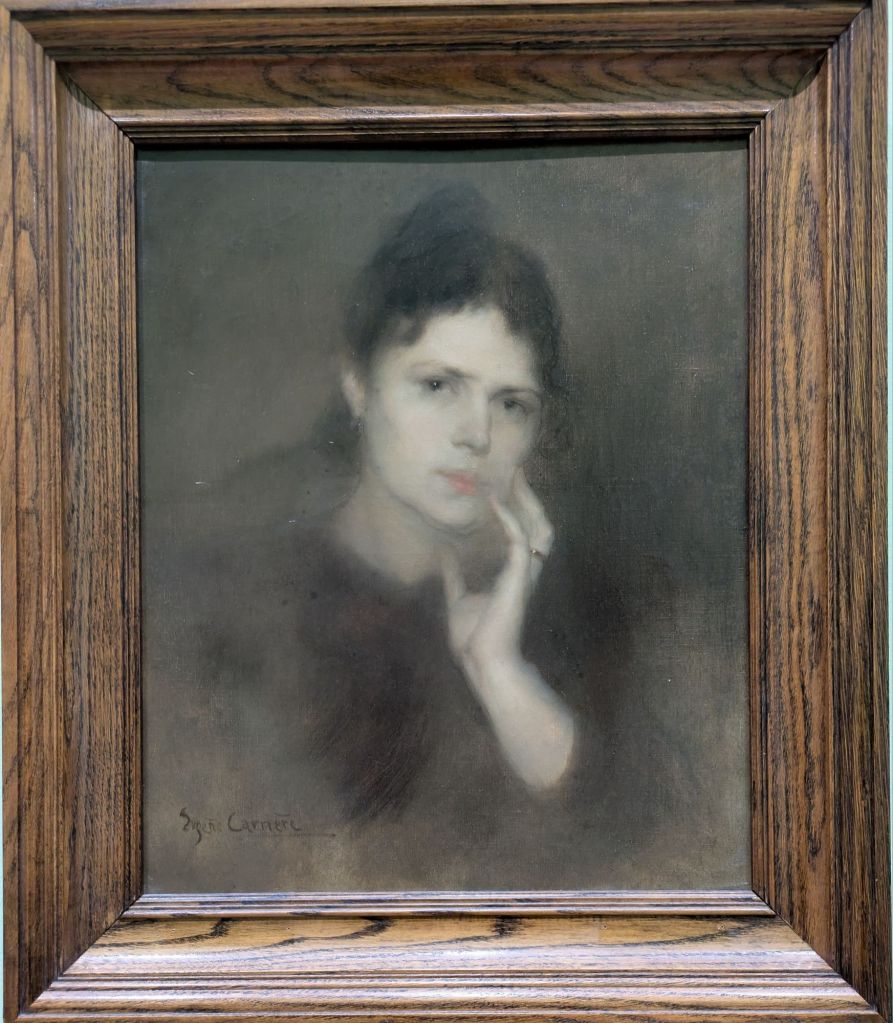
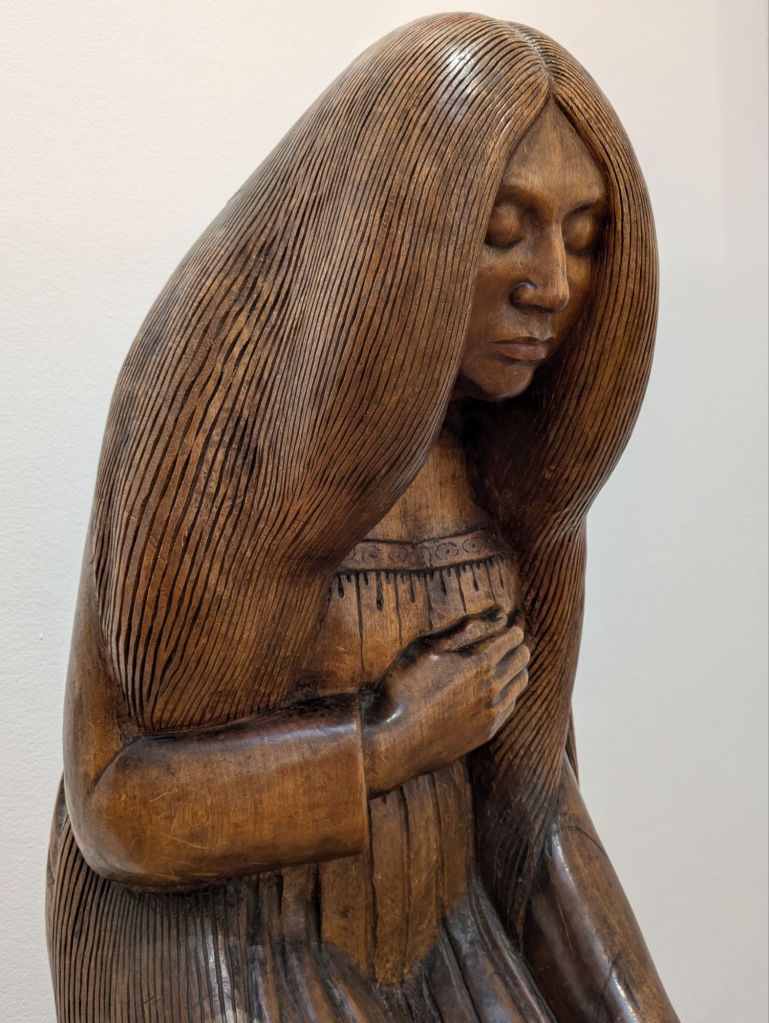
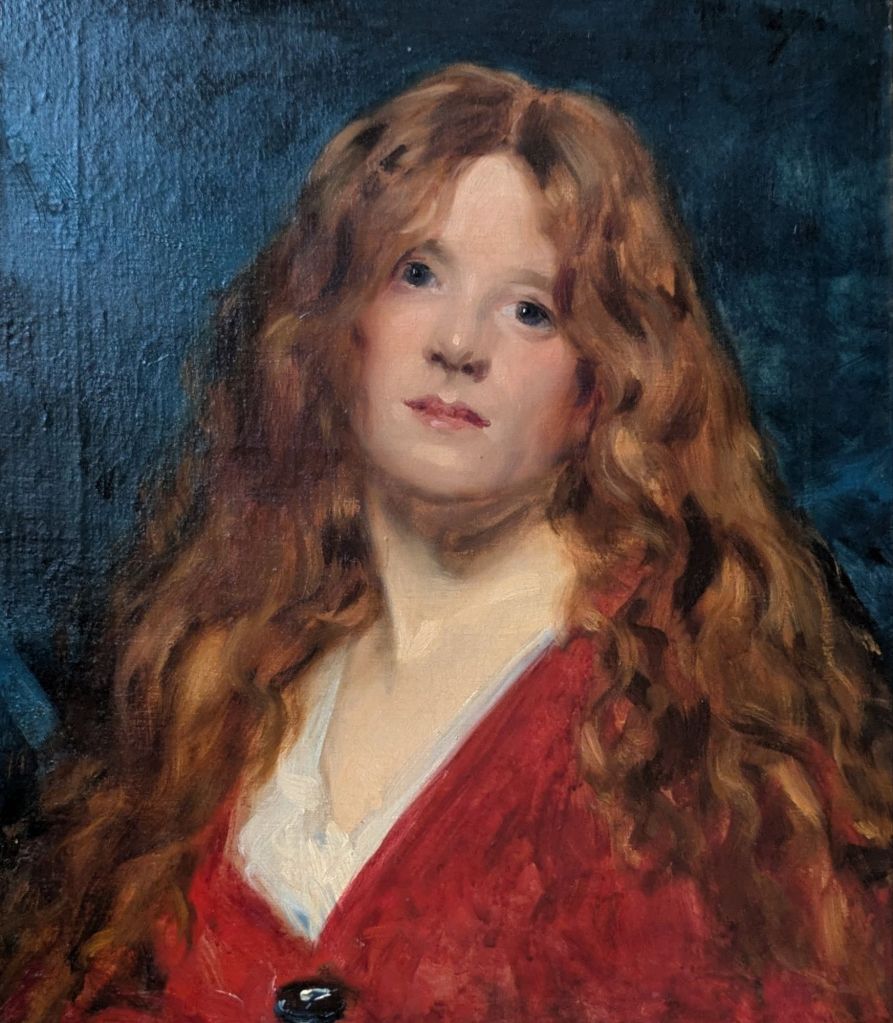
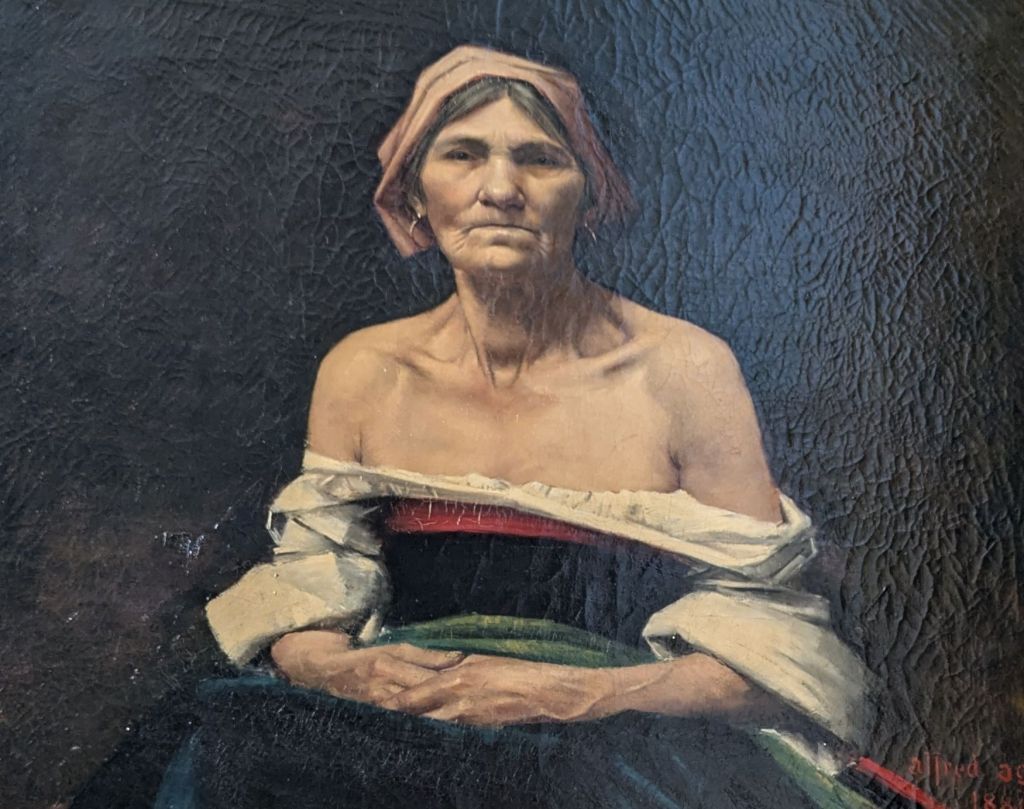
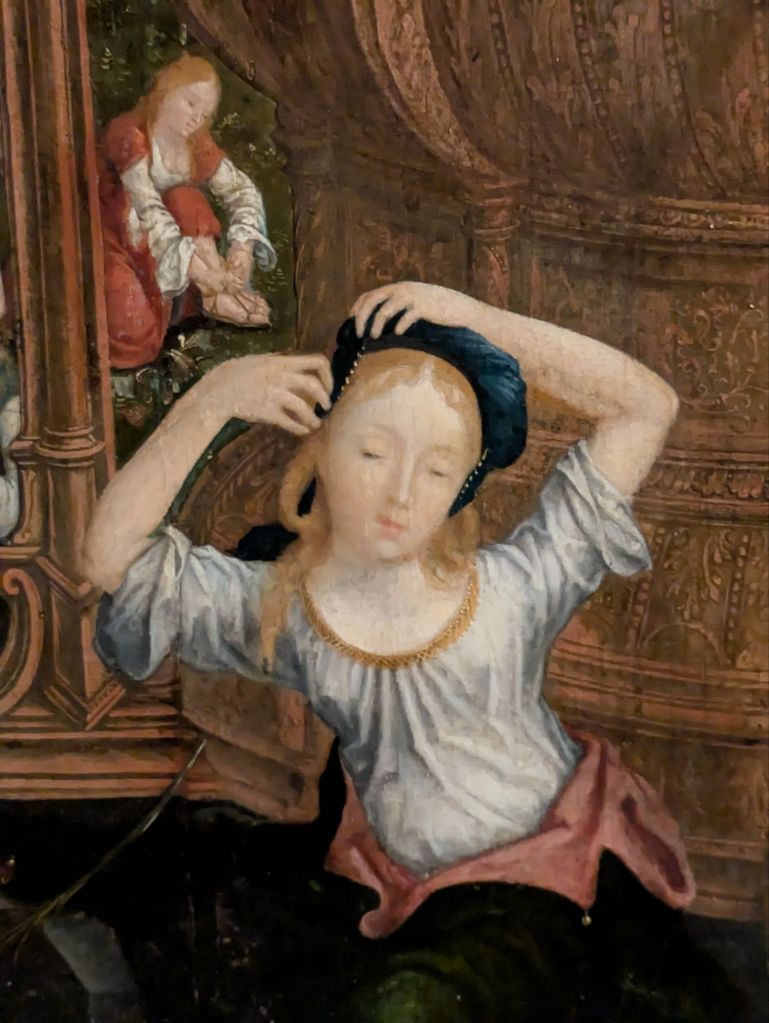
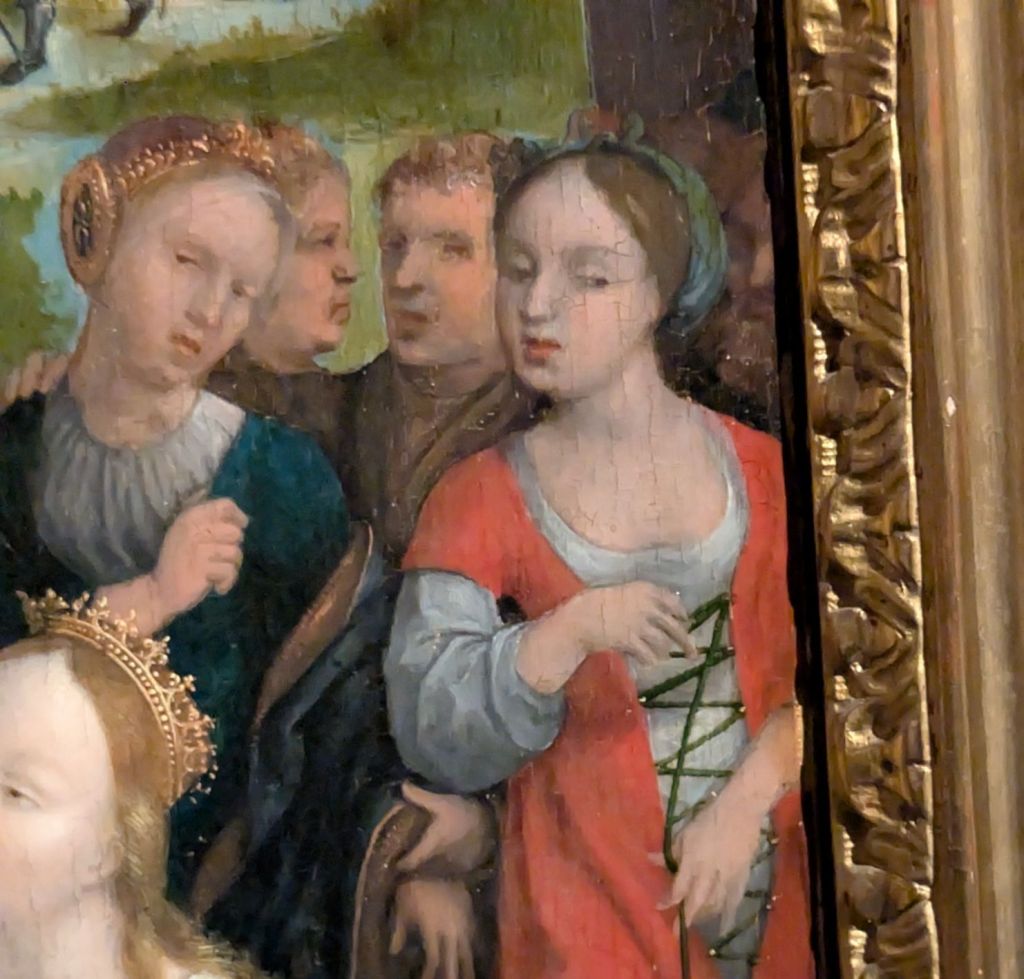
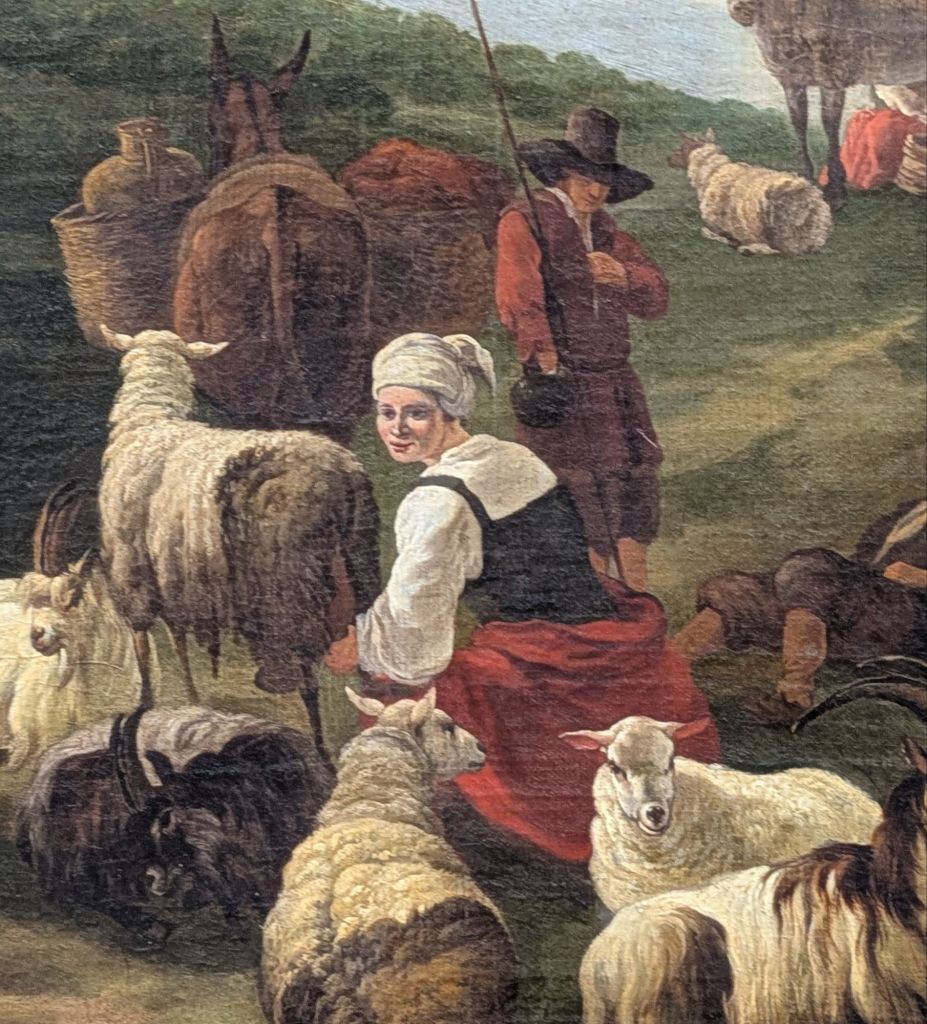
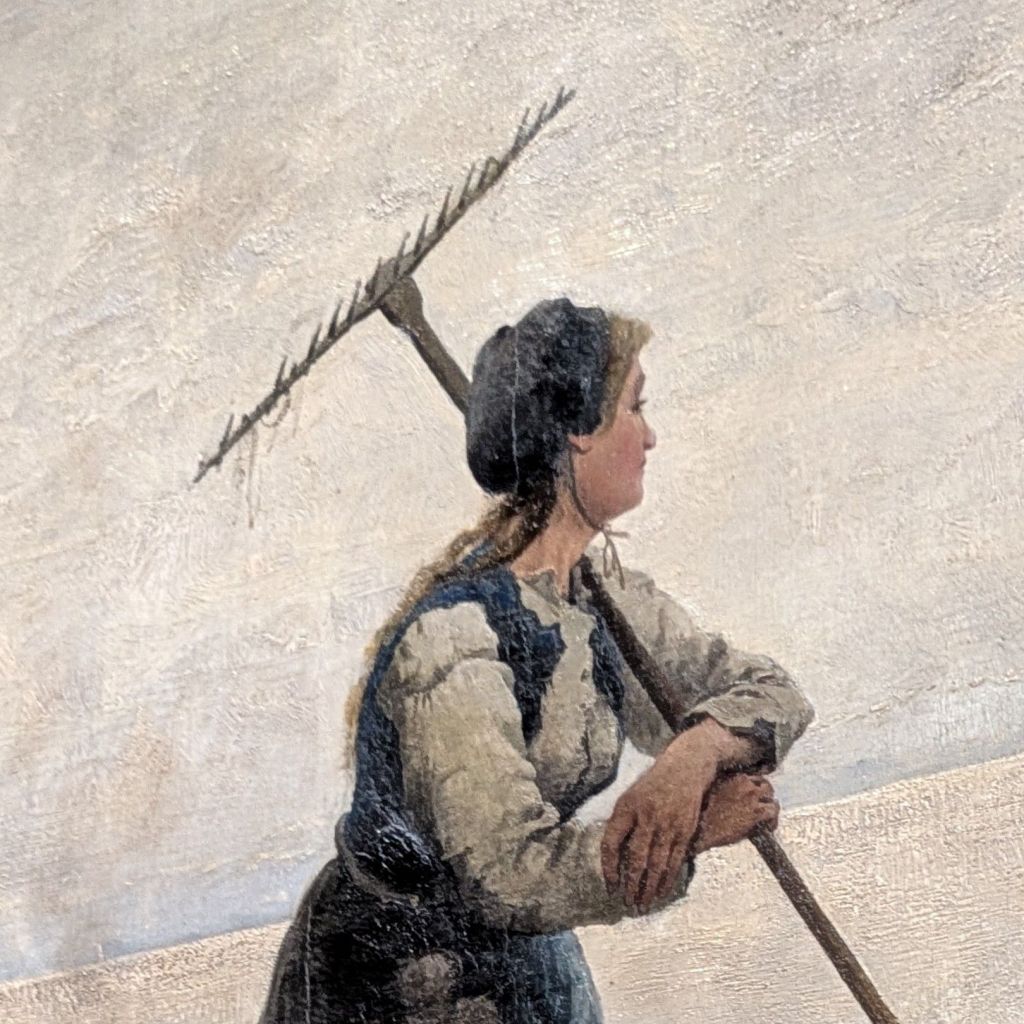
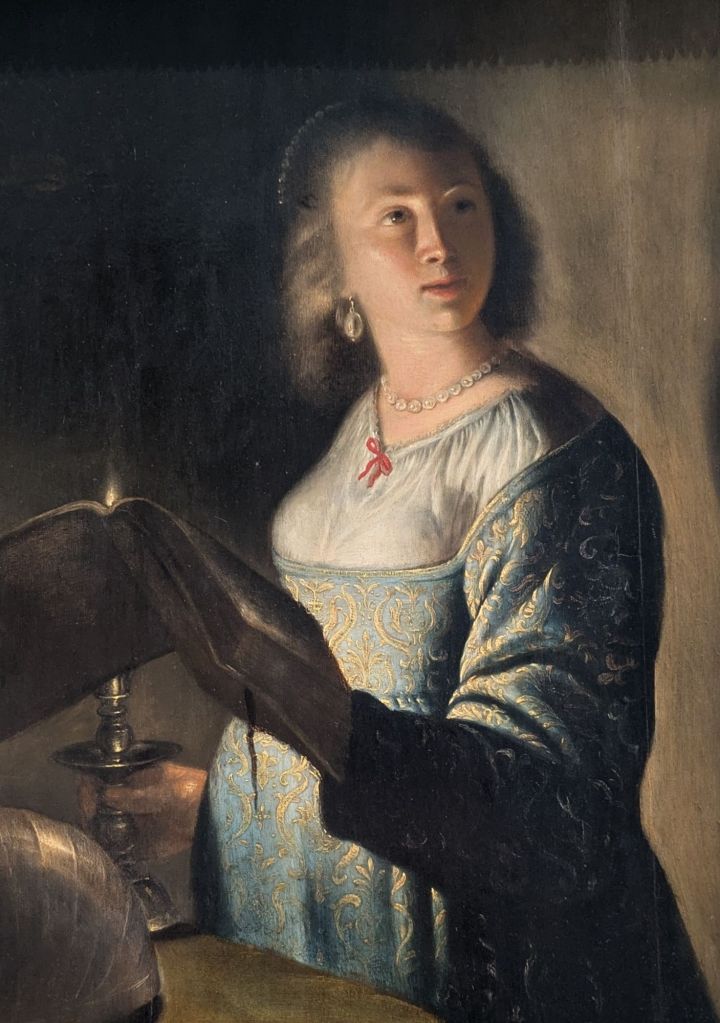
I don’t know if it is something about this museum in particular, or maybe it’s just my frame of mind, but with the assault on women’s rights in my country of America, and my PTSD daily triggered because our government is literally run by rapists… but what I kept noticing in this museum were all of the women on every wall. In paintings. In sculpture, marble and wood. They all seemed to be staring right into my soul.
I feel your pain. That gut wrenching pain of everything
Across decades and centuries, these women share their lives, the sacred and the profane. Our experiences are simultaneously universal and personal. We know that the circumstances of women have improved in our modern times and yet these women whisper to me, “Nothing has changed.”
Unnamed womenBaring their souls
And not just wealthy women having their portraits painted in their finest attire. Not just images of women painted as allegory. But real women living authenticly, captured on canvas, telling us the stories of their lives.
After those hours, I felt part of this eternal sisterhood of struggle, of just trying to live our lives and not be treated as a man’s property, of getting shit done on a daily basis and absolutely making the world work.
Through time and distance, my soul is uplifted in solidarity.
And the title of this painting should be, “Why is he asking me where is fucking socks are?”
On visiting the Museum of Beaux Arts in Lille and spending hours combing the galleries. There will be posts!!!
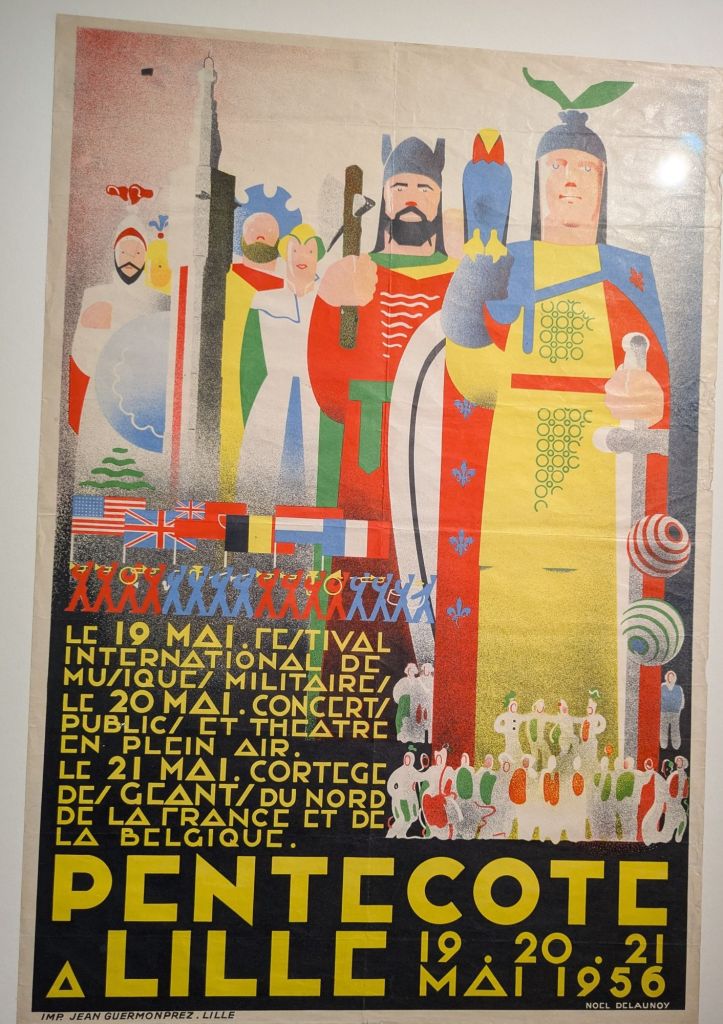
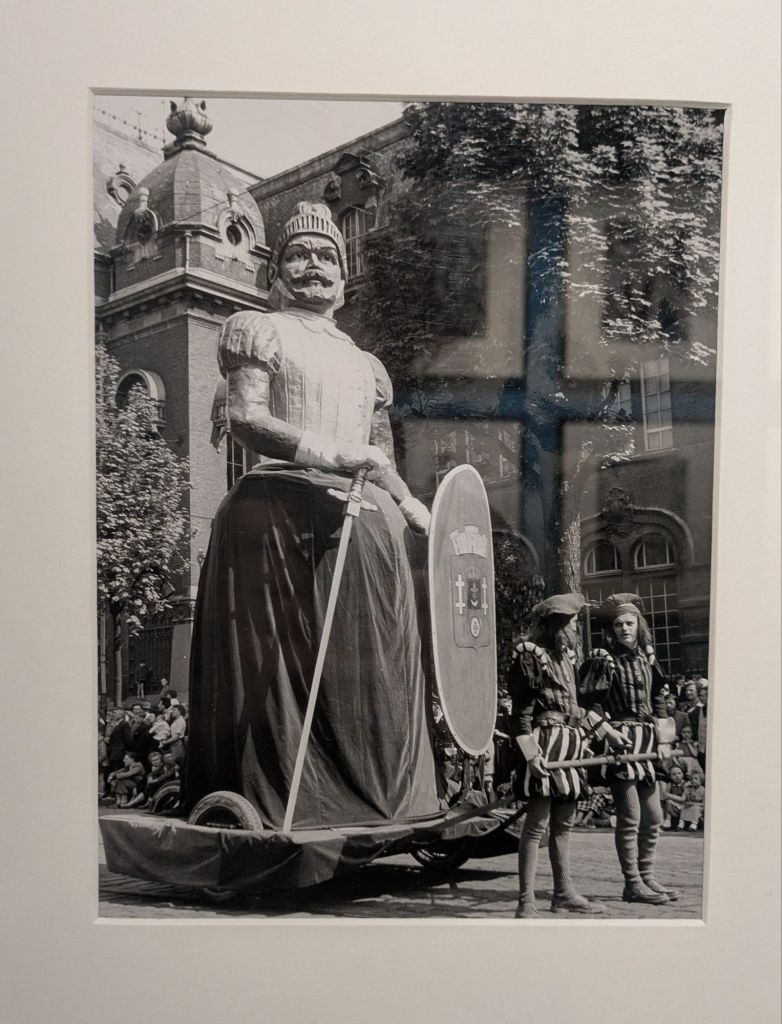
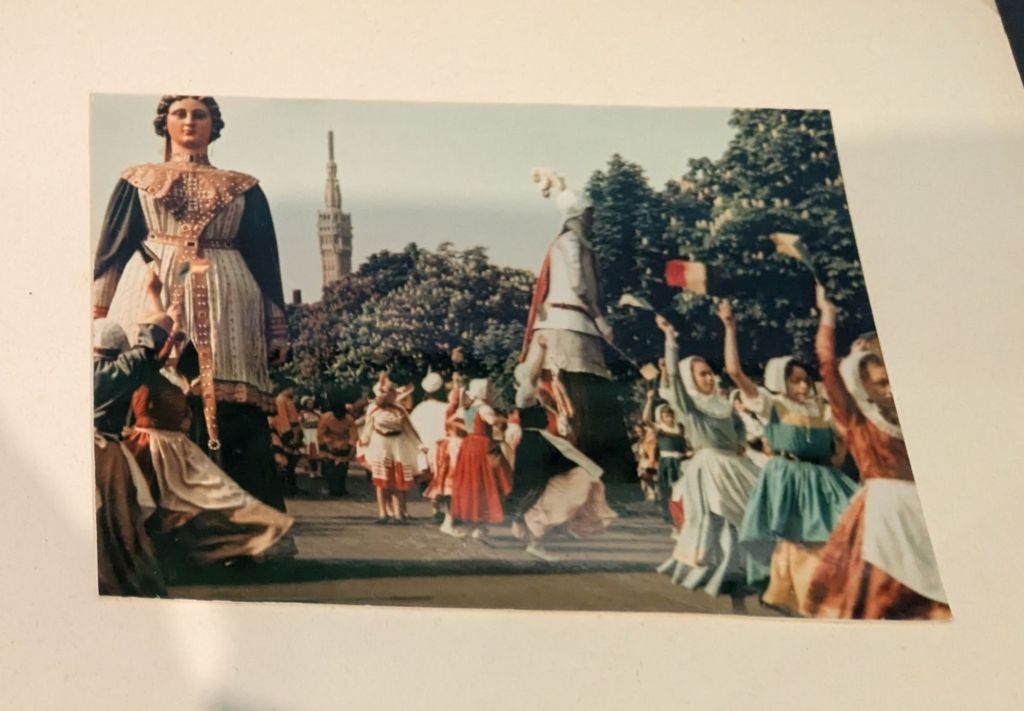
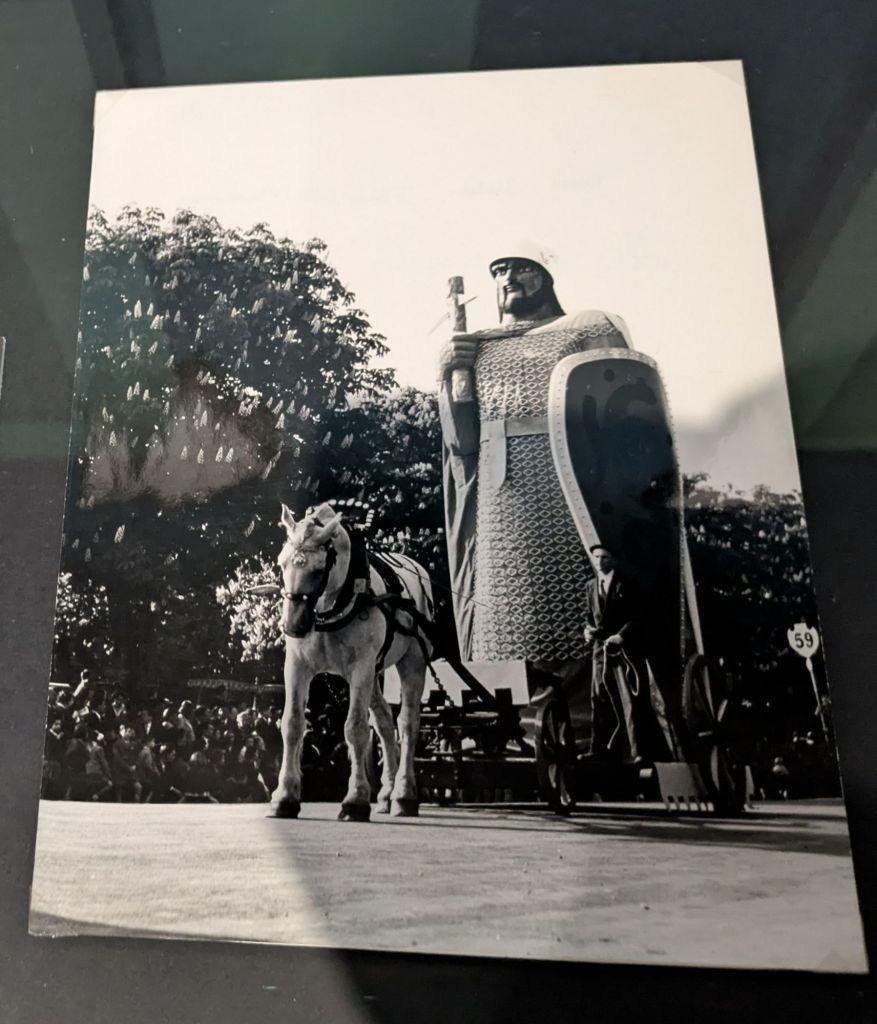
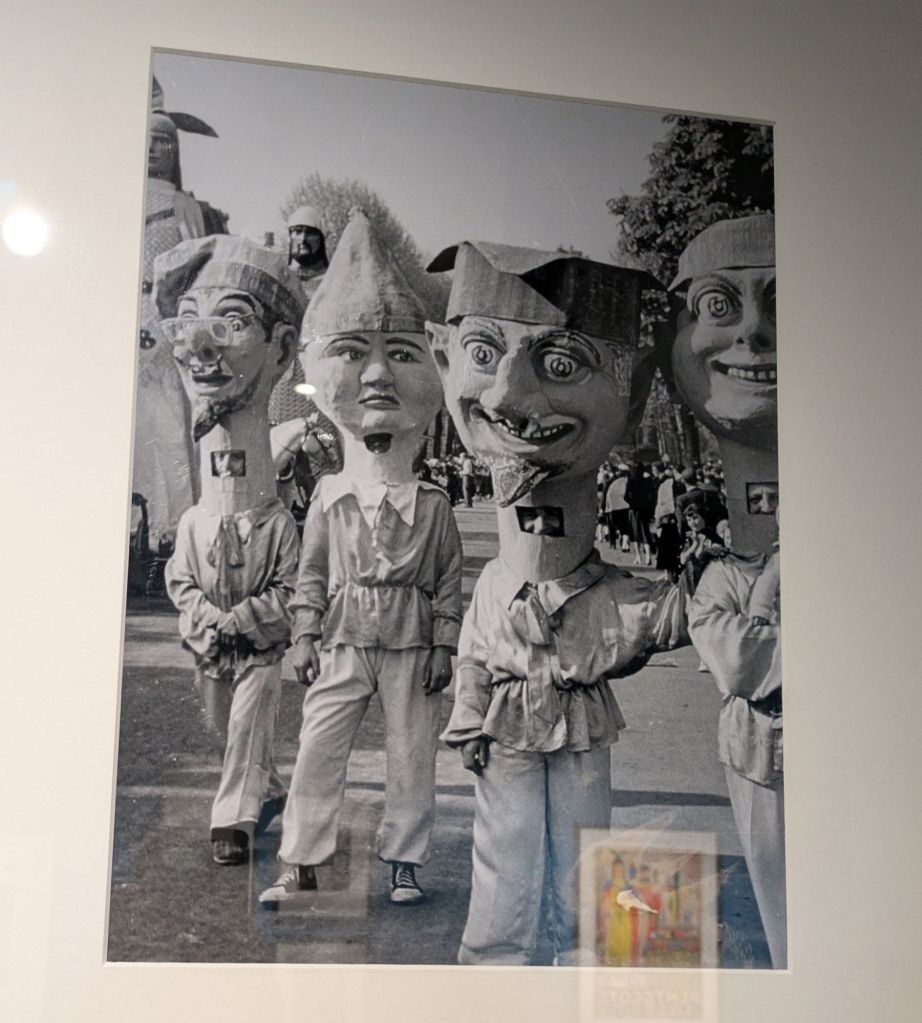
I am just learning about the rich tradition of Giants in Flanders. Lille, and this extreme northwest corner of France, is closely associated with Flanders, the French speaking area of Belgium. (Hopefully I will get this right)
Stories about giants are important in the mythological roots of this region. Each town has its origin story and the characters who represent the products and agriculture of the region. Each community builds their giants and parades them through the streets on festival days. This tradition began at least 500 years ago!
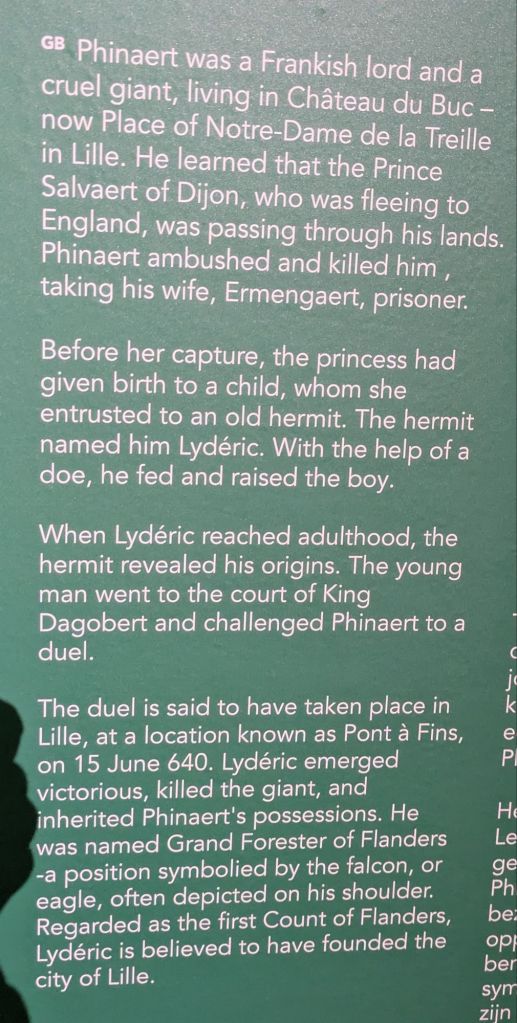
The main characters celebrated in Lille are the evil giant Phinaert and the young warrior Lydéric. Avenging his parents death, Lydéric kills the Giant and founds the city of Lille.
I hope I get to see these magnificent giants in action one day!
How it all came about and the people who helped along the way
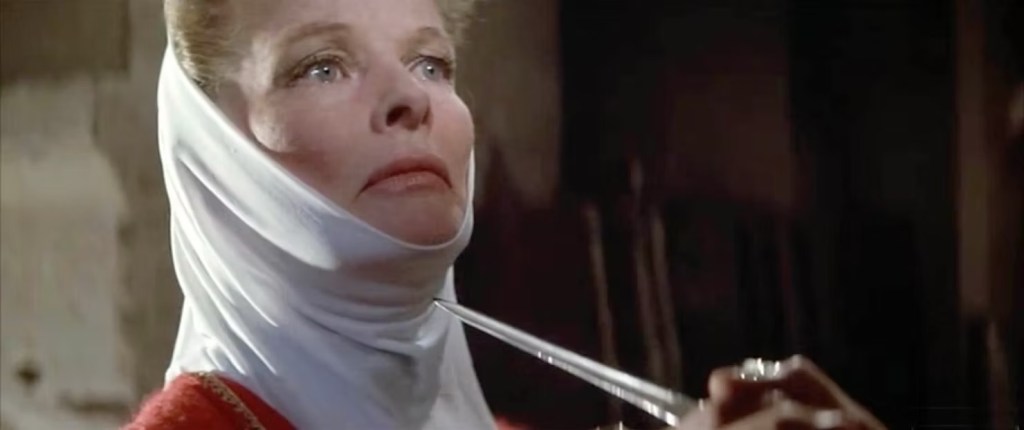
I can’t remember when I became infatuated with Eleanor of Aquitaine. I don’t remember the first time I saw The Lions in Winter, although I am a child of the 60’s and would have been aware of this powerful movie when it came out in 1968. The movie resulted in 3 Academy Awards, and Katherine Hepburn’s third Oscar. It was a big deal.
But I have always loved reading biographies of women in history. Women who suffered, those who became powerful in their own right in spite of the oppressive patriarchy. These women have always been my guiding stars. ( My other favorites besides Eleanor, are Artemisia Gentileschi, Eleanor of Toledo and especially Katherine Swynford.)
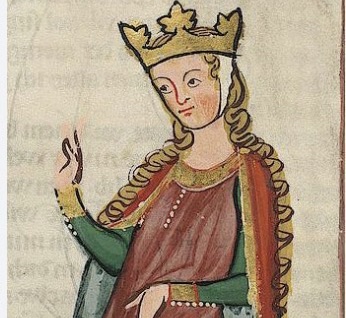
Eleanor of AquitaineEleanor of Toledo
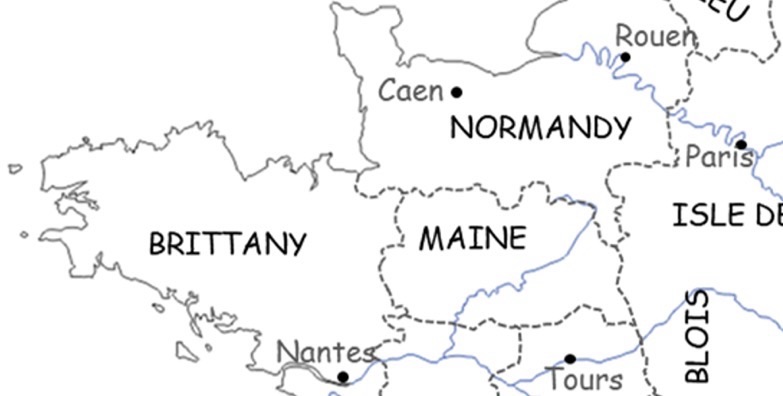
So imagine my delight and strangely disconnected surprise when I realized we had landed right smack in the middle of Eleanor’s world! The Plantagenet dynasty of Norman descent would rule England for 300 years. The Norman Conquest, the Hundred Years War, the Battle of Agincourt… you might not know the details but you have surely heard the phrases. Hell, Ragnar lovers can take it all the way back to Rollo the Viking who became the first Duke of Normandy. The history of this area is surely fascinating to anyone who considers themselves to be an Anglophile. And here I am!
Thehistoryofengland.co.uk
We went to Fontevraud Abbey (see previous post for details) to see Eleanor’s grave. That trip lead to discovering stories that you won’t read while visiting there. That the bodies are lost. That there were once 6 effigies and they have been moved many times. And the there was once an English king who decreed that his heart be placed in his family’s tomb.
Henry III’s grandparents, uncle and mother
My mind got stuck on the fact that no one seemed to know anything about this. I emailed the abbey and no one answered. We certainly didn’t see anything about that on our visit. So I asked a FB group I enjoy, Medieval England, and received answers that ranged from “Of course Henry II is buried in the abbey” to “this is a silly question from a silly person” to “no one is interested in this so go away”. Look, first of all I’m asking about the heart of Henry III not II, and yes he WAS there, but that has nothing to do with his grandson’s heart. And secondly, PLENTY of members were indeed interested!
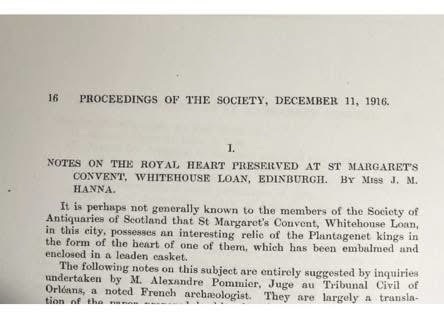
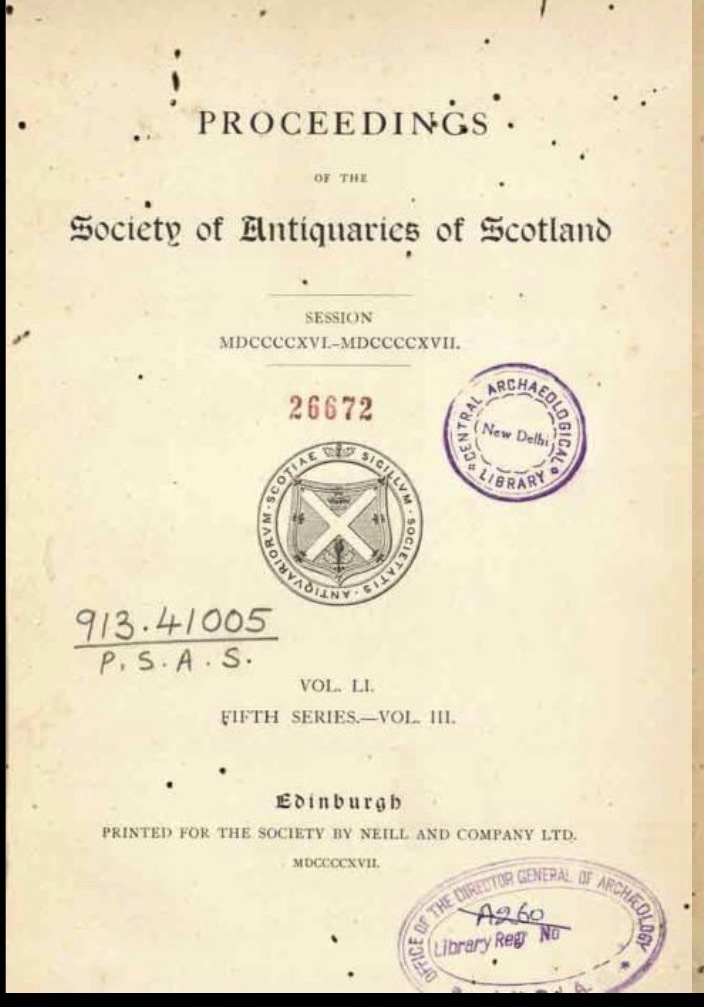
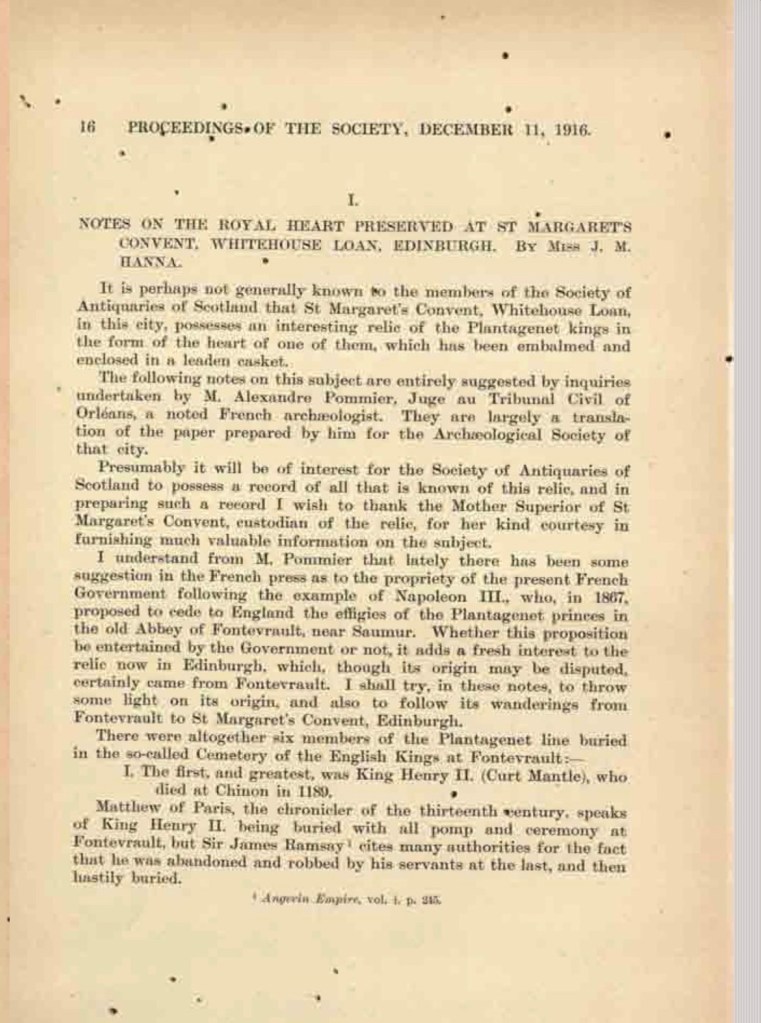
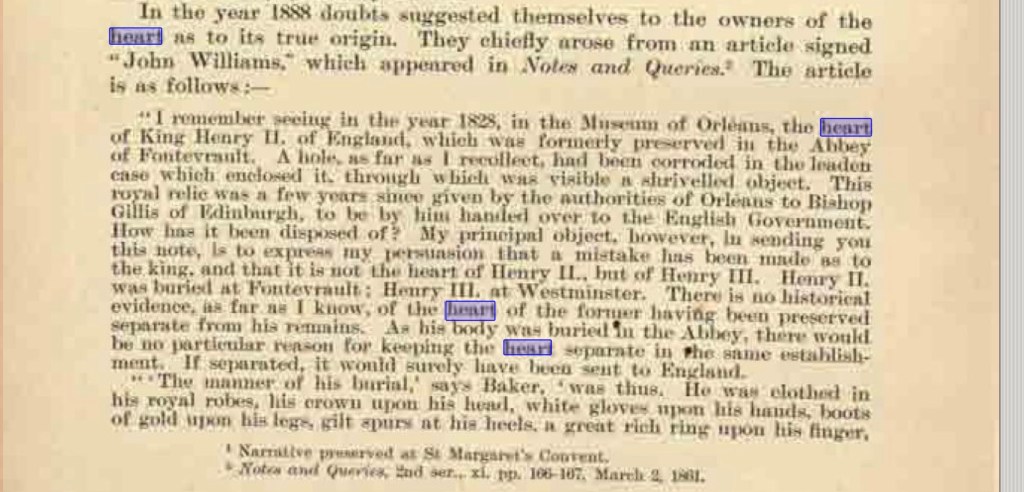
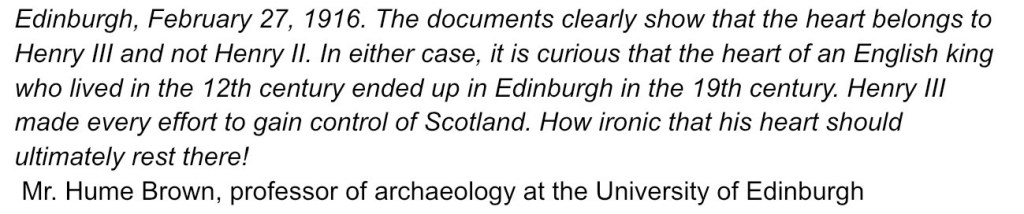
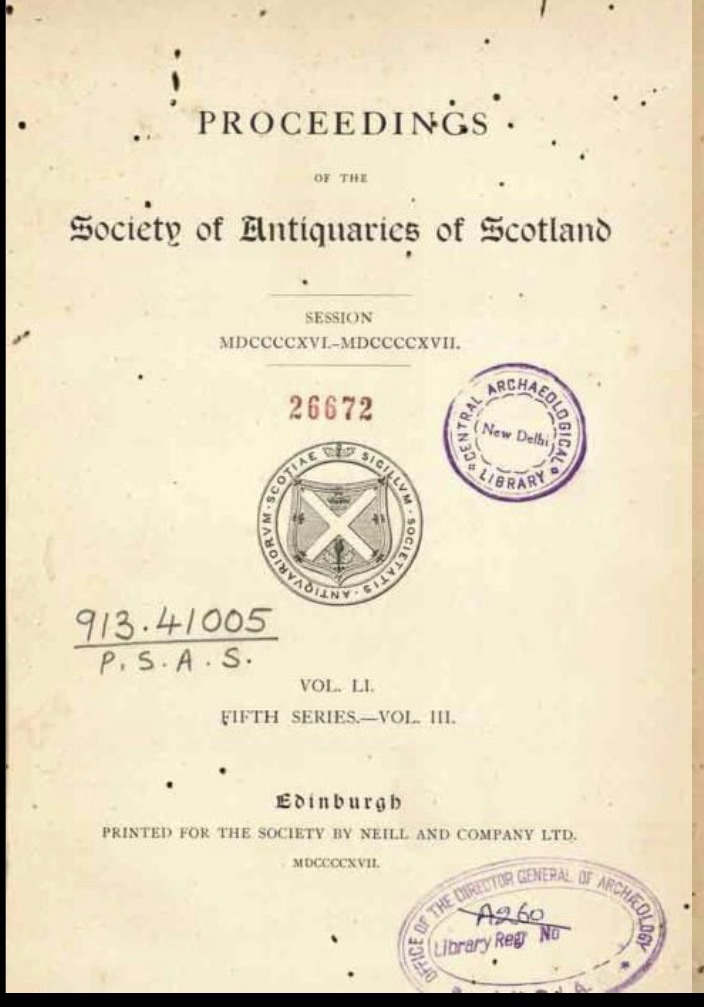
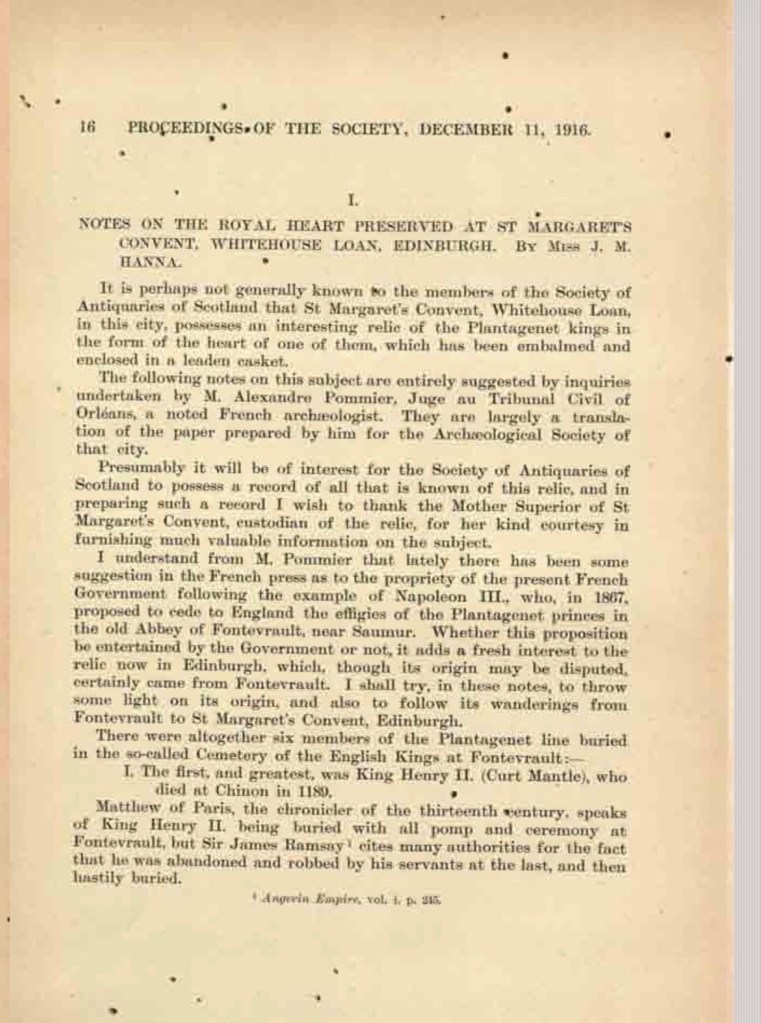
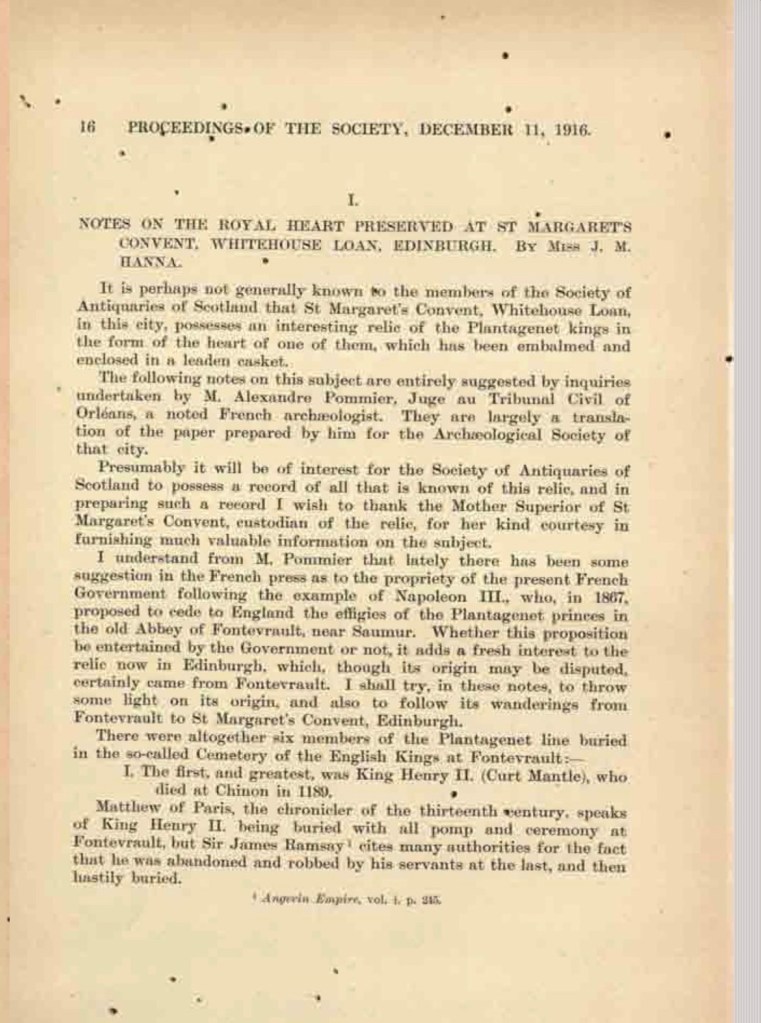
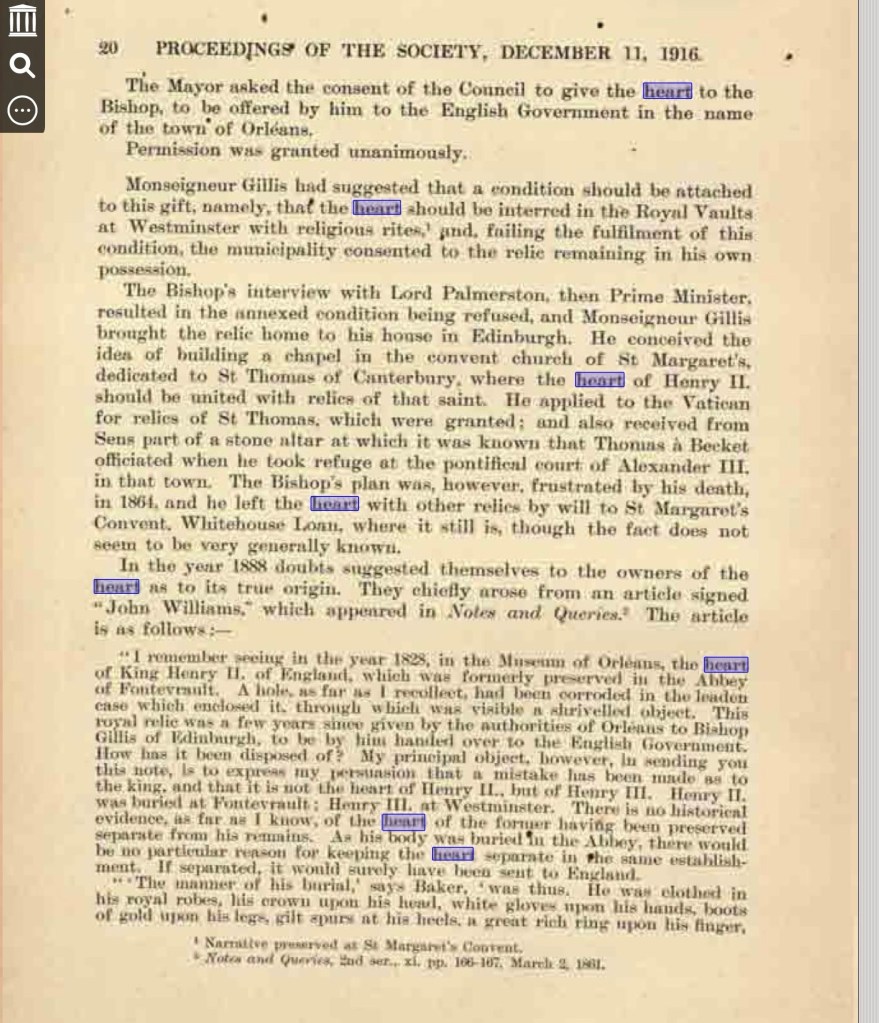
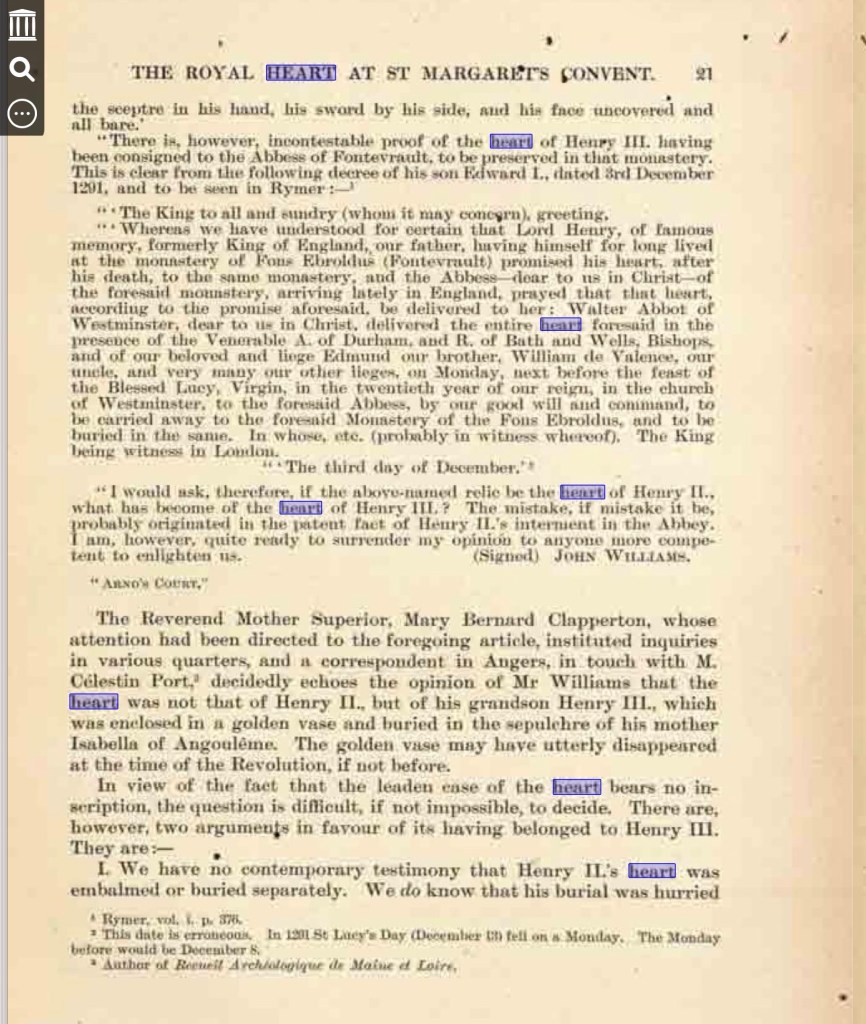
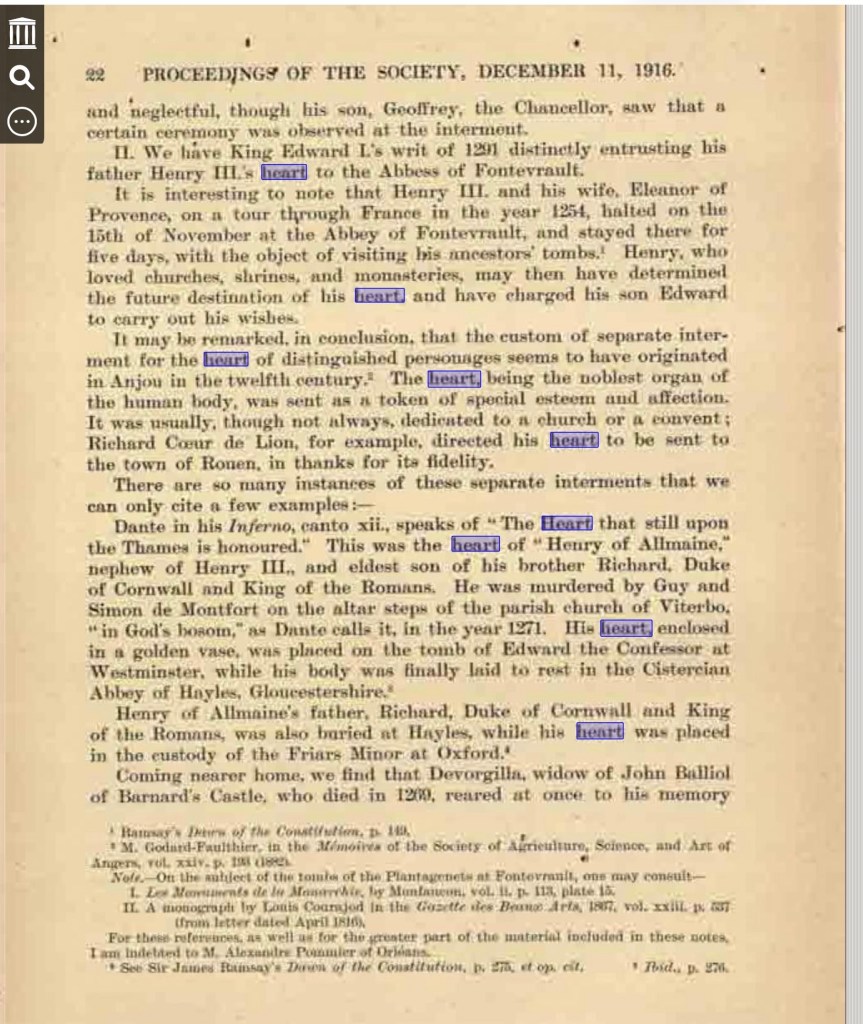
Among them was a gentleman who sent me the above blurry image of a 1916 essay entitled, Notes on the Royal Heart Preserved at St Margaret’s Convent. When I followed up asking for a link, he replied that he wasn’t good with links but the publication came from the Society of Antiquities of Scotland. Fortunately this society has been absorbed by the National Museum of Scotland in Edinburgh, a place I know well, as I have spent countless hours there, searching for nålbinding items. This journal didn’t take much sleuthing to find, as they have digitized all the journals going back over 100 years.
This account, by Miss J. M. Hanna (a woman no less! yay!) told the account of the heart with great detail. She stated up front that this information comes from the account of a Mr. Alexandre Pommier in another journal, published in France earlier that same year. Right then, I got the idea to track down that publication as well as a few others that she cited in her footnotes. (Always look at the footnotes, people!) More on that later…
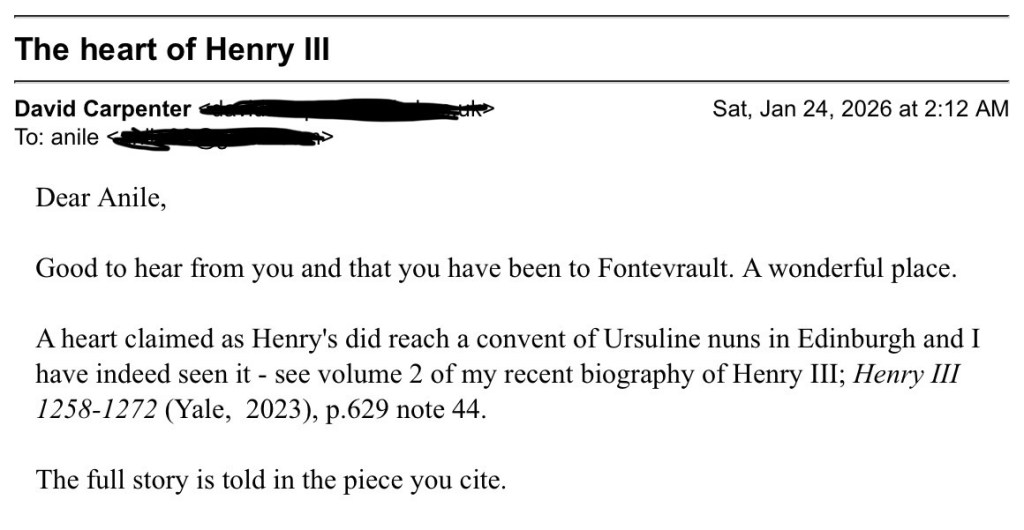
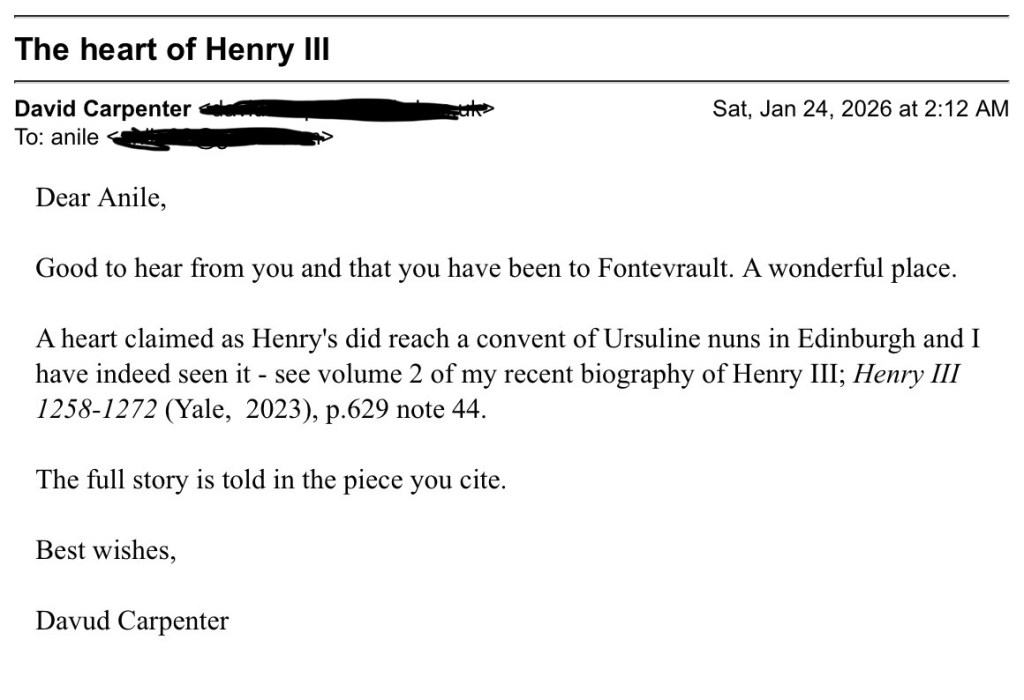
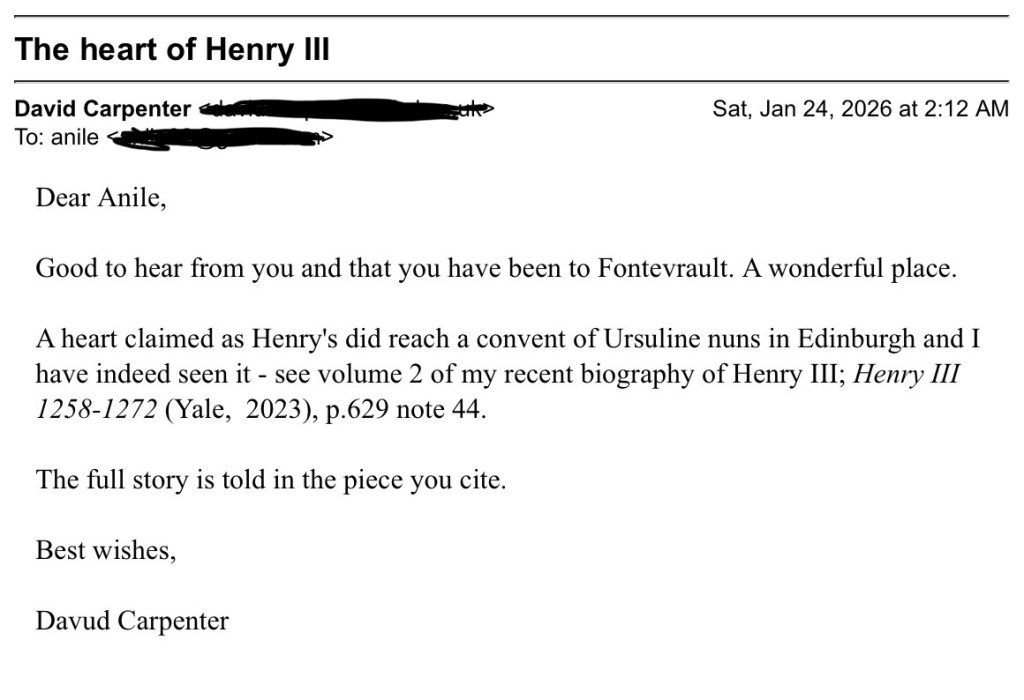
A second member of the Medieval England group suggested that I email the preeminent expert on Henry III, Mr. David Carpenter, Professor of Medieval History at Kings College London. “Really?” I thought. “Why would someone as prestigious as him bother with little ol’ me?” But what the heck? If you know me, you know I’m always the one never afraid to ask a question. So I did. And guess what… he emailed me back!!!
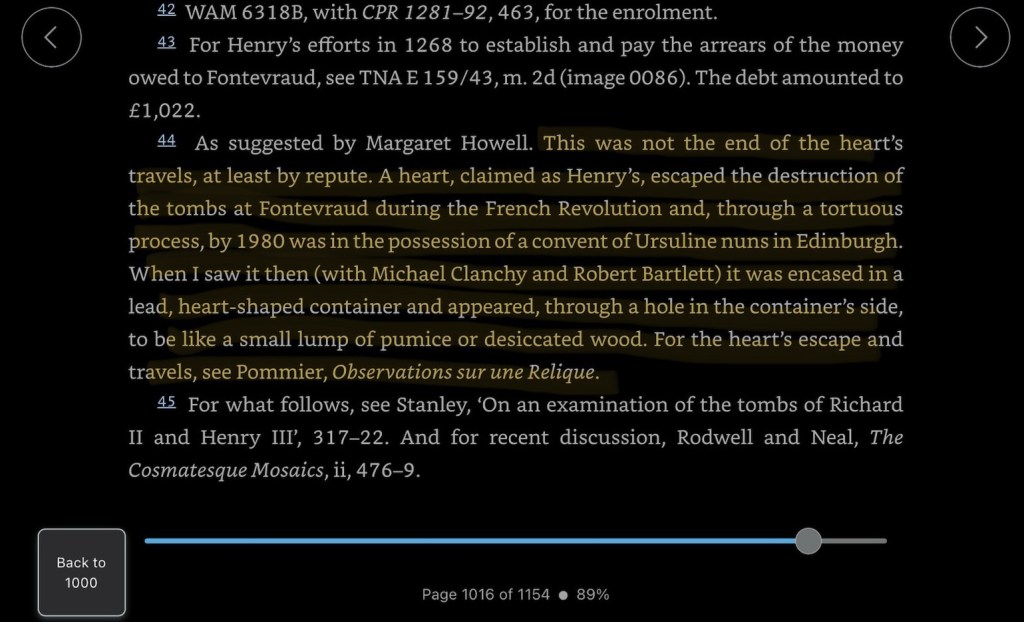
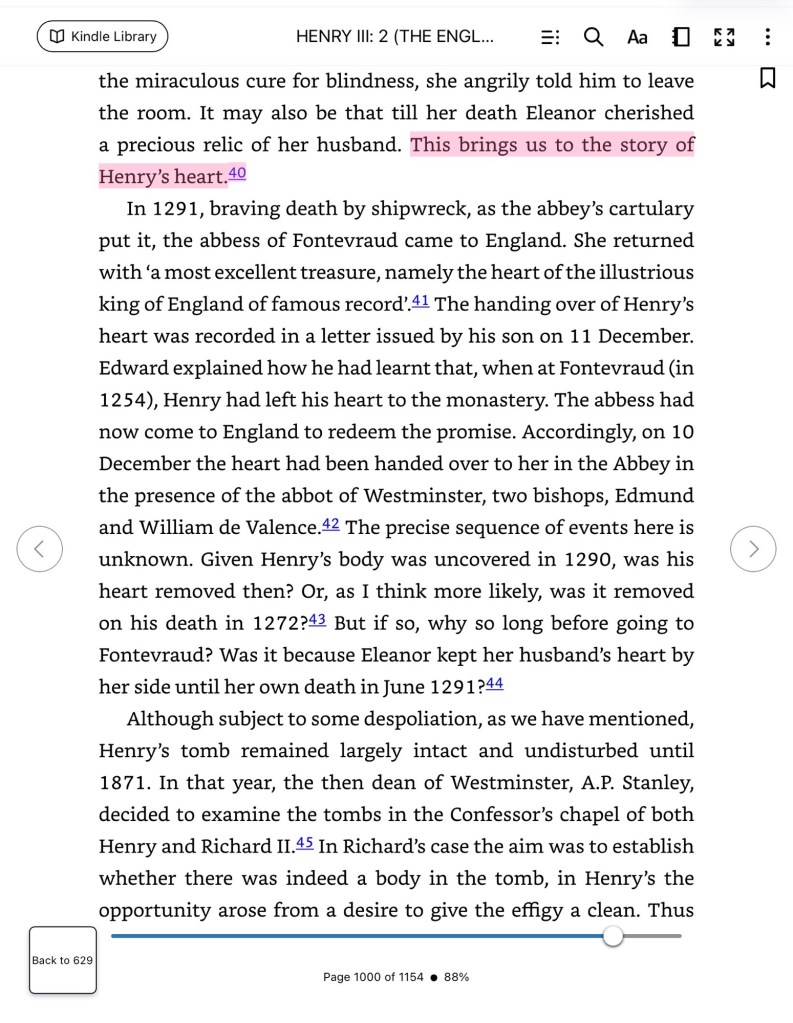
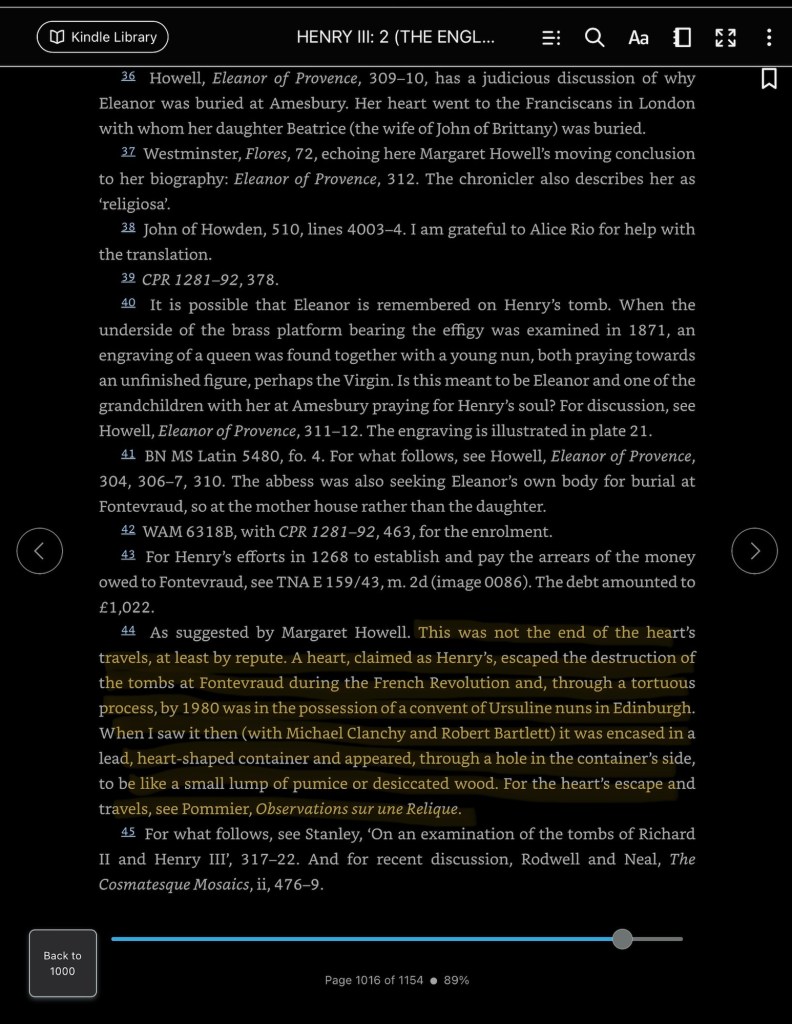
I about fell out of my chair. Actually what I did was jump up and down and do a little dance of joy. He had SEEN THE HEART! And of course, the first thing I did was buy that book! However, on Kindle, the pages are different. After hours of reading and searching, I finally found his reference on page 1016. So again, it seems that all roads lead back to Mr Pommier.
From Henry III: Reform, Rebellion, Civil War, Settlement, 1258-1272 (Volume 2)
And now we get to the hilariously improbable part of the story of a rank amateur who speaks not a word of French, trying to find an obscure, undigitized essay in a 110 year old academic journal.
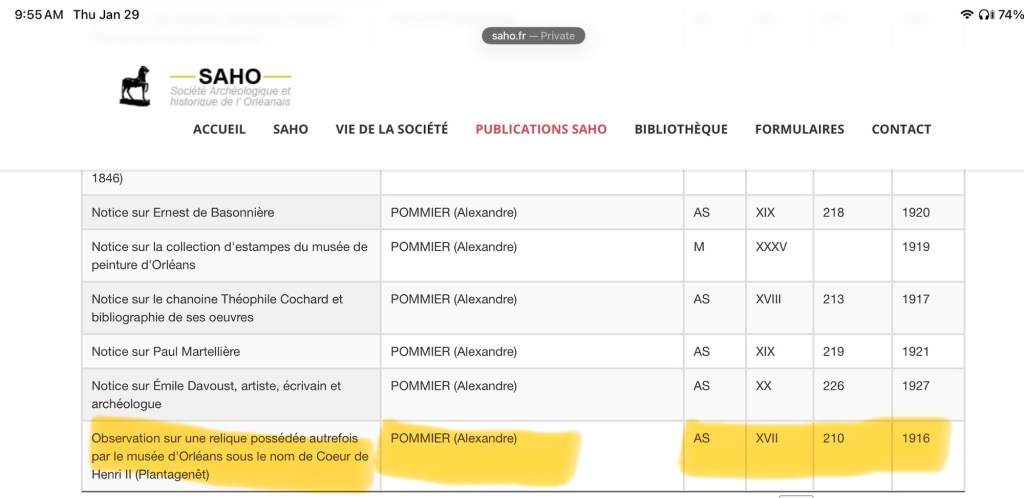
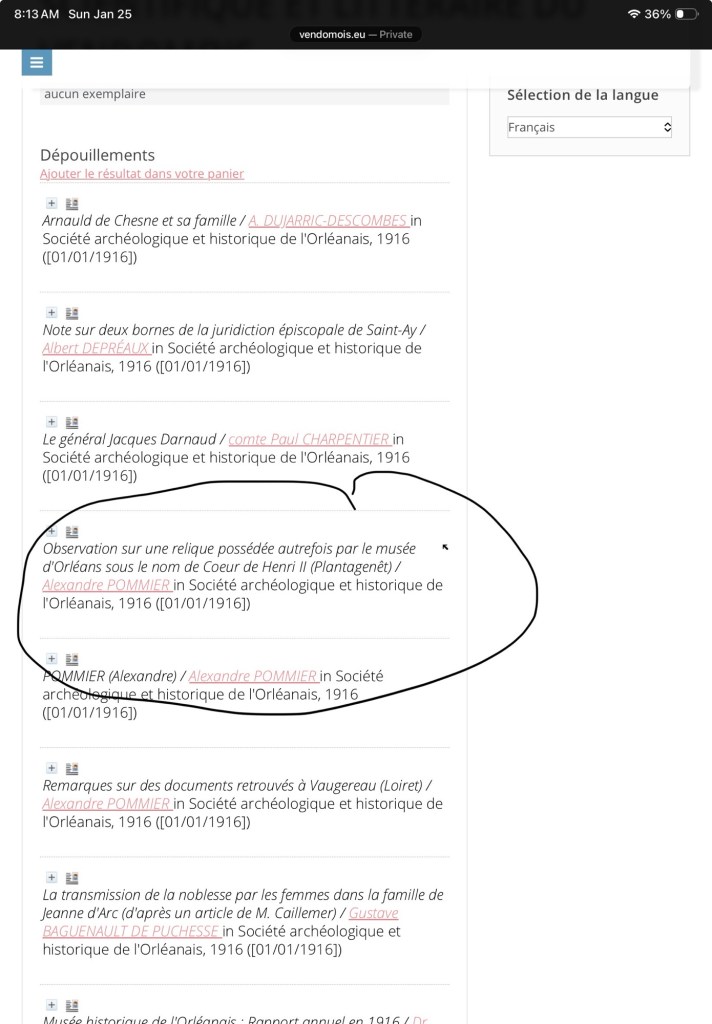
Looking up Alexander Pommier immediately brings up images and entries of a variety of apple! That was fun. I’m not particularly tech savvy, so it took me a while to figure out how to avoid this. (Please bear in mind that I don’t have a computer. I’m doing this all on my ipad) But I eventually did, and I found the article, as a chapter of a journal, on a website where you can order academic papers. But this one is not digitized. I emailed anyway, and got no answer.
I eventually found it on a different website. But my weird ass brain gets so fatigued with trying to translate websites. It goes beyond using Deepl, but words mean different things. I don’t know why but I guess my brain just doesn’t work this way and it shuts down. So I can only do it for so long before I crash. I just couldn’t, for the life of me, figure out how to access this document.
Finally, I emailed my French Airbnb host, Edgar. He loves books and philosophy and I asked if he could help me. After a couple of days he found out what I needed to know, and had an email address for me! So I sent off my request:
Good morning,
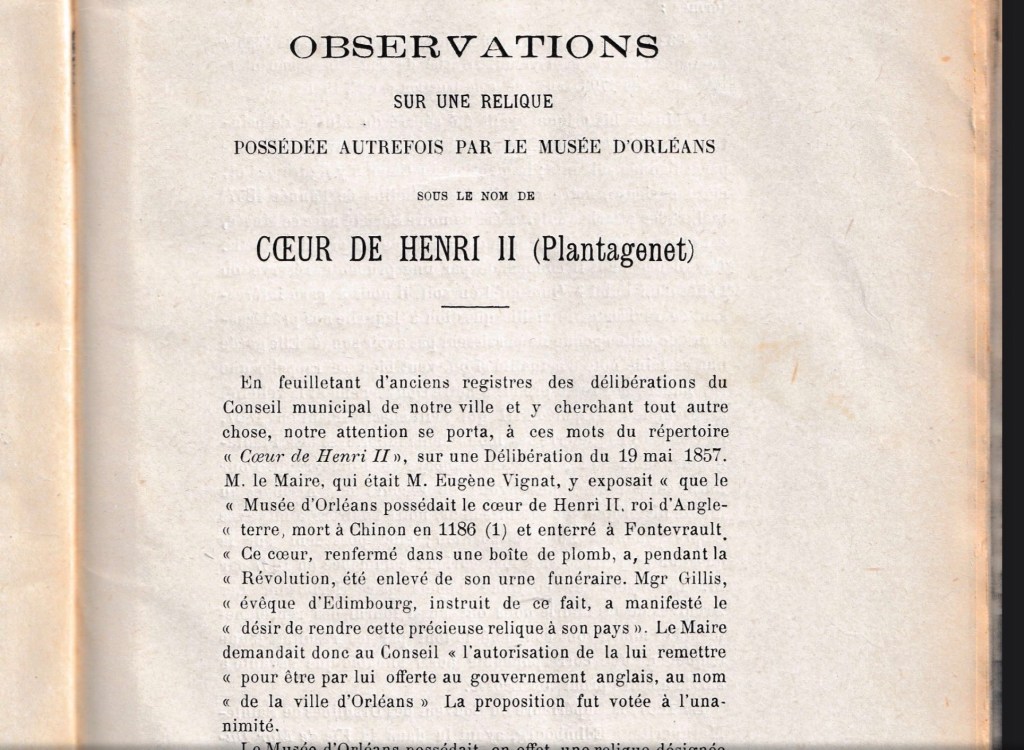
I am sorry that I don’t speak French. Please accept my apologies.I am looking for an article by Pommier Alexandre, published in 1916 entitled Observation on a relic formerly owned by the Orléans museum under the name of the Heart of Henry III(Plantagenet) I understand it might be in your archives. Is there a way to read it? I understand it may not be digitized.
I would very much appreciate any help you can provide. I am not a scholar, just an amateur trying to research the story of the heart of Henry III.
Thank you so much.
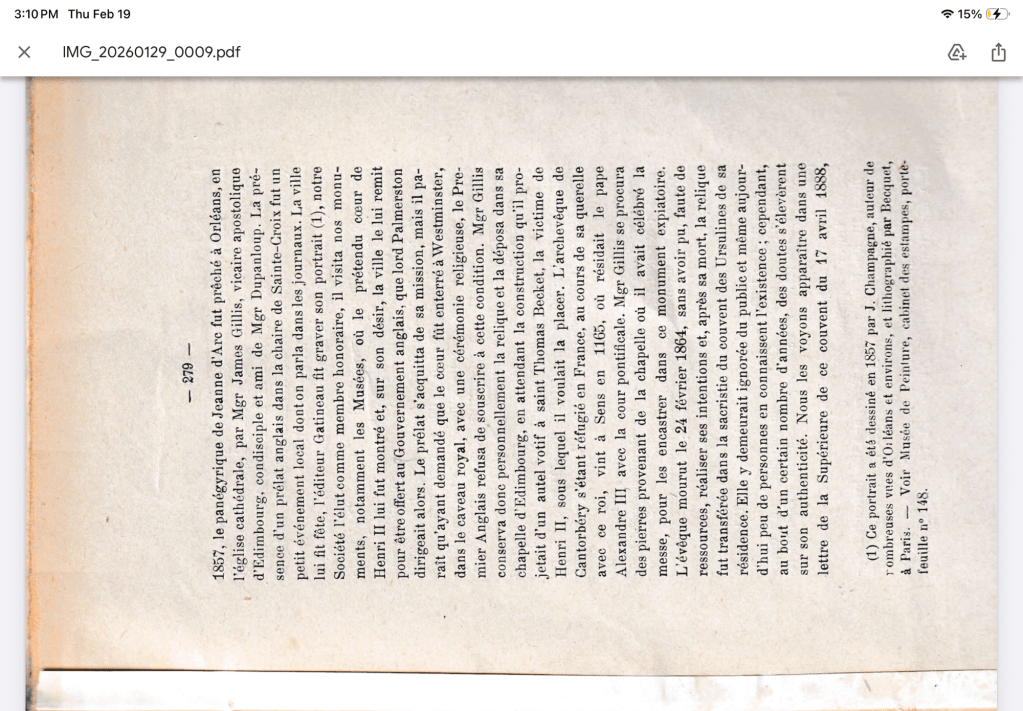
Four days later I got a reply. This gentle lady, the Librarian of the Societe Archeologique, Scientifique et Litteraire du Vendomois, emailed me a kind note, with photographs of the requested pages. That a professional took time out of her day to find this publication and personally take scan 10 pages to send to a nobody– Wow! I still cannot get over the generosity of this woman!
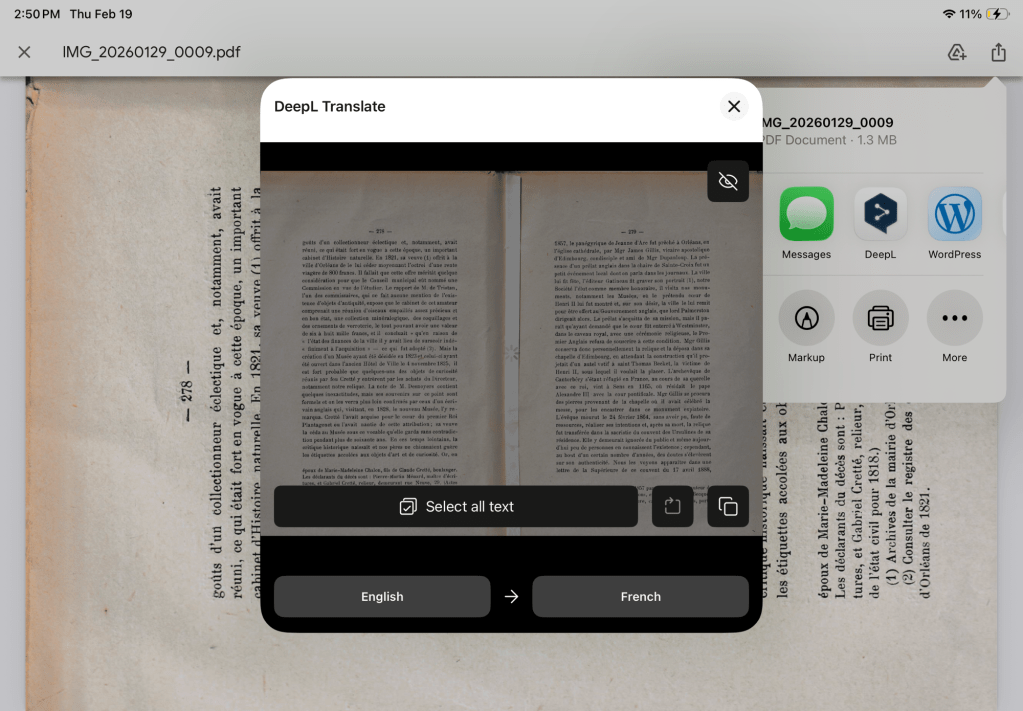
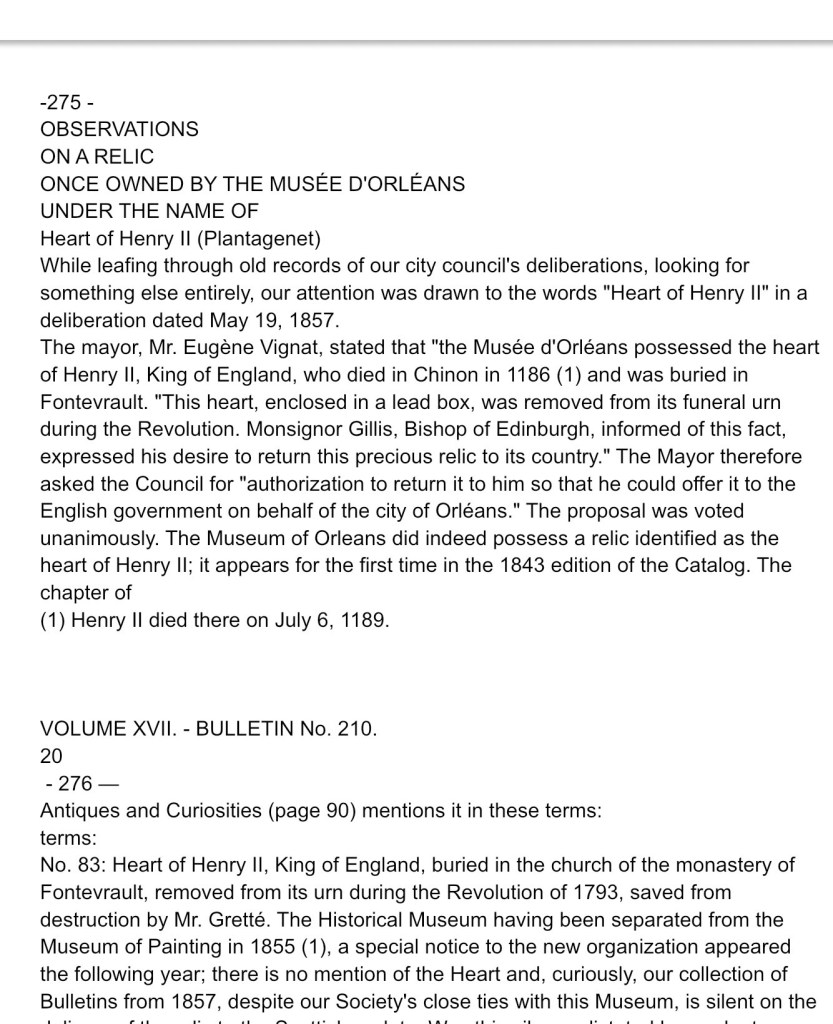
Now all I had to do is use Deepl to translate the photographs, save the text and paste it into a google doc, then edit to create a cohesive form. After several attempts, I got a lot better at it. Then it beagn the reading, taking notes, and whittling it all down.
After this adventure in finding documents, I began tracking down other works cited within the footnotes of both of these sources. The scope grew and expanded. I was able to find 3 additional sources, and each one added a few details or color to the account of Pommier.
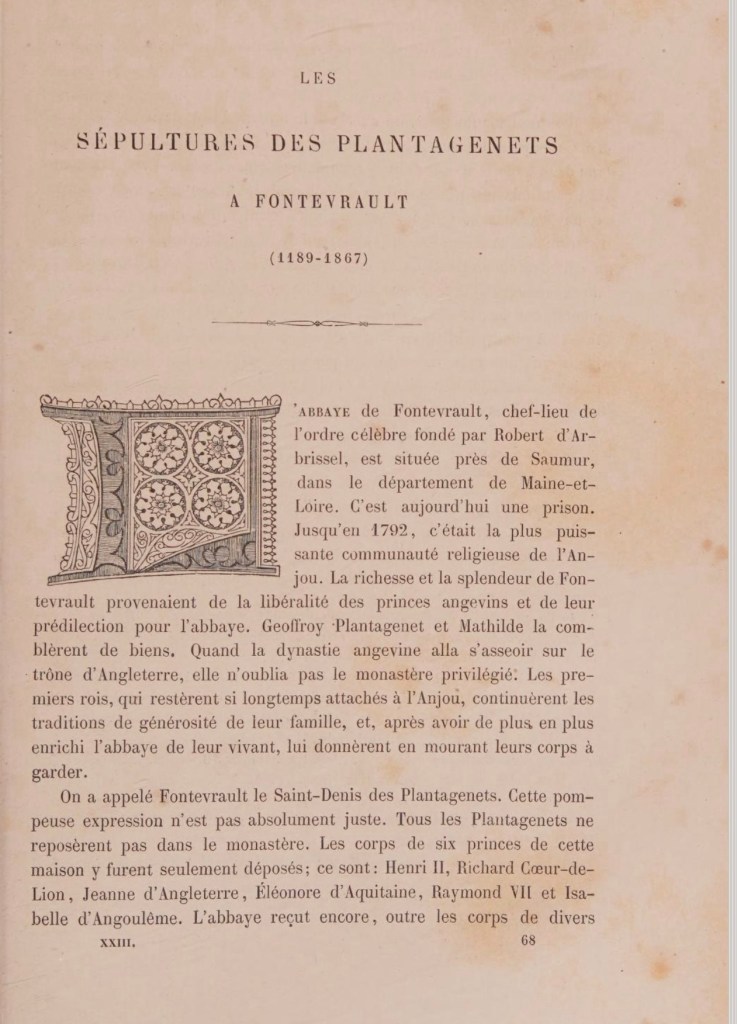
I am still on the hunt for any kind of sketch or lithograph of the actual tombs at Fontevraud before they were ransacked, and especially of the two missing effigies. So far I haven’t found any before the 1800’s.
The articles can be confusing because all along, this heart was assumed to be the heart of Henry II. Finally I remembered that an Abbess in Edinburgh began to suspect that it did not belong to Henry II and enlisted some historians to find out. The consensus was that it indeed belonged to his grandson. (See my previous post, part 1, for details) I went back and reread everything with a much clearer head.
I took almost a whole notebook full of notes. Cross checked and correlated. I eventually boiled the story down, trying not to make it too long but also not leaving out important details. After about 8 revisions, it was ready to publish!
Henry III not Henry II!
Living in this area so full of a history that I have a personal interest in has been exciting and intriguing. For people who live here and grew up here, it’s just their countryside, not really anything super noteworthy. I can understand that, but wow, this is a dream of a lifetime, a dream that I really didn’t even realize until I’m right smack in the middle of it!
Funny how things work like that…. Thanks for reading!
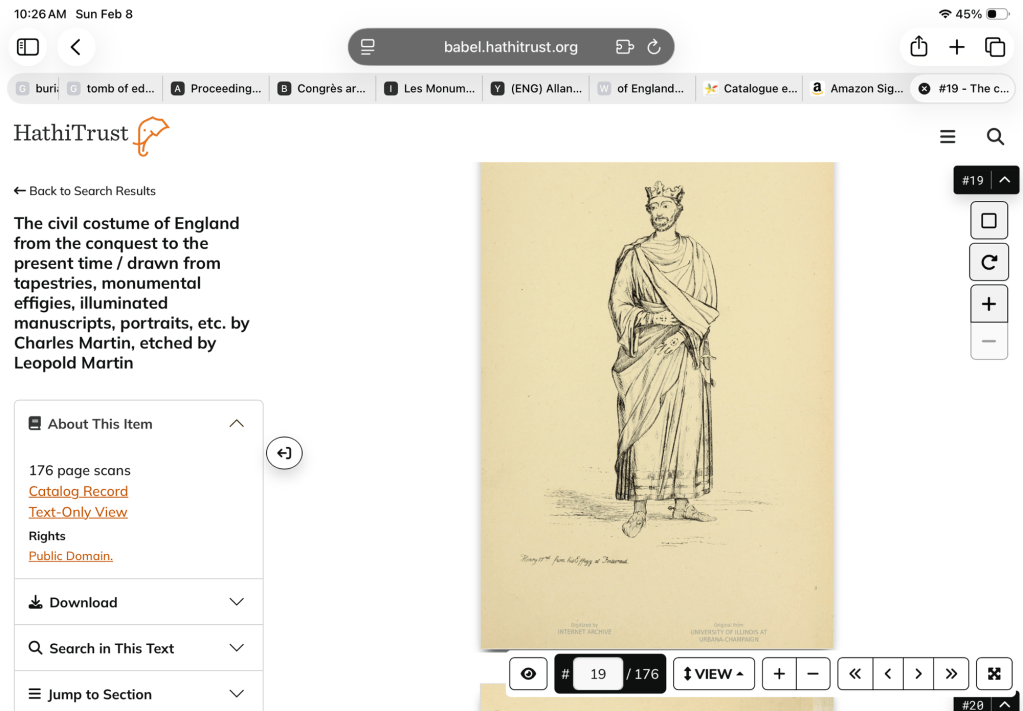
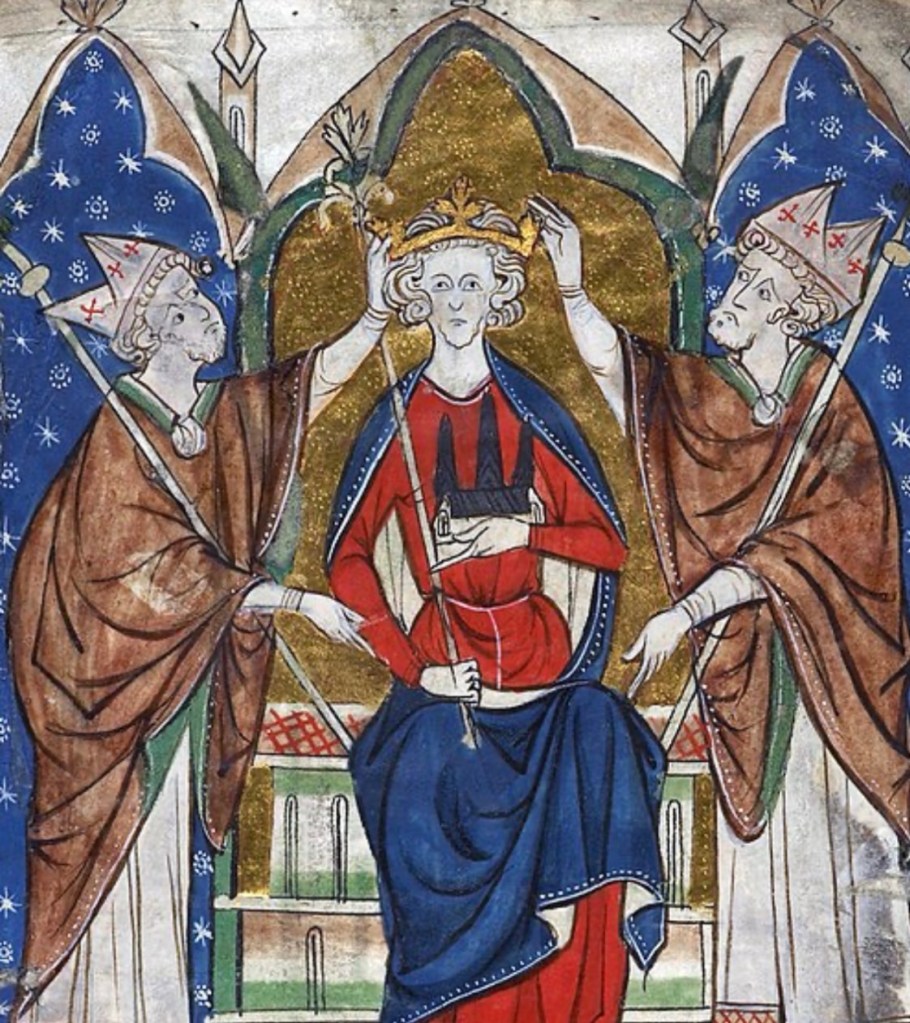
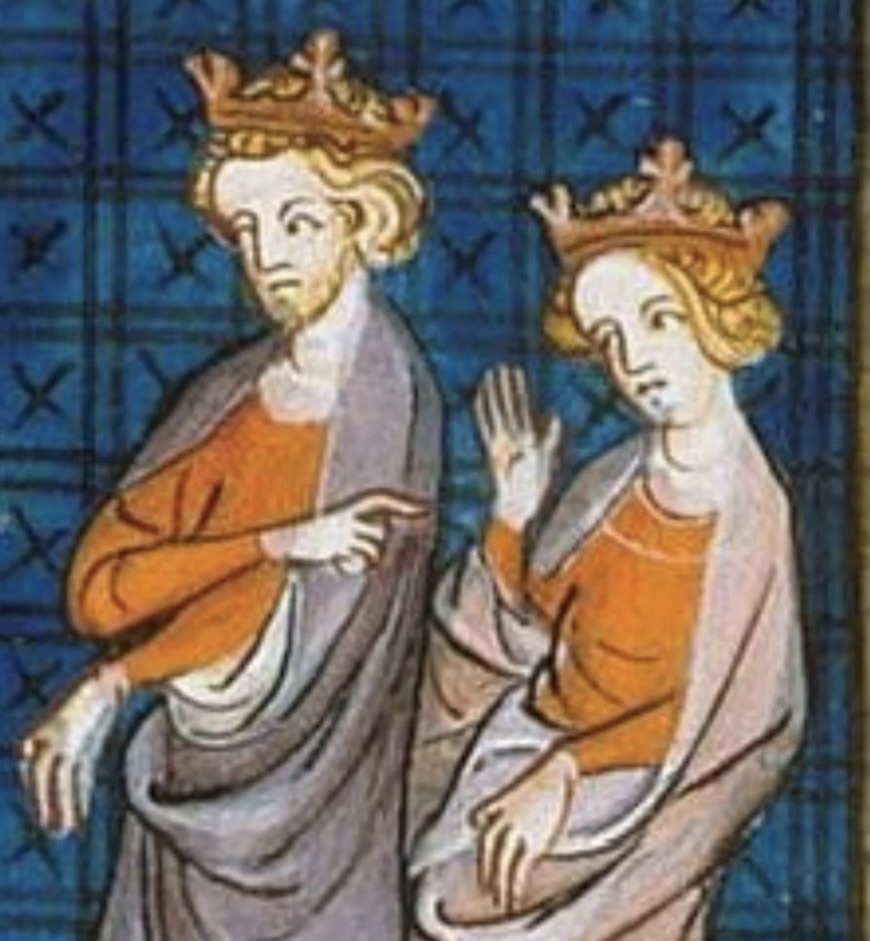
Henry II, King of England, Lord of Ireland and Duke of Aquitaine, 1216-1272. He descended from the line of the great Viking Rollo, Count of Rouen, and William the Conqueror through his great grandmother, Empress Mathilda, and a Plantagenet from his great grandfather Geoffrey, Count of Anjou. He was the grandson pf Henry II and Eleanor of Aquitaine, portrayed in the 1068 film, The Lion in Winter. During his reign, he spent less time in France than had been the tradition of his predecessors due to his father having lost their territory. He strove to live a pious life even though he was capable of immense cruelty and antisemitism. His greatest architectural achievement was the construction of Westminster Abbey and the magnificent tomb of his patron saint, Edward the Confessor.
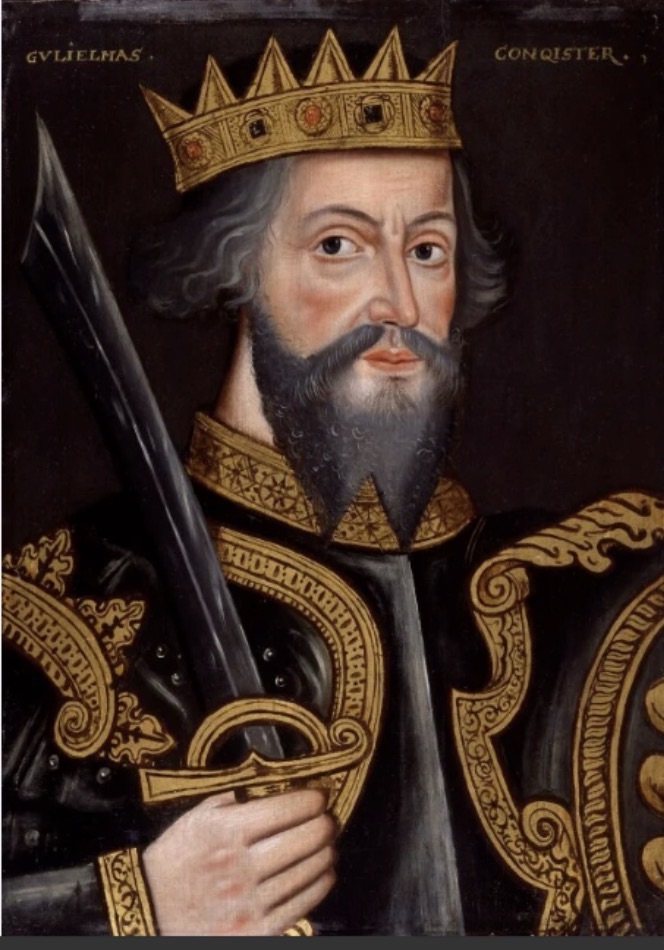
Rollo Duke of NormandyWilliam the Conqueror Henry II & Eleanor of Aquitaine
Nonetheless, Henry retained a deep fondness for Normandy, the land of his grandparents and had visited their tombs at Fontevraud Abbey, where his mother had spent her last years and was also buried. Upon his death, he had asked for his body to be buried in Westminster Abbey and for his heart to be buried alongside his family in France. Unfortunately, his heart is not there.
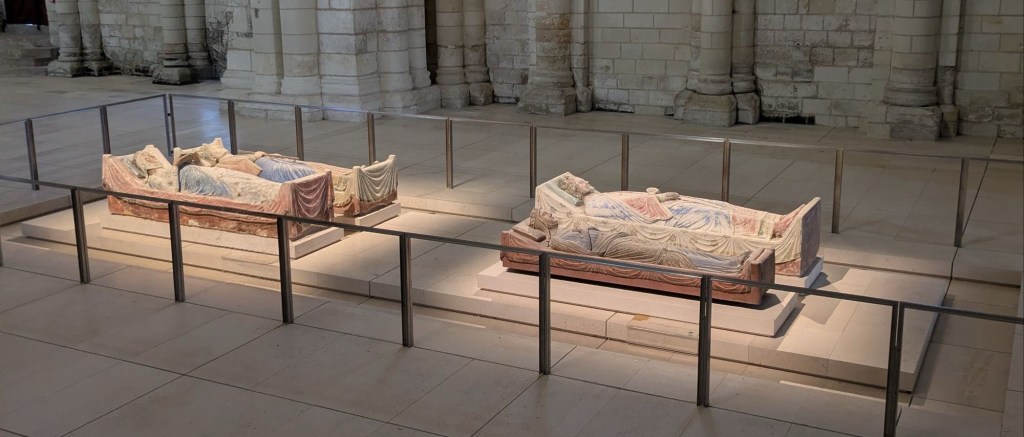
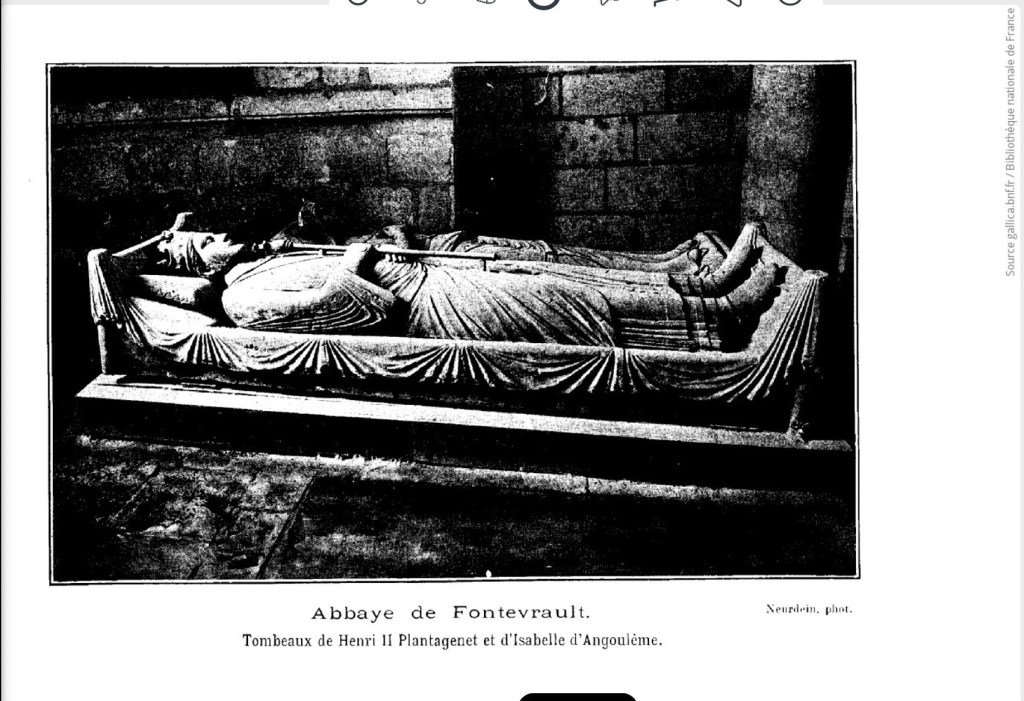
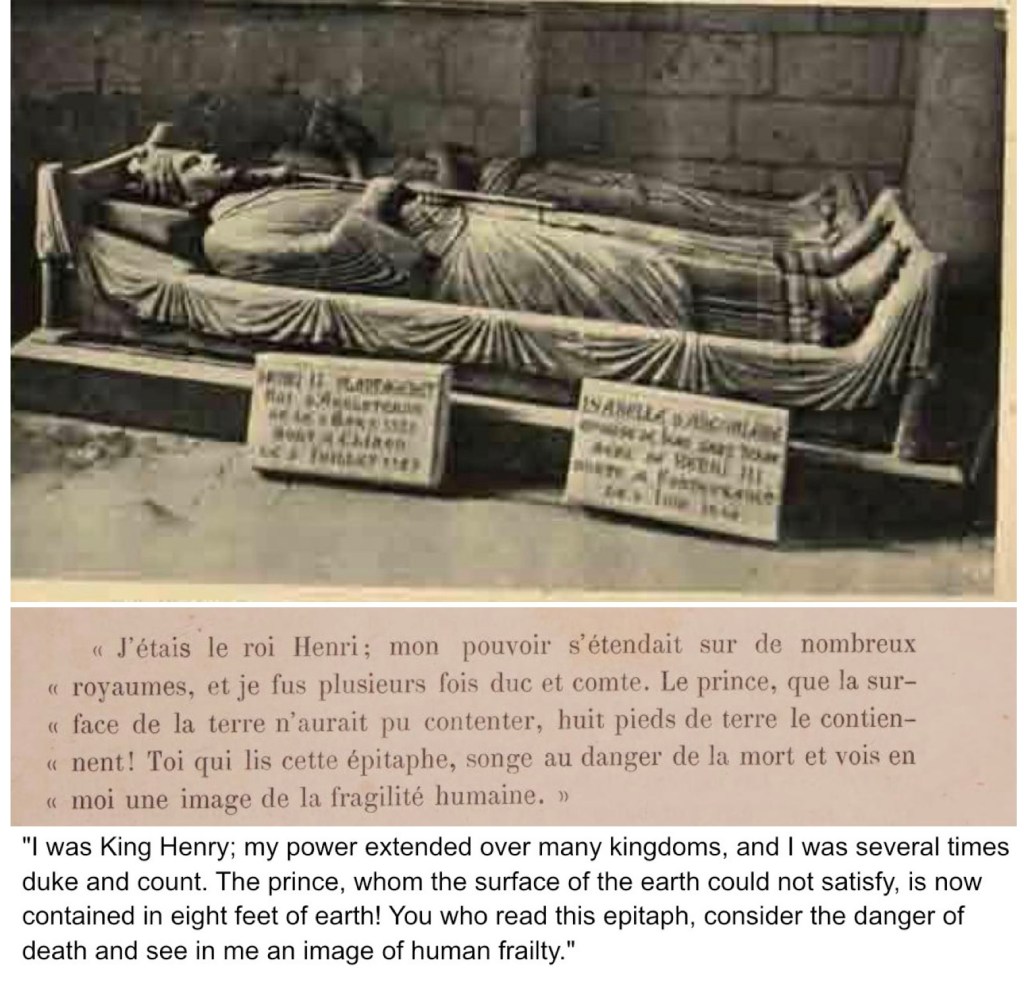
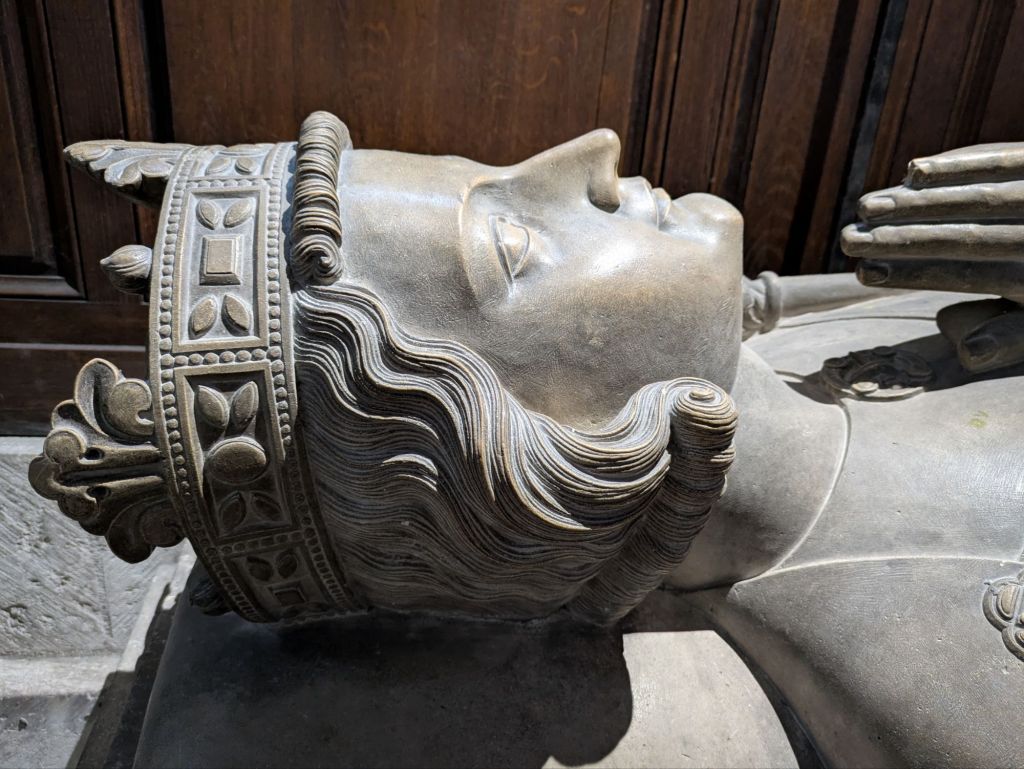
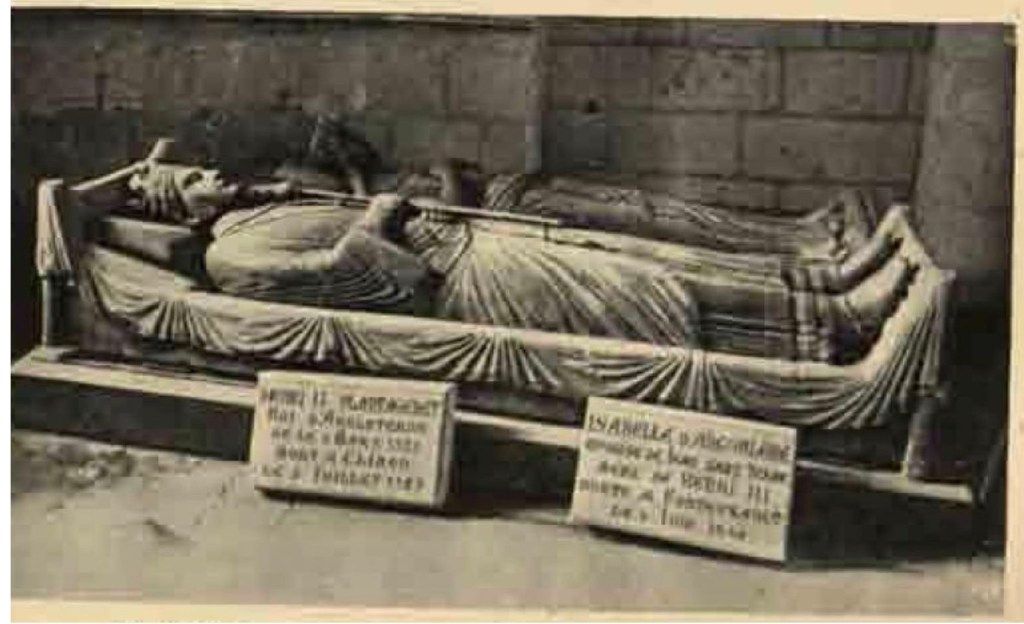
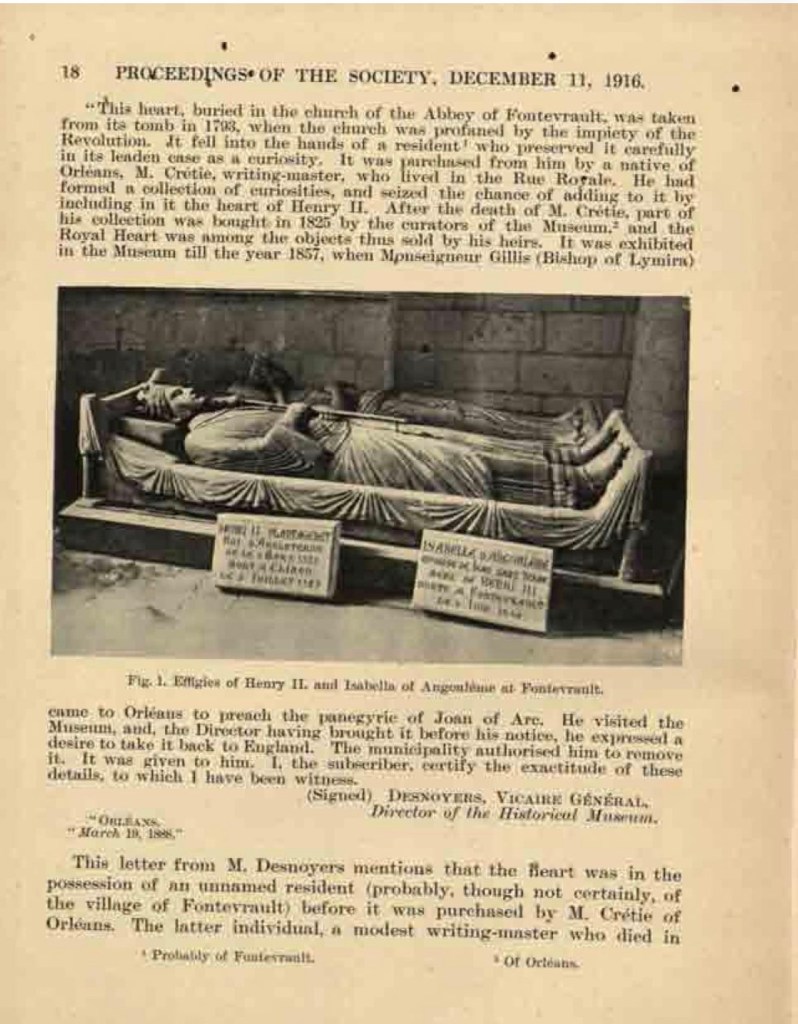
The effigies of Henry II and Isabelle of Angoulême at Fontevraud Abbey, from the publication of the Scottish Society of Antiquities
The story of his wayward heart actually begins in the months before his death. Seriously ill, he must have realized his time was near, and he began to make arrangements for his burial. That included how to dress his body, what to place alongside him, and making sure his body and heart were buried in separate countries.
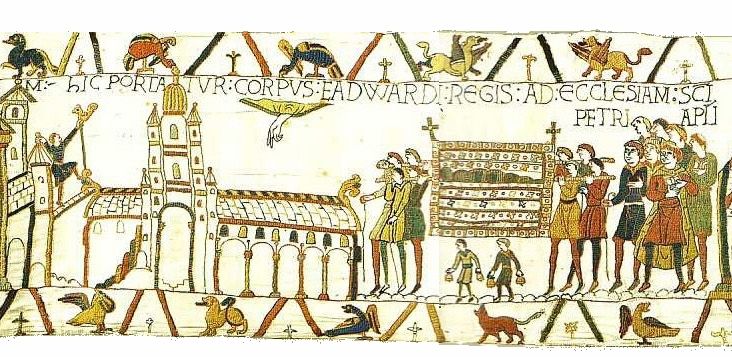
The burial of Edward the Confessor as portrayed in the Bayeux Tapestry
Henry was devoted to Saint Edward the Confessor, a King of England who ruled almost 200 years before. (Edward just happened to be the stepson of another great Viking, King Cnut.) Henry built Westminster Abbey on the very site of the Confessors original cathedral. He also erected a fancy new monument to the saint, and had Edwards body moved into it from its original tomb. Henry, ever chasing piety, held the idea to have himself buried in the saints original tomb.
When Henry died in 1272 he was buried according to his detailed instructions. Whether or not his heart was removed at this time is not documented. However, at some point it was indeed removed, encased in lead and placed into a golden urn.
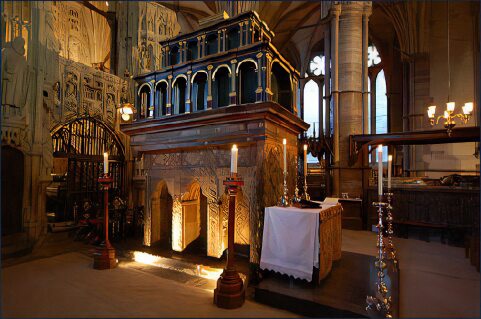
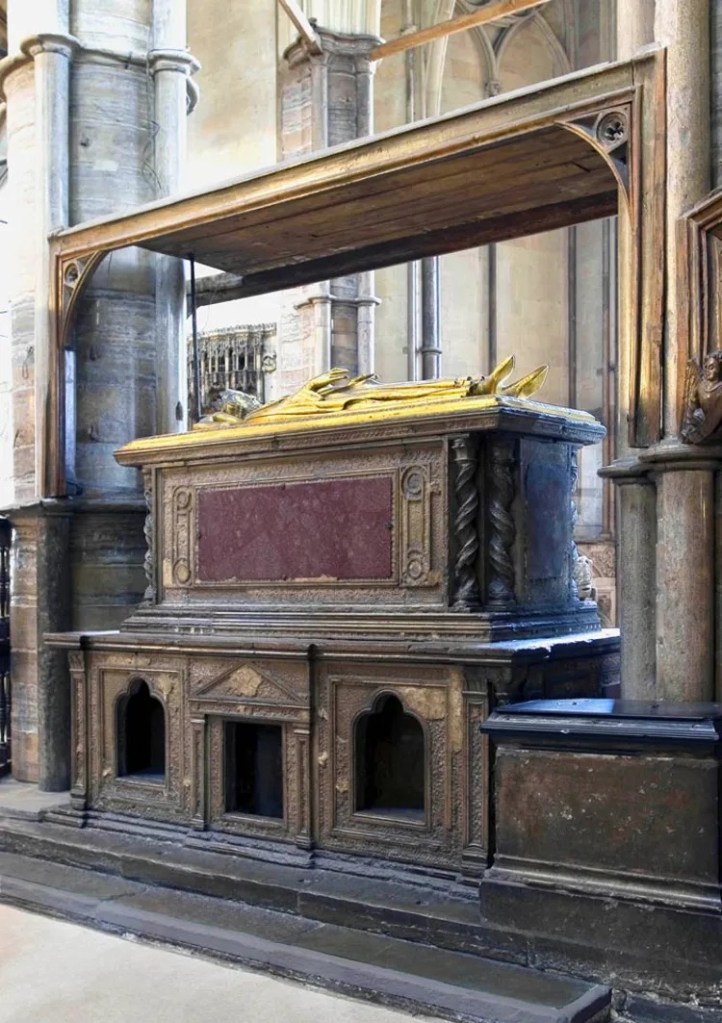
Tomb of Edward the Confessor, Westminster AbbeyTomb of Henry III, Westminster Abbey
Henry’s son and successor, Edward I eventually built a new, grand tomb for his father and had his body moved into it in 1290. At the time that the original tomb was opened, witnesses noted that Henry’s body had not decomposed, and that he had a long flowing beard which had continued to grow after death. Several miracles were reported among those in attendance and those visiting the new tomb afterwards. His devoted wife, Eleanor of Provence, hoped fervently that he would be canonized, like his hero Edward. That was not to come, but Eleanor remained loyal this hope for the rest of her life.
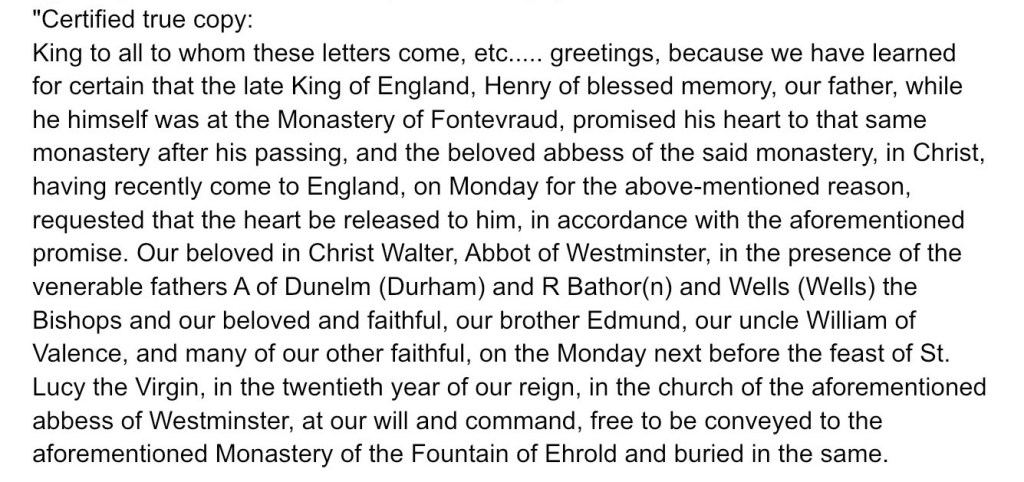
Again, we do not know exactly when Henrys heart was separated from his body, but in 1291 Edward, in a letter to his own son, acknowledged his father’s wishes. So maybe it was at this time that his heart was taken from his body? So far, no contemporary descriptions have been found.
Pommier Alexandre, Observations Sur UneRelique…
1272- Henry dies
1290- His body is moved by Edward (son)
1291, June- Eleanor of Provence (wife) dies
1291, Dec 3- Edward wrote of the heart request
1291, December 10- Heart given to Abbess of Fontevraud
No matter if Henry’s heart was removed at the time of embalming, or at the exhumation 18 years later… where was it kept in the meantime? David Carpenter, imminent scholar of Henry III, interestingly surmises that it would have been in keeping with his wife’s character, if Eleanor would have kept it close until her death. Perhaps that is why it became available to Edward to finally pass it on the the Abbess of Fontevraud the very same year as her death, and he could finally have his father’s wishes fulfilled.
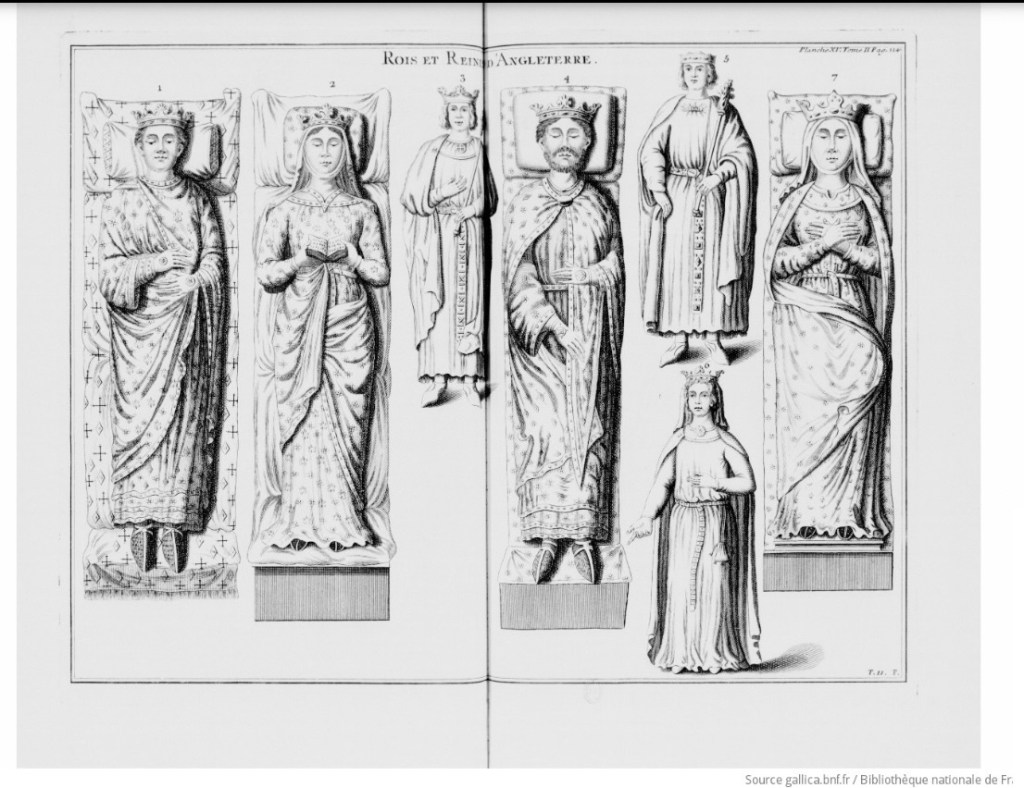
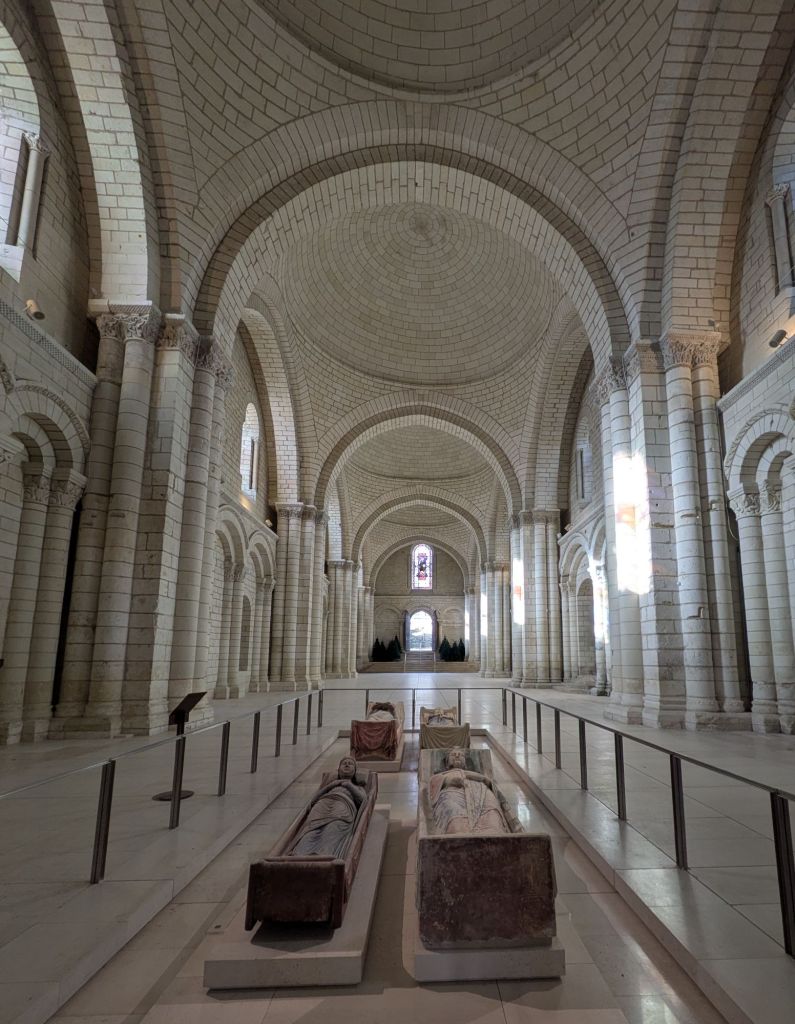
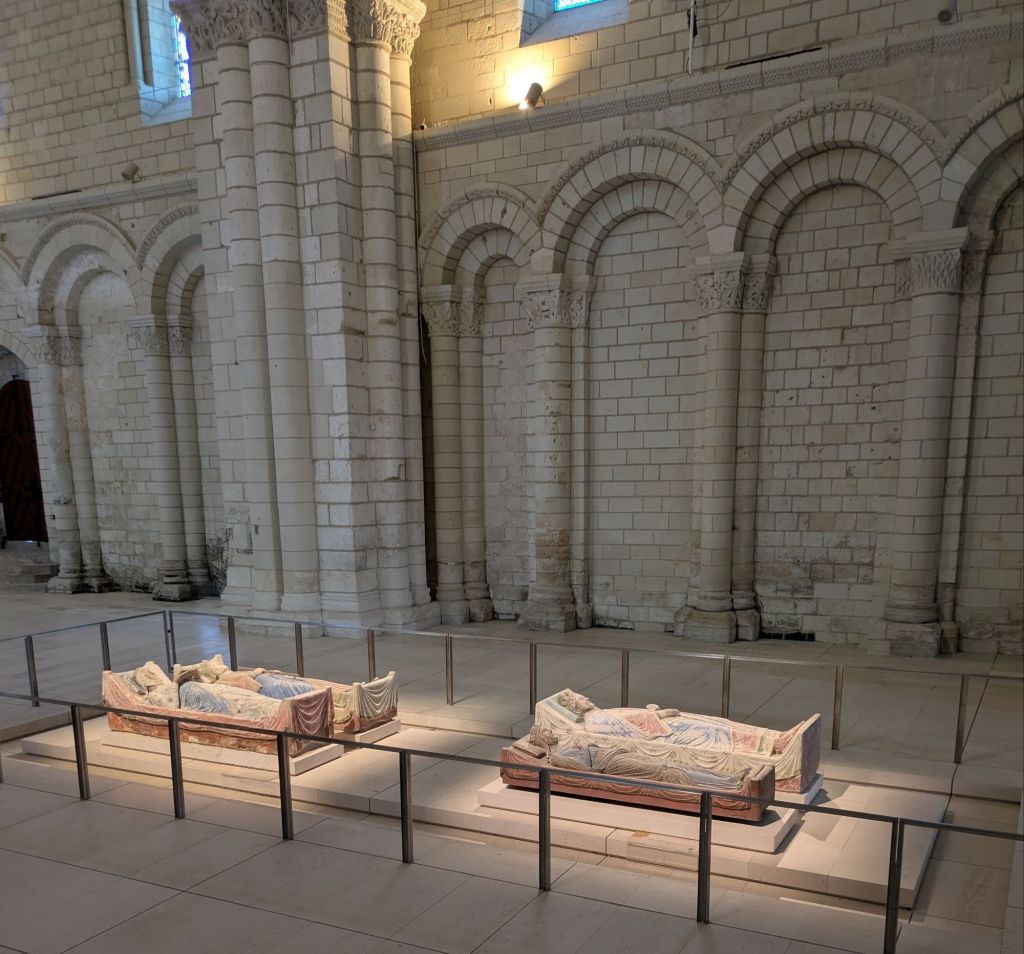
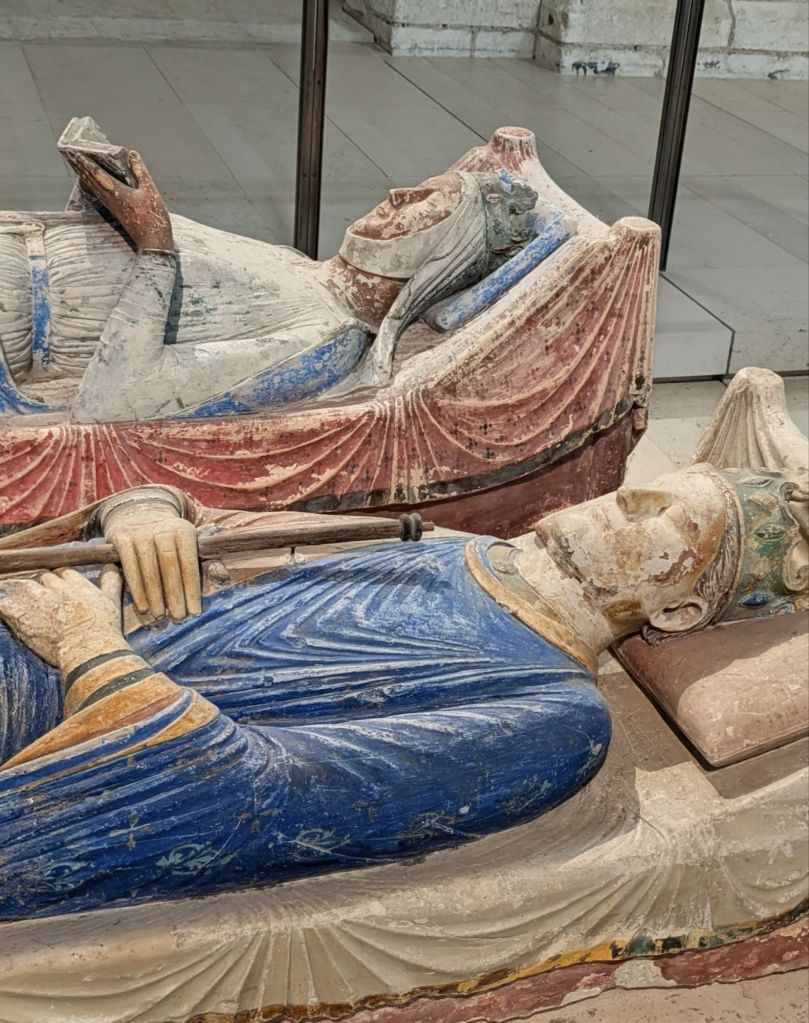
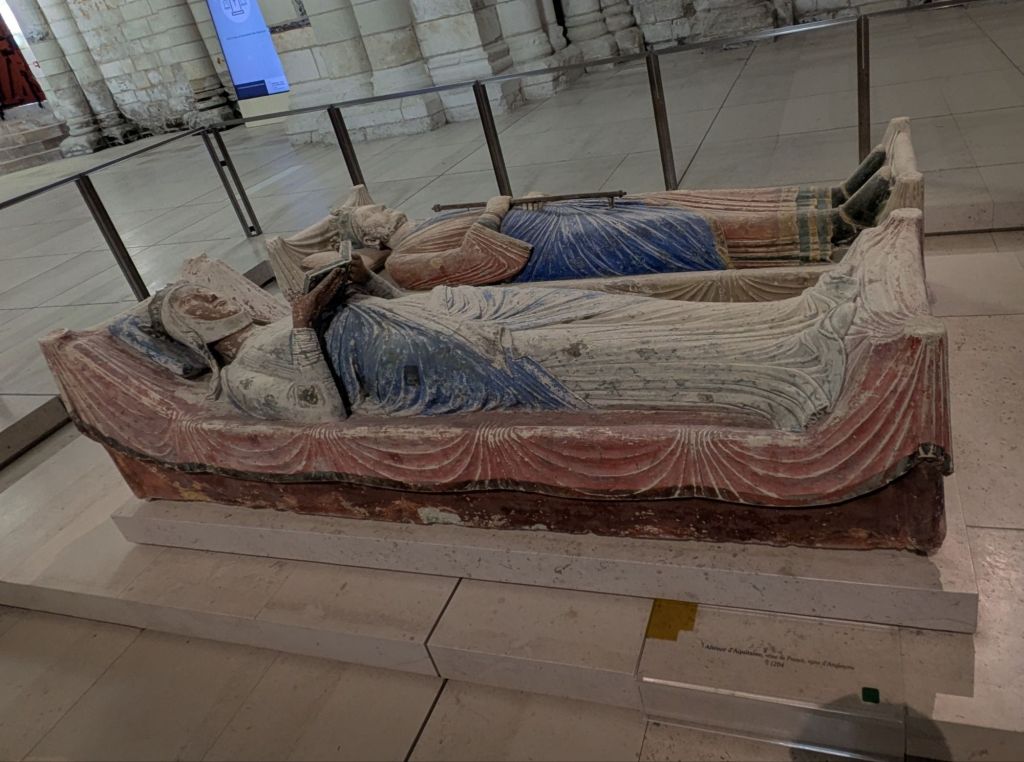
The effigies of Henry II, Eleanor of Aquitaine, Richard Lionheart, Isabelle of Anguolême at Fontevraud Abbey. Their remains are no longer present, having been scattered after the Revolution.
The story of Henry’s heart does not end here. During my recent visit to Fontevraud Abbey, no one seemed to be aware of the hearts fate. In fact, I found out that over the years, the bodies and tombs have been relocated or raided several times:
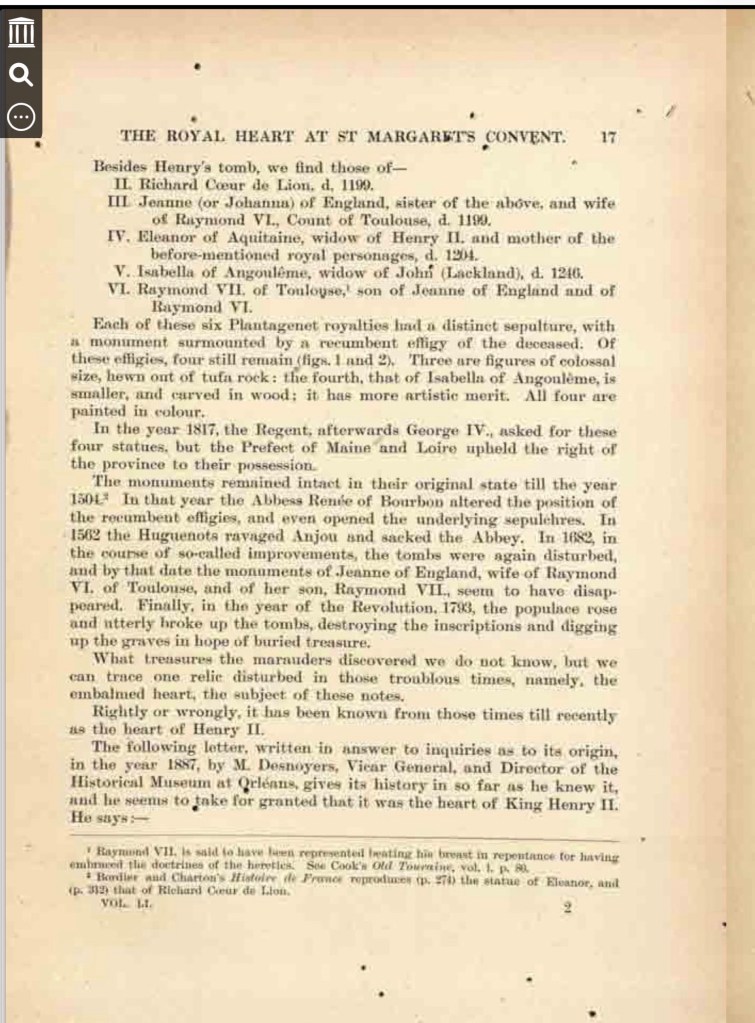
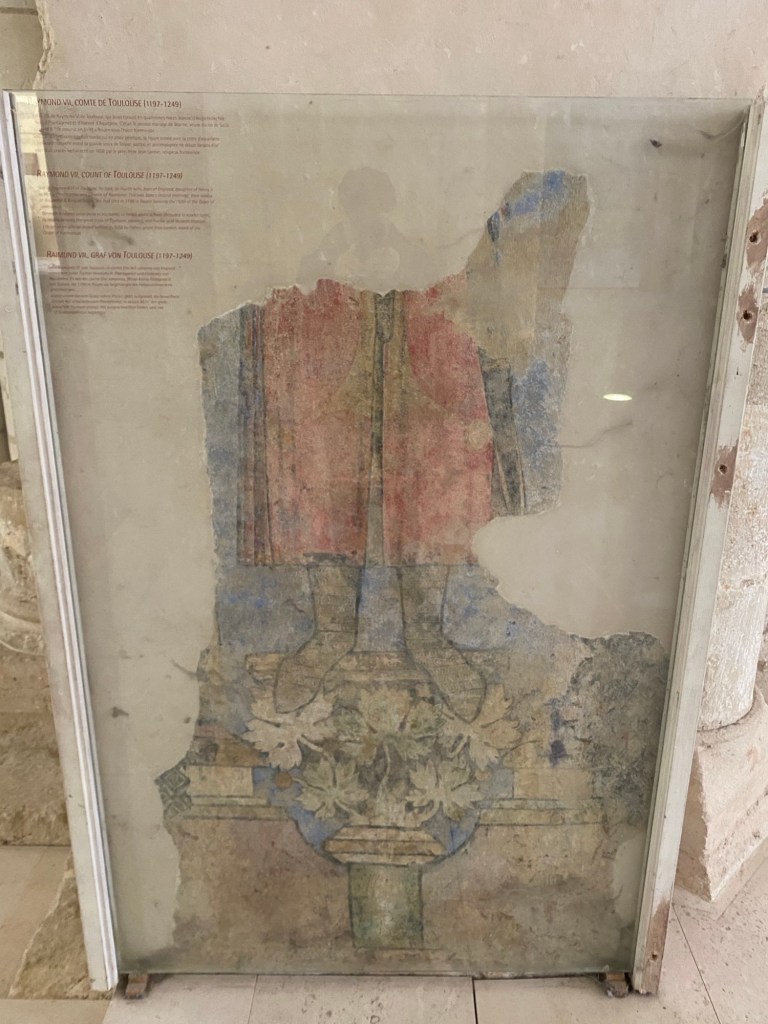
In 1504, the Abbess moved both tombs and bodies to new positions within the abbey church to accommodate renovations. In 1562, Huguenots raided the abbey and possibly looted the tombs. At the time of another renovation in 1638, the effigies of Joan and her son Raymond were already missing. Whatever human remains were left were moved into a common grave and the surviving 4 effigies moved atop them. Was the golden urn among the bones? It wasn’t mentioned in the accounts. I wonder if they had totally forgotten about it by then.
The final insult came in 1793 when revolutionary mobs ransacked the cathedral. According to one account, the bones were dumped into a nearby river. Another account says that the monks reburied the bones in a secret location. However, according to an interview of one supposed witness, there were no bones or treasure to be found. The tombs were empty. Ot aeems that after this, the 4 effigies were moved to an underground crypt and forgotten.
Regardless of which of these accounts is true, it seems to be the consensus that in 1793 the urn was somehow discovered, the gold looted, and the unmarked lead container with the heart inside taken by a local resident. Ot was then sold to a scribe in Orleans, a Mr. Cretté, who kept a collected curiosities.
From Alexandre, Pommier Observations sur une relique…
As to what happened to the effigies: the abbey was deconsecrated in 1804 and became a prison for the next 130 years. During necessary renovations, the effigies were rediscovered lying in the crypt. As the church was now used for prisoner activities, the effigies were offered to England, but somehow the deal fell through. The effigies were taken to Versailles for a number of years, before returning to Fontevraud to be displayed in the church once again.
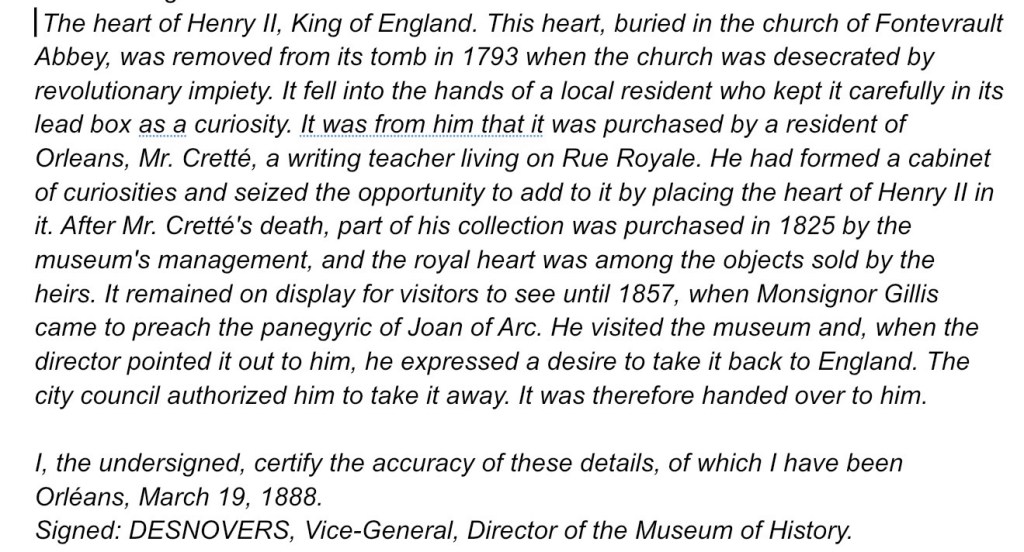
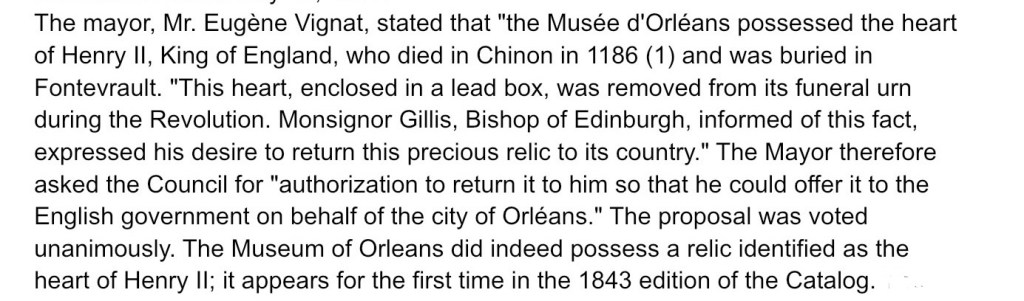
Back to the story of the heart: Upon the death of Mr. Cretté in 1881, his widow offered the heart to the City of Orleans in exchange for a lifetime pension. It took them about 4 years to decide to purchase it and in 1884 the heart came to reside in the City’s newly built museum.
Then, in 1857, the Archbishop Gillis from Edinburgh happened to come to the museum to deliver a tributary speech about Joan of Arc. In the process of a welcoming tour, he was shown the heart and expressed his desire to return it to England. He came up with the idea to bury Henry’s heart at the feet of a new memorial he was constructing to honor Thomas Beckett, the very man who Henry had murdered so centuries ago. The archbishop unfortunately died before being able to fulfill his dream, and the heart was taken into custody of the Ursuline nuns in Edinburgh.
Pommier Alexandre, Observations Sur une relique…
Author David Carpenter, the preeminent expert on Henry III, write to me the he saw the heart there in 1982. And there, as far as anyone knows, it remains.
In these sources, you may notice that the heart is quite often referred to as belonging to Henry II. It was sold to Mr. Cretté as such, and continued to be referred to in this way for 60 years. It was an Abbess in Edinburgh who became suspicious of the designation. In 1888, she wrote that she had conferred with several top scholars and they all concluded that it was the heart of Henry III. What is the evidence of this? The burial of Henry II is well documented, and although the accounts differ wildly, none mention the removal of his heart, and they all agree that he was buried swiftly at Fontevraud Abbey. If his heart had been removed, one can assume that it would have been sent somewhere else, and not simply buried beside him. And so, since Henry III had asked that his heart be sent to France, and Edward acknowledged his wishes and saw the deed done, and it was found at the abbey where Edward said it was buried, these scholars all agreed that it does belong to the Third, and not the Second.
Note: In this account I have attempted to keep things concise, and therefore have omitted, admittedly, a lot of lengthy detail. For further reading please see the sources which I have relied on and quoted from. In addition, following this list, I will soon relay the exciting story of how I found all the supporting documents and all those who helped me out, especially in searching for early documents in French, which I do not speak. Thanks for hanging in with me on this journey! -AW
Sources:
David Carpenter, Henry III: Reform, Rebellion, Civil War, Settlement 1258-1272, The English Monarchs Series 2, Yale Press, 2023
Miss J. M. Hanna, Notes on the Royal Heart Preserved at the St Margaret’s Convent, Whitehouse Loan, Edinburgh, Proceedings of the Scotland Society of Antiquities, 1916
Pommier Alexandre, Observation sur une relique possédée autrefois par le musée d’Orléans sous le nom de Coeur de Henri II (Plantagenêt)in Société archéologique et historique de l’Orléanais, 1916
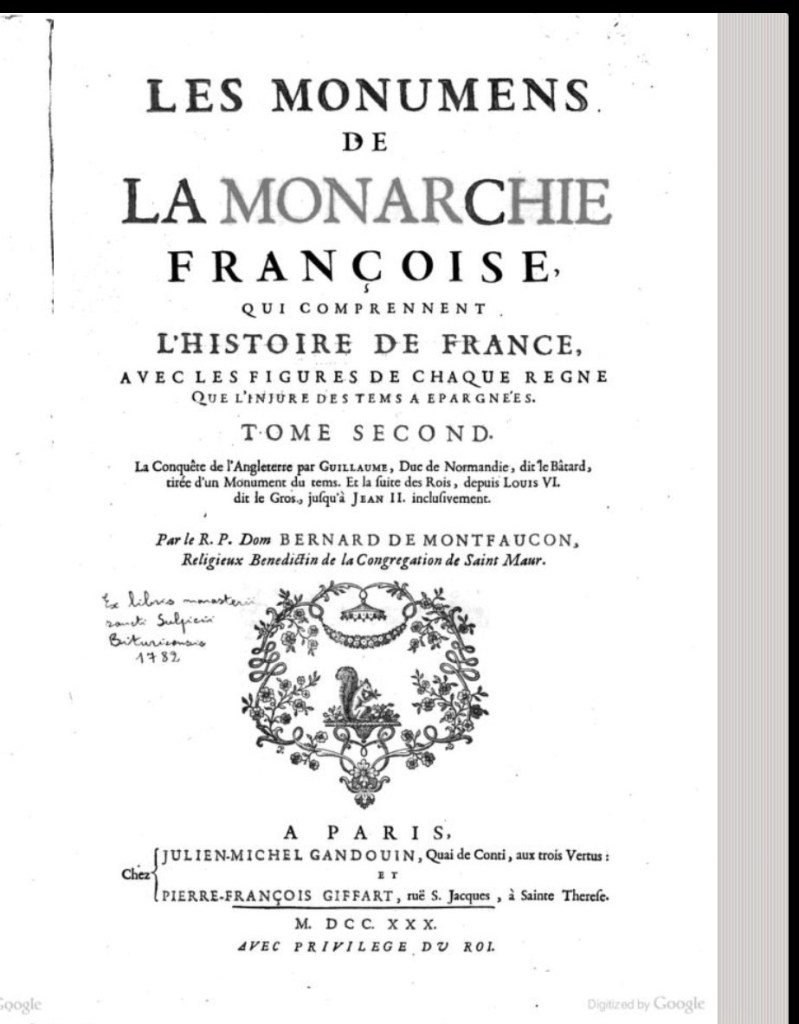
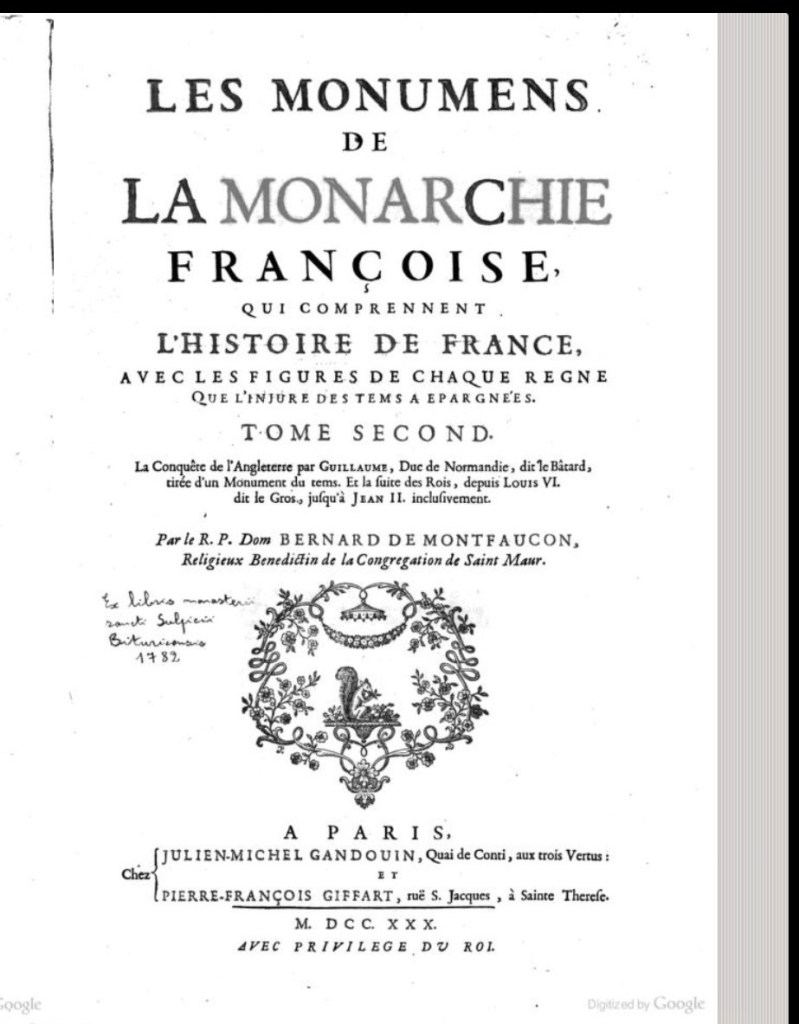
Montfaucon, Les Monuments de la Monarchie, volume II, 1820
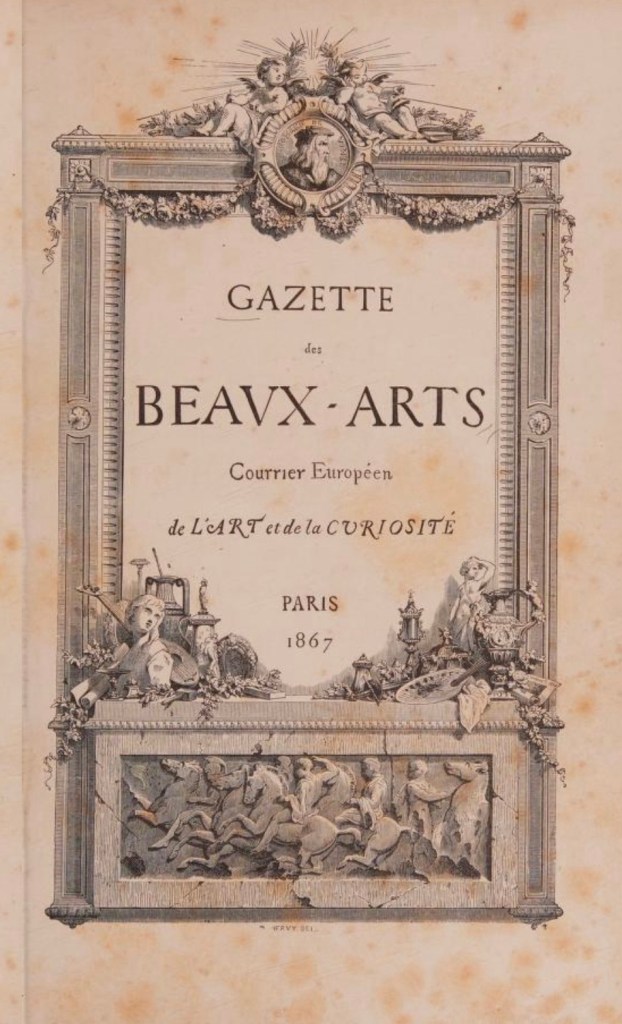
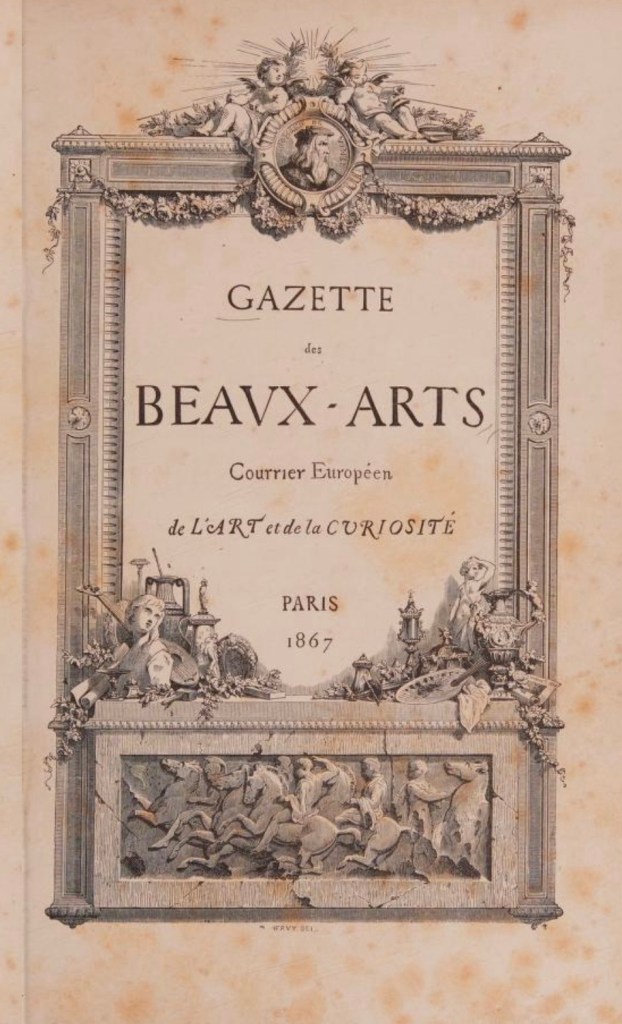
Louis Courajod, Gazette des Beaux-Arts, volume XXIII, 1867
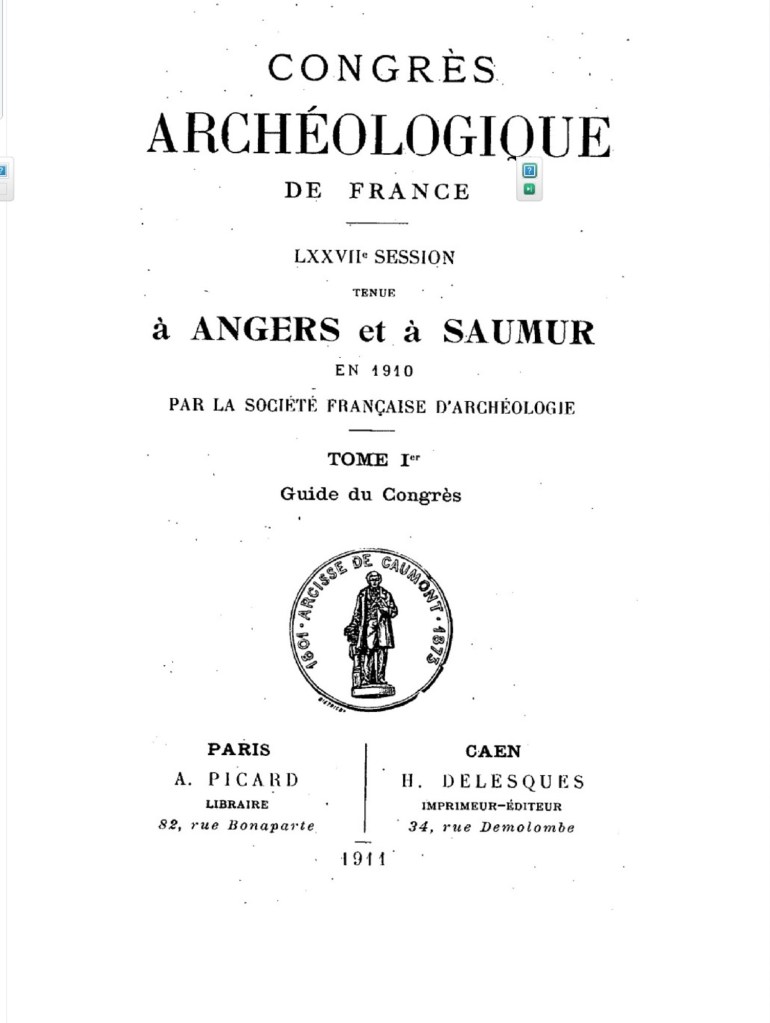
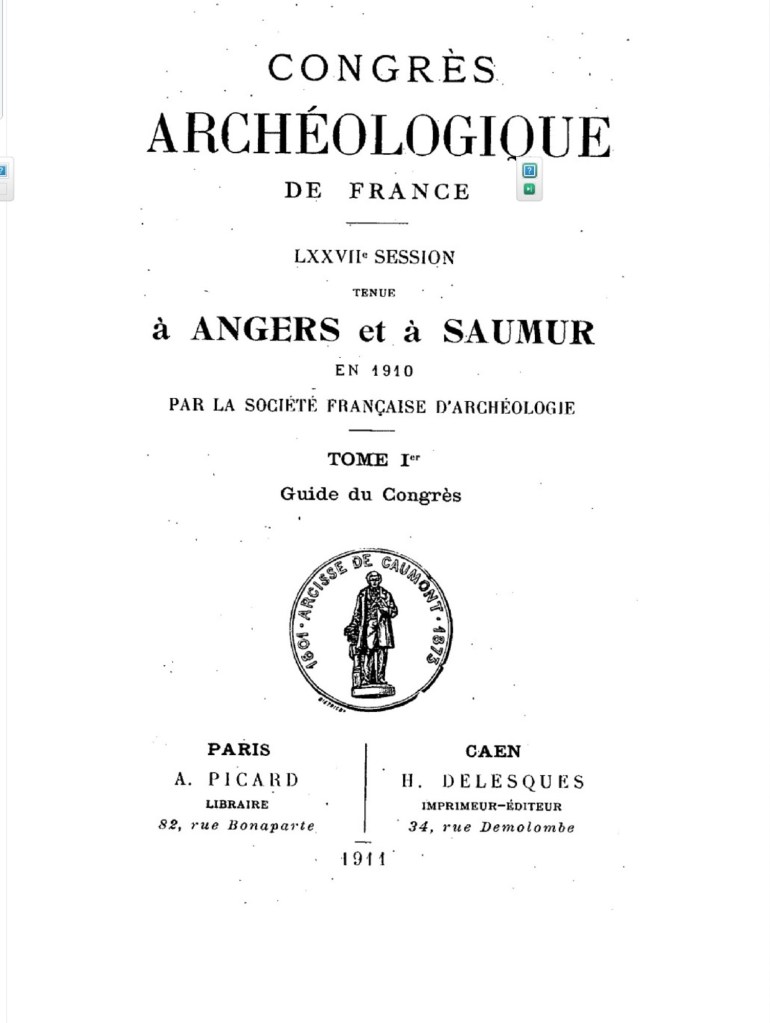
Journal of The Société Française d’Archéologie AngersandSaumur,1910
For more reading about the practice of separate burials, see:
Alison Meier, Bury My Heart Apart From Me: the history of heart burial, Atlas Obscura, 2014
As we pack up our lives once again and hit the road to Lille, we bid a warm adieu to the City of Nantes. Nantes is a lively and boisterous town, full of families on bikes and people who actually celebrate life.
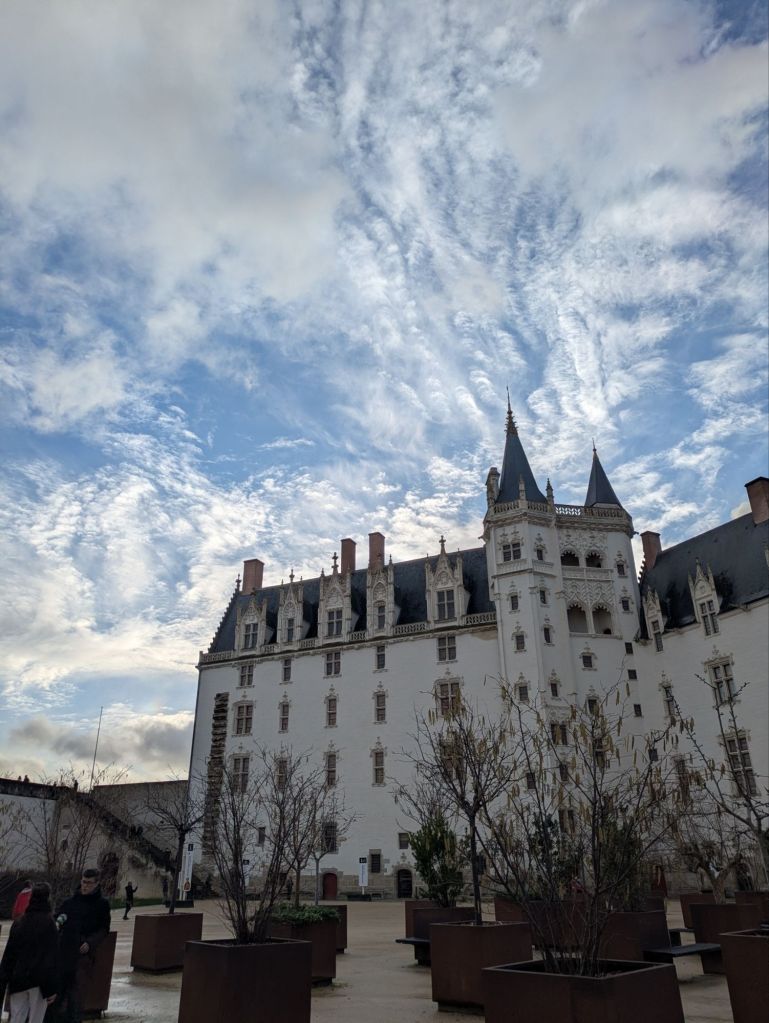
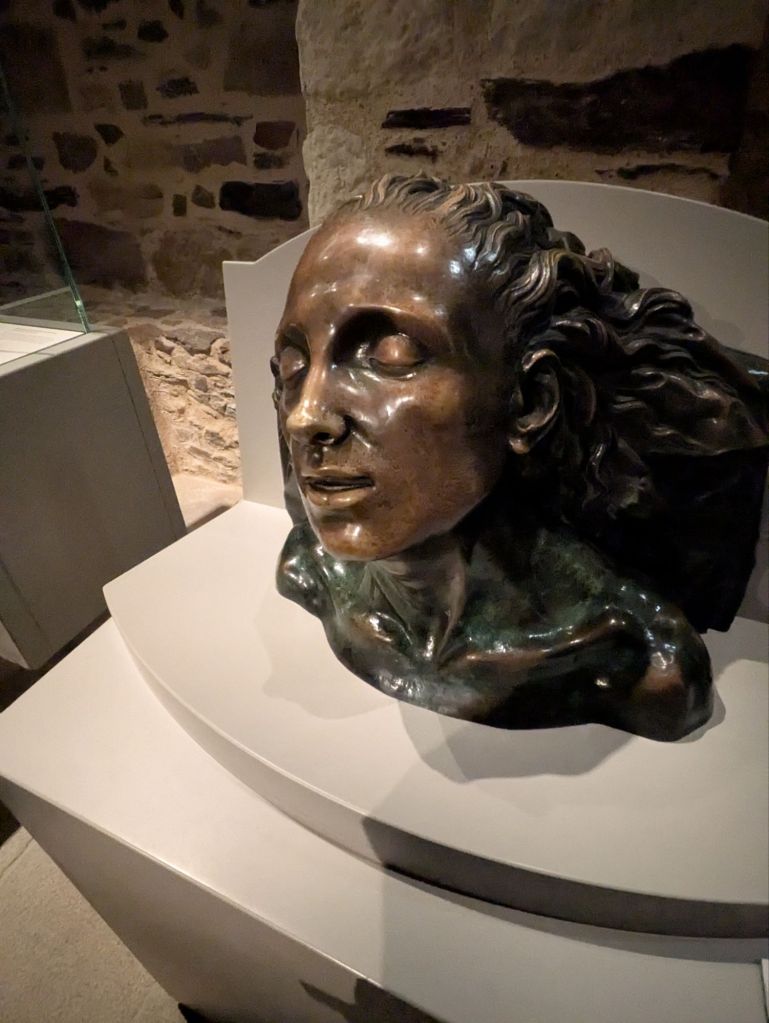
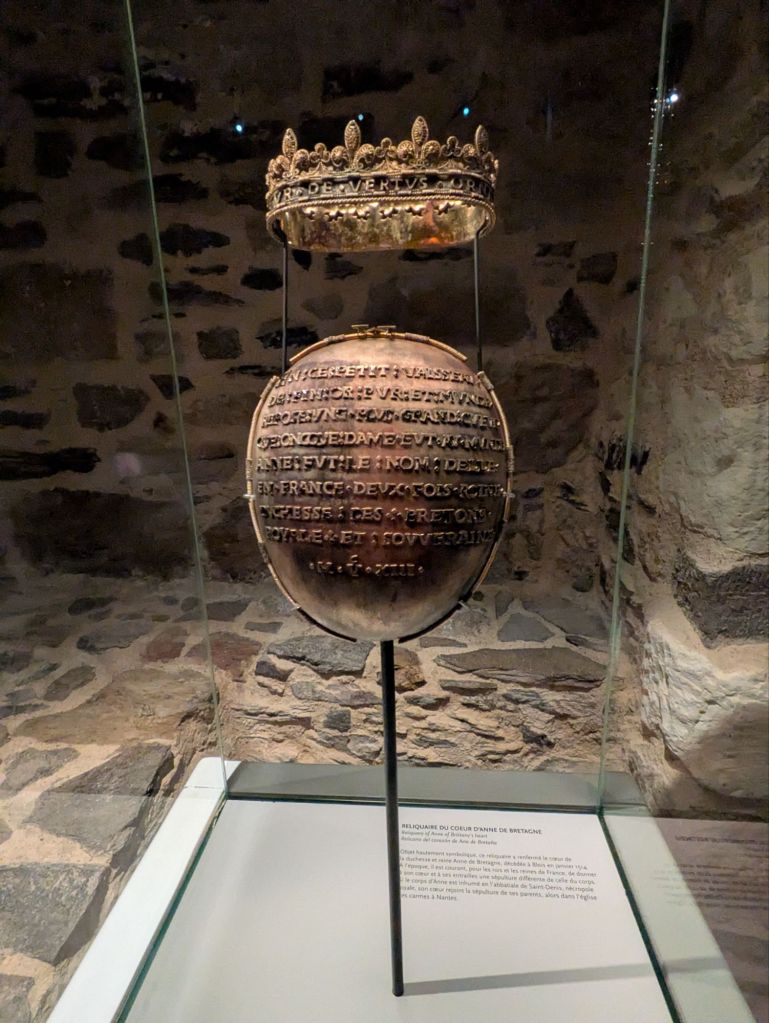
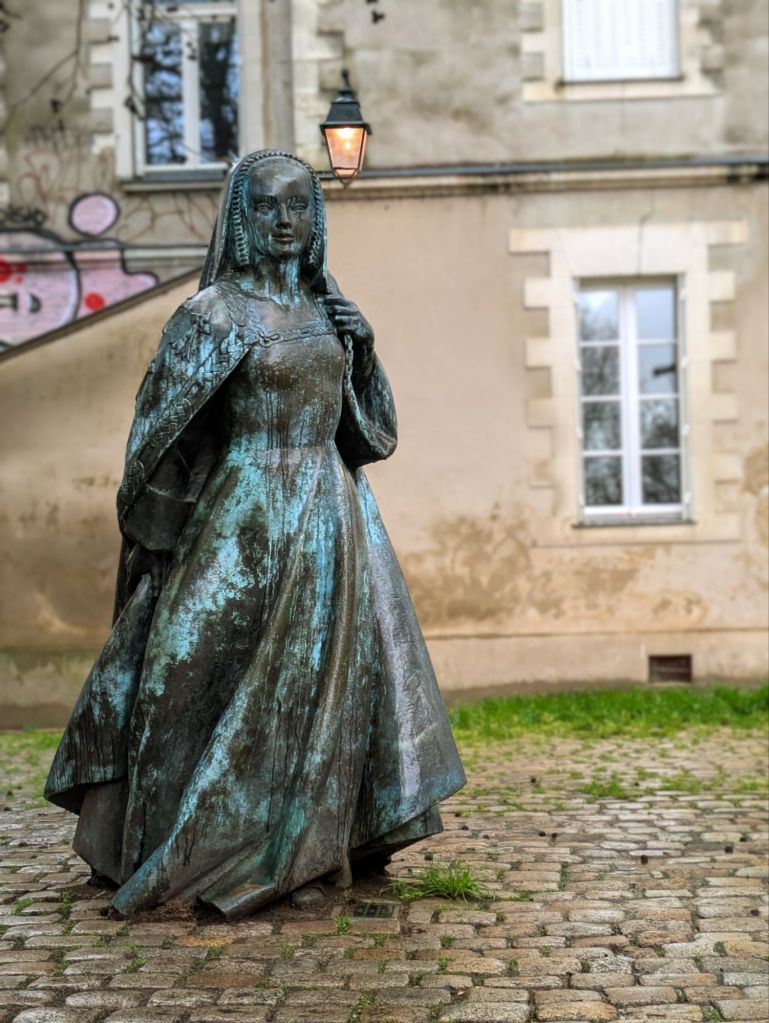
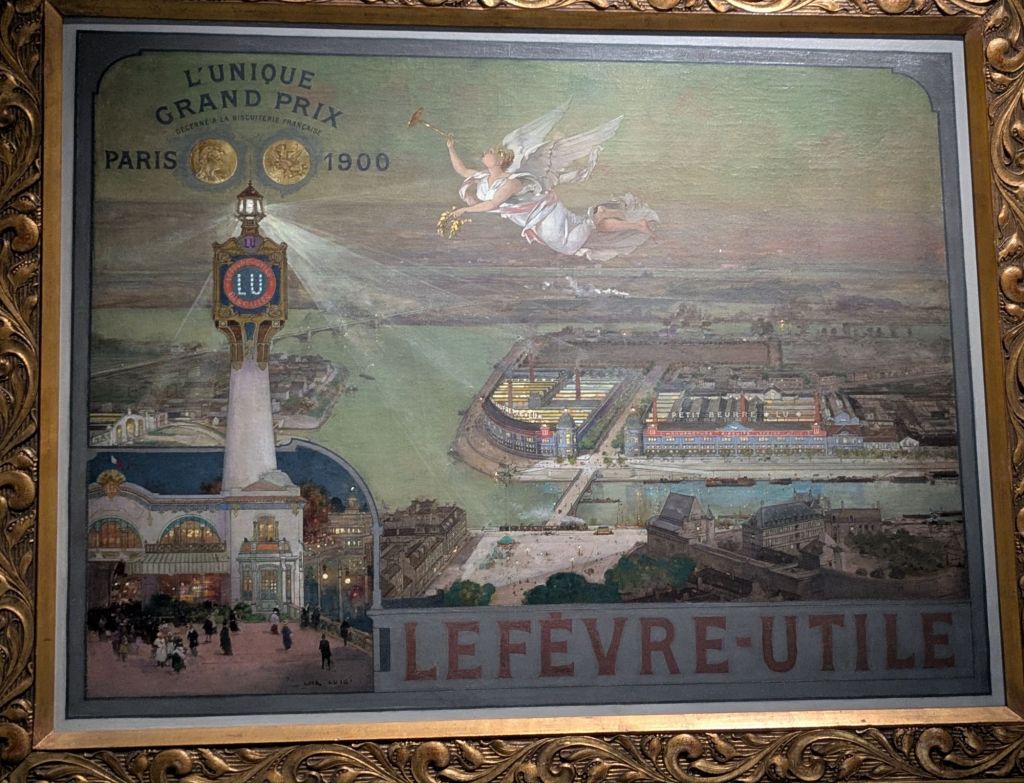
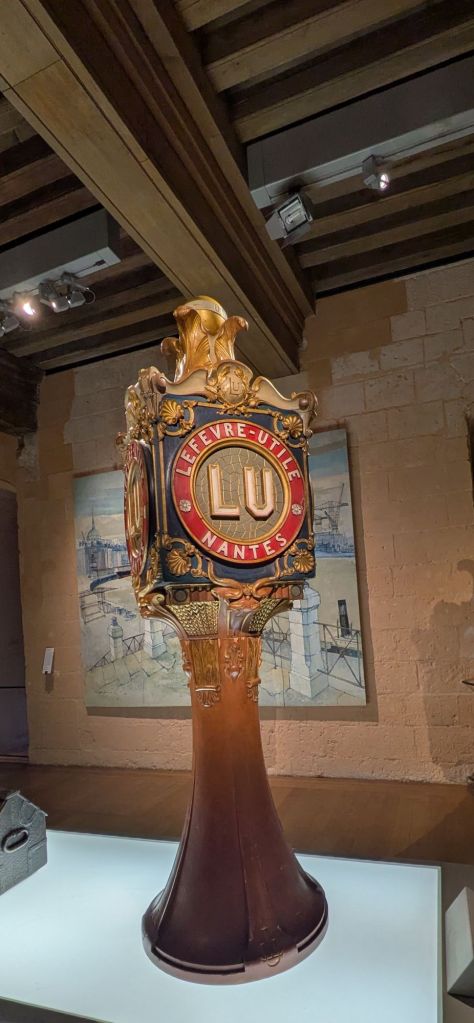
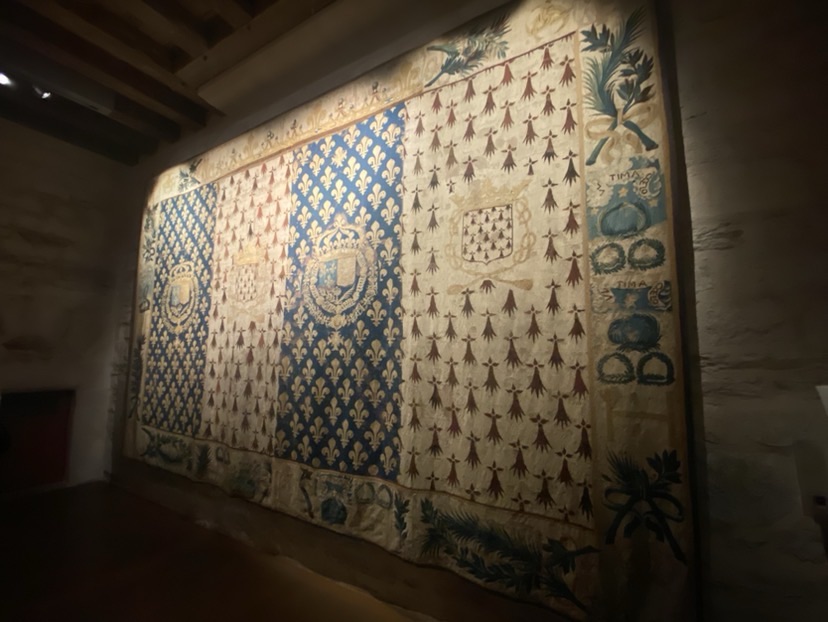
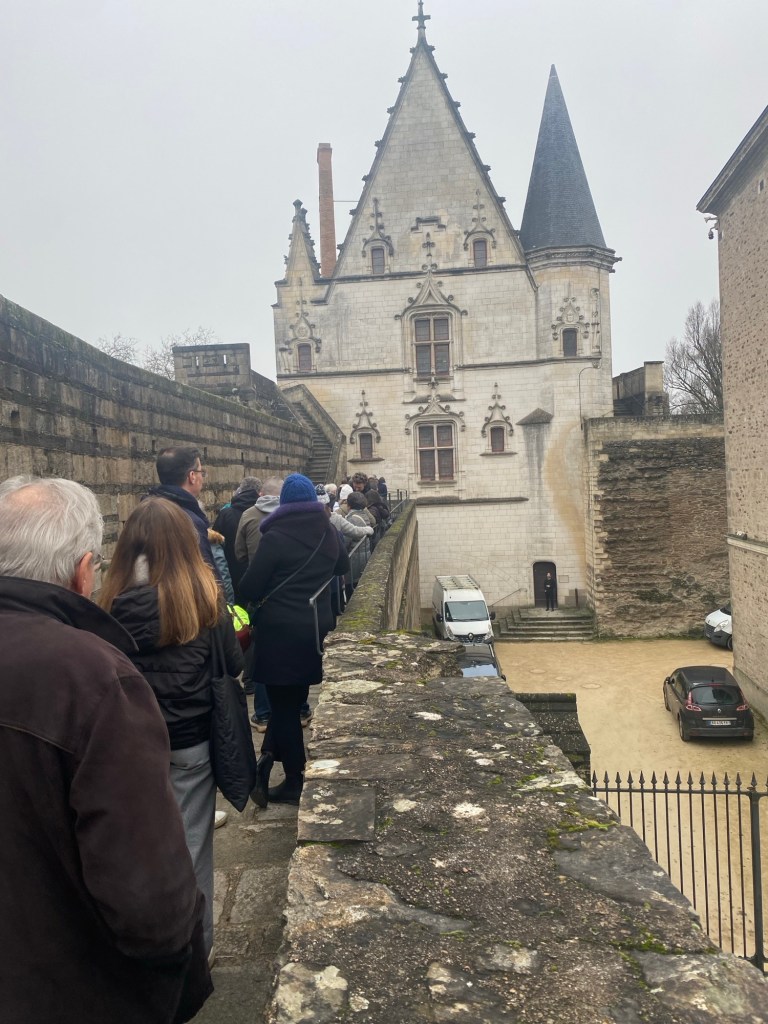
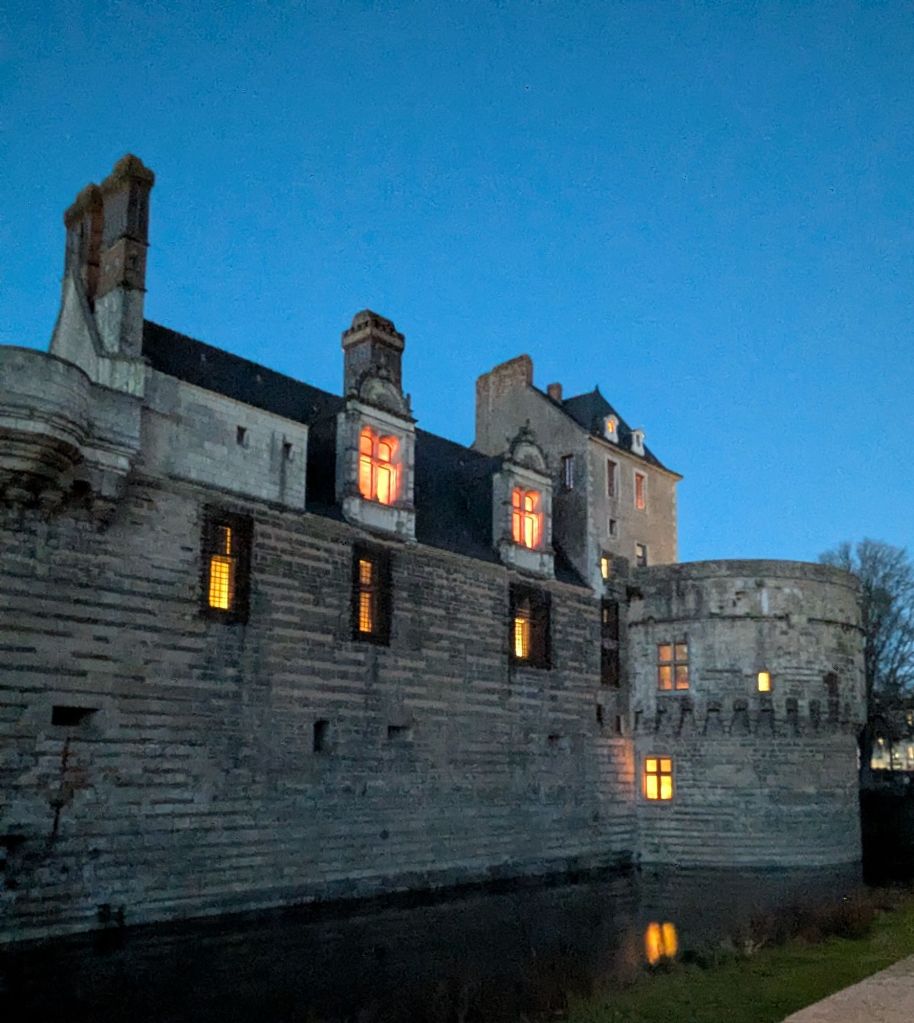
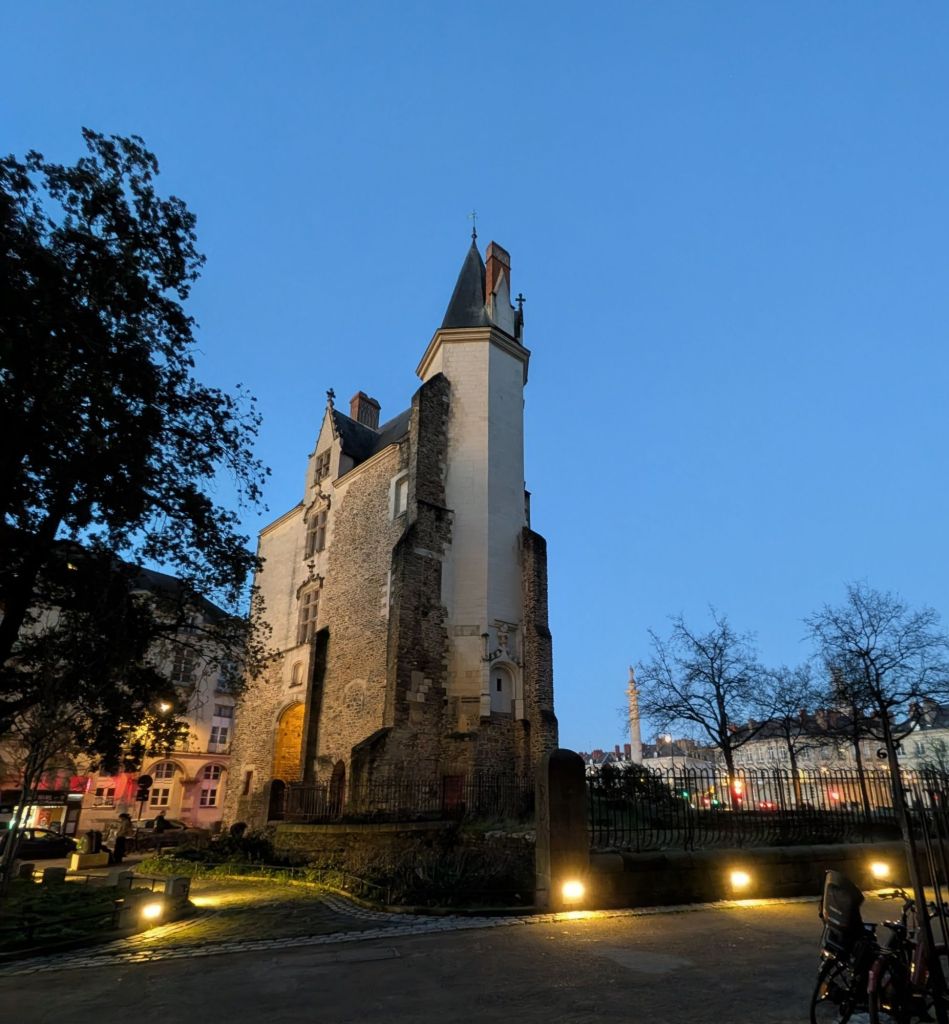
We finally made it to the city history museum, located in the towns castle. I love the architecture of this museum. While the structure of the massive building is sound, the inside floors are long gone. Instead of restoring them, a new structure was built within the walls. It combines a minimalist palate to appreciate the stonework and details of the exhibition. It all starts with Anne of Brittany, Nantes’ kind of patron saint.
The city made was a big player in the transatlantic slave trade and the museum doesn’t shy away from confronting this uncomfortable truth.
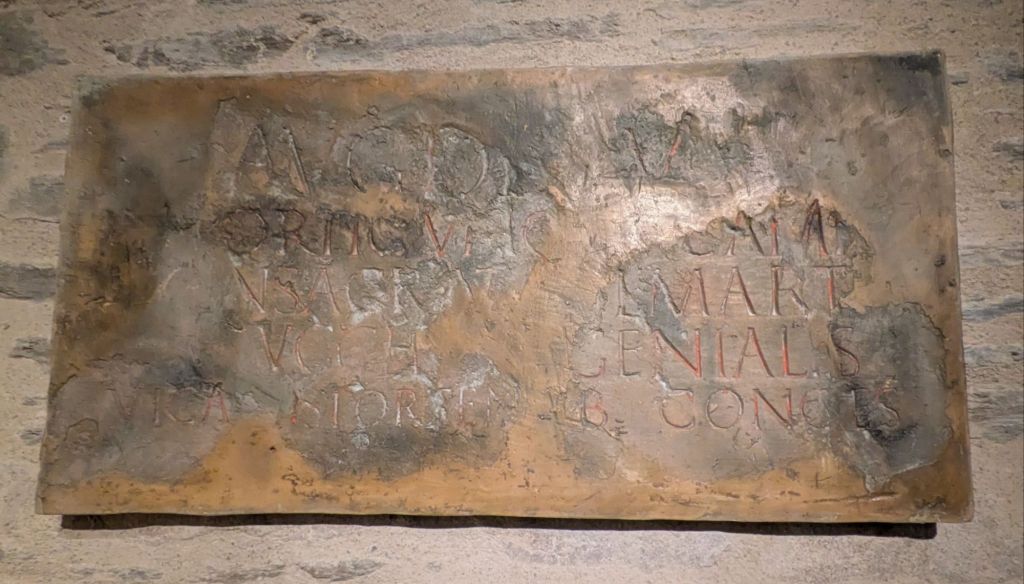
It also goes into lots of detail on the evolving map of the city from it Roman foundation to modern day.
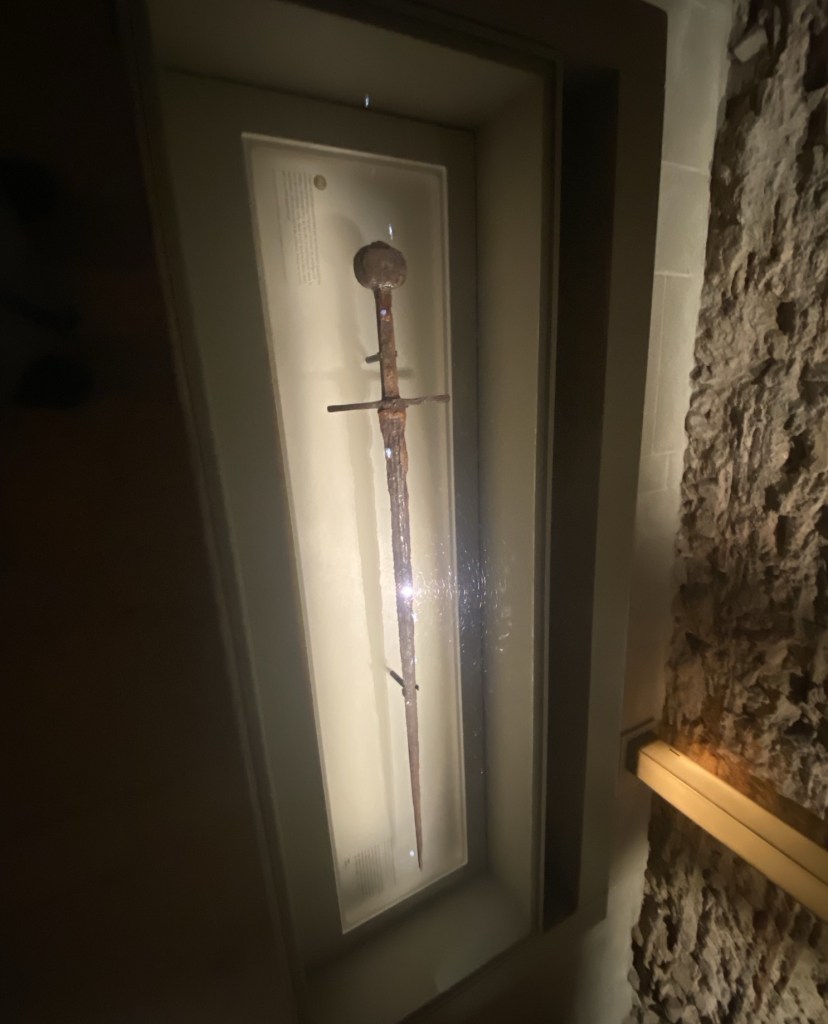
Some Medieval finds from castle grounds
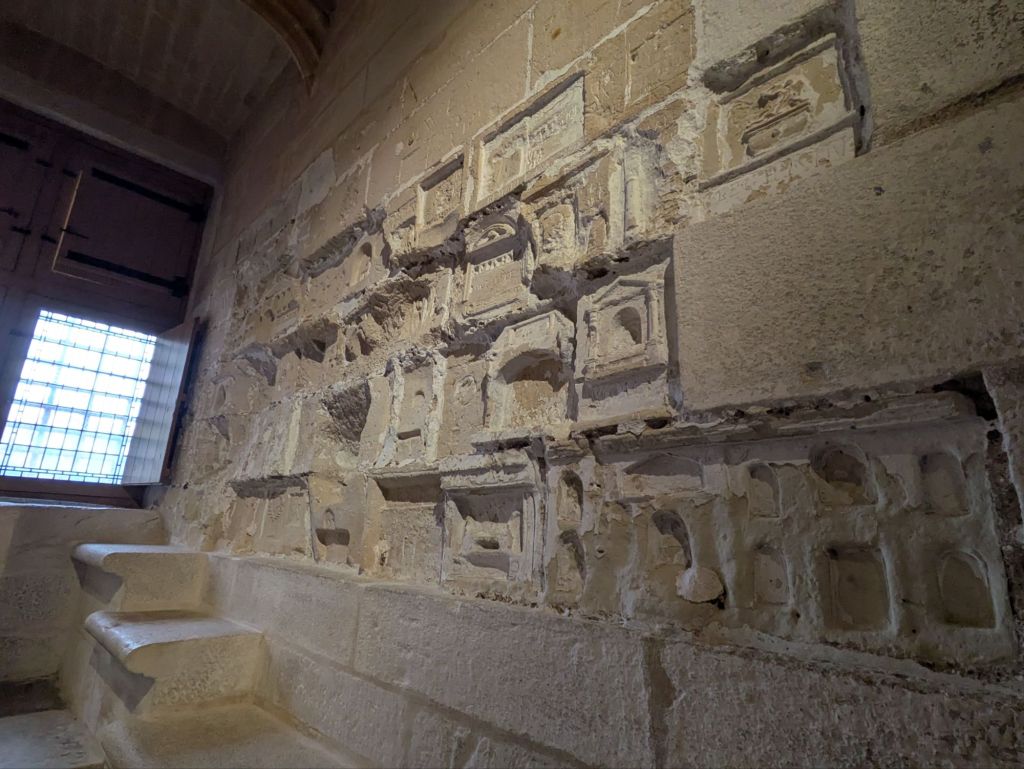
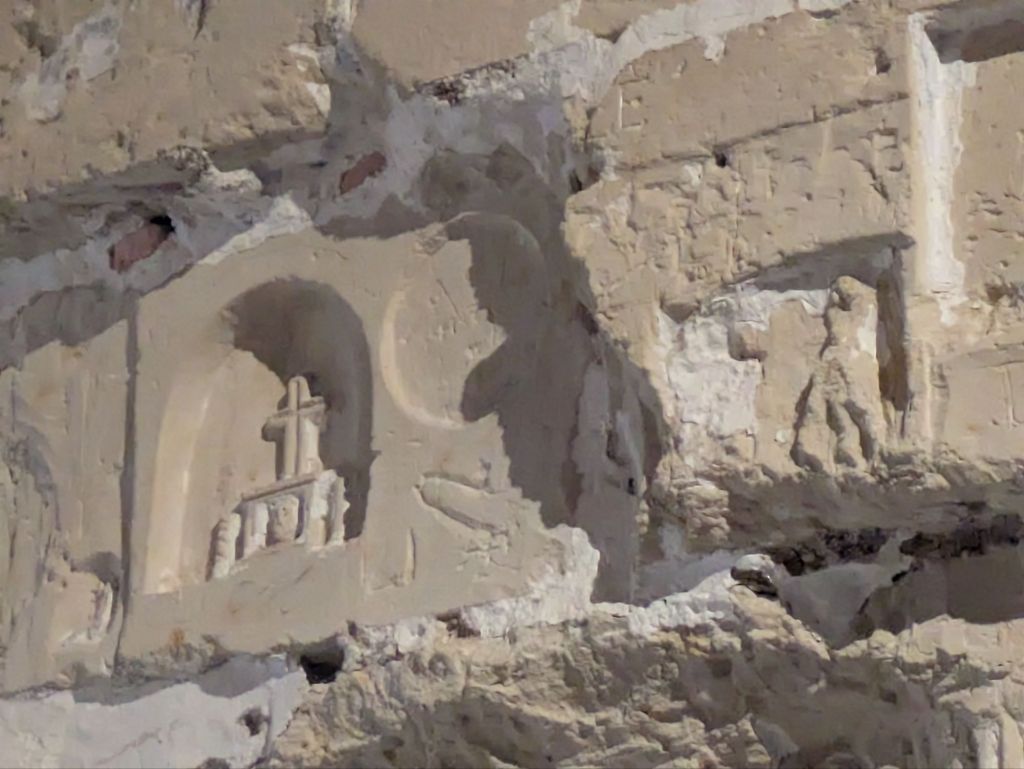
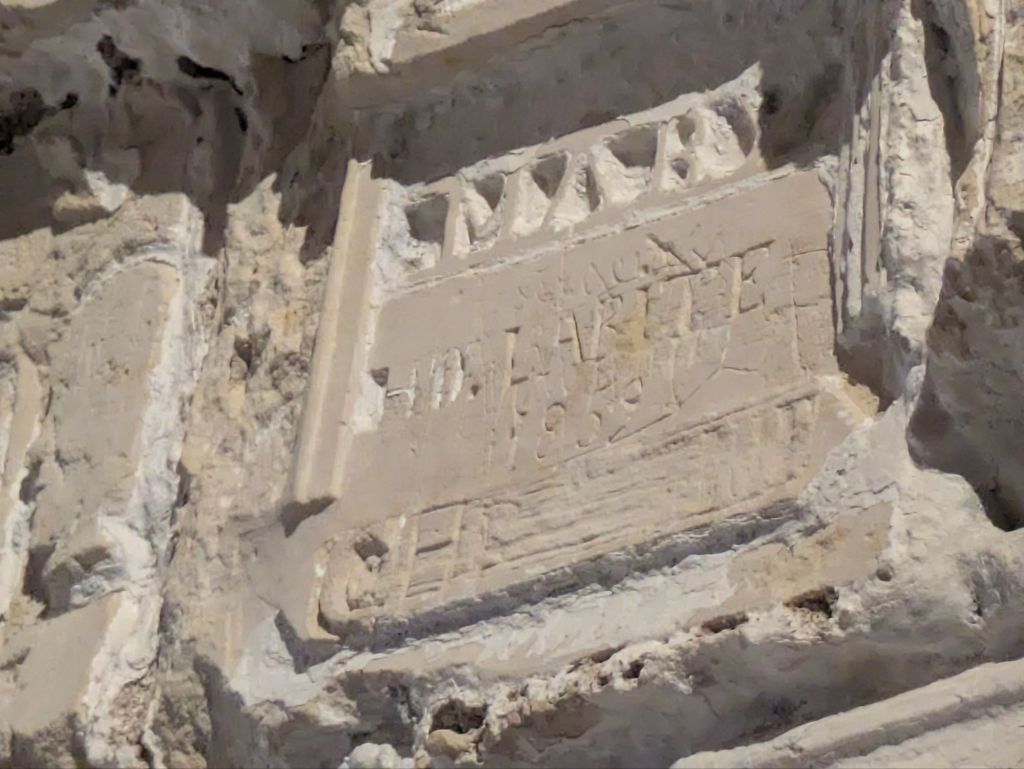
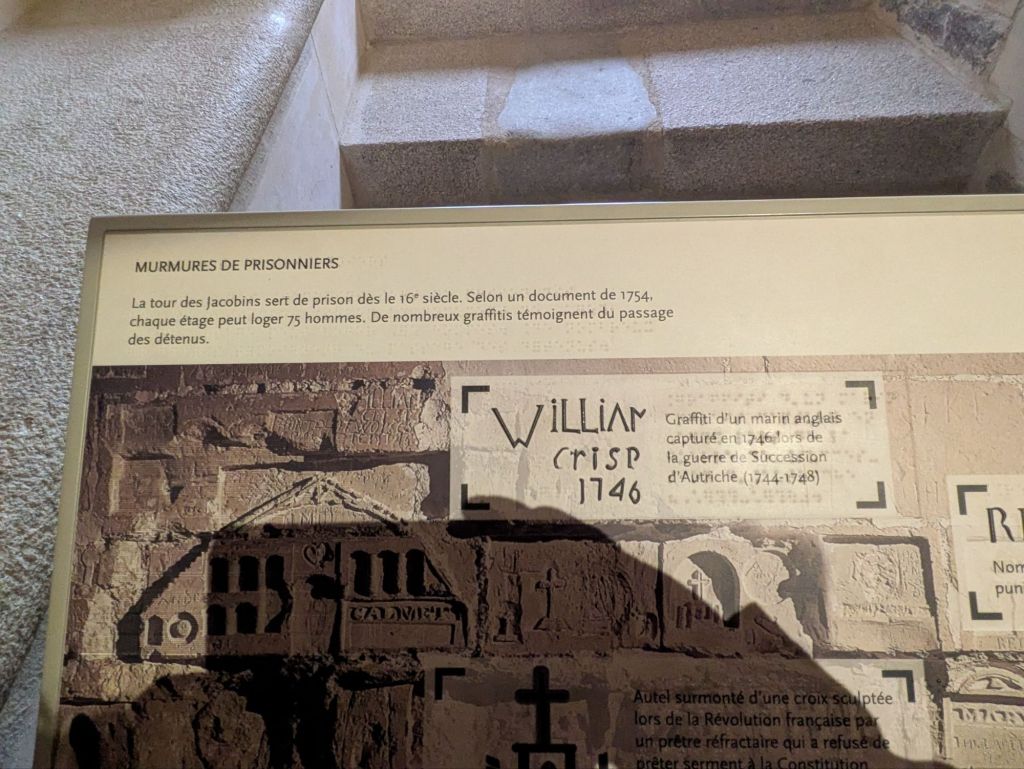
The walls bear the preserved graffiti of prisoners.
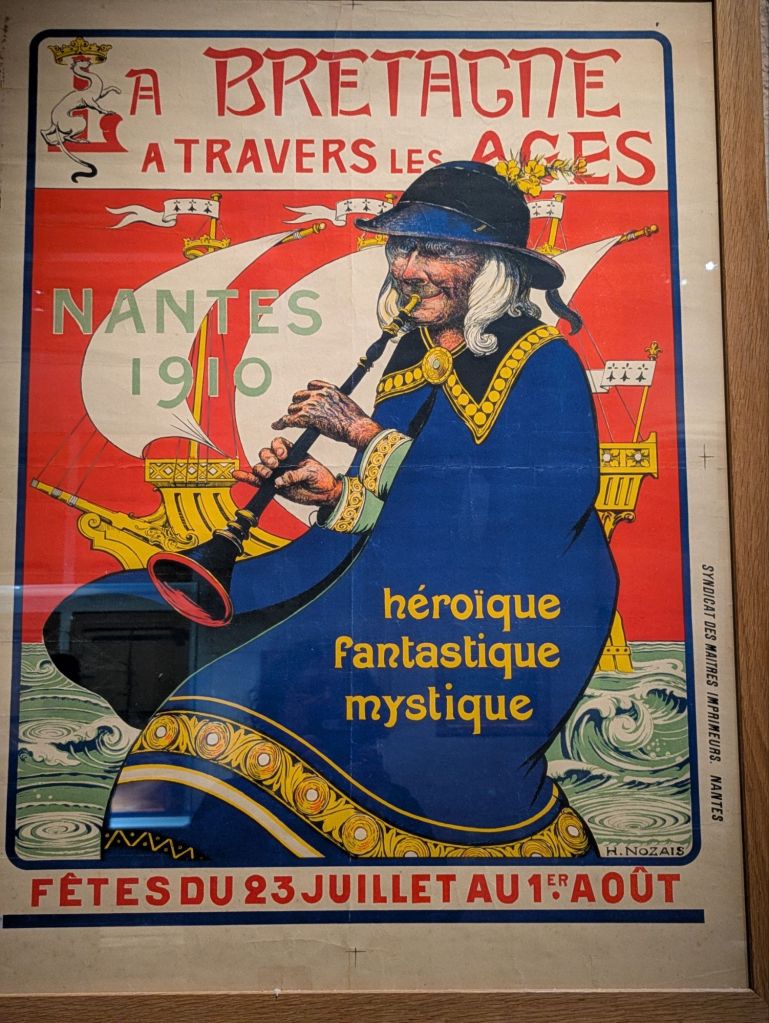
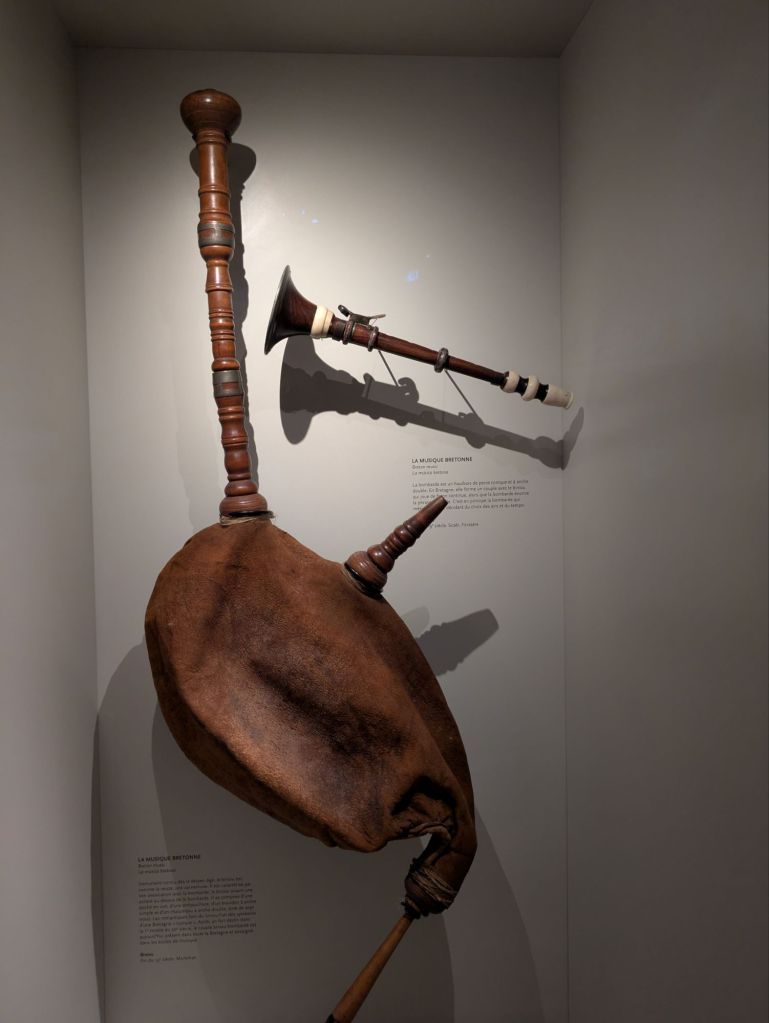
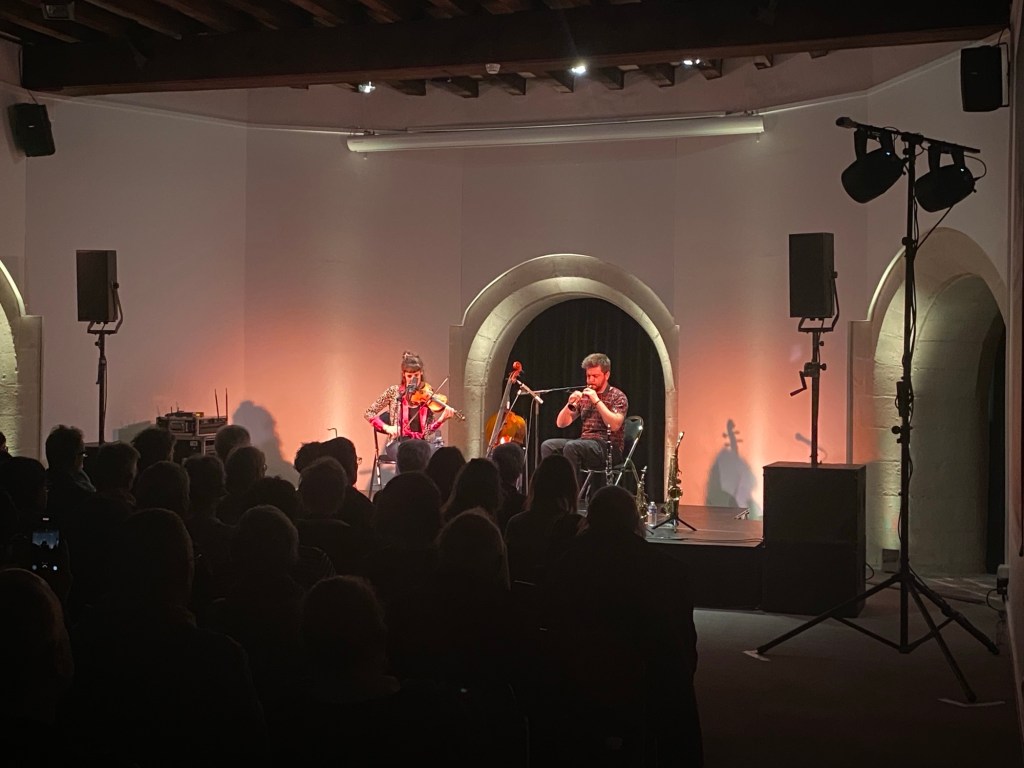
And a fun find about this particular Breton instrument, which we heard played during a concert of traditional Breton music, played in the walls of one of the other buildings within castle walls.
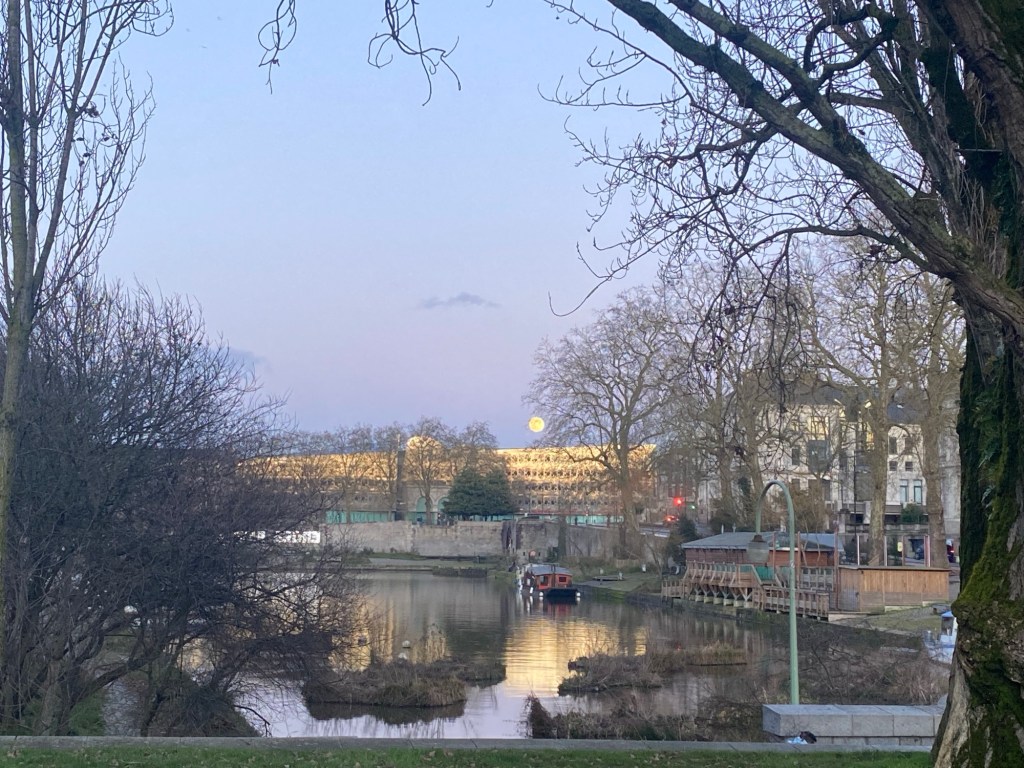
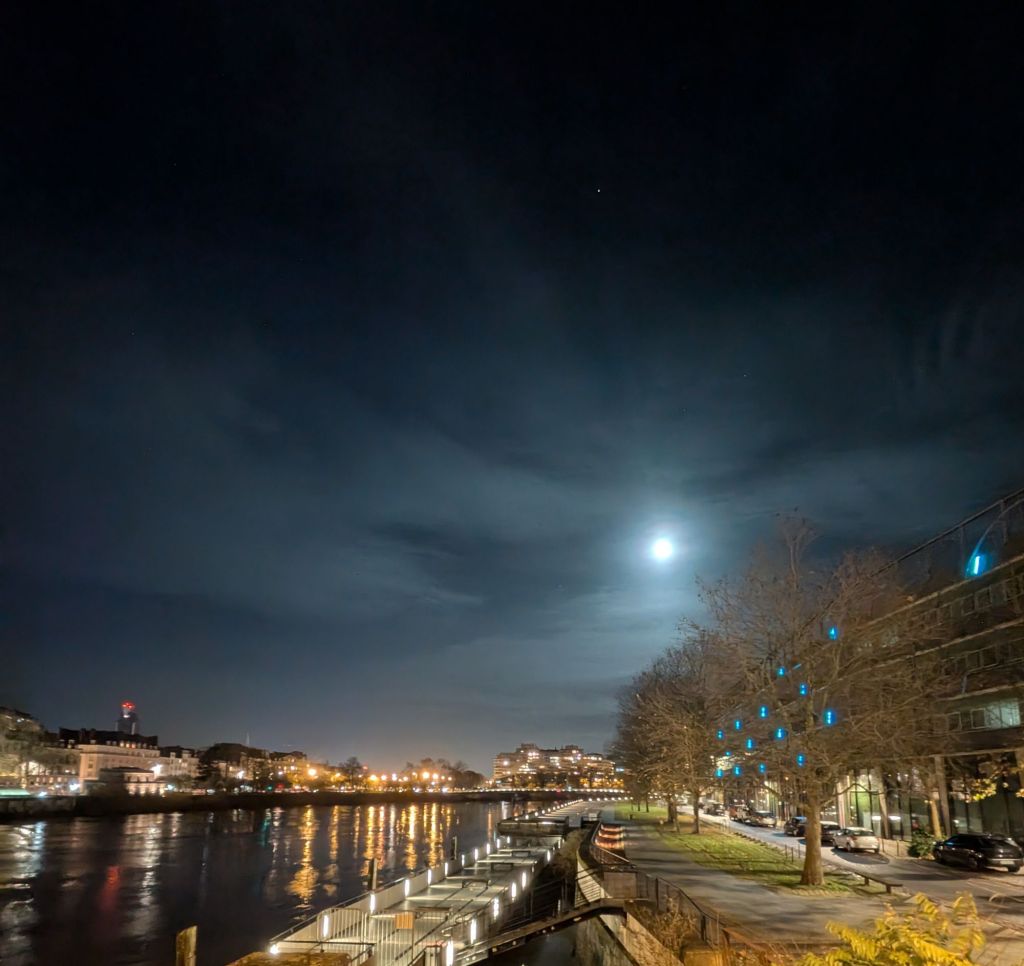
Just a perfect moonrise on the walk home.
And a final dinner with our Airbnb host, Edgar, who has made our stay feel like home. So long Nantes! You will remain in our hearts and our memories.
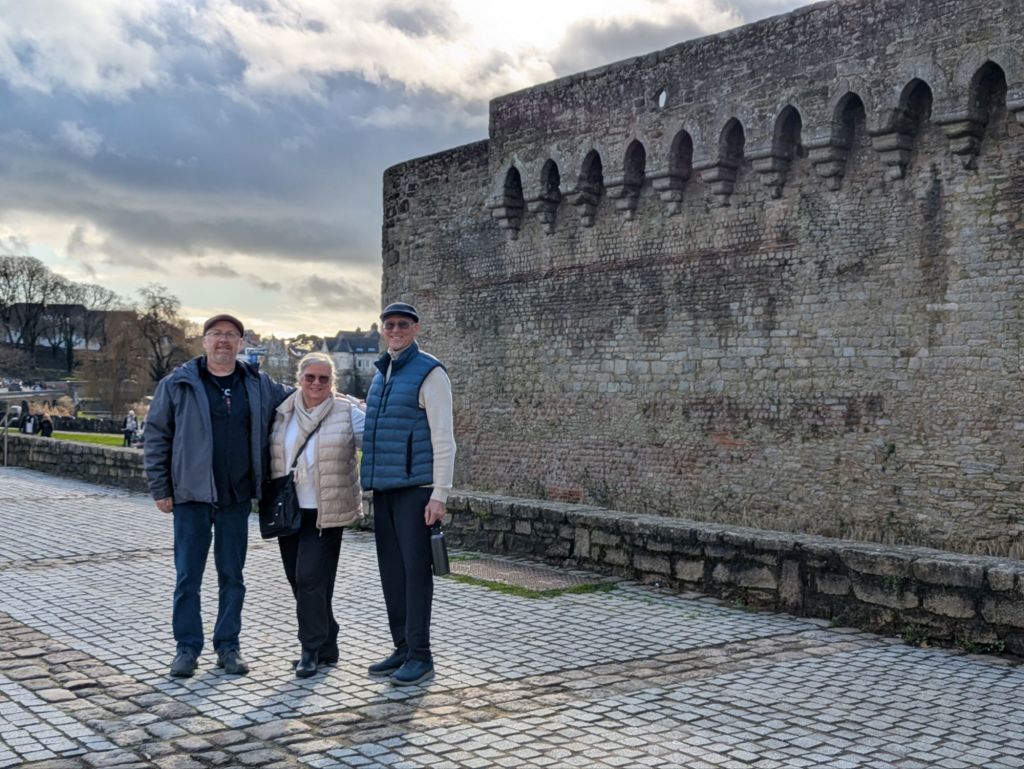
Our friend Miyoko texted over WhatsApp, “Hey, you should meet my friends who just moved to France.” So we took the train to a lovely coastal town named Vannes and spent a day meeting new friends.
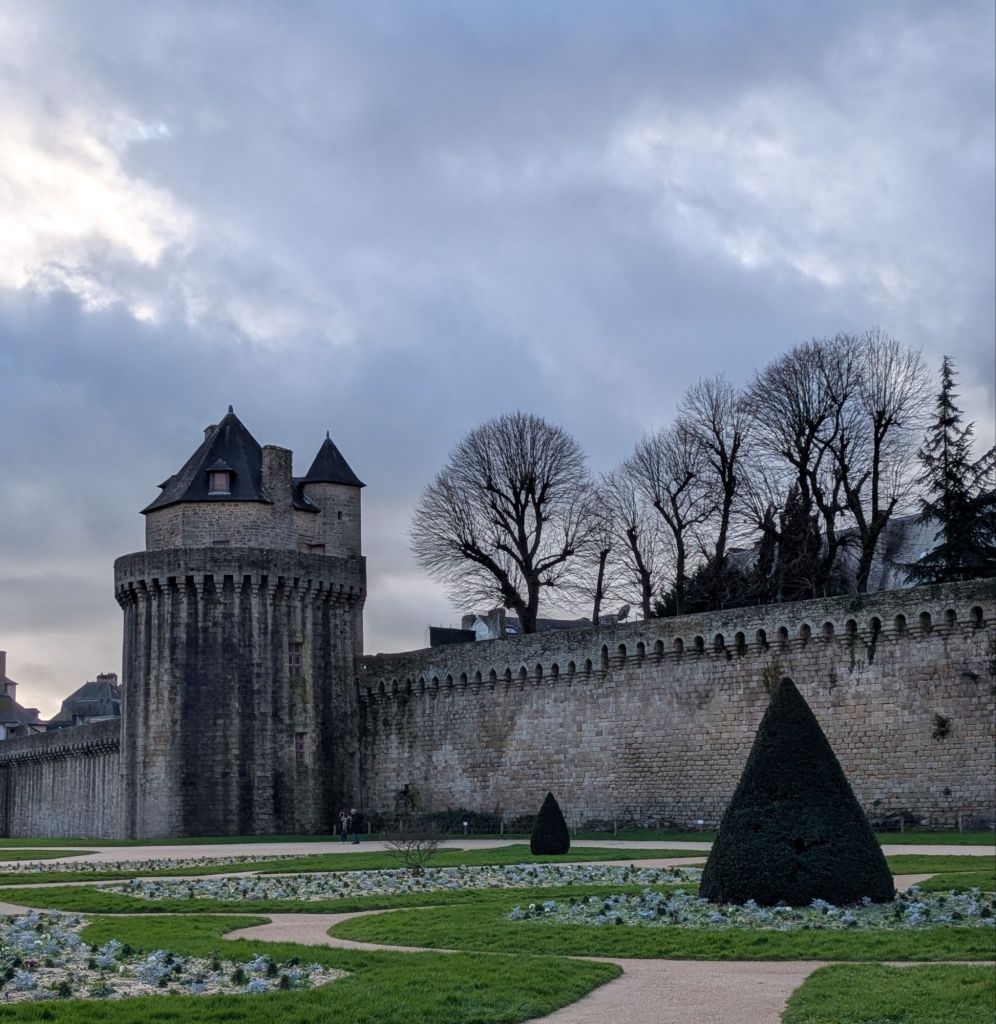
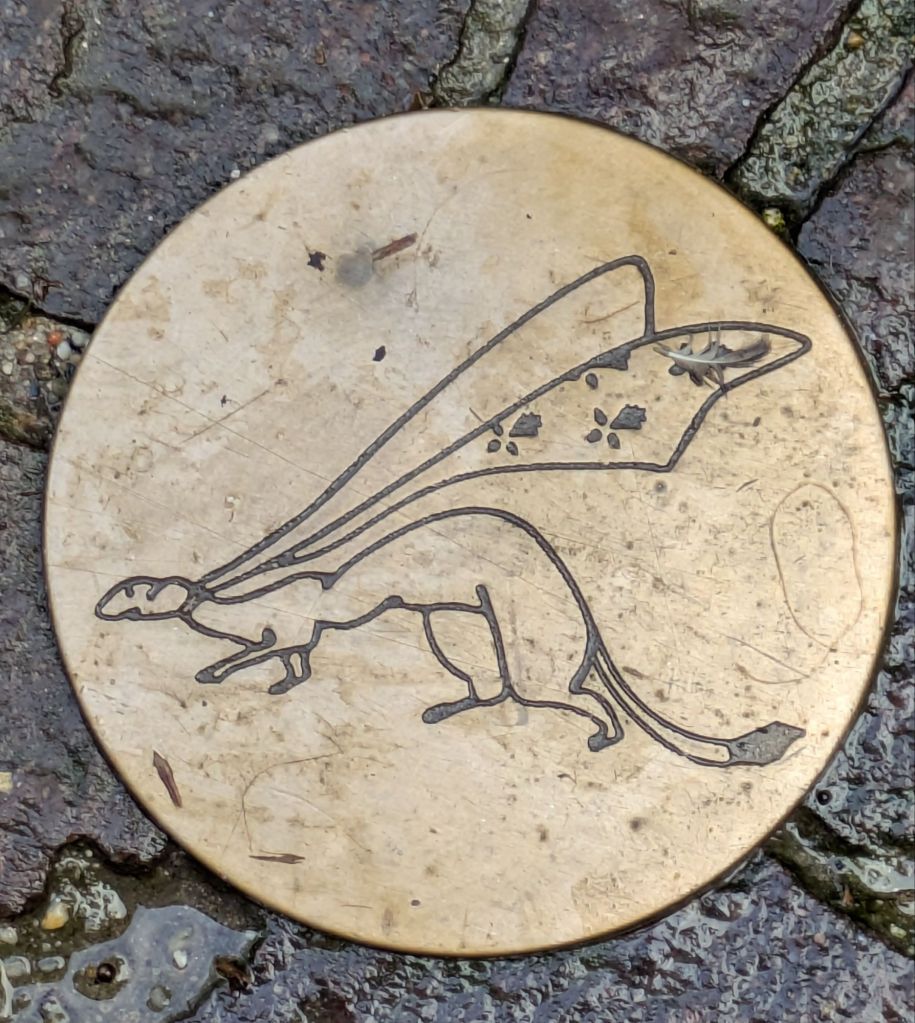
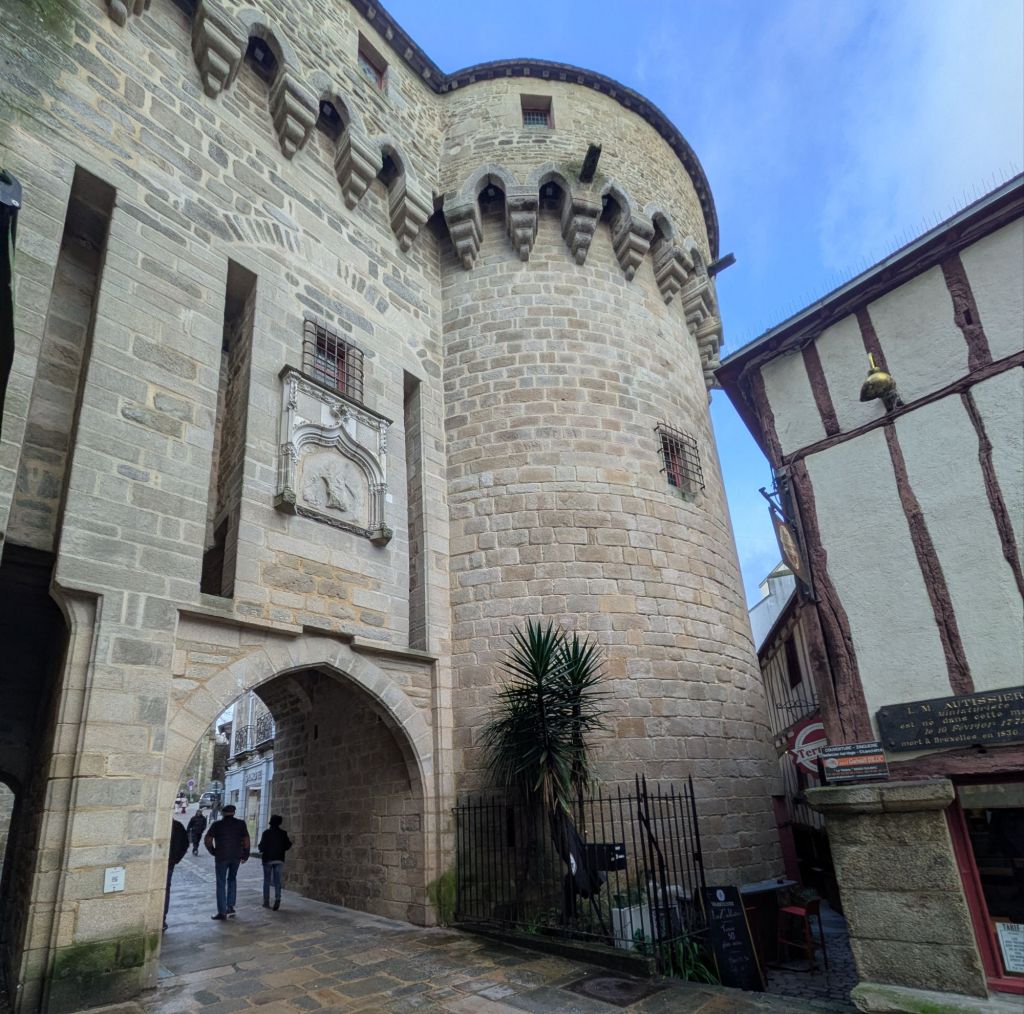
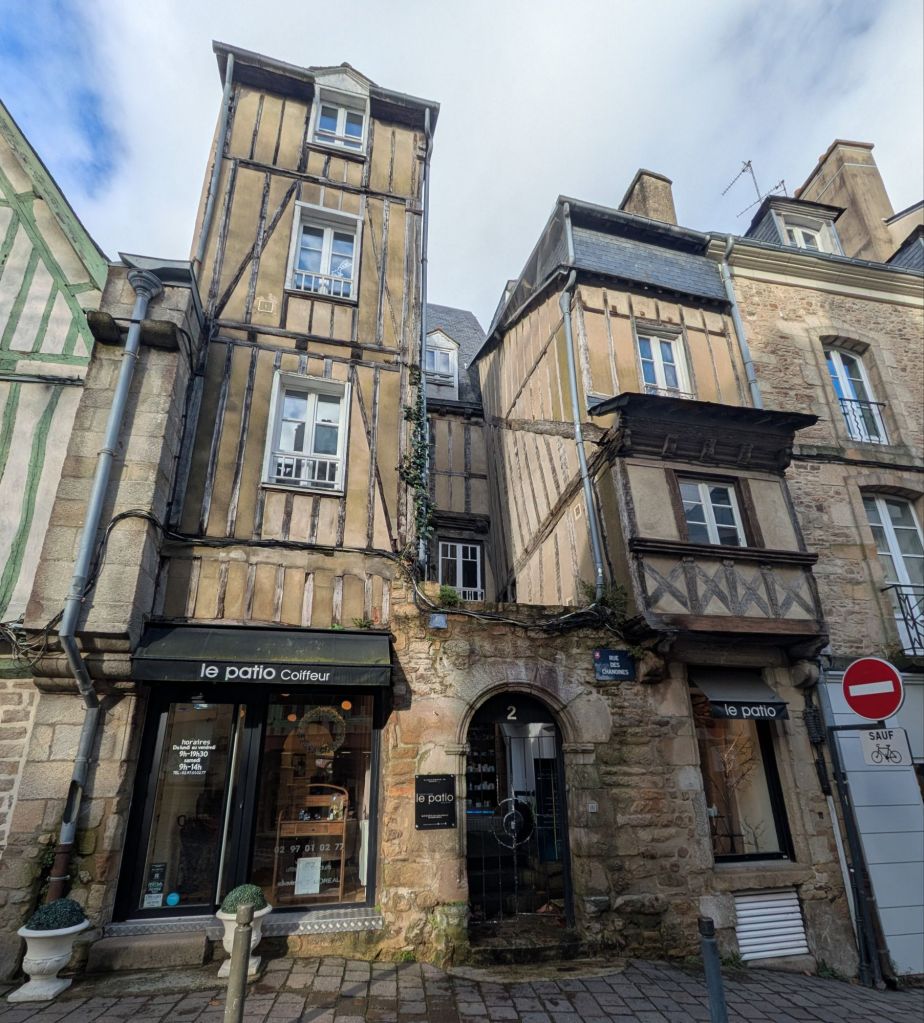
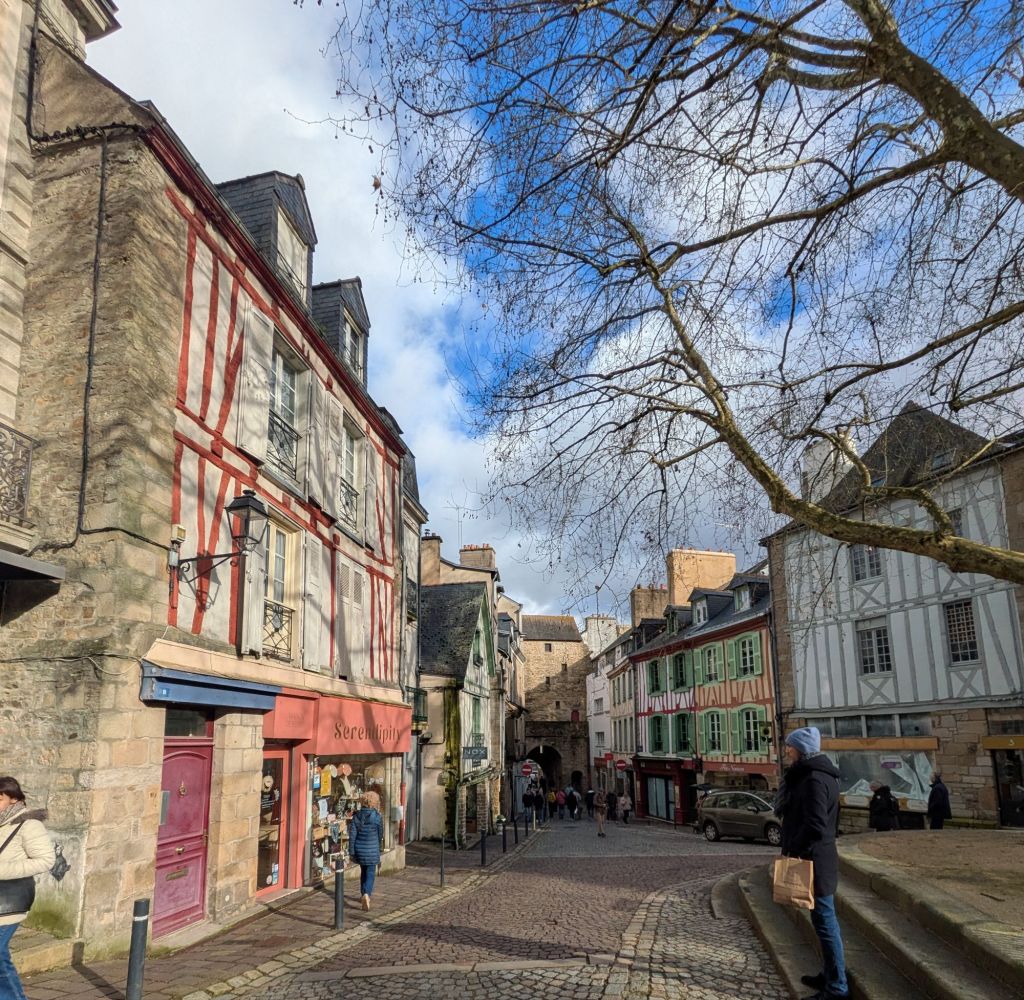
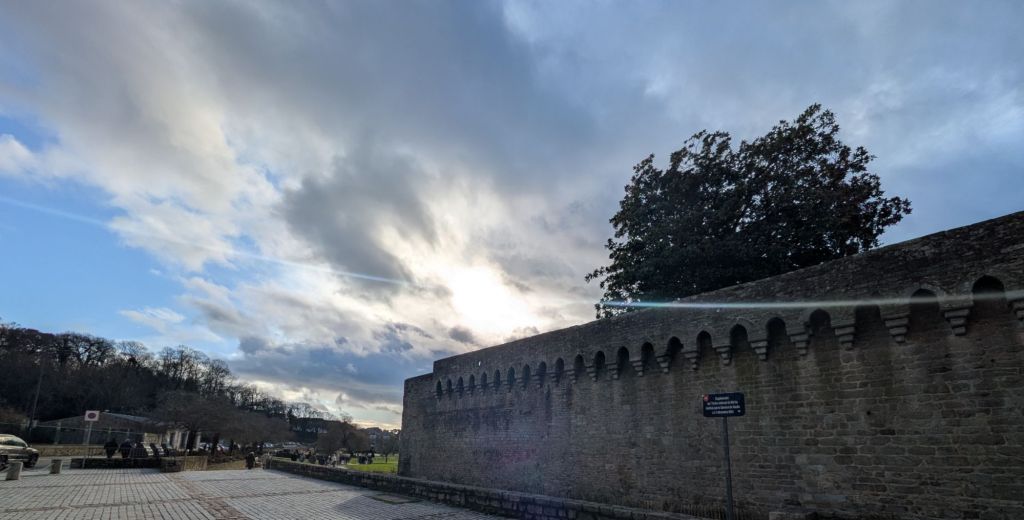
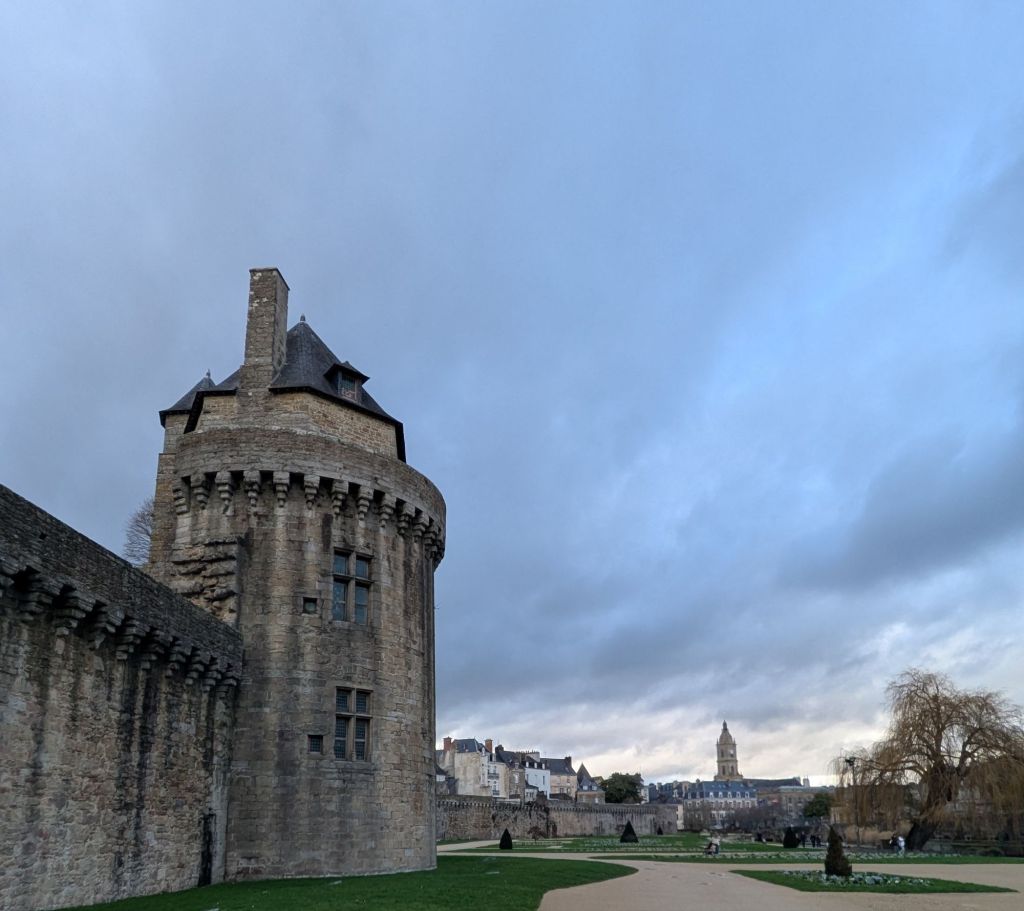
Vannes is a walled city, with a population of just under 56,000. It was founded by Celts around 150BCE. Subsequently occupied by the usual culprits, aka the Romans, then came the Brits, thus establishing Brittany, followed by French dynasties. Its symbol is the cutest ermine ever.
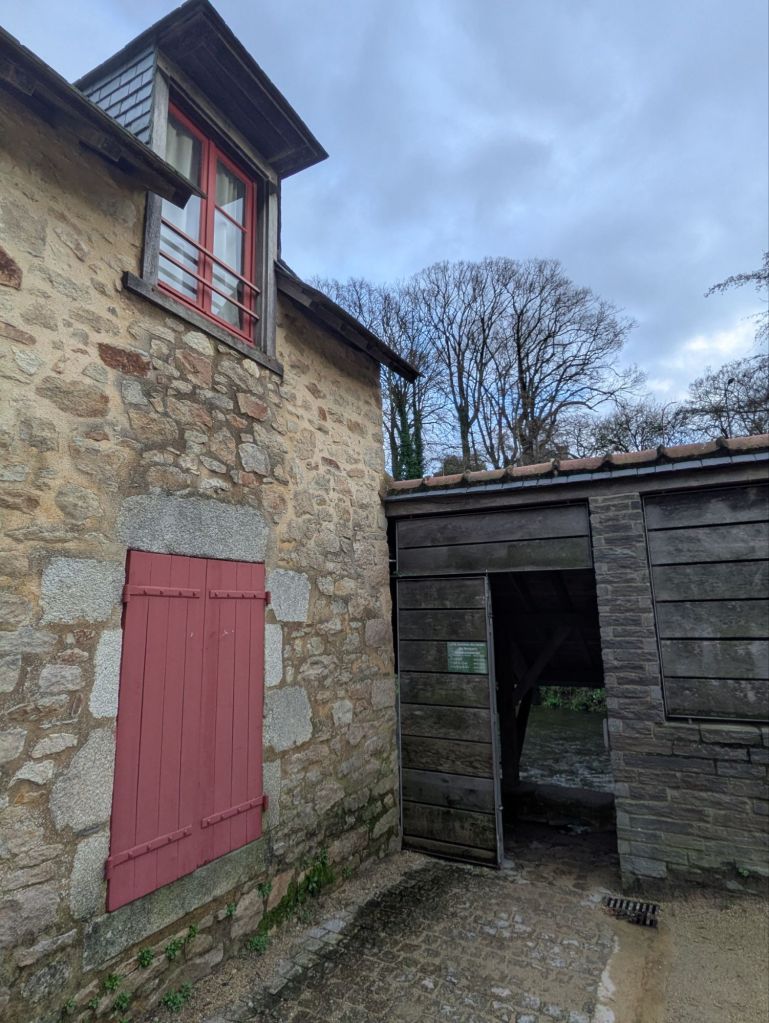
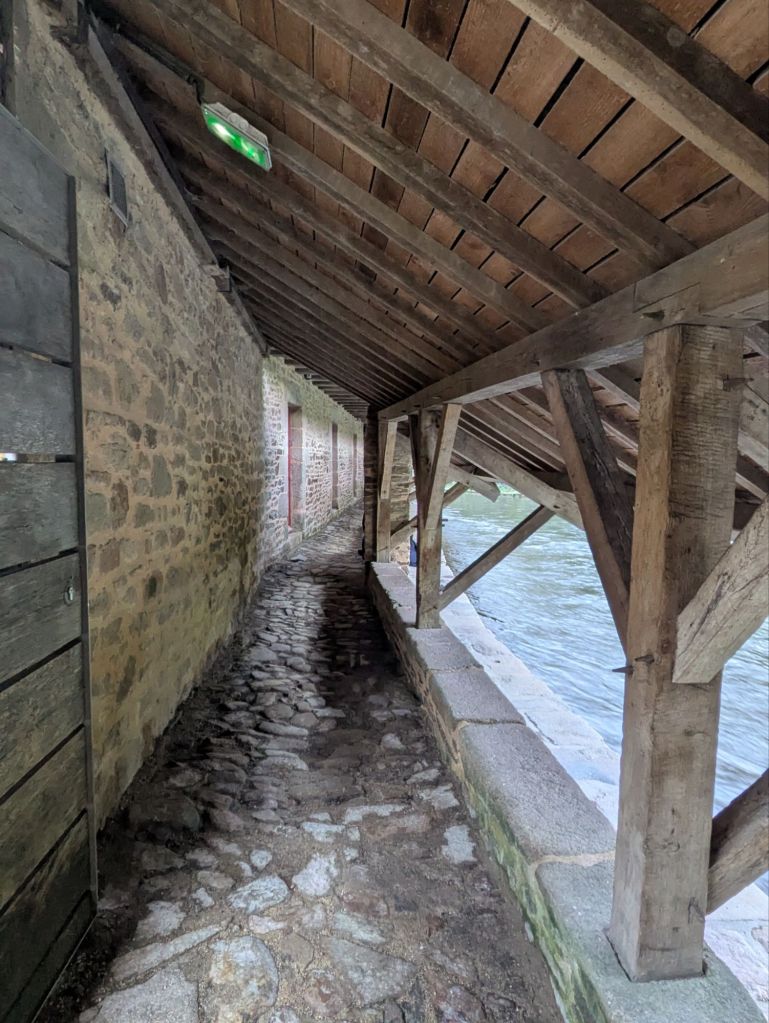
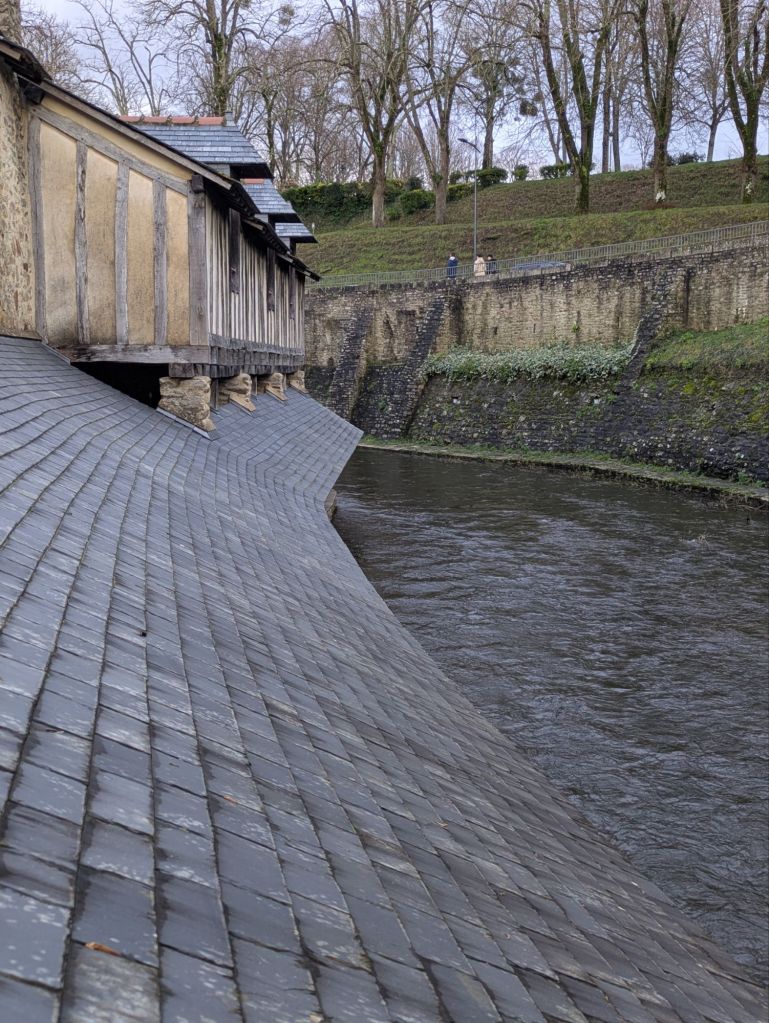
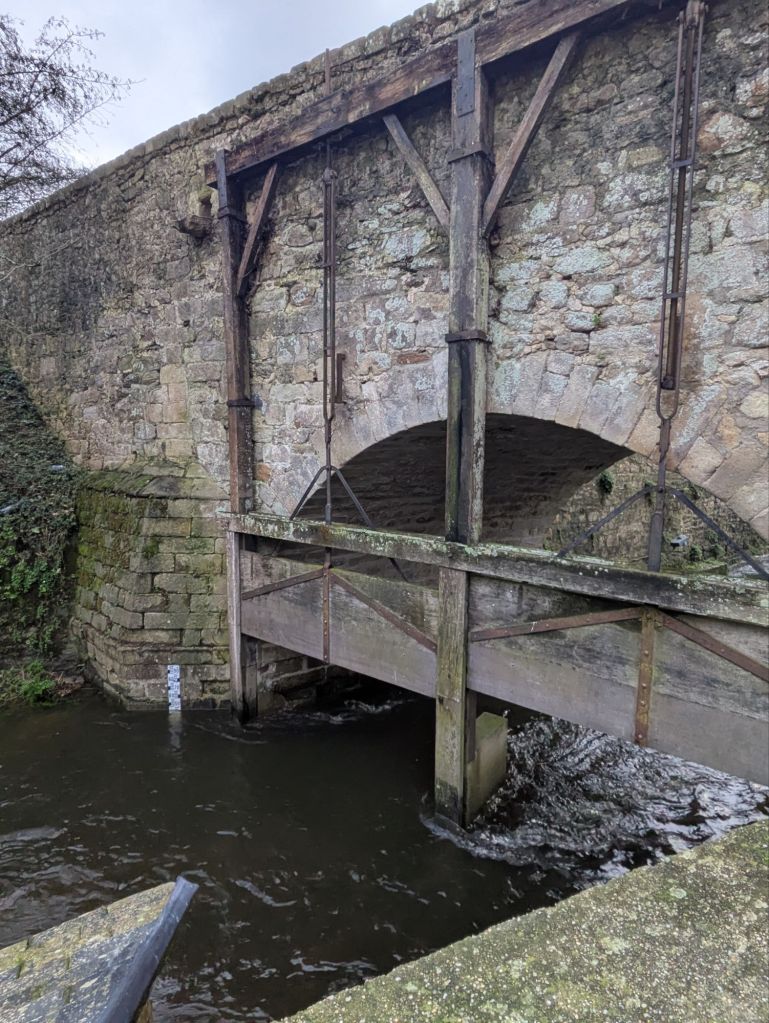
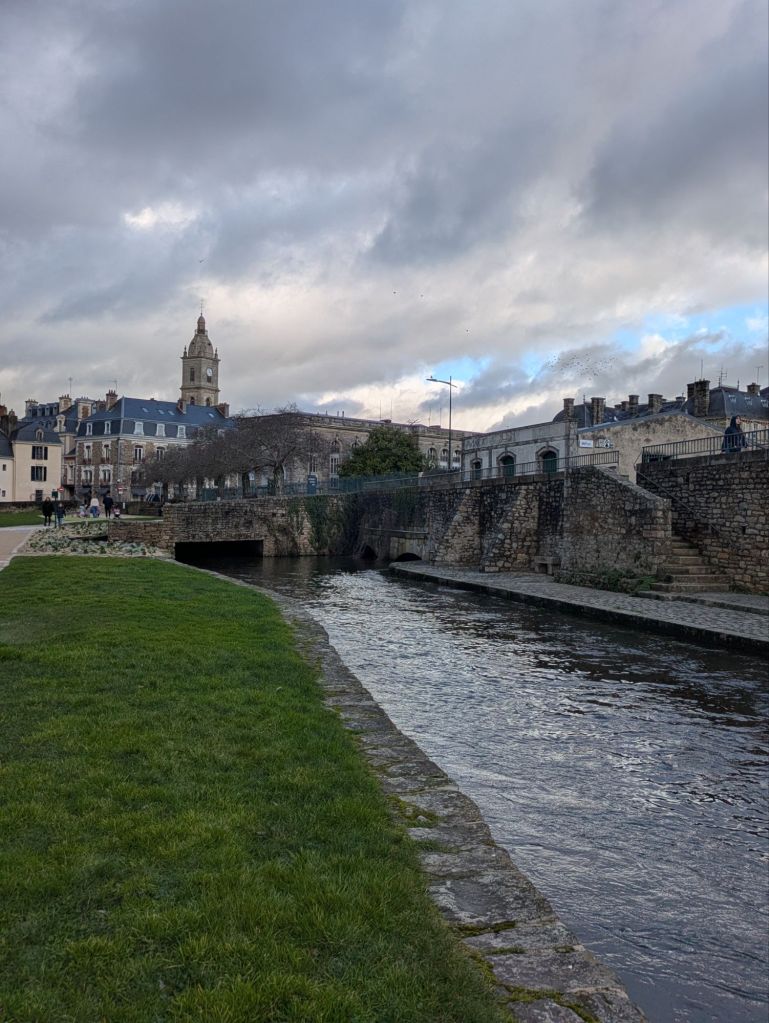
It was a day of dramatic skies for sure. One highlight was the washing house at the rivers edge. Once a place of busy laundering, now a favorite hideaway for a romantic snog.
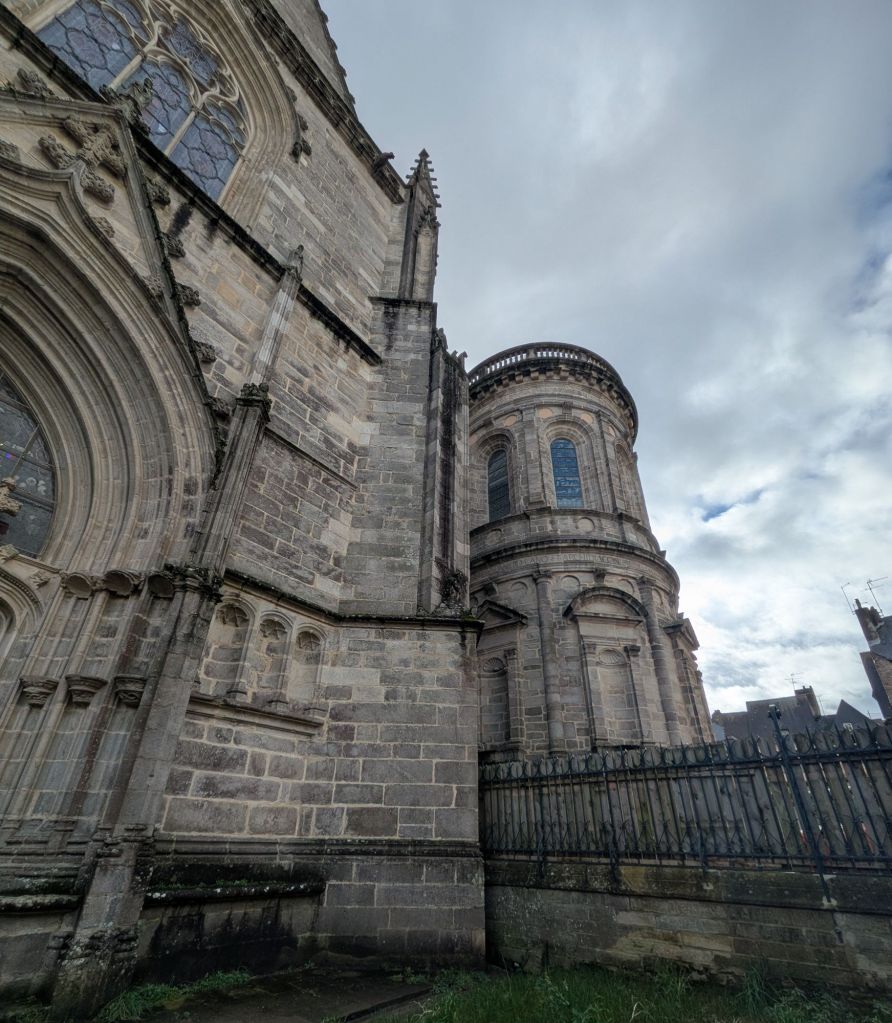
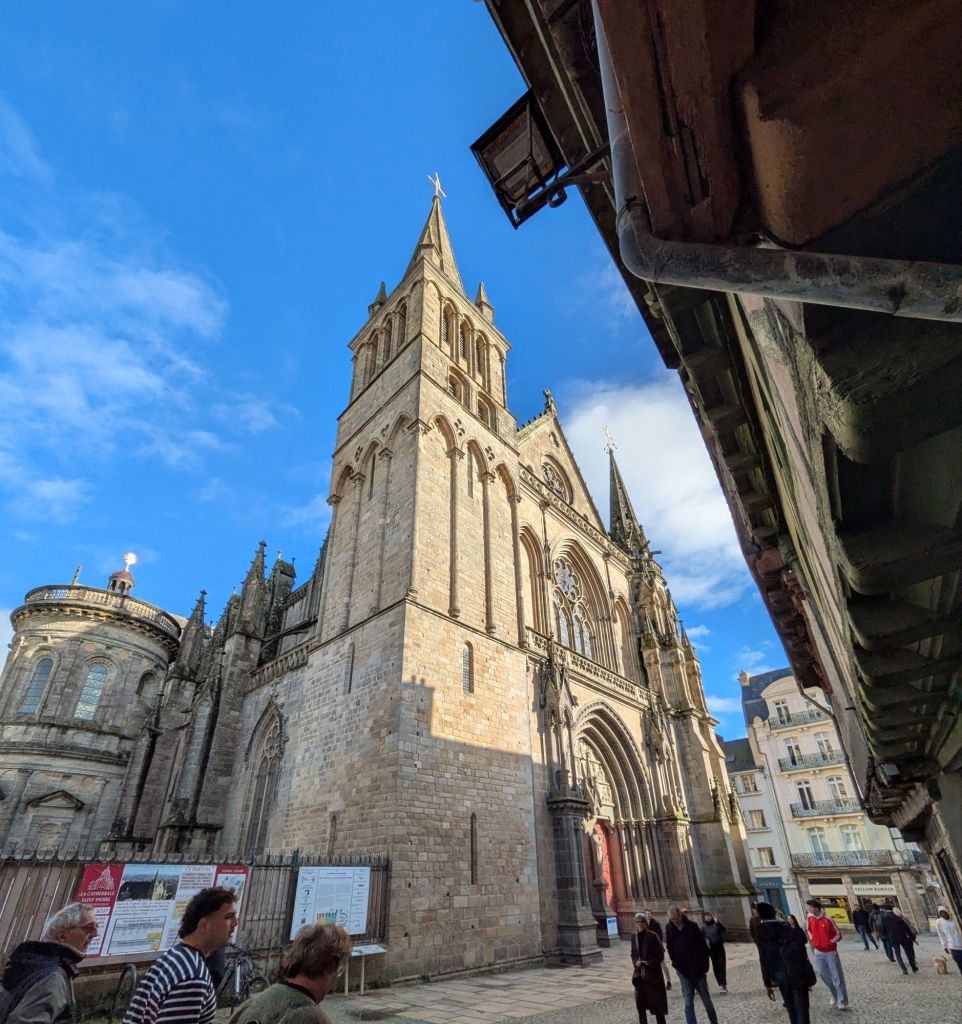
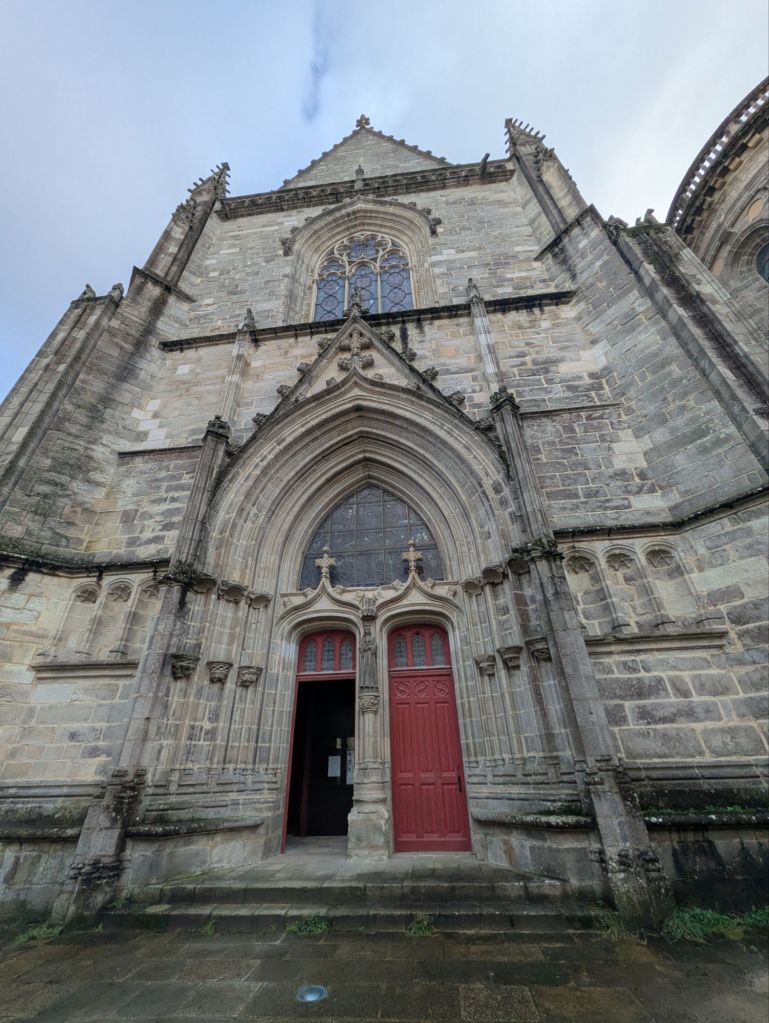
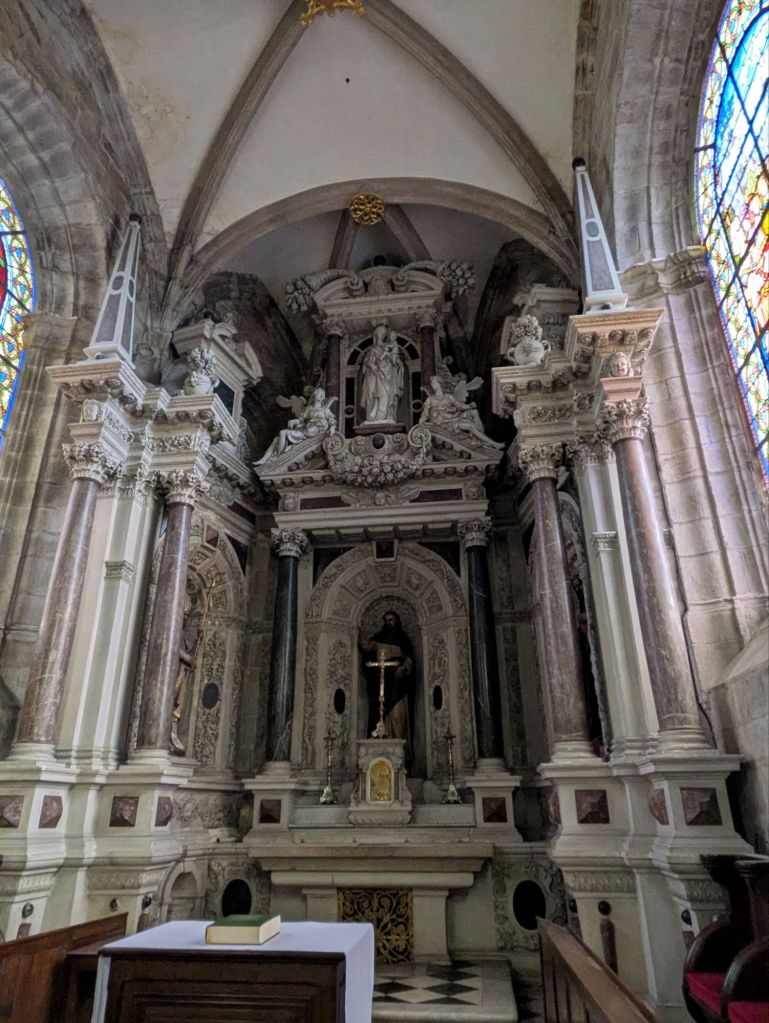
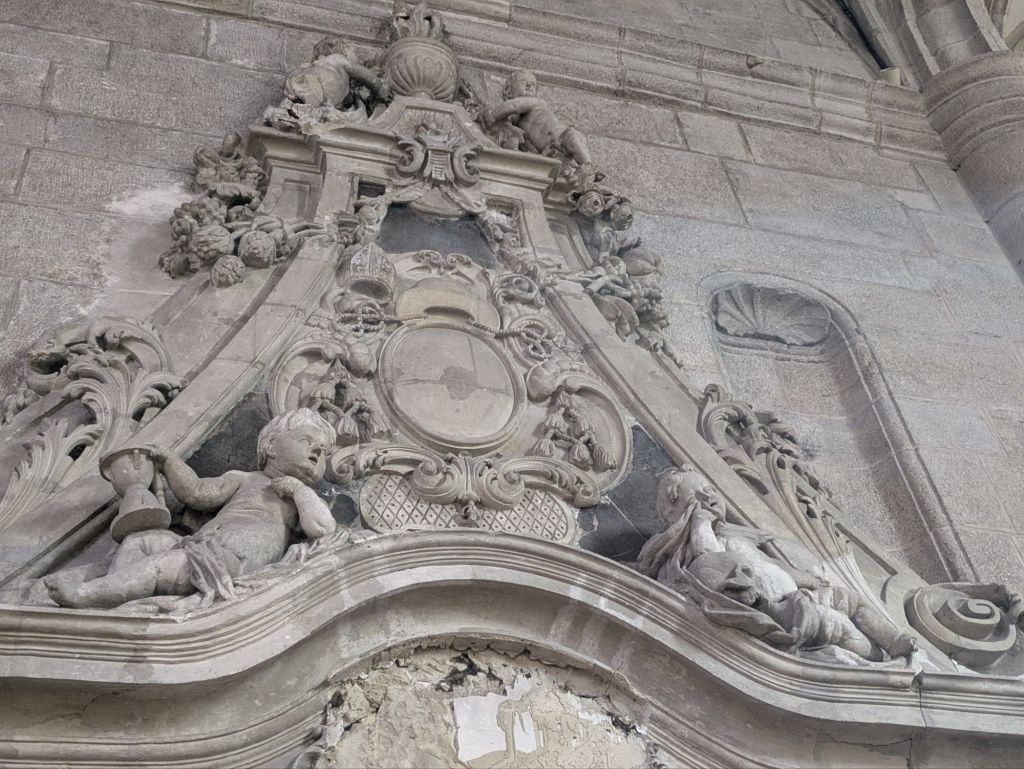
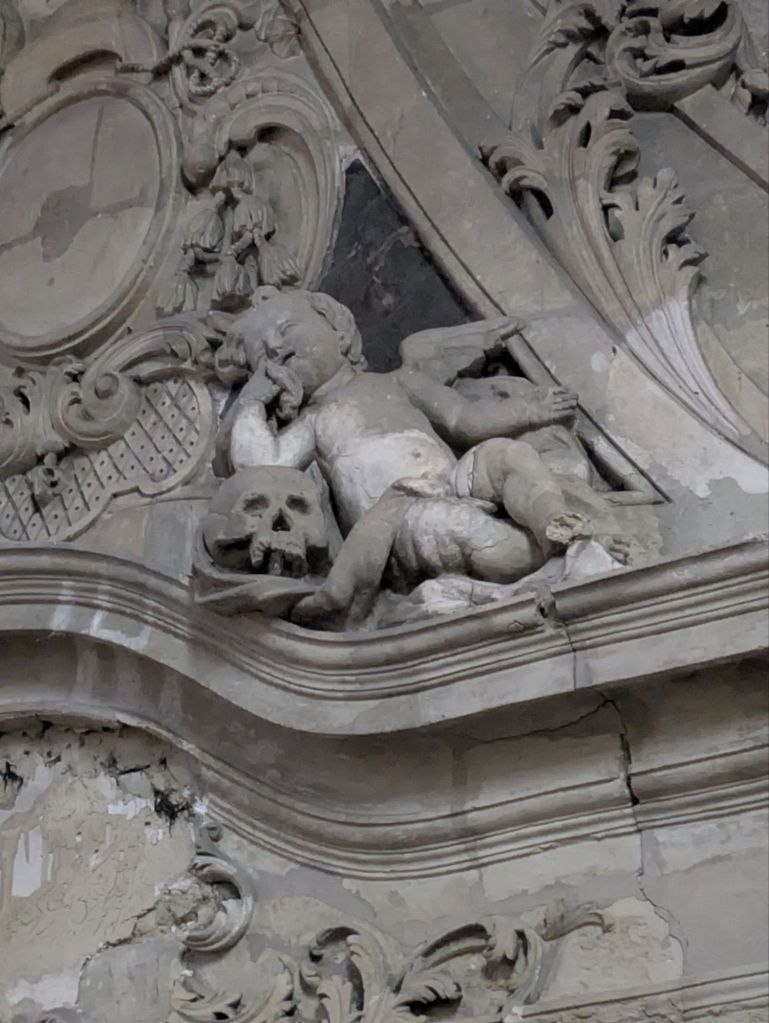
The cathedral we visited is under major restoration so much of it was off limits, but tucked away in the back is an older nave. You know how I love Memento Mori? I managed to spot a nod to the reminders of our common destiny, the hourglass and the skull.
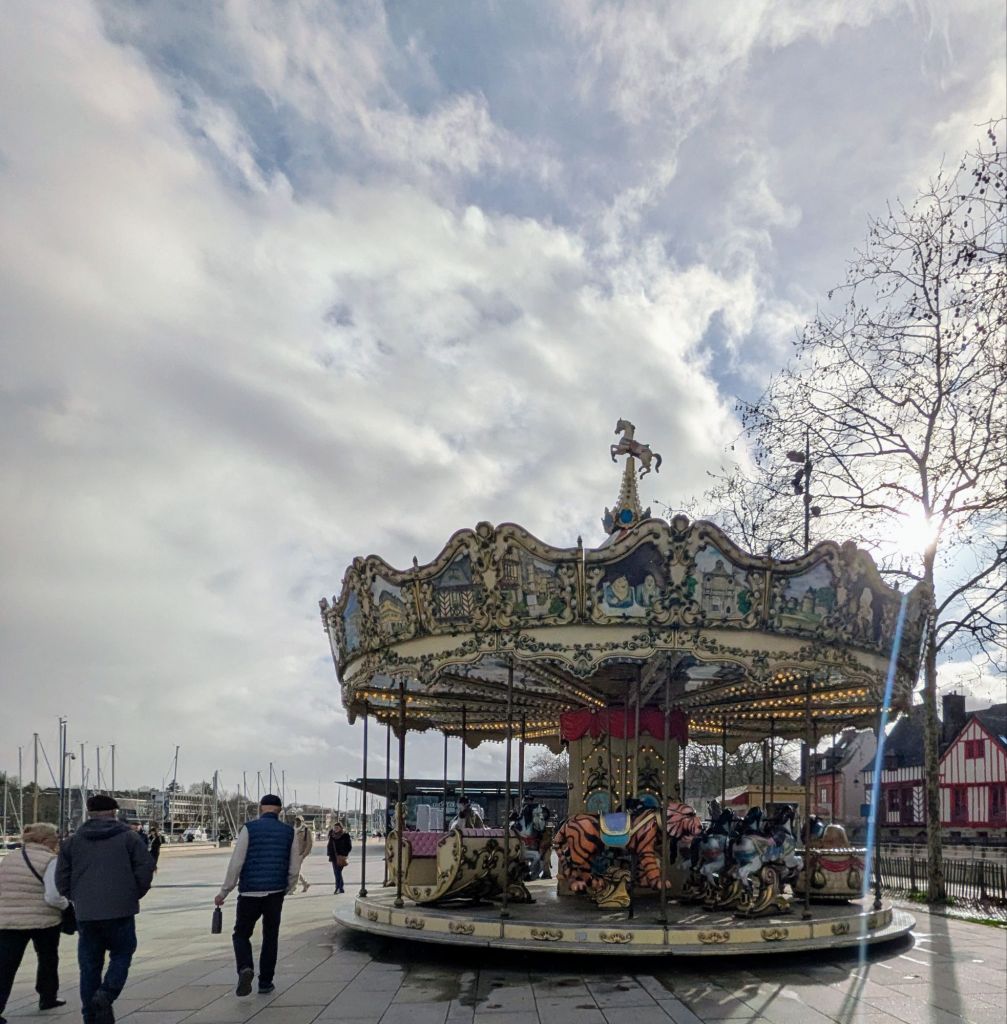
And of course every town has it’s carousel
On the train ride home, we met a lovely young woman, Fanny, who spoke amazing English, and was so kind and joyous. She made the ride home to Nantes fly by. Thank you to Diane and Dennis for a welcoming day full of uplifting conversation and for sharing their new hometown with us.
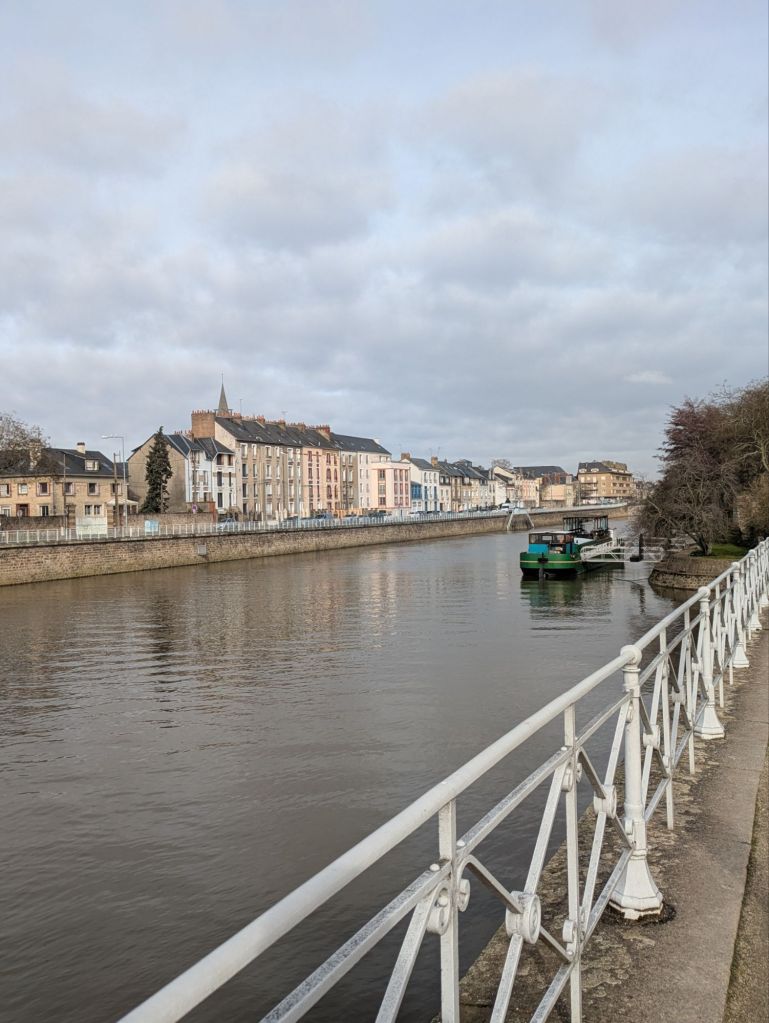
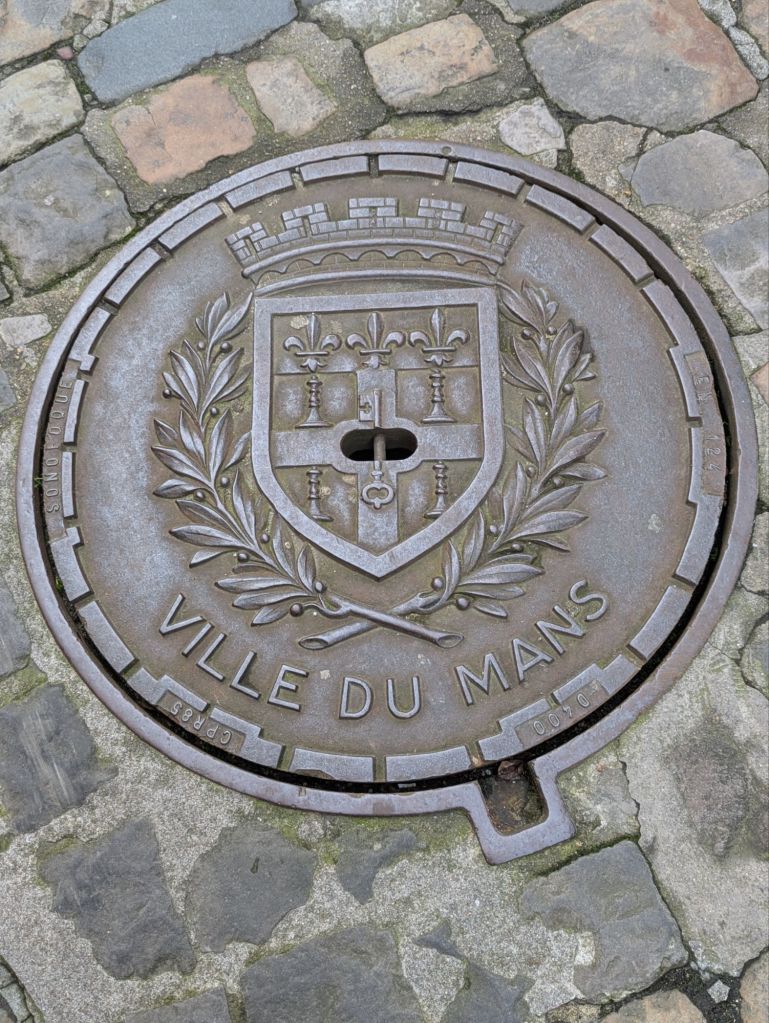
We took the train to Le Mans, city of the famed 24 hour car race.
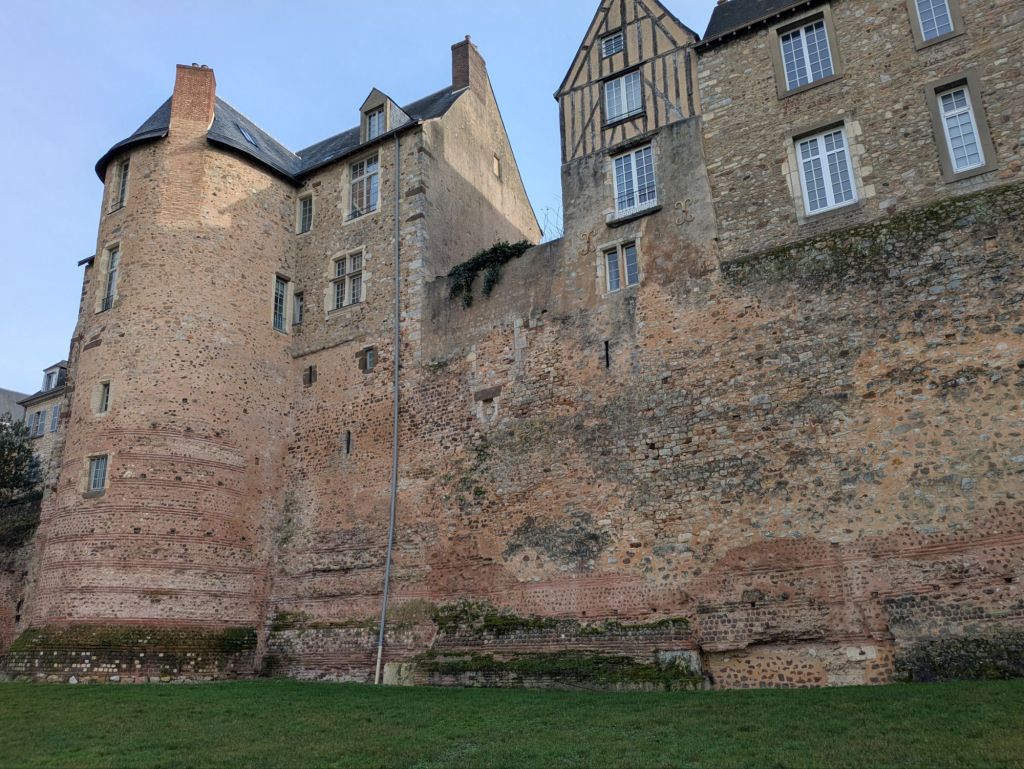
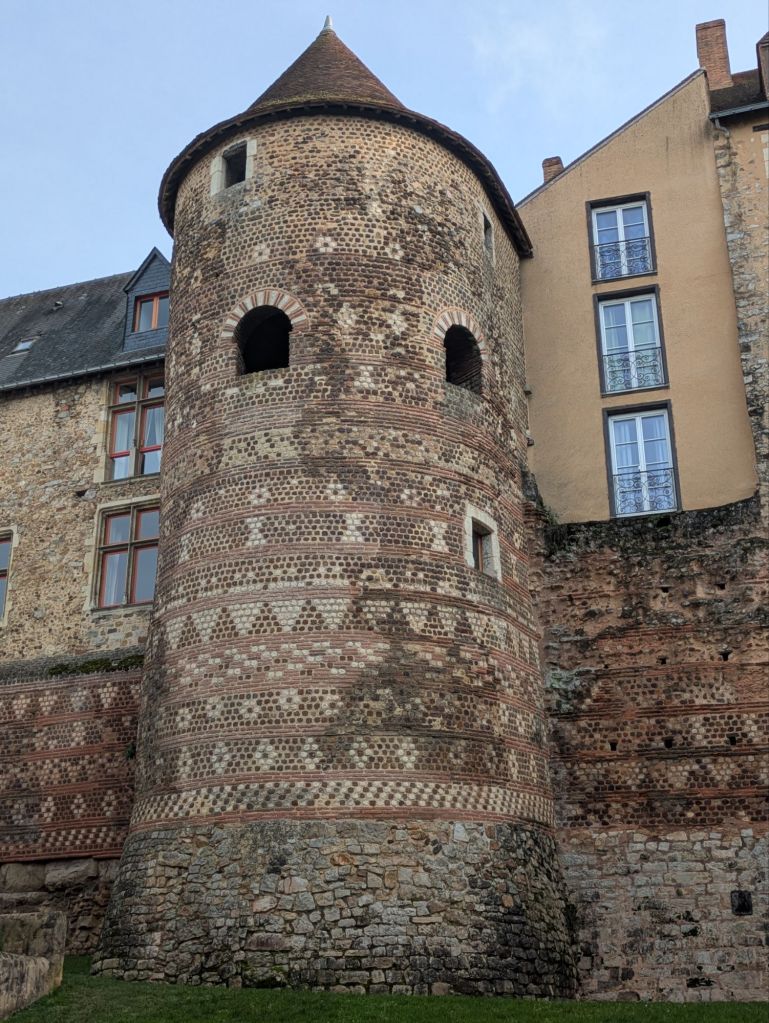
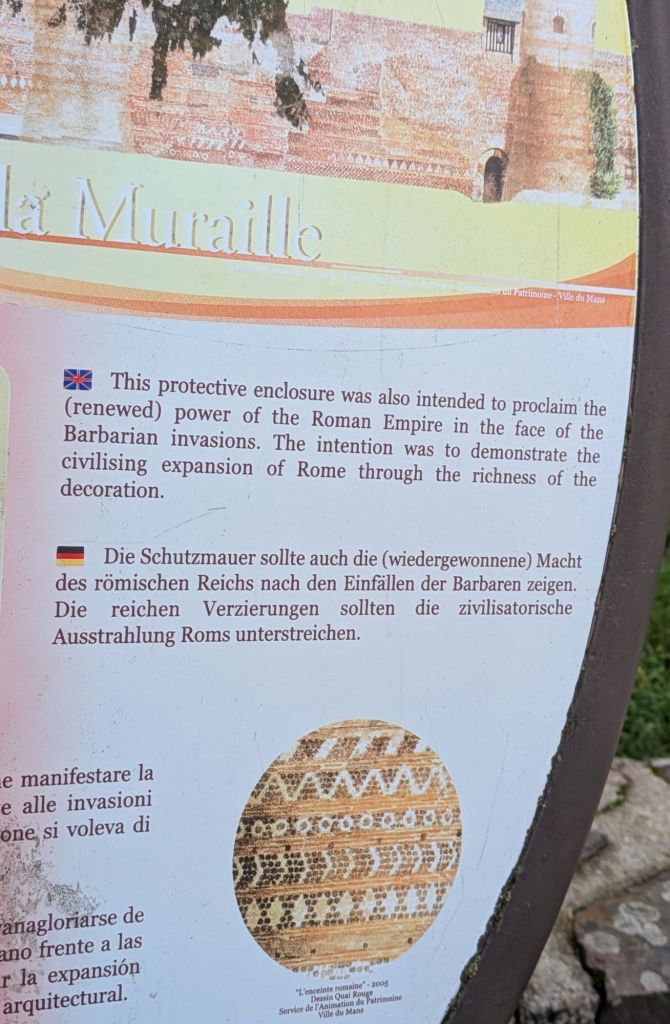
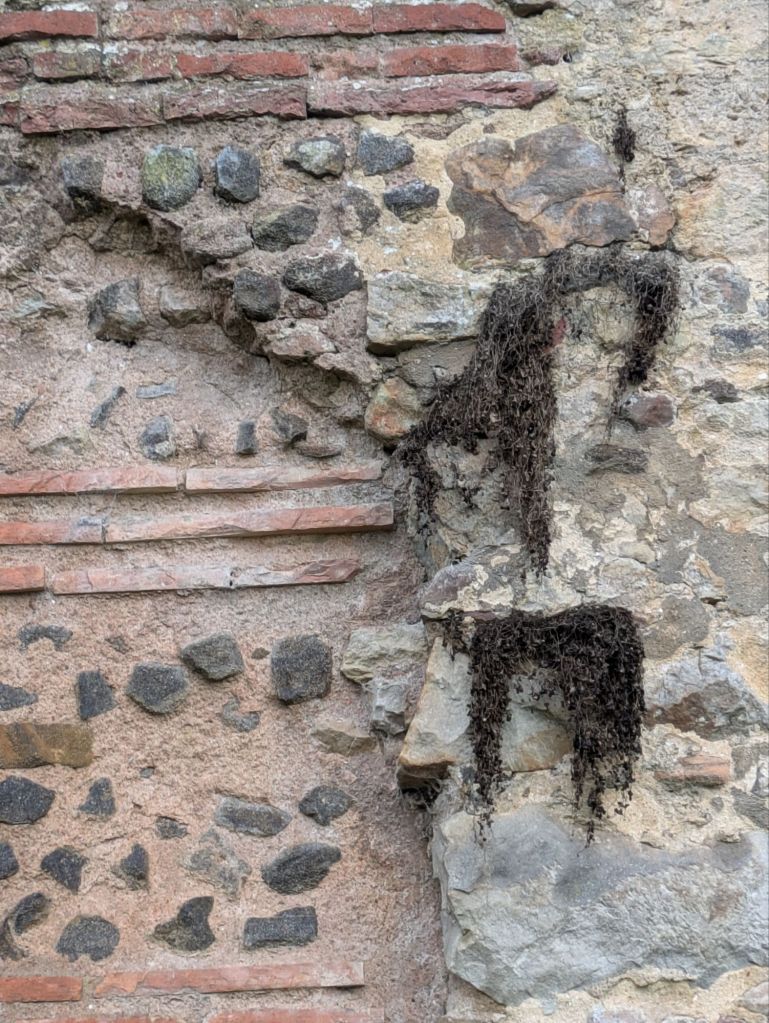
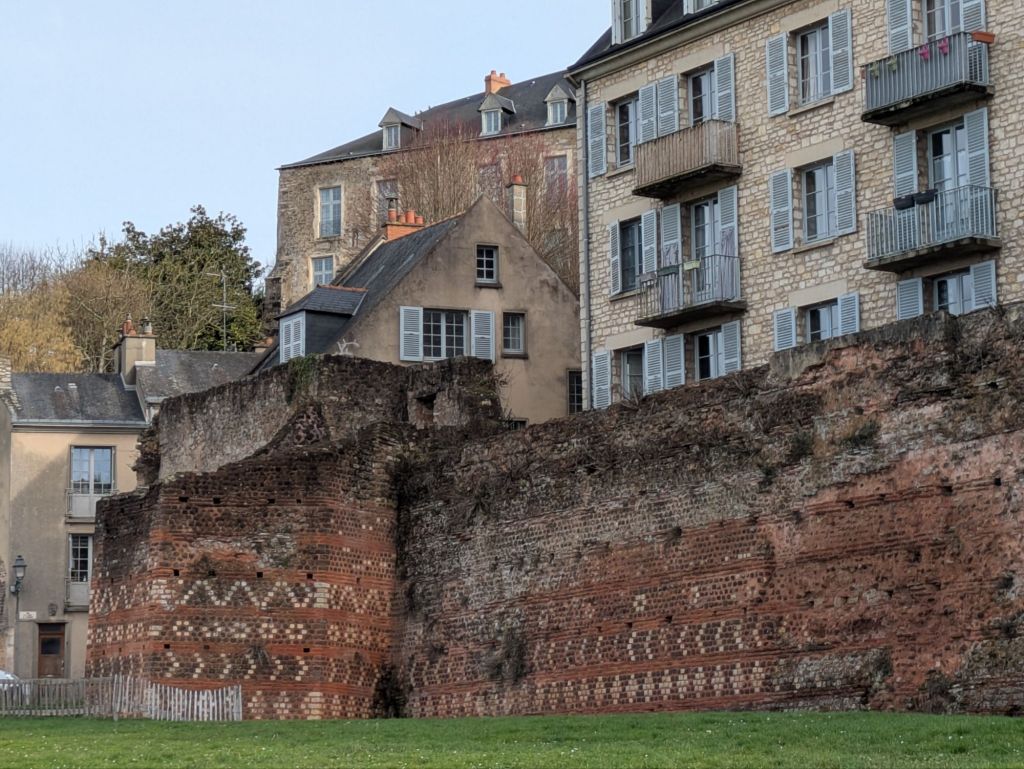
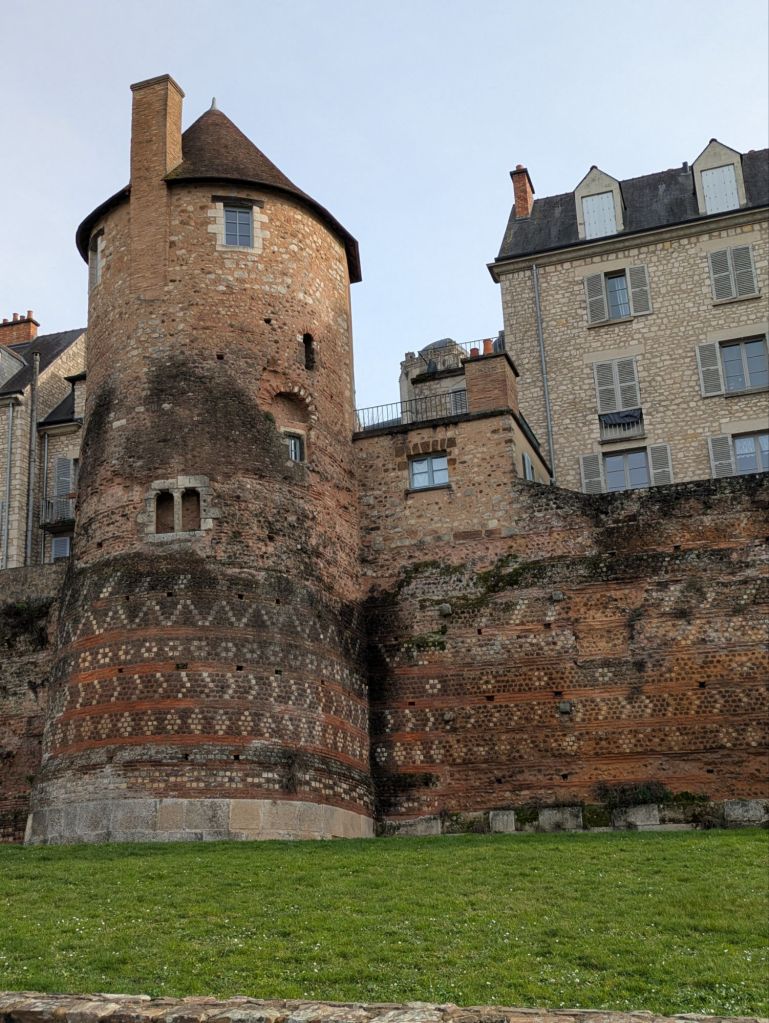
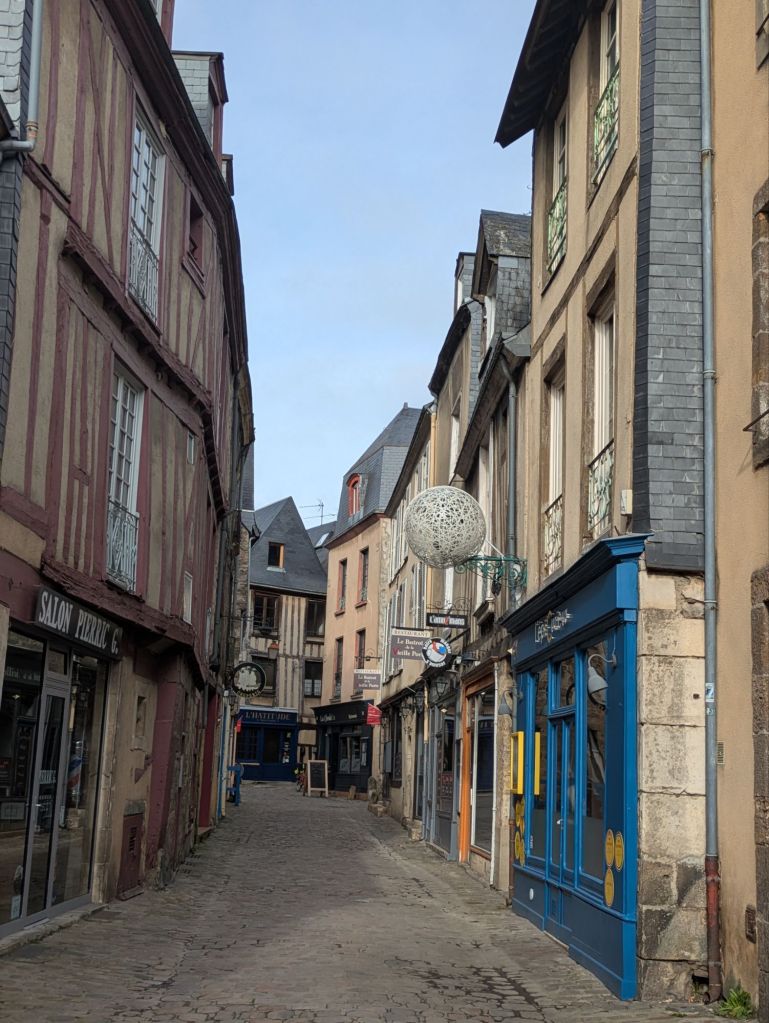
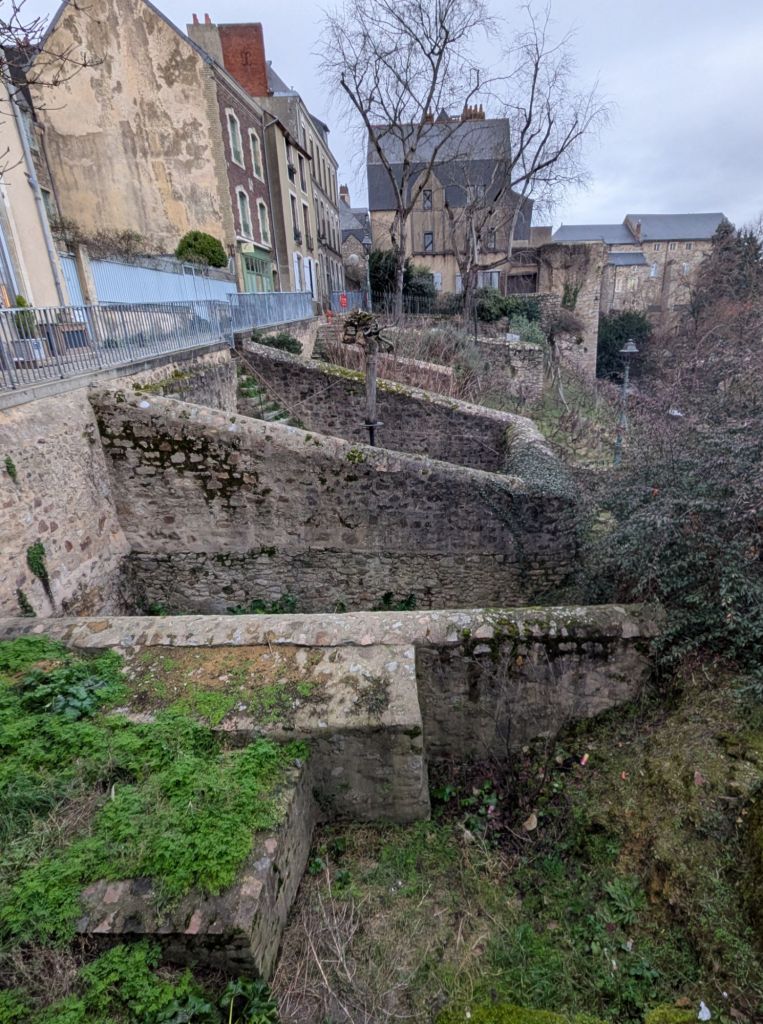
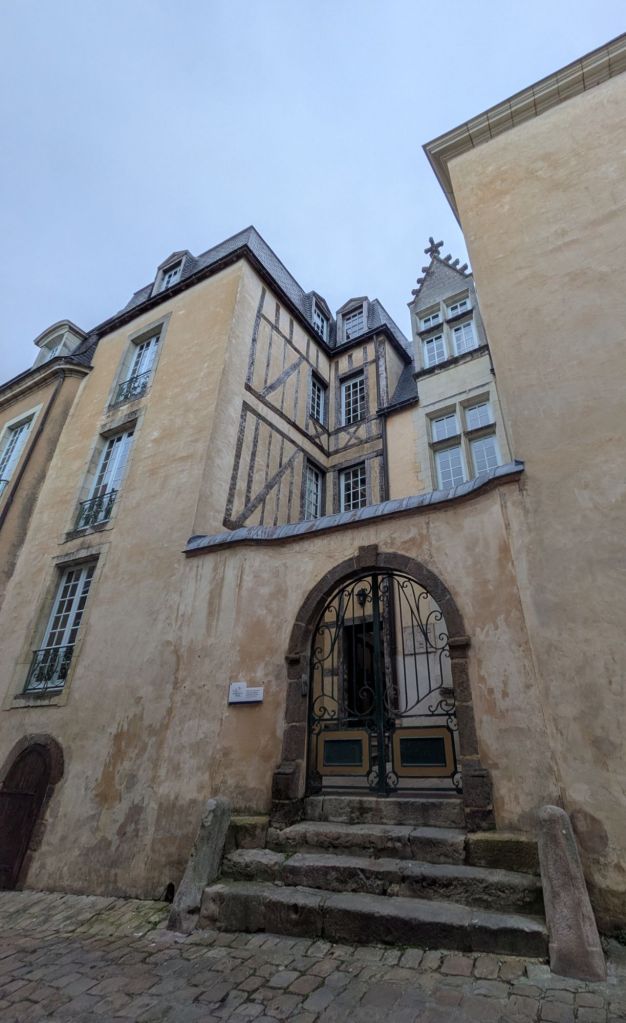
We went to continue our trail of Norman kings and queens of England, in an area named Citê Plantagenêt. This part of the city was built within a Roman wall which was constructed between the 3rd and 4th centuries CE.
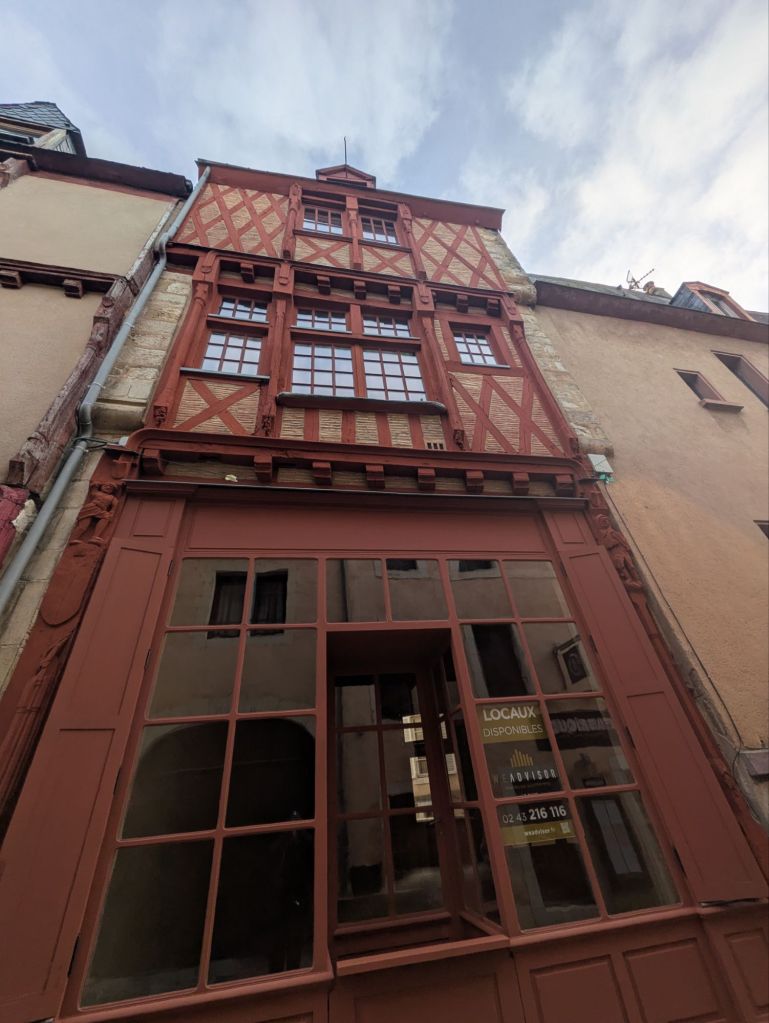
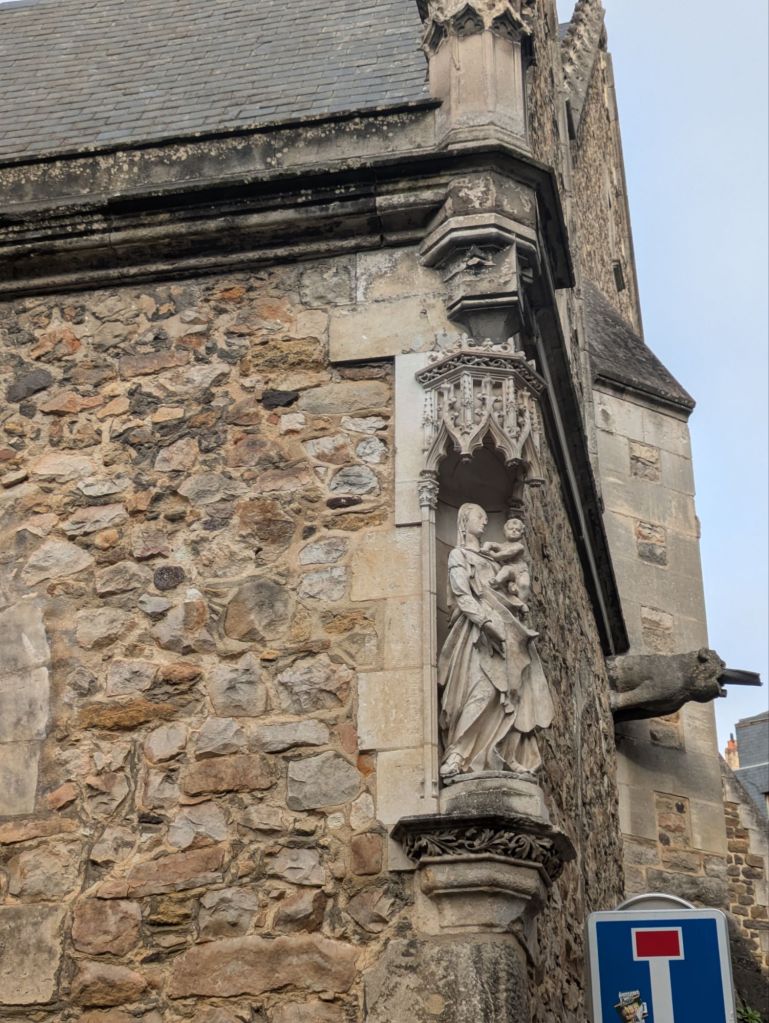
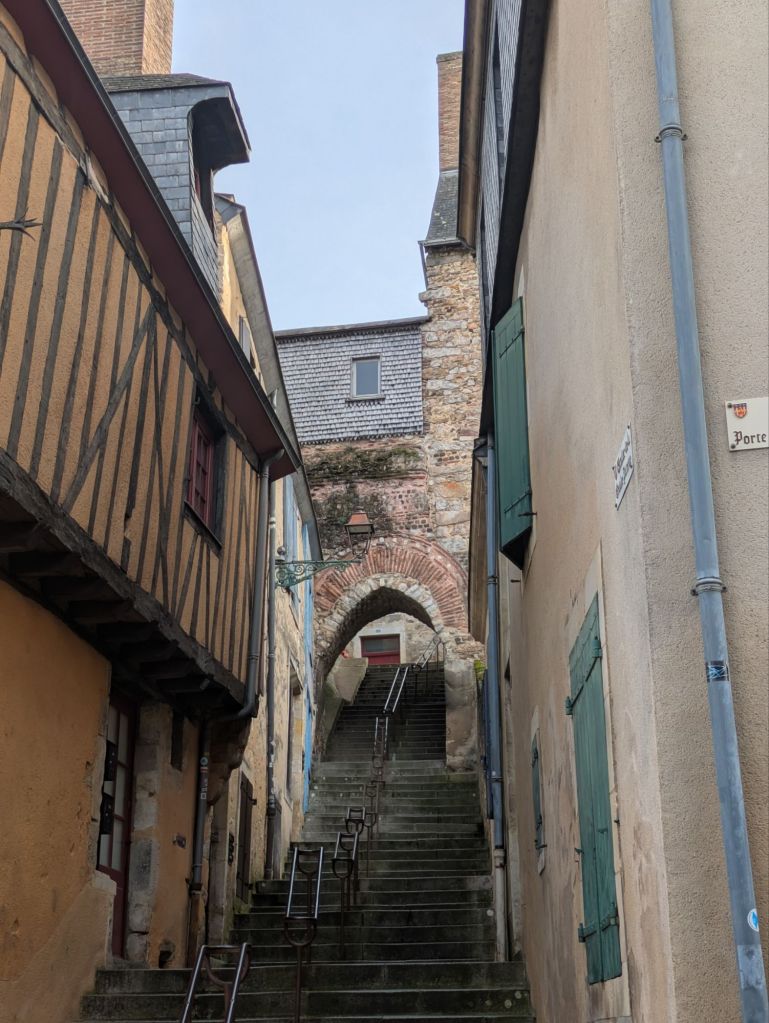
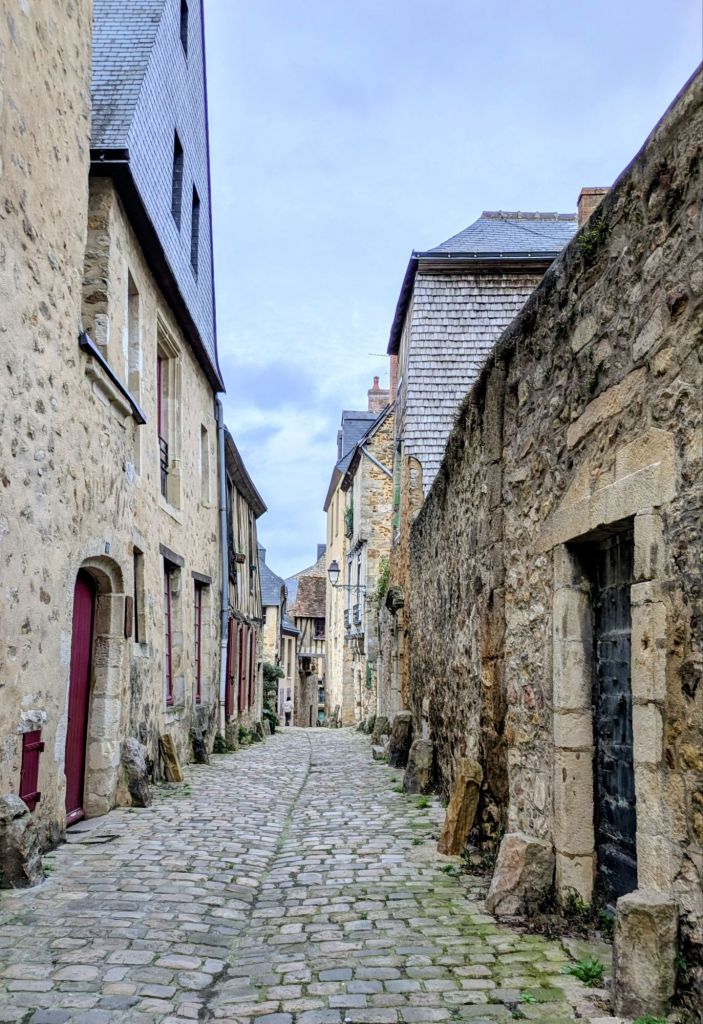
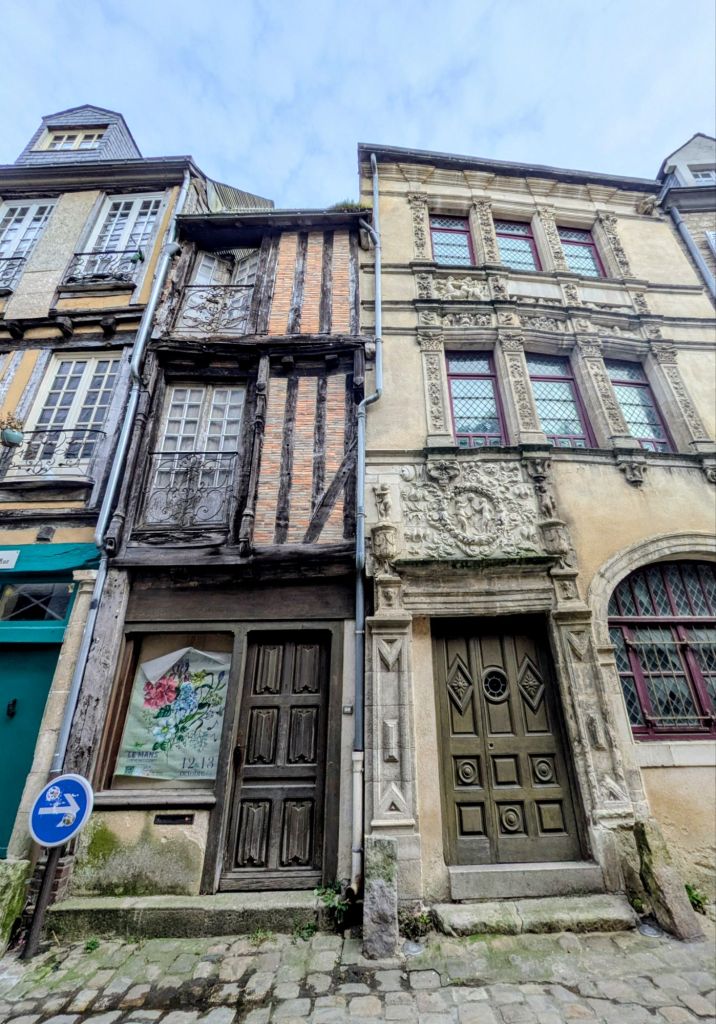
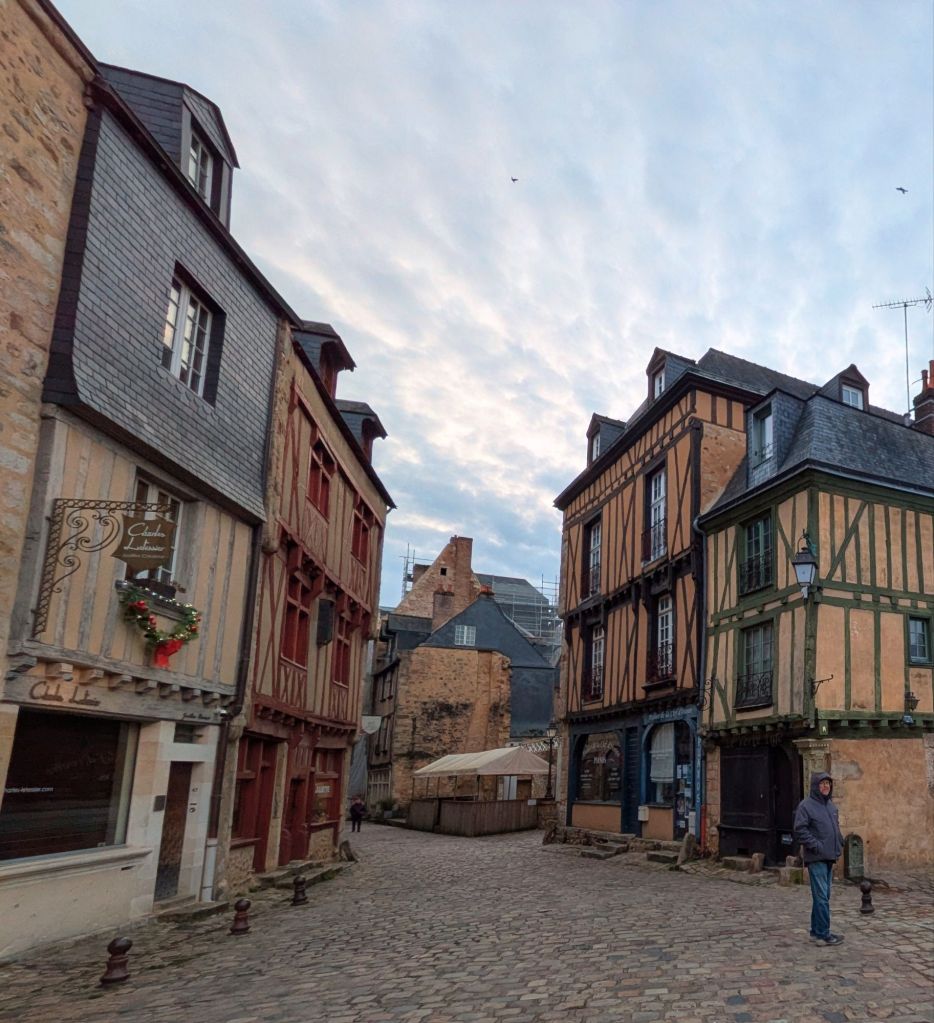
Continuing up to the Cité Plantagenêt, you step back into history- deep, rich history. Le Mans is a bit different than the other towns we’ve been to so far, as the mix of Roman, Medieval, Gothic, and 17-18th century, built up on top of each other, is just mesmerizing.
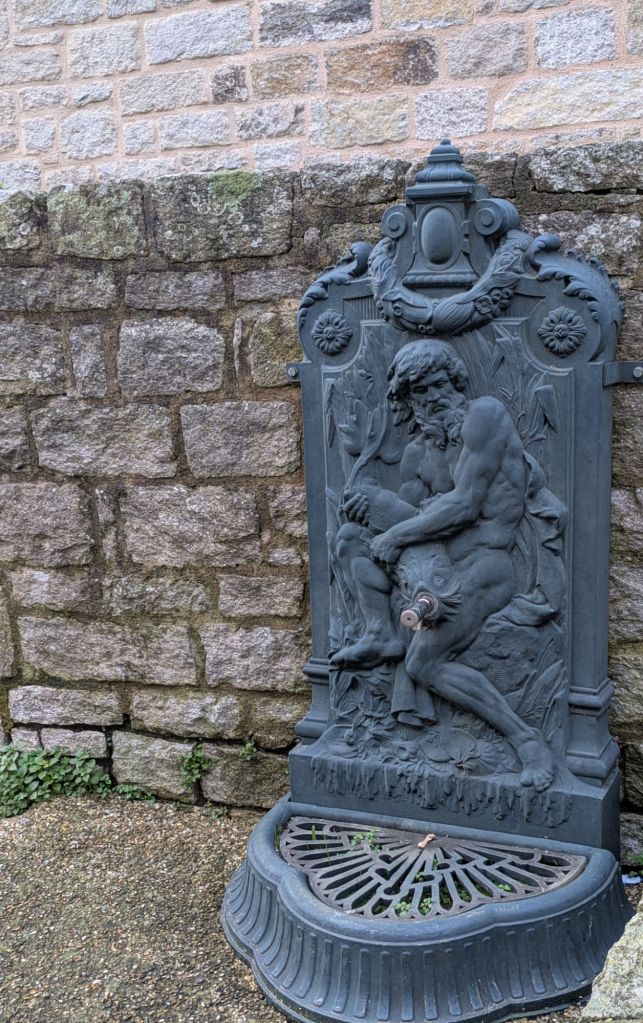
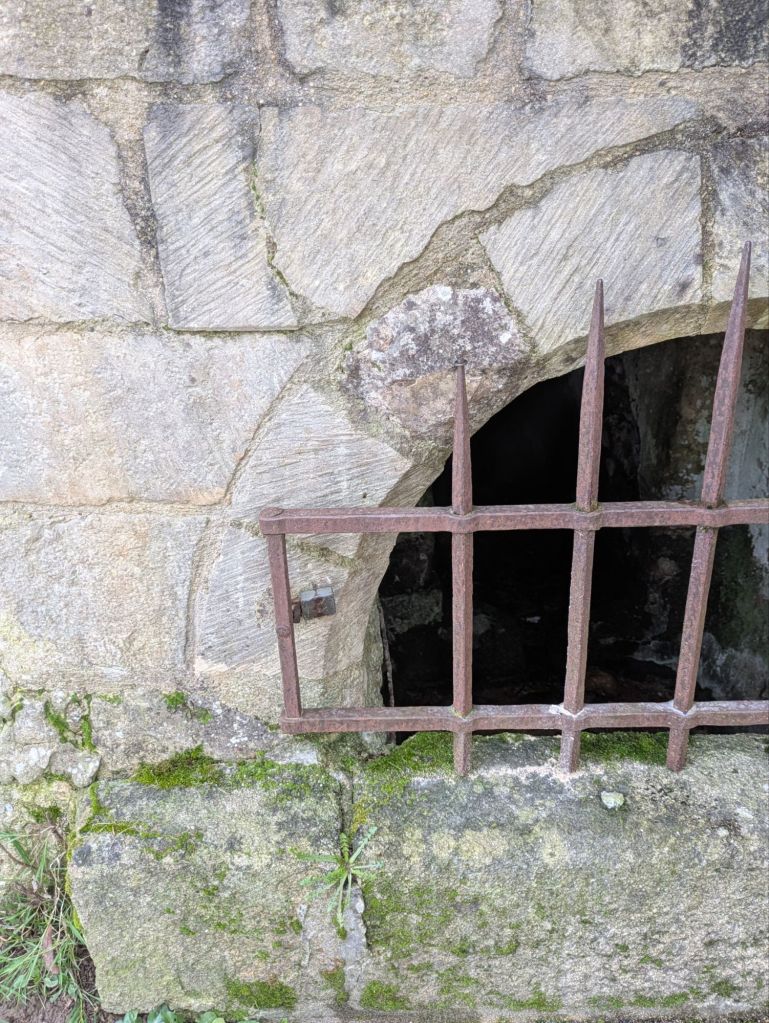
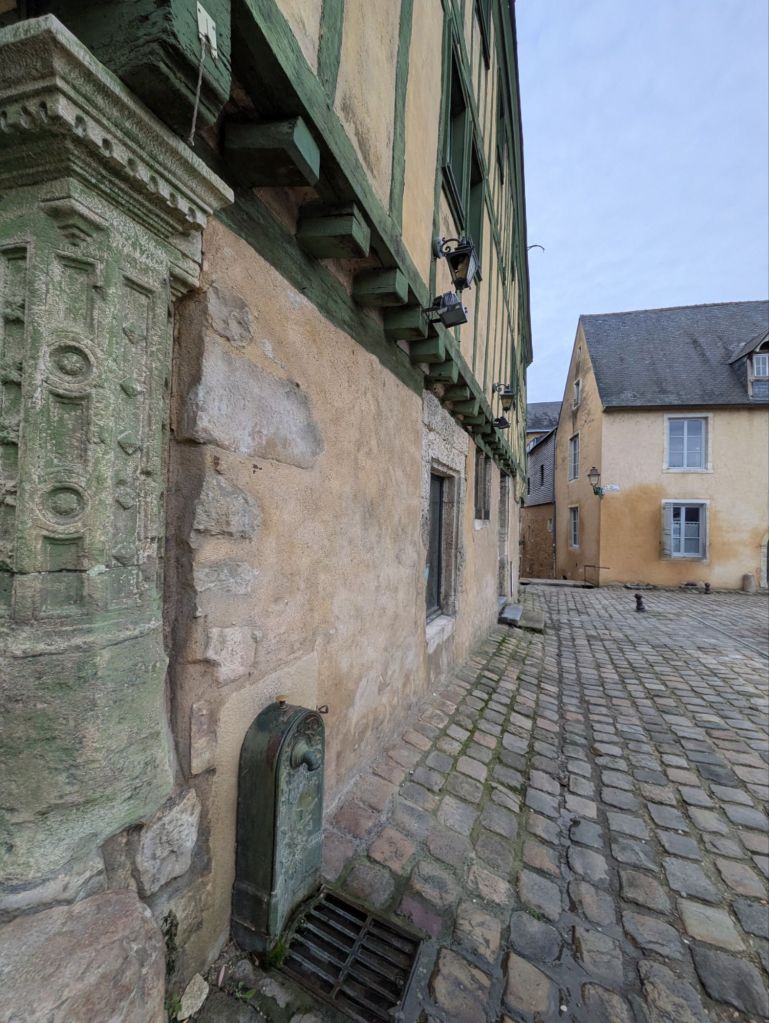
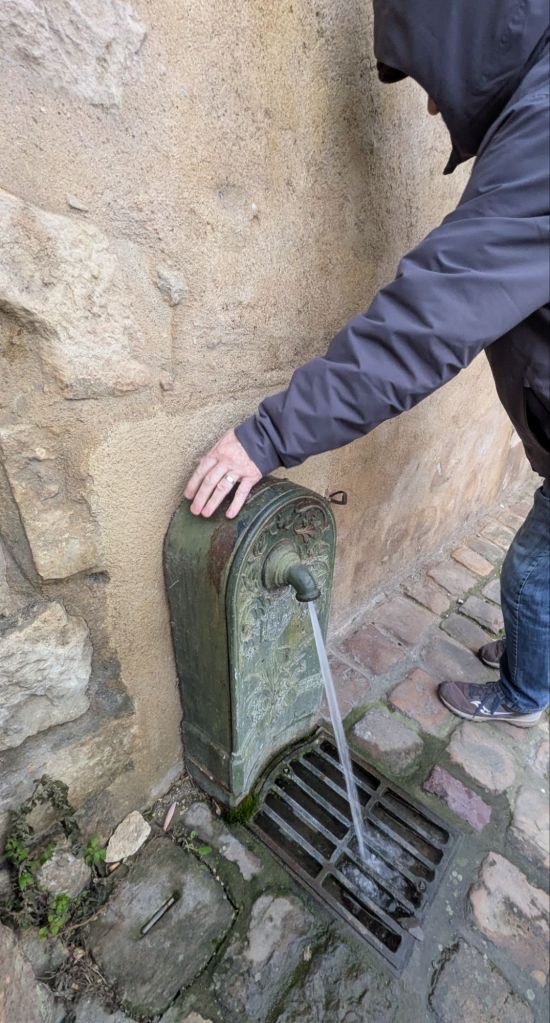
These public water pumps can be found all over the area. So far I haven’t found out much about them. And they work!
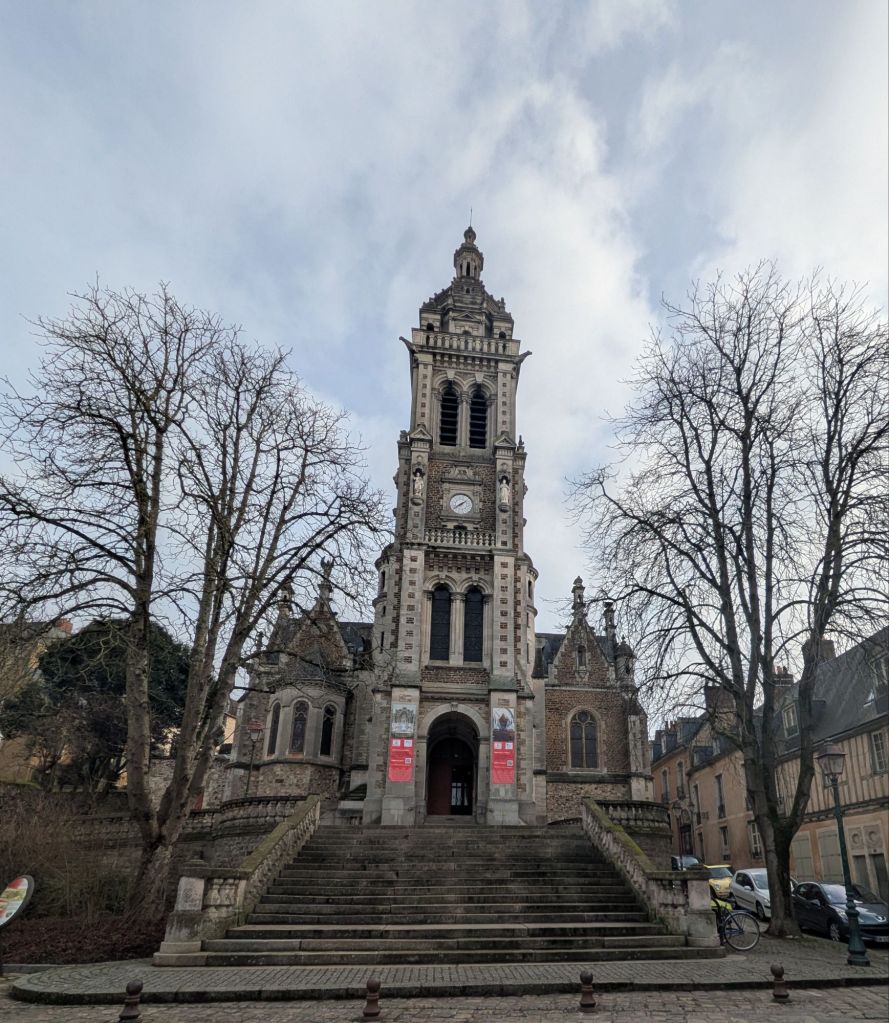
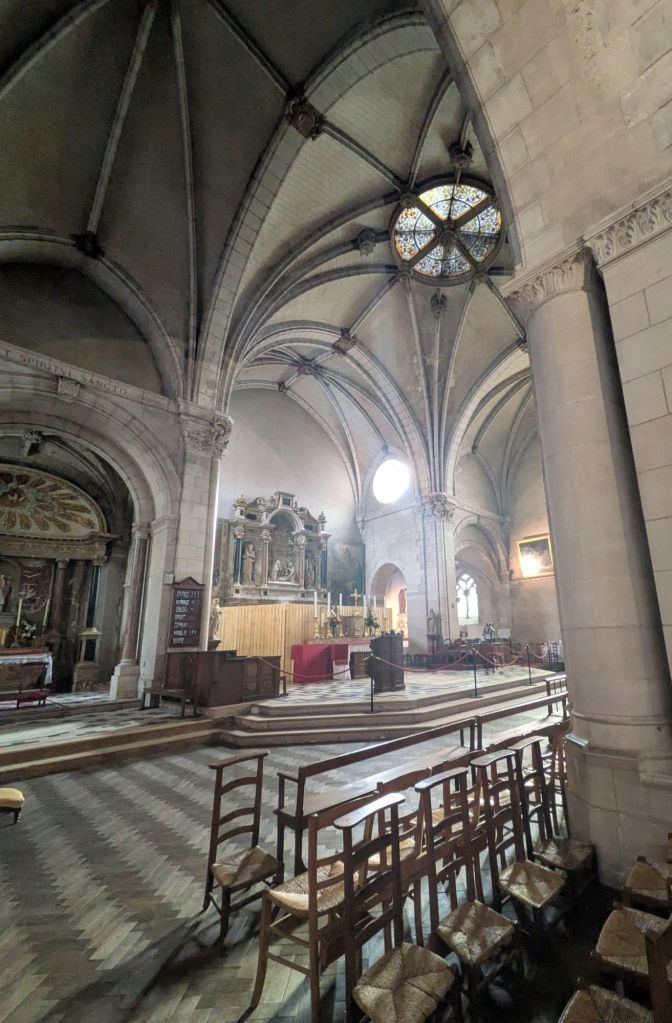
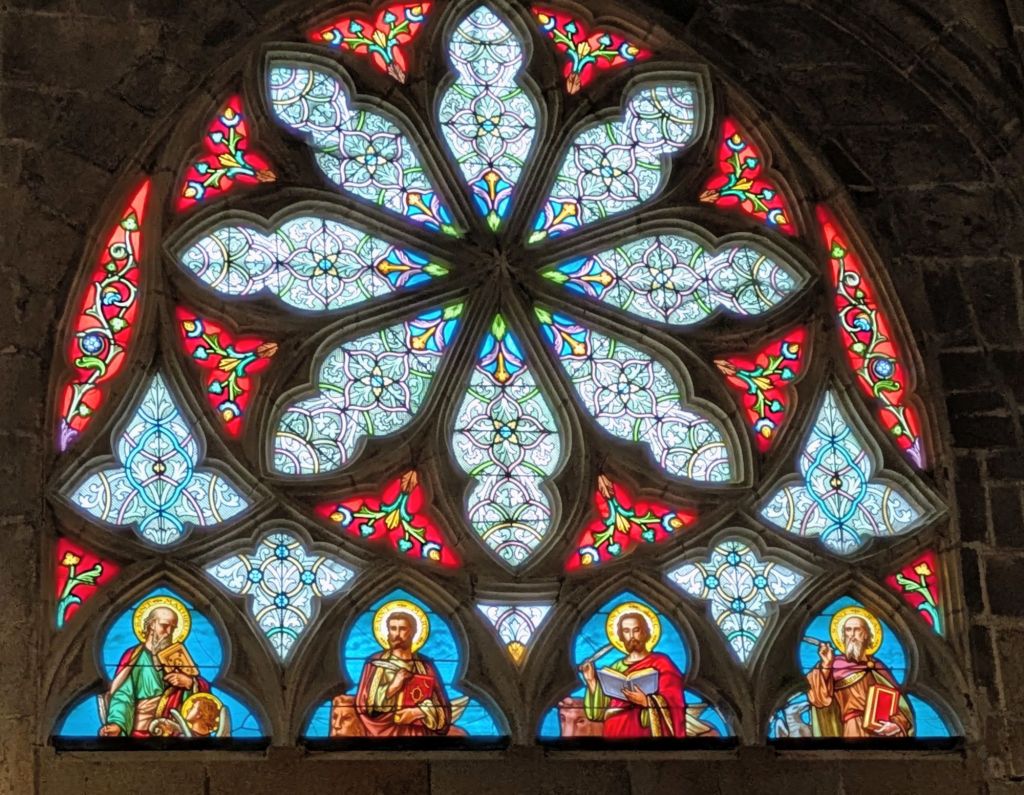
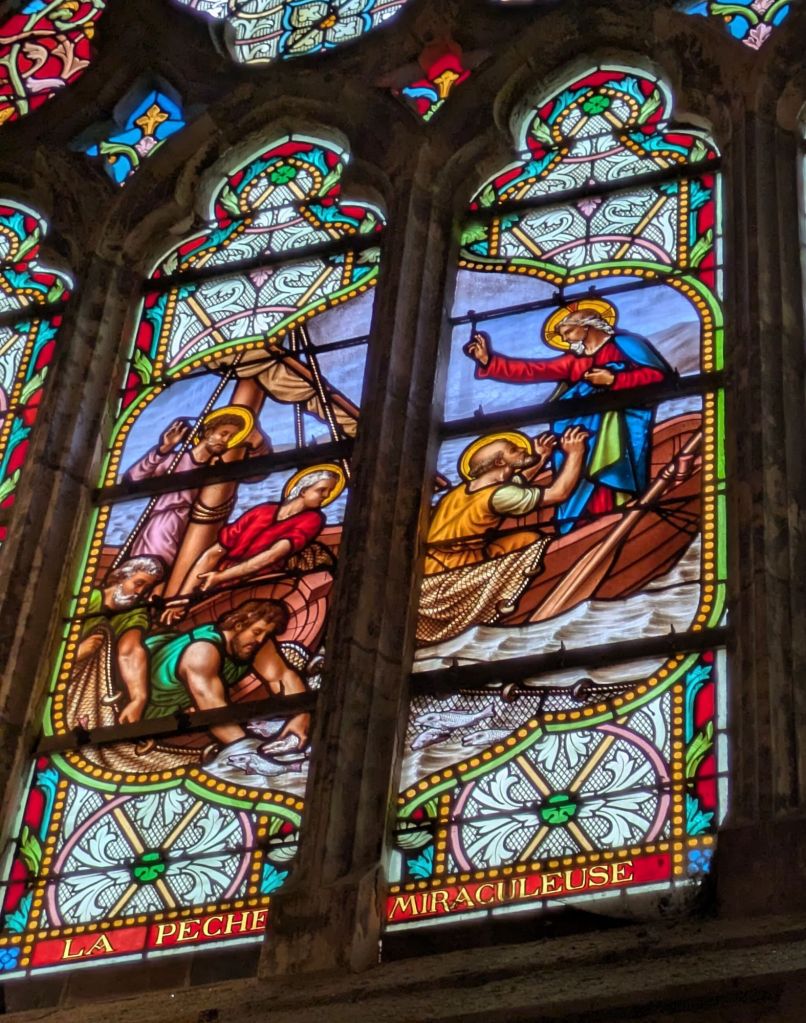
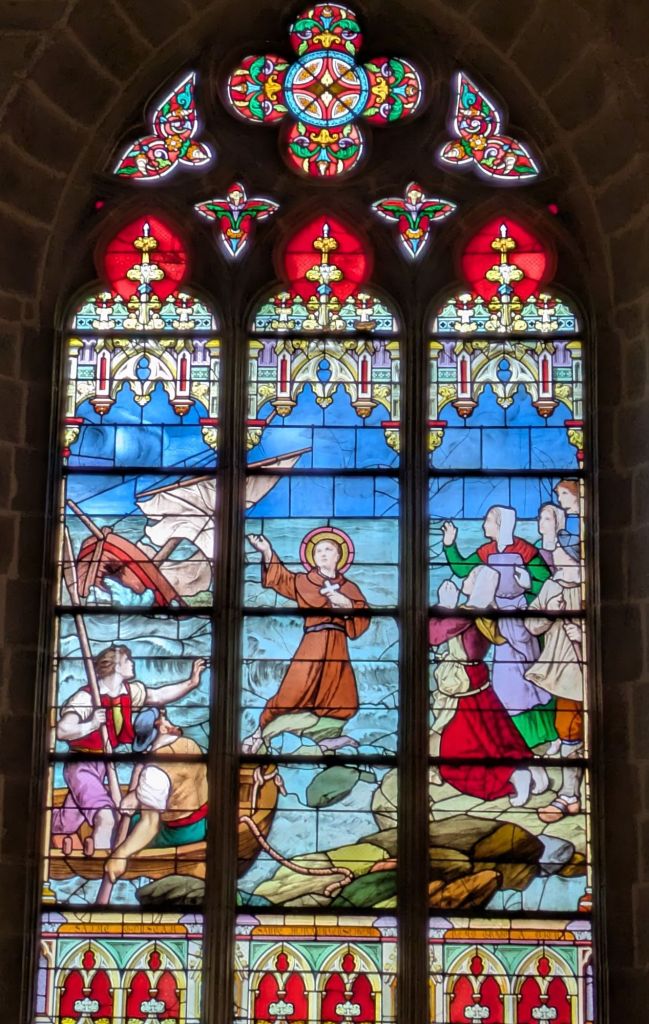
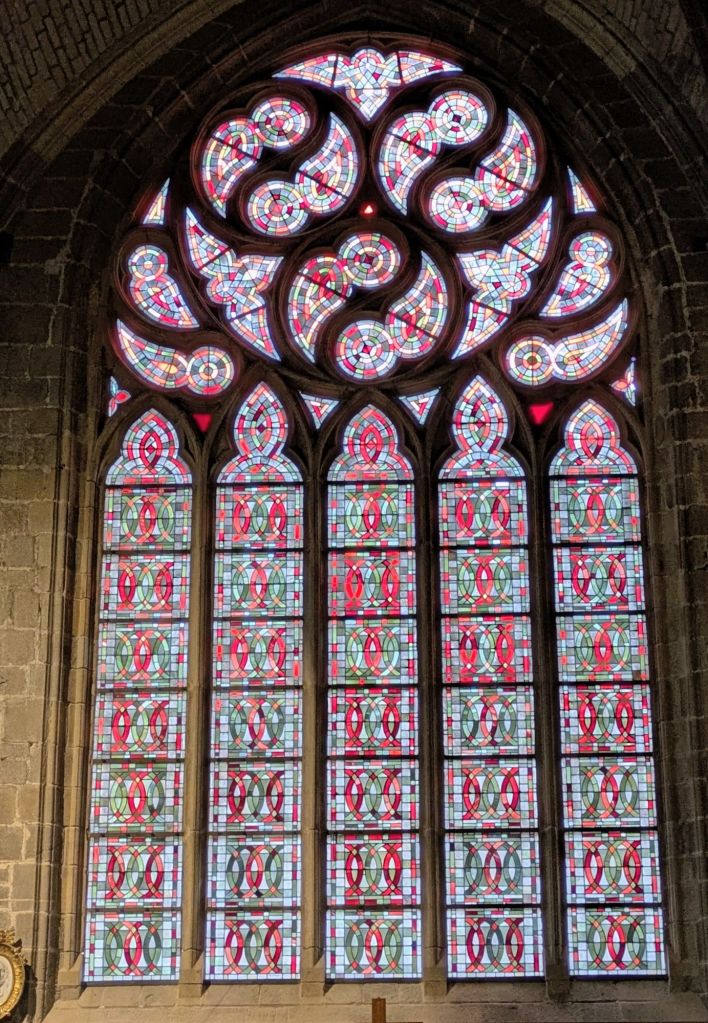
We came upon this old church, St. Benôit du Mans. First built in the 12th century, then rebuilt in the 15th and 16th, sitting on top of the Roman ruins. The most interesting thing about it was the stained glass window in the ceiling, and that it is dedicated to an Italian Saint named Scholastica, with a crypt containing her supposed humerus. All of these windows are from the 18th century.
We had lunch at a really sweet, tiny vegetarian restaurant, that has a menu of two bowls each day, one vegetarian and one vegan, depending on what they buy at the market. I forgot to take a photo of the food! It was Monday, which means everything is closed until 7:00pm, so we weren’t able lucky to be able to eat here.
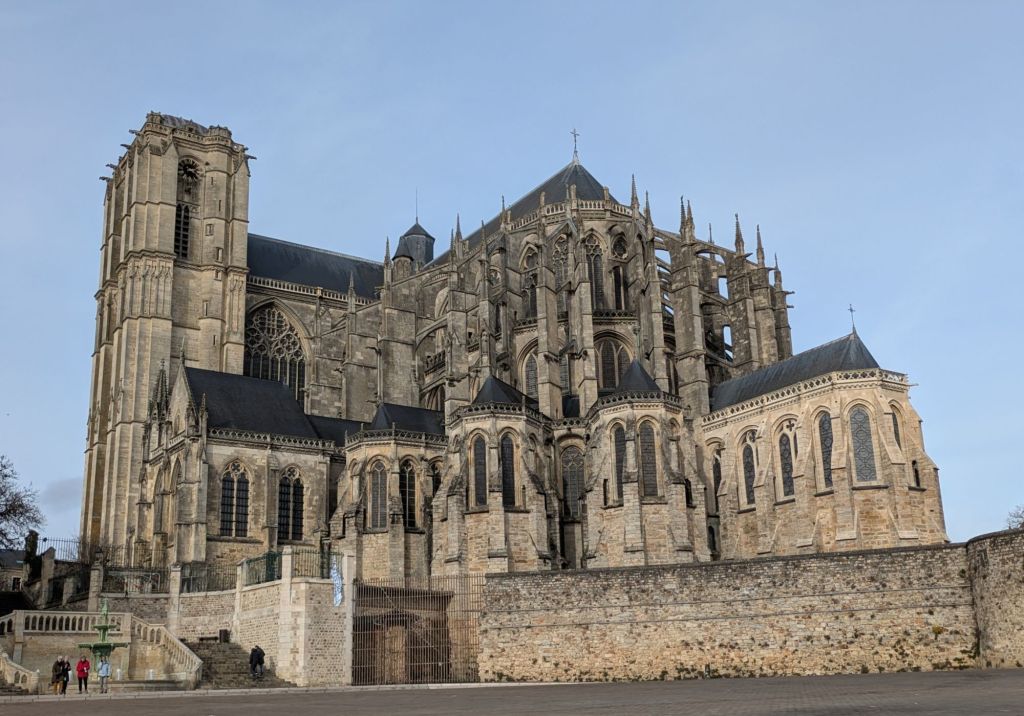
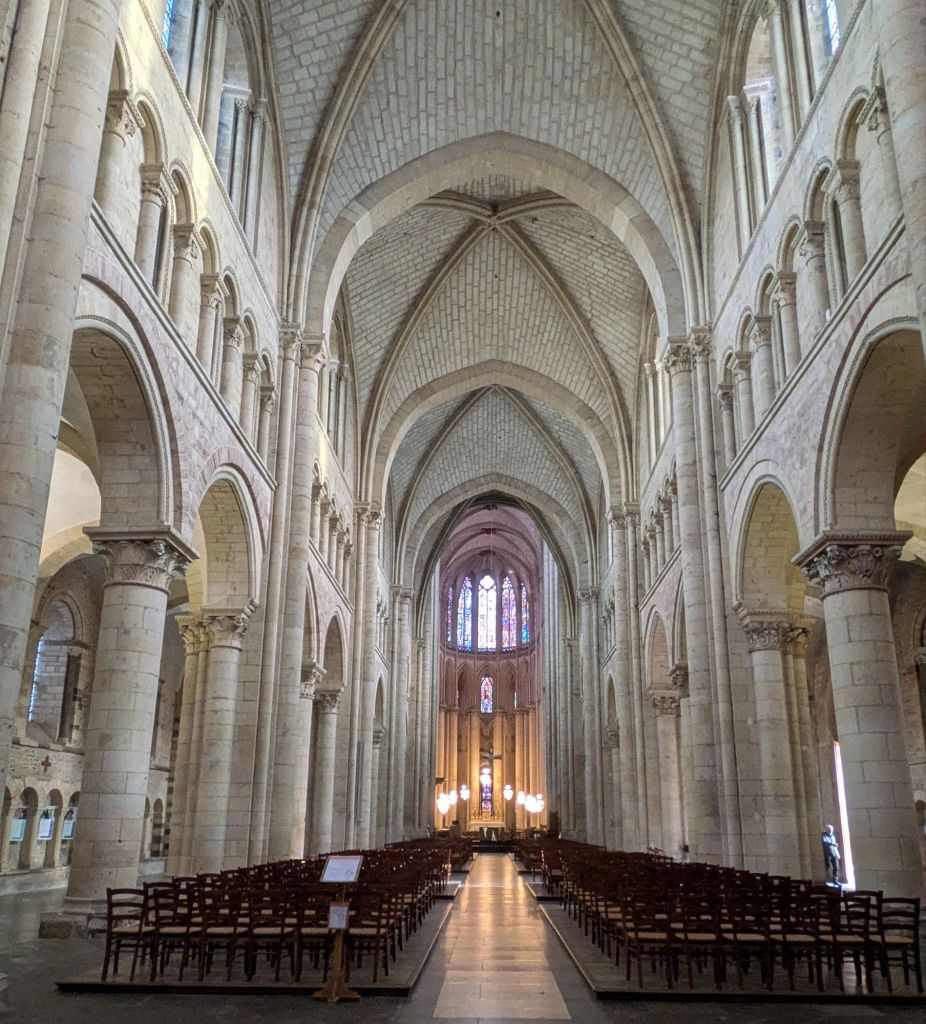
Next we head to the big cathedral, St. Julien. When we got there, we stumbled into a funeral. Luckily, because of that, we got to hear the magnificent organ, and all the lights were on! We stayed a bit but then left to walk around town and come back when we wouldn’t be disturbing a sacred moment.
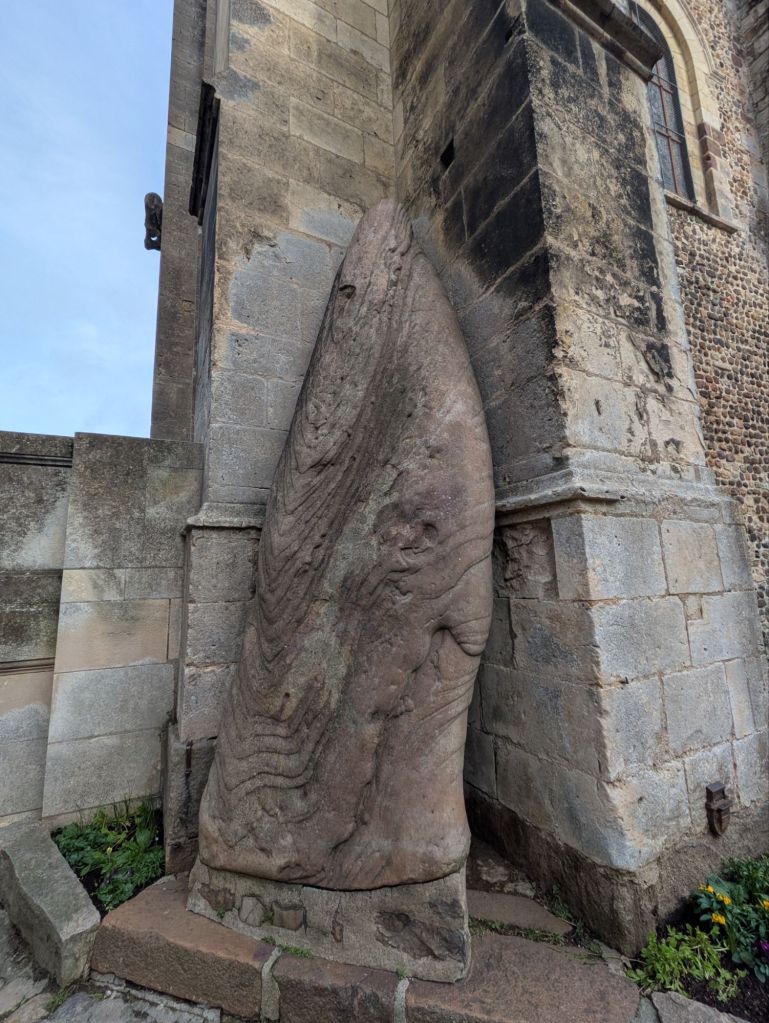
Outside the church is a famous Menhir of Le Mans. A menhir is a single standing stone. It was an important pagan symbol that was saved by St. Julian, who brought Christianity to this town in the 4th century. It was placed next to the cathedral during construction and is said to be the only remained stone of where others once stood.
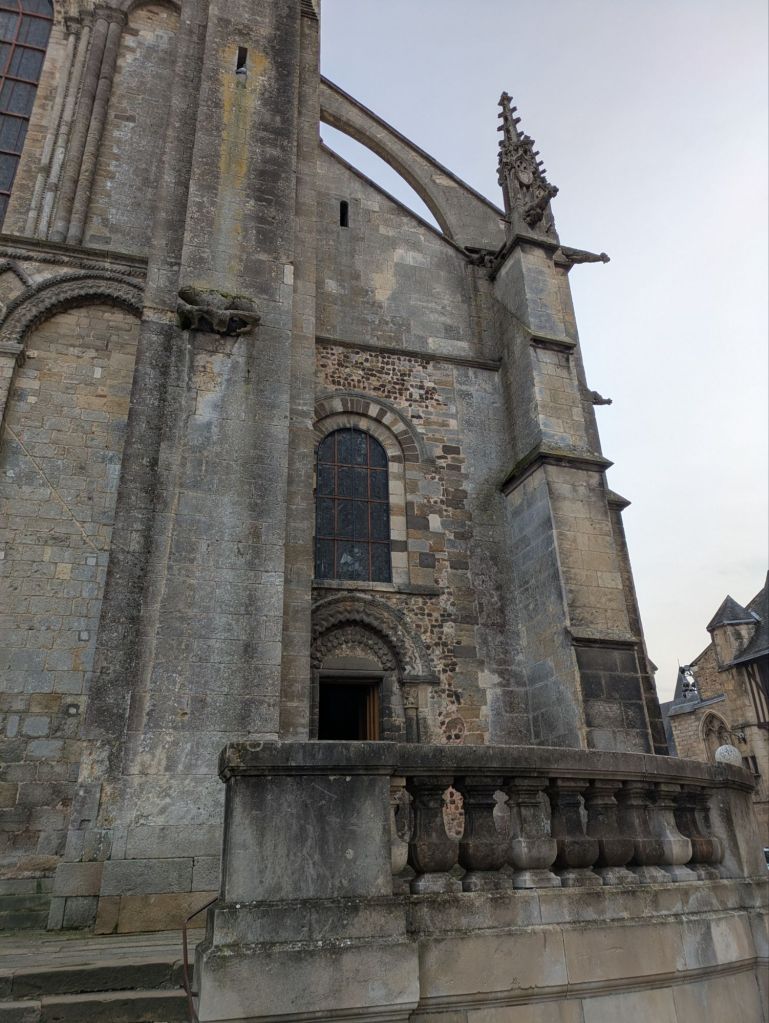
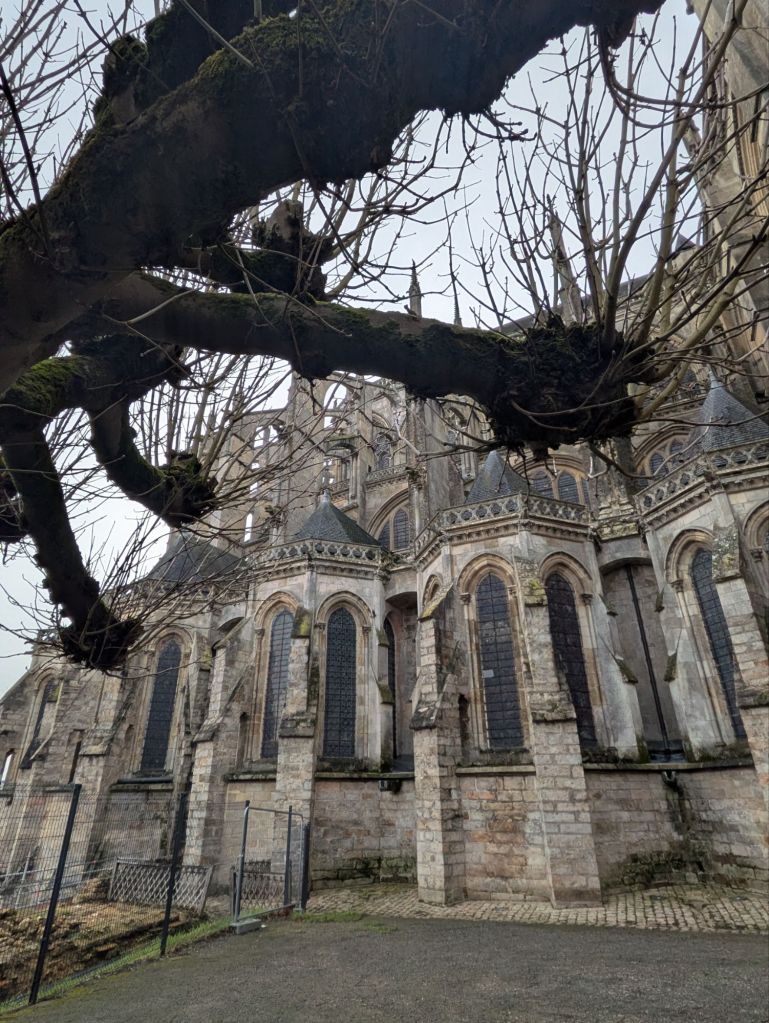
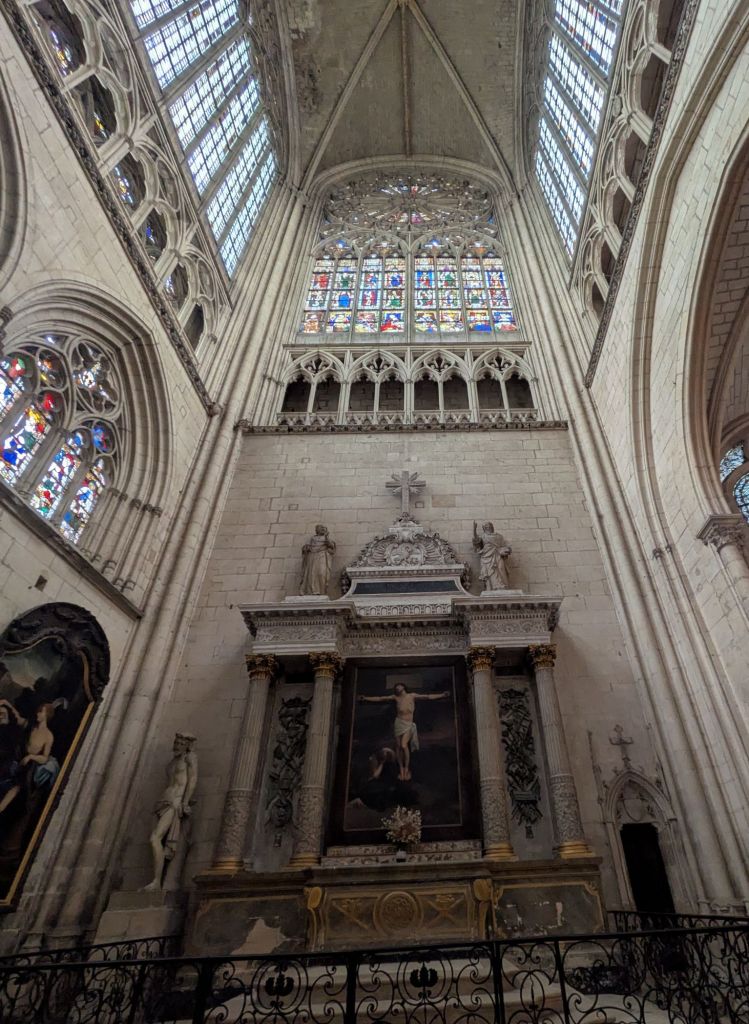
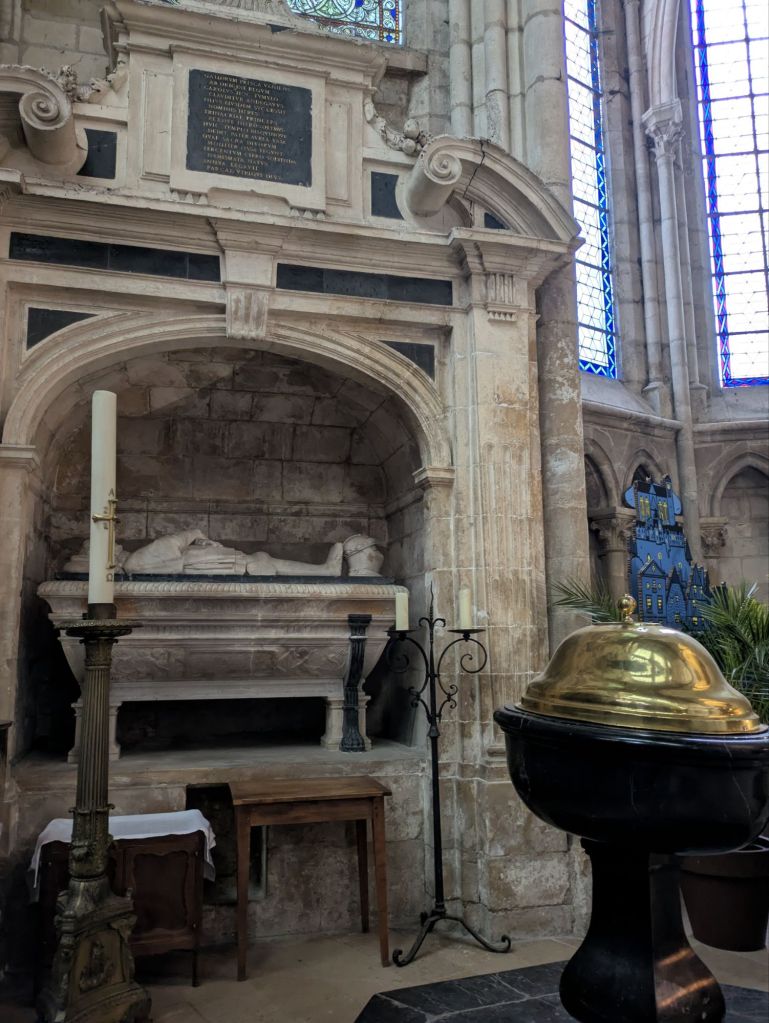
The current building was begun in the 10th century and finished in 1430. Its later work was accomplished by Henry II, and his father, Geoffrey Plantagenet is buried here. The church is indeed amazing and we got to hear the bells chiming a couple of times. It really is amazing.
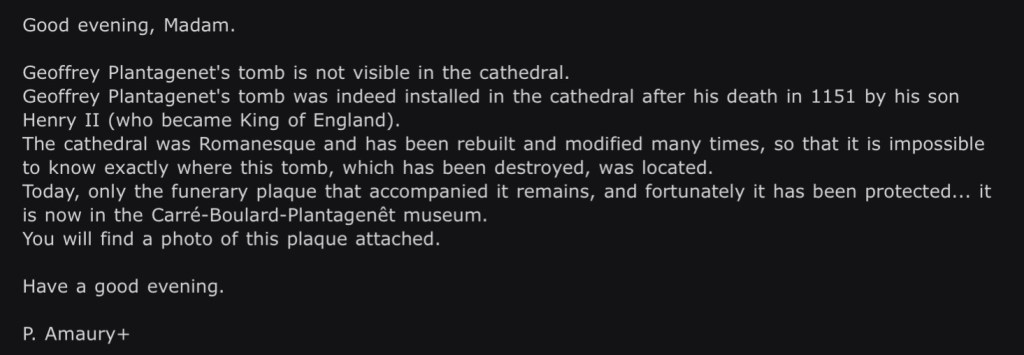
Geoffrey Plantagenet buried somewhere here. I emailed the church to see if they can tell me exactly where, and got a reply.
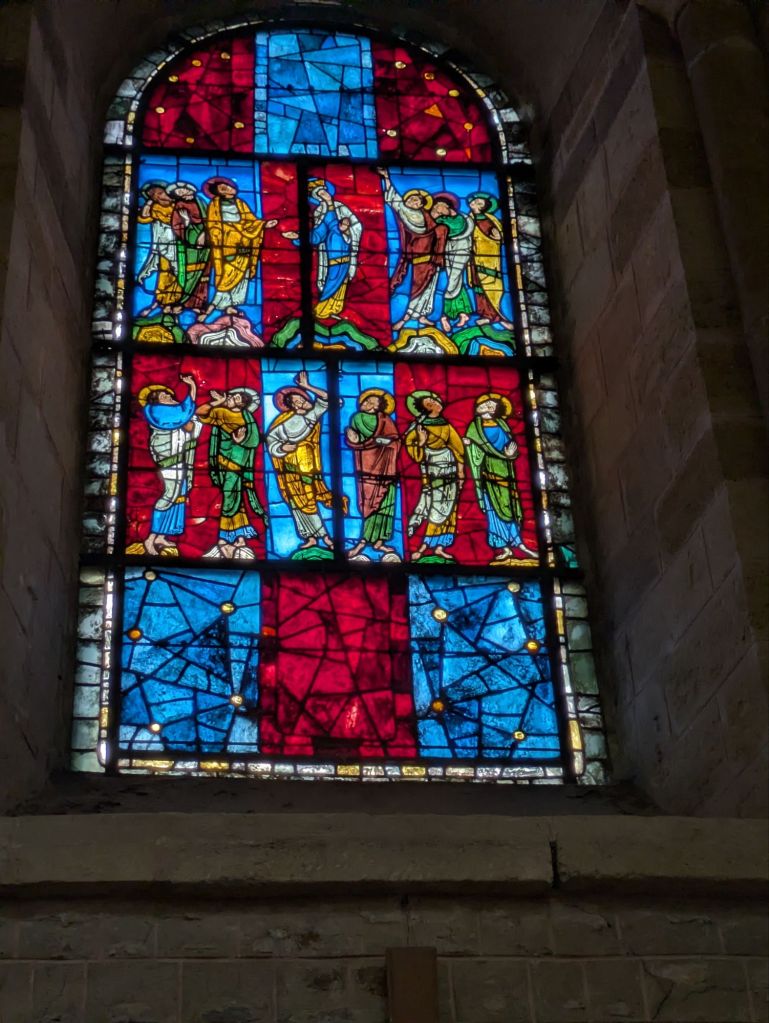
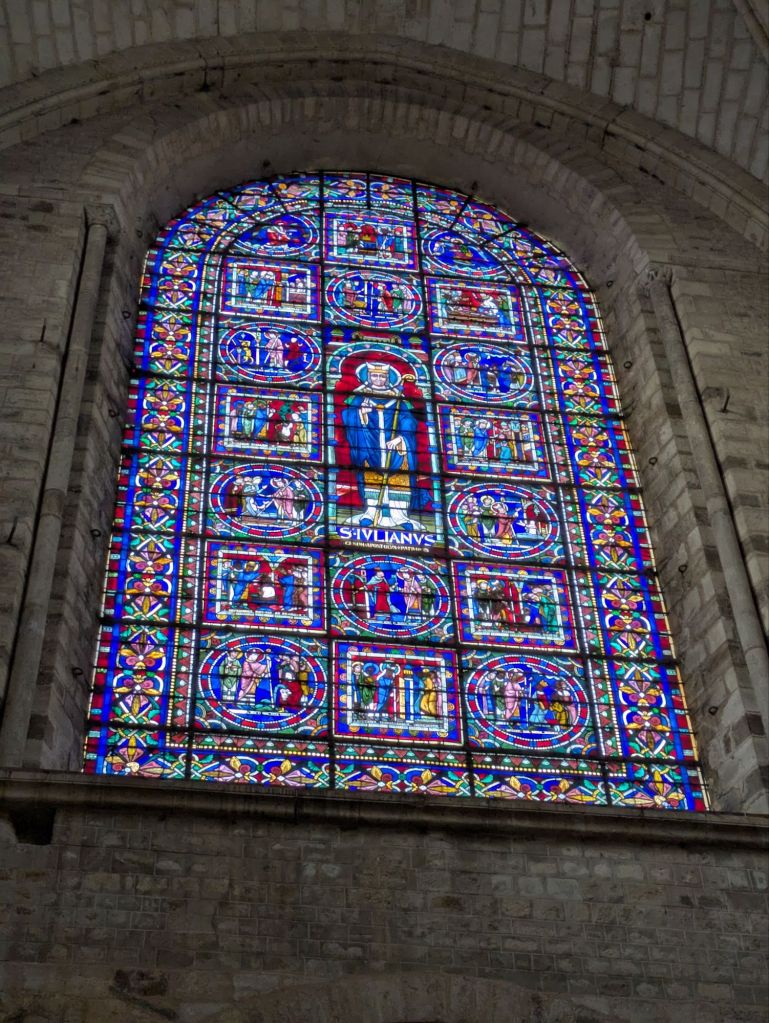
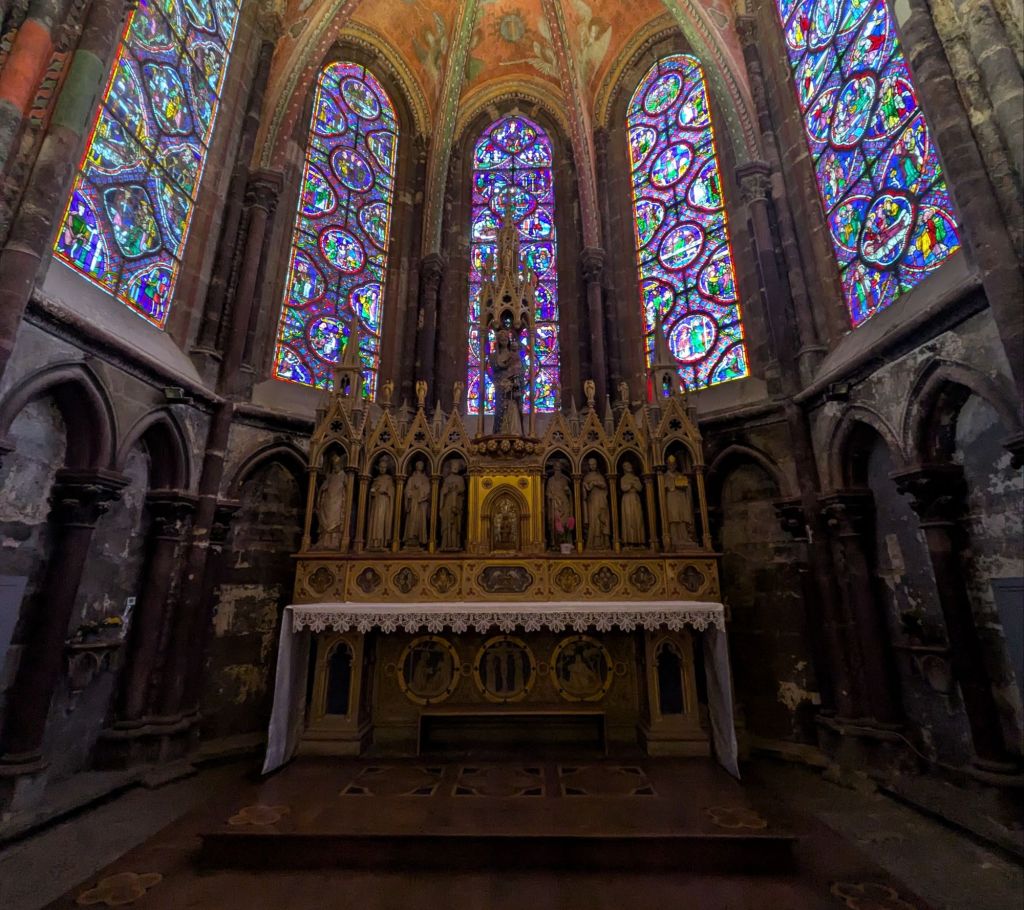
The greatest feature of the cathedral is that it holds the oldest, intact, stained glass window in its original position, in the world. Close by is the second oldest in France. We stared at it for quite a long time, just soaking it in. Simply awe inspiring to be in the presence of this artistry.
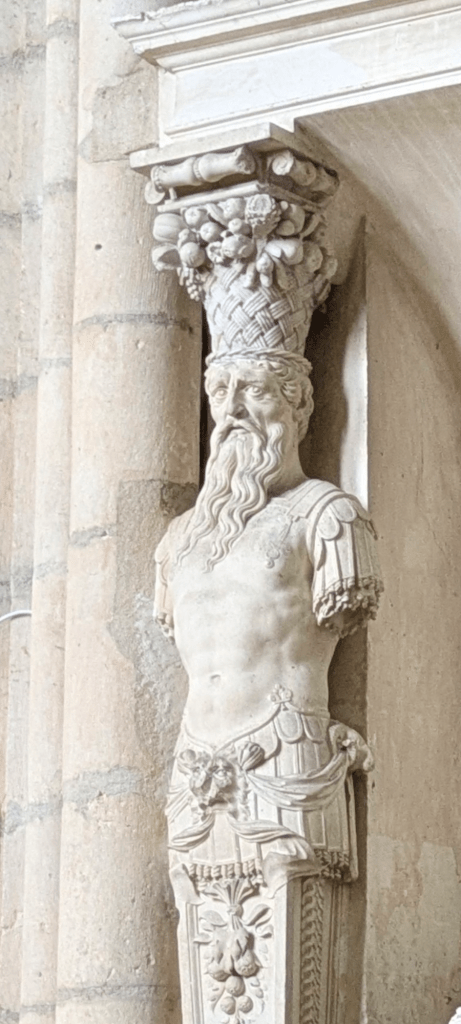
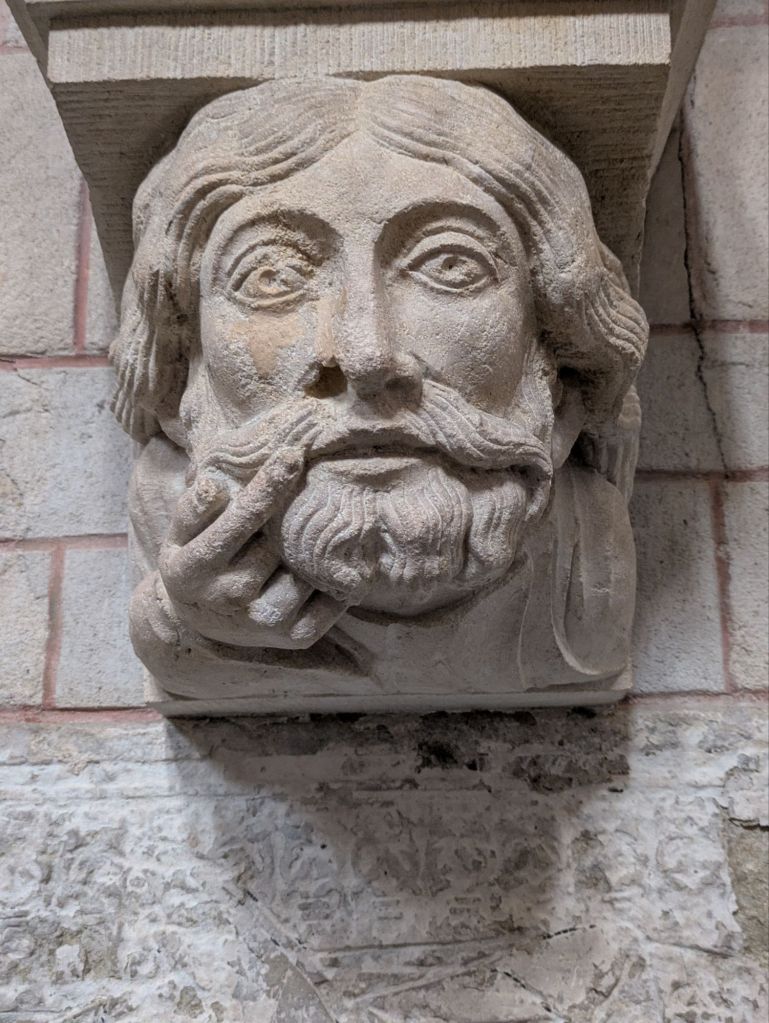
Some more details from the cathedral
A chapel built by the commission of Queen Berengaria just feels like the oldest part of the chapel even though it was consecrated in 1254. She was the wife of Richard the Lionheart, son of Eleanor of Aquitaine. She also founded and died at an abbey near here. That’s where she’s buried. It is closed until April, so we weren’t able to go there.
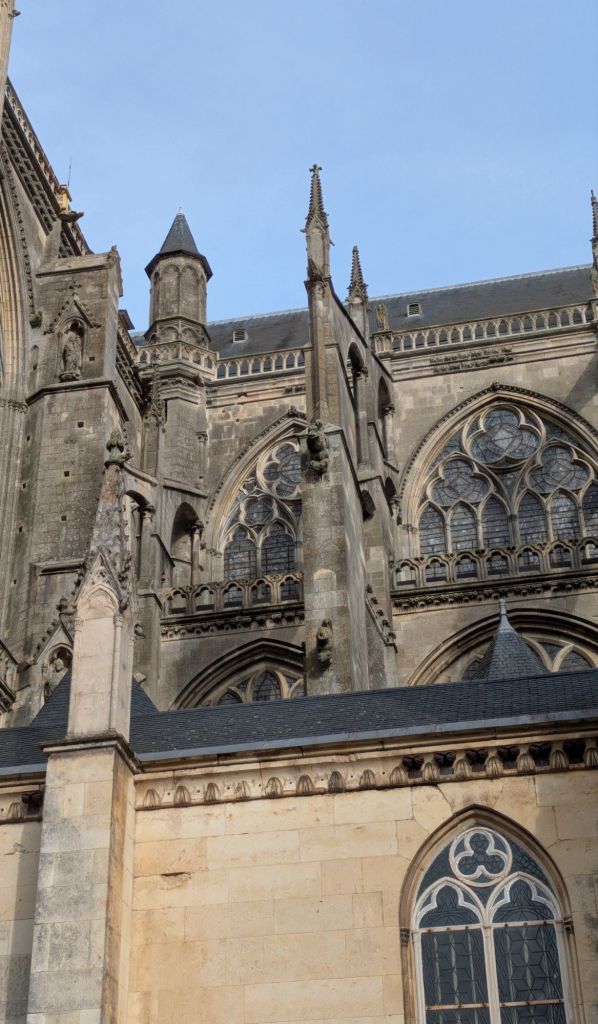
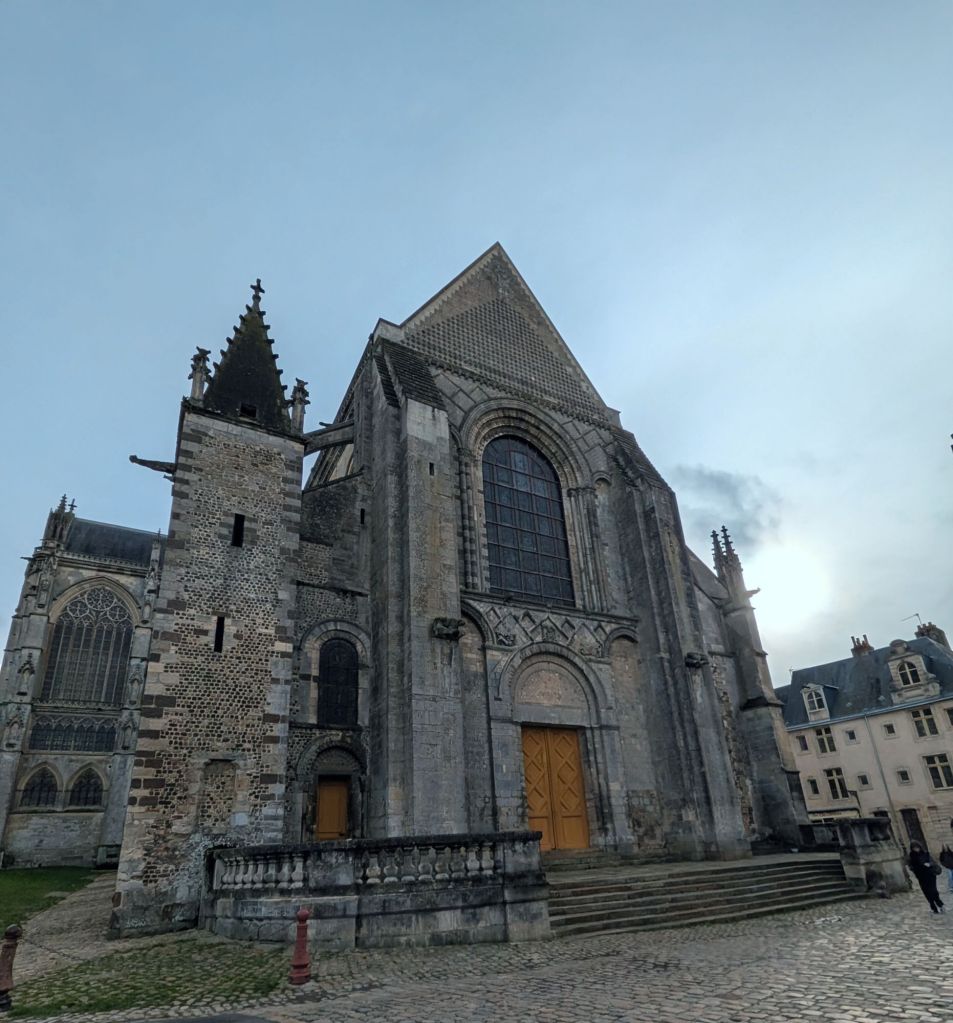
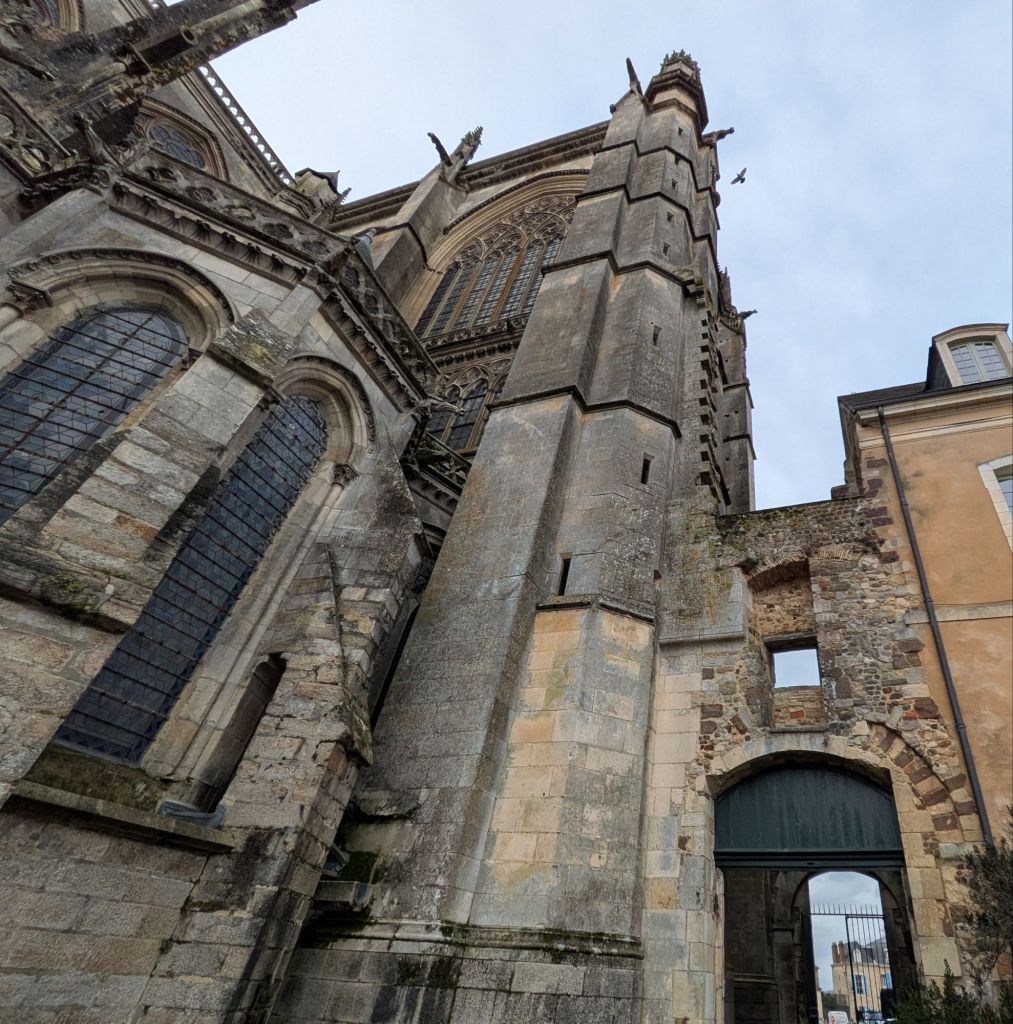
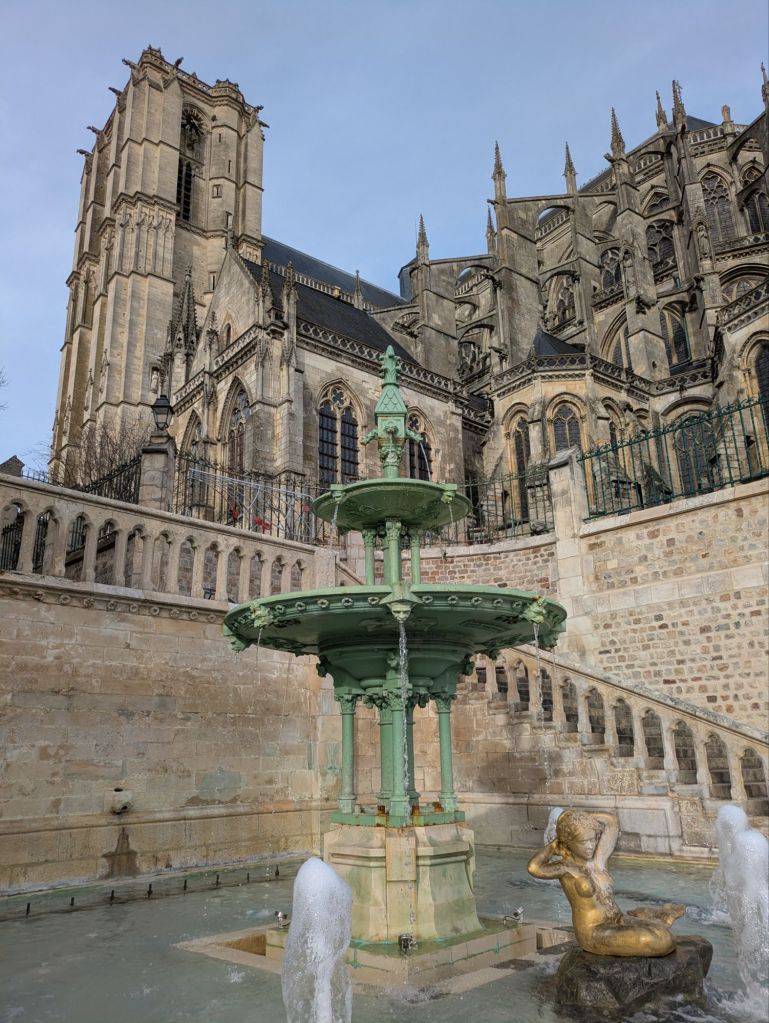
And now, finally, we walked all around the outside. The old Roman wall passes right through the body of the cathedral, or under it, I should say. Again, I find the side-by-side builds between different centuries just so interesting and beautiful.
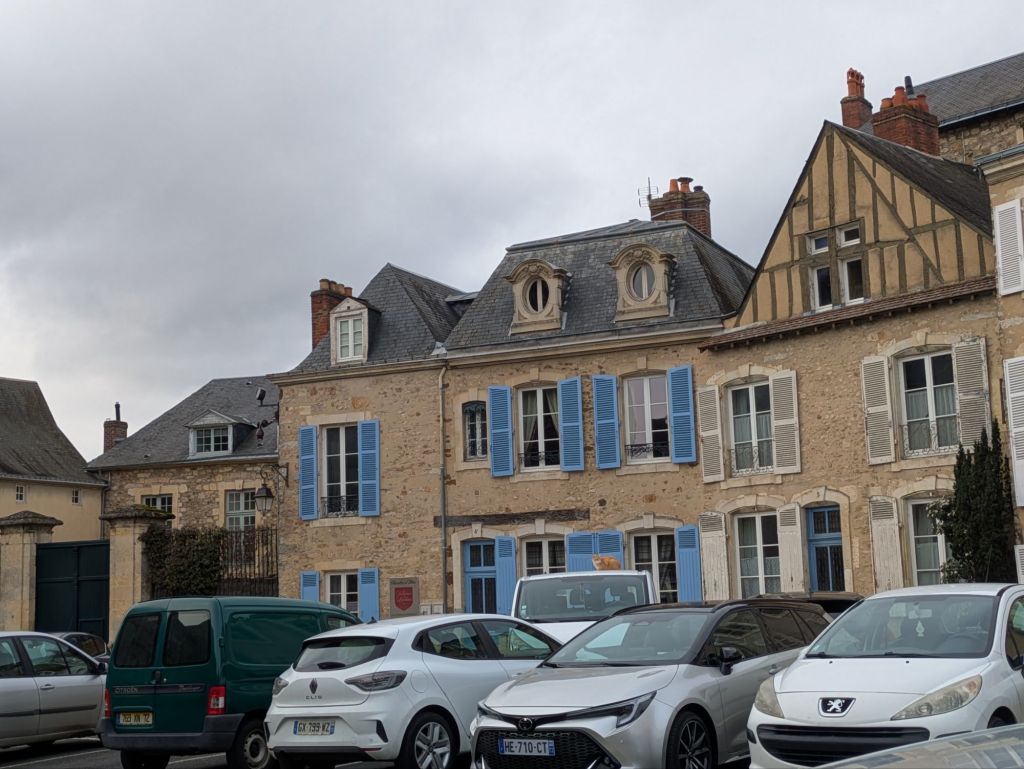
Le Mans is another surprising city. We had no problem wandering the beautiful cobblestone roads and exploring the nooks and crannies of a medieval city. We left just as it was getting dark and all the beautiful lights were turning on. We stopped into a market for a bottle of wine and some snacks to enjoy on our train ride home.
I’ve been on a fun quest today while it’s raining chats et chiens.
While reading ever more on the Plantagenet kings and queens of England, I ran across a reference that said Henry the Third decreed that he would be buried at his beloved Westminster Cathedral, but his heart was to be interred with his grandmother Eleanor, grandfather Henry II, mother Isabella of Angoulême and uncle, Richard Lionheart at Fontevraud Abbey. (See the previous post for details about the abbey) His father, King John died and was buried in England but had his heart interred in the Rouen Cathedral.
However, we found absolutely no mention of the story of his heart at the abbey when we went there. 🤔
I posted on a FB group I belong to called Medieval England and no one had heard of this either. So a bunch of us began to search the interwebs.
We were able to find many references that after the French Revolution Napoleon decreed all members of the royalty be dug up and their bodies thrown into the river, or mass graves or scattered to the winds. The graves were looted for gold, gems or other precious metals, if indeed there was any left from previous lootings.
A member of the group found an article in the publication of the Scotland Society of Antiquities, from 1916 that said his heart was in Edinburgh, having been offered up after by Napoleon III. Another suggested I email David Carpenter, a British scholar who has written a several important books on Henry III… so I did. And he answered!
So it’s been lots of fun sleuthing it out, and people are still coming up with new information.
It sounds gross, but it was actually a very common practice for the body to lie in one location, the heart be sent to another and the entrails to another. And think about all the supposed relics of saints scattered among various churches and cathedrals. When we went to Spain, in the cathedral at Santiago de Compostella, we touched the purported finger bone of Saint James.
So here is some of the things we found today, along with the email from Mr. Campbell and a page from his book.
I get so excited about stuff like this!
ScreenshotScreenshotScreenshotScreenshot
According to https://www.unofficialroyalty.com/royal-burial-sites/british-royal-burial-sites/british-royal-burial-sites-house-of-angevin/ raided by Huguenots in 1562 but it was after the revolution when the tombs were emptied, as others have noted. One legend is that they were thrown into the river or perhaps the monks (nuns?) buried them in a secret location. This is the first reference I’ve seen to the fate of the 4 effigies themselves. They claim that they were tossed into a crypt until rediscovered in 1816, taken to Versailles but returned to Fontevraud in 1849. Napoleon offered them to Queen Victoria, but legal issues prevented the transfer. There is no mention of the heart.
We ventured off to find the effigy of Eleanor of Aquitaine. And we encountered many, many surprises along the way.
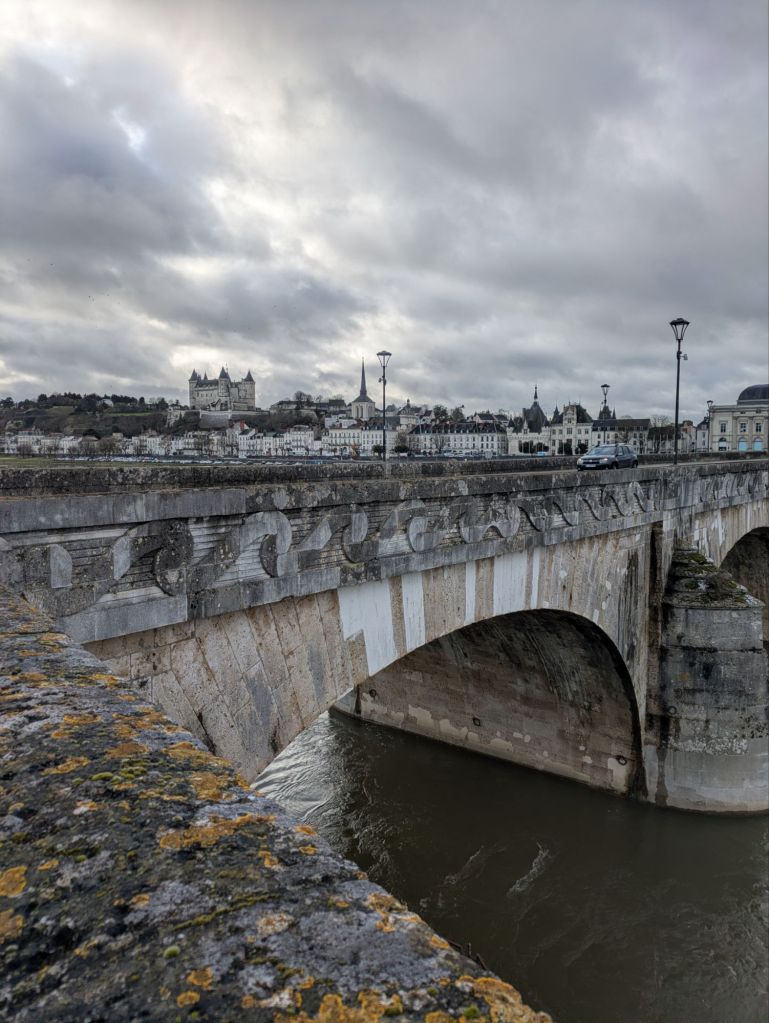
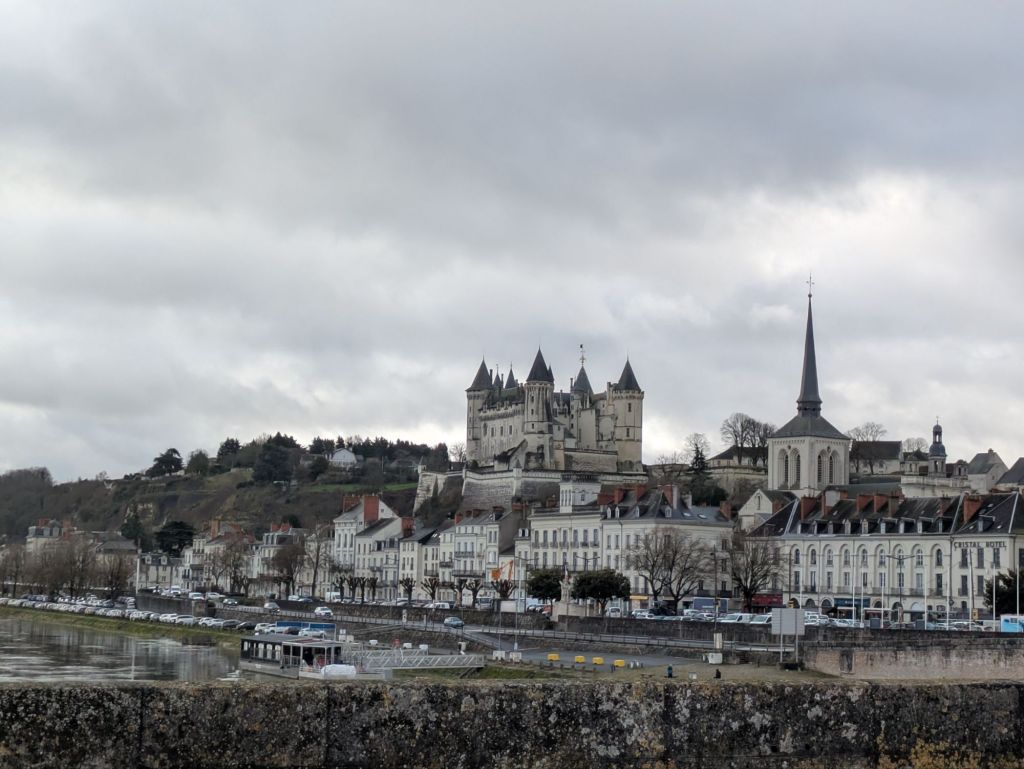
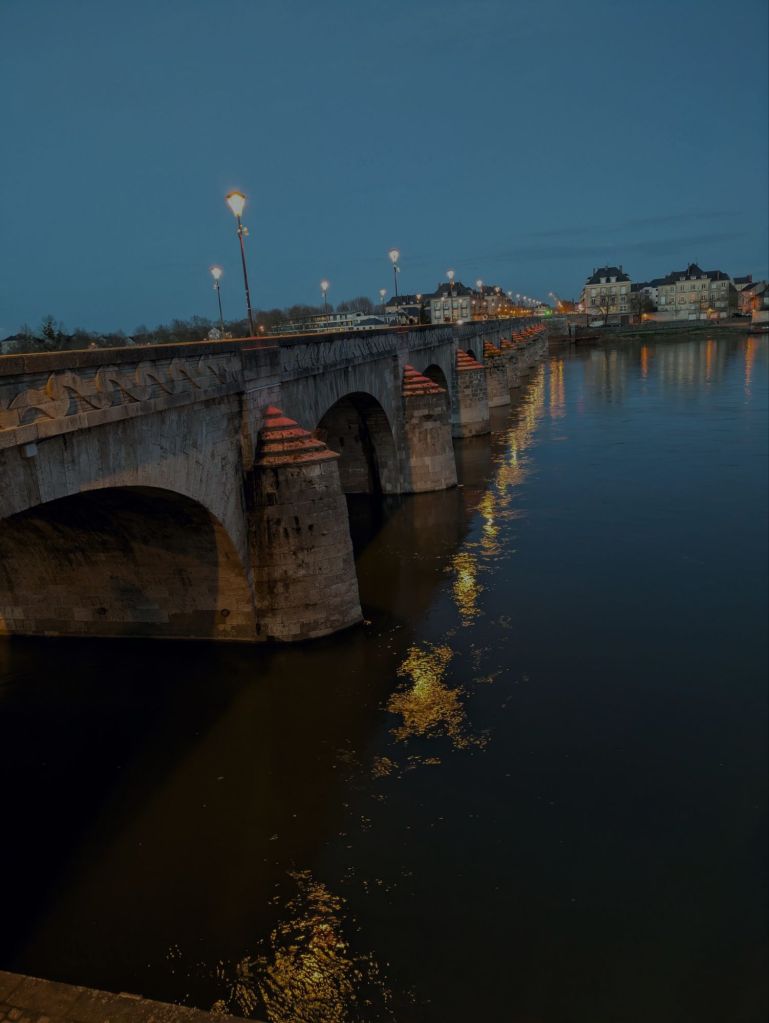
I had no interest in Saumur, But dang, as I walked across the bridge over the Loire, it came into view and was a stunning sight!
We left the apartment in Nantes early to catch the train to Saumur. I had convinced Terry that this was a good idea. I had very little idea how this would turn out, but on true Anile fashion, was sure it would be OK. So despite Google telling us there was no public transportation to the Fontevraud Abbey, we headed that way.
We had to go to the tourist office first, to figure out how to take the bus to the abbey.
You don’t have a car? (Looks at me like I’m crazy) Yes there is a bus. One. Bus. And it leaves in an hour.
You want to have a taxi bring you back? (Looks at me like I’m crazy) Book now because there might not be any taxis. The ONE bus to bring you back leaves the abbey at 5:30.
Faced with the prospect of one long day roaming around a place of unknown size, I talked Terry into waiting until we go there to book the taxi. That way we could better determine how much time we wanted to spend there. In retrospect, not the best idea.
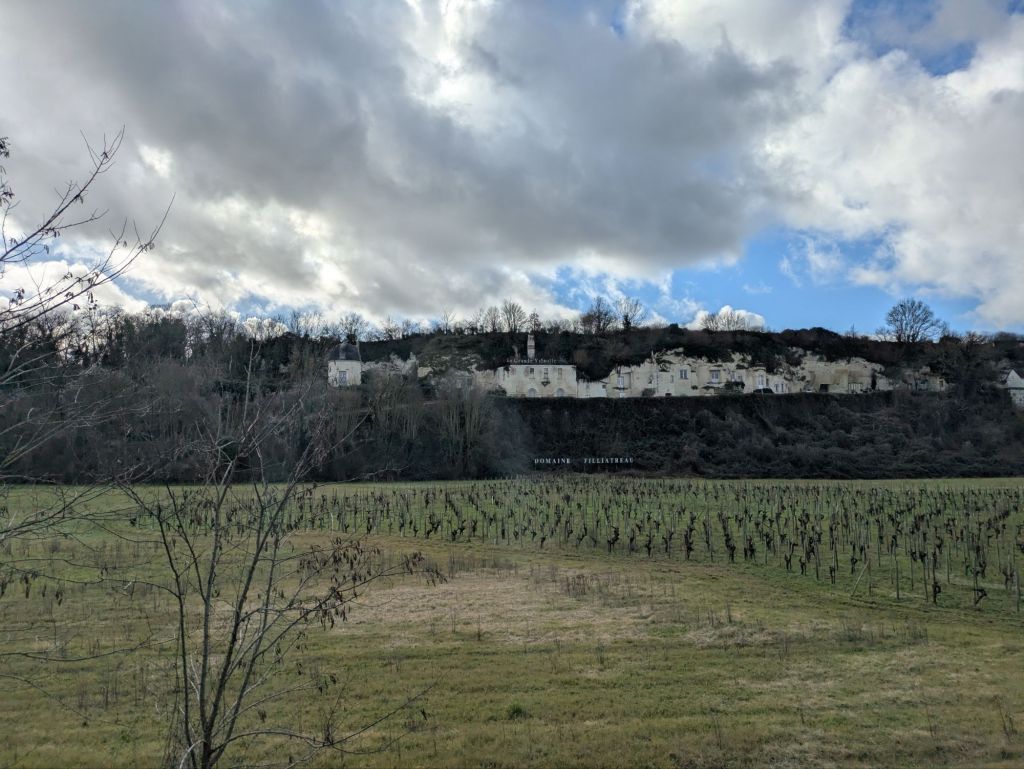
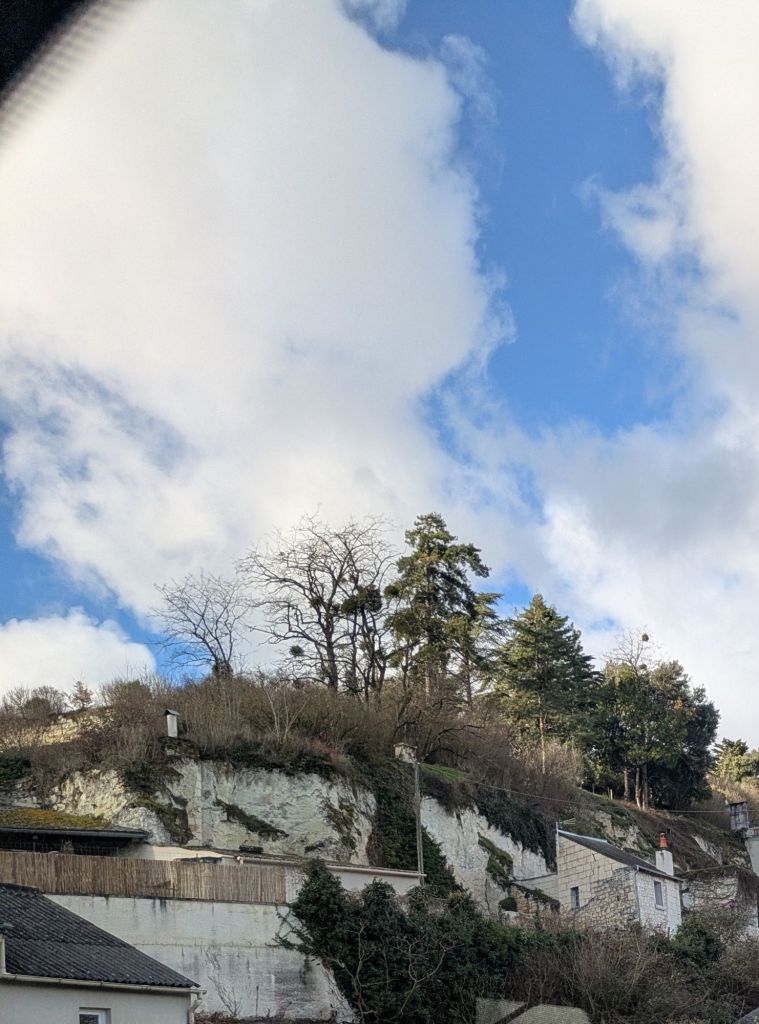
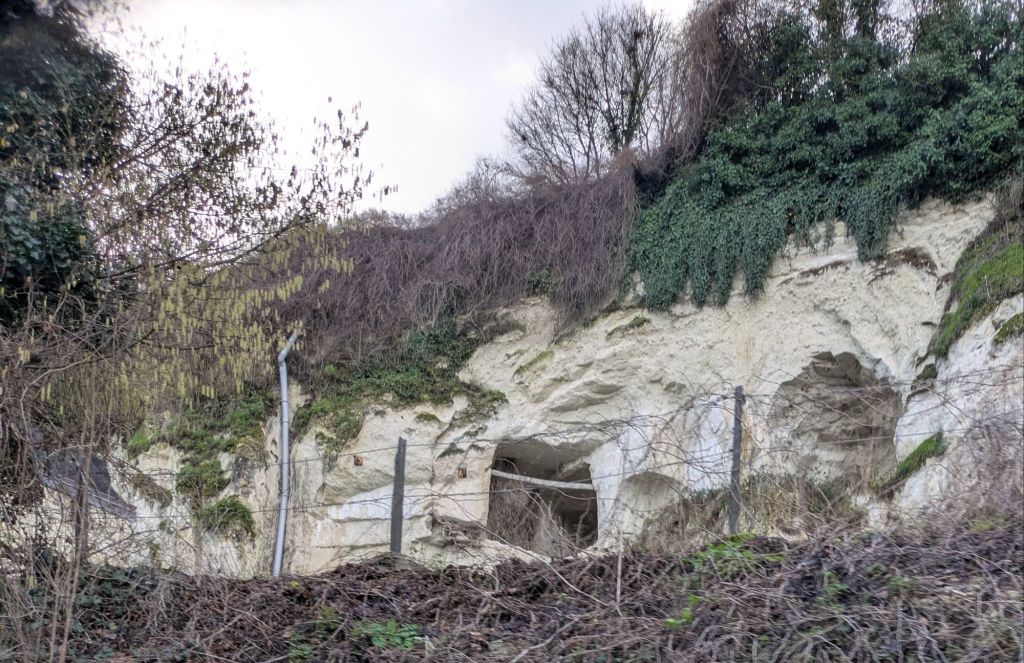
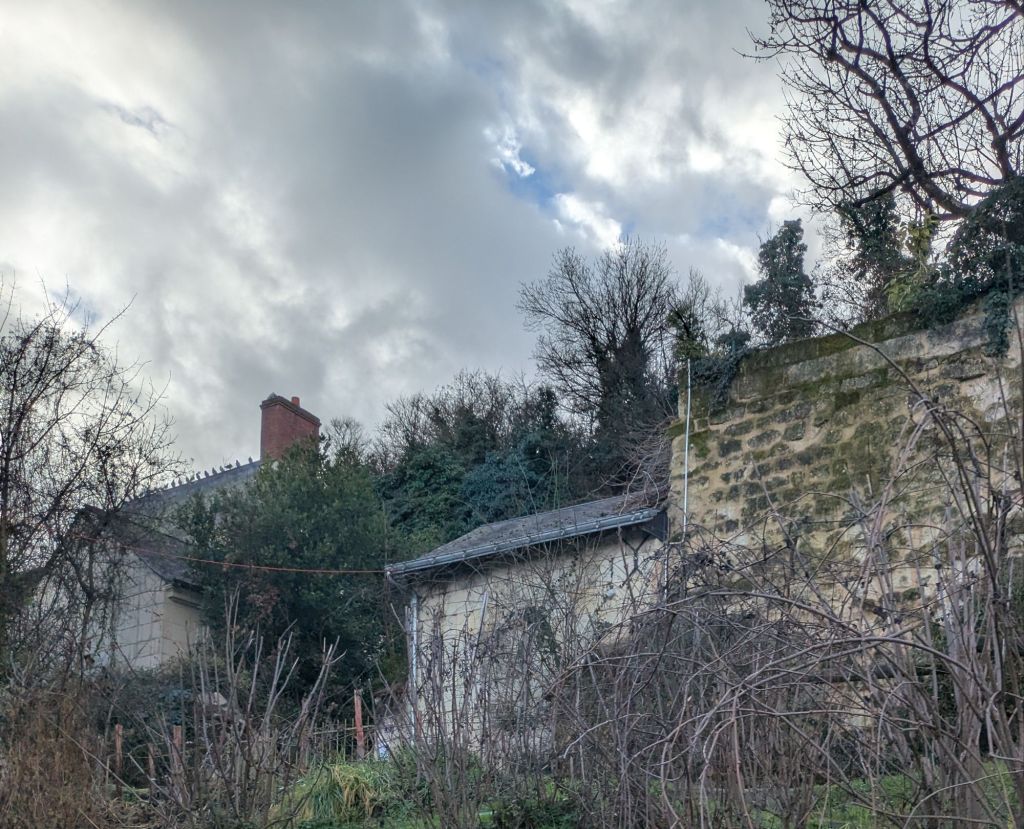
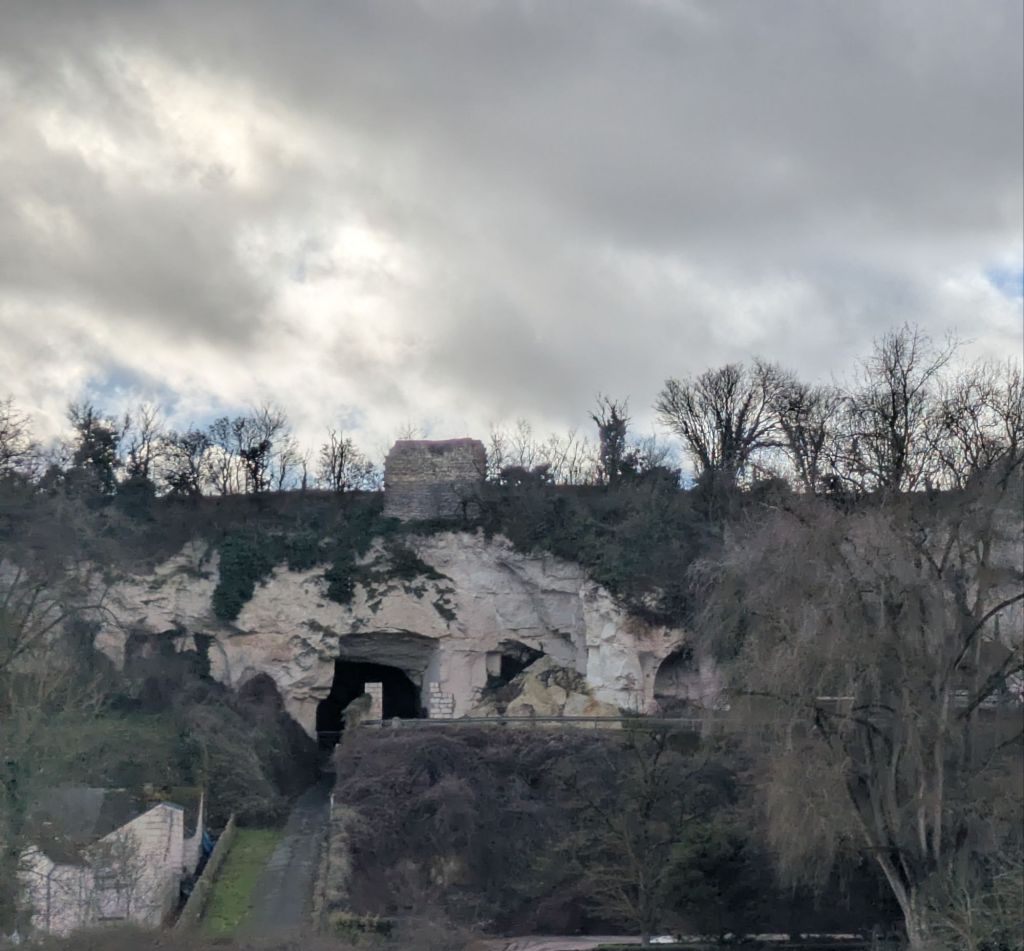
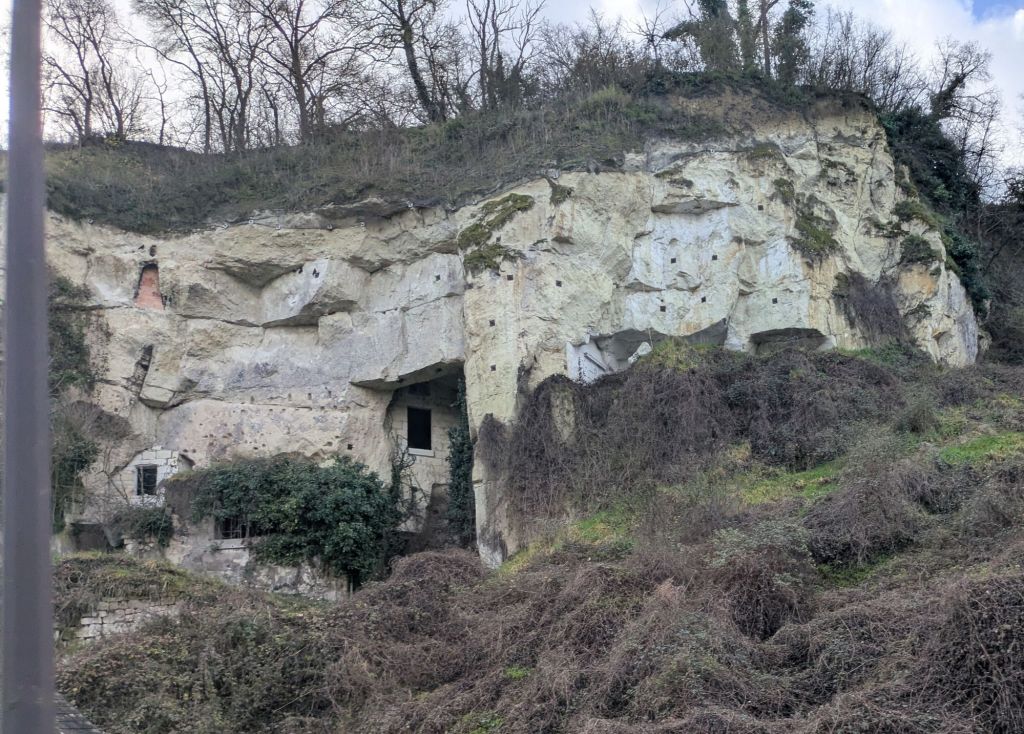
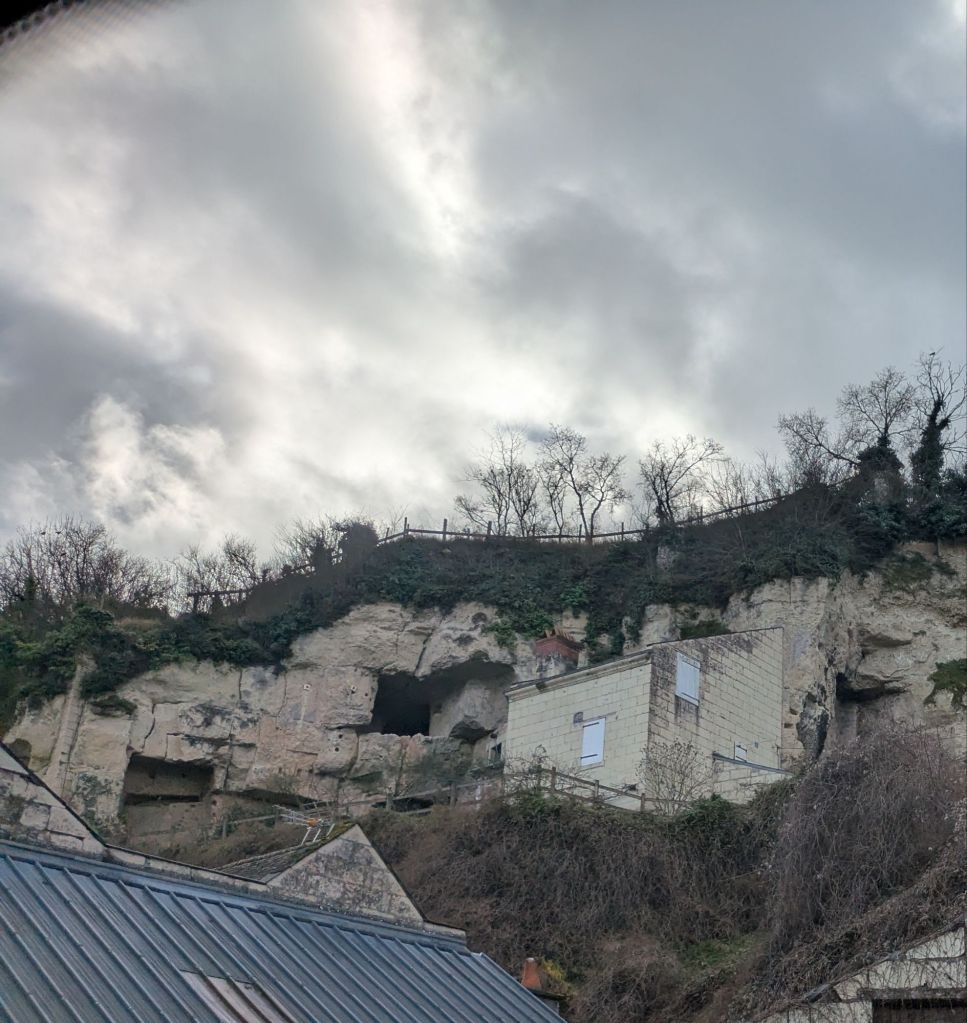
The bus ride proved to be amazing. Going down tiny, barely paved roads through the countryside, we emerged alongside these mesmerizing cliffs filled with caves, homes built into the caves and Crémant (a kind of champagne) houses. It was truly unexpected and so intriguing.
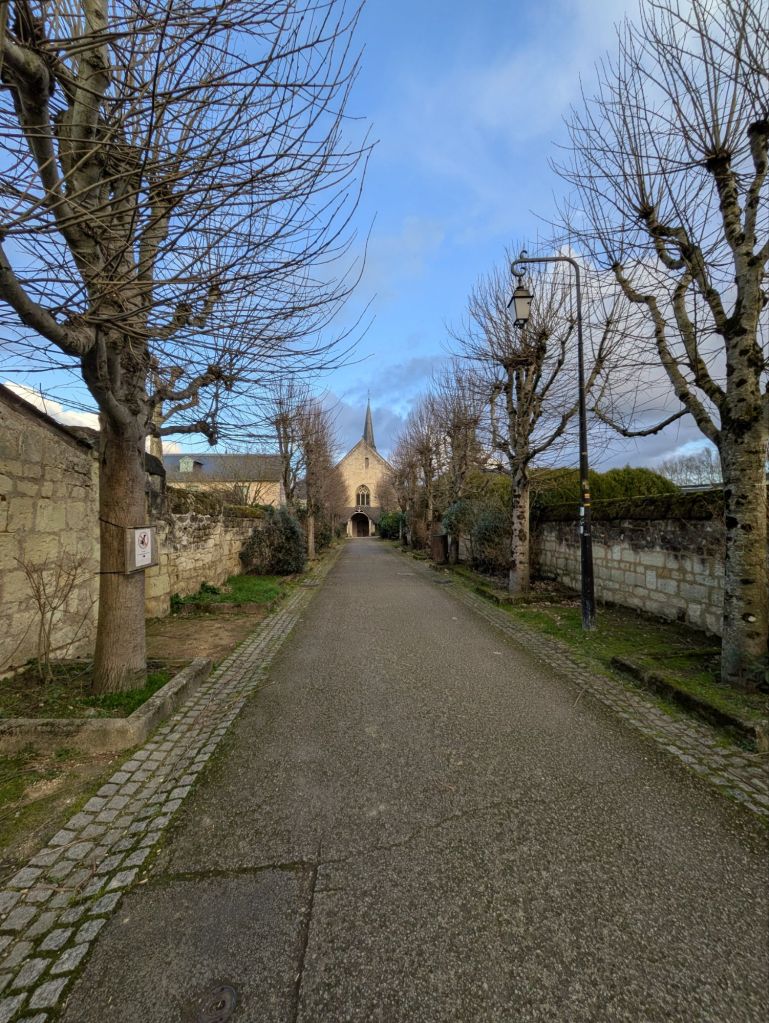
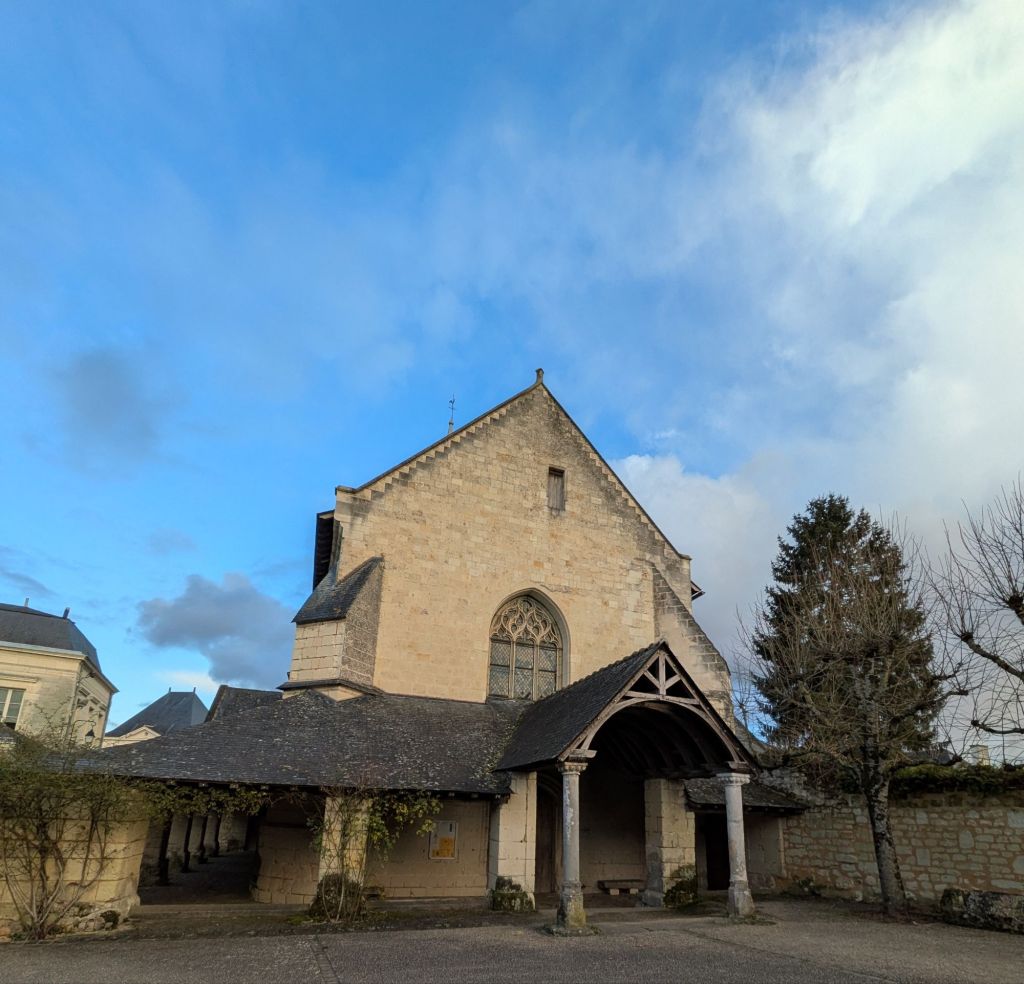
The bus driver let us off near the abbey and it was a short walk through the tiny town. At first we came upon the Chapel of Saint Catherine, built originally in the 13th century, and updated throughout the 15th to 18th centuries. Its heavy door creaked open to reveal a cold, dark and kind of creepy interior.
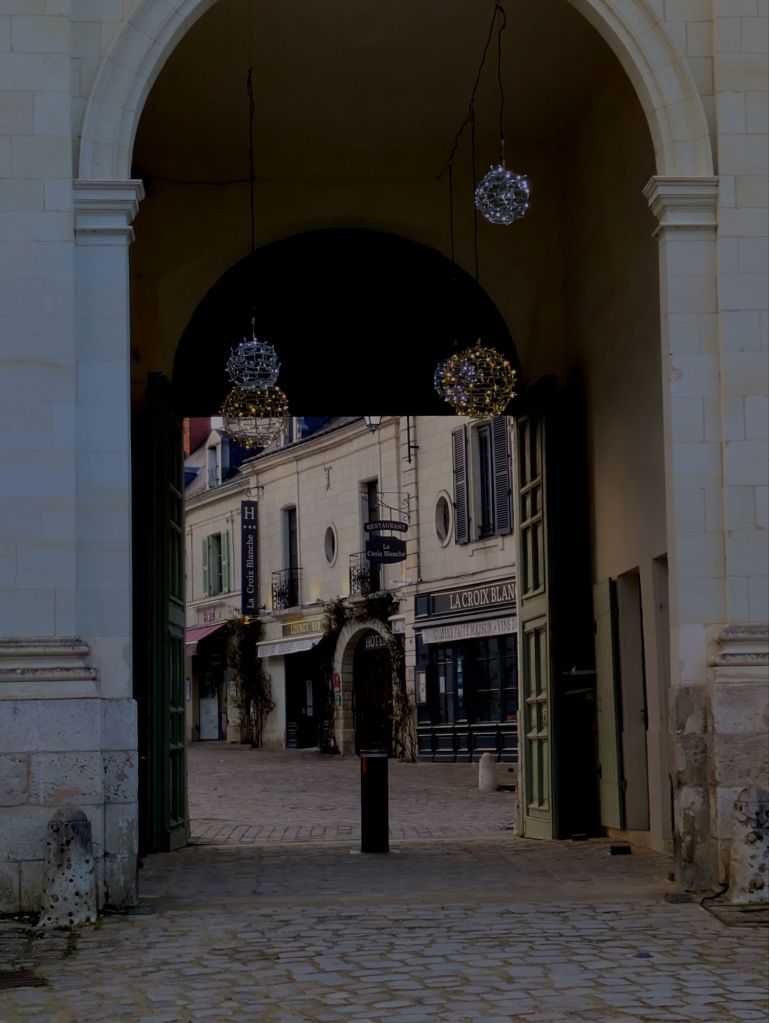
Walking now through the tiny town where everything is closed, (good thing we brought snacks and water) we come to the abbey itself and I was absolutely filled with excitement with what was to come. Honestly, as we passed through the visitor/ticket center, we quickly realized the abbey was a vast town of its own.
Unfortunately, at this point, trying to get a taxi was impossible and between dying batteries, not speaking French, and my French phone number making my phone act weird, (we finally found an outlet to charge my phone and translate the message to “more taxis available today”), we realized we were stuck there until 5:30. So we relaxed and decided to enjoy the ride. Sorry I didn’t get more pics around the abbey. I was having fun exploring and forgetting to take photos.
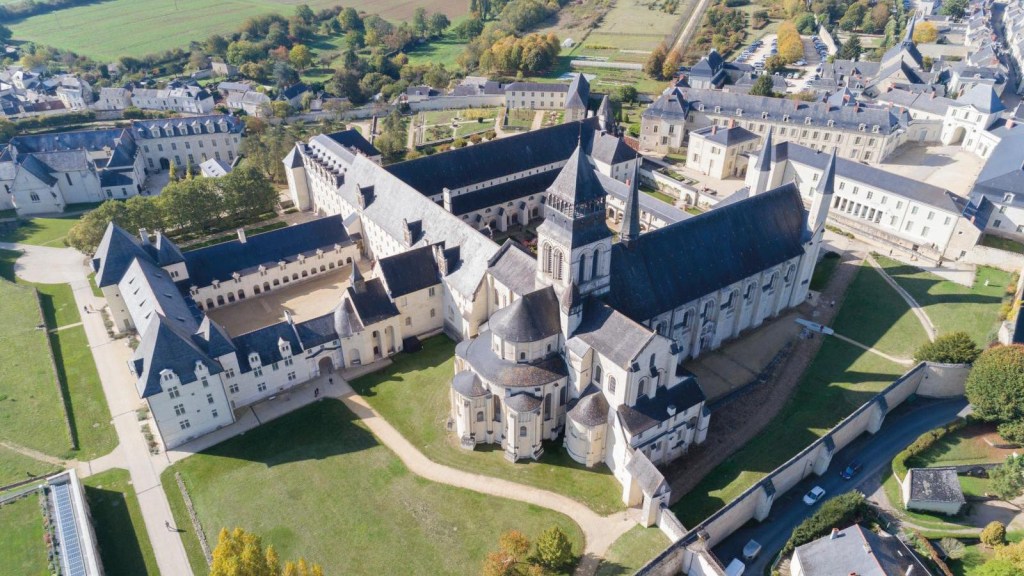
Obviously not my picture, but gives an idea of the immense size of the abbey
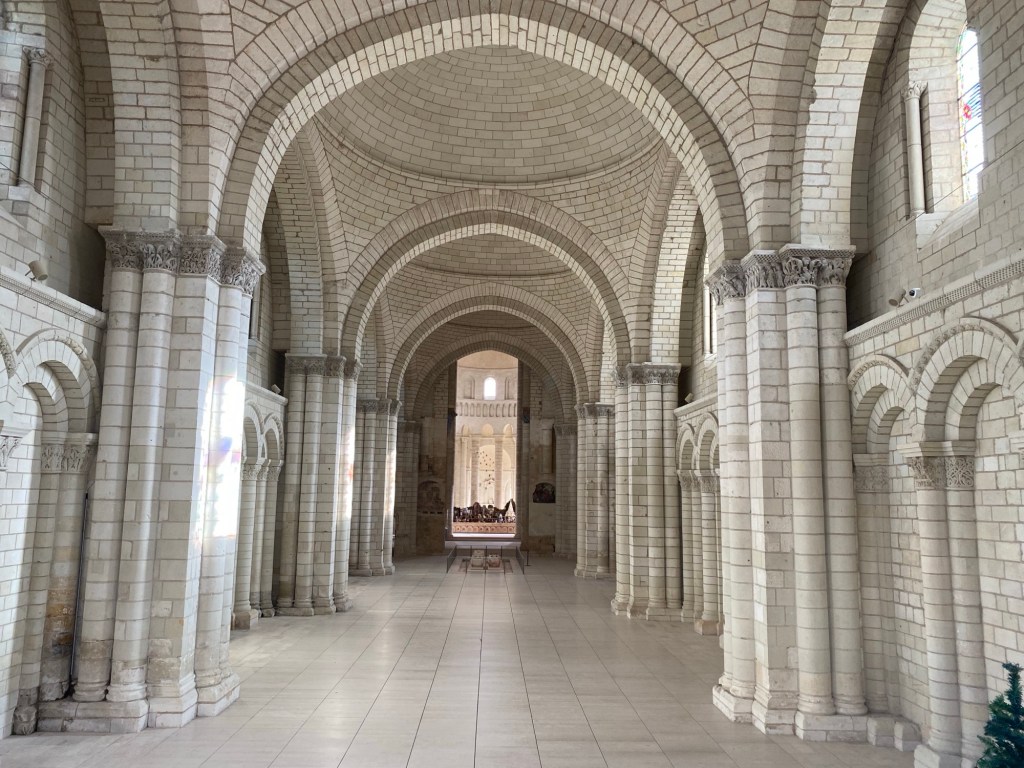
First, we headed inside the cathedral where rest the effigies of Henry II, Eleanor of Aquitaine, their son Richard the Lionhearted and their daughter in law, the wife of their other son, King John. I later found out the there are no actual remains there. After the French Revolution, all royal bodies were dug up and disposed of in various ways.
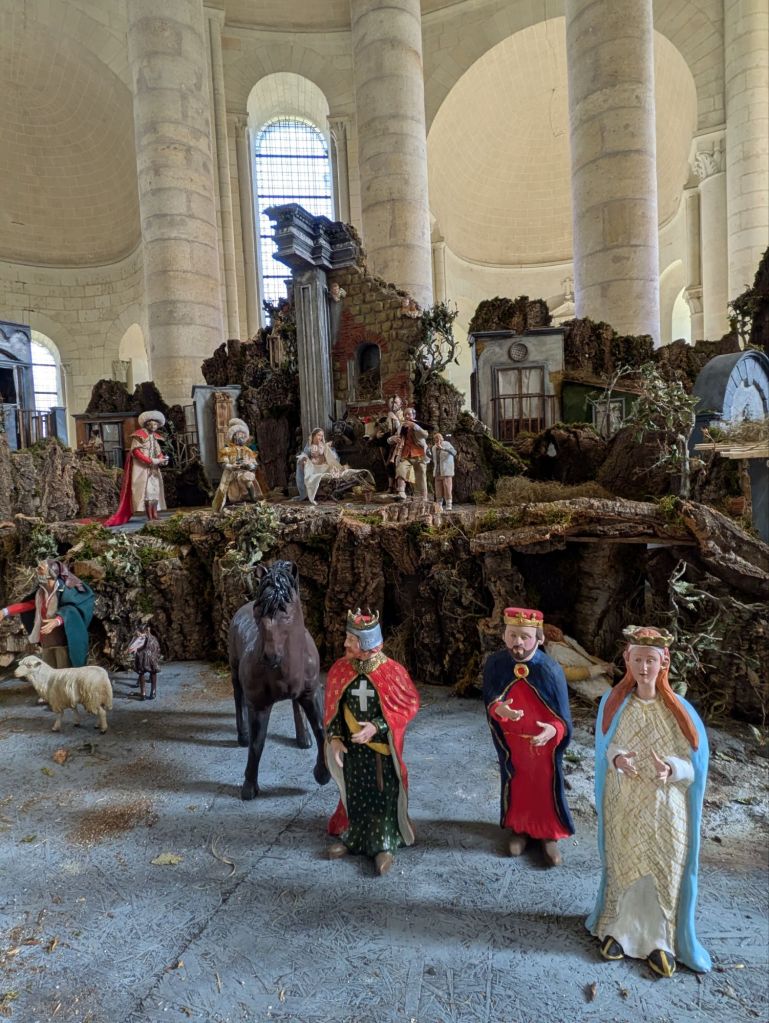
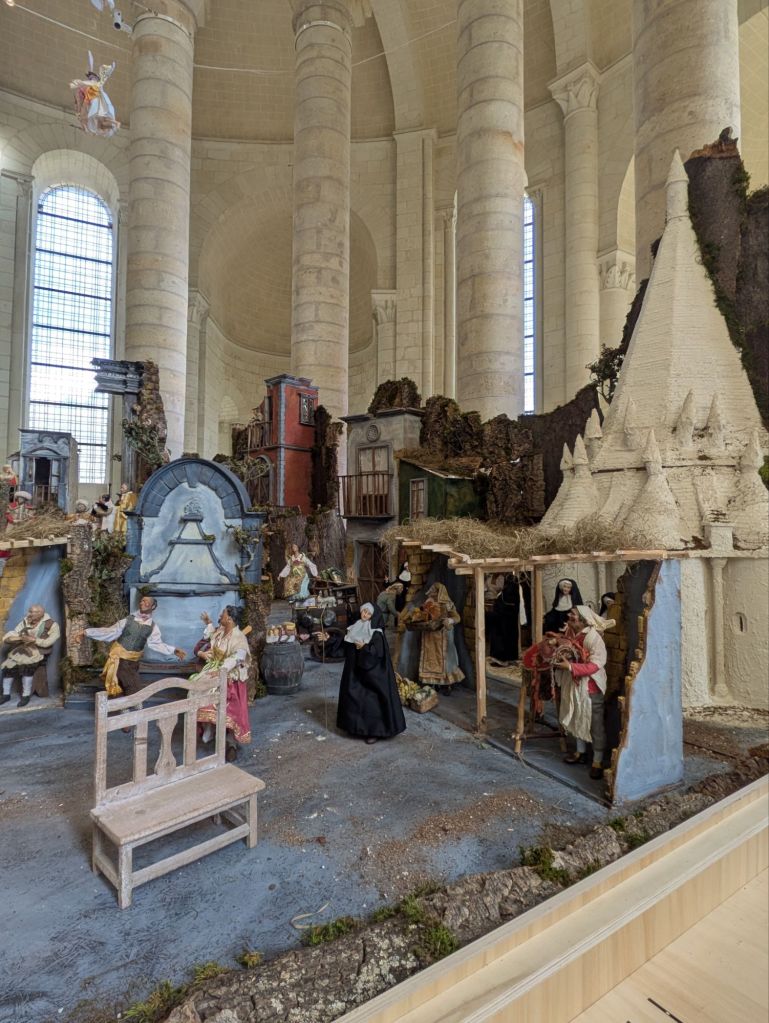
In each church, their crêche is filled with figures that represent the regional dress, industry and local legends.
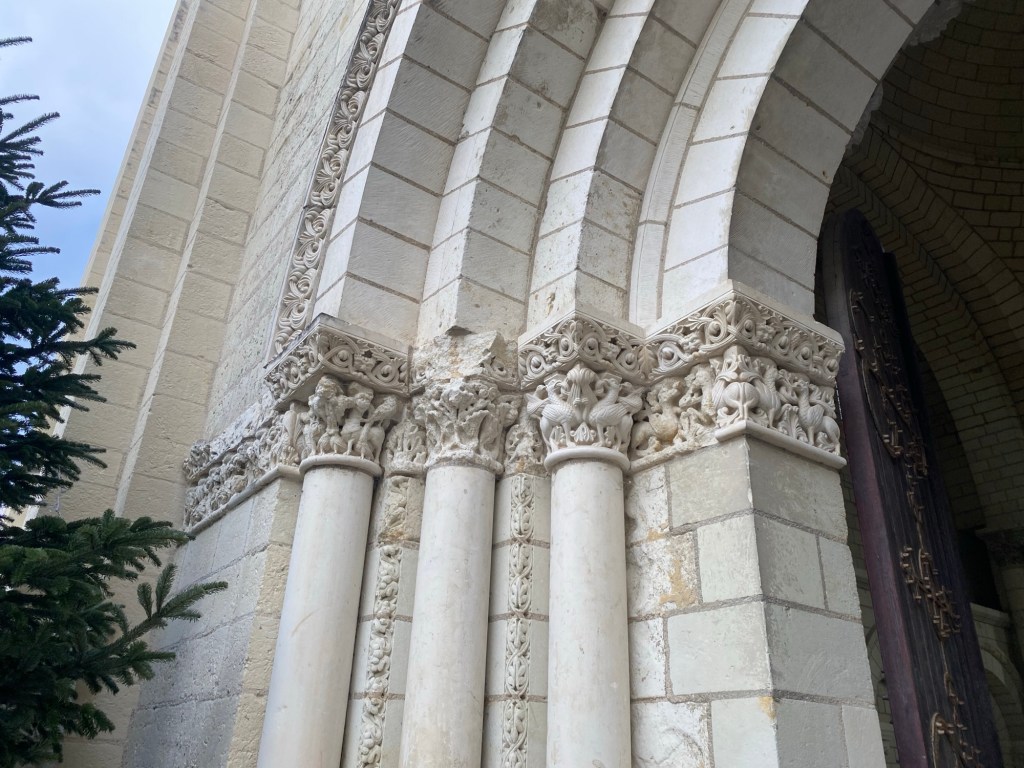
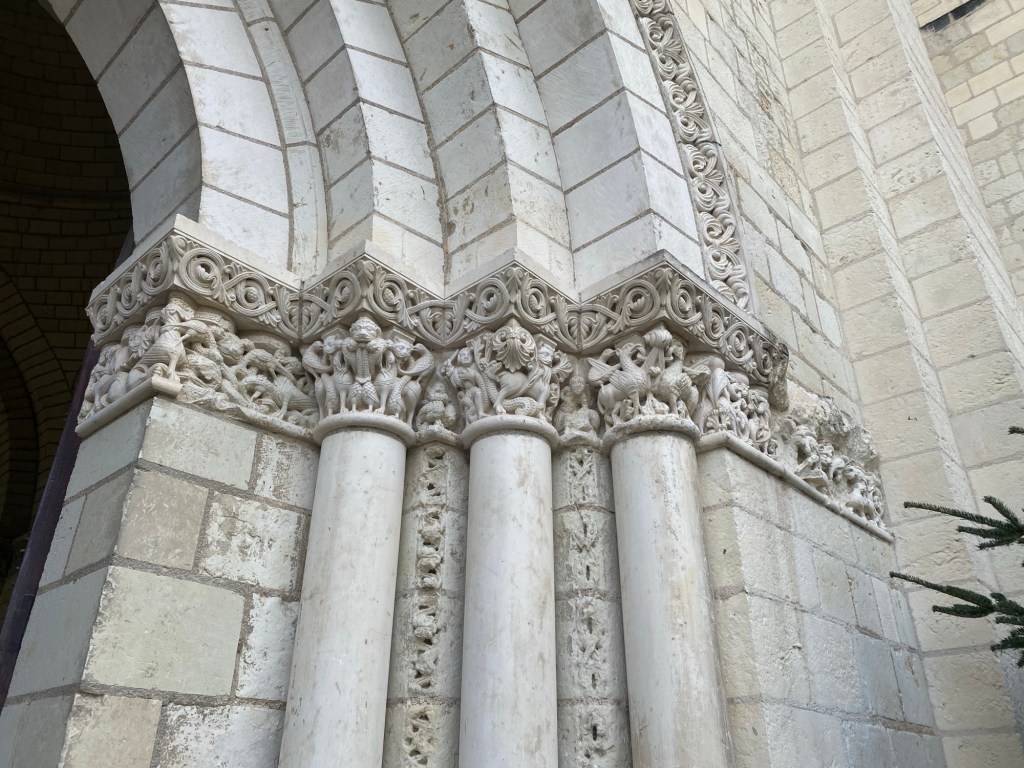
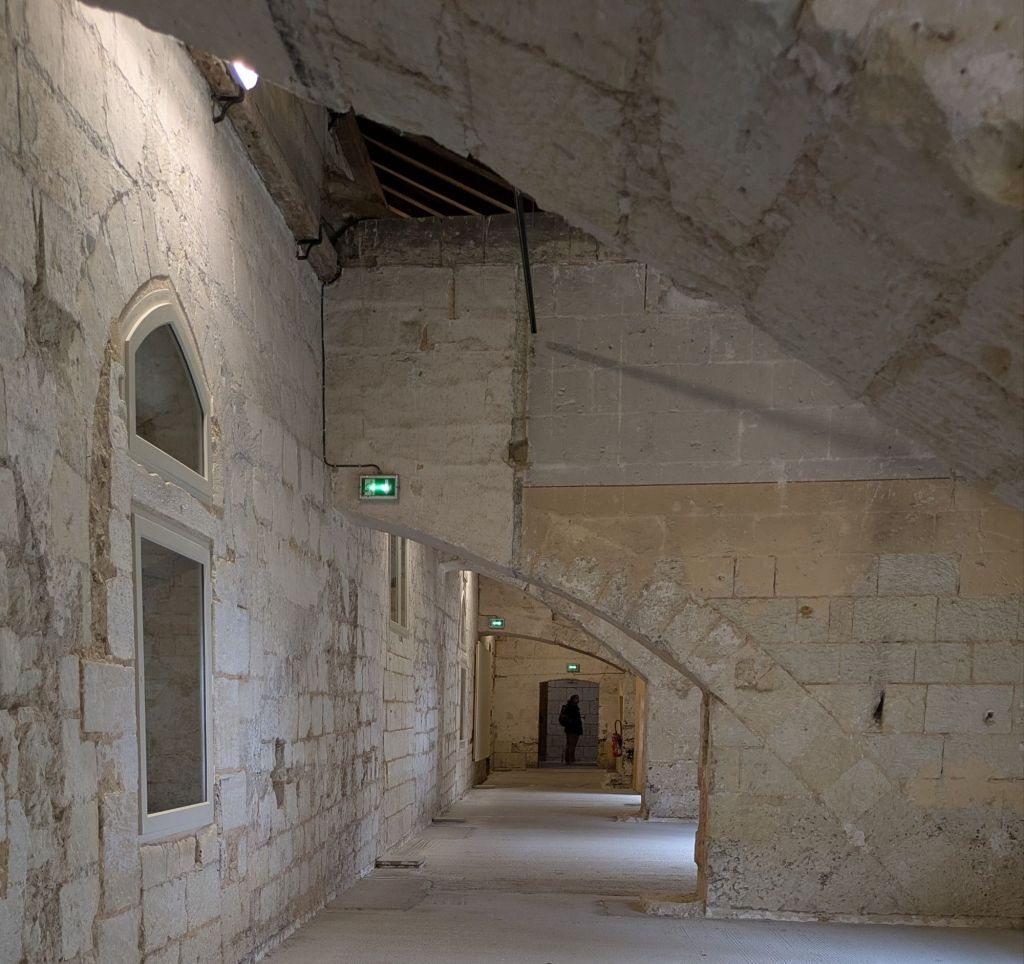
The cathedral is almost entirely stripped of any and all decoration. After the revolution, the nuns were expelled and the place was looted and the Napoleon declared it a prison. During the following 130 years it was a prison and many utilitarian changes were made such as sturdy new floors.
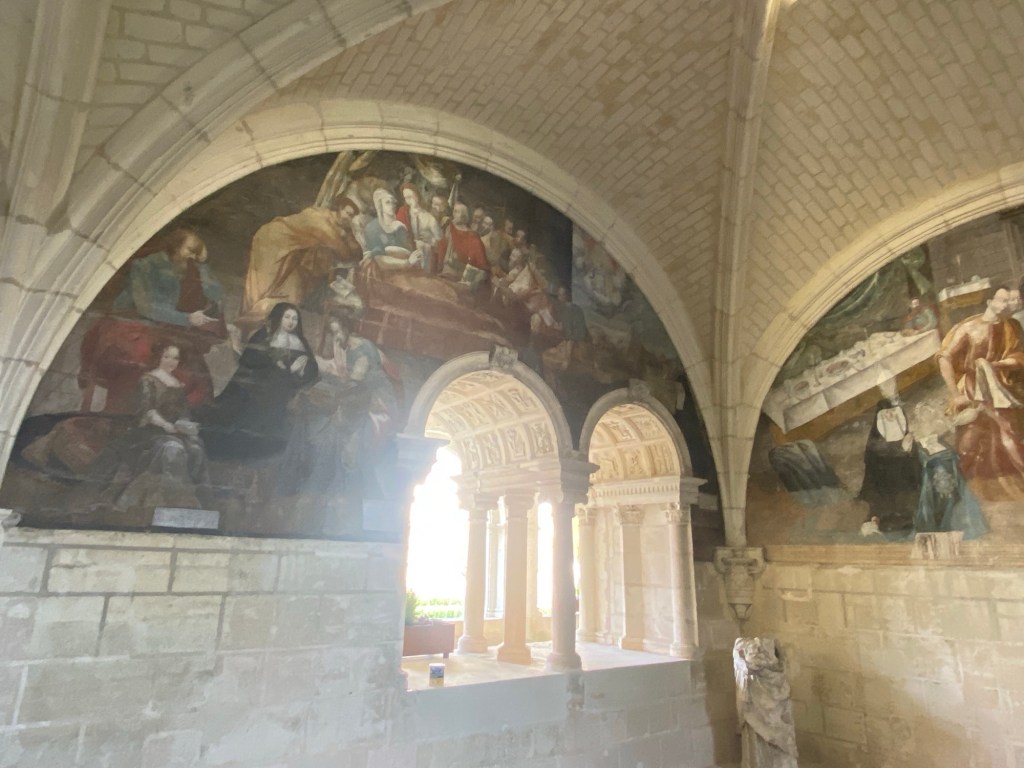
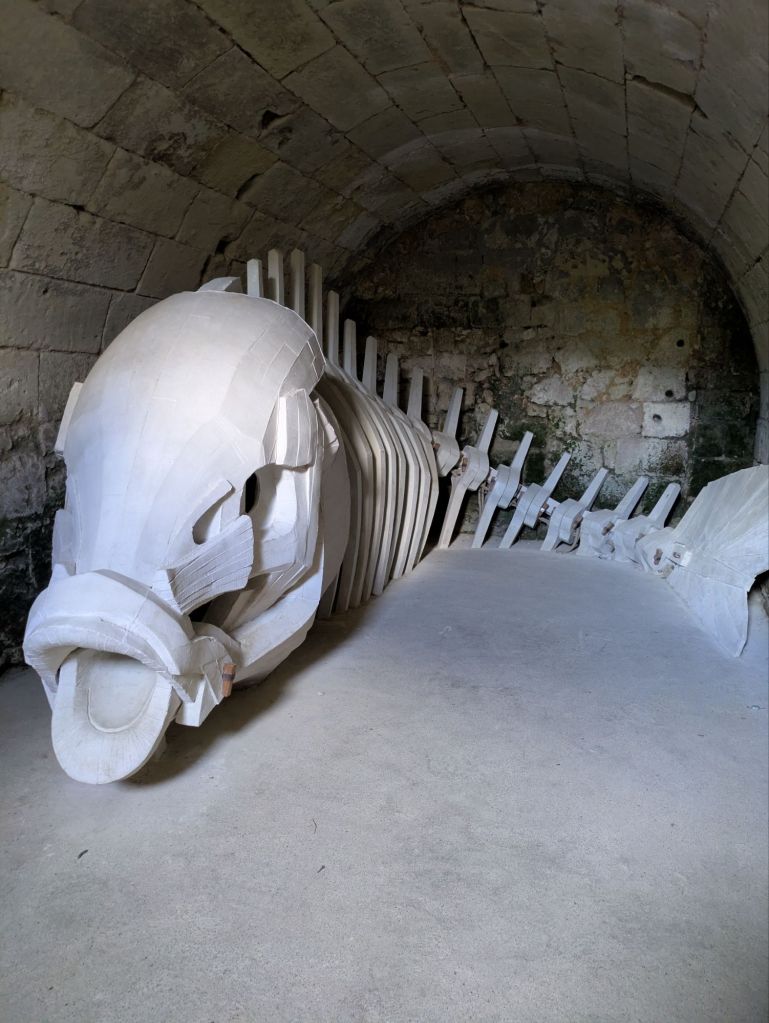
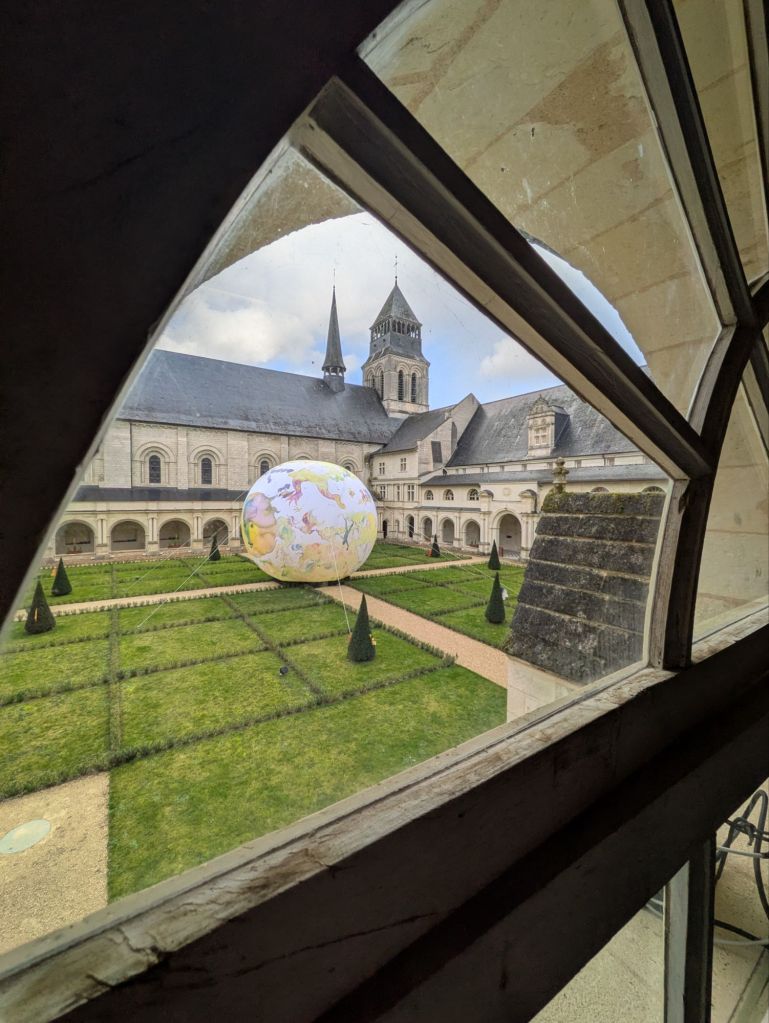
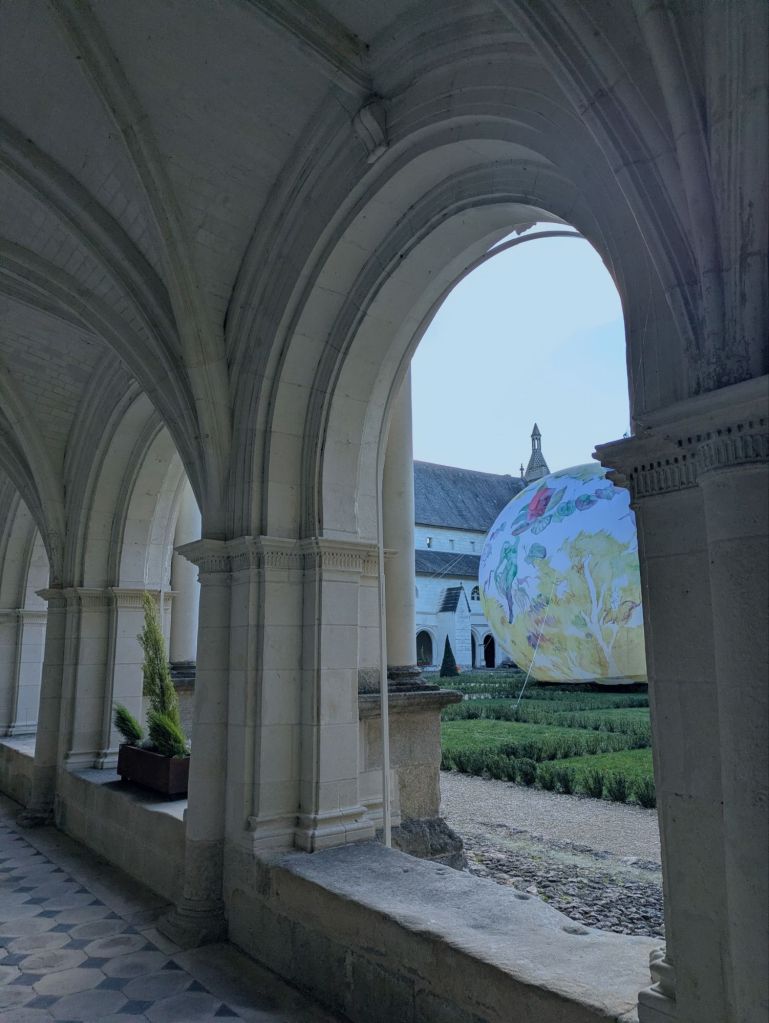
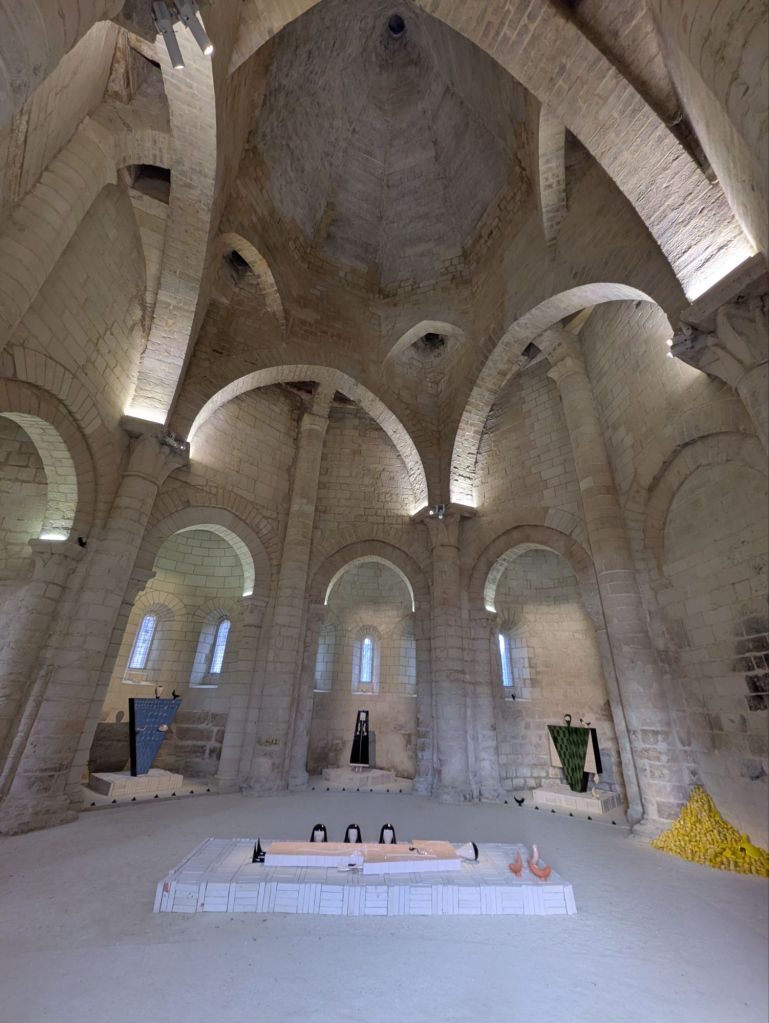
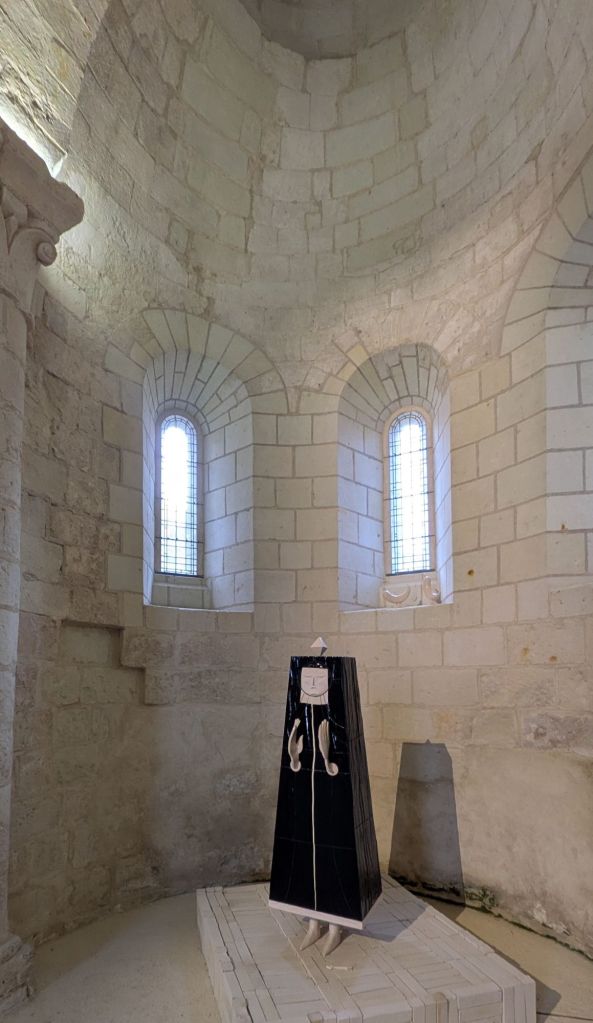
Walking around the grounds, we came upon various art installations. After the prison closed, the abbey reemerged as a center for art and tourism.
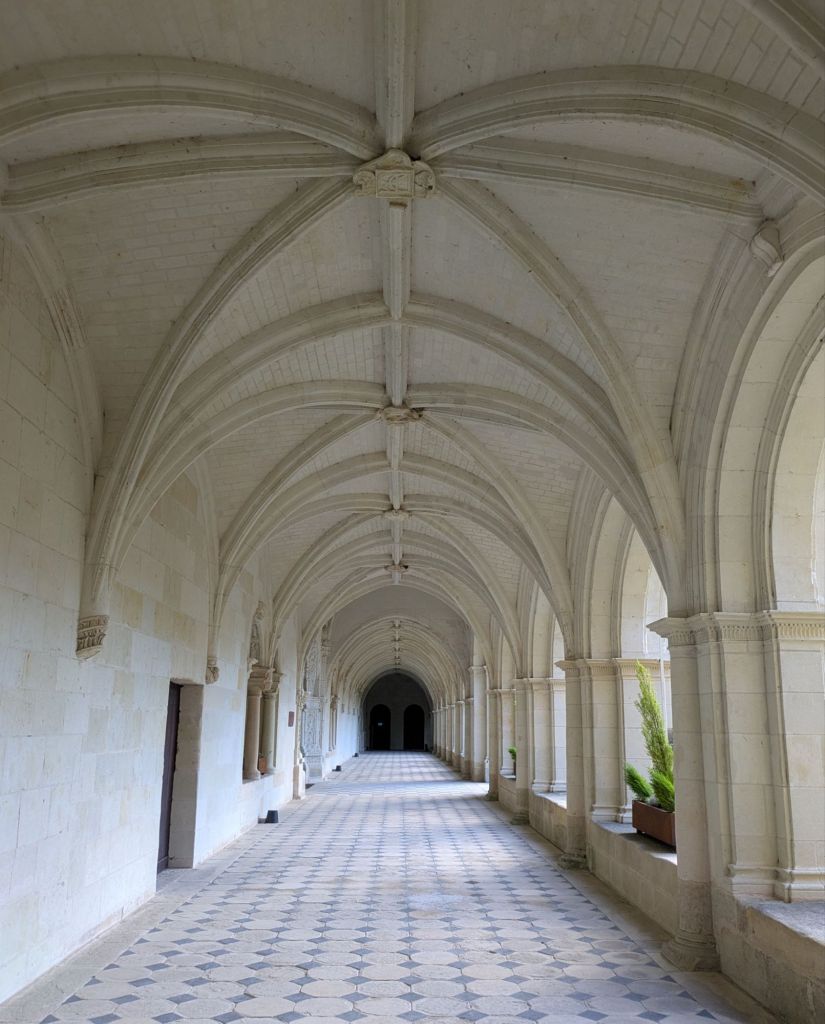
Over all I felt like a kid, exploring all of the floors, underground vaults, different rooms and the grounds. There are innumerable tunnels, doors, stairwells and niches open to wander into and around.
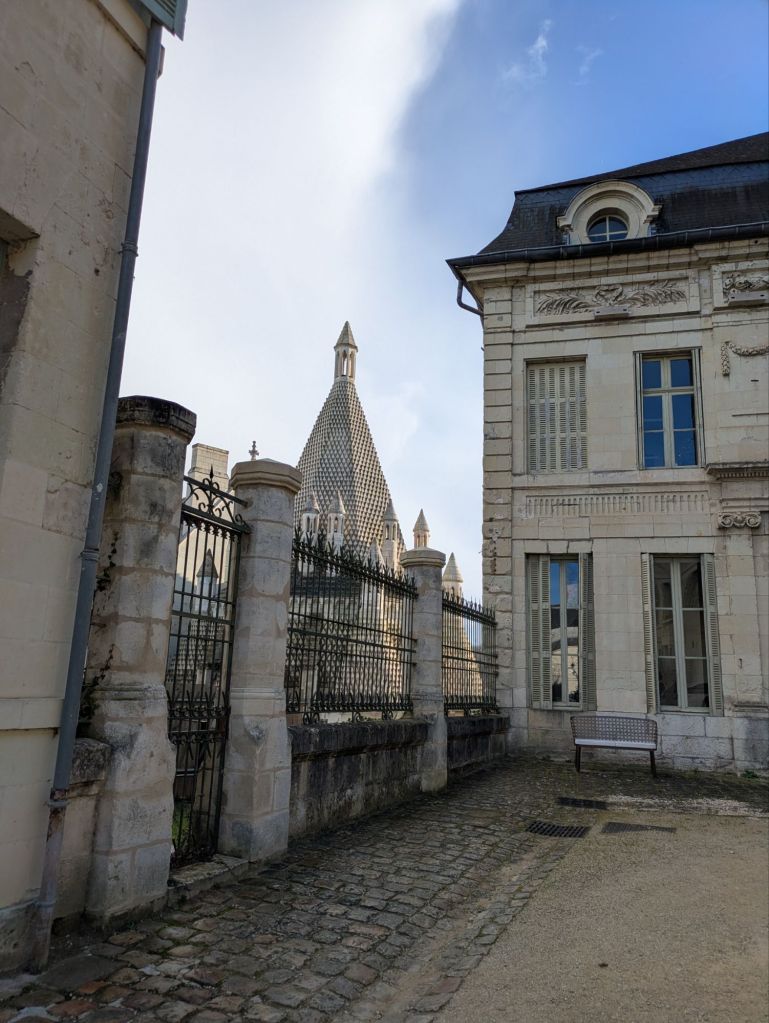
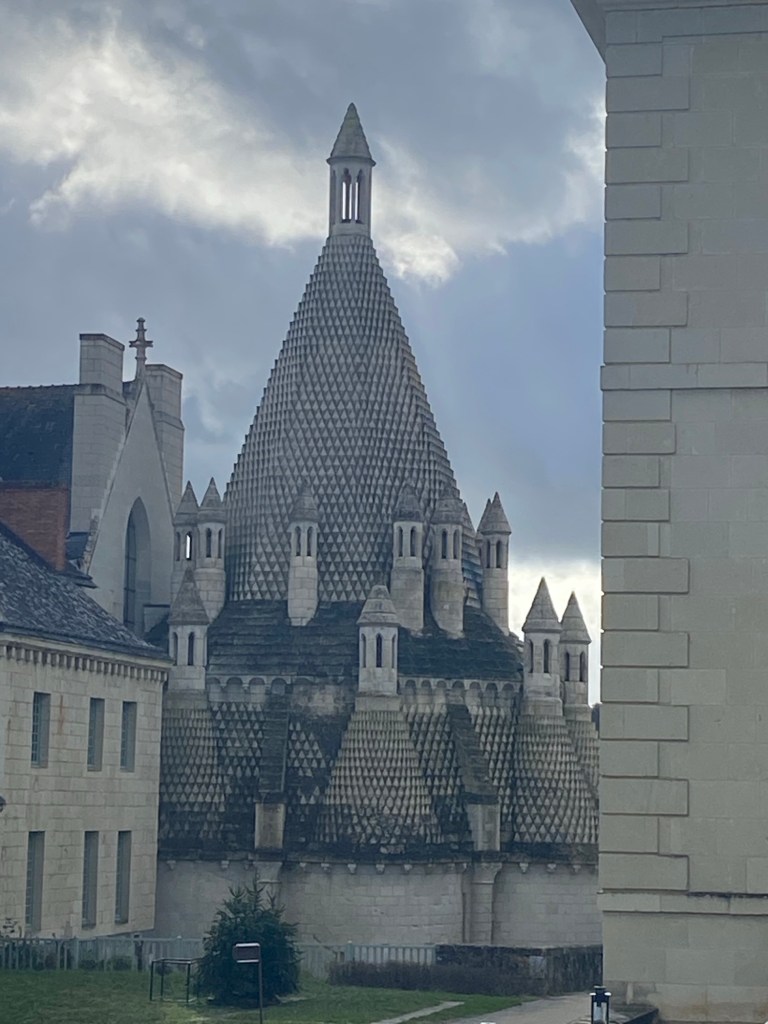
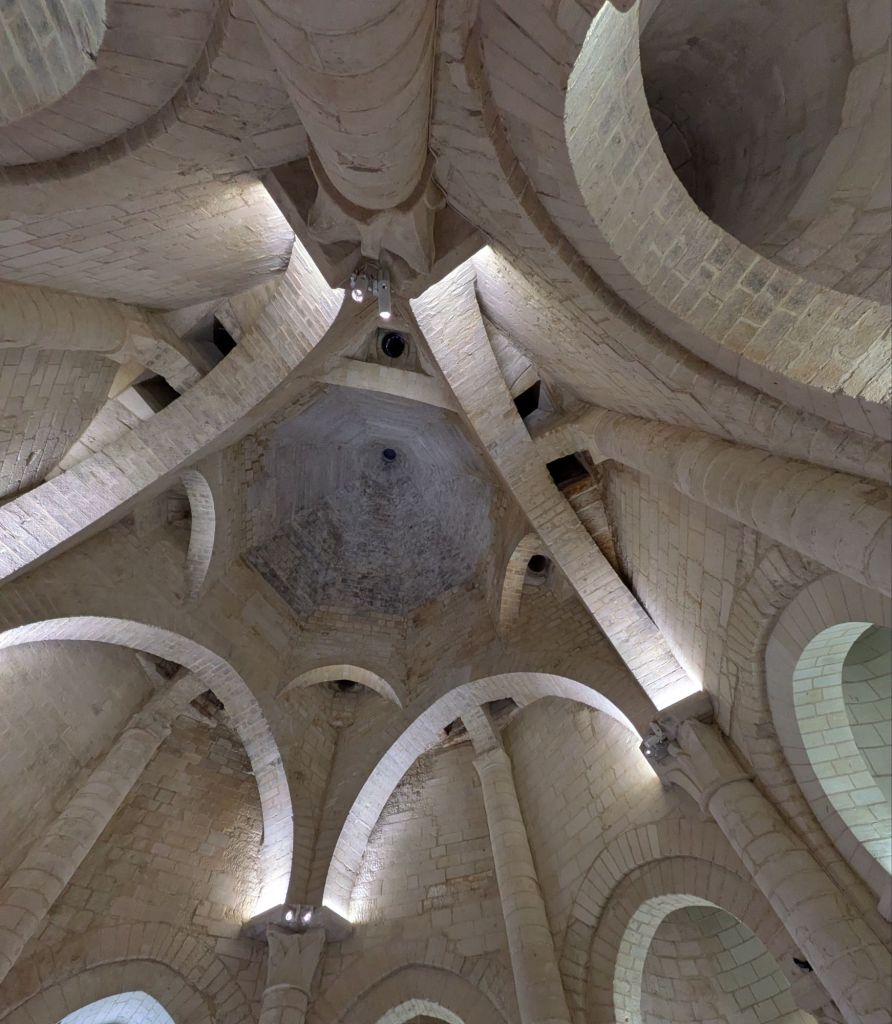
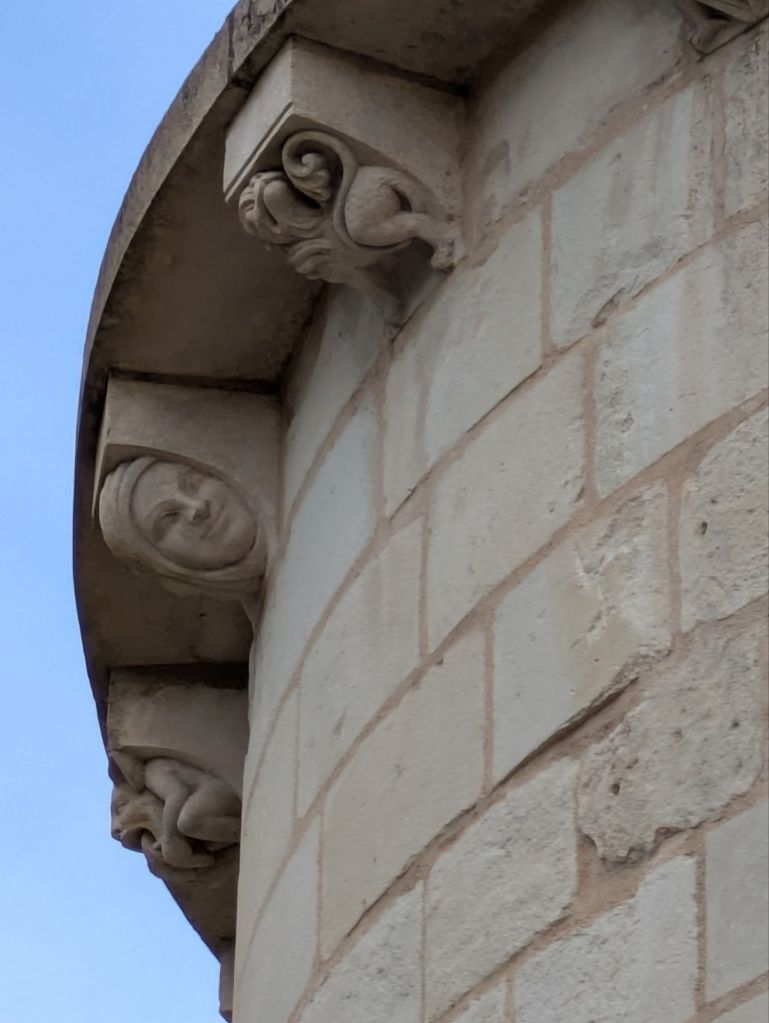
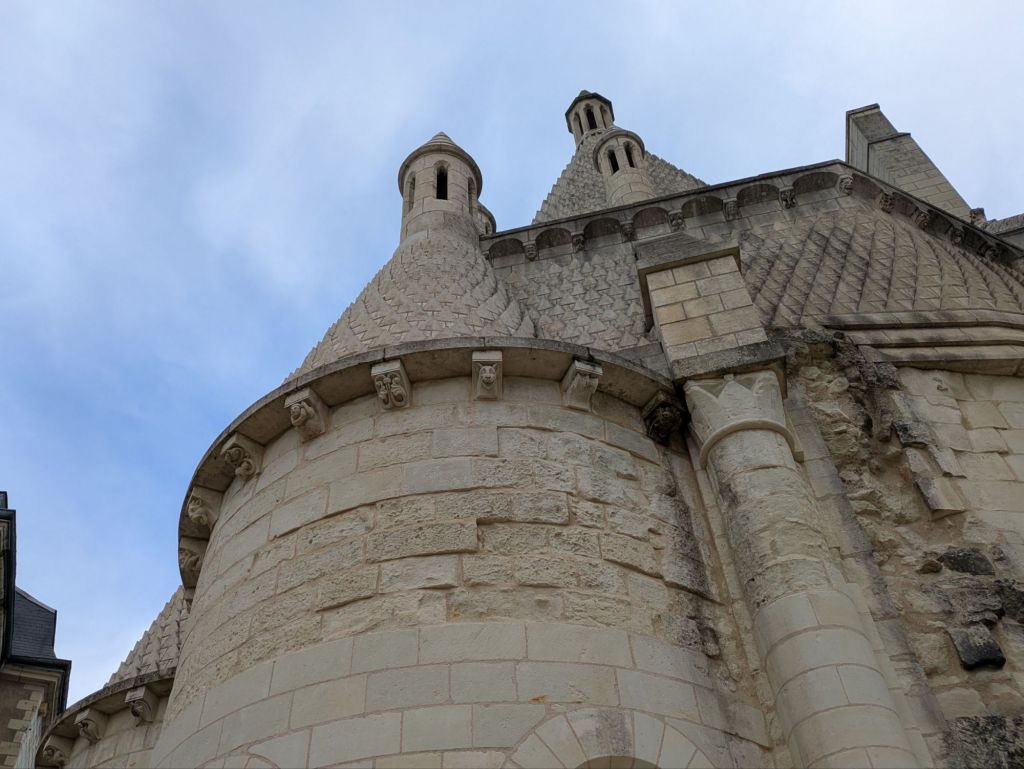
By far the most intriguing building was the kitchen. They think it may have originally been a place of funerary rites, or even a hideout of a famous bandit of the area… however archeological evidence shows it was used as a kitchen for much of the 300 years. Each of those cones is an open vent, for smoke. A cool installation was there to inspire questions about its use.
After 3 hoirs our feet were killing us, and finally a little store opened up in town, so we bought some wine and headed back into the abbey to kill time until the bus came. All the decorative lights began to come on with the darkening skies, and I imagined what it would be like to wander around after dark. It must be truly magical!
I’m glad we went back in, because I caught the lowering sunlight beautifully gracing the effigies in the cathedral.
The bus actually came and picked us up (yes, I was worried) and we made it back to Saumur, and then back home to Nantes. It was a long 12 hour day, with over 20K steps logged, and no real food. You can imagine that the kitties were super glad to finally see us!
What a magical, mystical day. These trips in the middle of winter might not be as fun to be outside in the cold and spattering showers, and everything is closed… but the reward is having the place almost all to ourselves!
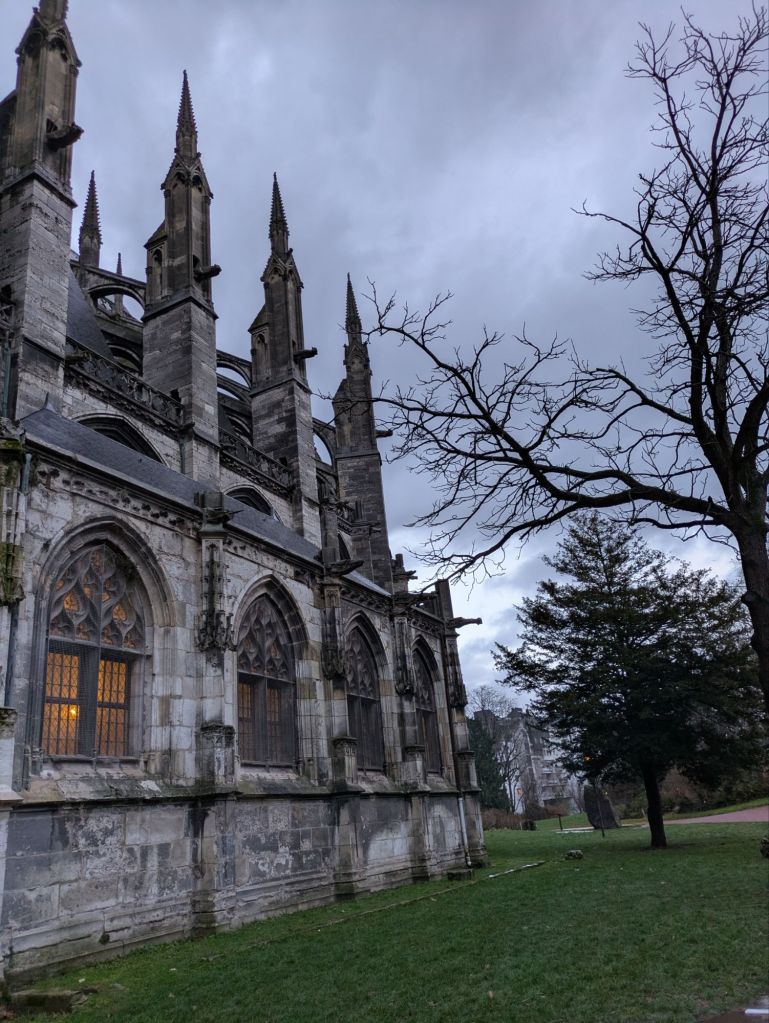
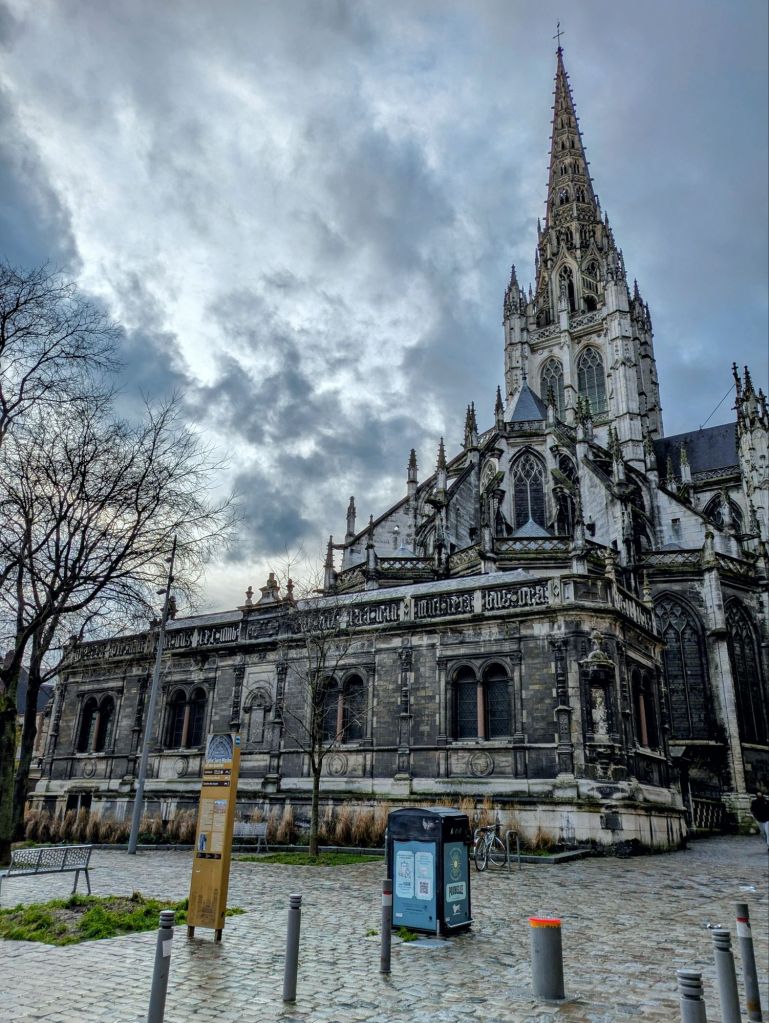
When we came to France, we landed in Nantes. It’s a great city, vibrant with cyclists and art, culture and fantasy. But it doesn’t feel like home. So we have been researching other towns, and eventually packed up the kitties and headed out to explore Rouen and Lille.
I had picked Rouen due to all its incredible history and the city’s efforts to preserve its medieval buildings and streets. Terry picked Lille due to its investment into bicycle infrastructure and its location, sitting right smack at the intersection of rail lines to Paris, London and Amsterdam.
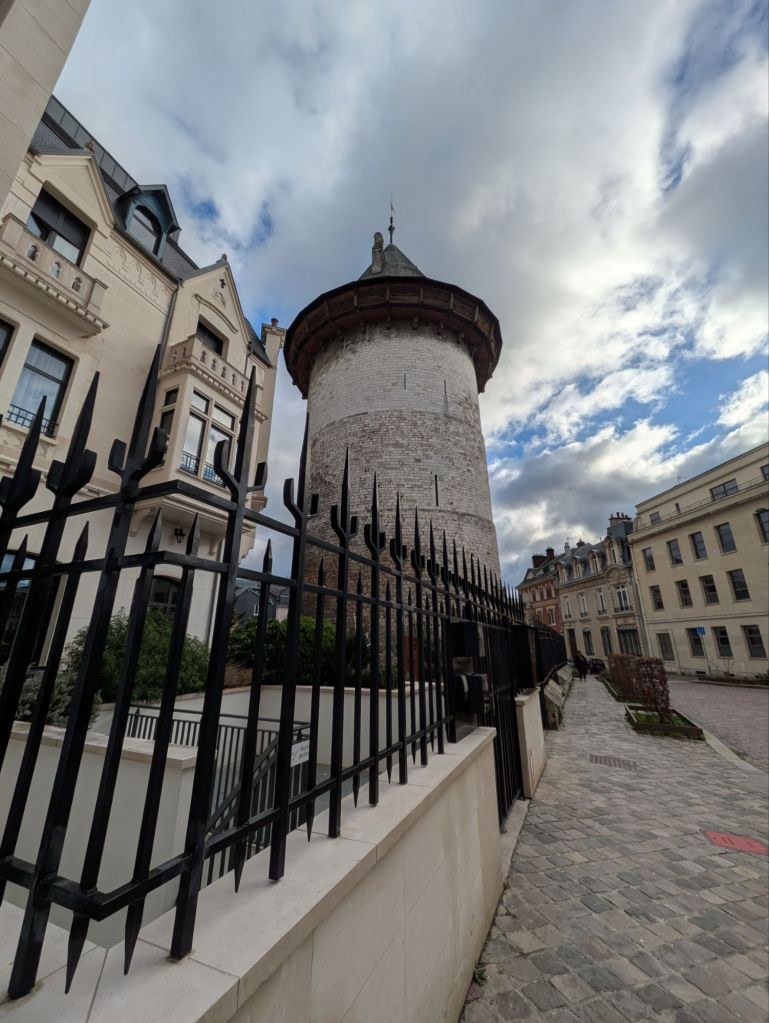
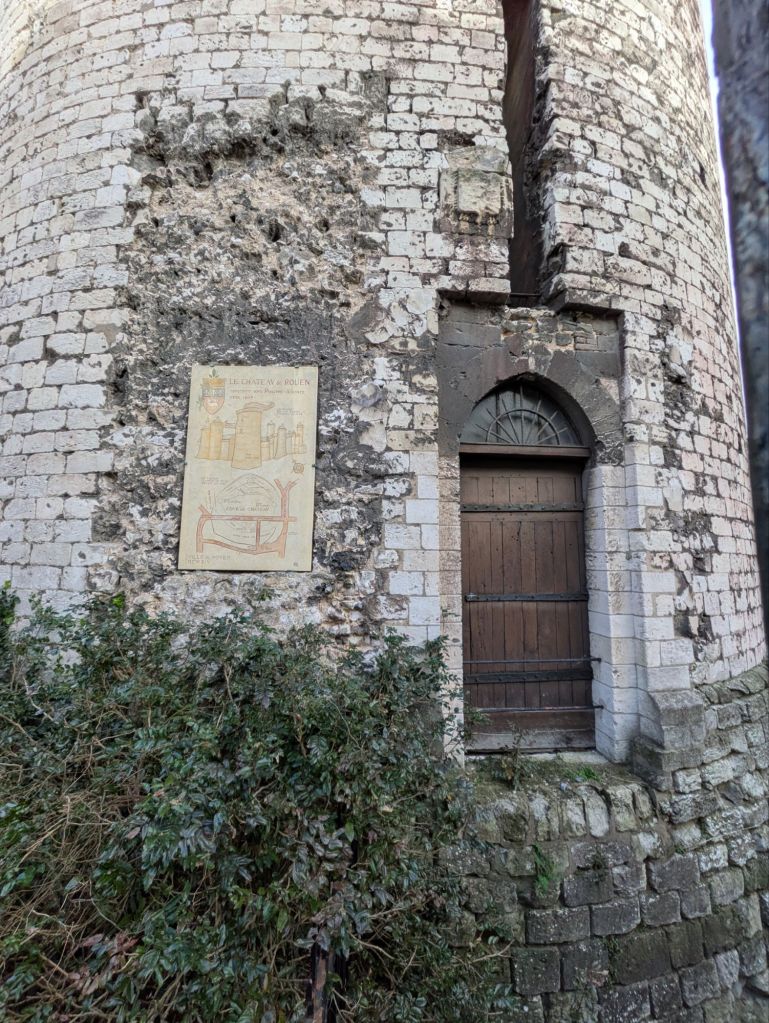
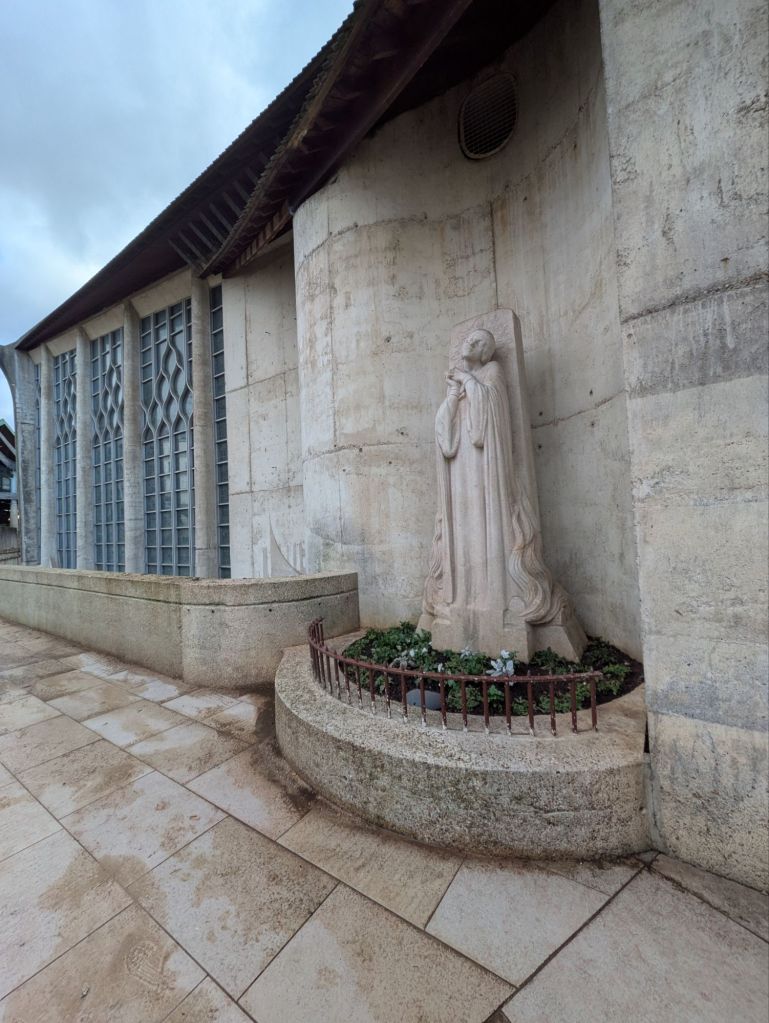
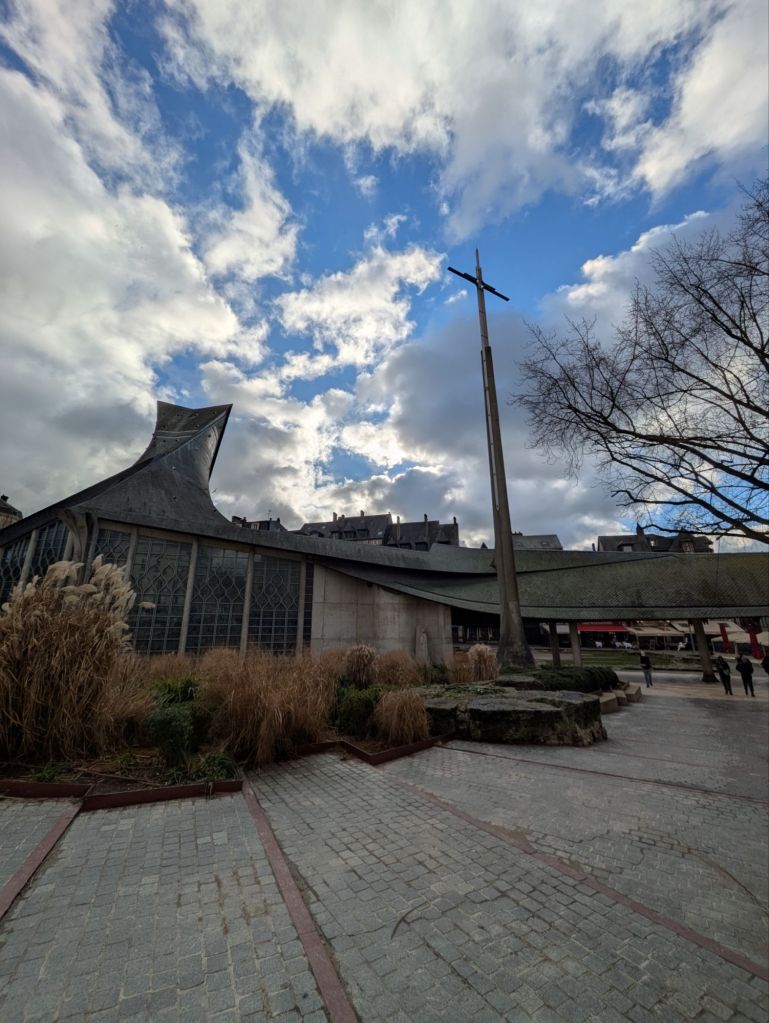
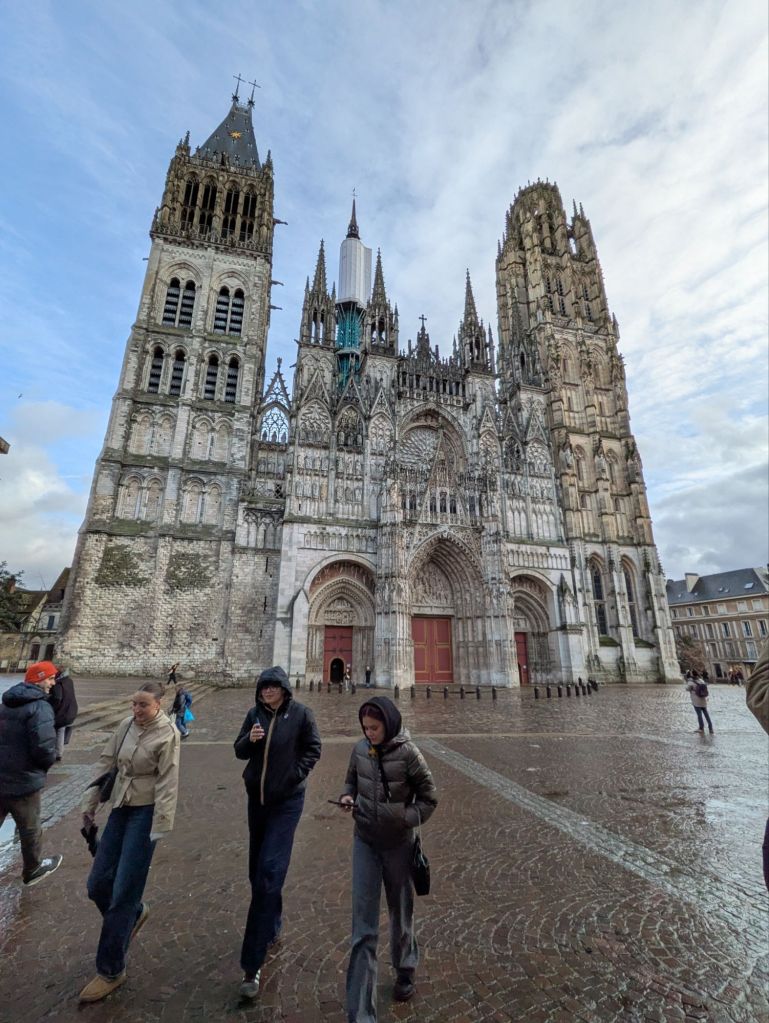
Rouen: Our first stop was Rouen, city where Joan of Arc was tortured, tried and burnt alive by the English armies. Her image is everywhere.
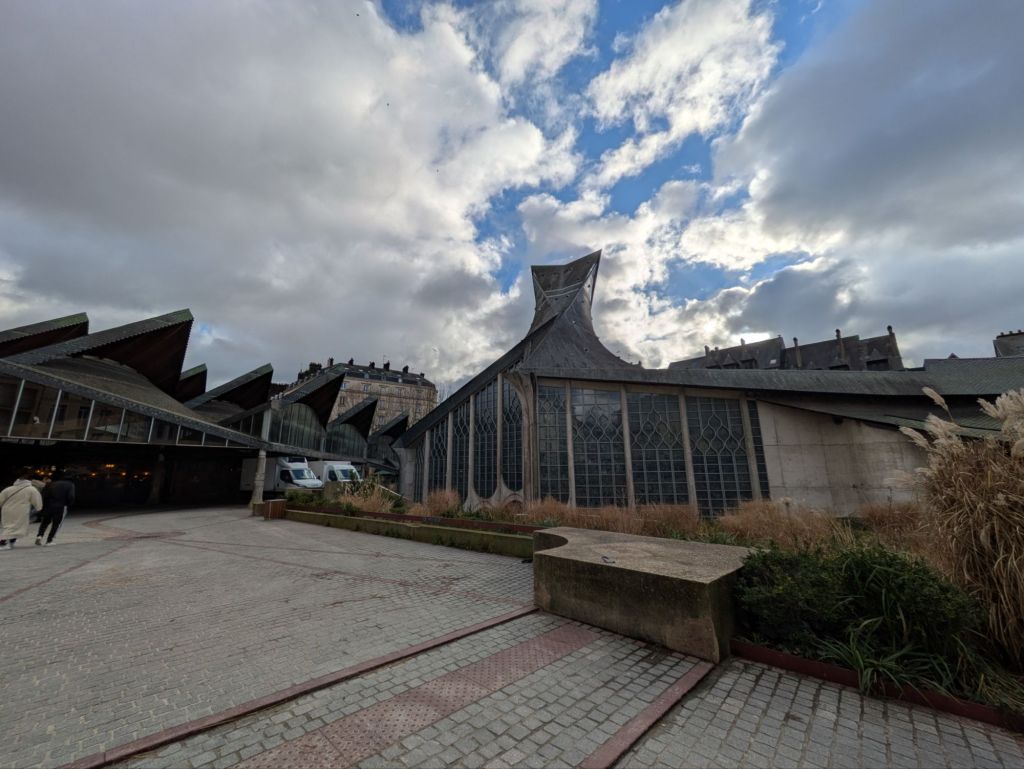
The tower Jeanne d’Arc was keptA modern church built upon the place she was executed. This cross marks the exact place she was burned alive
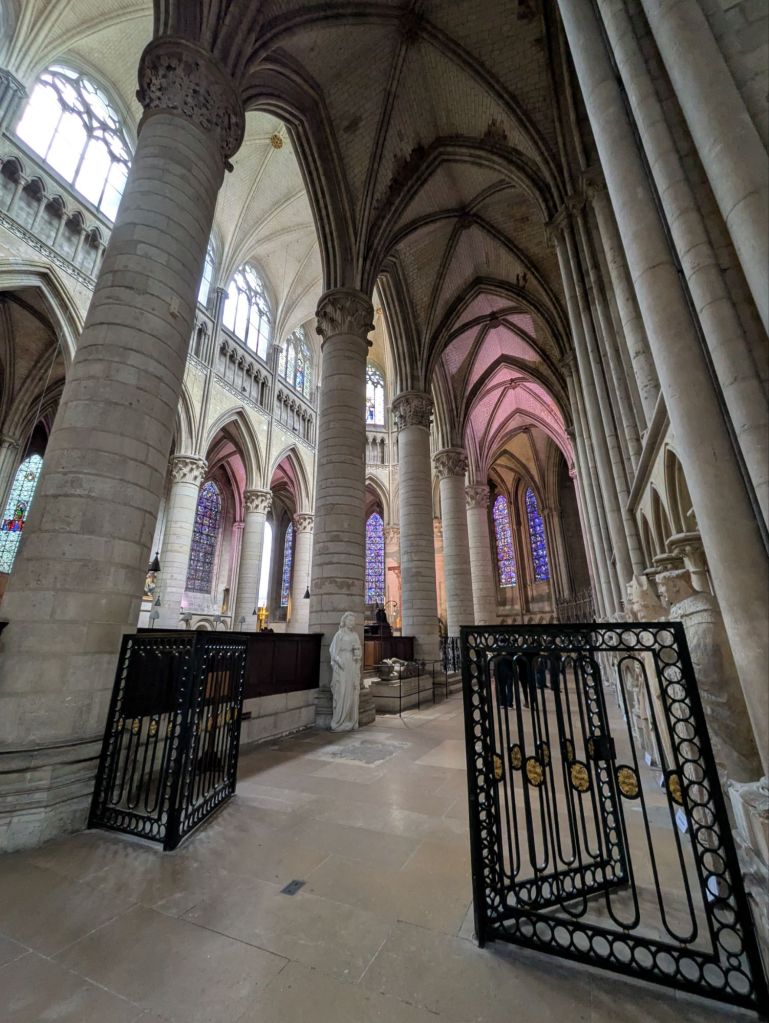
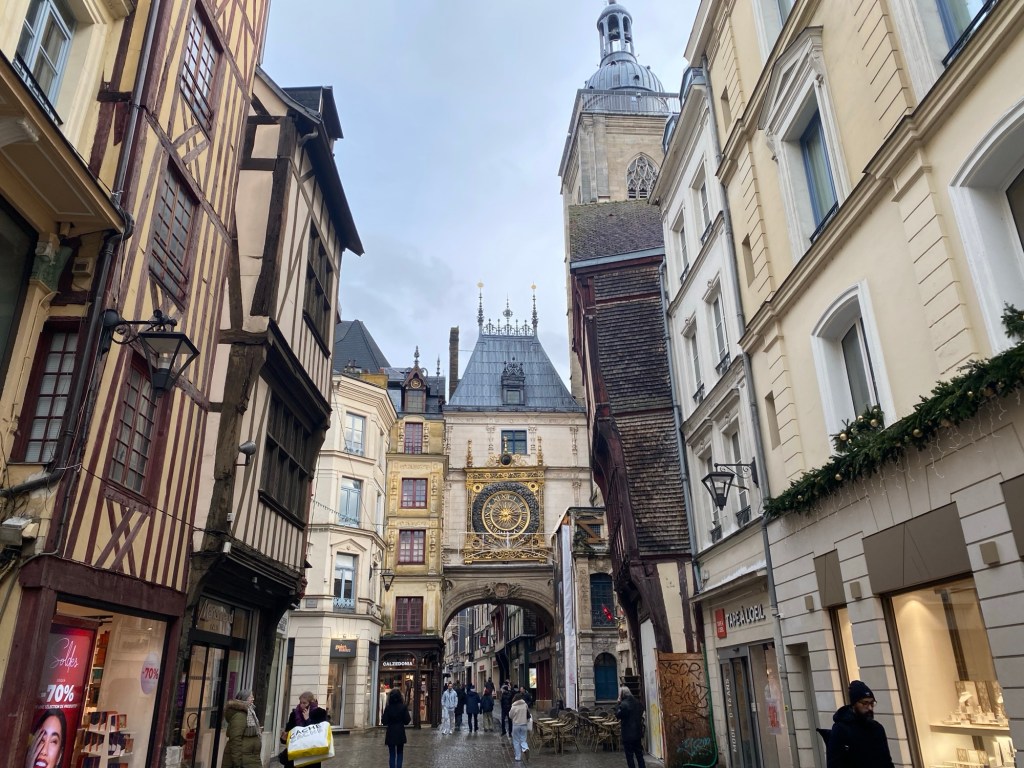
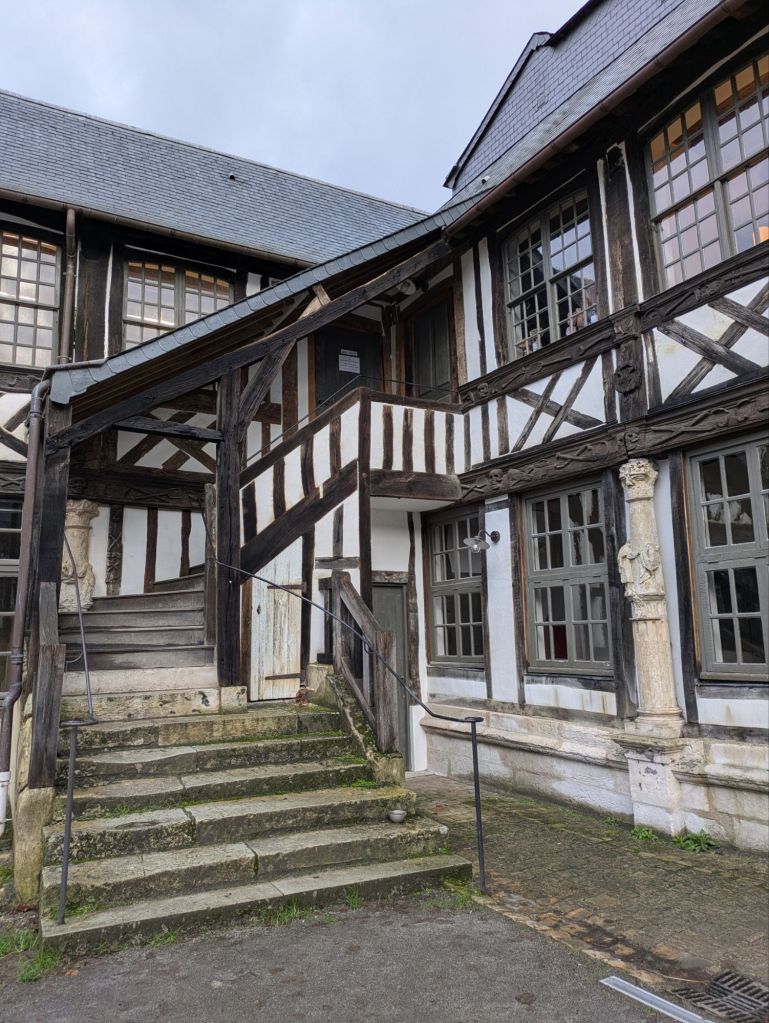
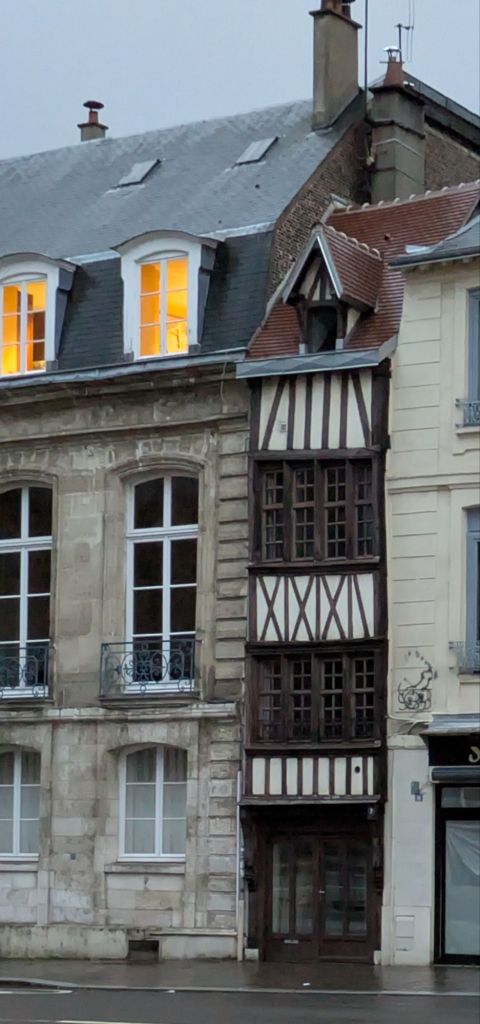
From the narrow cobbled streets, the hewn timber houses, to the fortified stone walls, Rouen is preserved in time. There is so much just to look at, it felt at times overwhelming and dizzying.
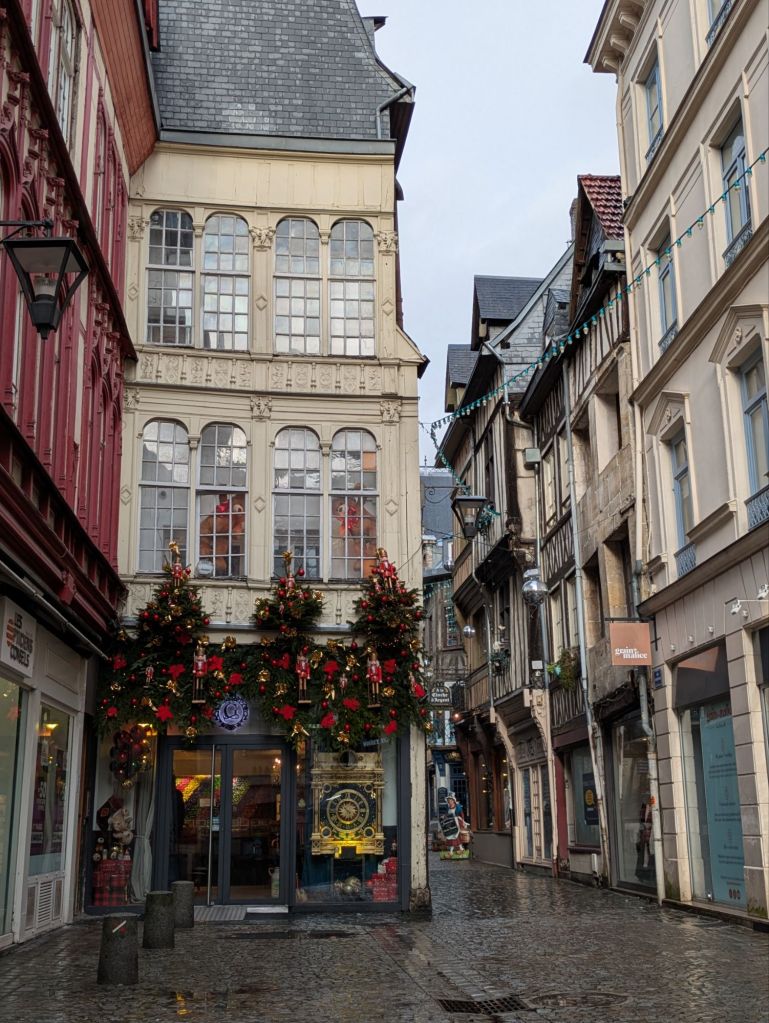
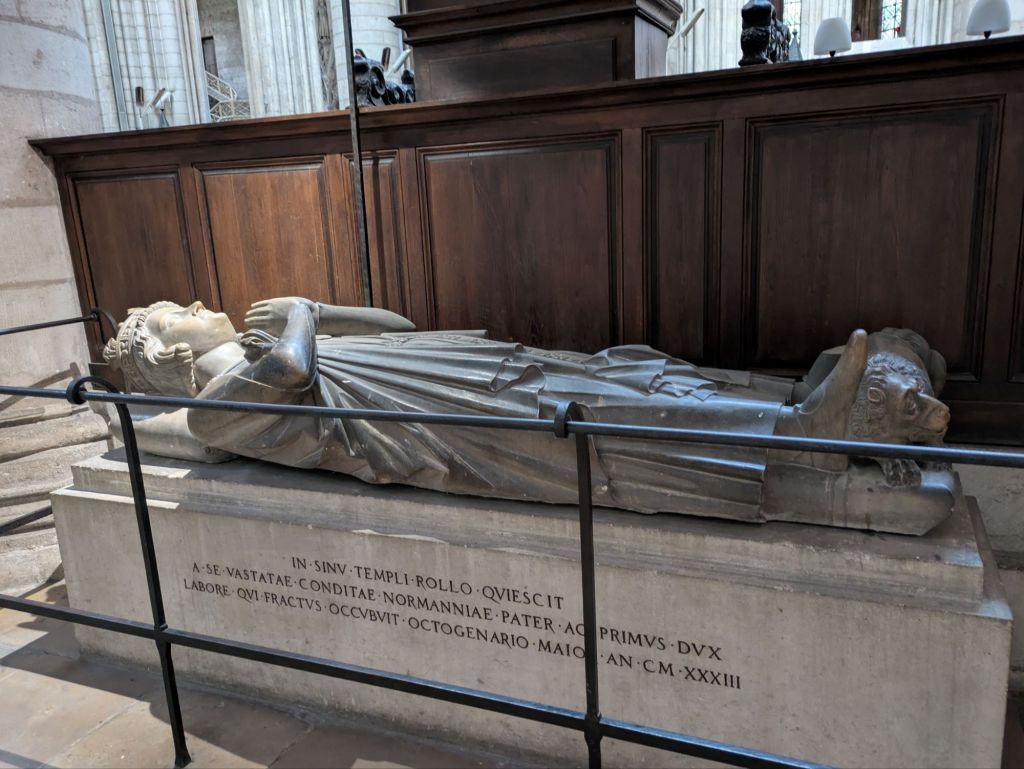
A typical street in RouenI love the acrobatThe tomb of Rollo, or Rollon, the Viking who converted to Christianity and was rewarded with the Duchy of Normandy. His great, great, great grandson was William the Conqueror. One of the oldest astronomical clocks still working in France
We stayed in a quaint, quirky, musty old home, in the neighborhood where Paul Gauguin had once lived and painted. We walked to the nearby subway, or just walked all the way to the historical city center, as we quickly learned just how close we were to everything.
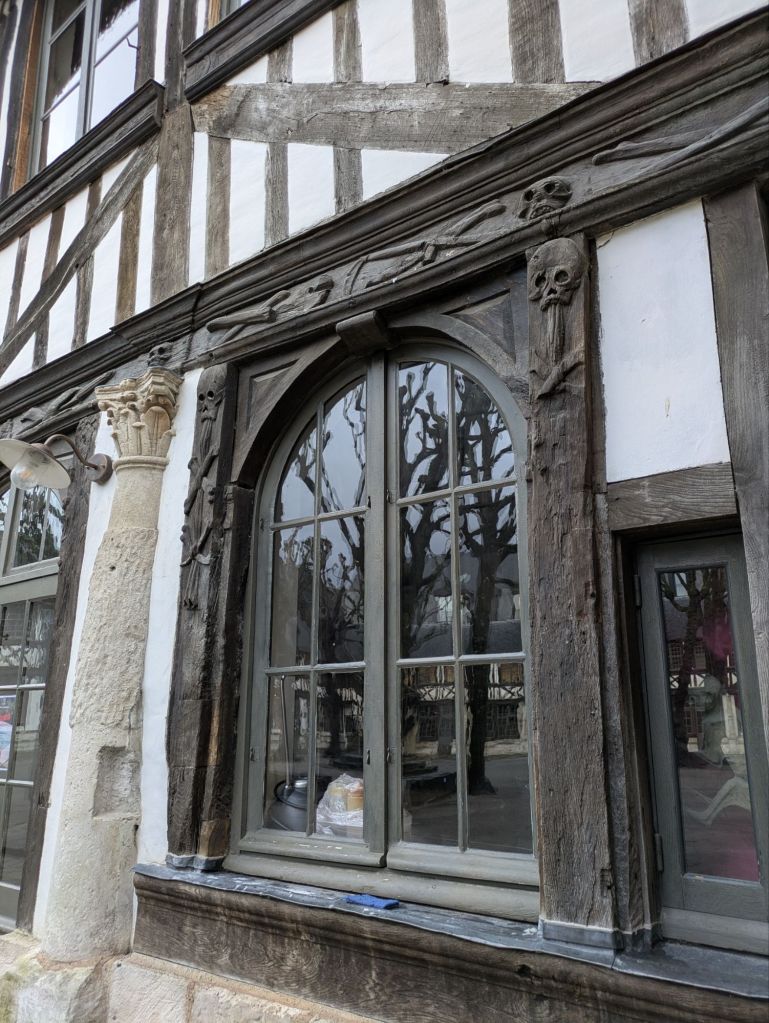
Part of the interesting and dark history was the Black Plague, which killed 2/3 of the population. They dug a mass grave, filled with bodies and lime, surrounded by buildings to house the not-yet-dead. The timbers of these houses are carved with skulls and digging implements.
Although the town is incredibly rich in history, and the best vegan meal we’ve ever had, I felt dark, foreboding and heavy in this town of tragedy. I don’t think I could live there.
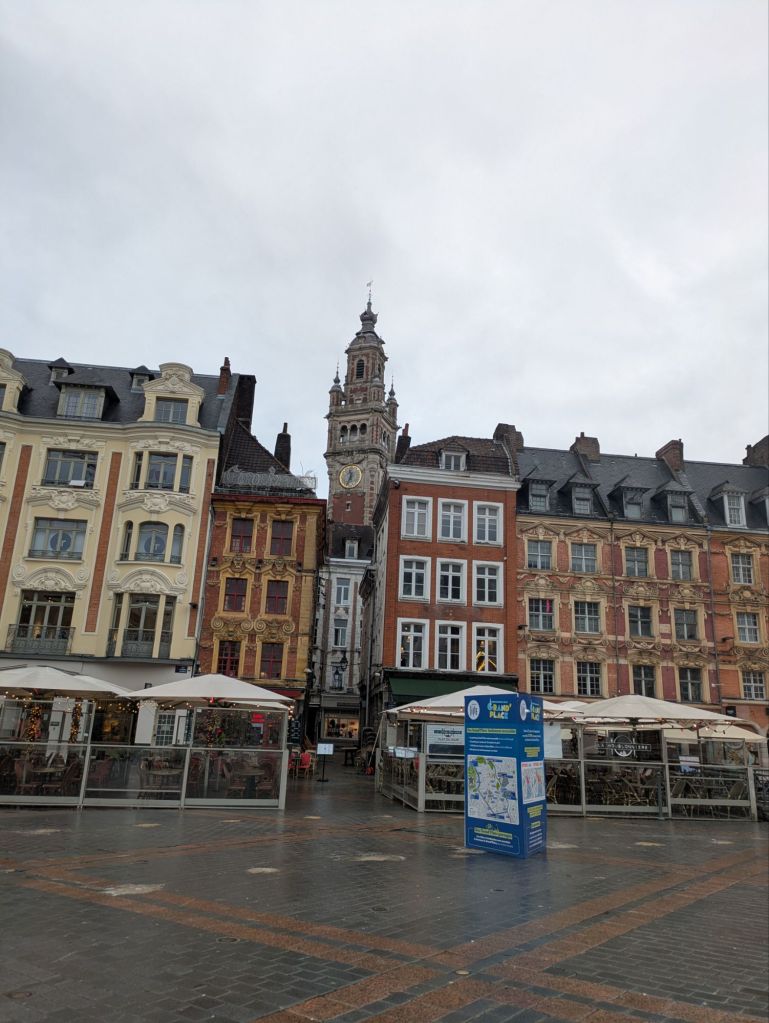
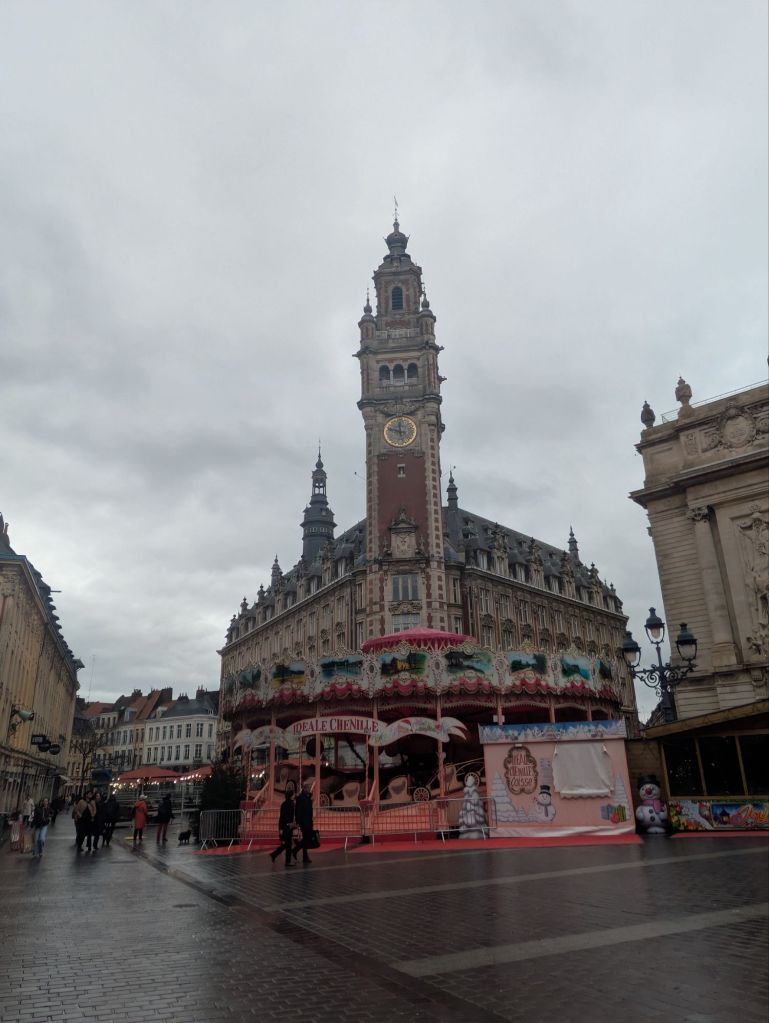
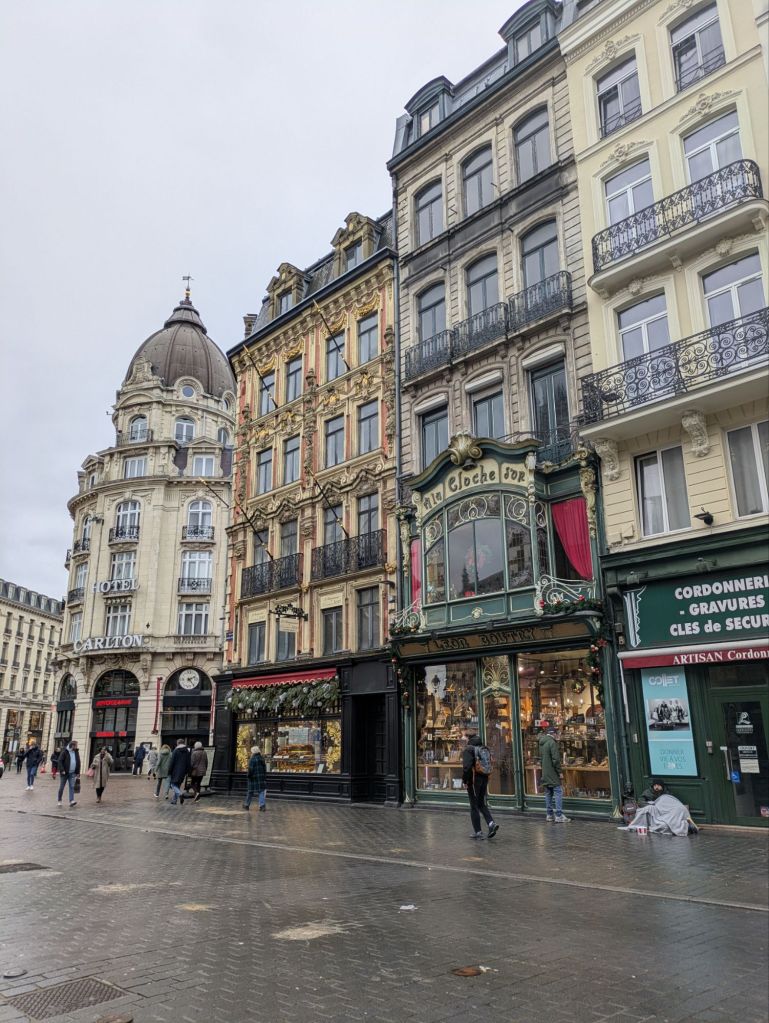
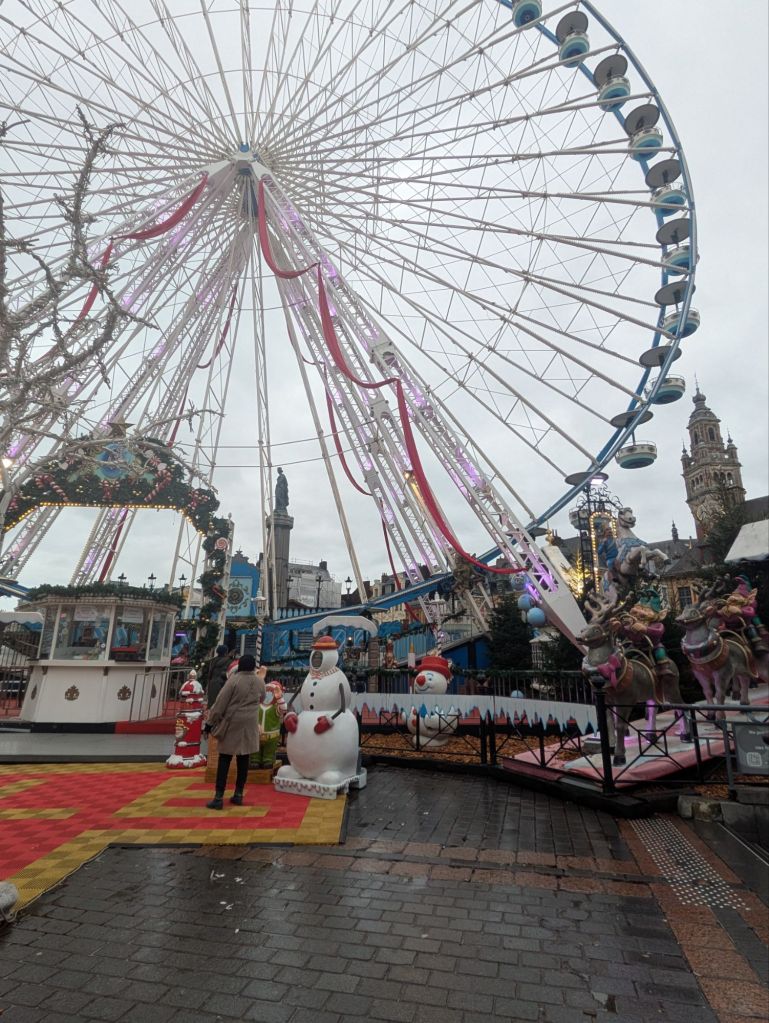
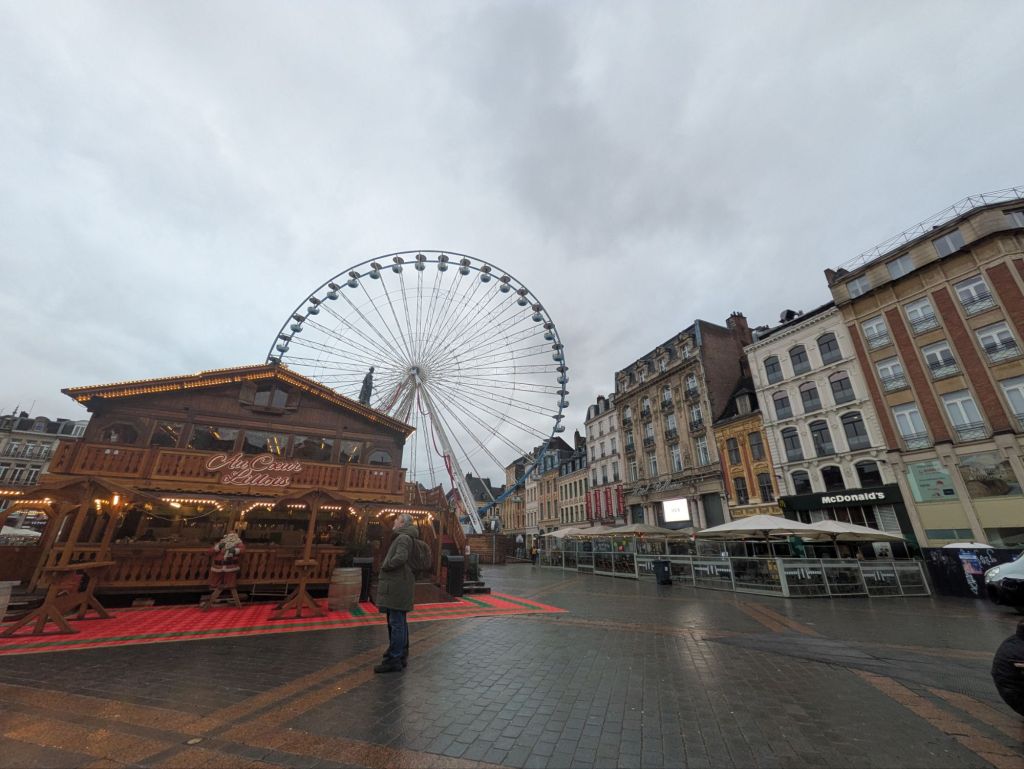
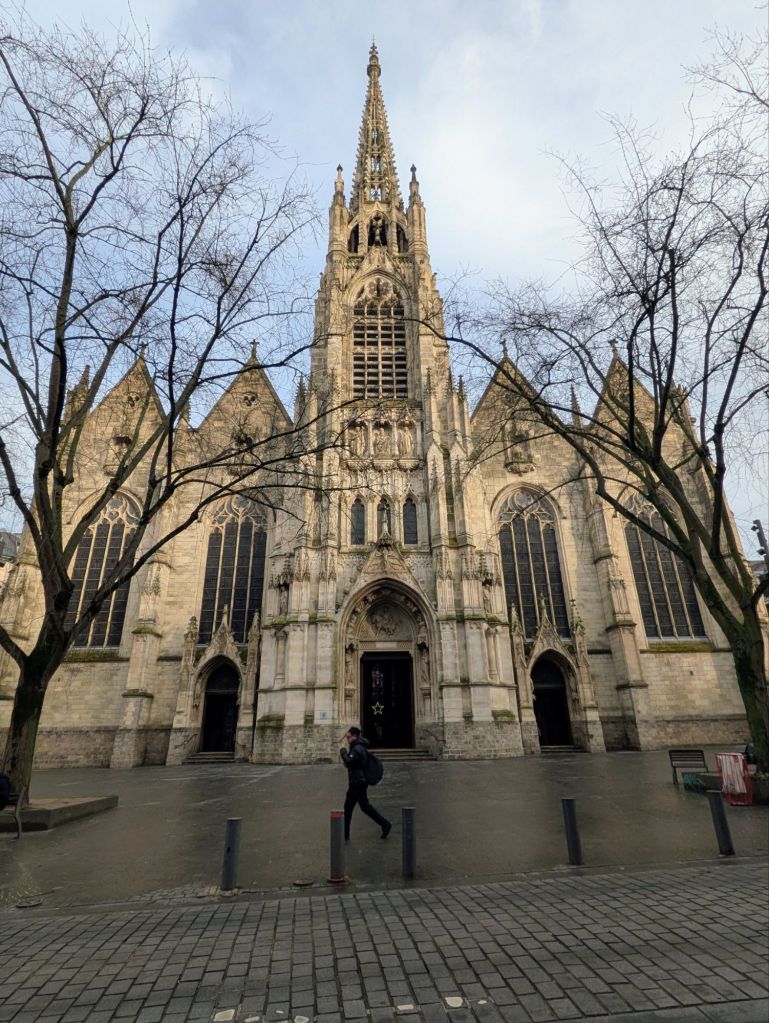
Next up was Lille. Lille proved to be open, bright, and a perfect mix of the historical and modern. The bike paths are wide and miles are speared from the car lanes. So smart. With a primarily Socialist led government, the investment in public infrastructure is clearly evident. And tons of green spaces!
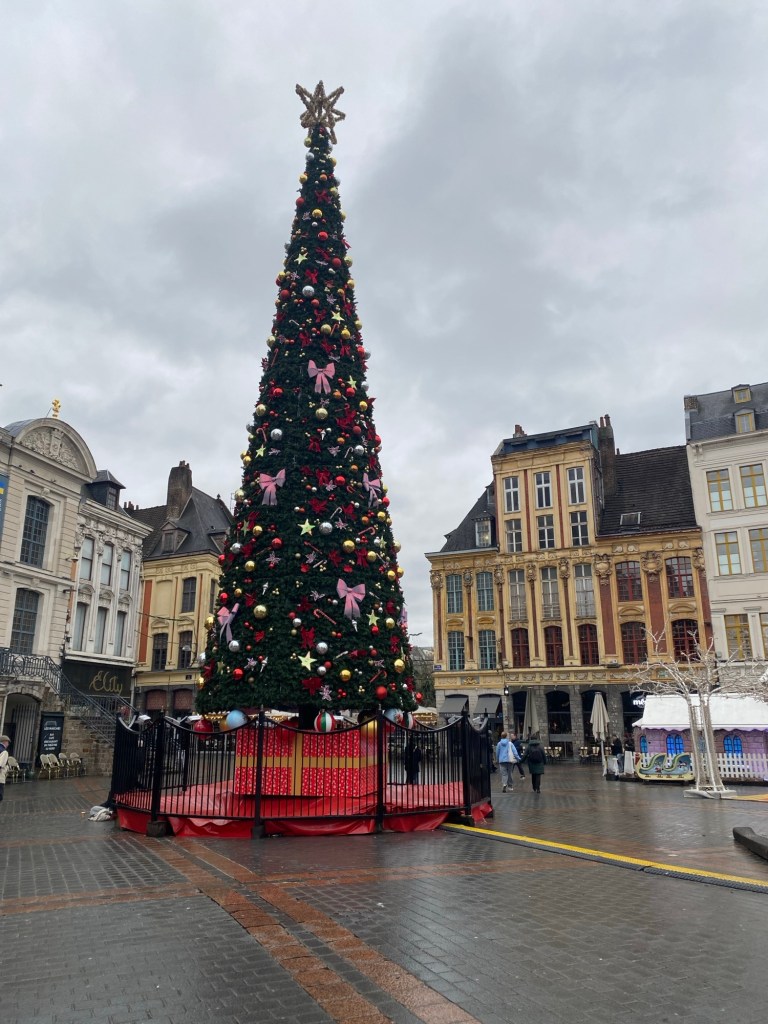
They were breaking down and clearing out all the Christmas markets, so it was a busy time for civic workers.
The town of Lille is actually pretty small but the surrounding villages have been incorporated into a kind of big city, all served with incredible public transportation and connectivity.
The bus systems and trams are efficient and well relied upon. We took a train out to Roubaix, of pro cycling fame, and found it was a quick 20 minute ride, just inside the Belgium border… a nice area for possible relocation.
In the end we were excited about Lille and will be moving there in a couple of weeks. Initially staying in an Airbnb near the city center, we will be exploring areas and looking at apartments. Hopefully we’ll find our permanent place by mid- March!
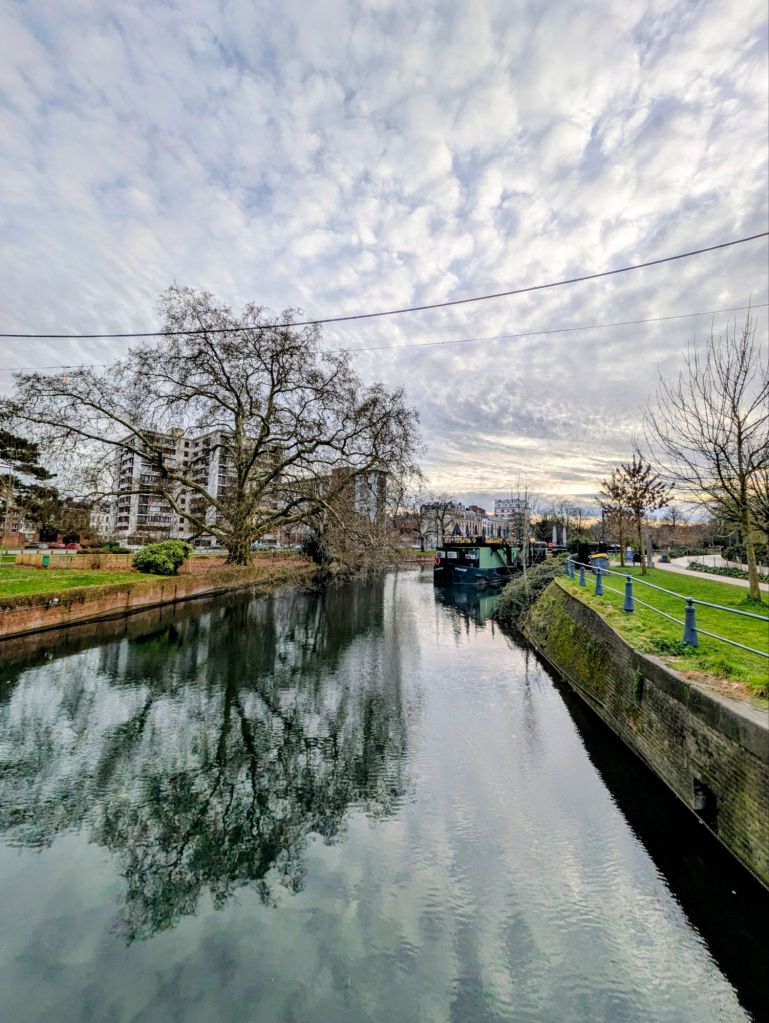
Afternoon respite on one of the boats in the canal
Victoria, this is for you! And please note throughout this post that THESE ARE NOT COMPLAINTS. This is not an American bemoaning, “why oh why arent things like America?” Nope. These are simply cultural observations, joyfully celebrated. Even the suck ass showers. 🚿 🚫 😂 💕
So much is different, and I’m not talking about language. Some things expected, some things surprising, some things frustrating, many things just make good sense. Much of the difference is because France is a socialist democracy. That means less focus on self-dealing individualism, more societal investment in the firm belief that everyone is better off when everyone is better off.
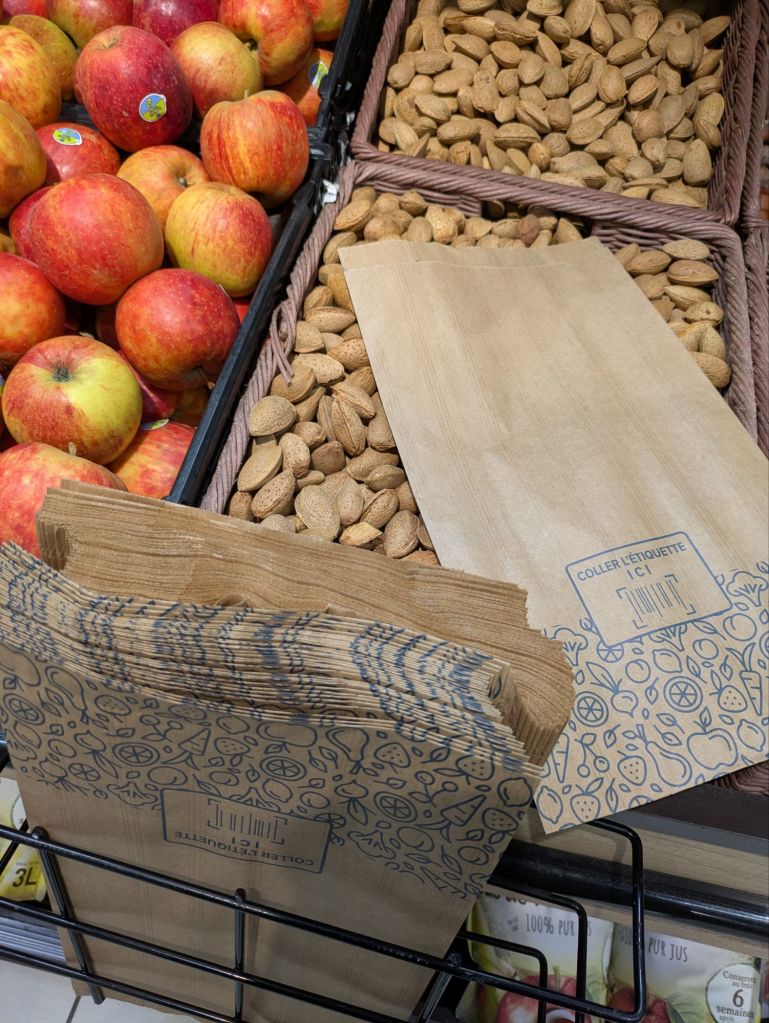
Start with… in the grocery stores they don’t use plastic bags, they use these thin but sturdy paper ones. These bags then work great for use in your composting bin… which, when full, you then walk down the street to the corner composting bin. It is not convenient yet everyone does it. Just because its the good thing to do.
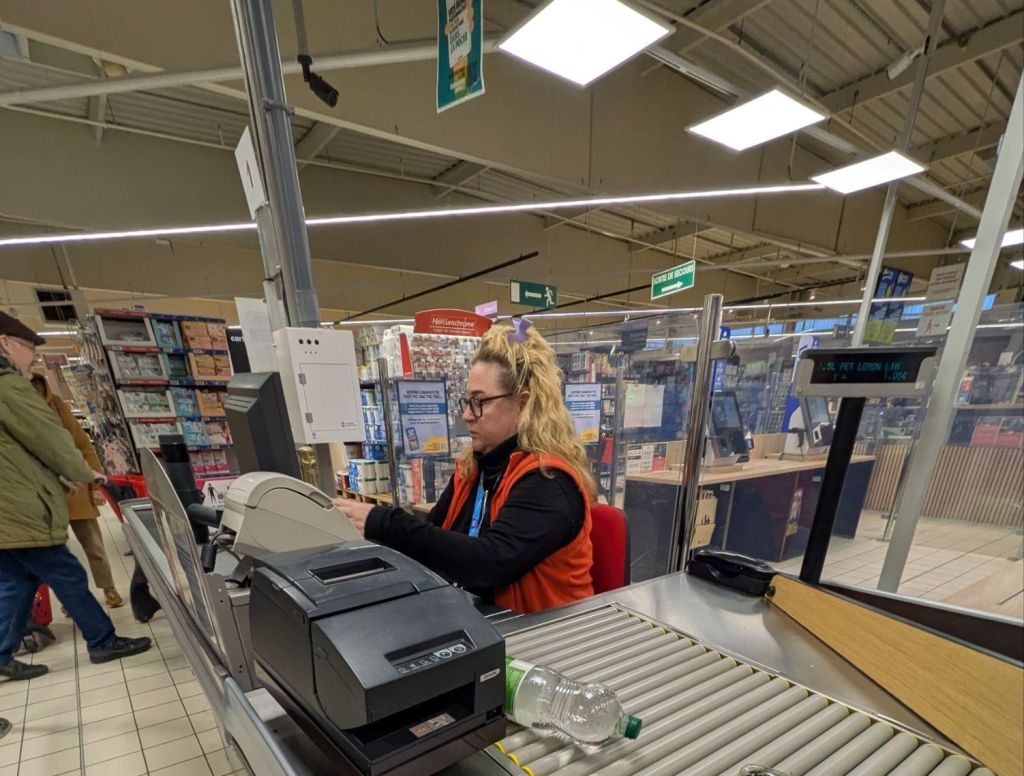
Cashiers are allowed to sit
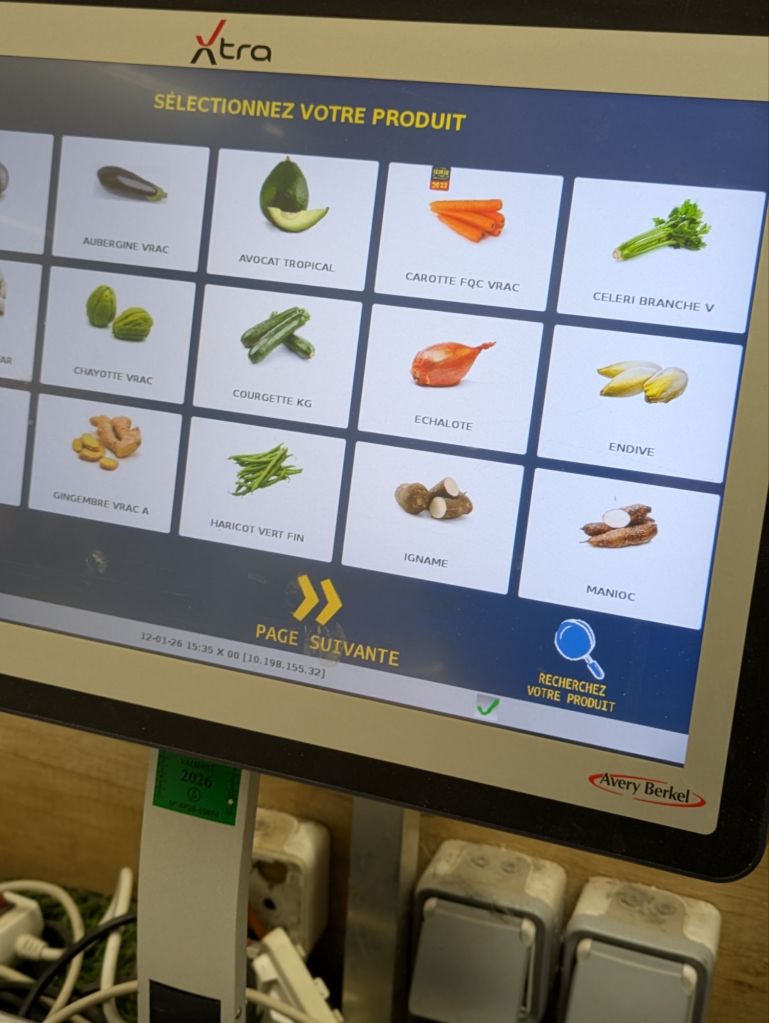
When you get your produce at a store, you take it first to scales to weigh, and a little sticker prints out that tells the cashier what to charge. We learned the hard, and embarrassing way, as we held up the line forever on that first grocery store trip! Good thing the cashier was kind, even though clearly annoyed.
And in the grocery stores, everything is smaller portioned. No giant tubs or jars. Because most people have small refrigerators, in small kitchens, in small apartments. Its no surprise that the image of French people going to the store, market, local meat shop, green grocer or bakery, is true. I love this part. Not only does it save electricity, but you get out walking every day. Although it took us a couple of weeks to adjust our mindset of needing to buy in big quantity after living on the island for 3 years, where you have to drive long distances to the stores, so you better stock up!
And did I mention how amazing the produce is? And prices on almost everything is so affordable. 1.25€ 🥖 6€ 🍾 .30€ 🧄 1€ 🥕🥕🥕 2€ 🥦
What is hard to find? Artisanal mexican ingredients. Everything is El Paso 😆. Chinese, Thai and Japanese beyond soy sauce. Mirin and rice wine vinegar are usually in tiny bottles that I go through in a week. Soba or ramen noodles, except rice noodles. I scored a jar of chili crisp oil at an Asian store in Rouen!!! I haven’t found dried chili peppers yet, ot Thai lime leaves. I got so excited when I saw 2 stalks of lemongrass at the market and the vendor was equally excited that I knew what it was and how to use it!
However, Middle Eastern, Syrian, and Vietnamese are easily found. Makes sense.
Weird: sage is really hard to find.
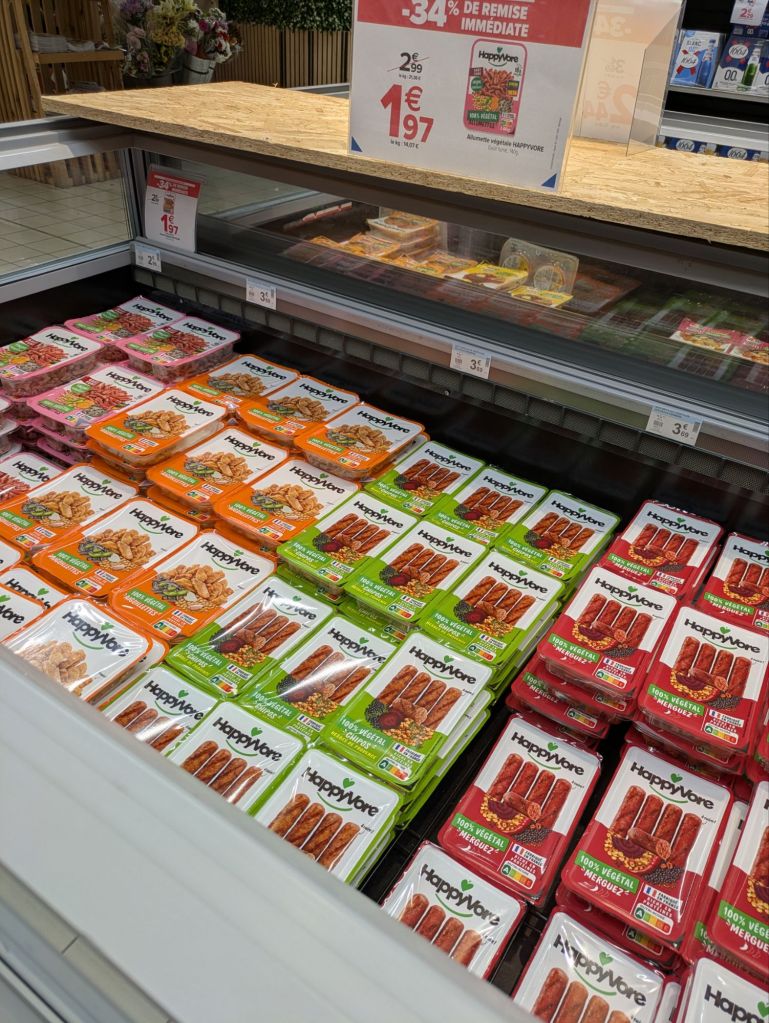
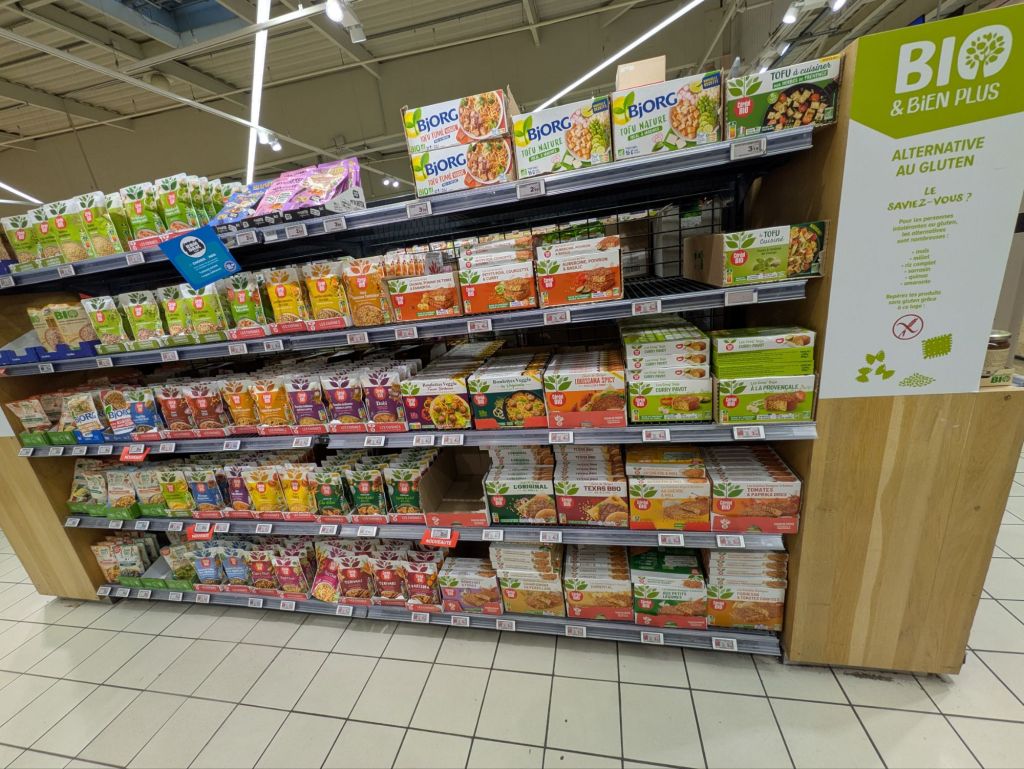
Lots of vegan products and they aren’t expensive!
Other difference: no one has driers, everyone has drying racks that you place near a radiator that heats the apartments. And showers are terrible for the most part. Seriously.
Light switches: up is “off”, down is “on”.
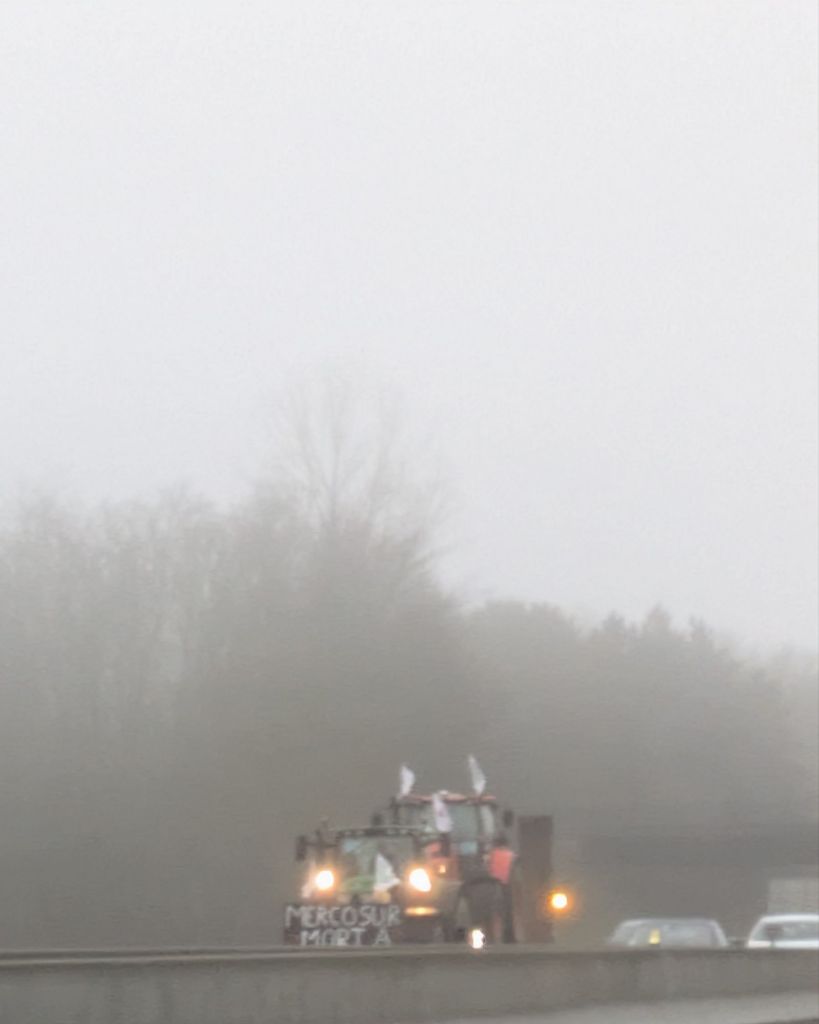
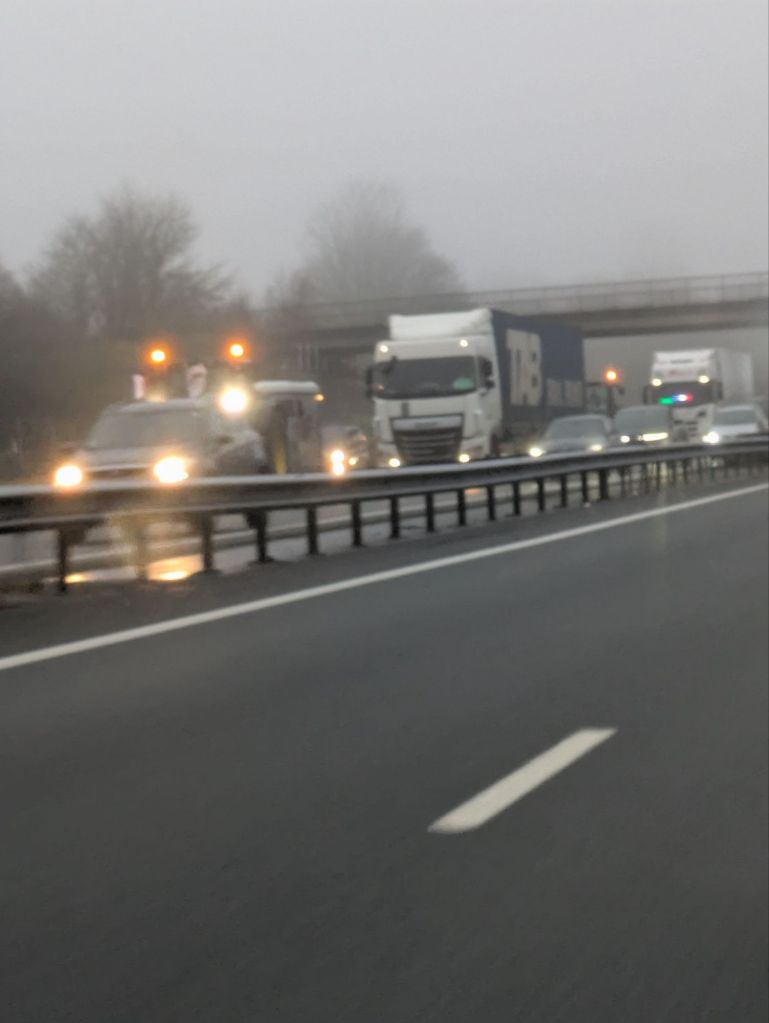
They say that strikes are the French national sport! We witnessed a huge one today driving from Lille to Nantes. The farmers ain’t messing around! Over 350 tractors blocking traffic around Paris and along the highway to Lille. Traffic is at a standstill for miles and miles.
And we’ve been here a month, lived in or visited 4 apartments. Not one has a bidet and I’ve yet to see anyone do “the kiss”. Such iconically French stereotypes that seem to have lost their universality. We will keep observing and report back!
This is what we hear from a lot of bloggers. I beg to differ.
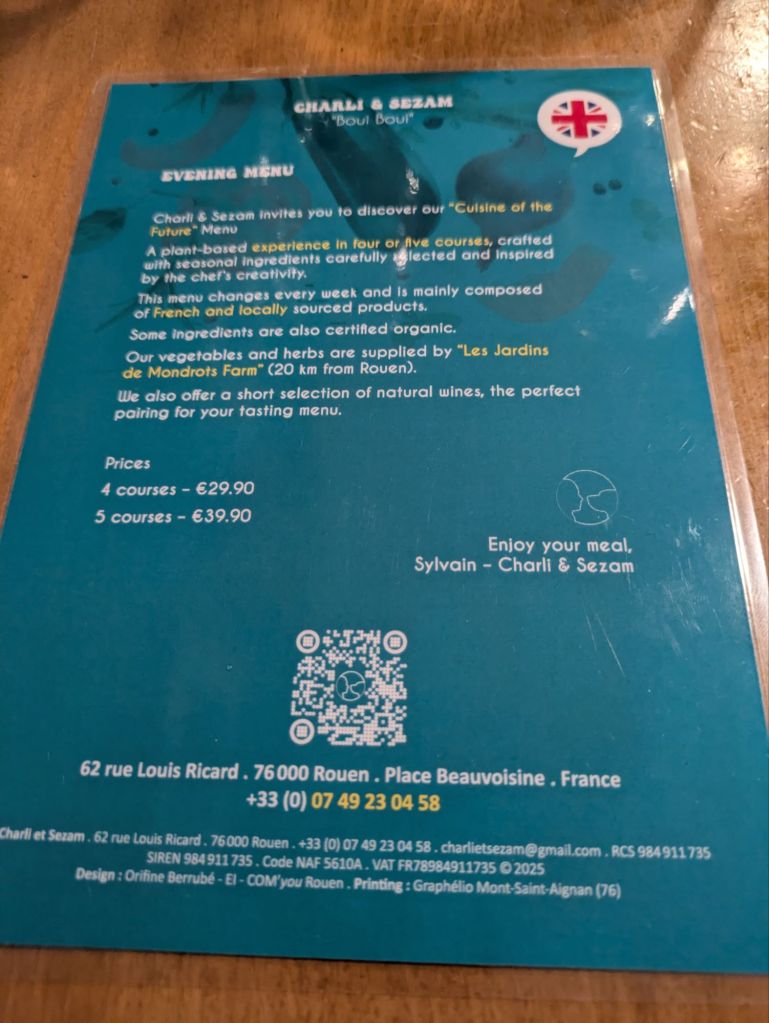
Coming from a community that was at times, out and out aggressively anti-vegan, we have felt like kids in a candy shop. Sure, most restaurants don’t have vegan options, but we are used to that. There are many vegan products in the grocery stores, from amazing produce and artisan cheeses to a fantastic bacon substitute, we have been cooking great meals at home.
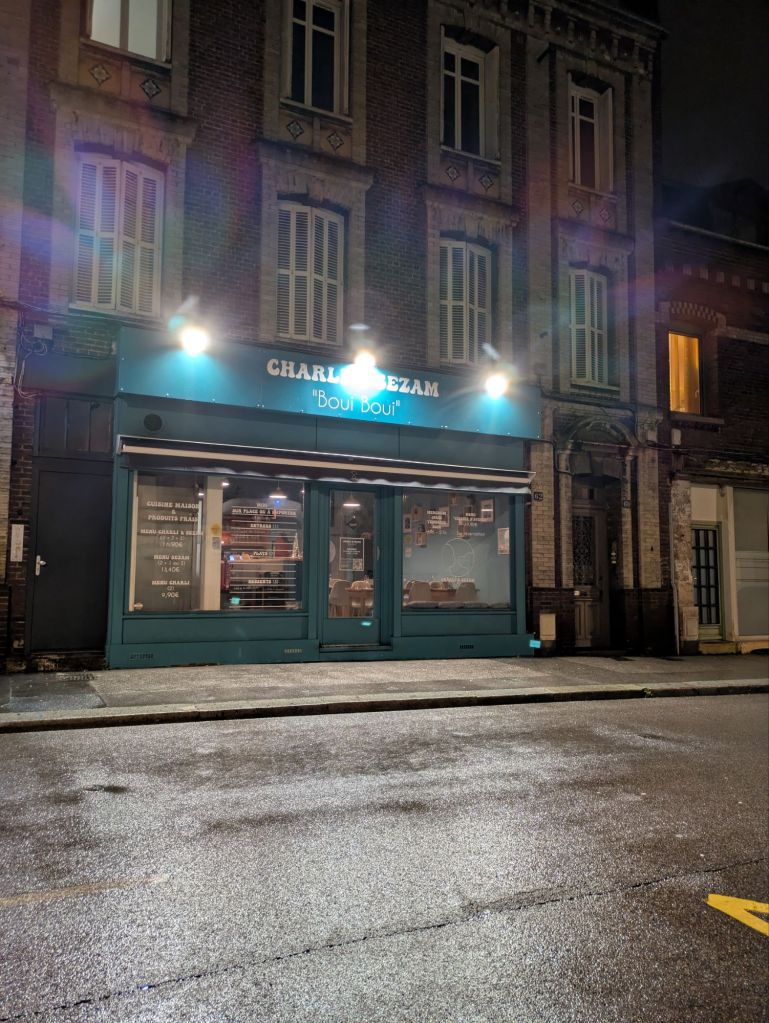
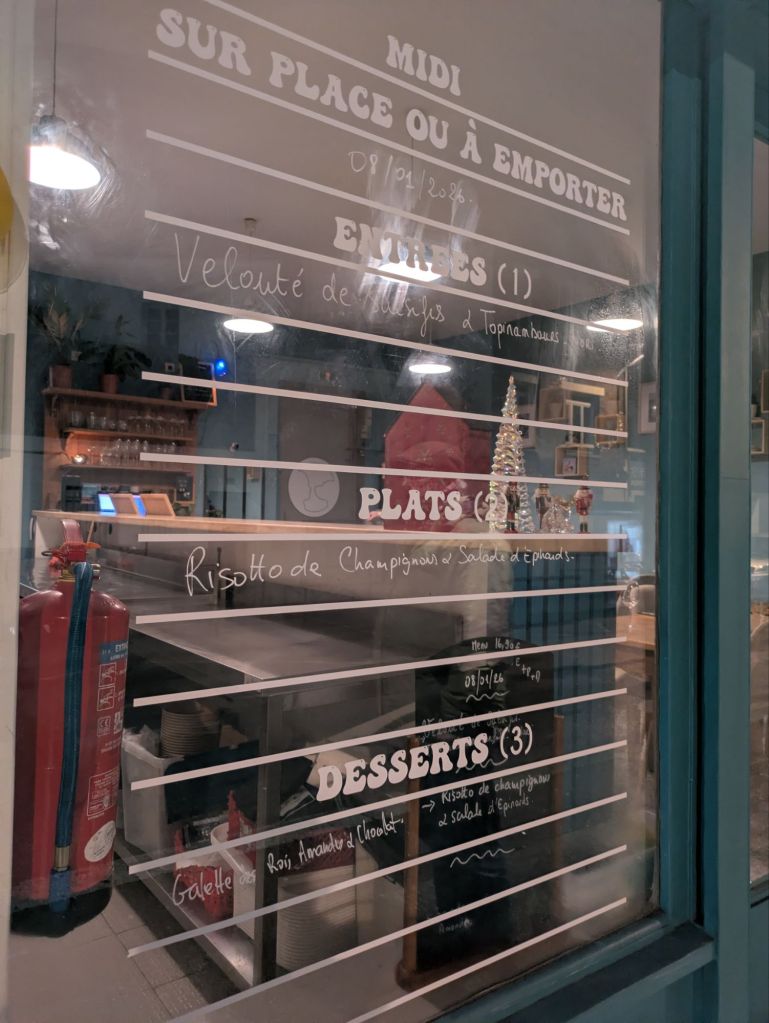
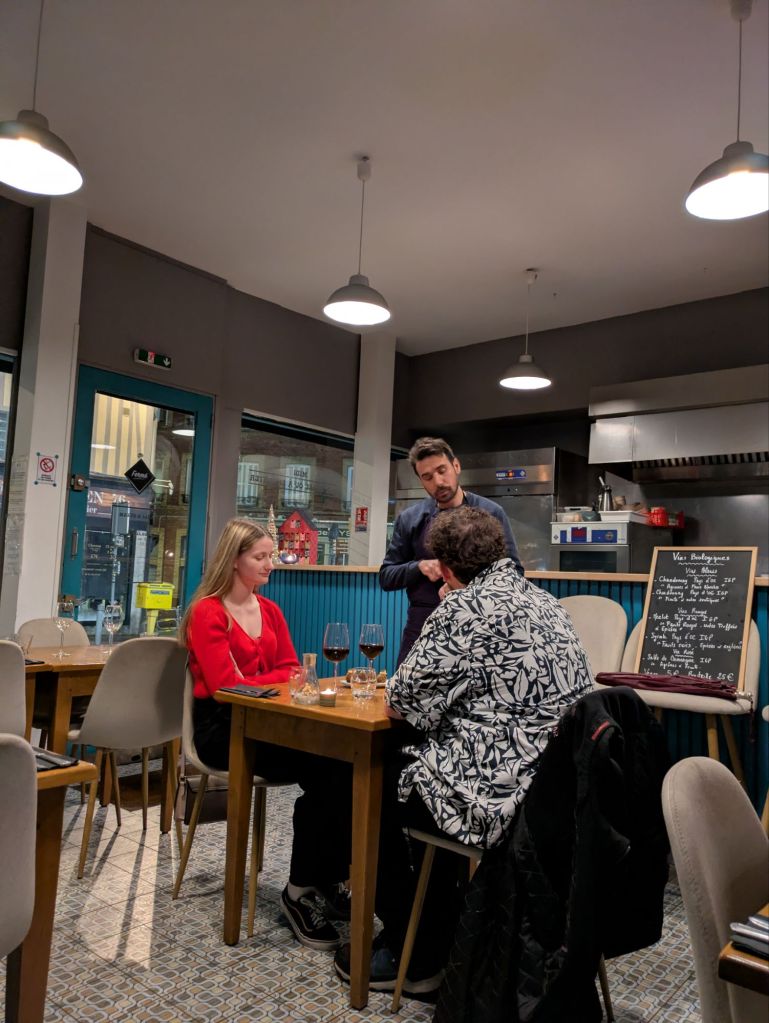
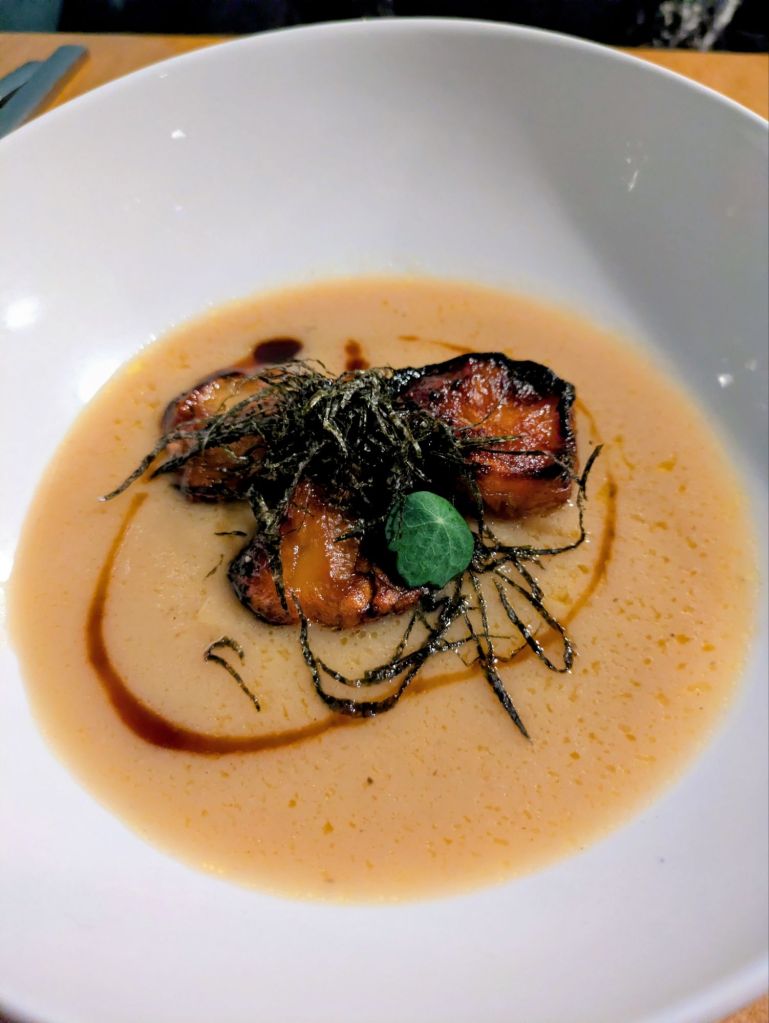
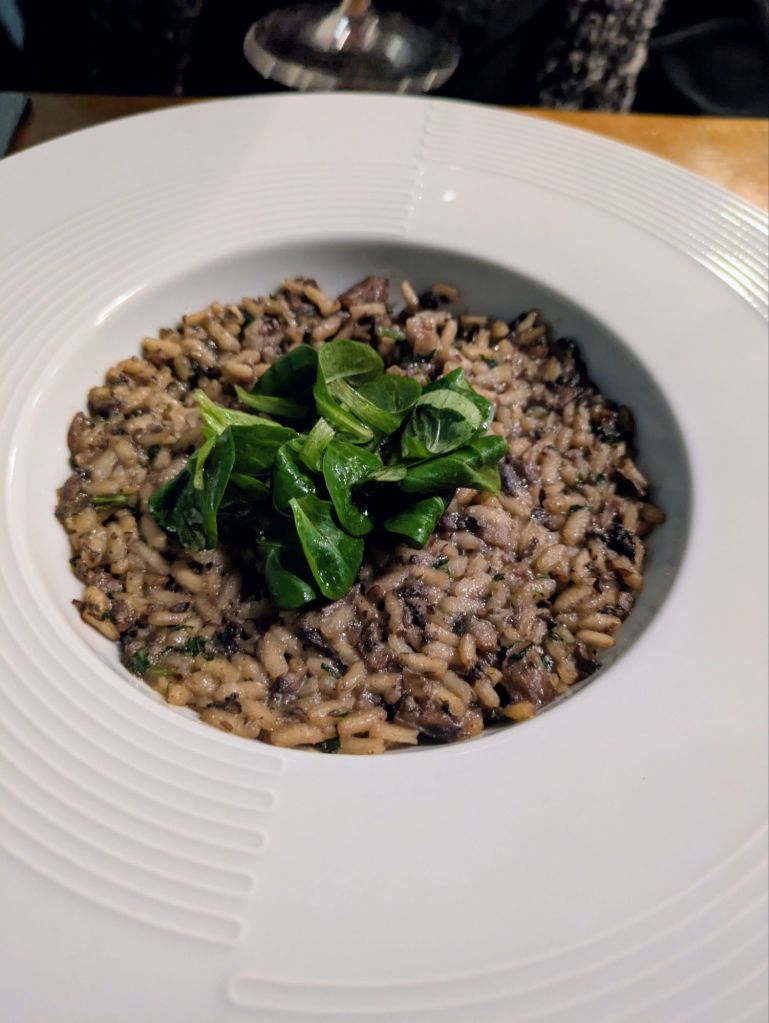
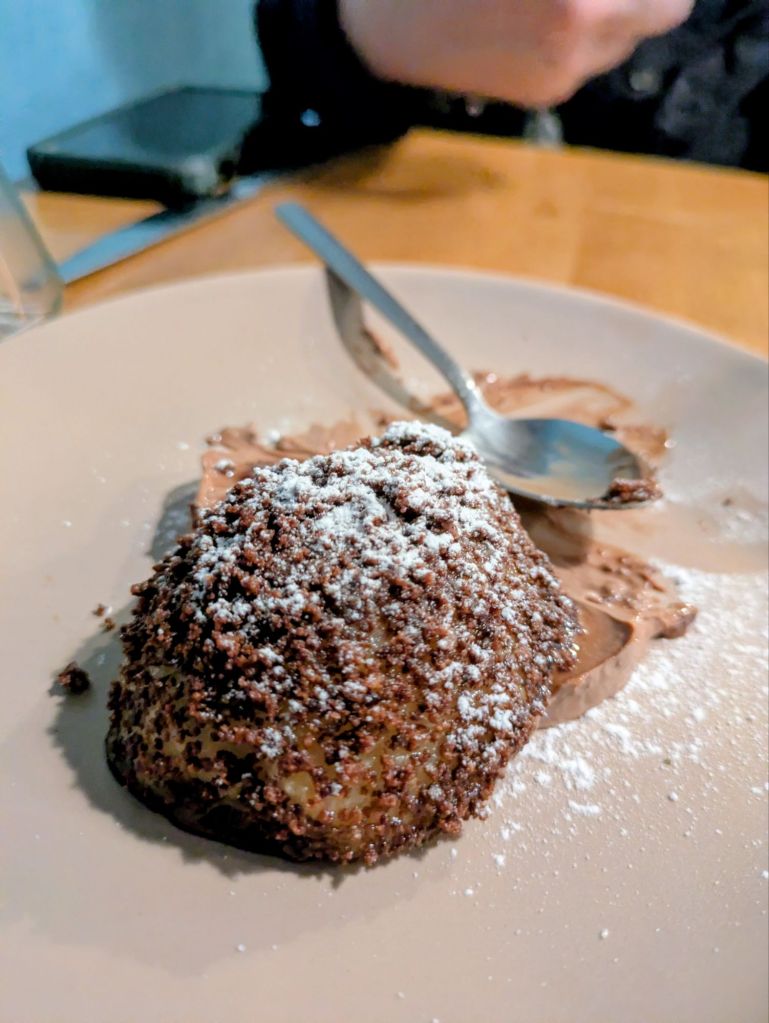
However, last night we had one of the most amazing meals ever. A tiny restaurant in Rouen, with one guy – owner, chef, server, sommelier- offers a prix fixe vegan menu. Each course was a feast for eyes, nose and taste, served with a targeted small selection of bio wines.
Thank you Charli et Sezam for a soul healing meal of gentle generosity and kindness on a stormy dark night.
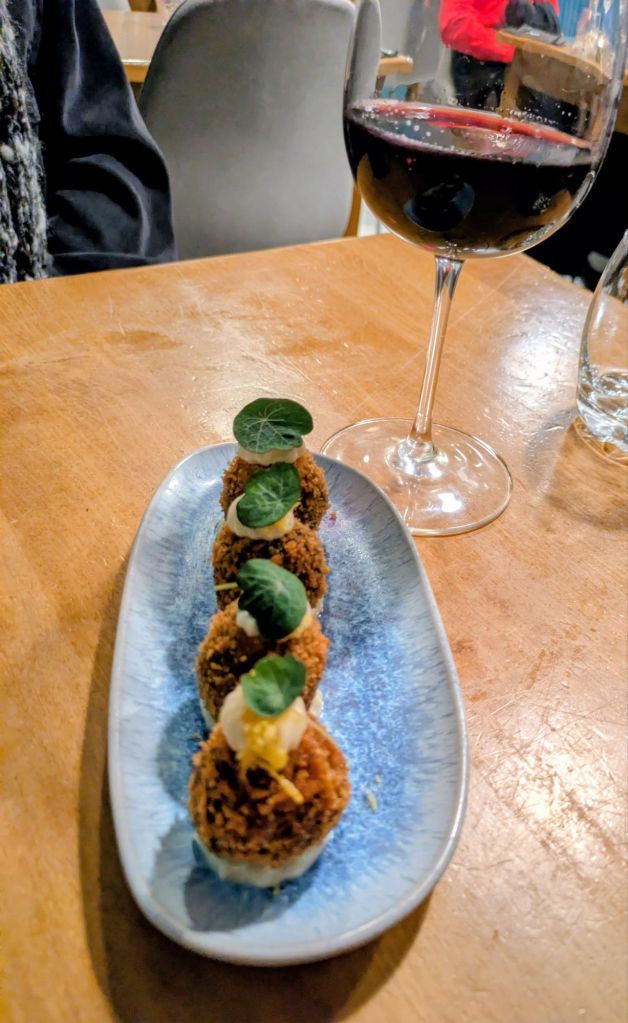
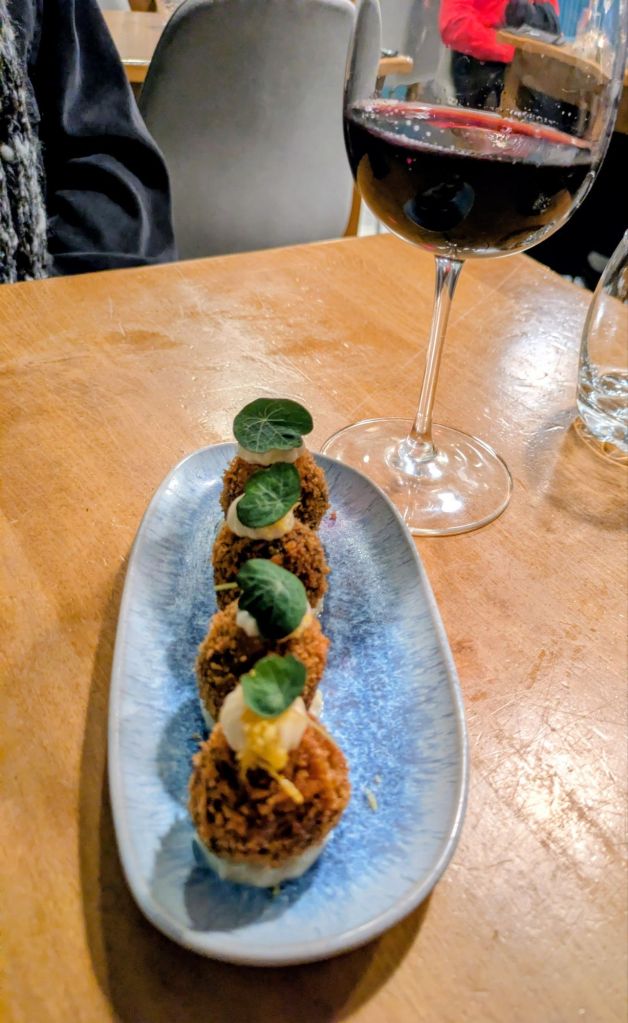
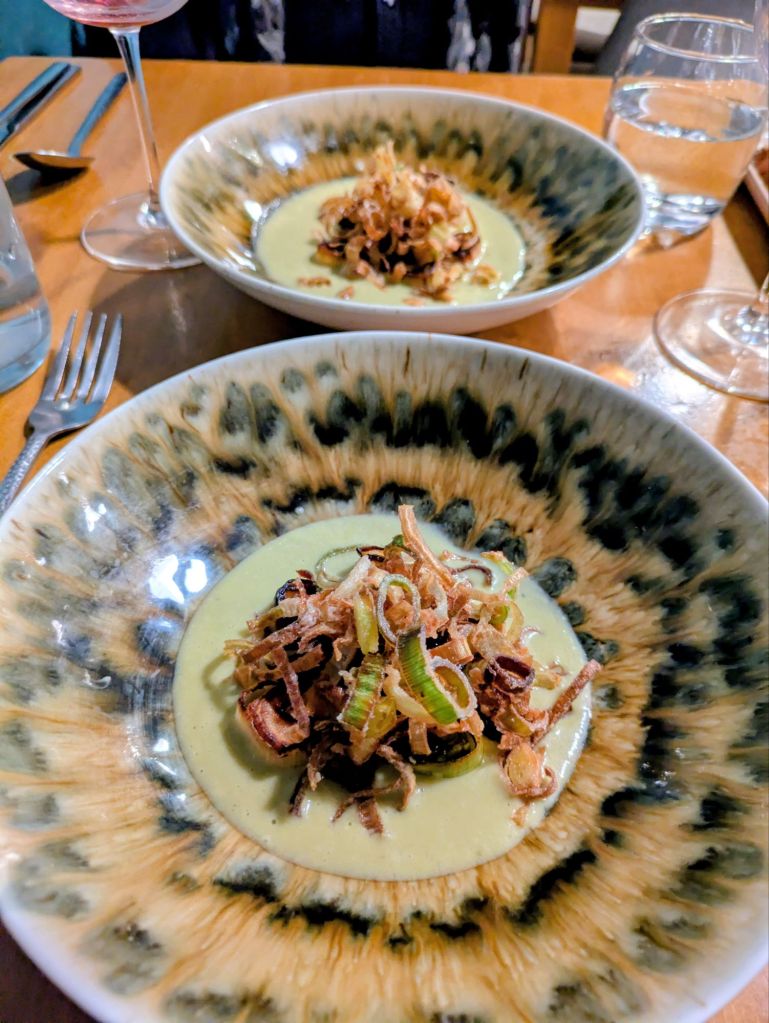
Fritters of brussel sprouts and garlic almond aioli and zest of orangeCoconut curry soup, pan roasted leeks and fried leaksSalsify velouté with pan roasted SunchokesMushroom risotto with mâcheCocoa encrusted poached pear with cashew mousse
We arrived just ahead of the coming cyclone and spent a sleepless night, with 60mph winds howling outside, mirroring the tragedy filled unrest in our hearts.
We packed up the cats in our rental car and drove 4 hours to Normandy, Rouen, the medieval jewel where Joan of Arc was imprisoned, tortured and burned at the stake. We arrived to the news that Renee Nicole Good had been murdered by ICE agents. Like any decent human being, I was shaken to my core. And being here, in the shadow of France’s most cherished shero, the pattern of state sponsored terrorism is long and it is well established. And from micro aggressions to murder, this is where we are in America.
So to write about our trip as a travelogue seems so wrong right now. But to write about our trip in the true light of why we are here– as rejection of the white nationalist takeover with the complicity and giddy support of a third of the citizenship and in a huge part due to the constant triggering of my unbearable, soul killing PTSD by an administration literally run by rapists– well, this seems to be my message.
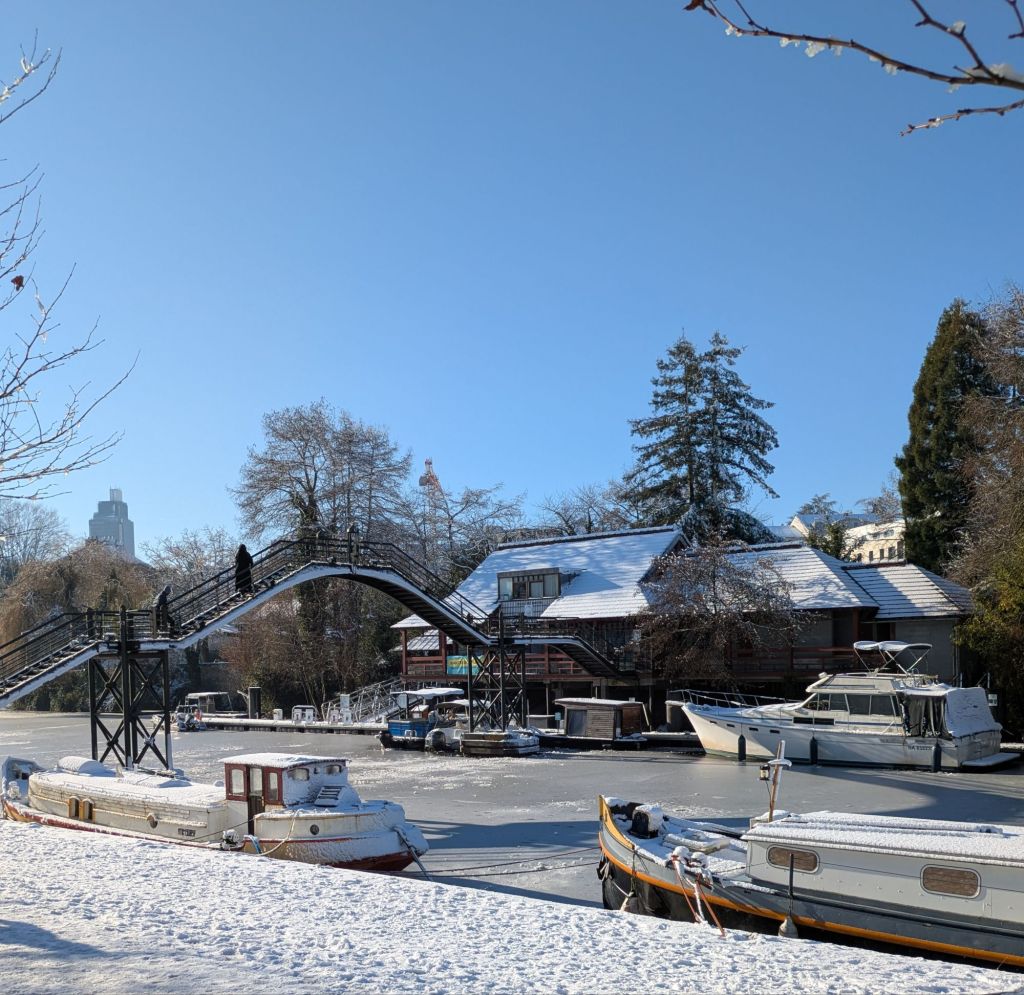
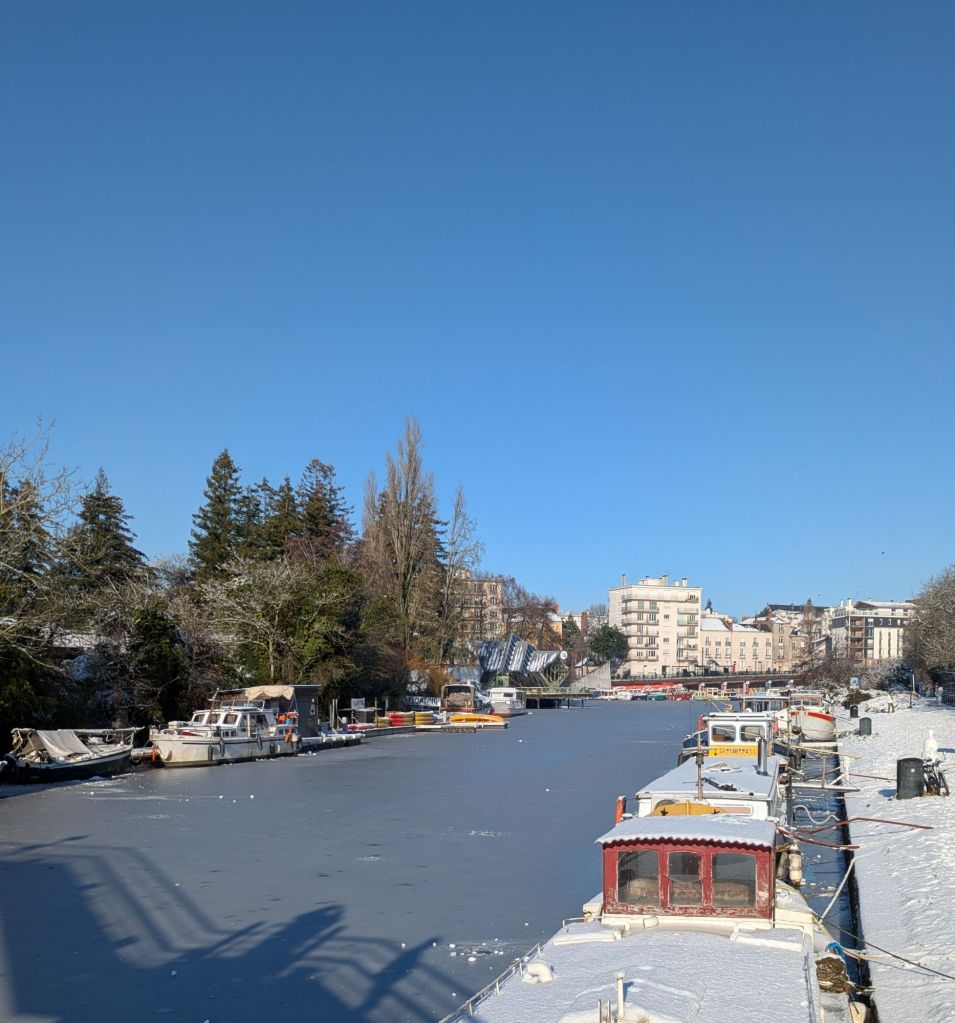
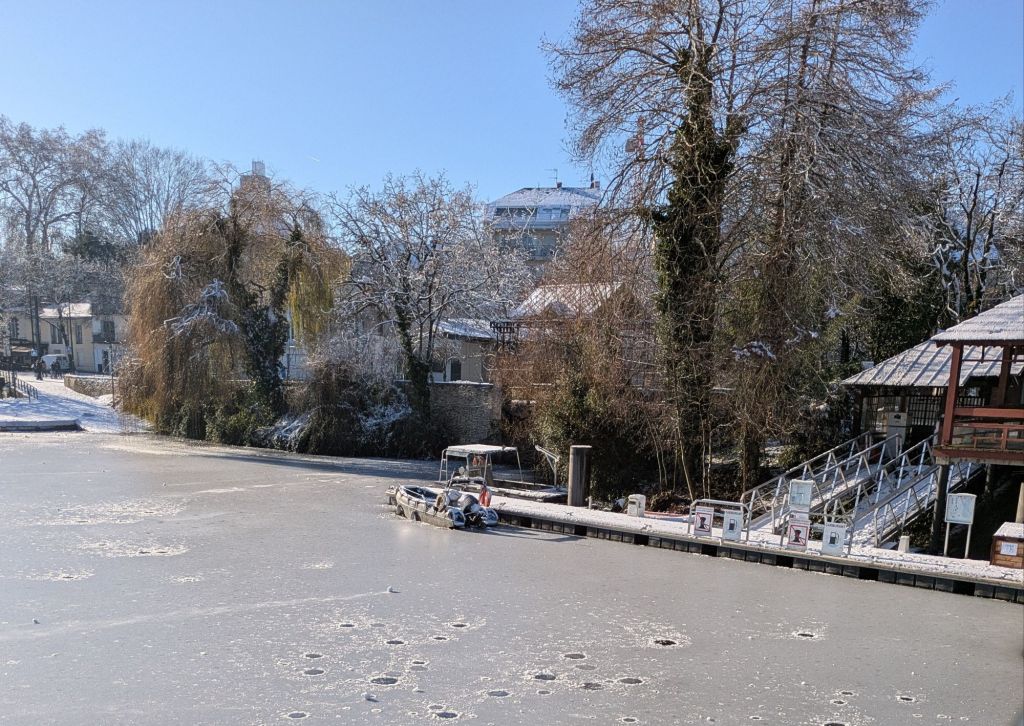
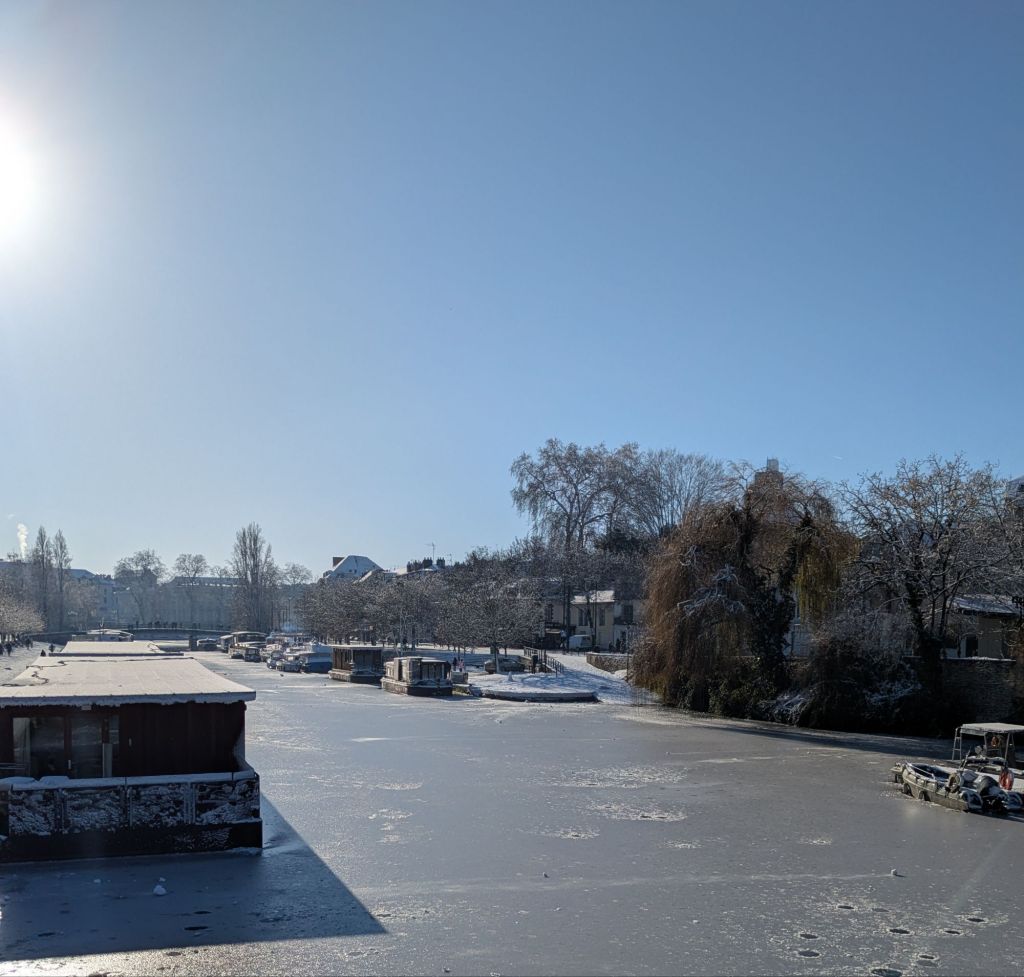
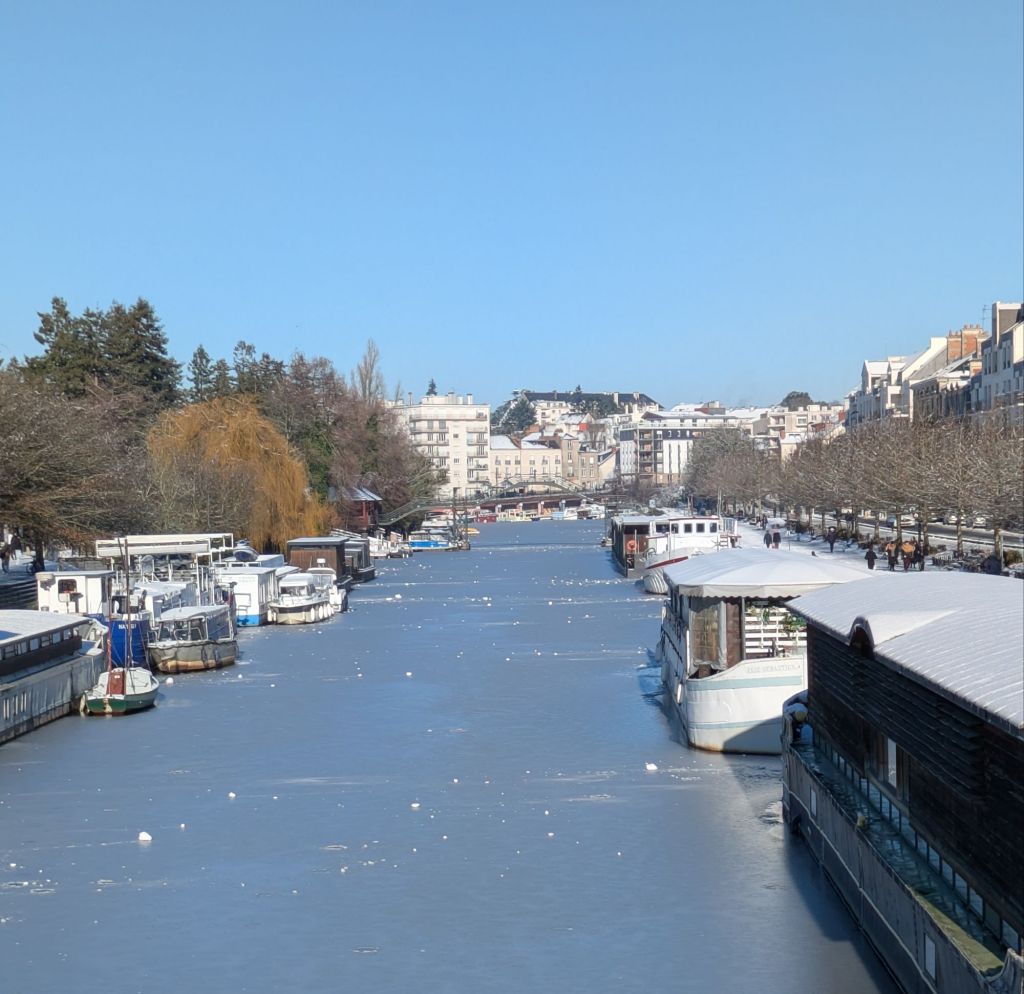
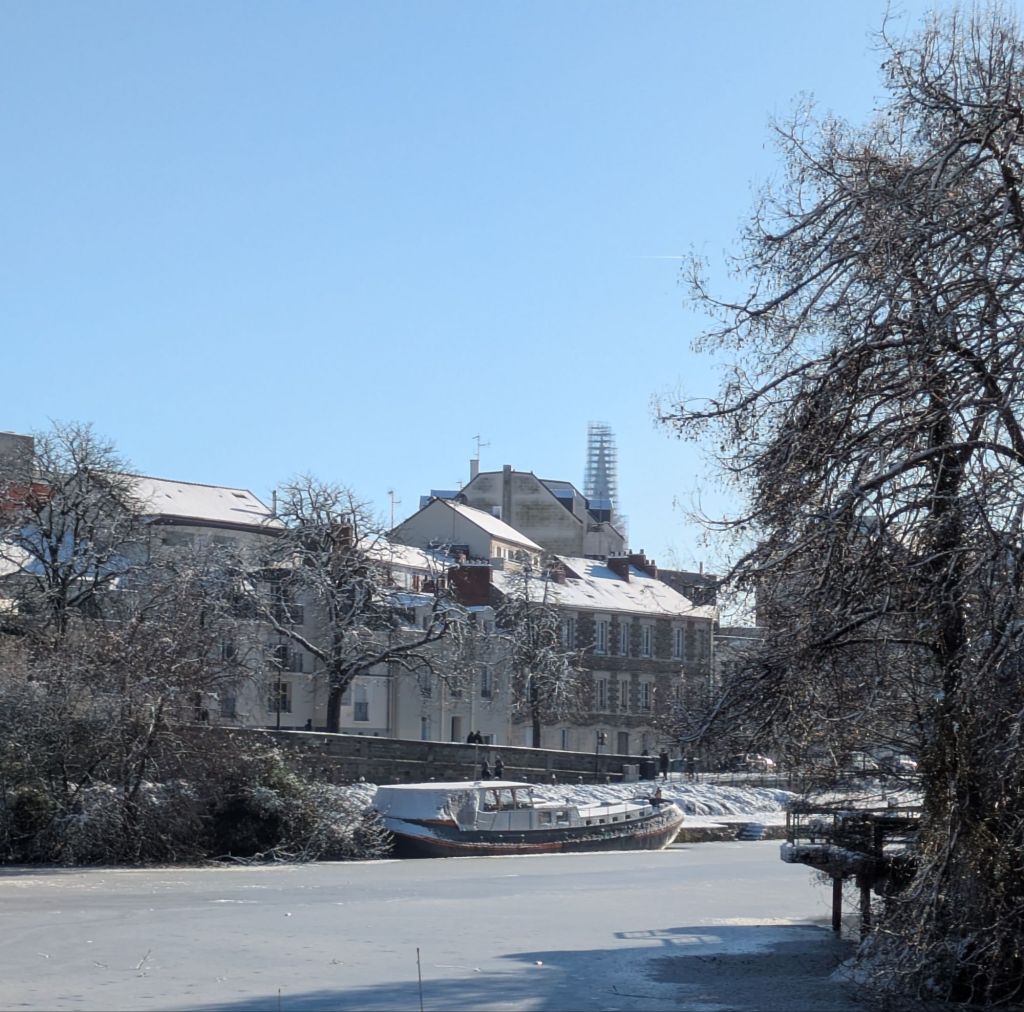
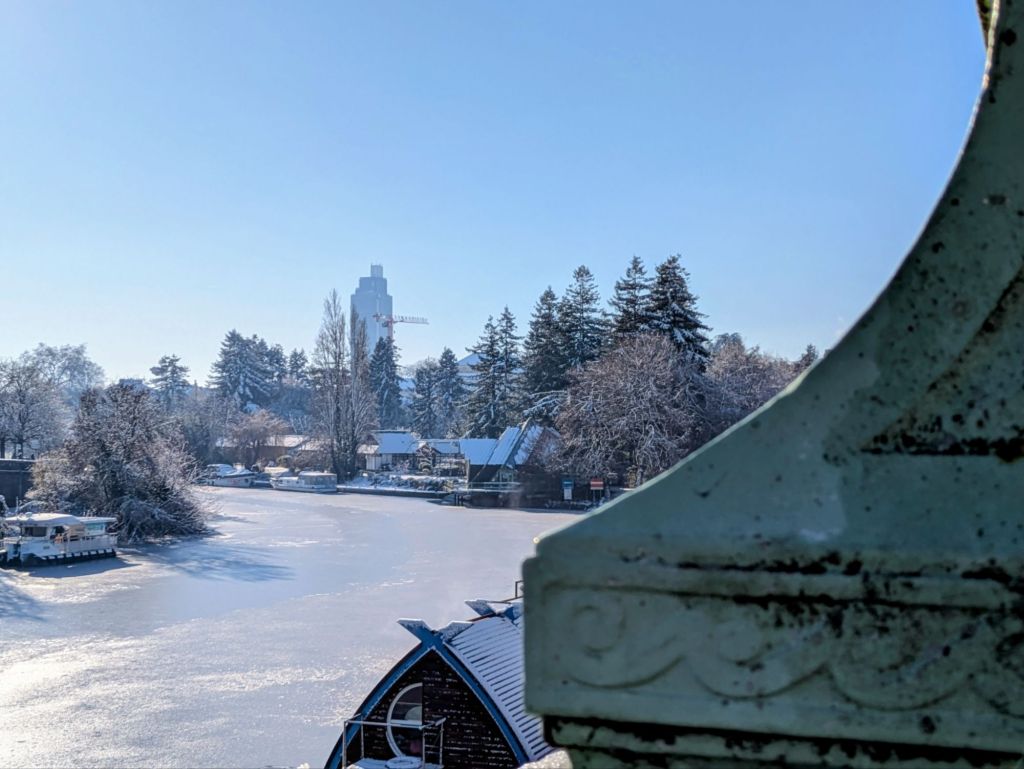
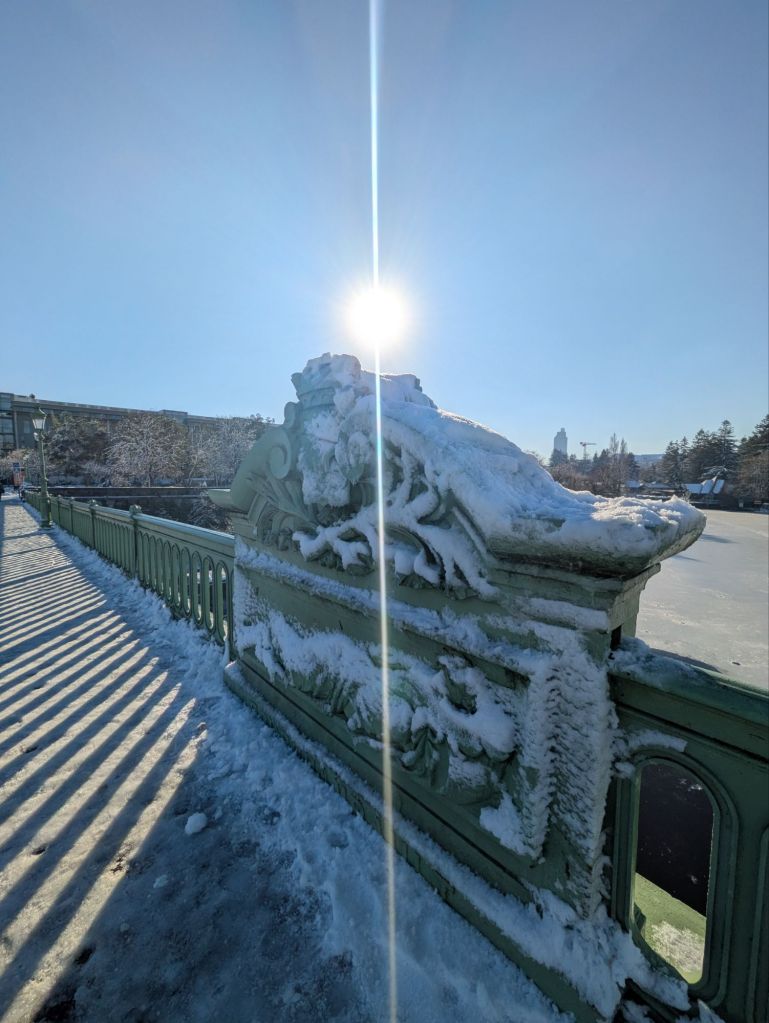
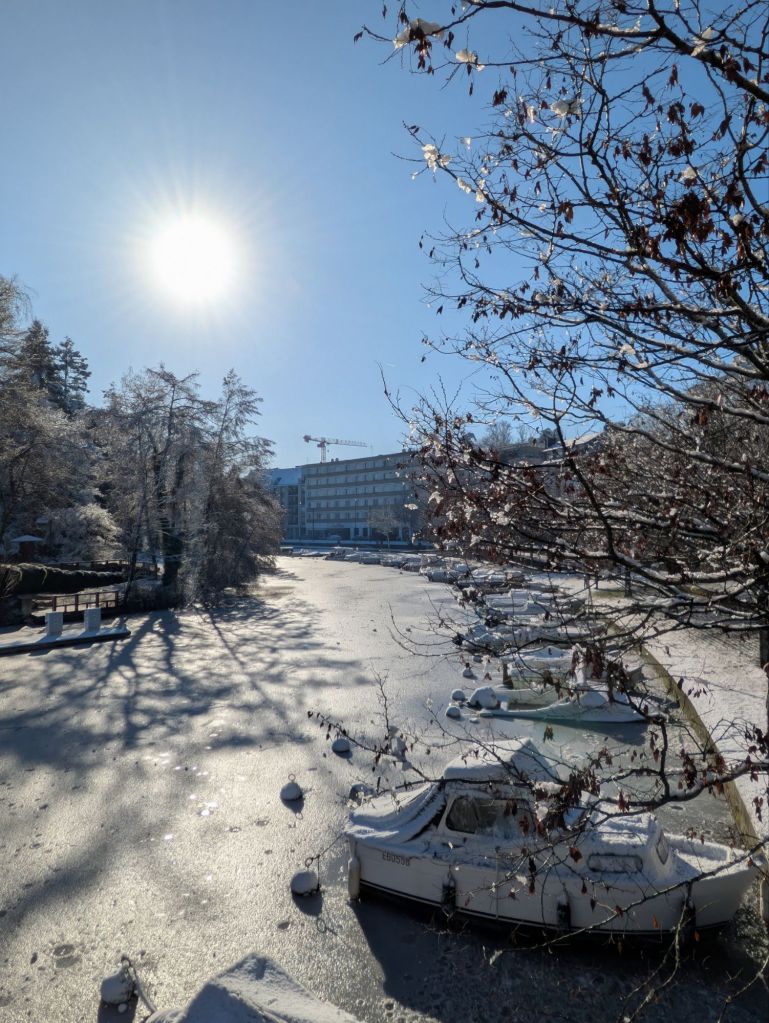
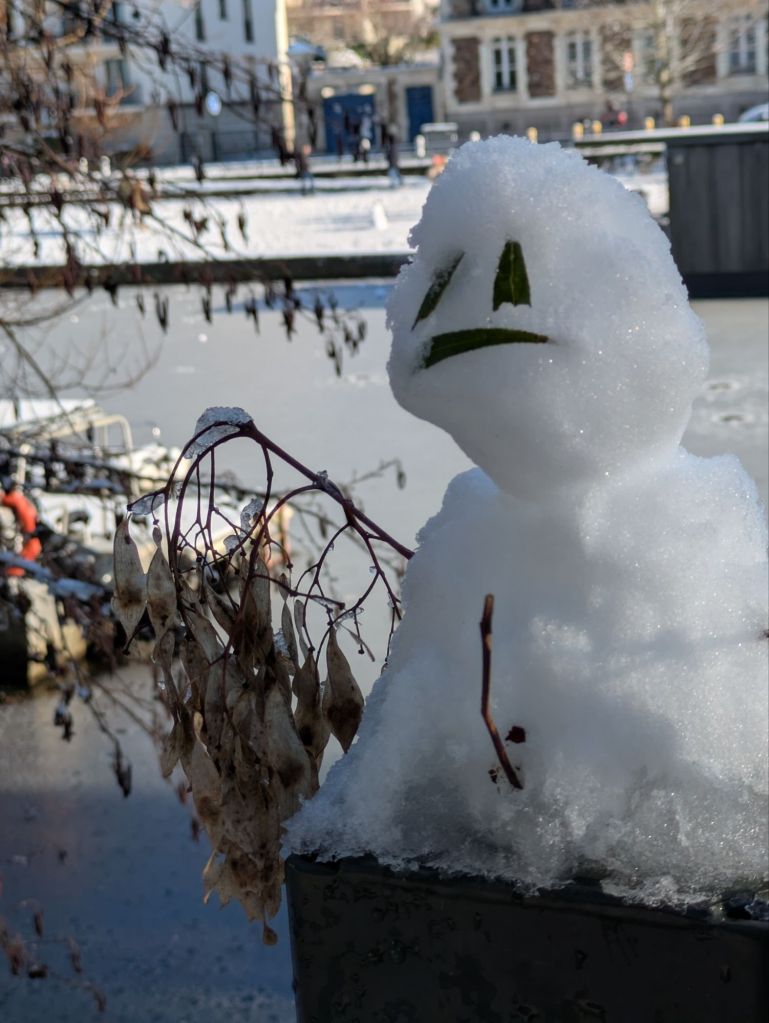
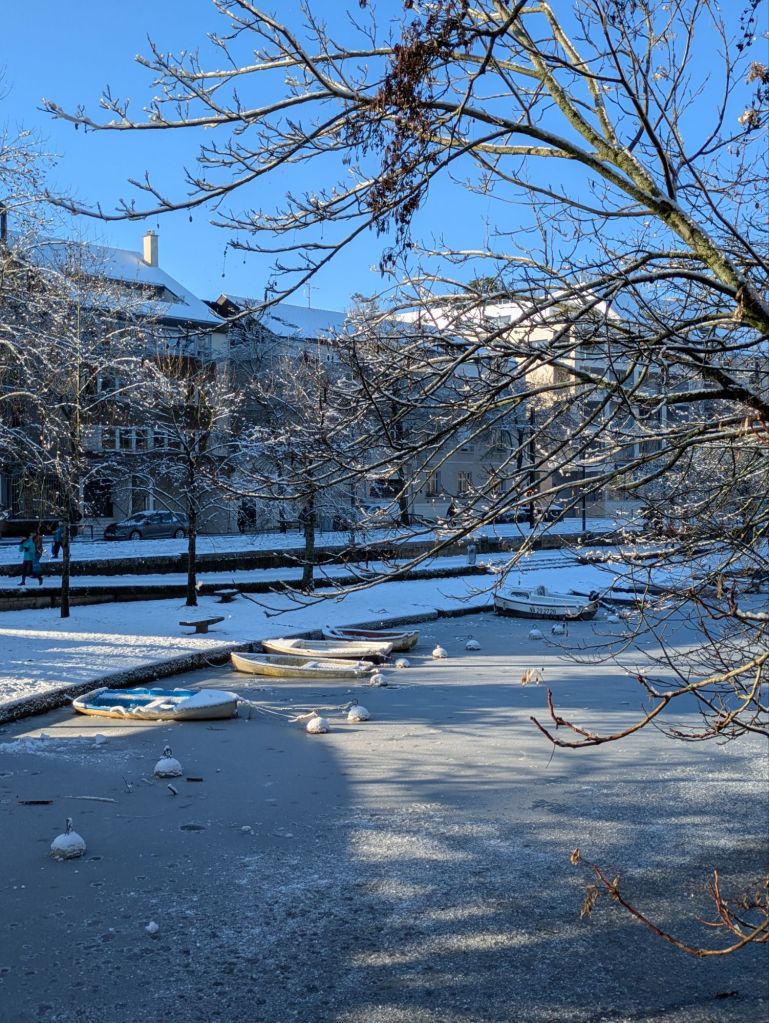
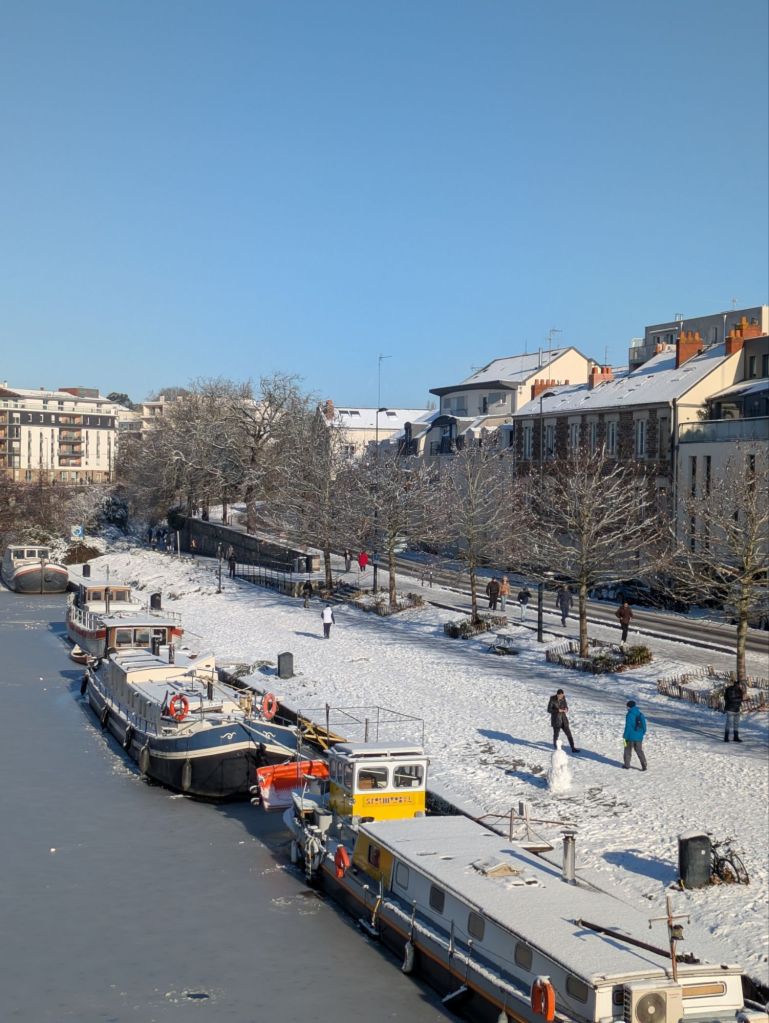
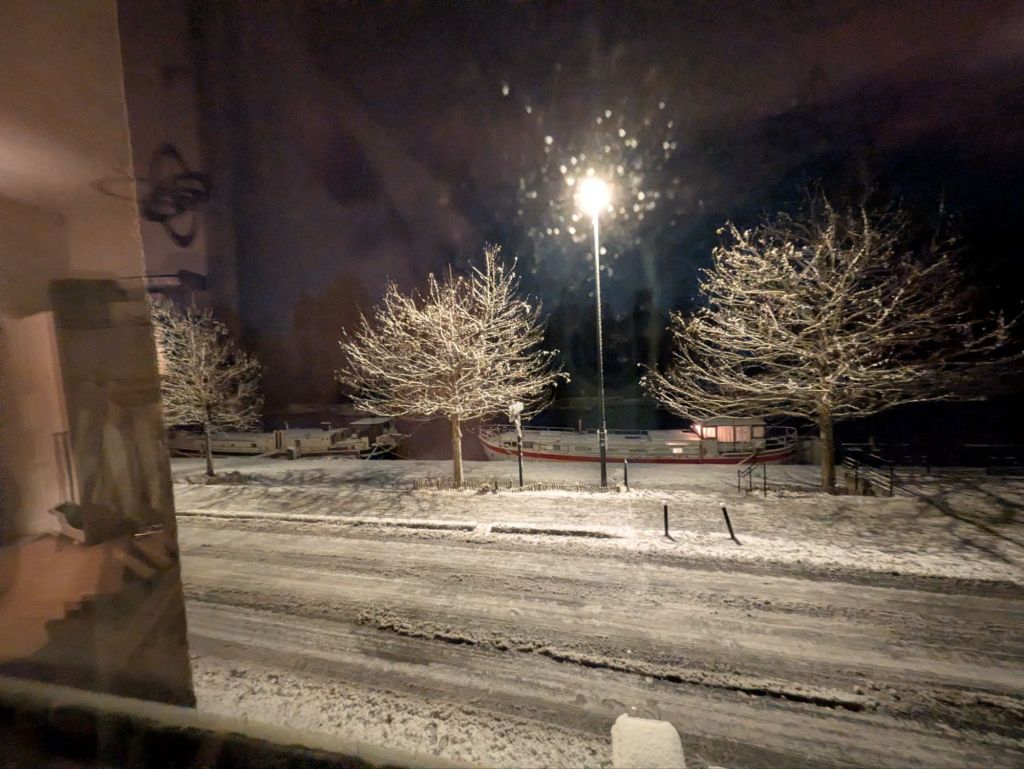
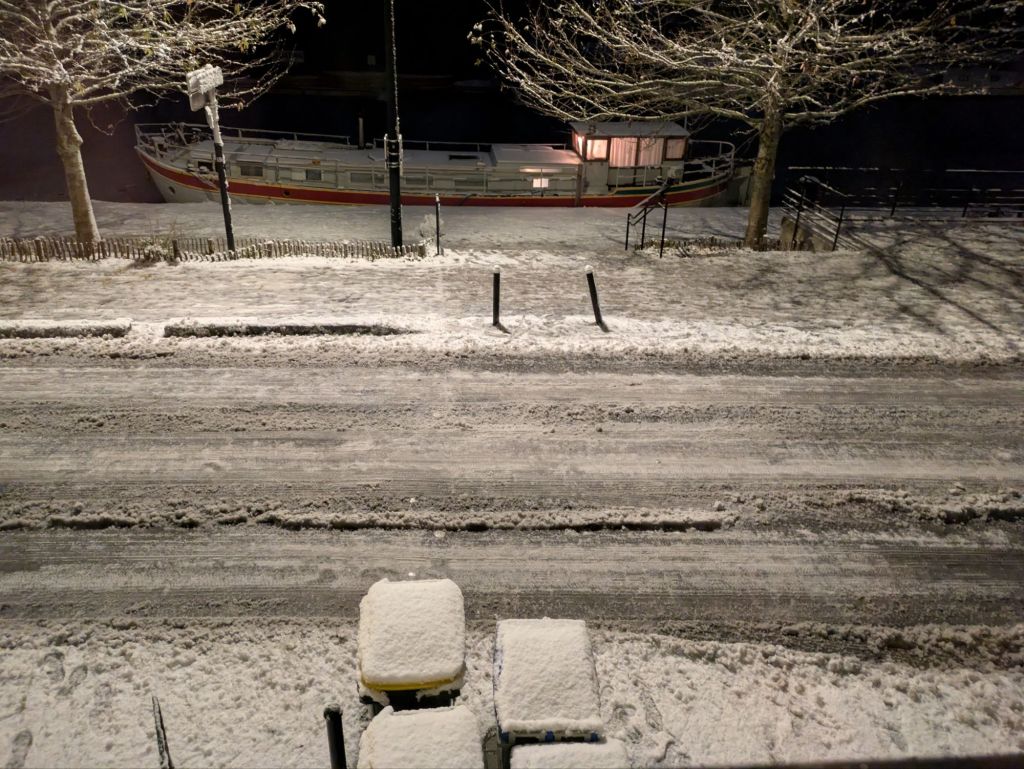
The river has been frozen for 2 days. We watched as families big and small come to the river to marvel at the ice, toss rocks, listen to the sounds. Even the birds are walking on the ice delighting in the wonder. I found out why… this river hasn’t frozen since 2017. Its not a common occurrence.
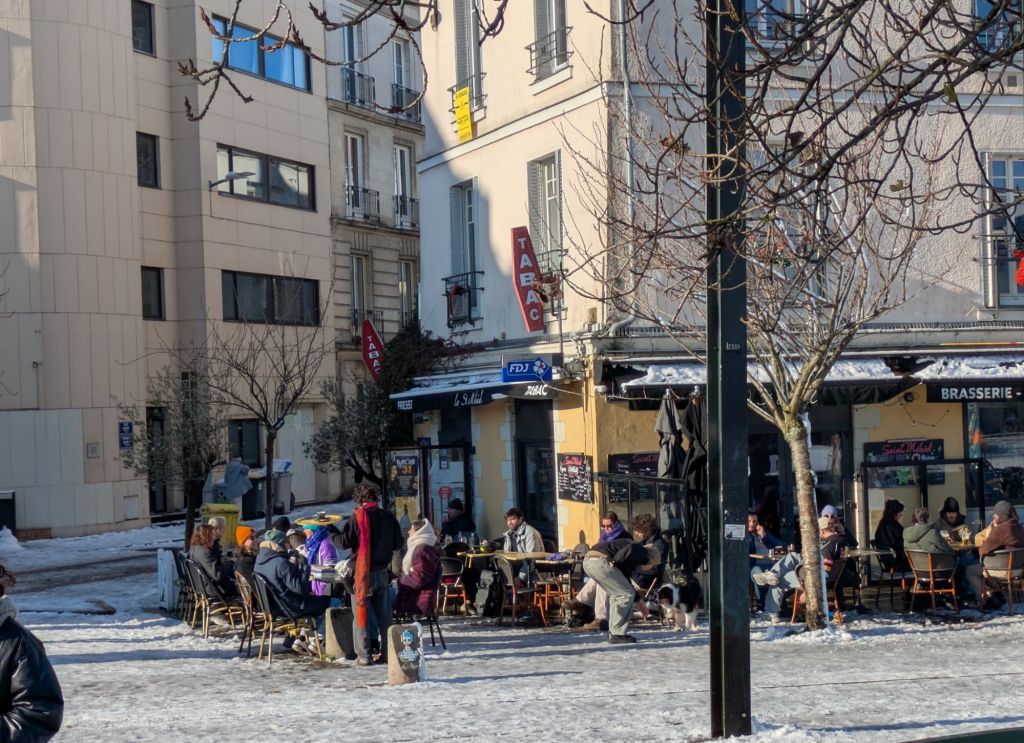
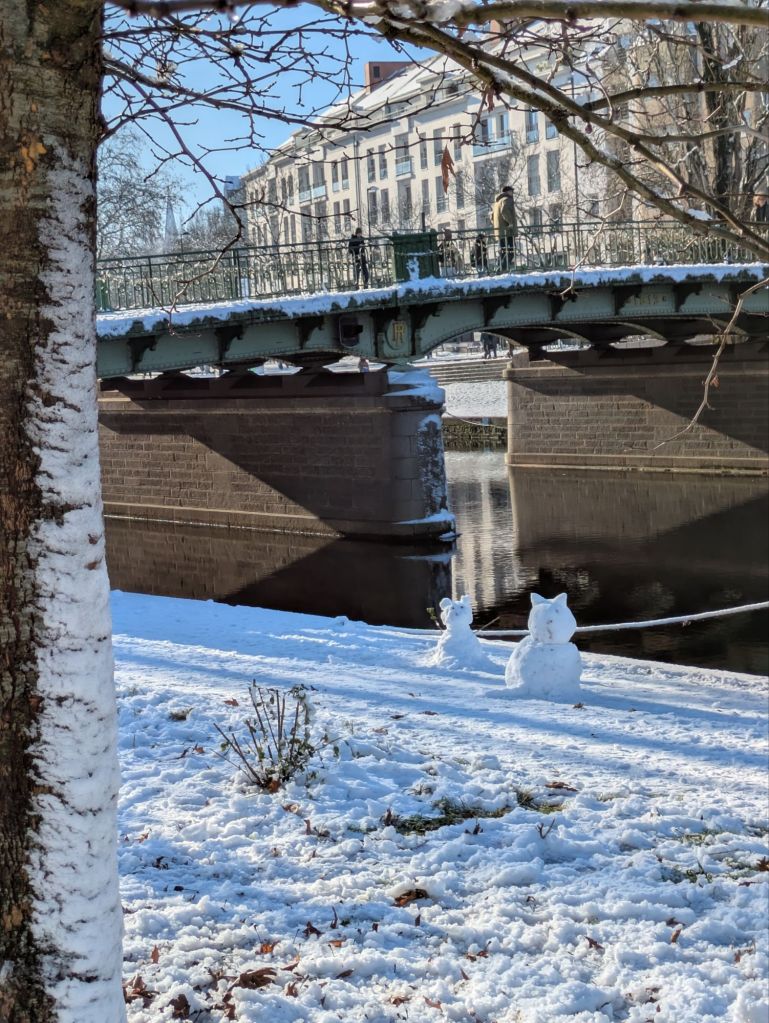
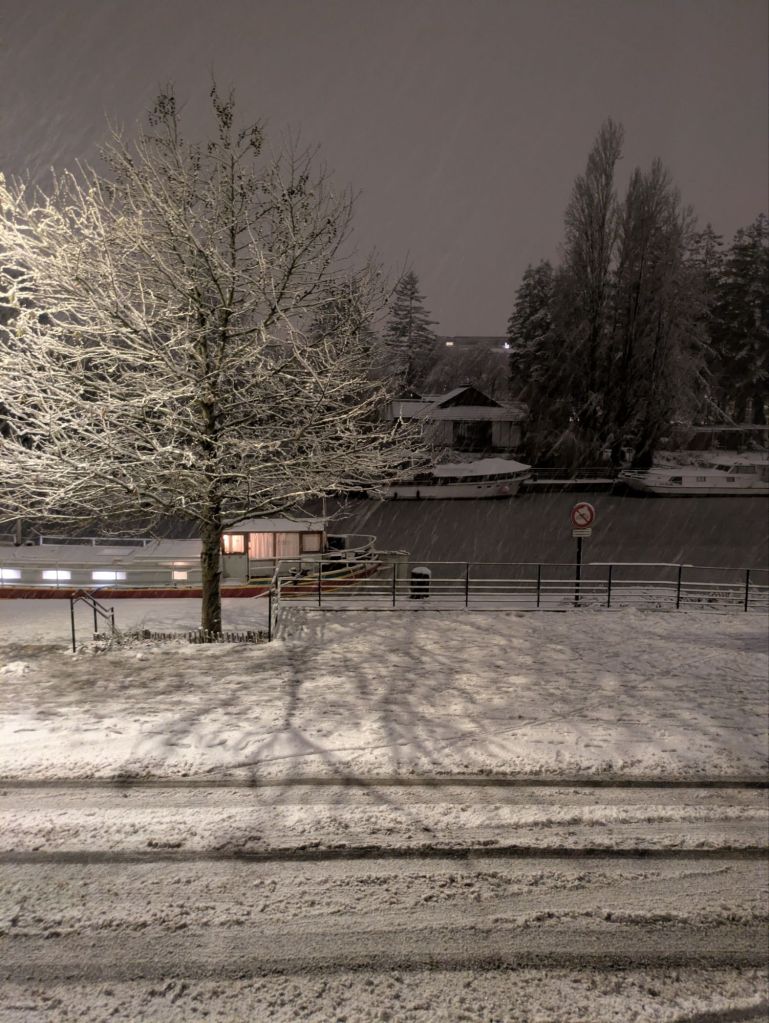
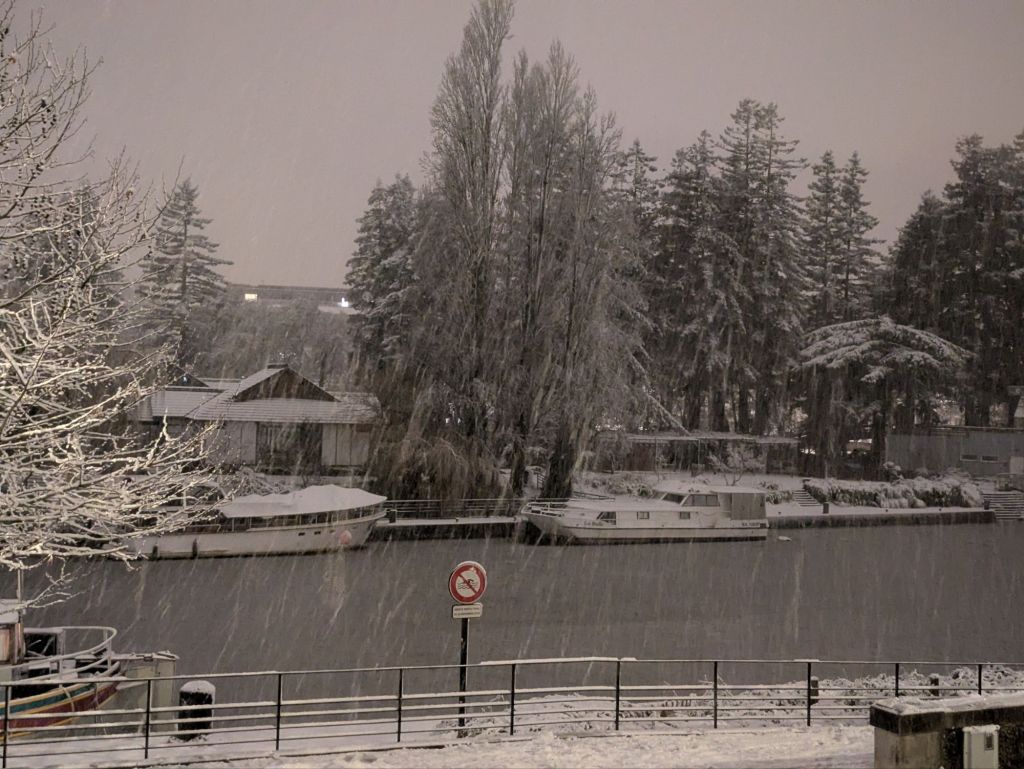
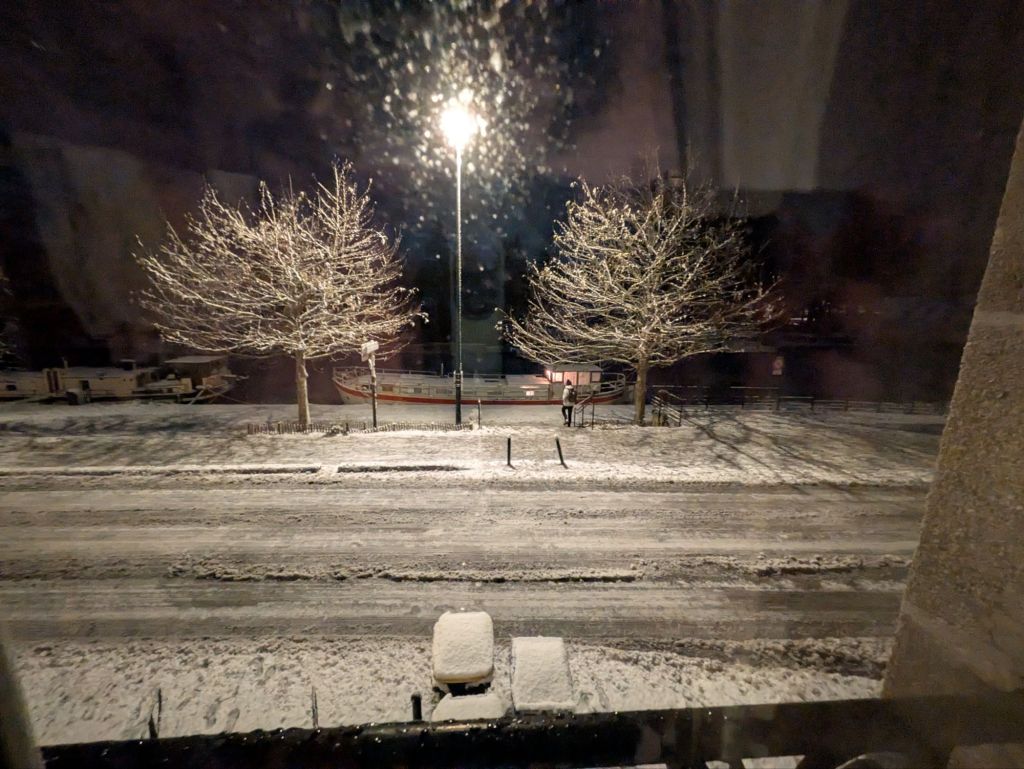
And then last night it started raining big cold sloppy drops of rain right as we were going out for an evening walk. Then it turned into a real snow around 10:00. I was so tired, falling asleep, and Terry said, “come look!” Then people came out in droves. Kids laughing and running around. Throwing snowballs, making snowmen. Dogs jumping and delighting. It was way too exciting to sleep! And now, in the very early hours, this bustling noisy city is silent. No trains, no cars, no sirens. The constant stream of cyclists commuting to work has vanished.
The silence that accompanies a blanket of snow has always been my favorite part of it all. It brings back memories of lying in bed under the blue light of a full moon in Waynesville, NC, the very first time I experienced the whole world silenced by new fallen snow.
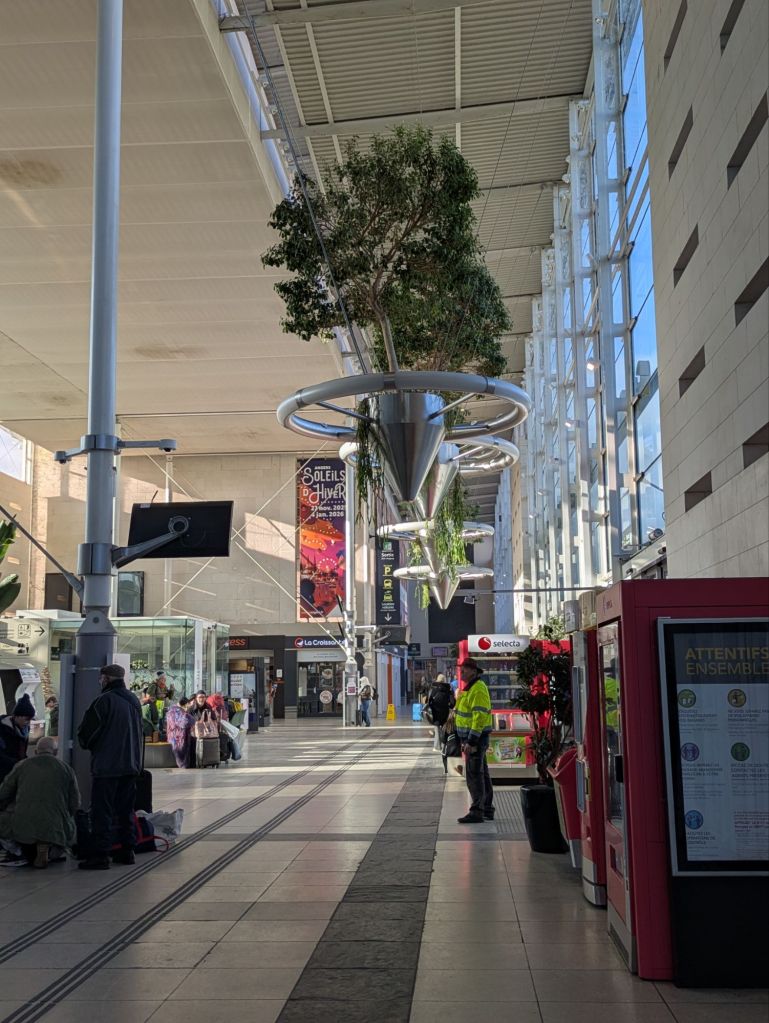
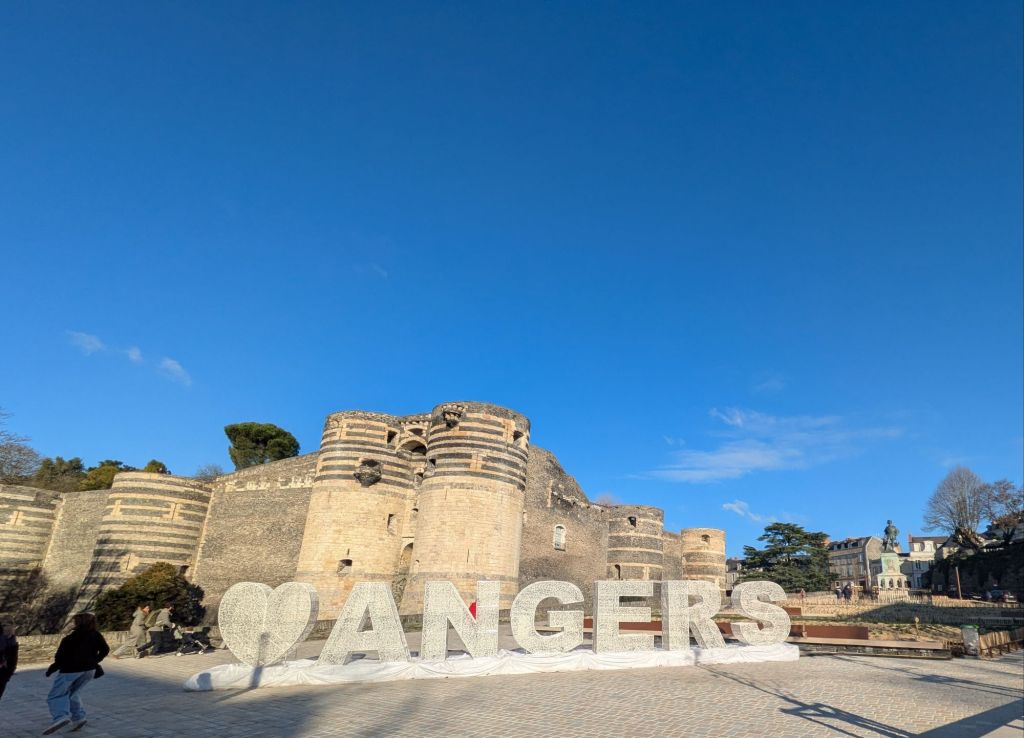
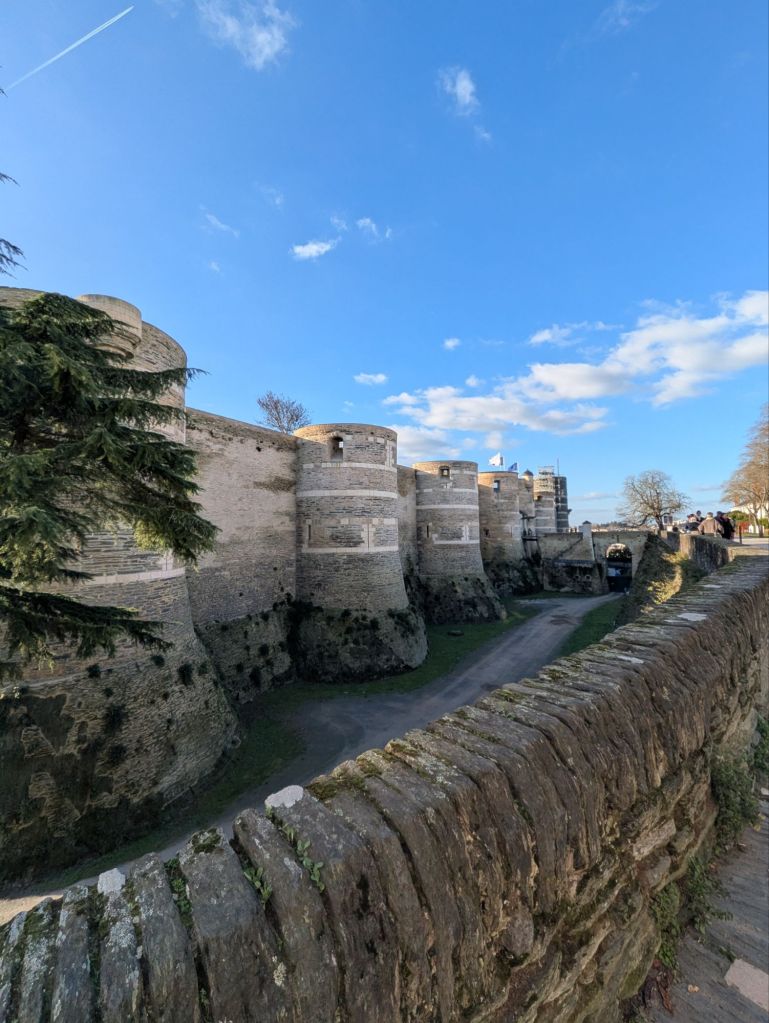
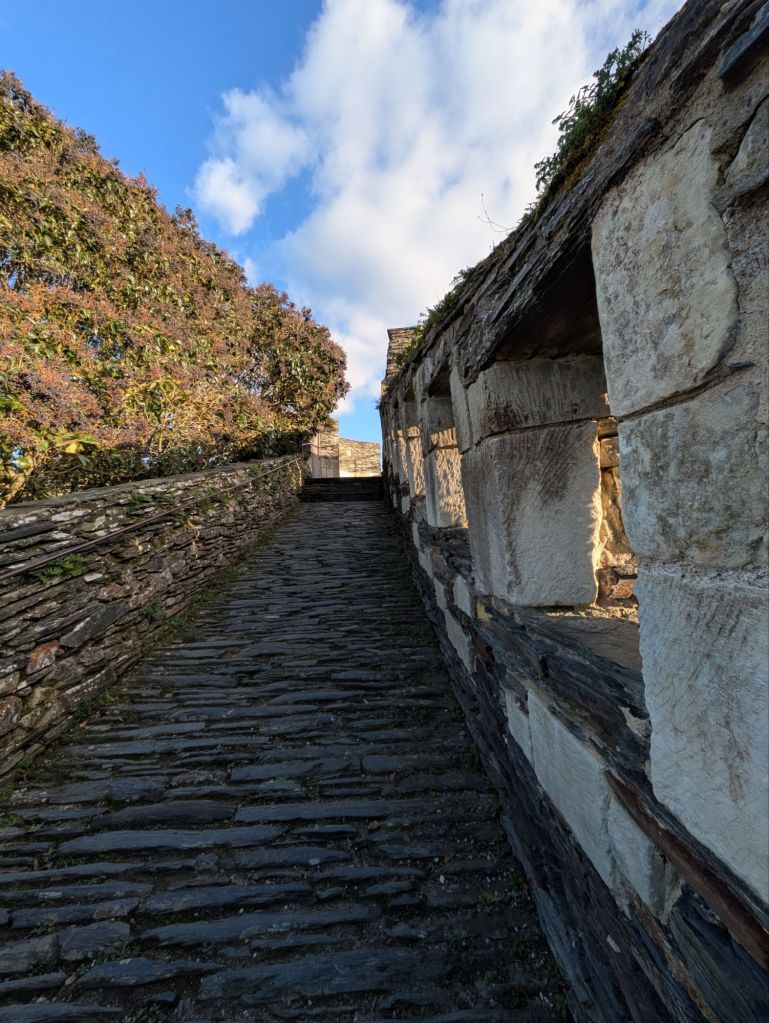
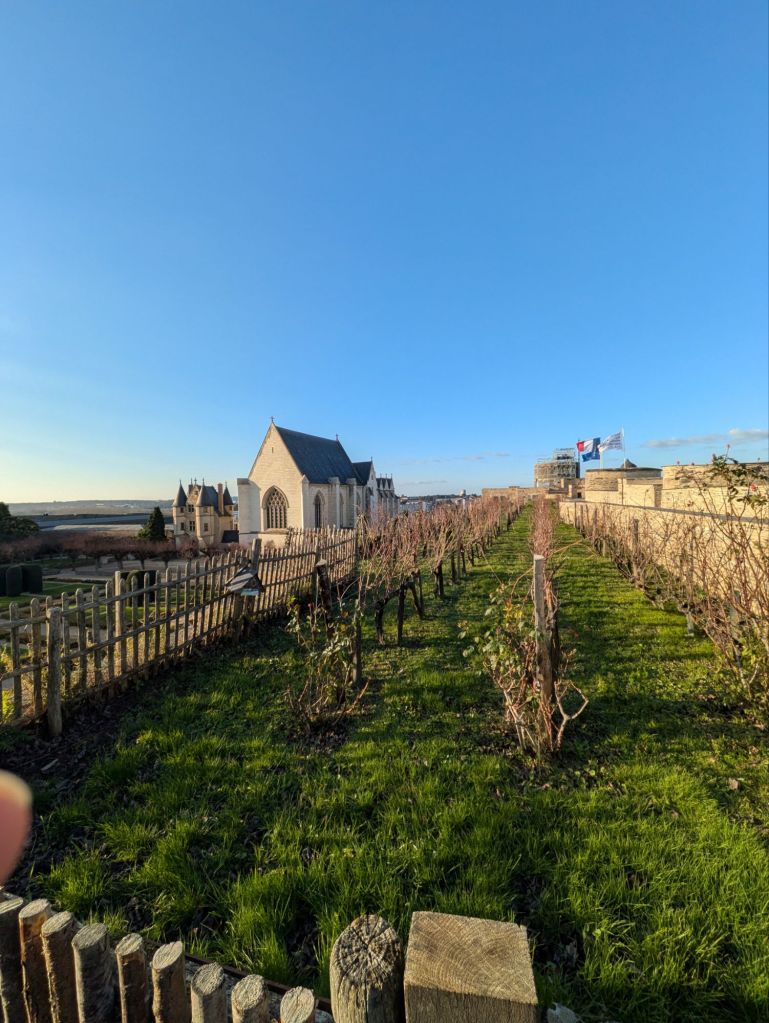
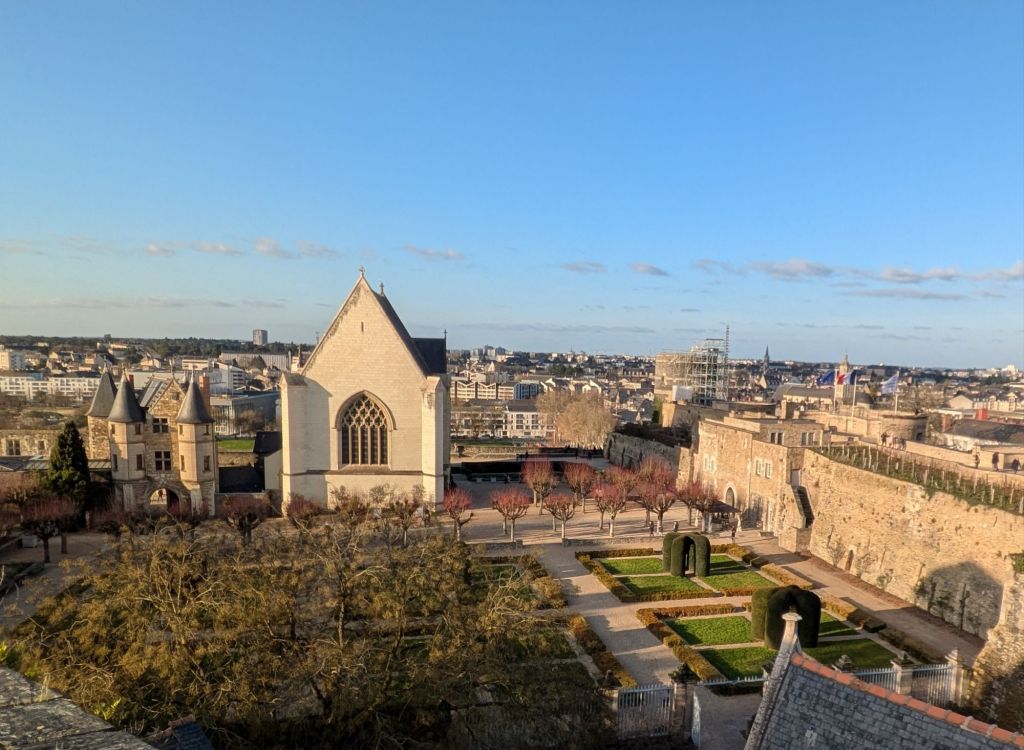
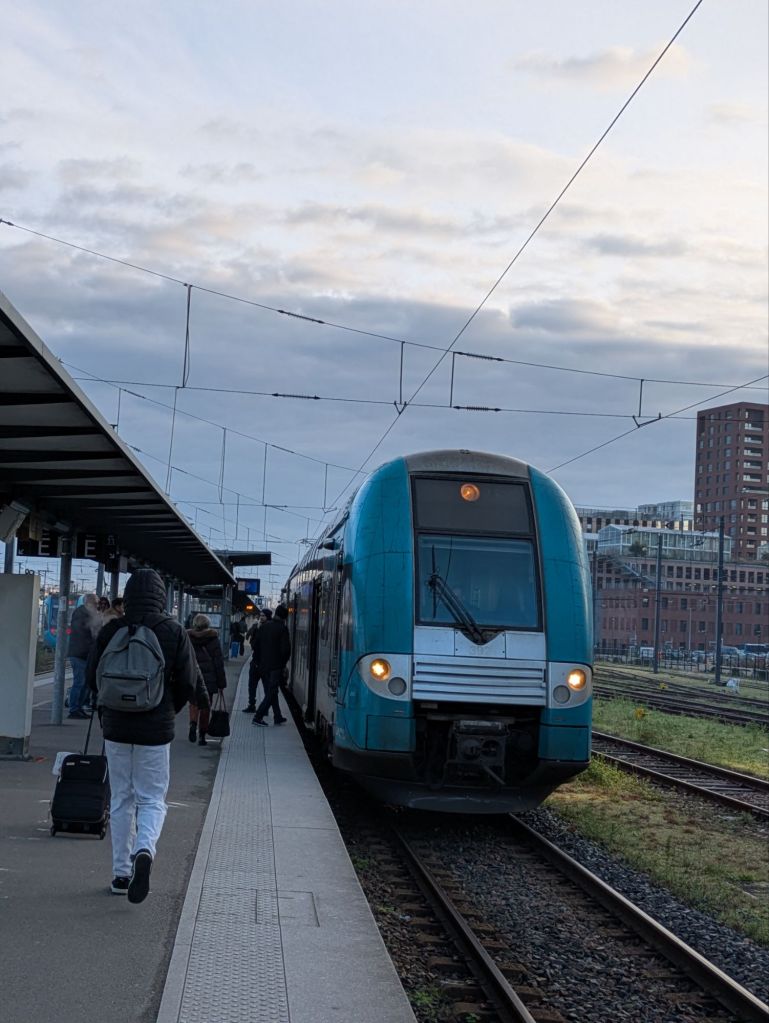
We hopped on a train and ventured 35 minutes out of Nantes to Angers
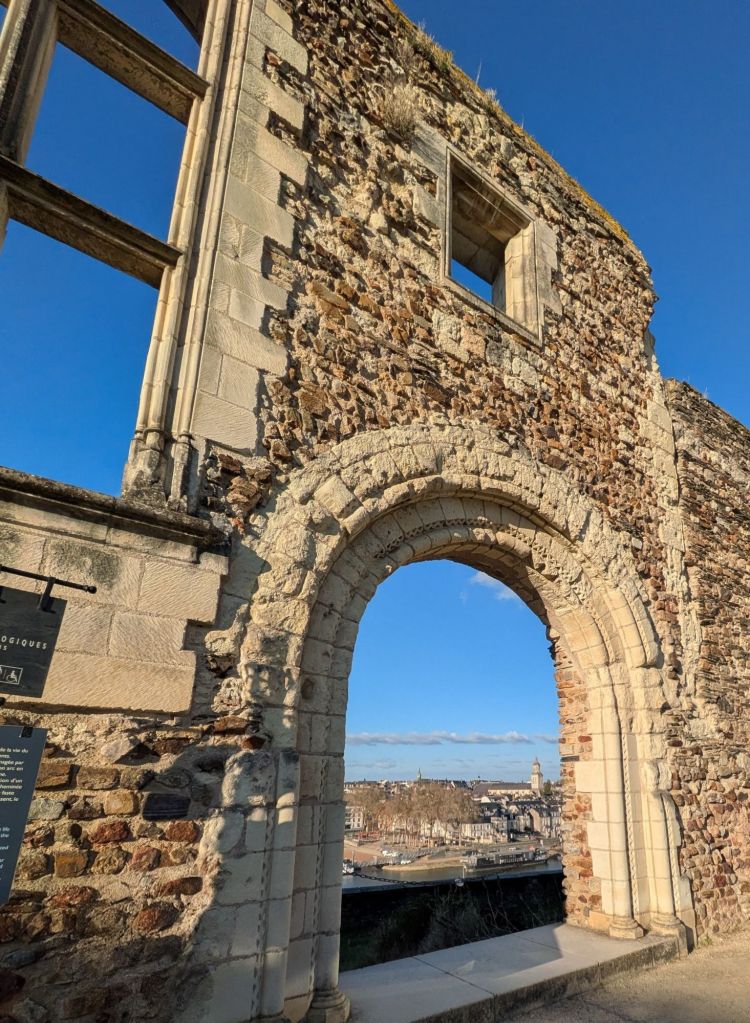
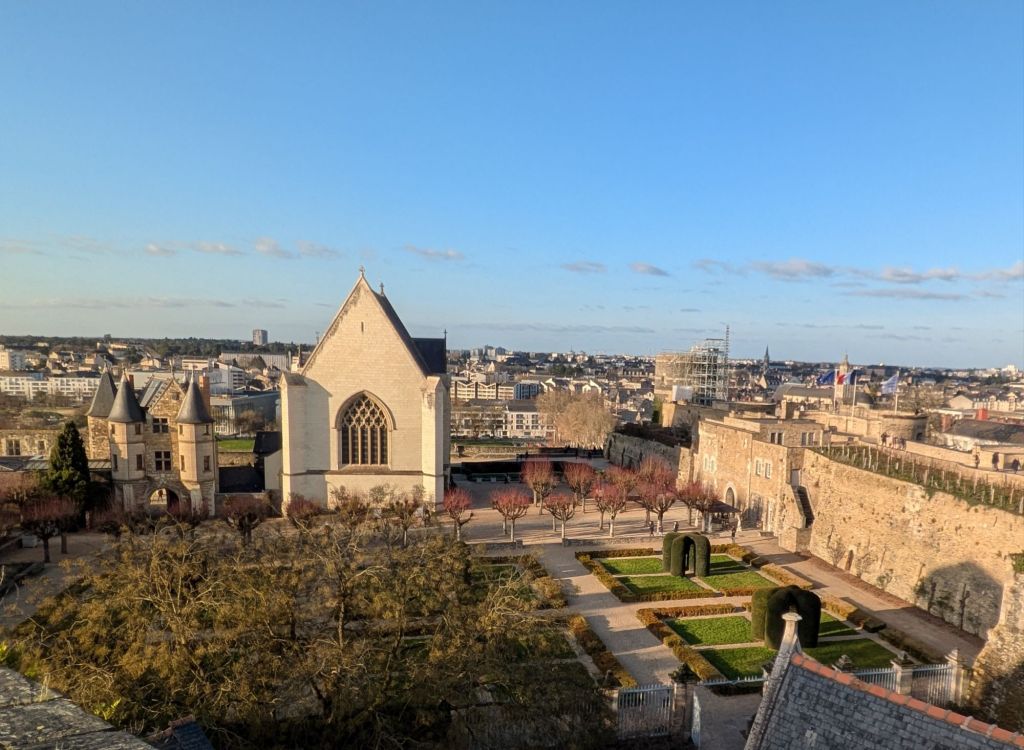
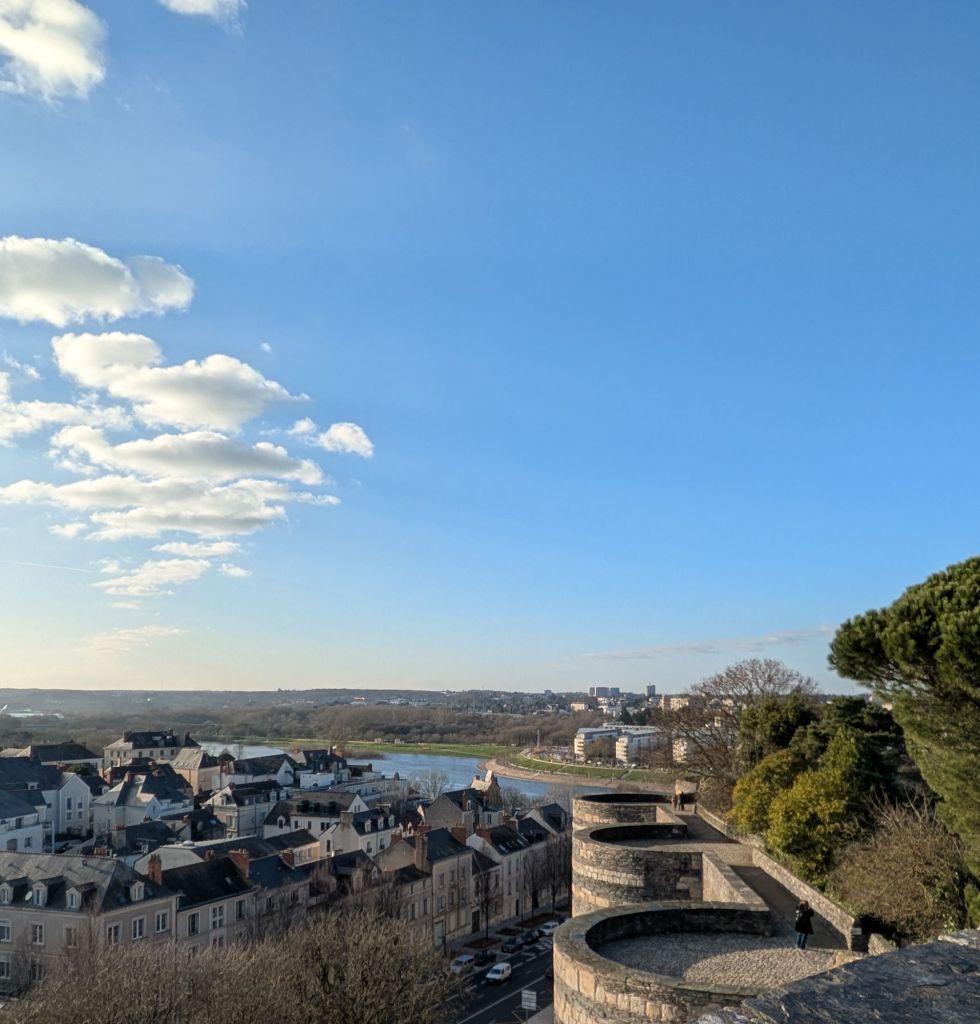
What a magical city! We fell in love with the old… well, everything!
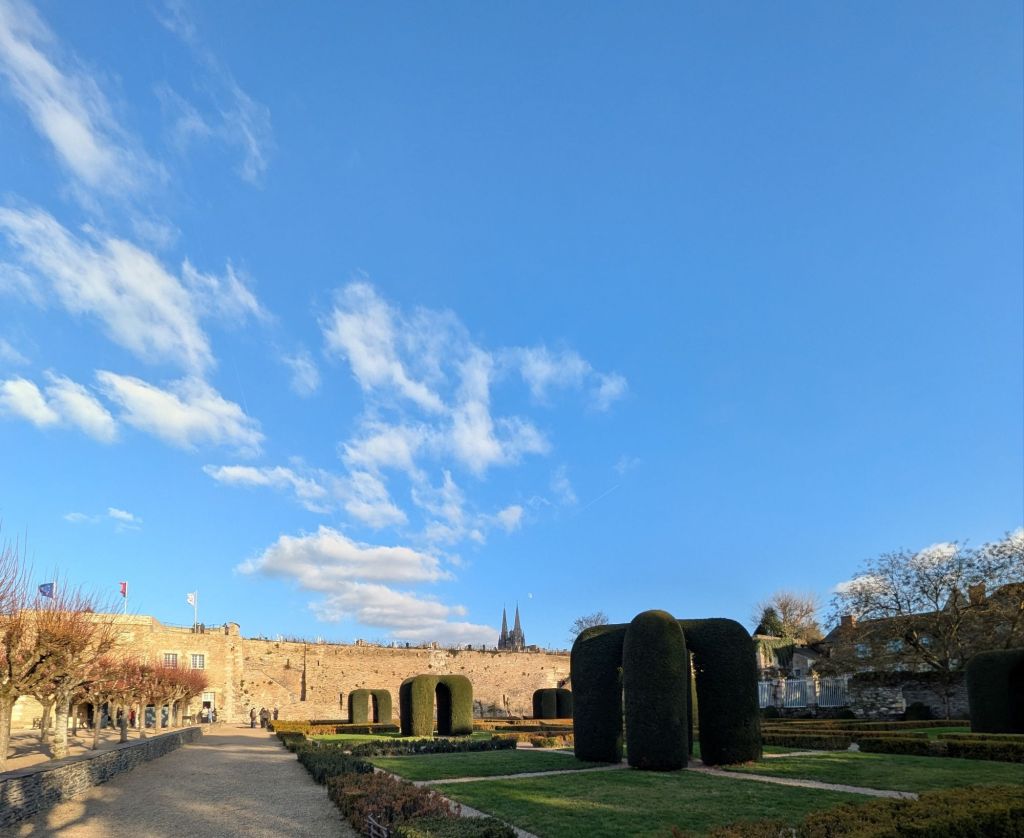
Turns out, it’s the “gardening capital of northern France”
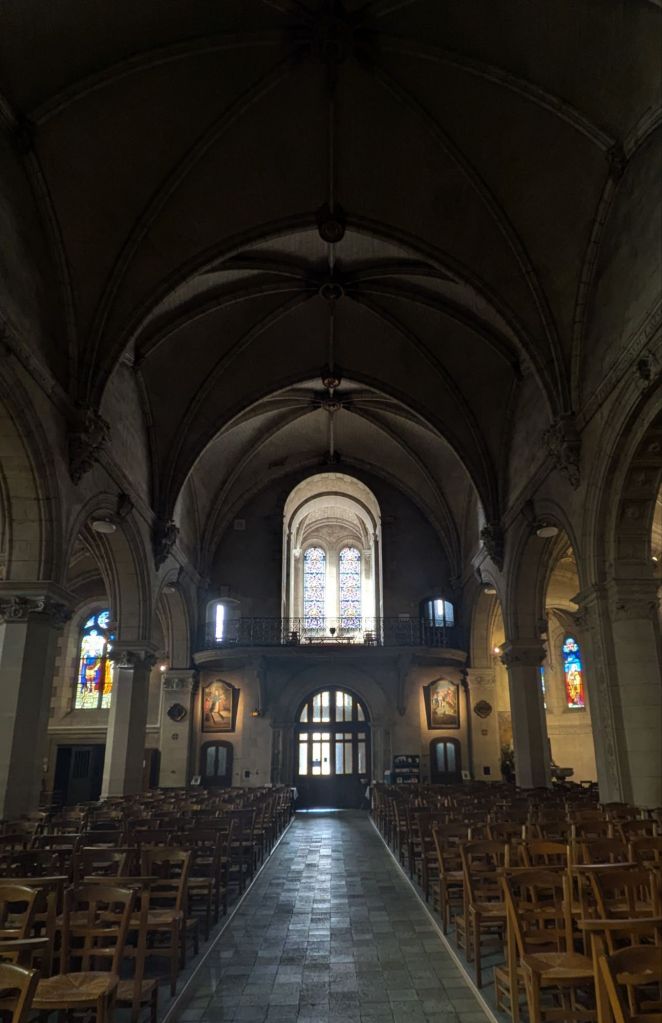
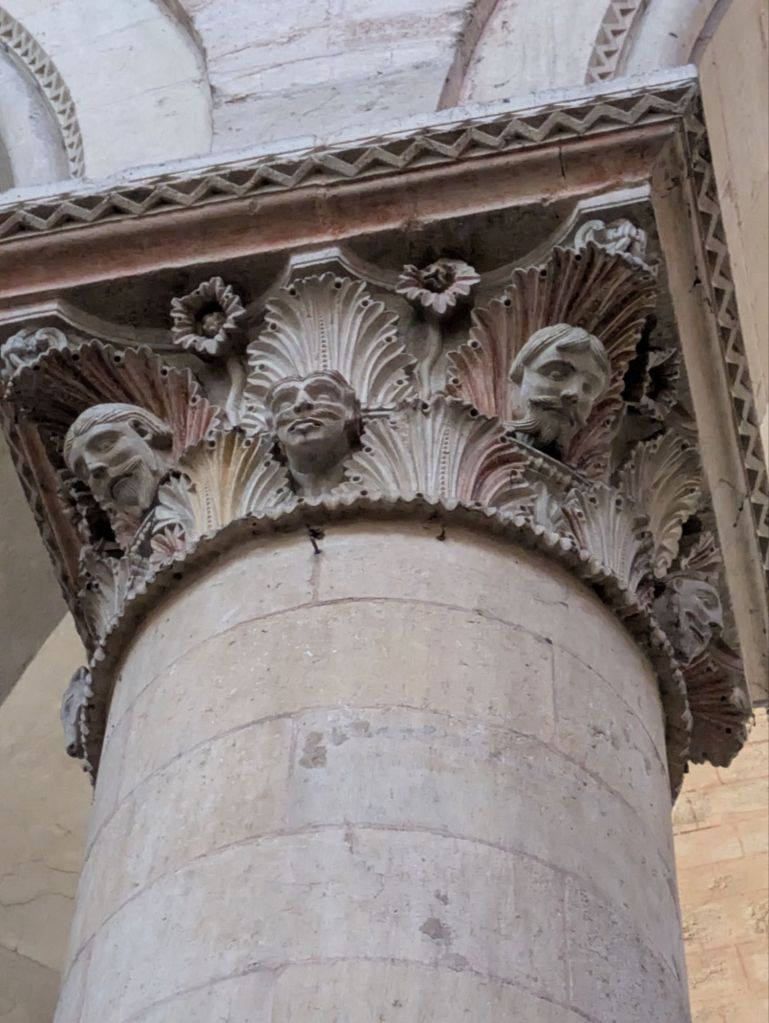
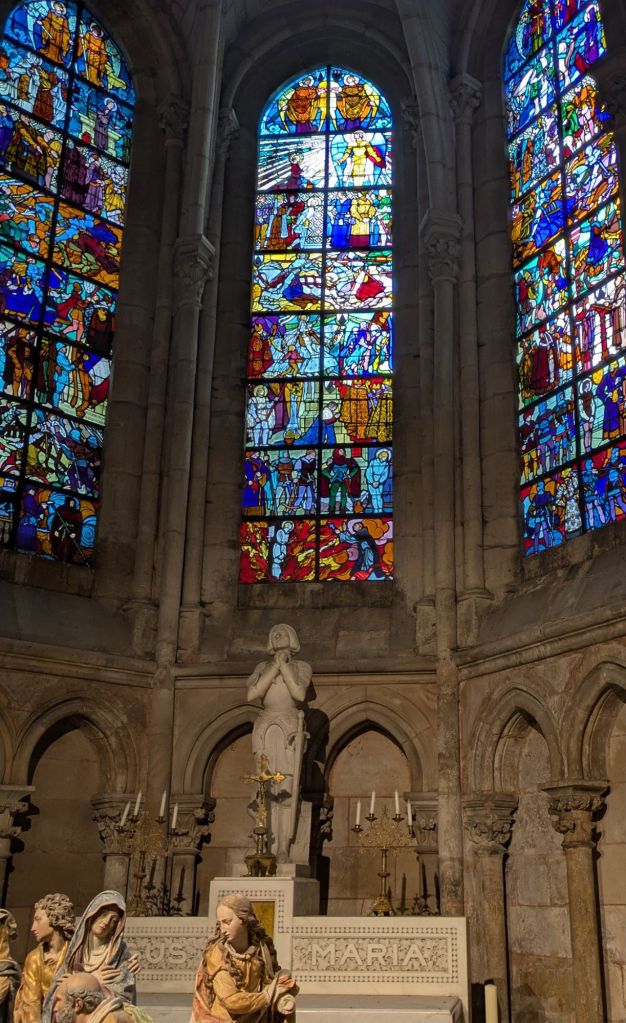
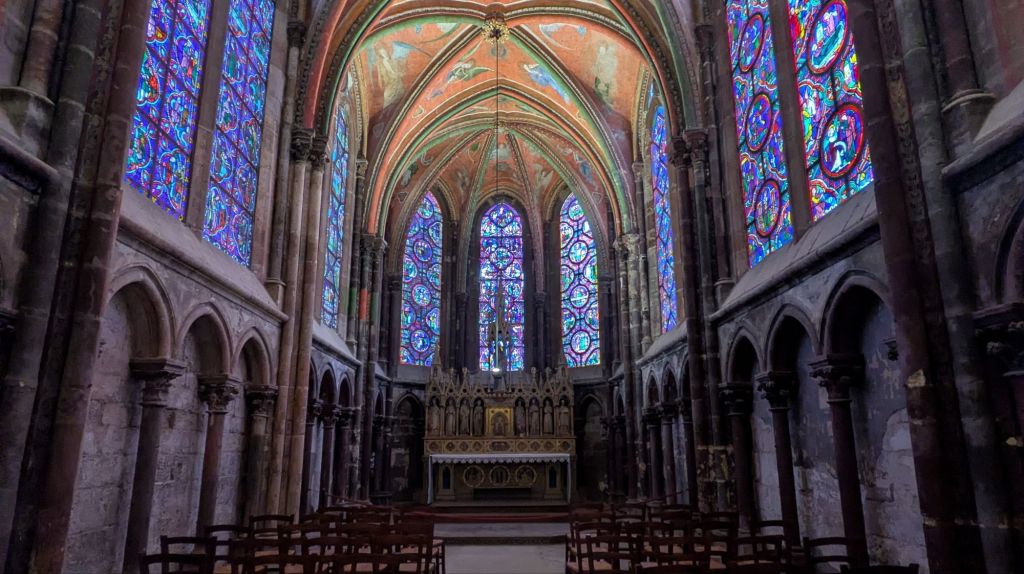
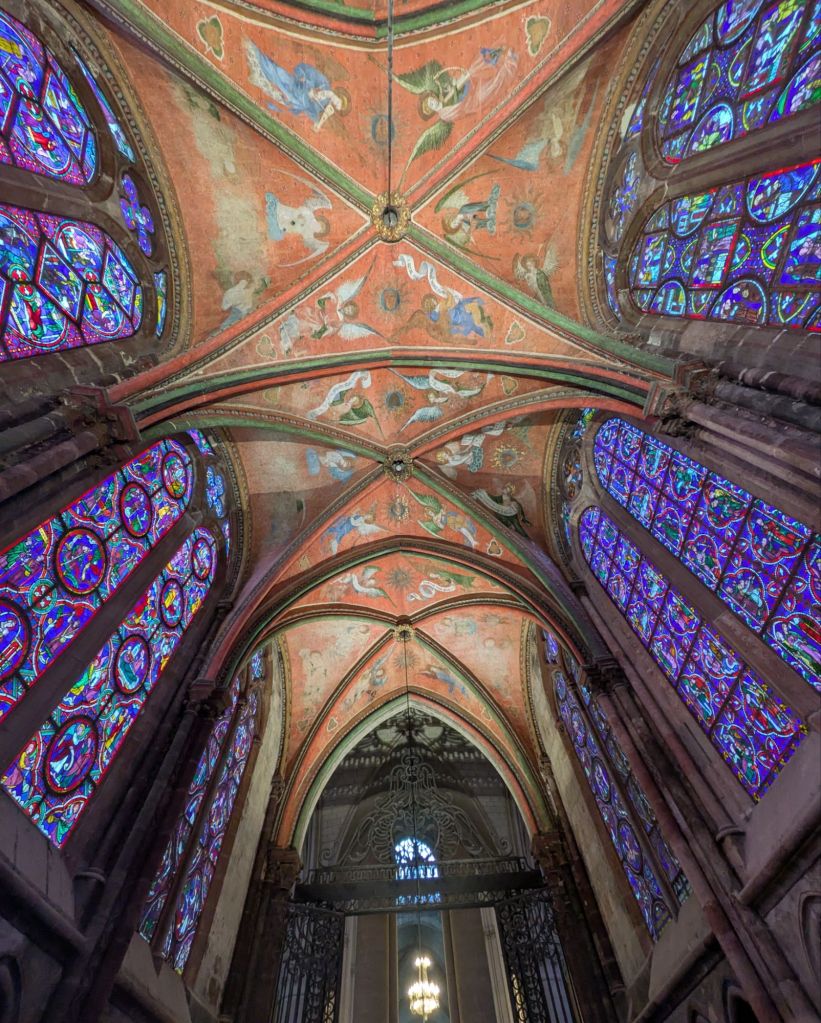
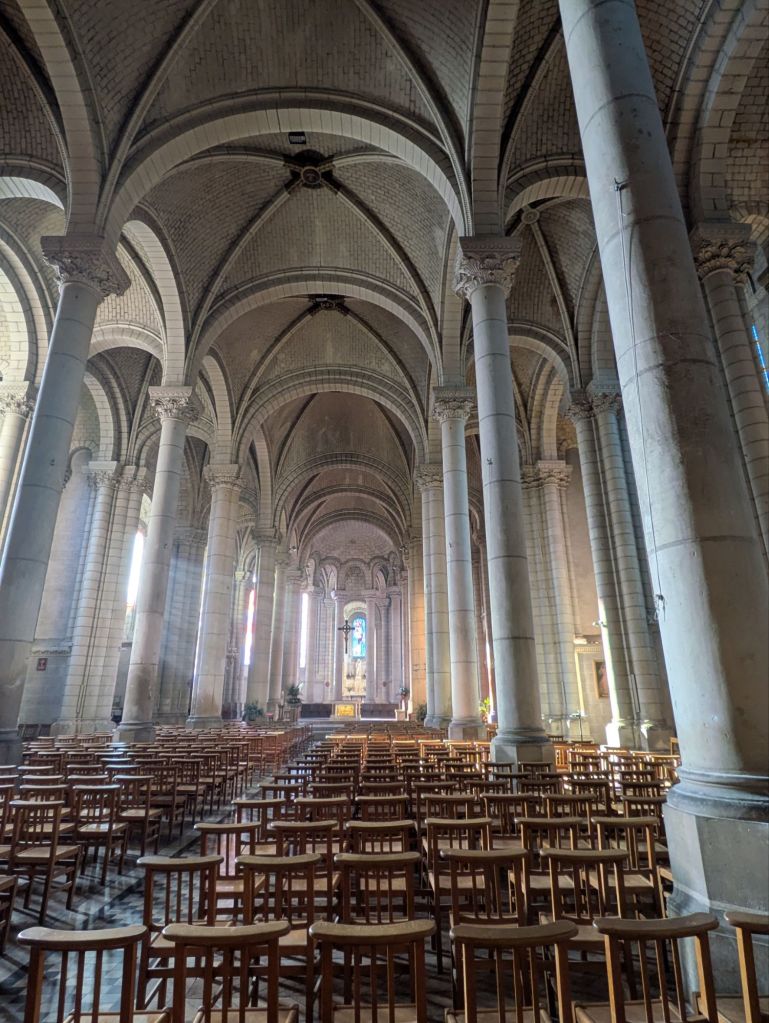
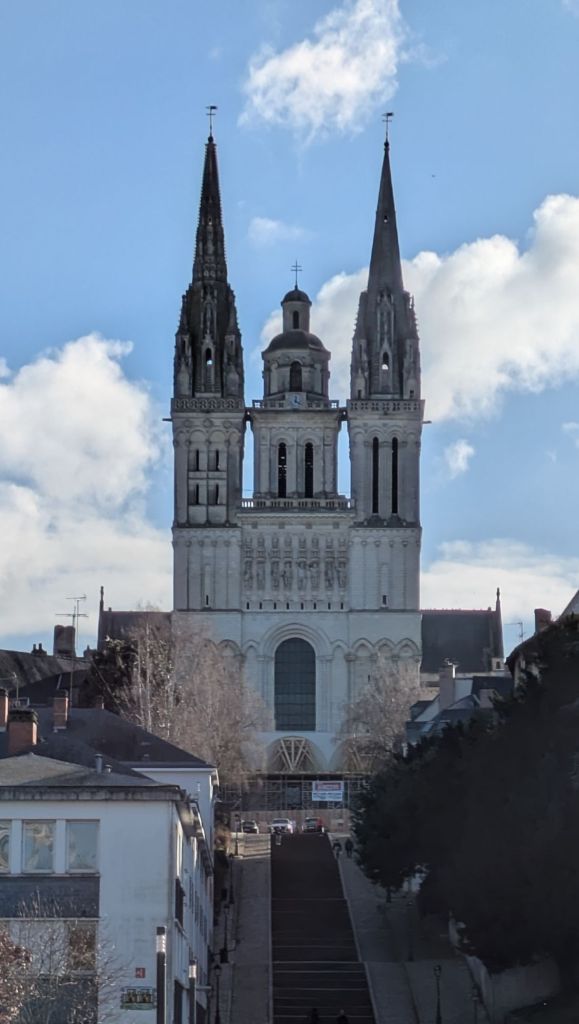
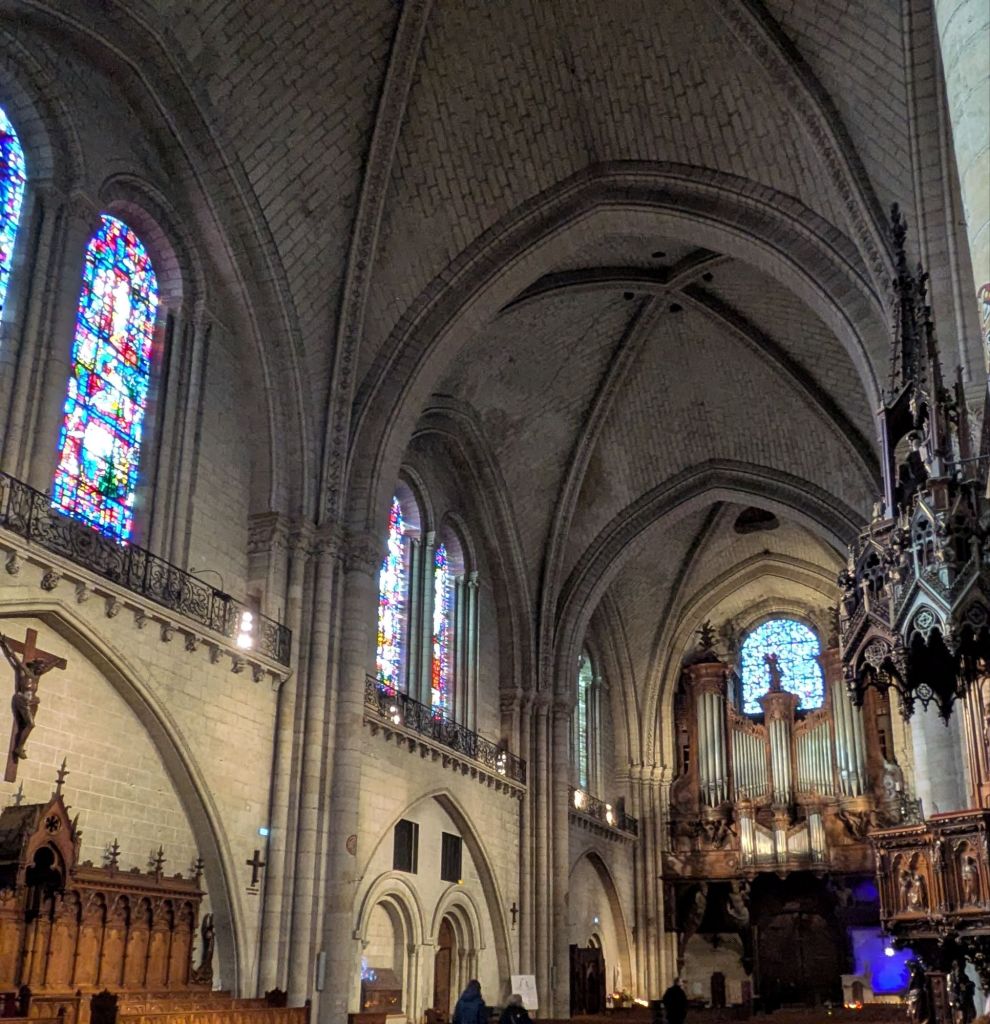
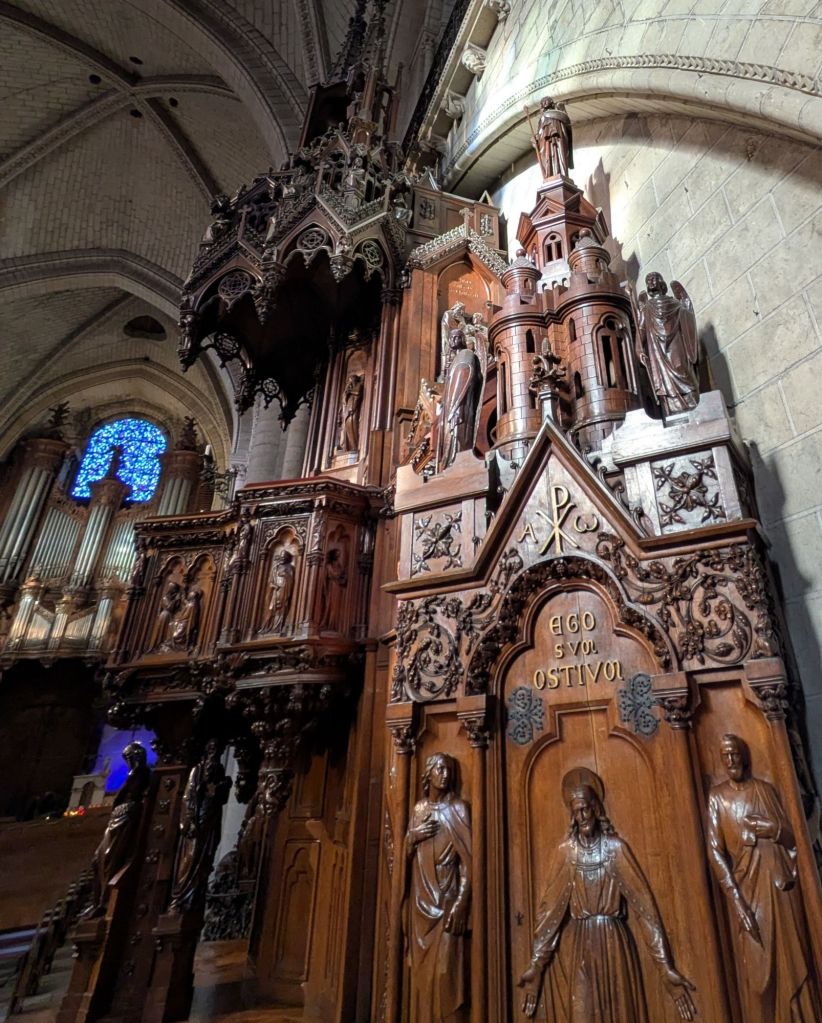
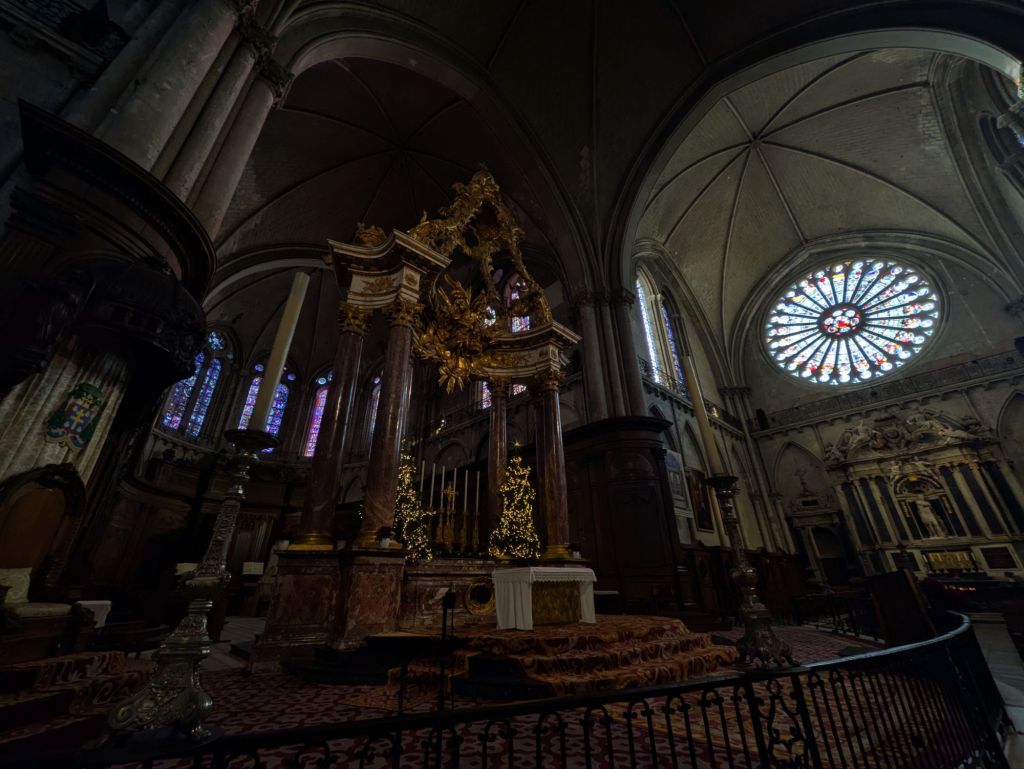
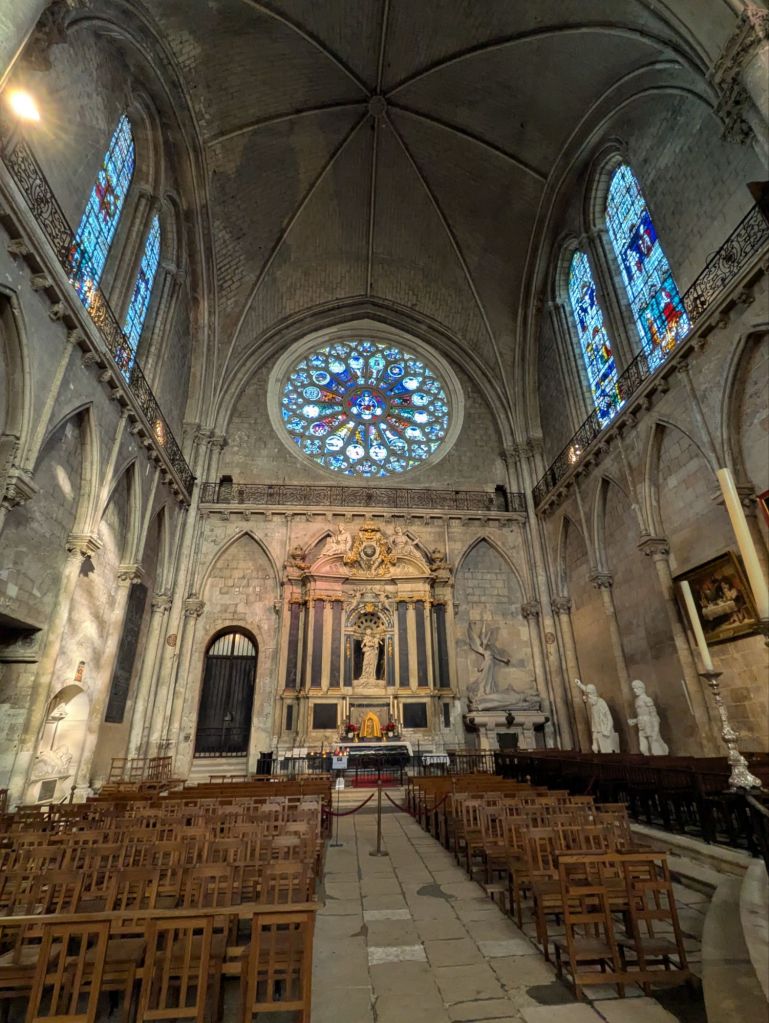
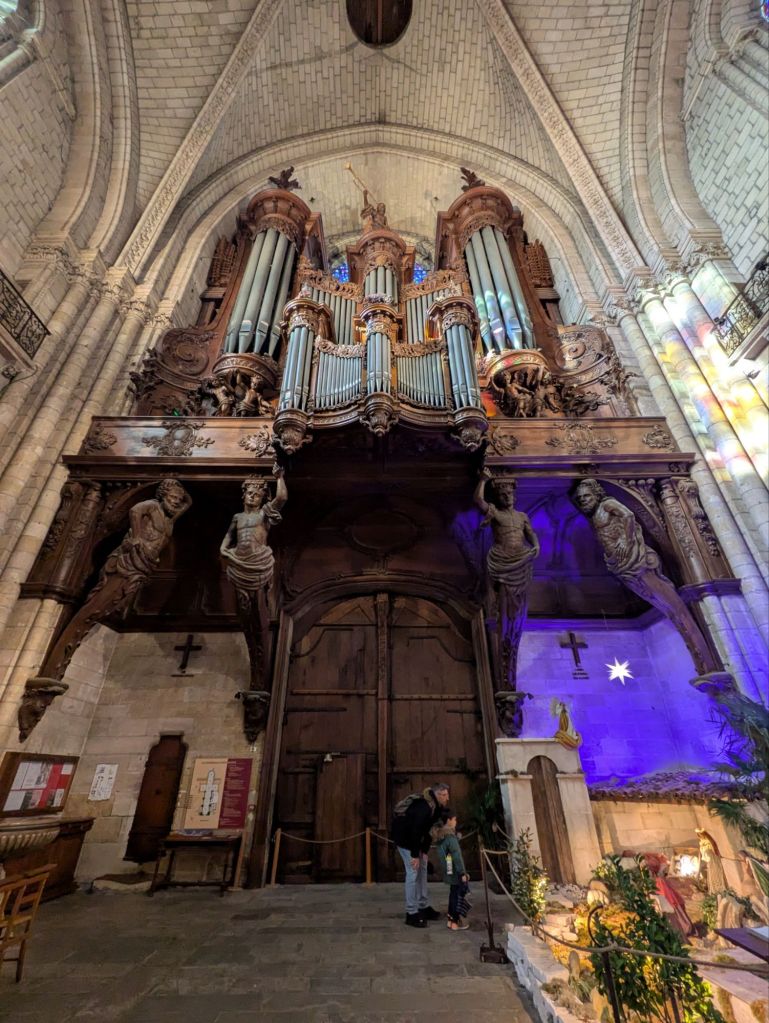
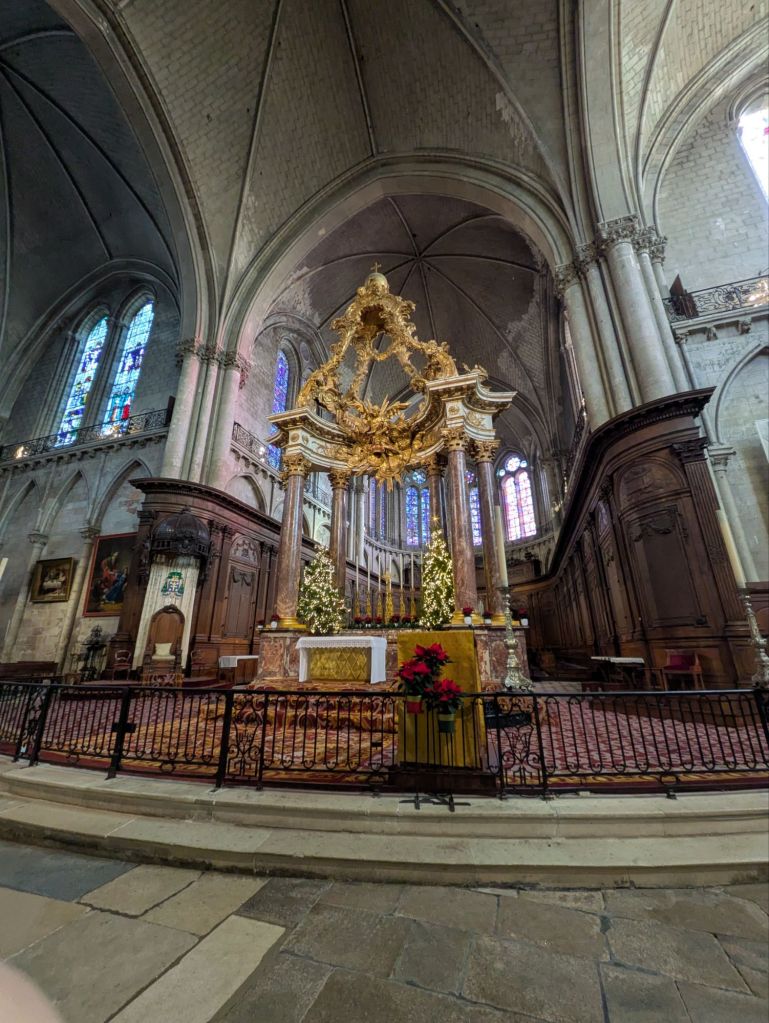
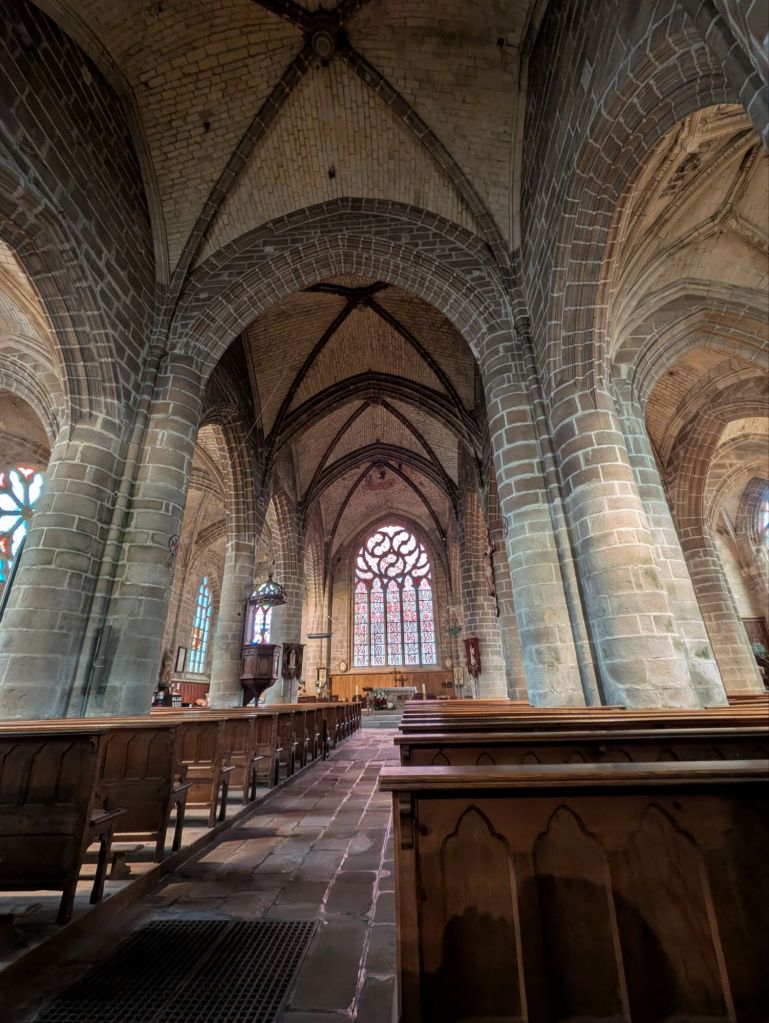
And the cathedral.. wow. We had no idea but when we stepped in… we were rendered speechless. In a land of cathedrals every 2000 steps- this one was indeed special.
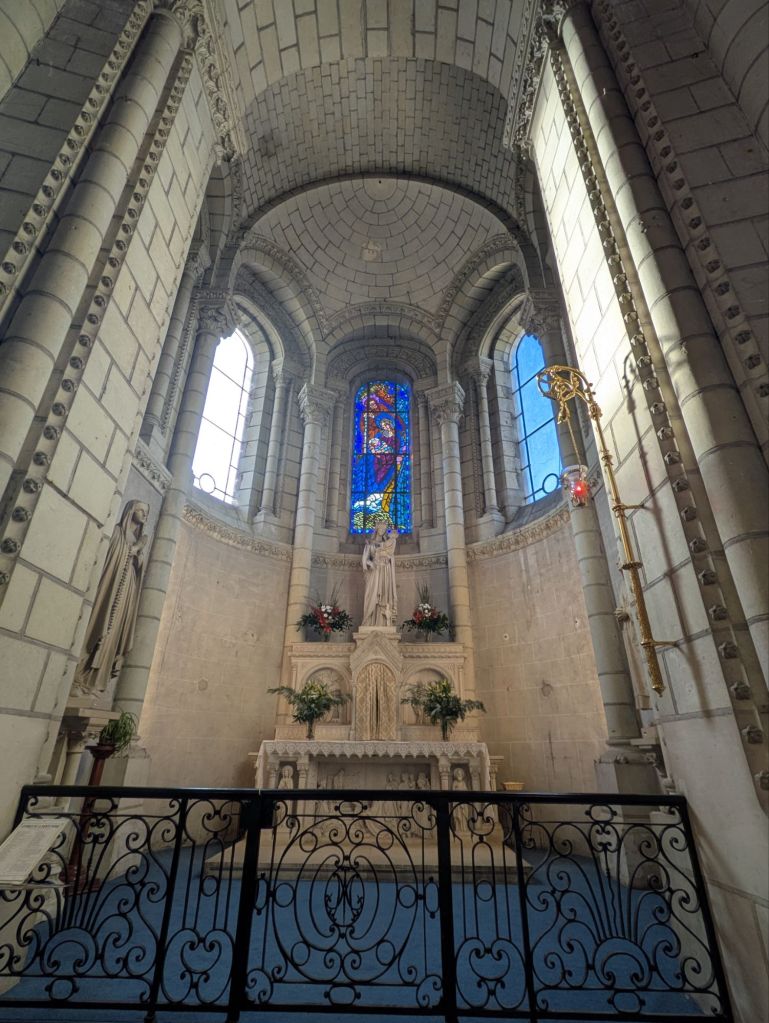
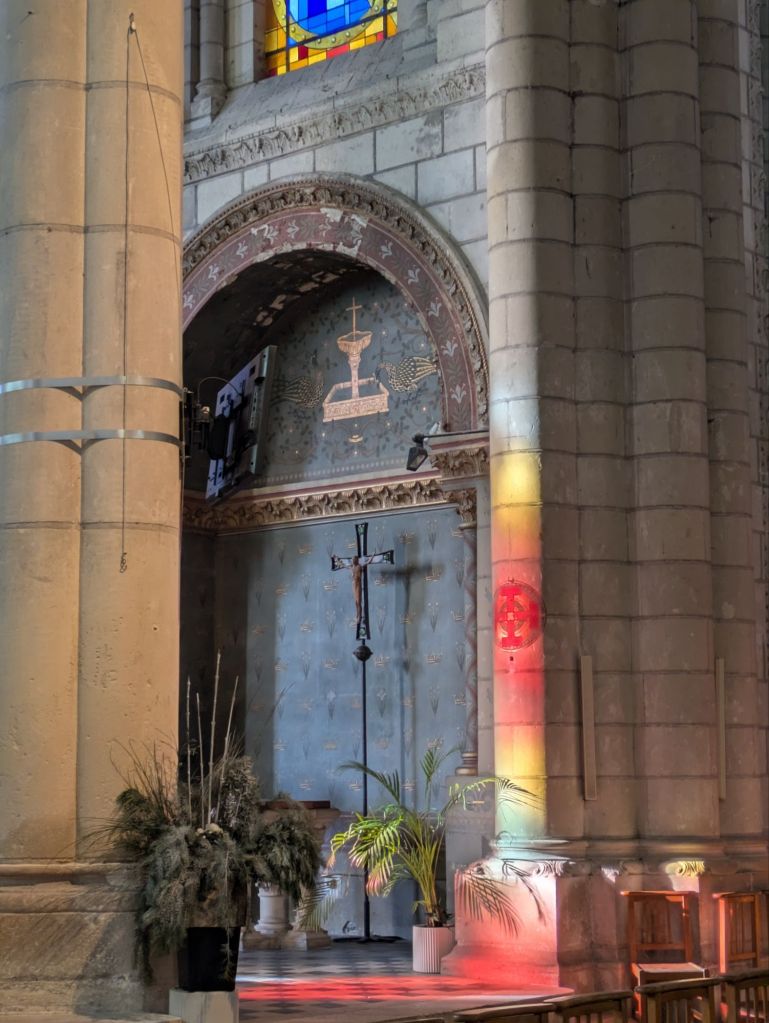
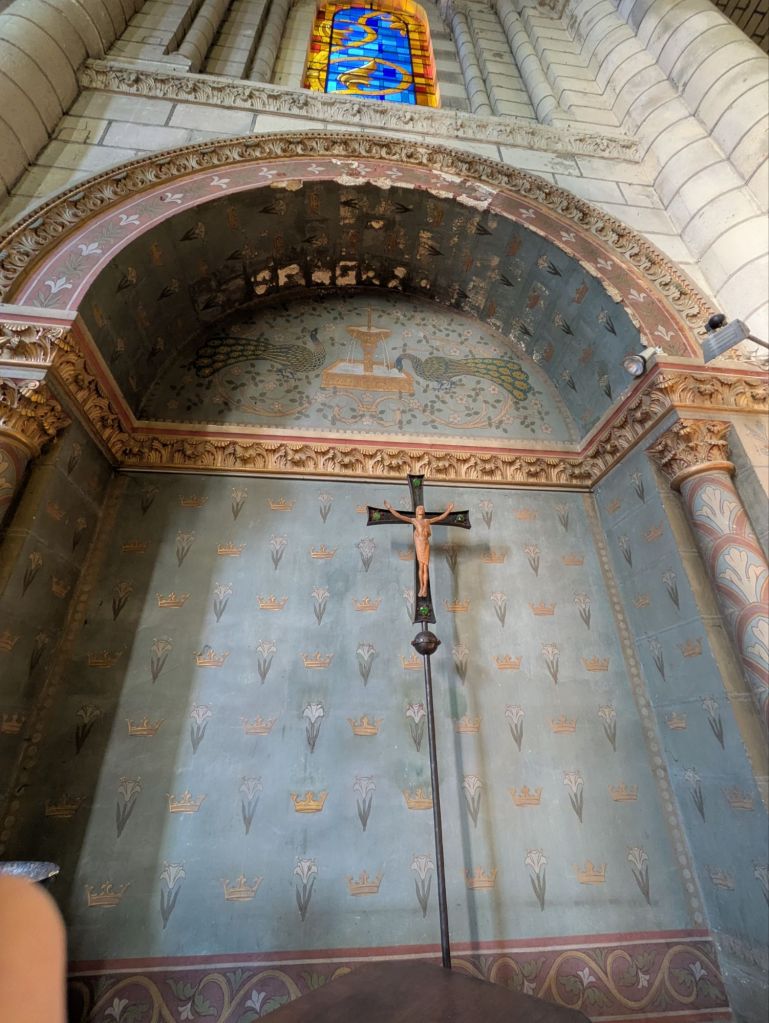
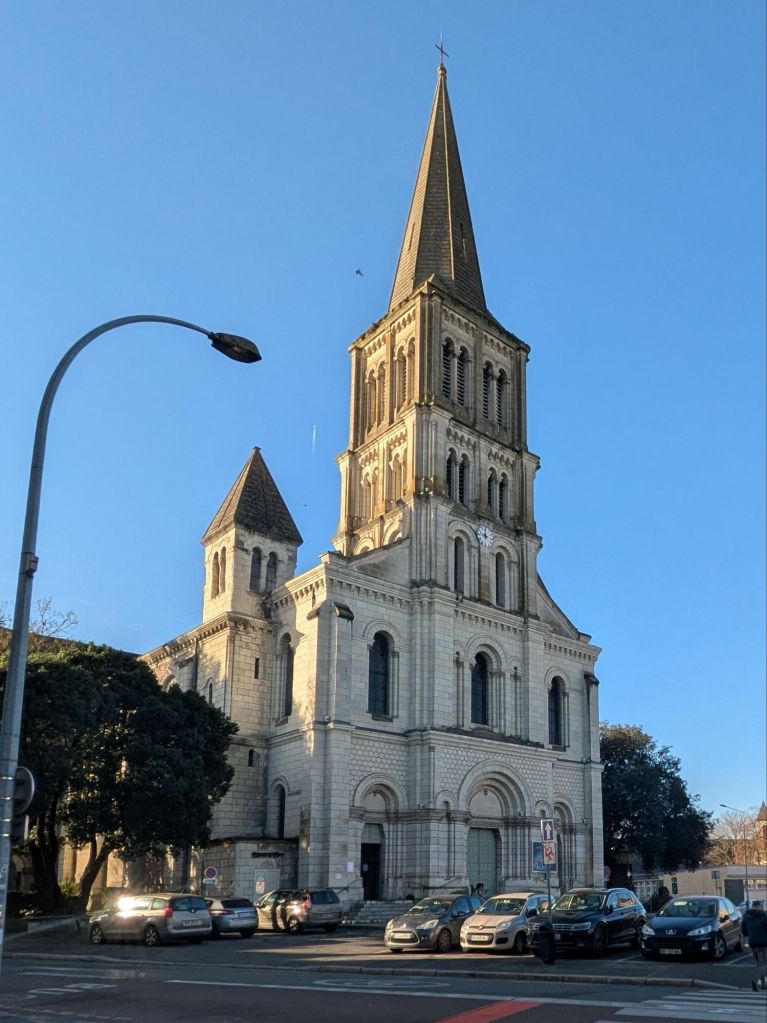
Train station with floating treesFirst Church. Outside unimpressive but inside like stepping into incense heavy history. Loved how the stained glass windows streamed the sunlit colors on the pillars
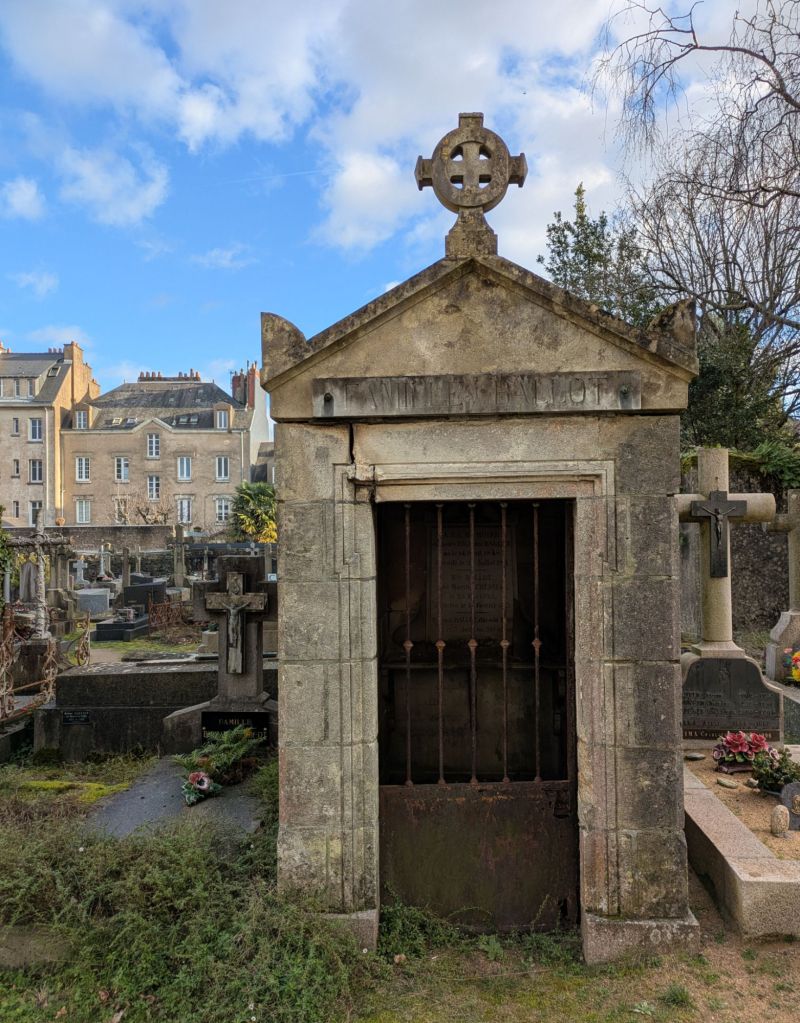
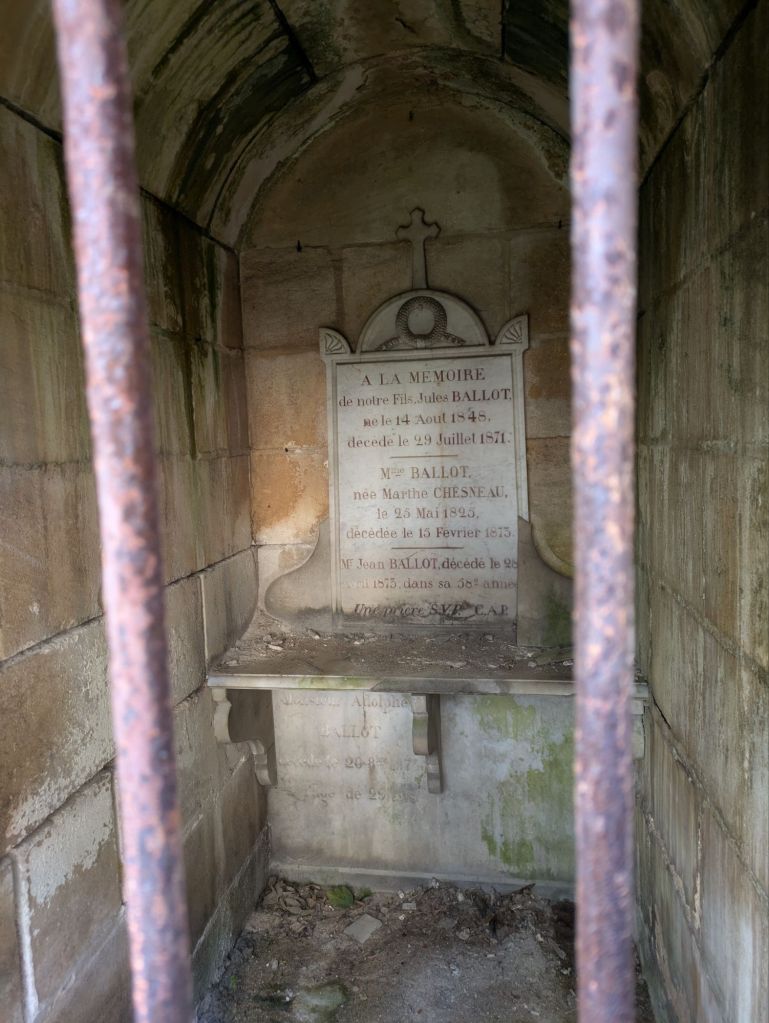
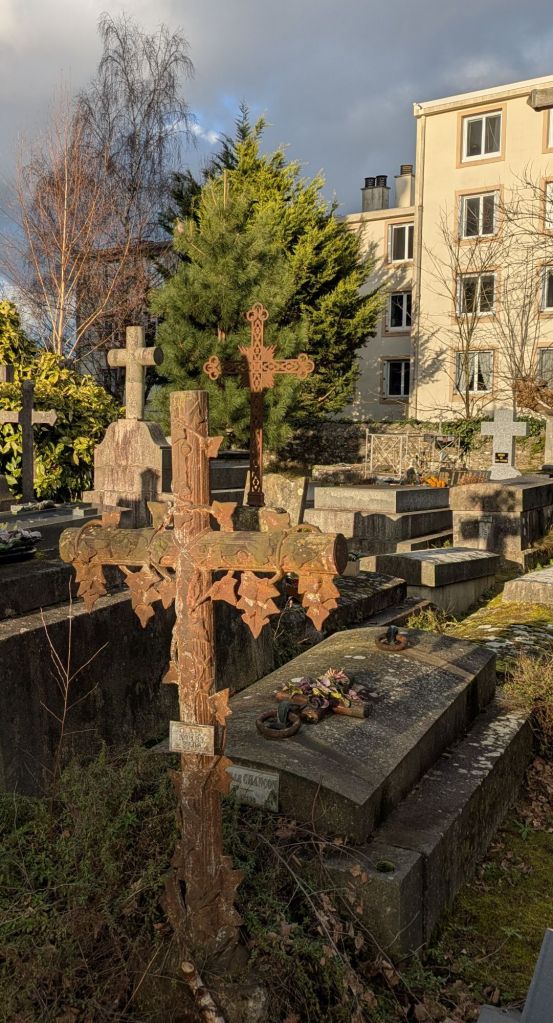
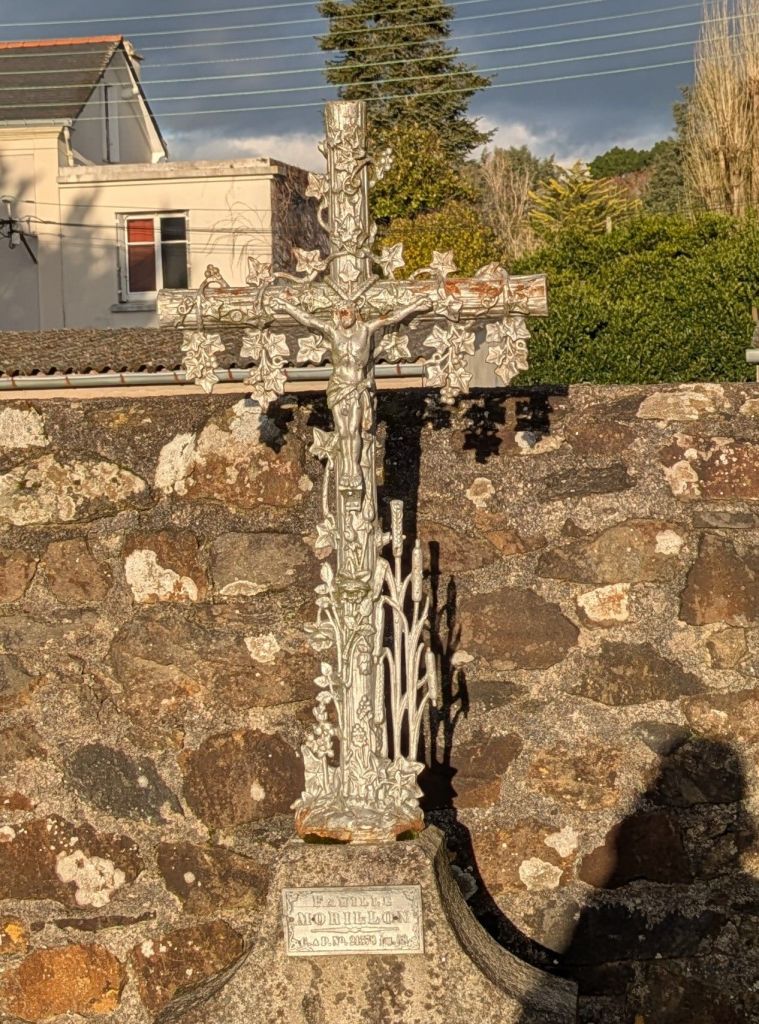
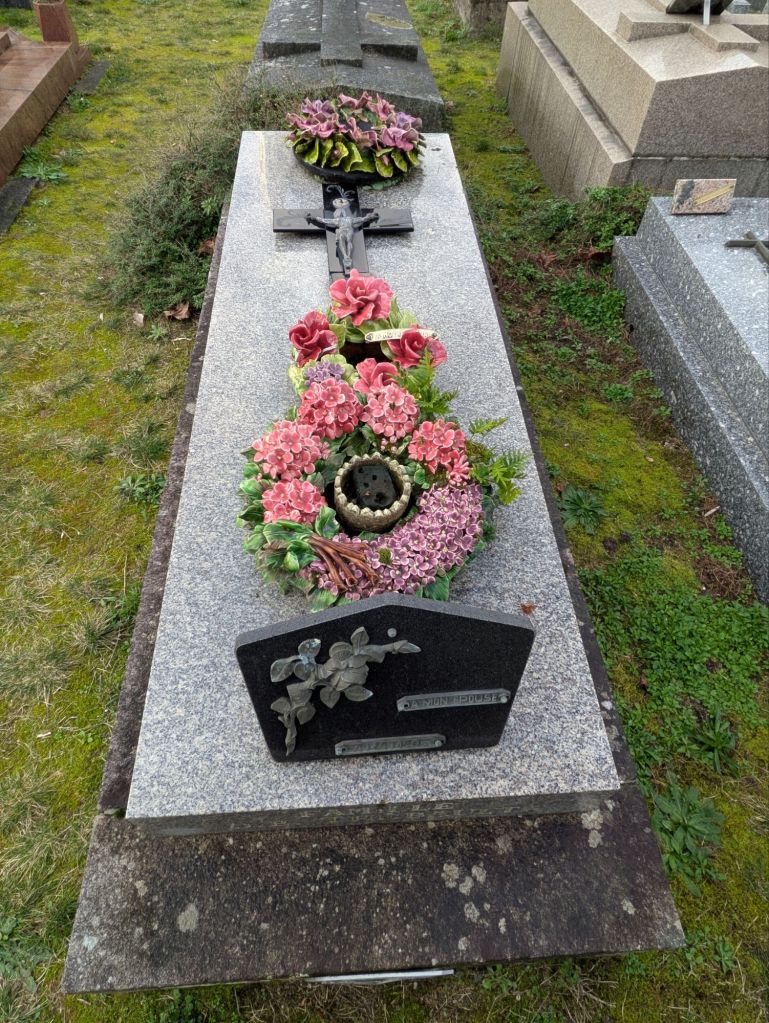
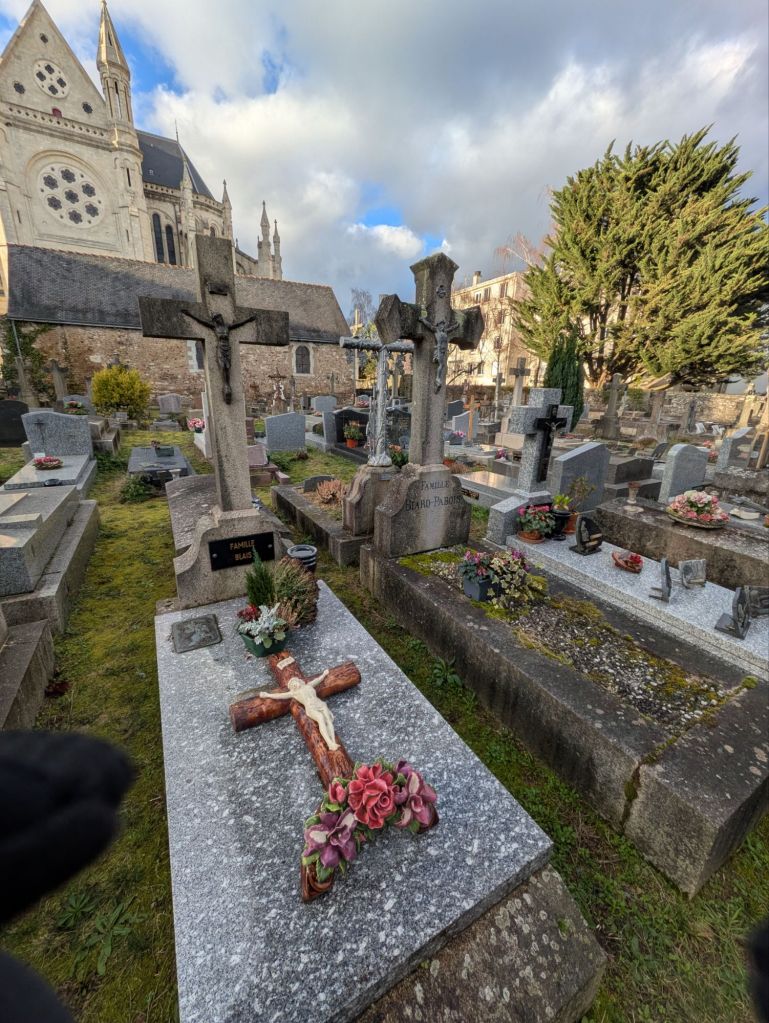
Are there any other friends out there who love cemeteries? As a preacher’s kid I have lived near and played in cemeteries my whole life. I find them peaceful, sometimes sad, always historical and beautiful.
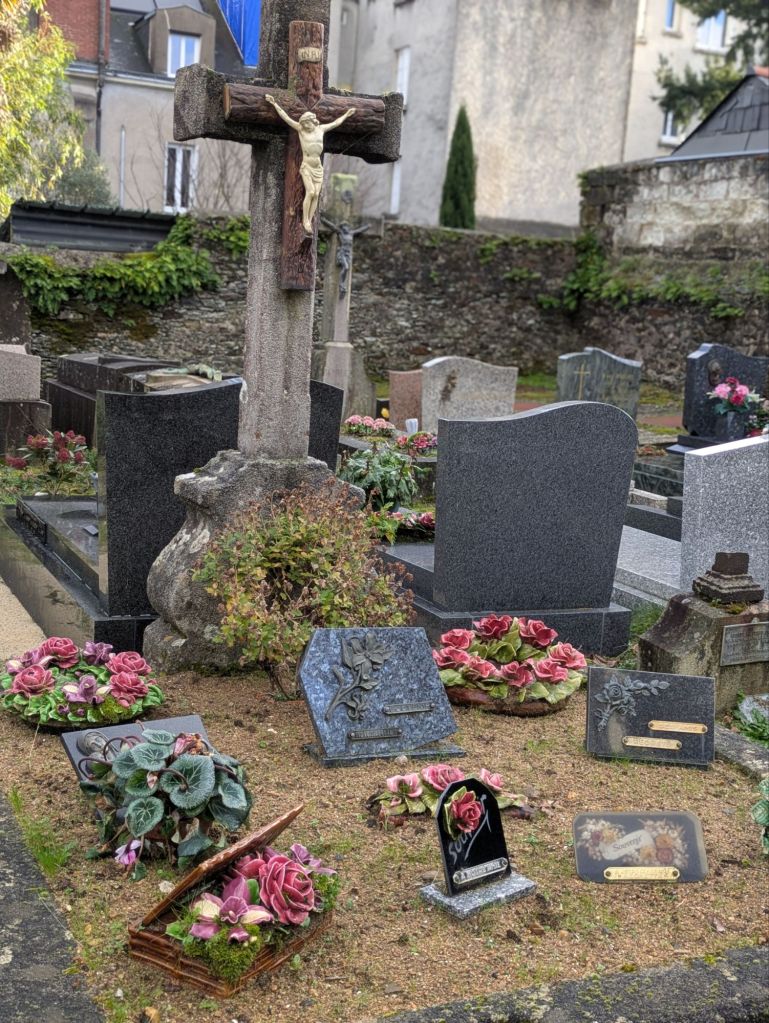
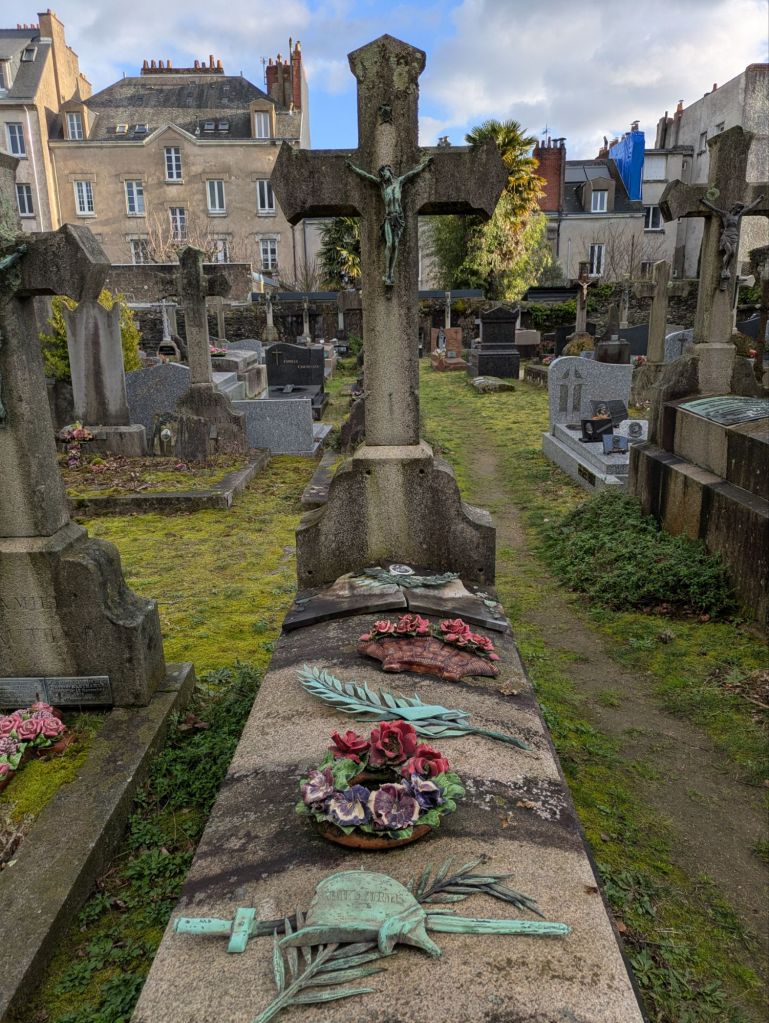
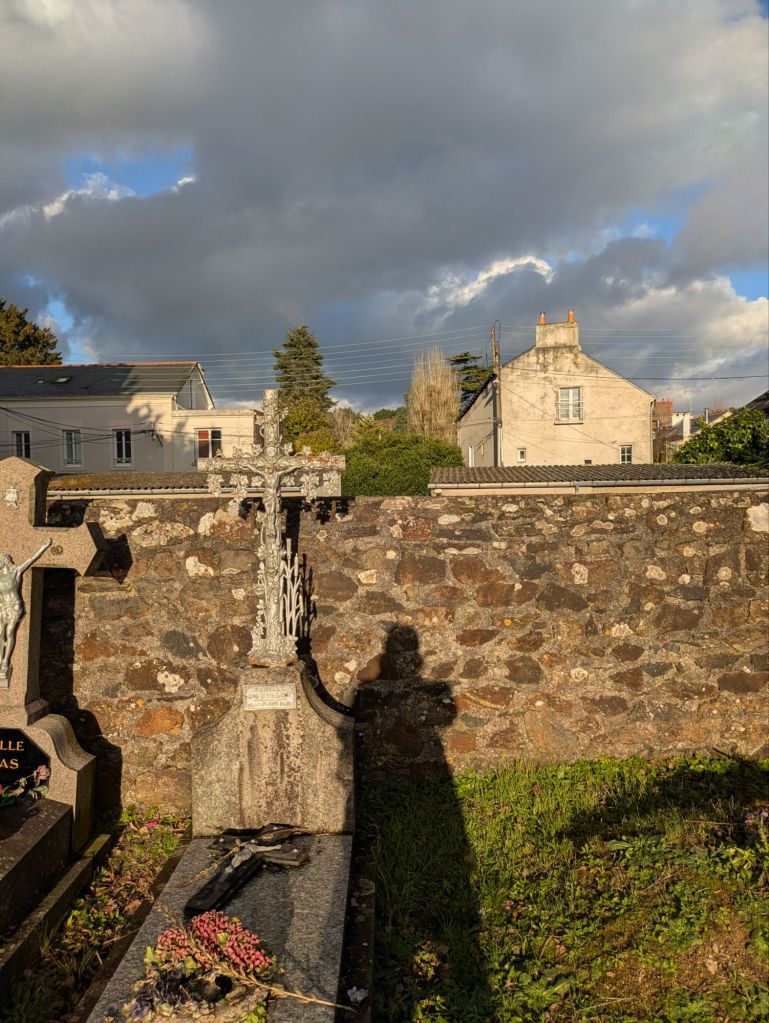
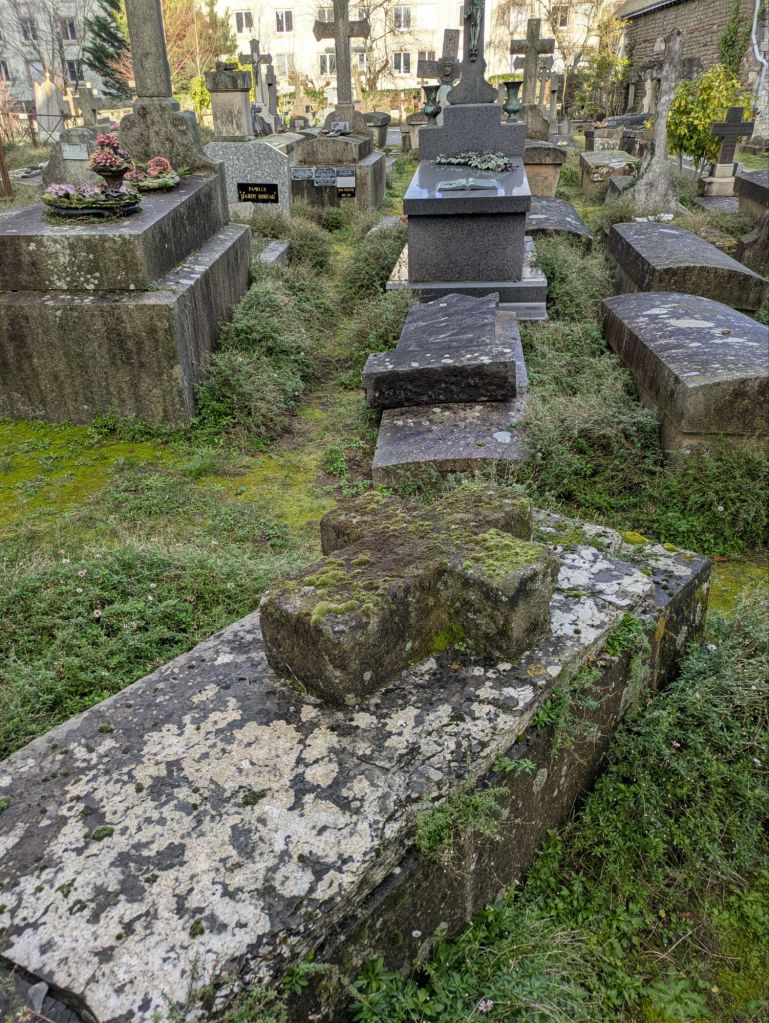
In a former post I wrote about our neighborhood cathedral. This time I wandered about the cemetery. It was beautiful and interesting. The oldest date I found was early 1800’s but so many tombstones were illegible.
Some notes:
These graves contain multiple family members. They must lift the stones and inter more bodies on top. I saw up to seven plaques on one grave.
Lots of grape vines entwined with crosses.
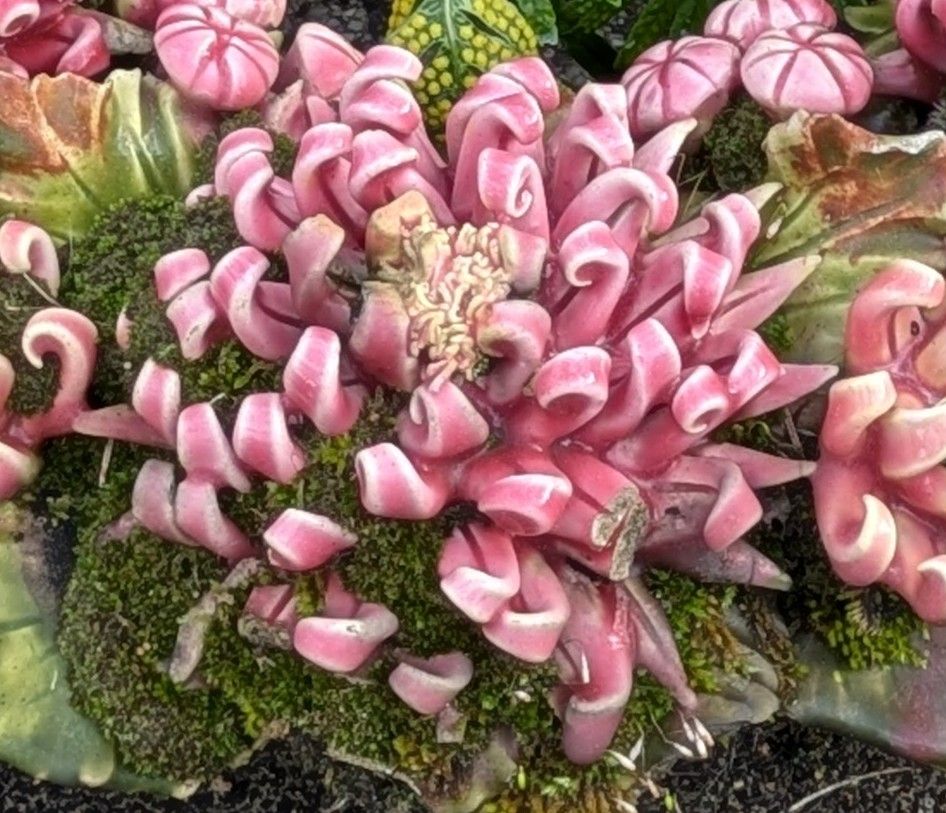
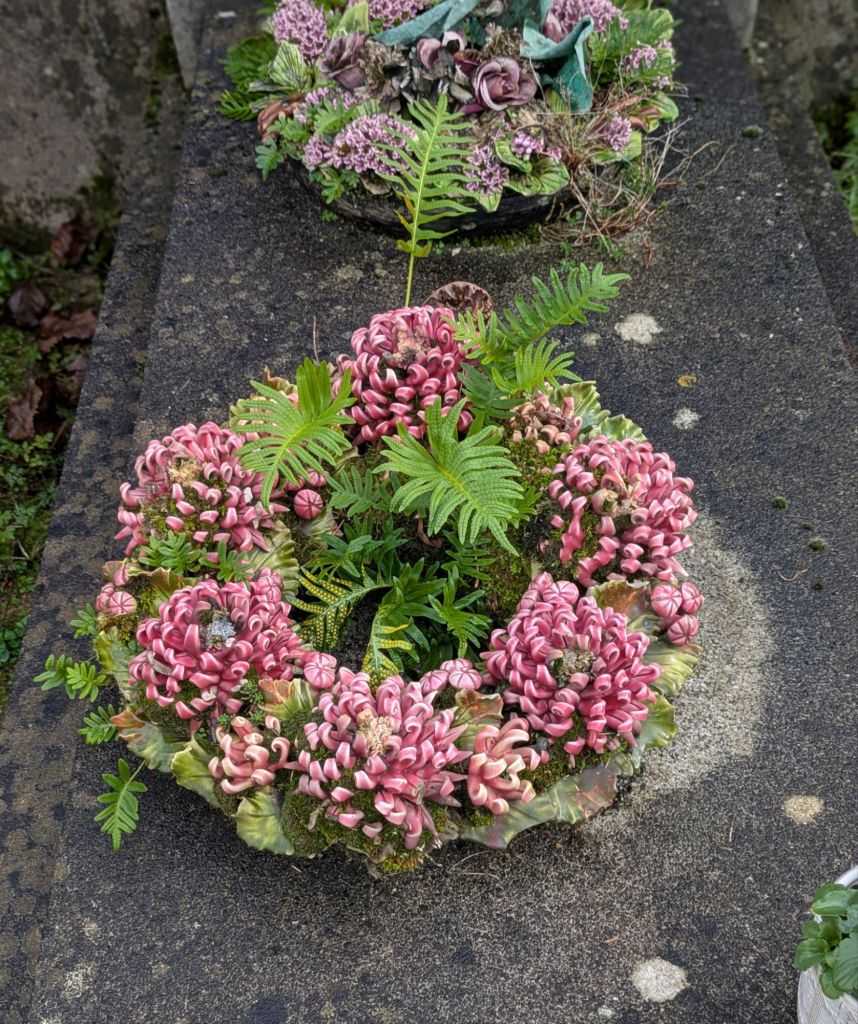
The stones are adorned with gorgeous and intricate porcelain flowers in addition to real plants. These porcelain arrangements were lifelike, detailed and translucent. Many had ferns and moss growing on them. A poignant mix of living and sculptural.
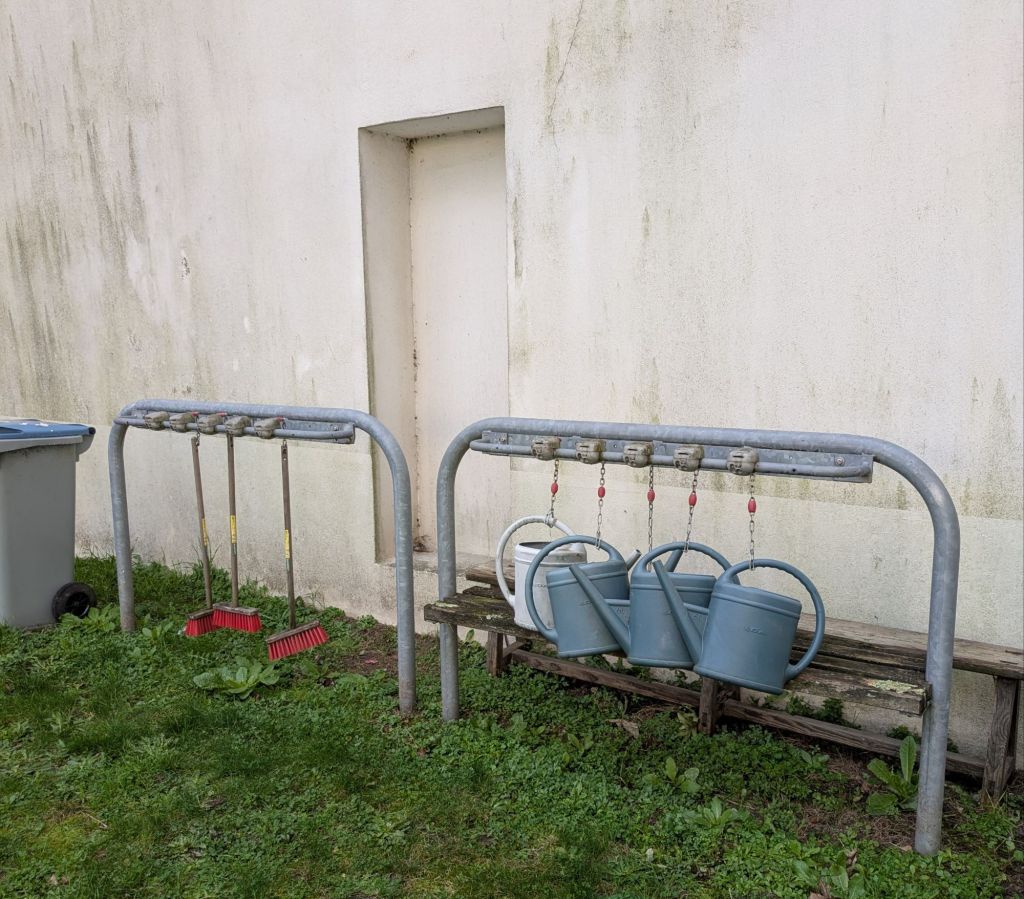
And what hit me as really sweet- a station of watering cans and brooms for families to keep their beloved well tended.
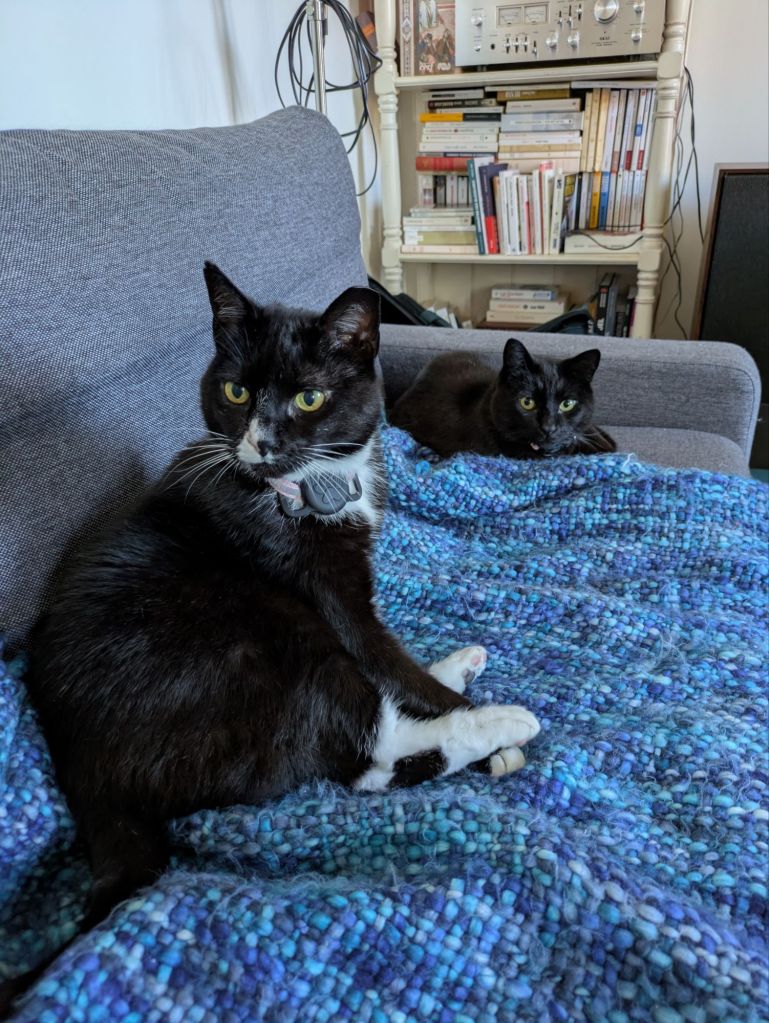
This post is for Penny (our human friend) who asked about our cats!
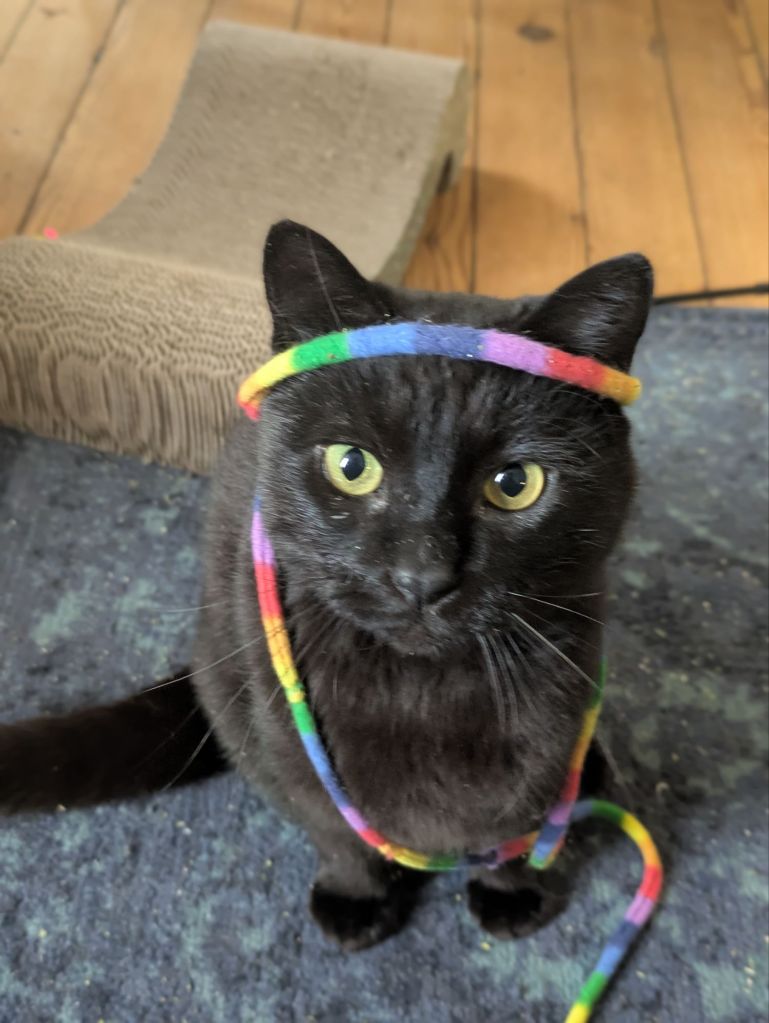
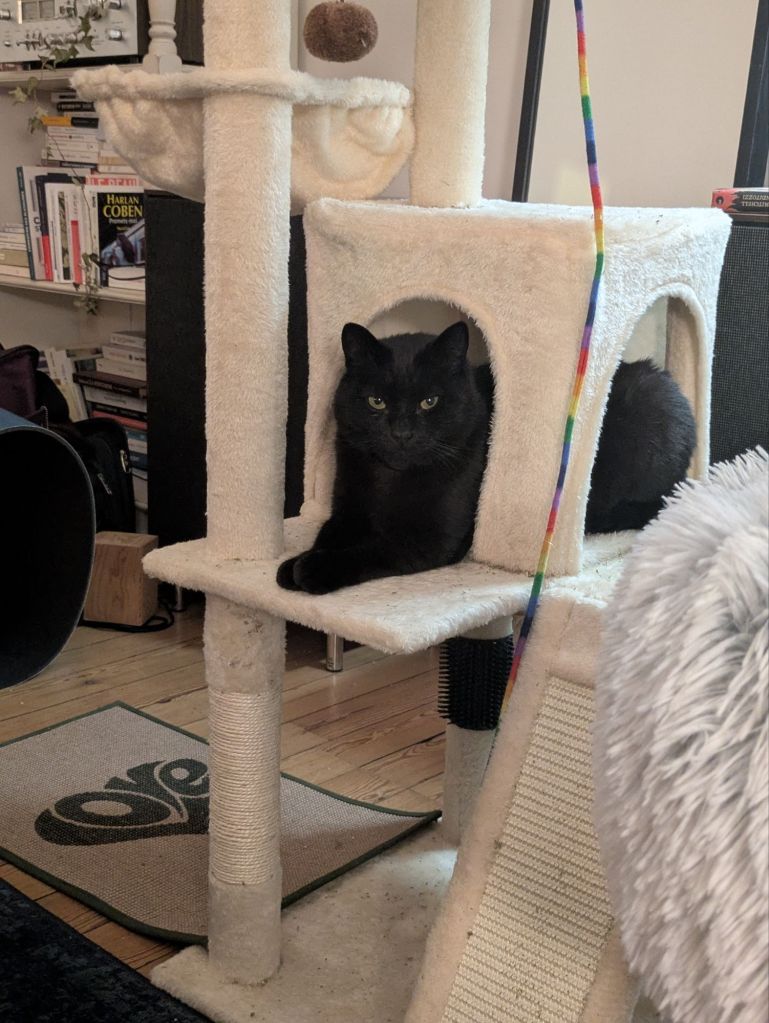
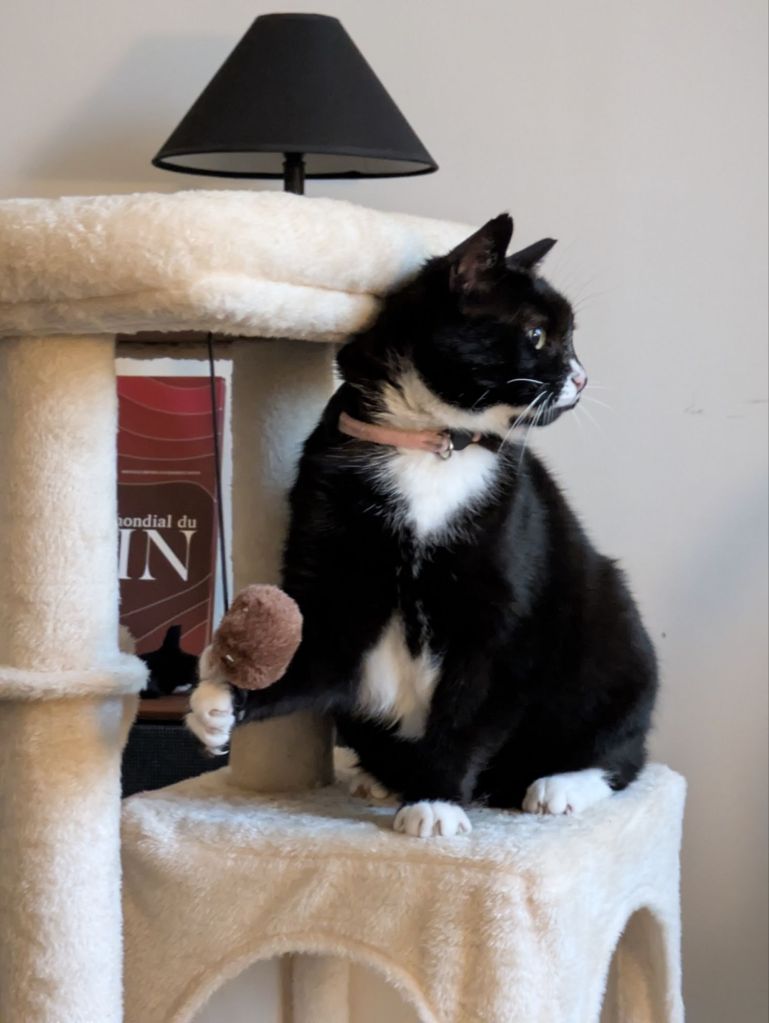
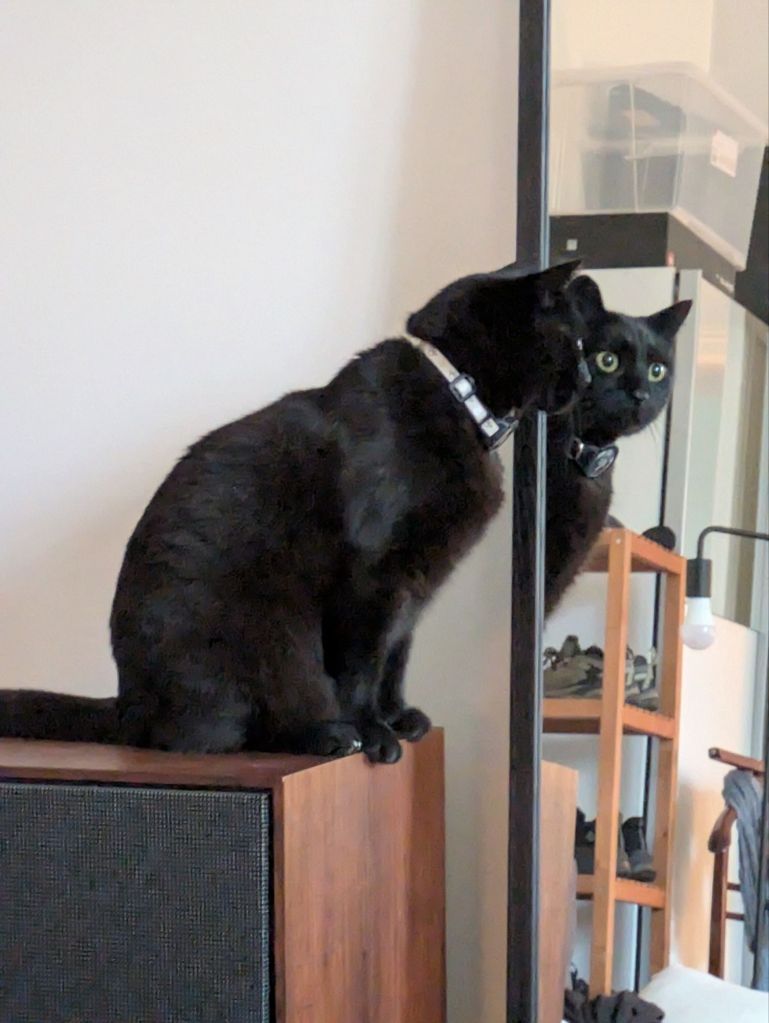
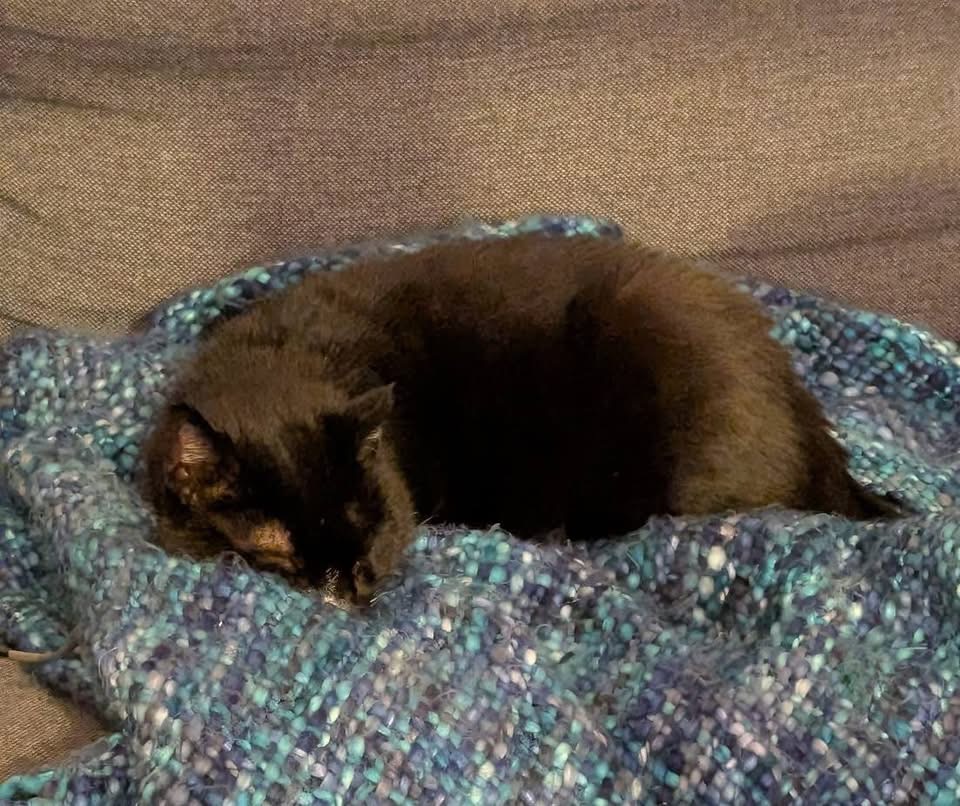
The cats were really traumatized by the 20 hour journey to our rental in Nantes, and so were we! We did the best we could, but especially for Penny, who has never been confined to a room, much less than a carrier… he was freaked out. He hid under the duvet for days. but finally he emerged and since then has grown more brave every day.
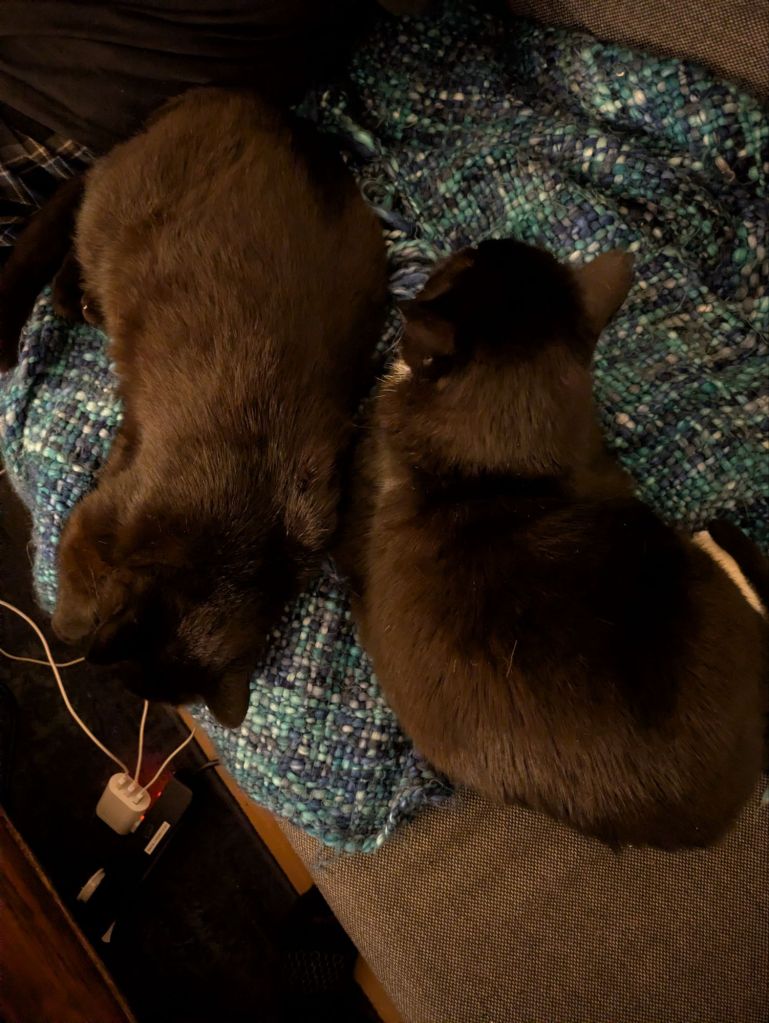
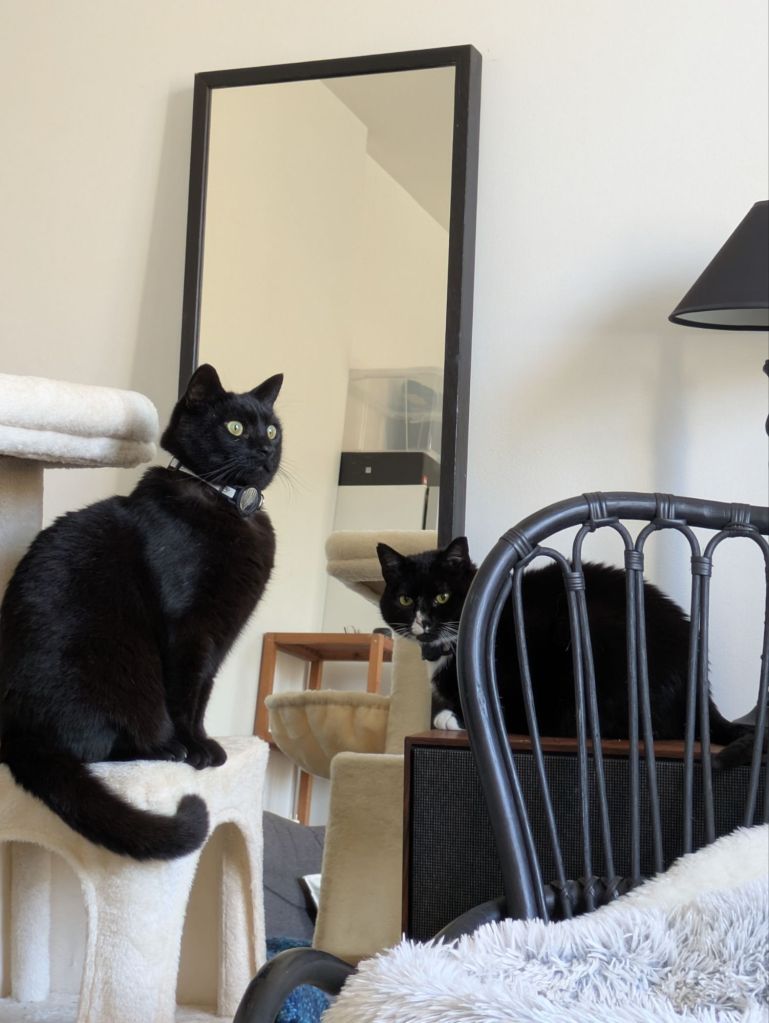
Both cats have adapted well. Biscuits seemed to take it all in stride. Shes older and has been through 3 moves previous to this one. I really feel like she knew what was coming.
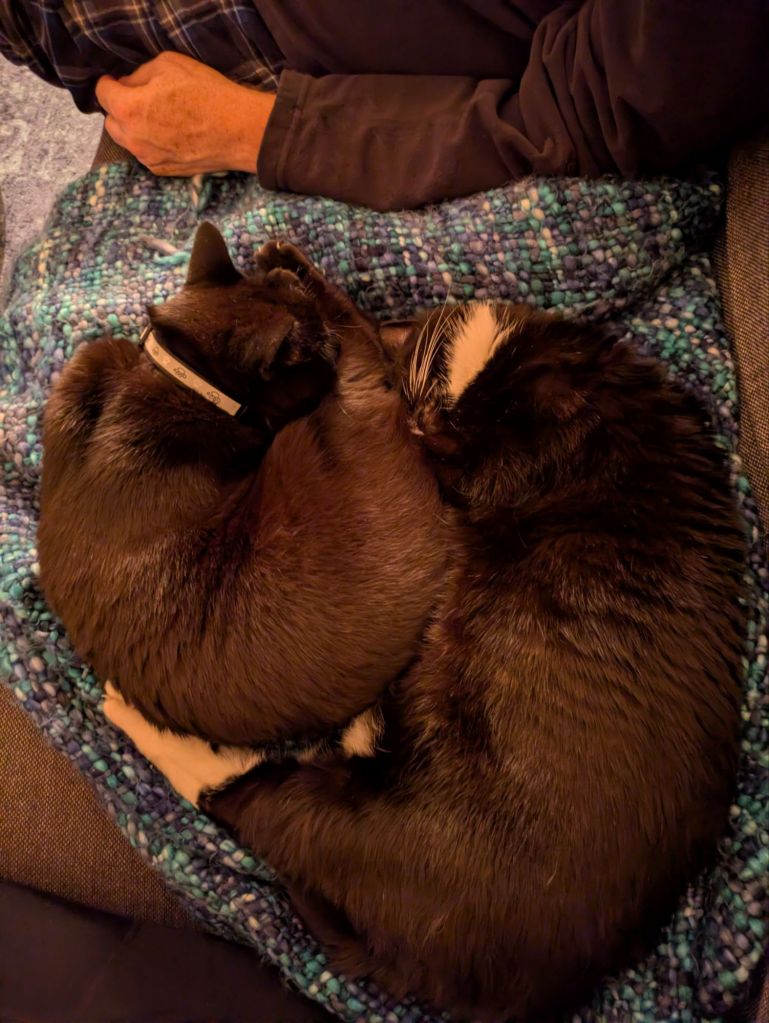
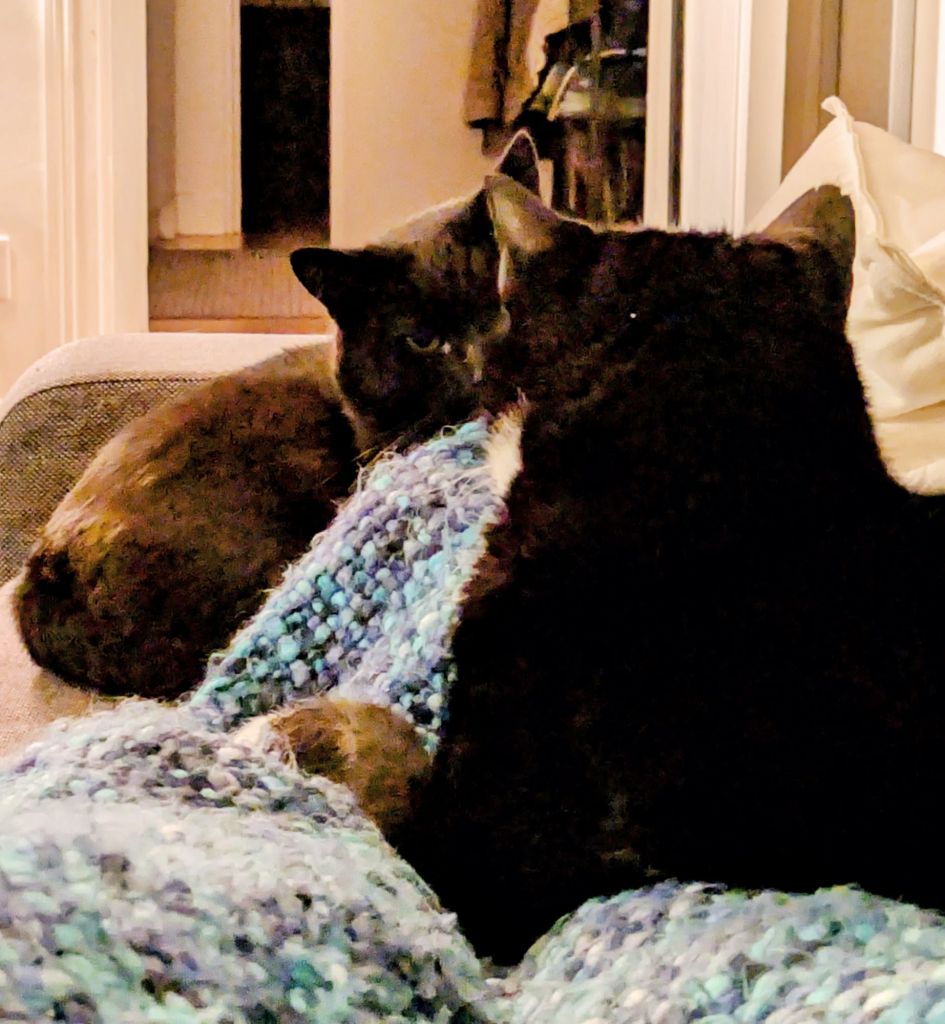
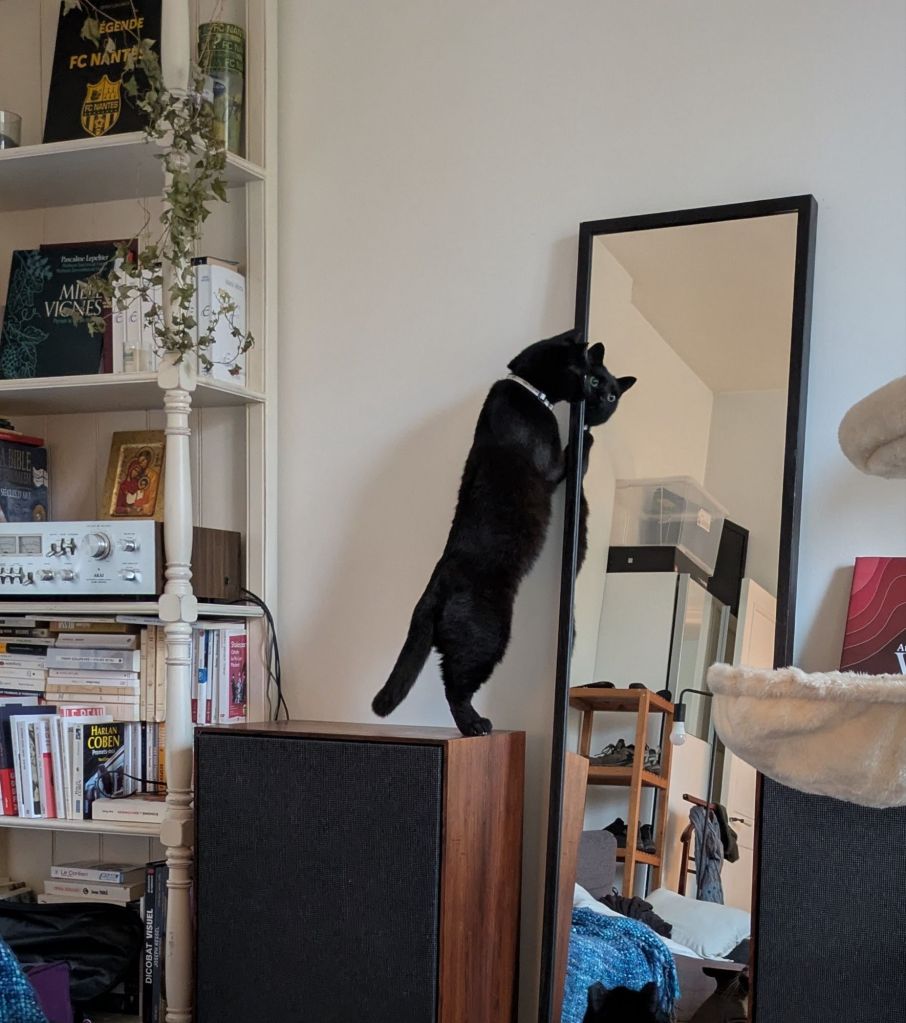
So today they are happy. They play constantly, eat normally, drink plenty of water and are super cuddly both with us and each other. They are both super sweet kitties. I’m sure they miss the outdoors, the freedom, the deer, mice and chipmunks. But they seem well adapted and content. We always tell them- we’re together and that’s what counts!
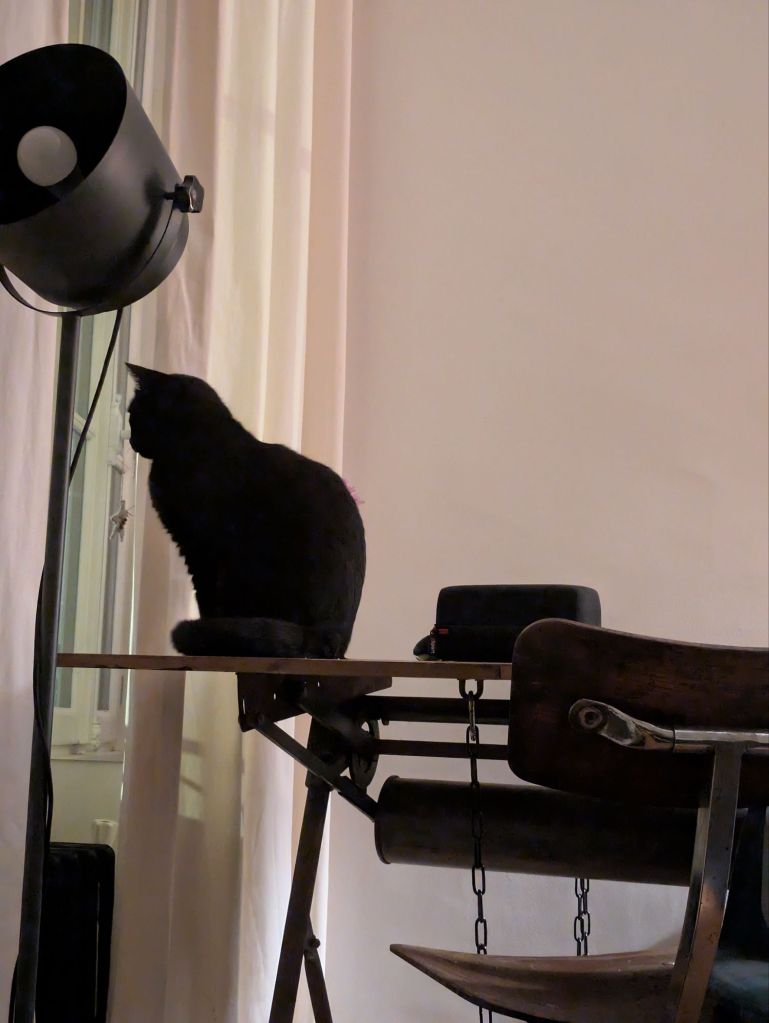
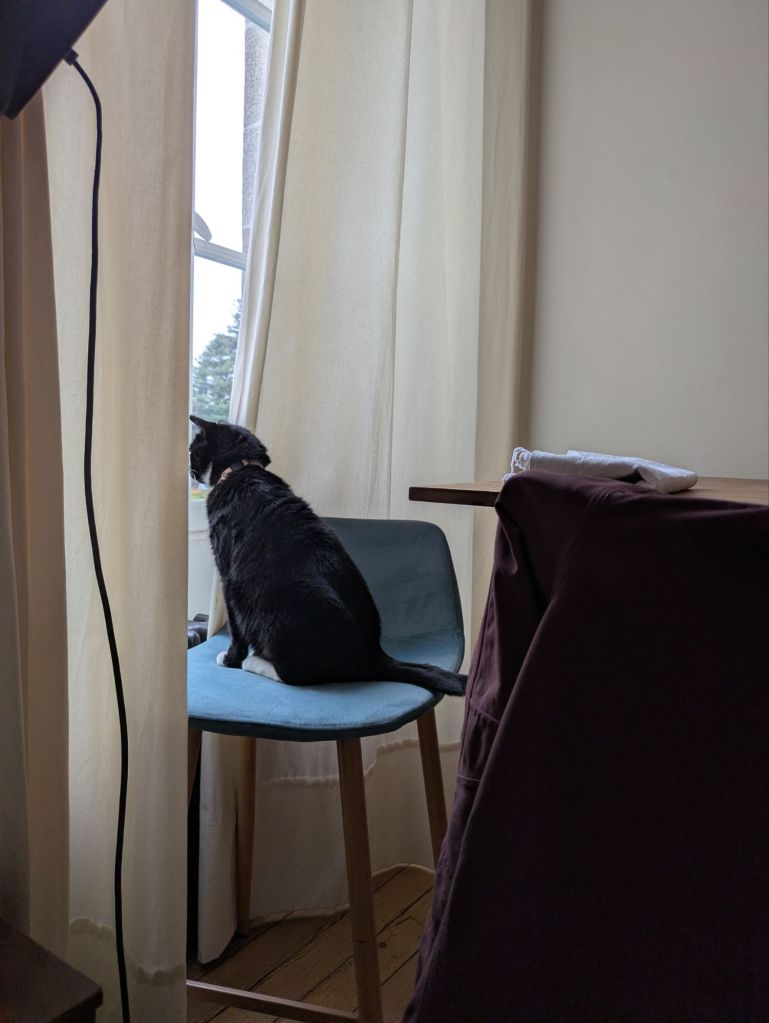
The latest development is that Penny got brave this morning and for the first time, spent time looking at the window at the cars, bikes and people running by.
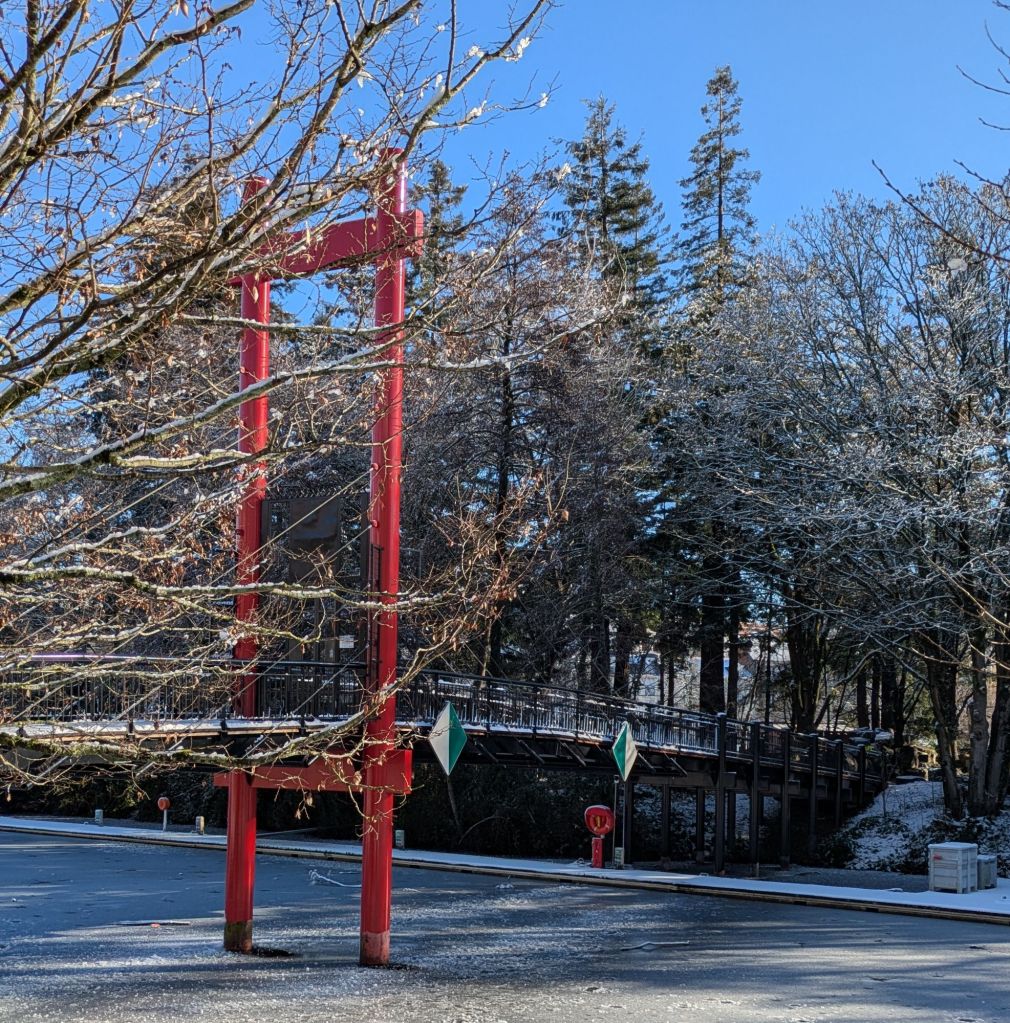
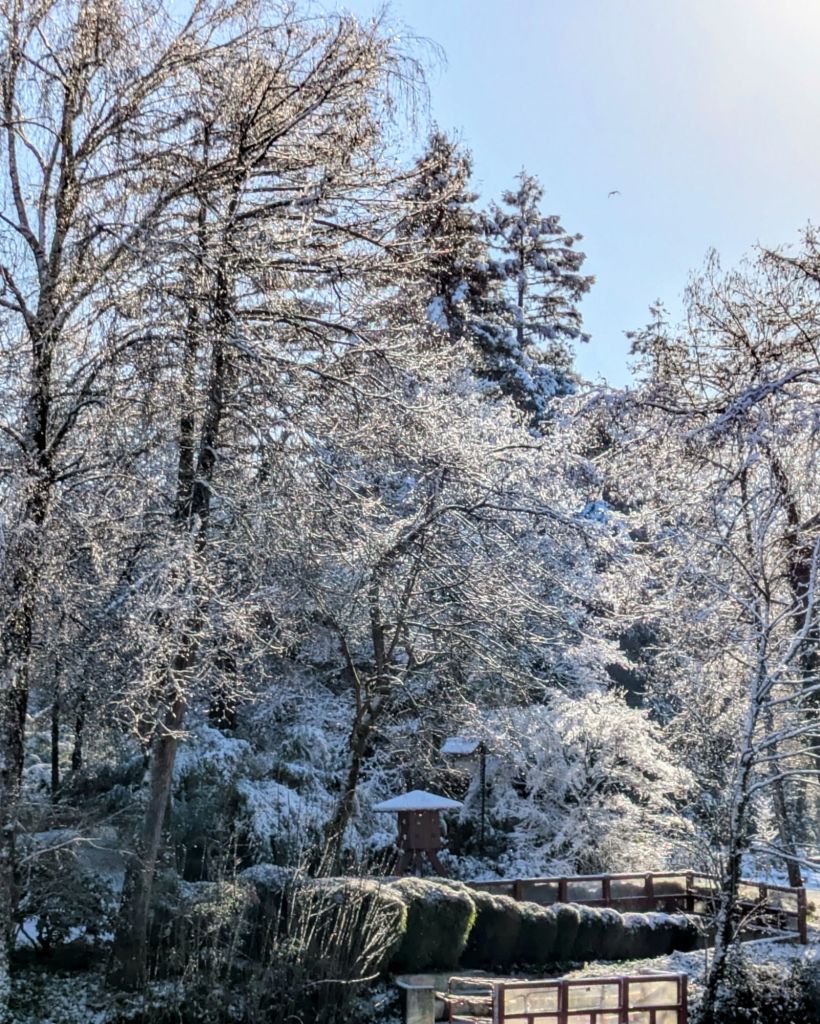
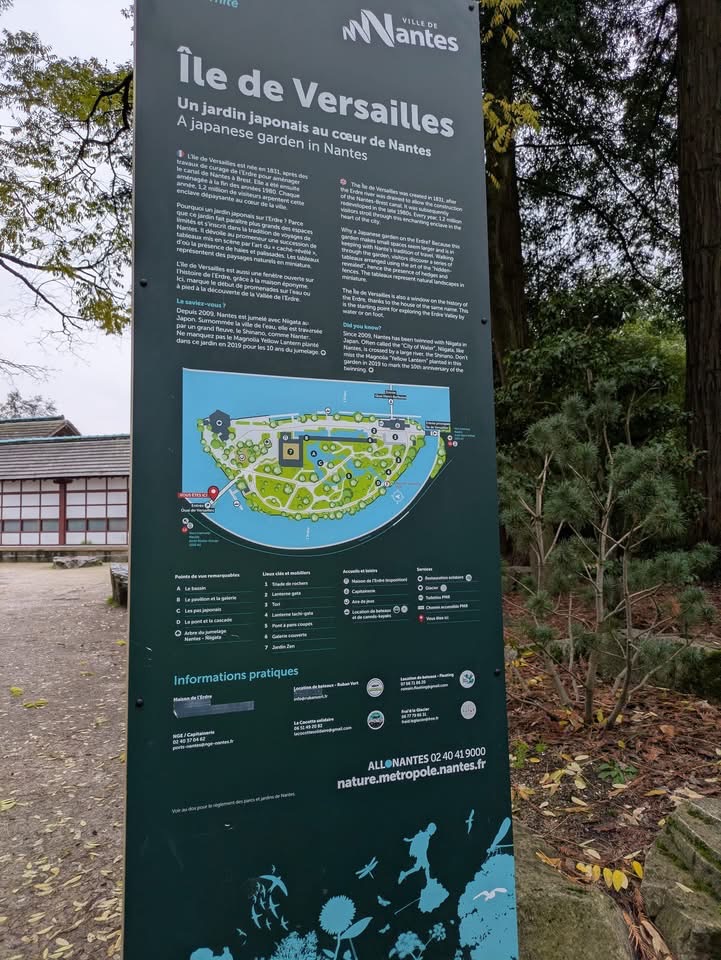
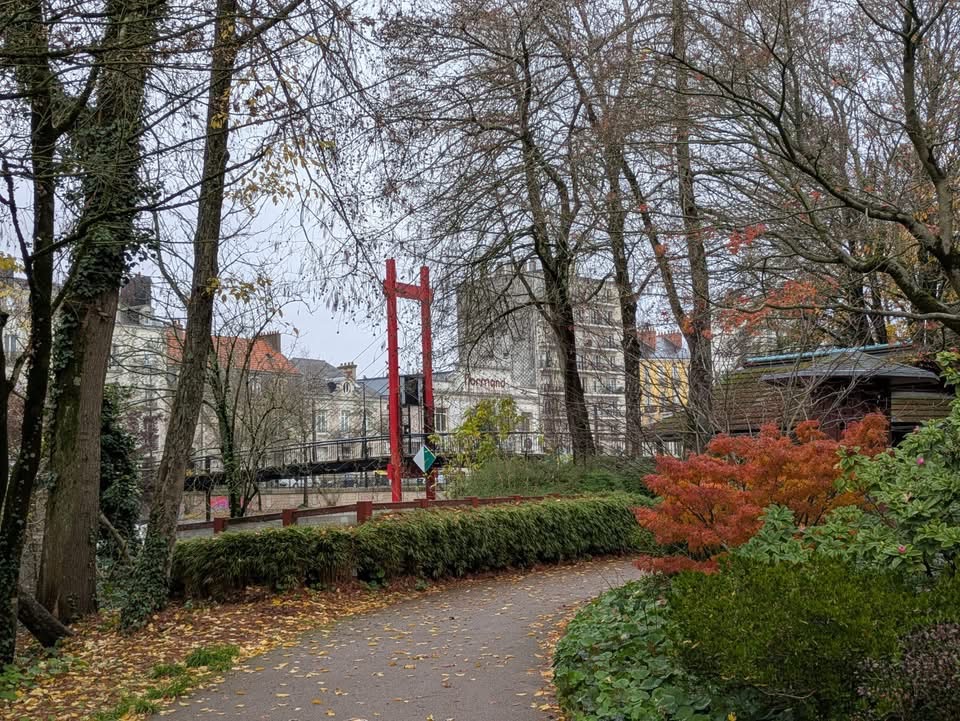
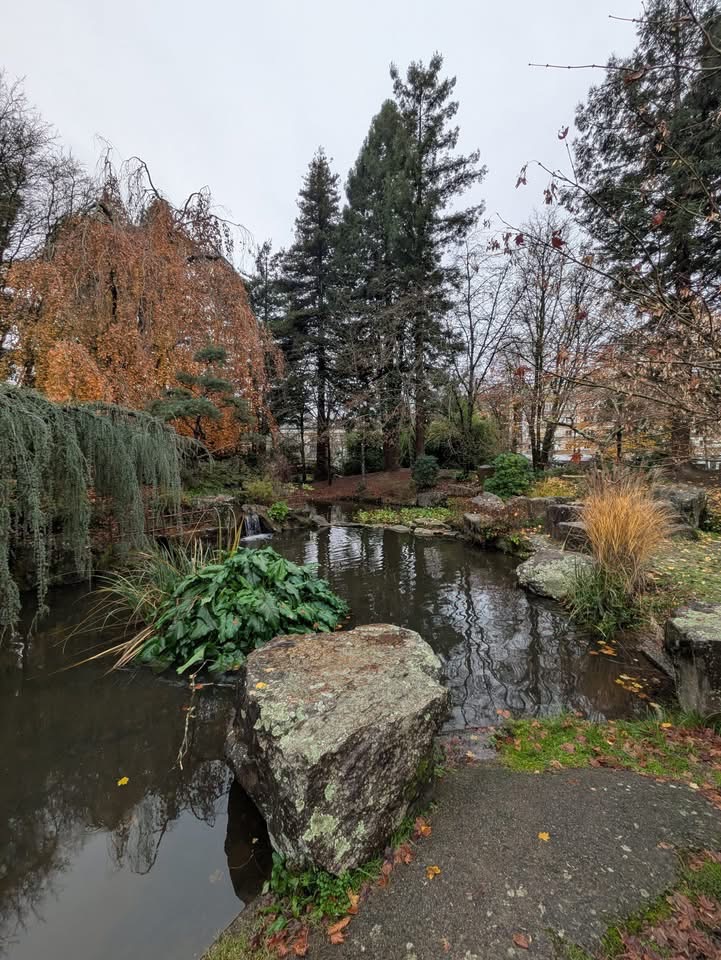
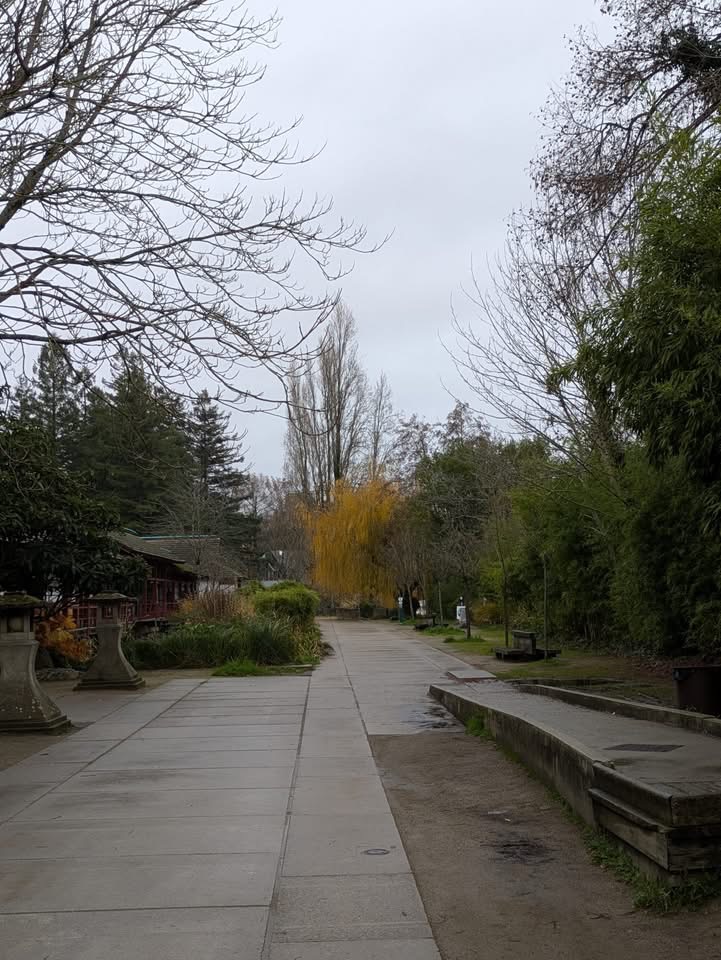
Christmas Day was filled with cooking and enjoying a relaxed stroll around the Japanese gardens on the Iles of Versailles. It was a cold, crisp day after a slight dusting of snow overnight. Not quite a White Christmas, and that’s OK with me!
I haven’t written much lately. I have to admit that a deep sadness overtook me as things haven’t quite turned out the way we had envisioned and most of that was due to mistakes on our part.
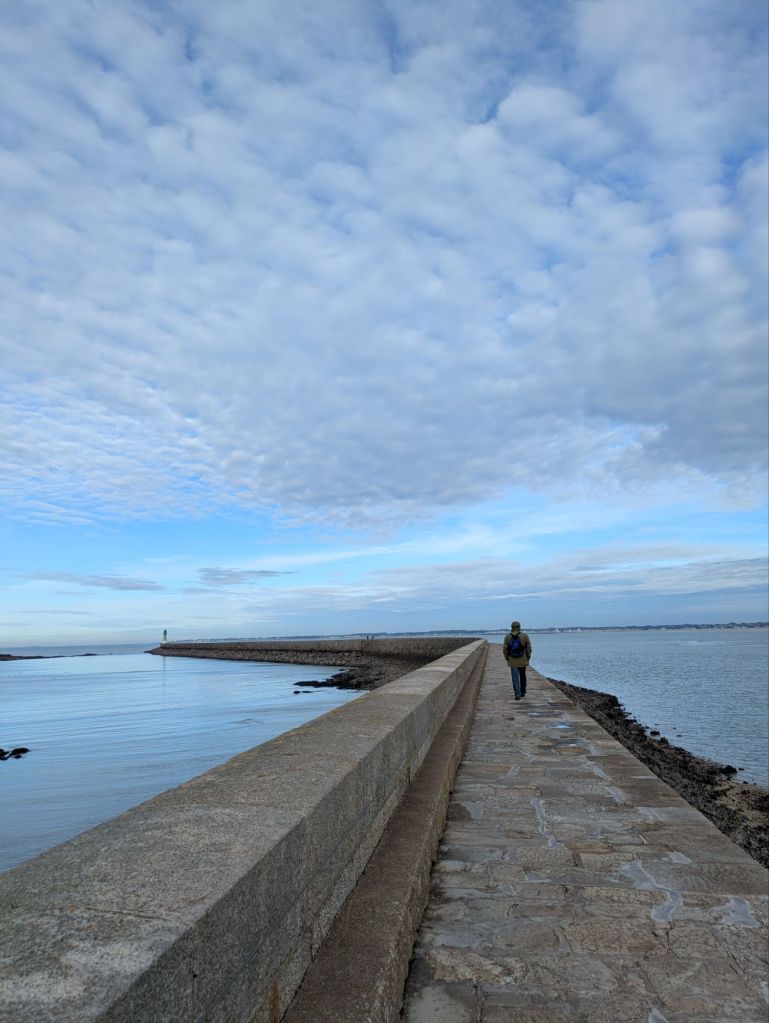
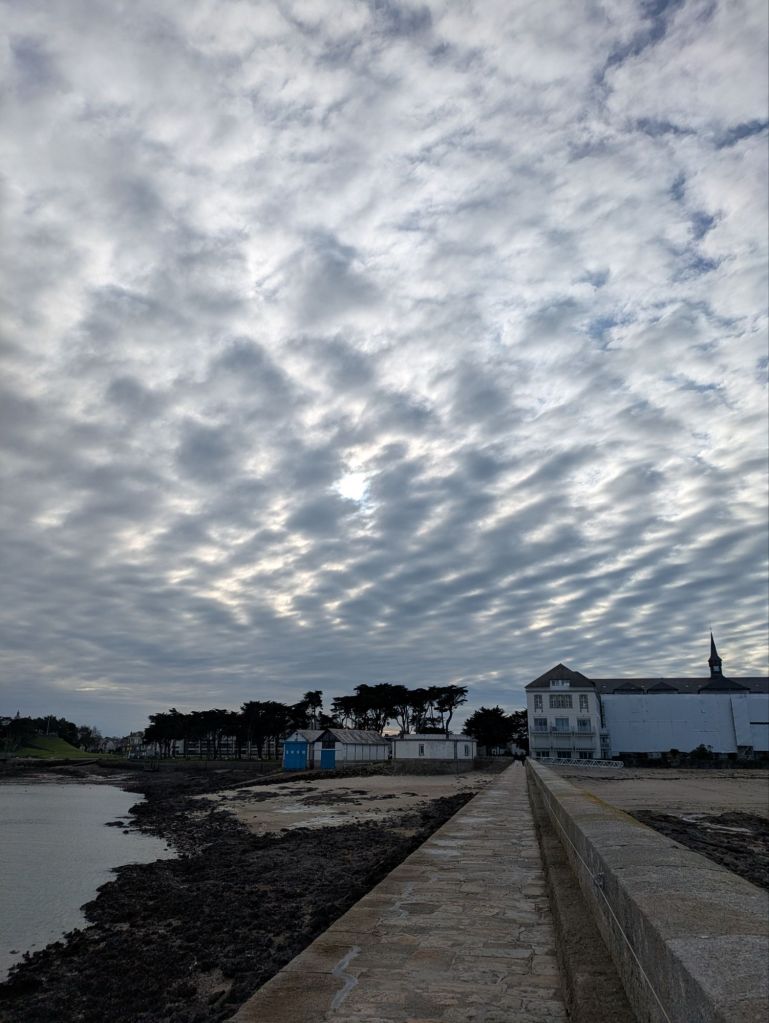
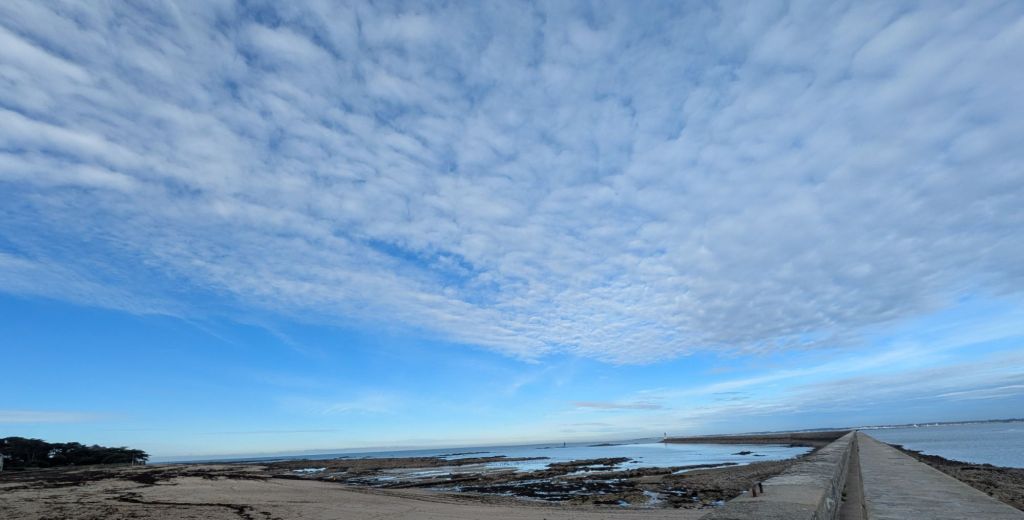
So we to recalibrate, took the train out to see the Atlantic Ocean the horizon, on a cloudy and cold winter day.
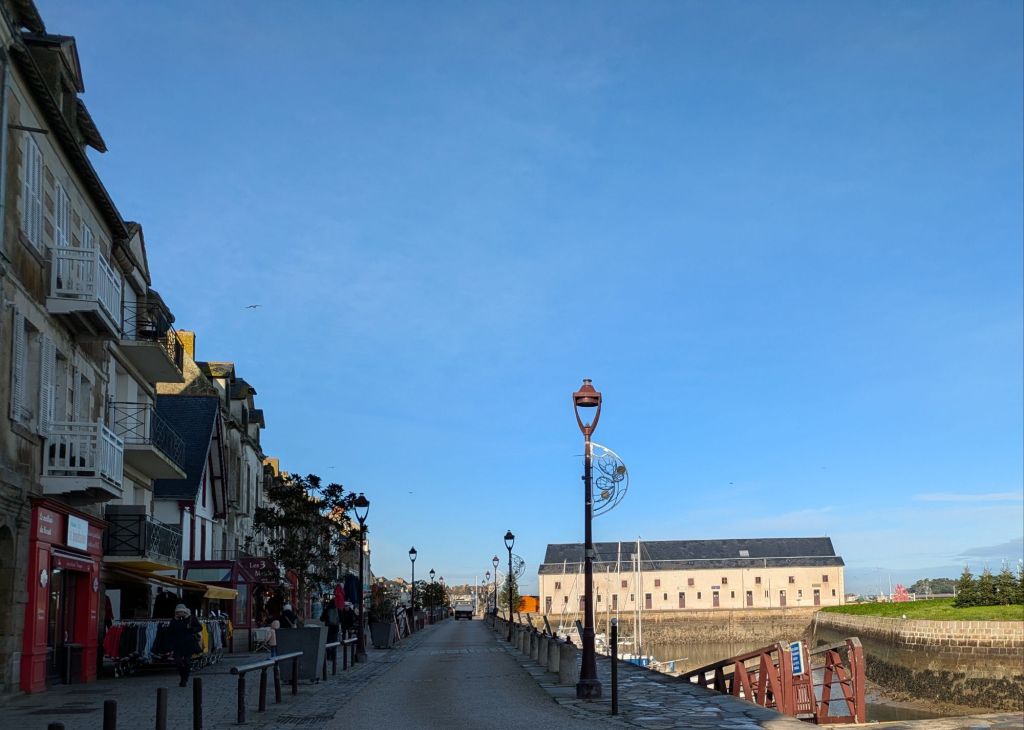
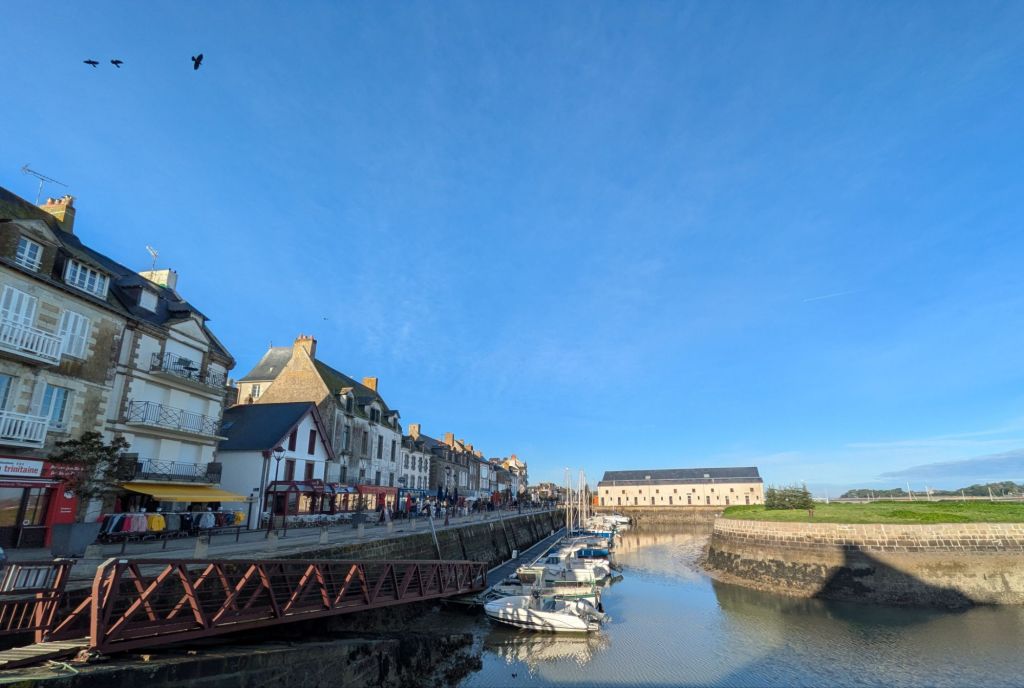
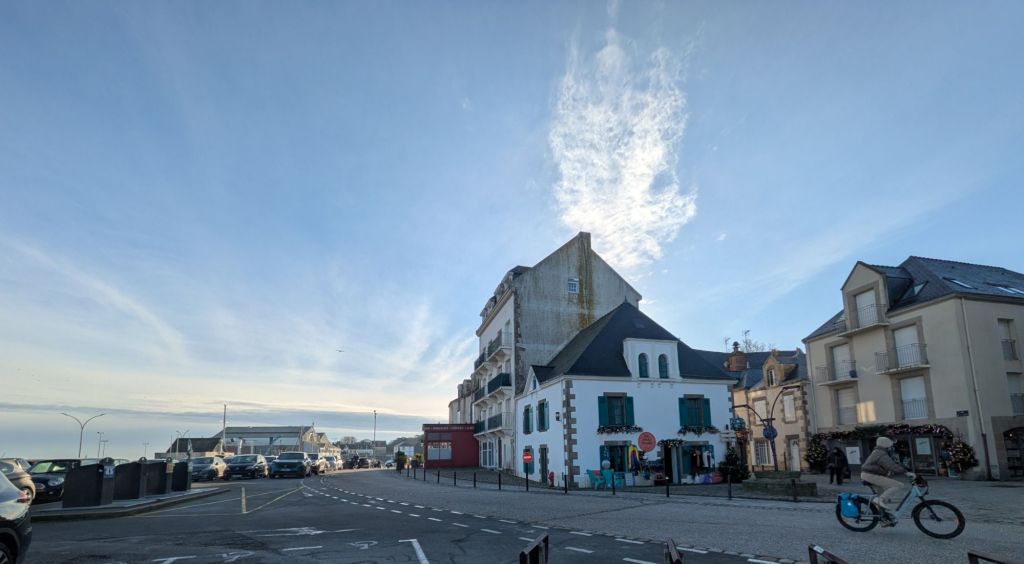
Le Croisic is a beautiful quaint town. It’s winter, so it was quiet. I bet the place is bustling once spring arrives!
It was a quiet and lovely day. We are exploring out from Nantes, and there’s lots to see and do.
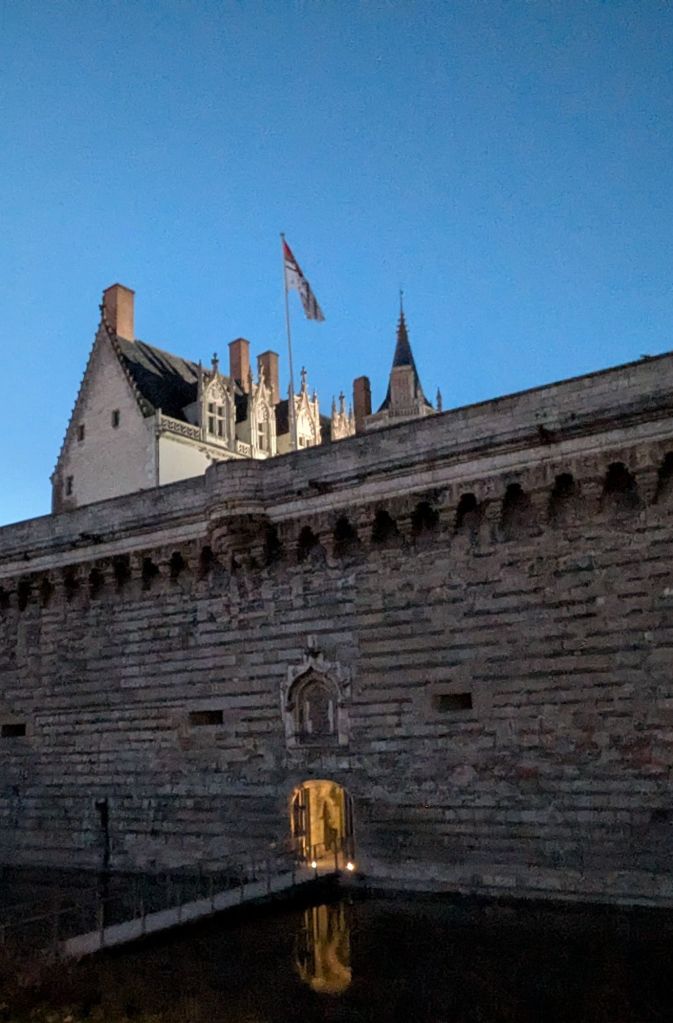
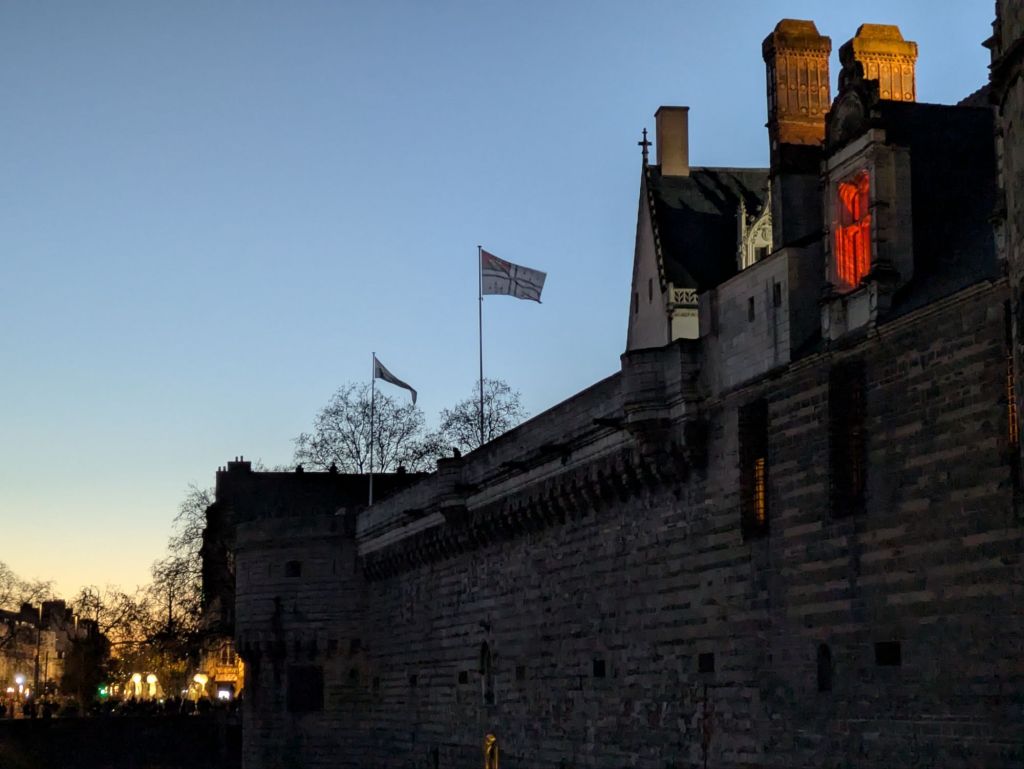
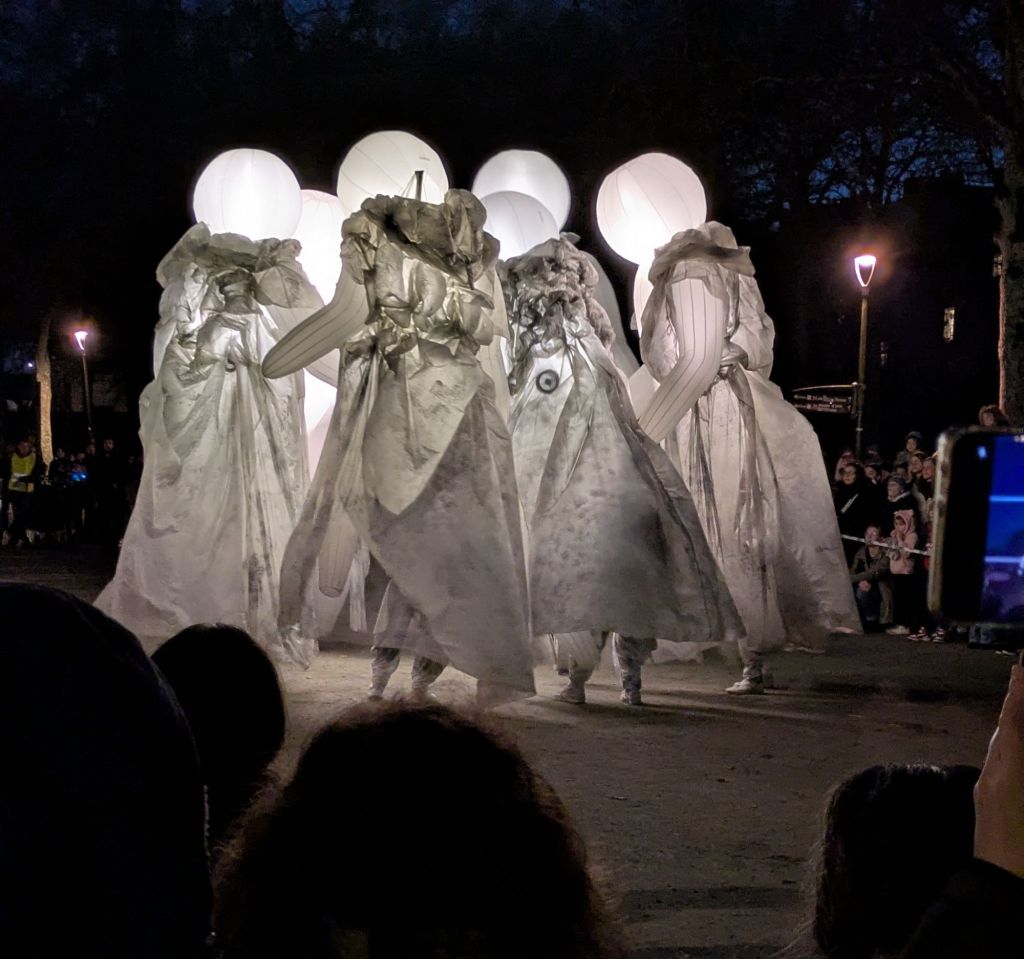
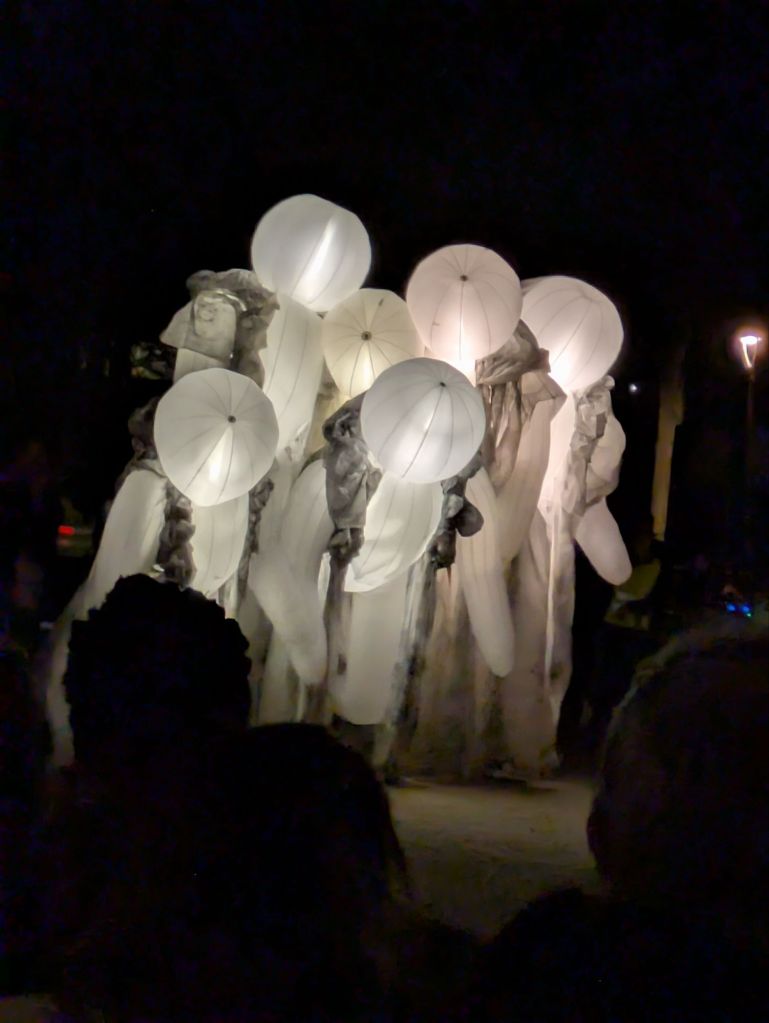
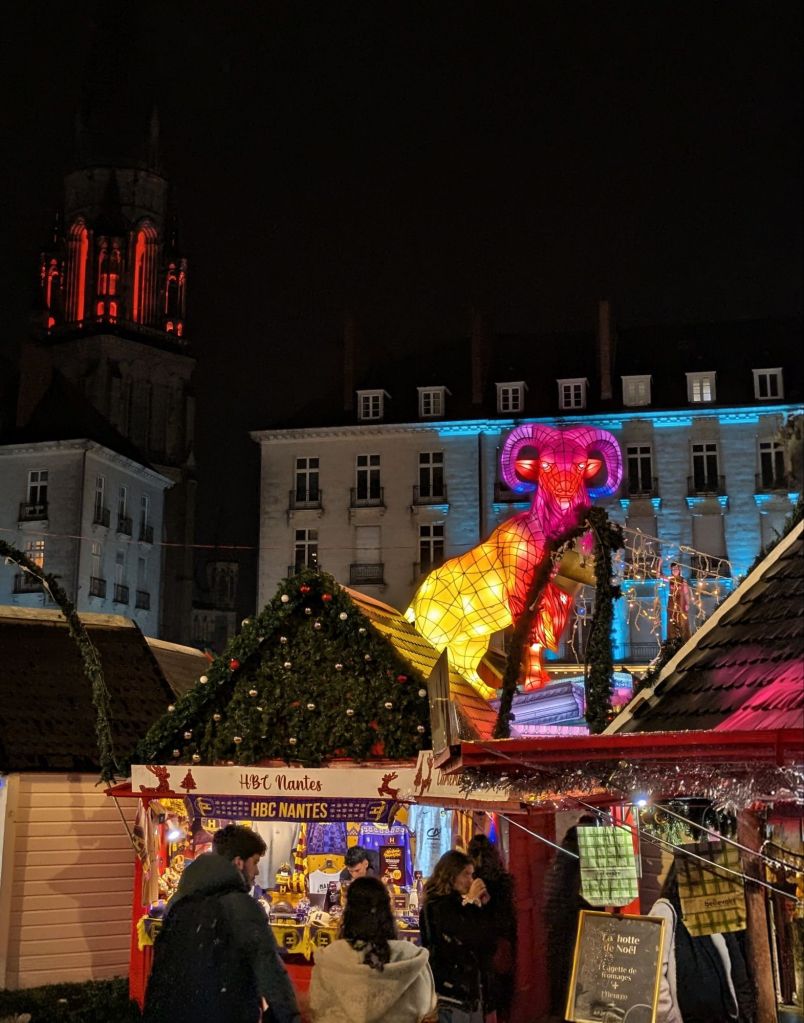
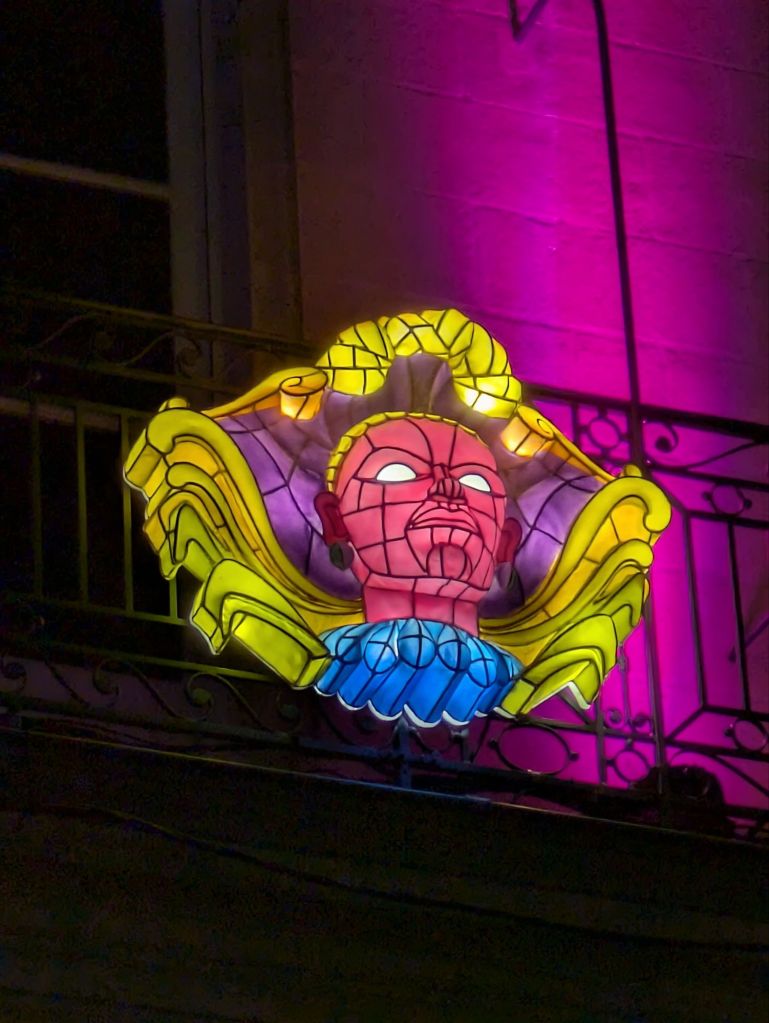
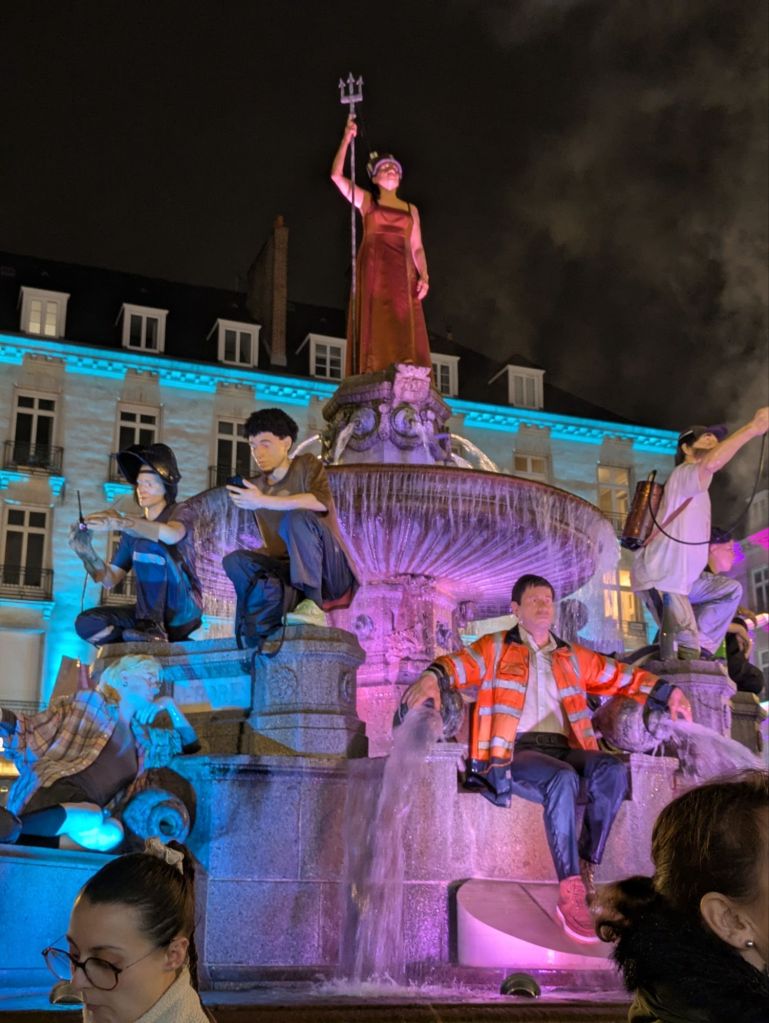
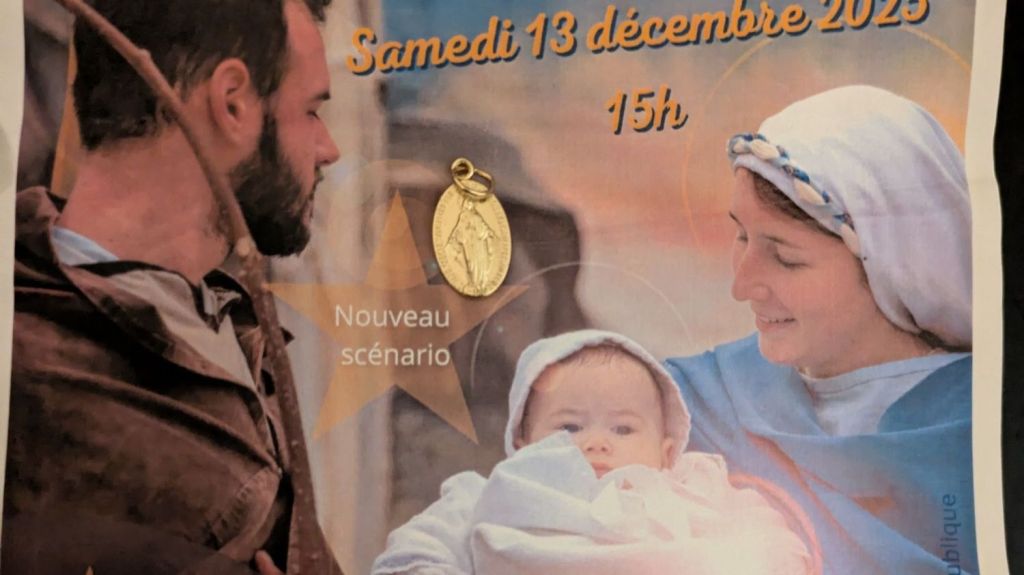
It was so fun to be out with hundreds of people, families, old and young, following these giants puppets from the cathedral and around the castle. At the end they did a dance together. A truly magical night!
Without fear, enjoying art together, in community.
Foggy winter mornings don’t stop people from getting out and about. The scene from our window. Today we are expecting 2 out of 7 boxes to arrive at our friends apartment. This delivery has turned out to be a major pain, but she graciously lets us take showers and hang out until they arrive. Then we will tote them to her storage space until we find our own apartment. At the Airbnb we are staying in, we have no storage options. Good news is that I got my french phone number and we activated our visas, thanks to our host who graciously allowed us to use this address as a permanent one. Now I think we have what we need to apply for a bank account. Once all that is done we can fill out the government papers, the “dossier” in order to rent an apartment. That will be our next big step. On the water heater front, repair persons will be here again today. Fingers crossed that we will have heat and hot water soon! Other than that we’ve been walking a lot and getting little things we need, like finding mirin, rice wine vinegar and a dish drying rack! Essentials for life, IMO. 💙 🤍 ♥️
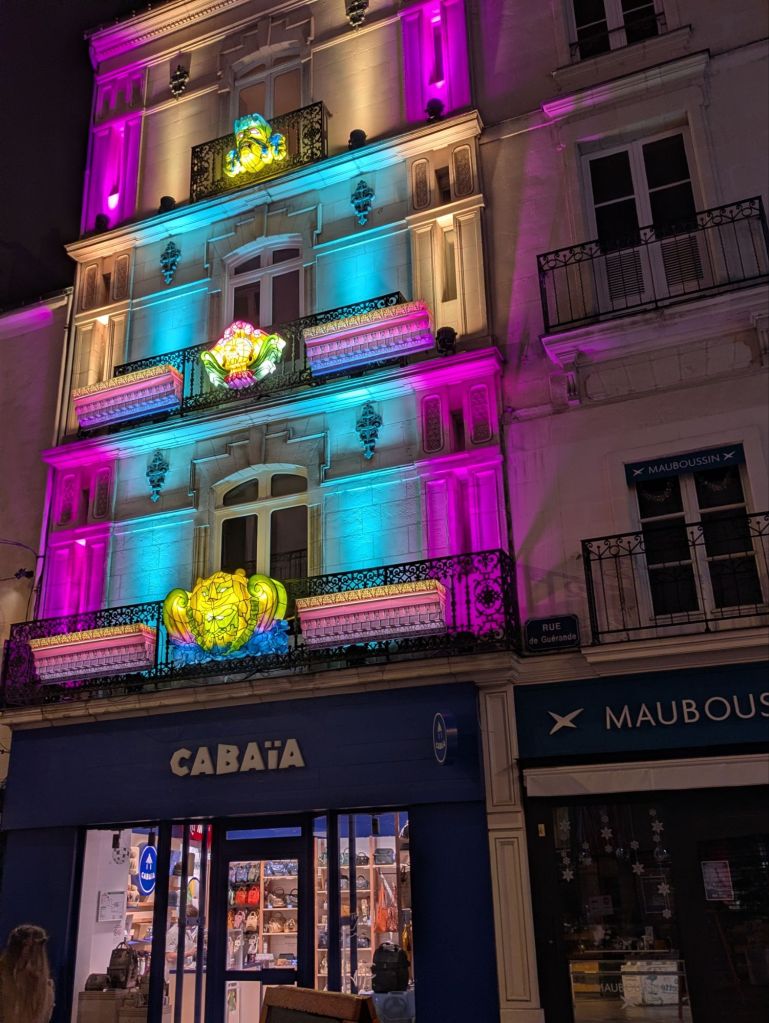
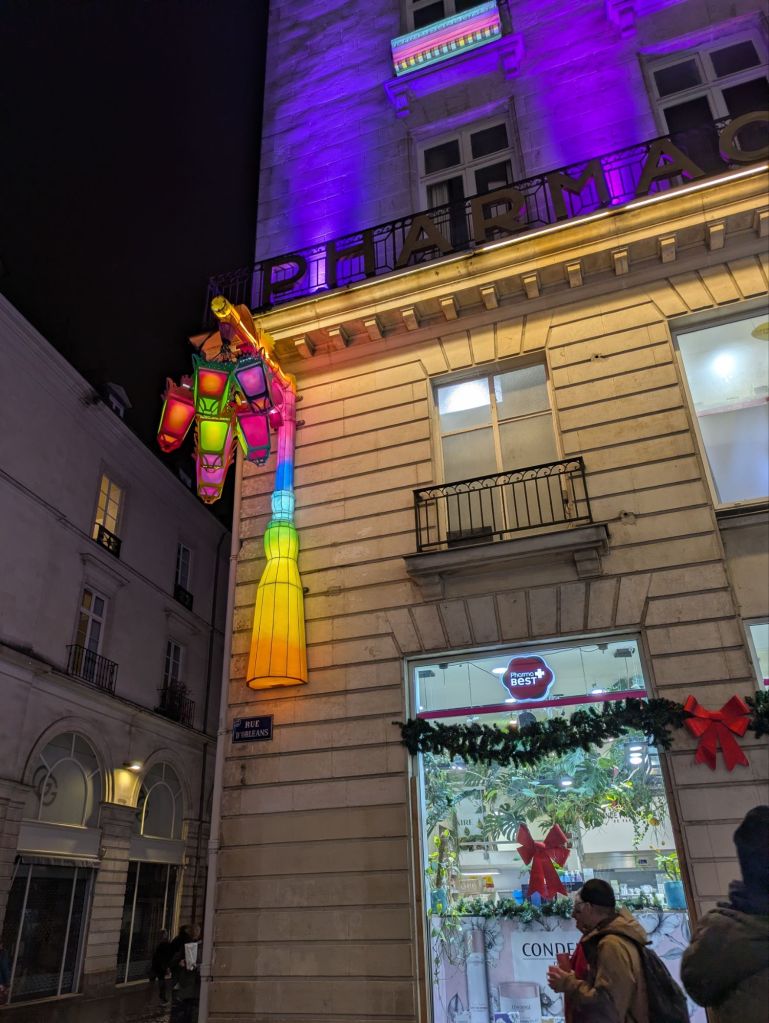
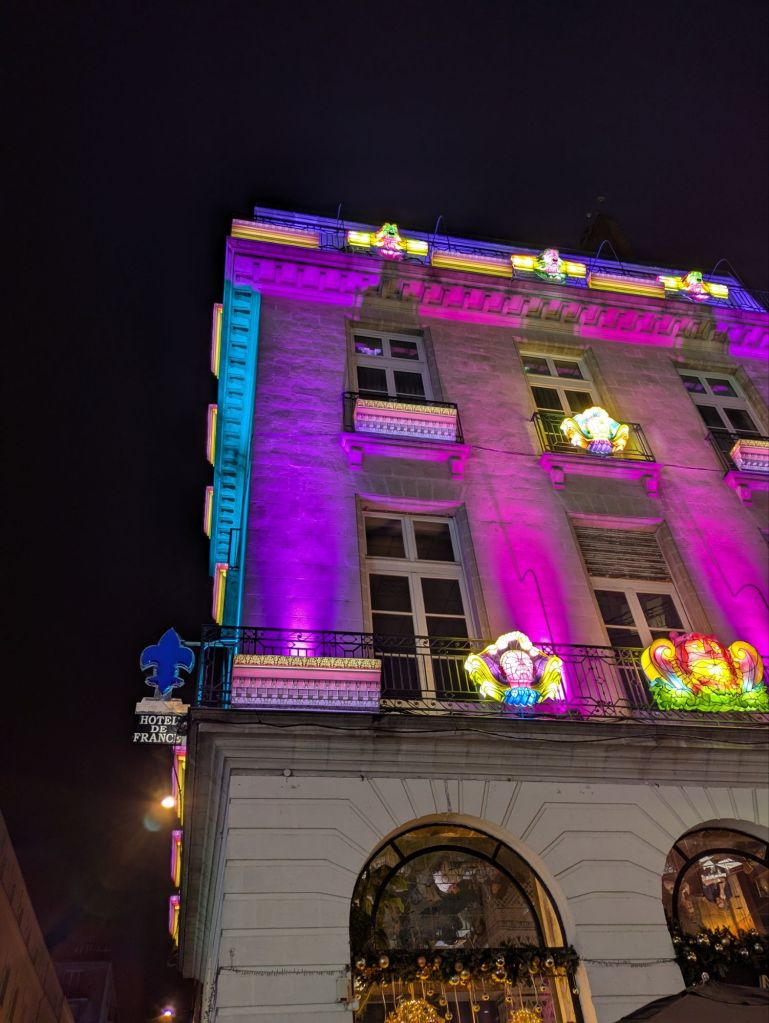
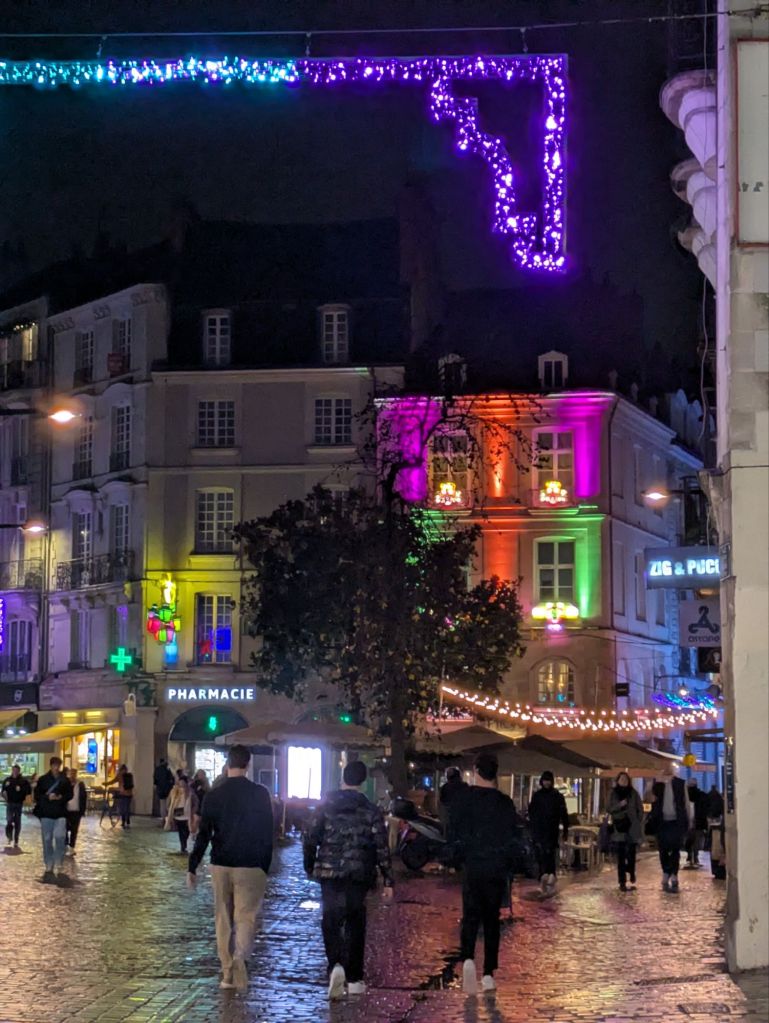
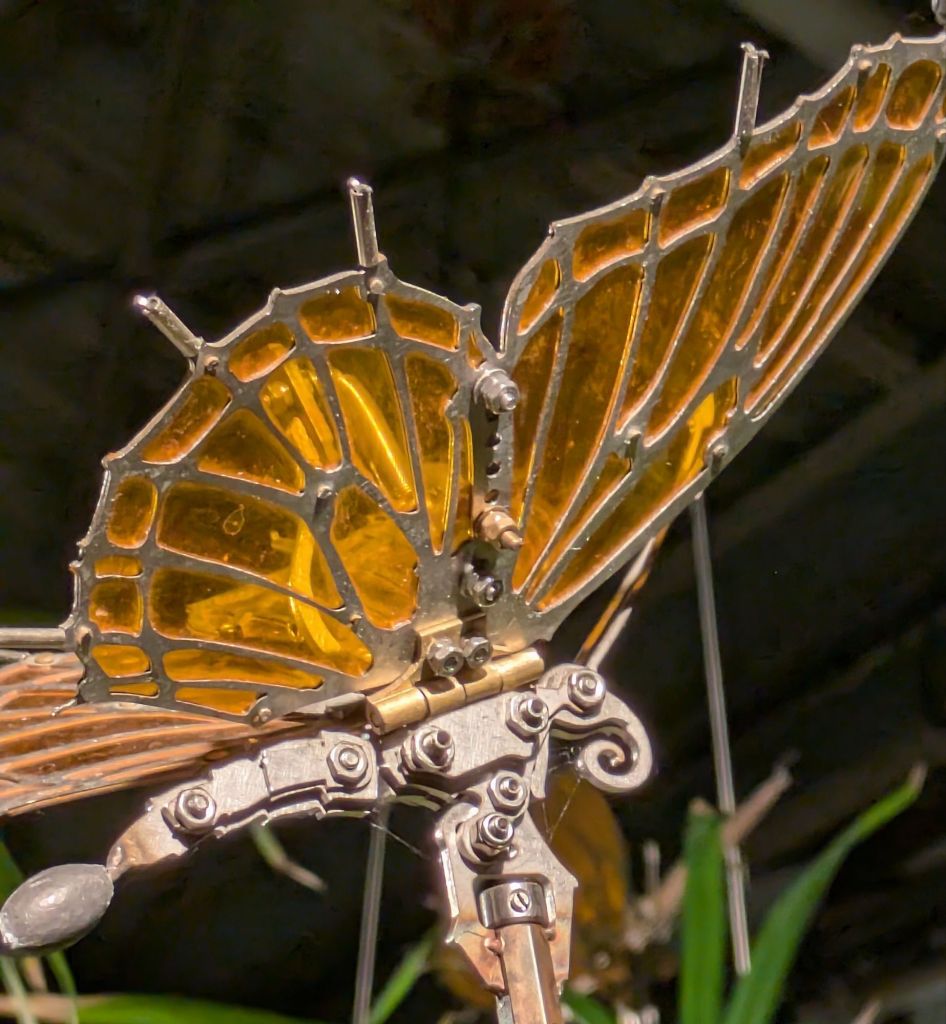
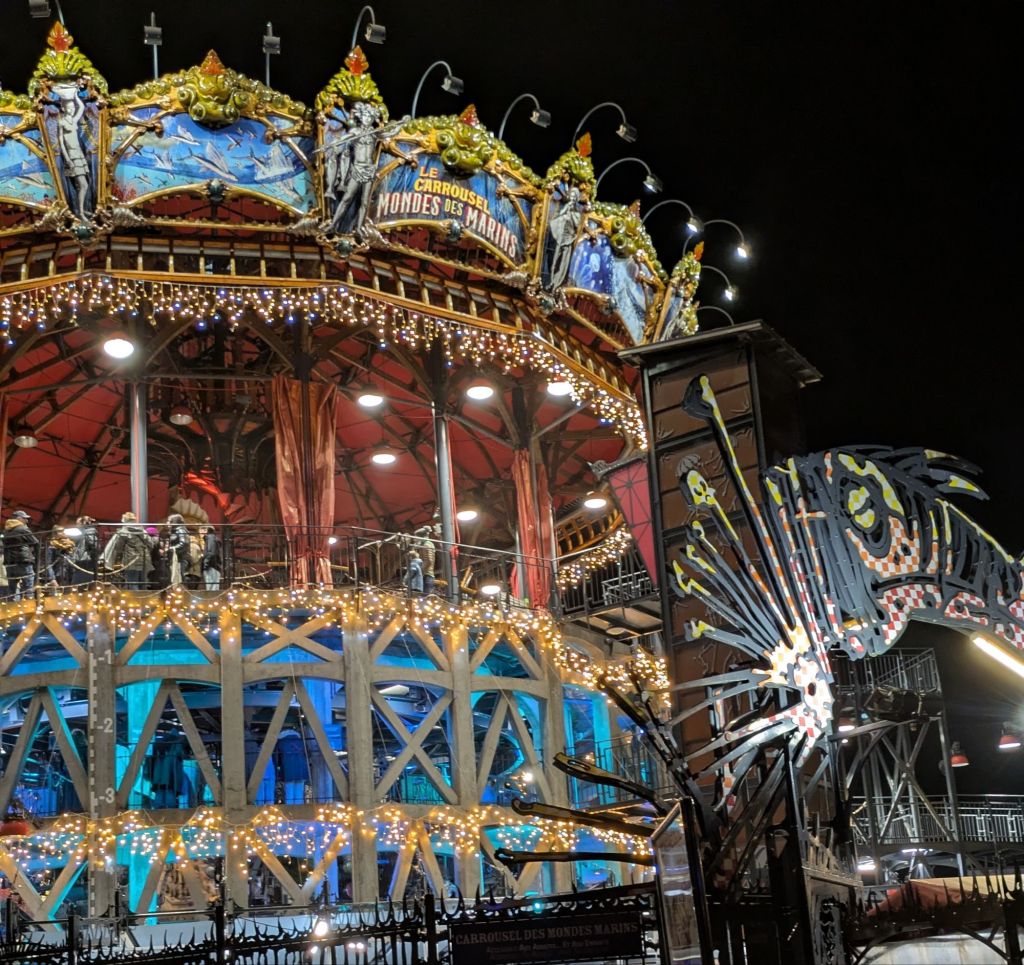
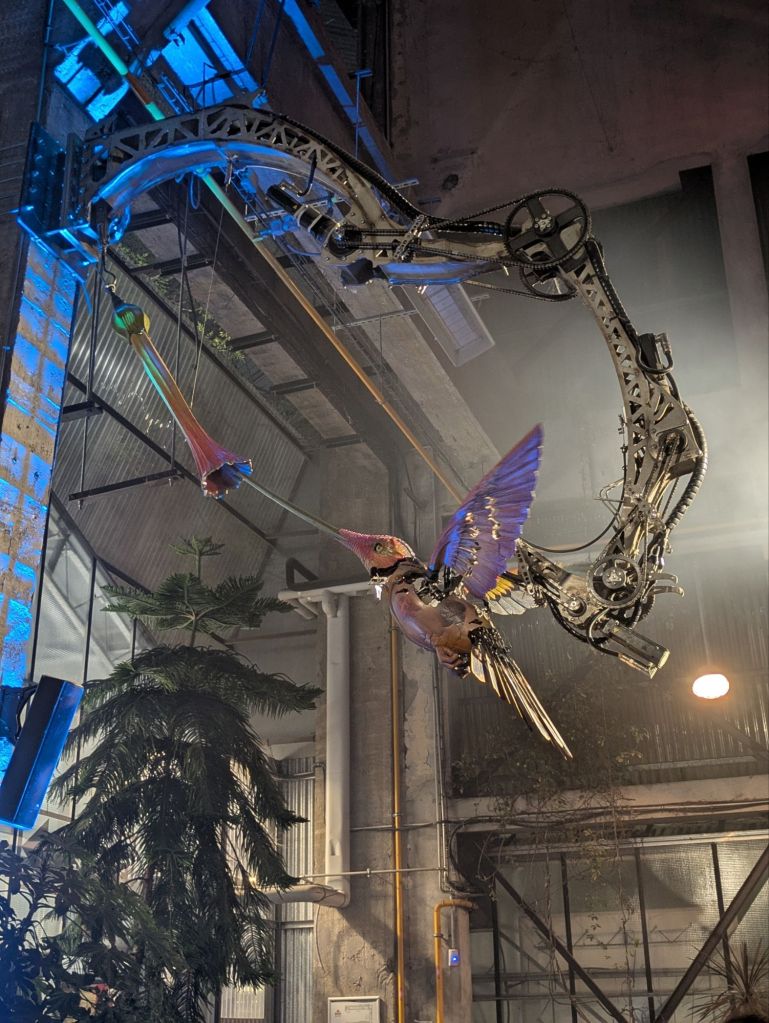
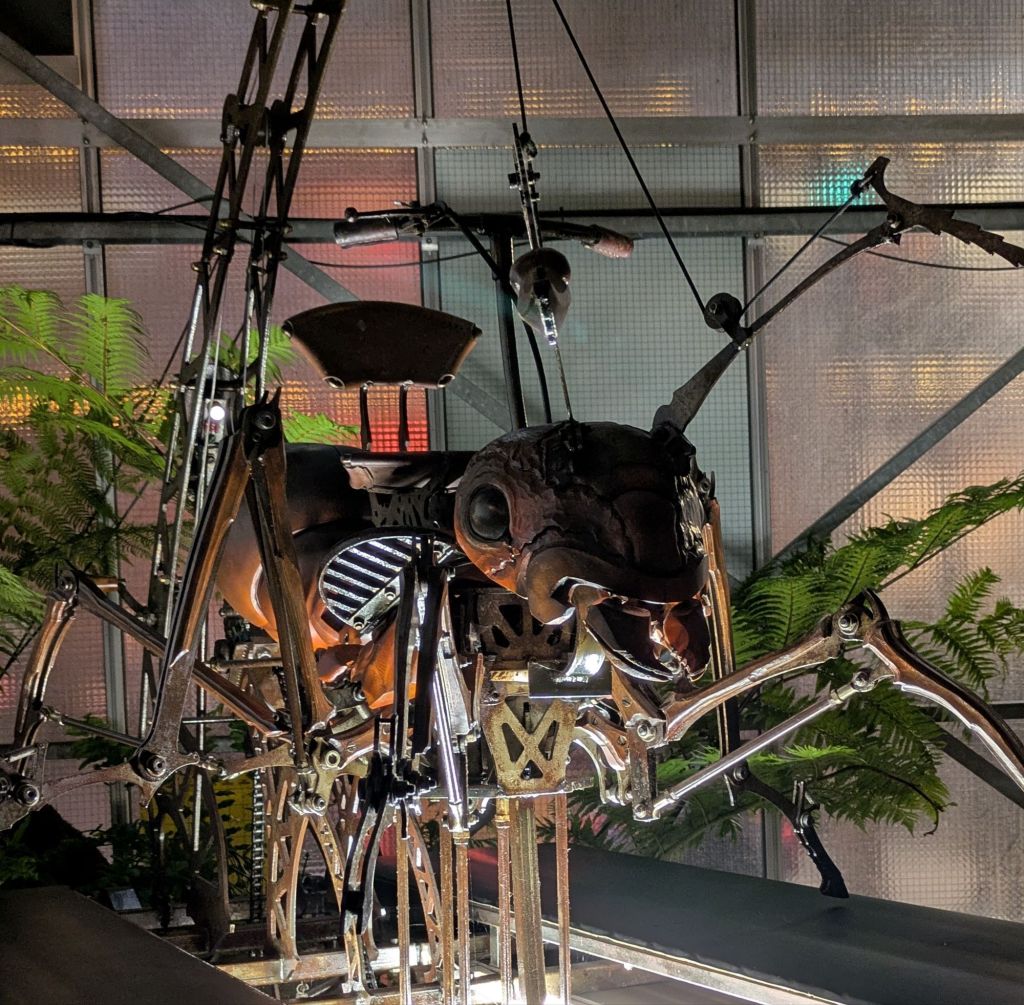
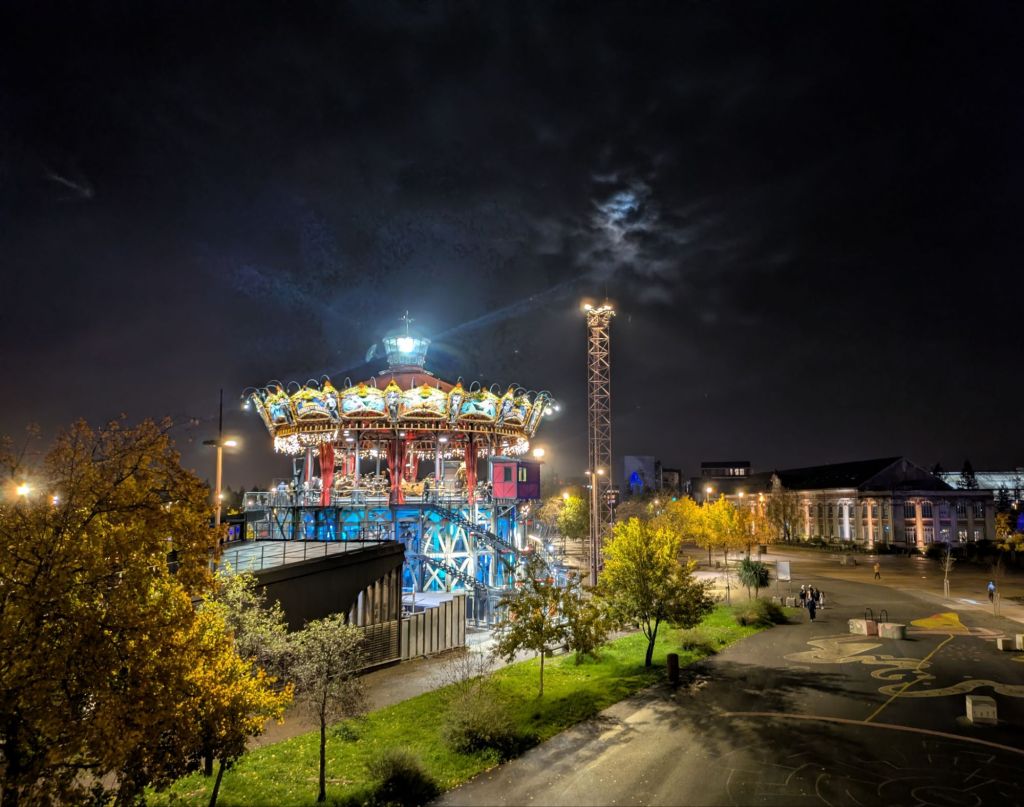
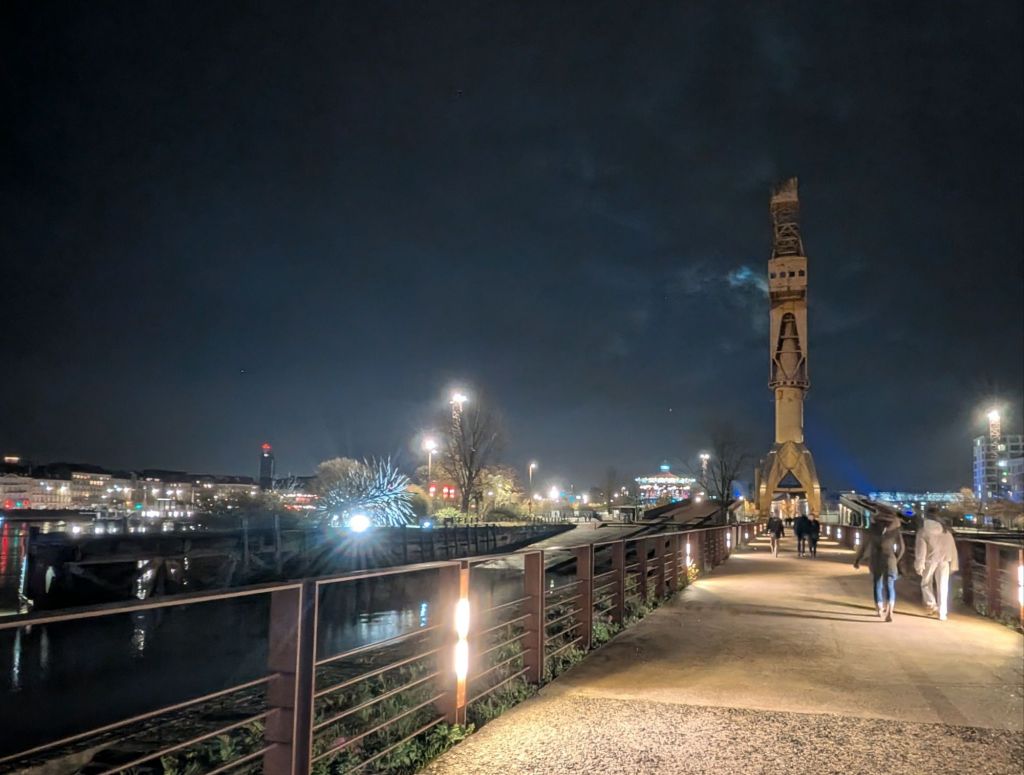
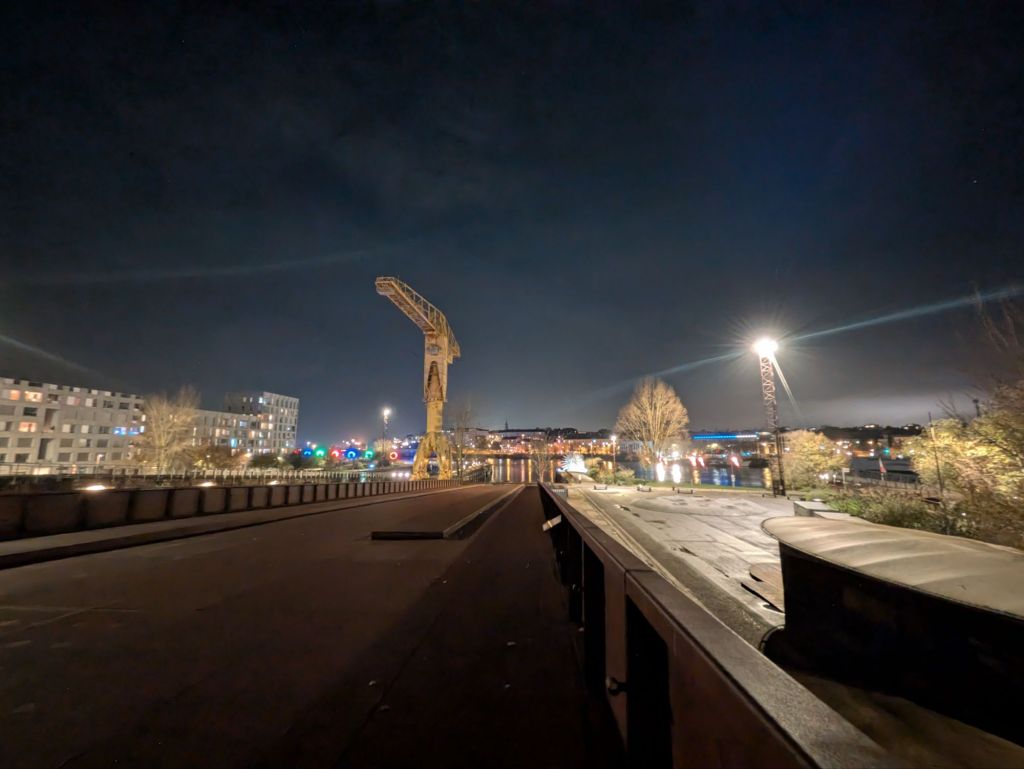
Tonight we travelled to the Ille de Nantes to visit these wonderful enchanting machines. I was awestruck and amazed. The whole town is lit up with festive lights, people are out having holiday fun and the town is lively and bright.
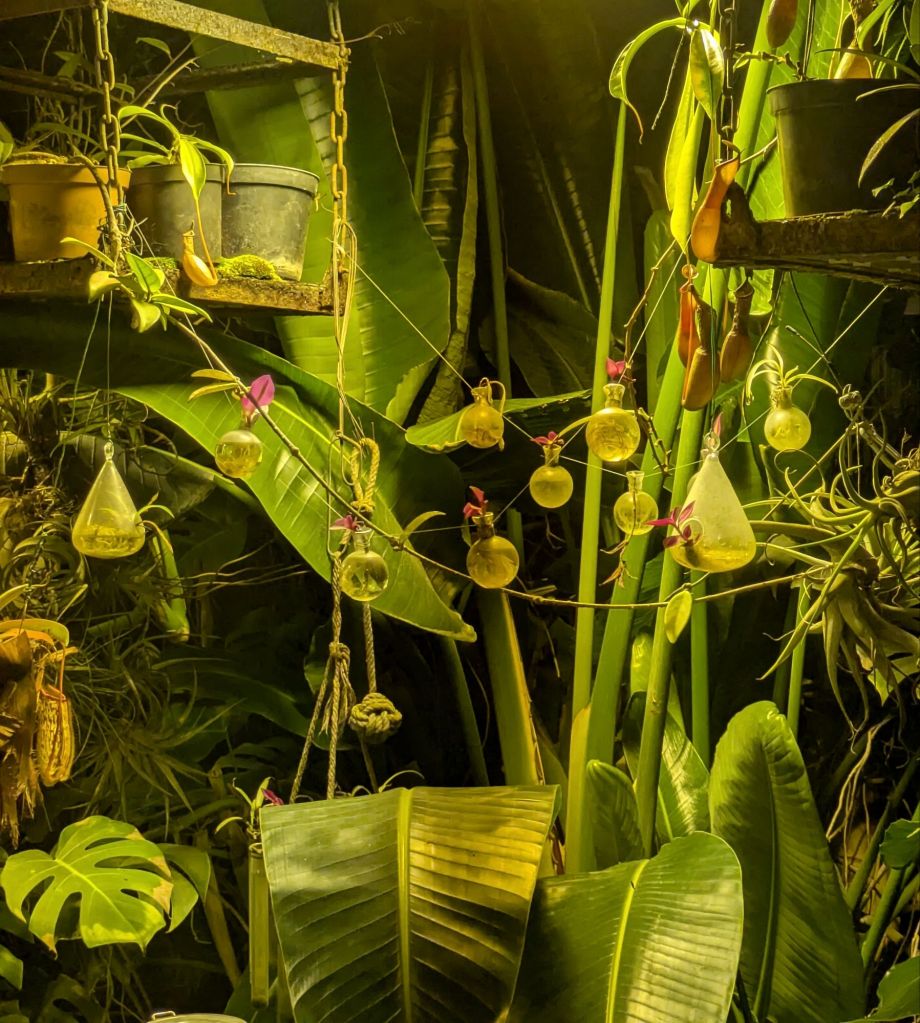
I just love the juxtaposition and harmony between the natural world and machinery. This environment and the machines that inhabit it are all inspired by Jules Verne, who was born here.
It was a good day, after finally getting some sleep, and time spent with good friends made the night even more special.
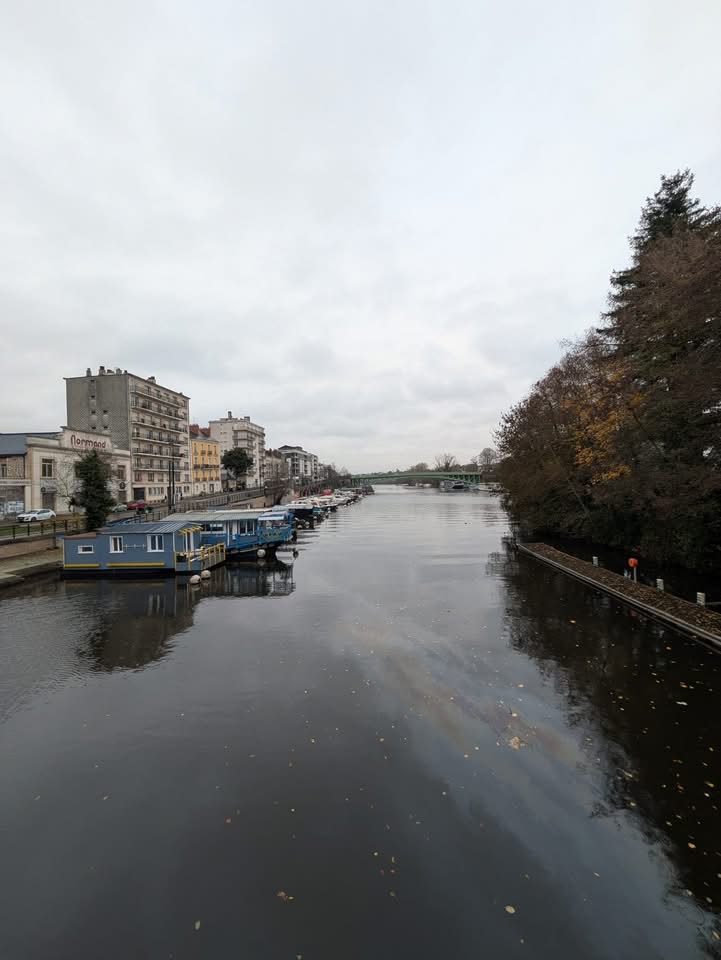
Moving to France sounds exciting. In reality, I am truly just exhausted. Can’t sleep, can’t stay awake, overwhelmed with details, tasks and requirements, to the point of paralyzing anxiety. But who’s complaining? For now we have no hot water, but thankfully our landlord is quick to address the problem with a blocked flue from the water heater. I bet the last person staying here didn’t even report it to him. Yesterday the plumber came and today the flue cleaning guy is coming, or whatever you might call it. So hopefully the problem will be fixed, and luckily we can shower at MM’s place, just an 8 minute walk away. Today we left the apartment early, for a gorgeous walk along the river, to their apartment to await the delivery of Terrys bicycle. So it’s a very different mindset, moving versus vacationing. Our main focus is not seeing the sights, but stocking the apartment. And to be honest, it is such an immense joy to have a real kitchen and new vegan products to explore, that I look forward to cooking our meals and don’t feel any need to eat out. All that will come later. Like tomorrow!
We have a full day of fun things tomorrow, so I’ll have less mundane things to report. In the meantime, mundane is the priority, as my anxiety is lessened when things are in place, and everything is new (light switches, stoves, washers) and there’s so much to do (activate visas, get eSIMs, make appointments with the bank to apply for an account, get address changes finalized, buy rain gear for cycling, find a yoga class, find a pool, etc etc etc)
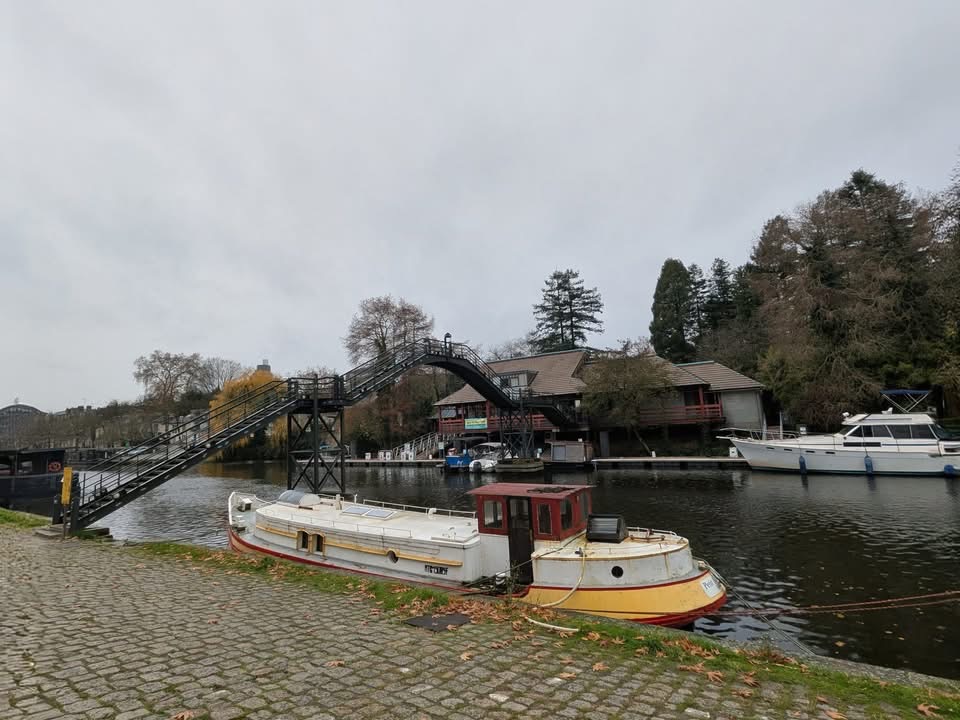
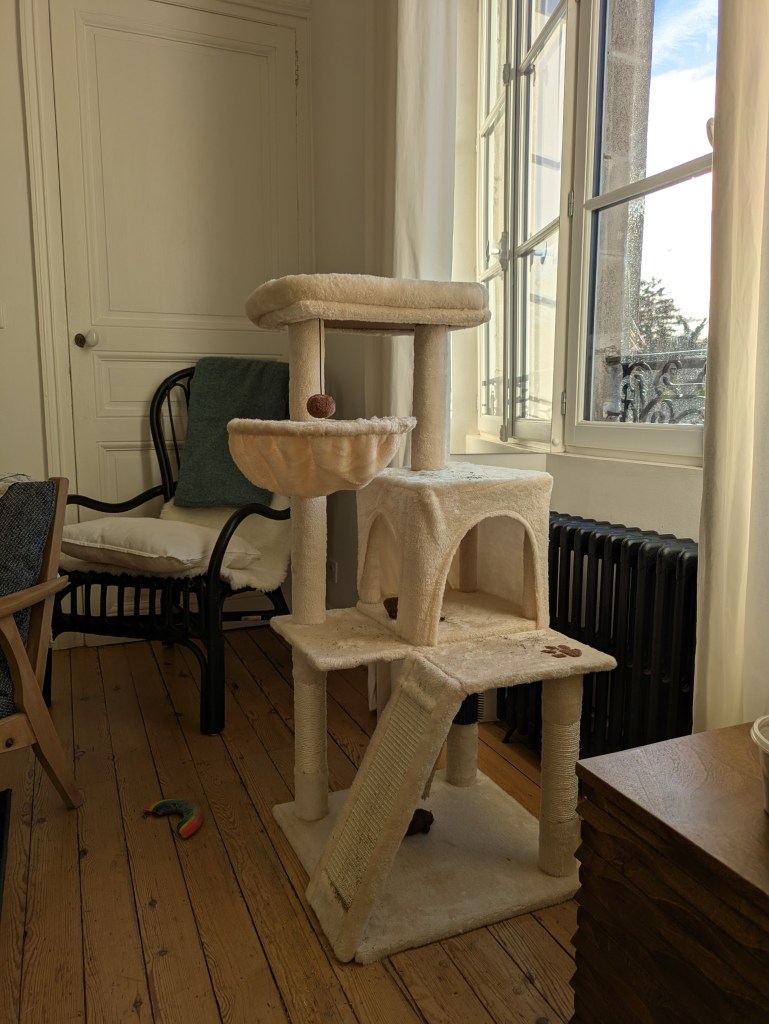
Today we returned our rental car and then walked back home. Along the way we strolled through the botanical gardens, found some CBD drops, a sweet consignment store and an organic food shop. We met the woman who lives in the boat across from us, and then cleaned our messy place, unpacked our suitcases, built a kitty tree and got ready for our host to stop by and show us how everything works. Tomorrow the plumber will come and hopefully fix the water heater. We really like it here. And it feels good to return the car and not have that to worry about Friday our boxes will be delivered and we will have bicycles!
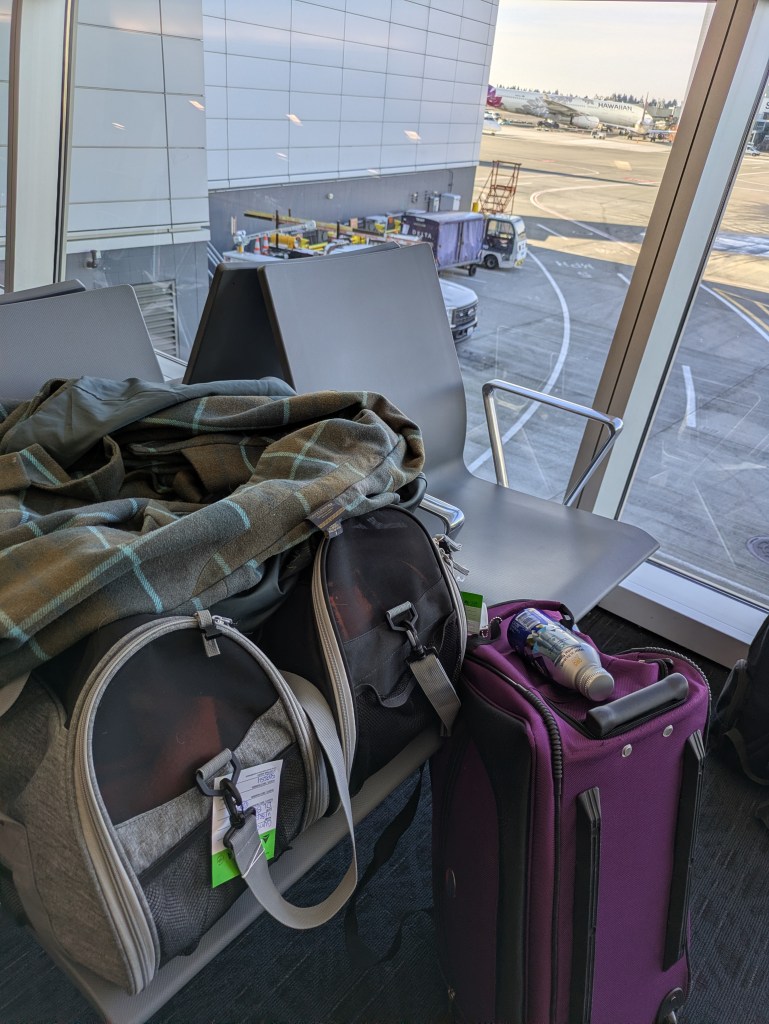
Although we arrived late last night, I’m considering this day one in Nantes… We slept, and woke up, and slept again. Finally got up around 1:30pm. But before you laugh, I was up from 3:00am to 6:30 emailing frantically regarding our shipped items, communicating with our friends back on Whidbey who are holding them, and the company, who for some reason didn’t pick it up today. Plus I was awake for a total of about 30 hours on travel day. So my brain is somewhat fried. We arrived to our very French apartment to no hot water, no shampoo or soap. One frantic cold shower later, and setting up a litter box for the kitties, we crashed. The best thing is that the mattress is huge and it is fucking awesome. No wonder we slept so long! Today we went and picked up the fabulous Miss M, and set off to IKEA, and the hugest supermarket ever. We got almost everything we needed (ie a litter box and rugs) and then went to the super market. Unfortunately for Miss M, who has the patience of a saint, we were like kids in candy land. Coming from a virtual vegan food dessert on Whidbey, this place was like Willy Wonkas factory! So many options! And a big cat tower scratcher thing to put together for the kitties. The vegetables here are just beyond amazing, and a whole huge section for vegan prepared foods; cordon blue, crocque monseur, shrimpette thingies, cheeses… I can’t even remember all the things we threw into our cart. Plus lots of beer to try and wines. Trash bags, laundry soap, shampoo, body wash, dish soap, cat food and litter… just everything you need to set up house… and it all came to about €300, which would be at least double that in the states. I can’t get how equitable the grocery prices are in the EU and UK. So that was our day. We wanted to take advantage of having a car while we do. Tomorrow we return the car and will finally have a chance to get out in the neighborhood to explore on foot. Our boxes arrive on Friday and we’ll have bicycles. I feel almost dizzy, whether it’s from travel or just the sudden upheaval… or maybe just from the fact that we have arrrived. One other bit.. we have zero French vocabulary. We tried to do some study before we left the States, but honestly, my brain couldn’t cope with one more thing. So now we have to ask… everyone. But everyone goes absolutely out of their way to be kind and helpful. It’s really wonderful. So tonight I cooked our first meal, and wow, just so good. It turns out that we are super close to the biggest open market in the city, so that will be our go-to for fresh ingredients in the future. Starting over from scratch… it’s stressful, bewildering, overwhelming and lots of hard work… but worth it! I feel like tomorrow is really the beginning of getting to know our new home.
Welcome to our journey. We decided to leave after the last election and began actively working on it in February of this year. I’ve long felt that there is no place for me in the United States, for many reasons. The death of our democracy, and more specifically the number of people who support, promote and enable the current criminal-in-chief, just amplify the urgency.
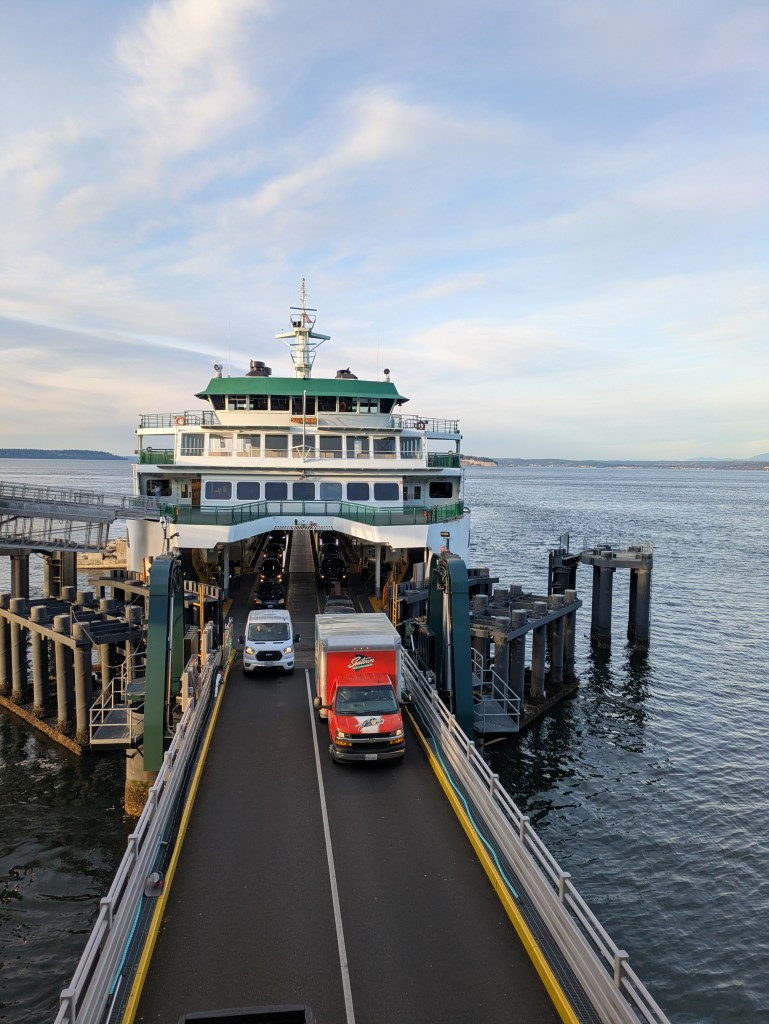
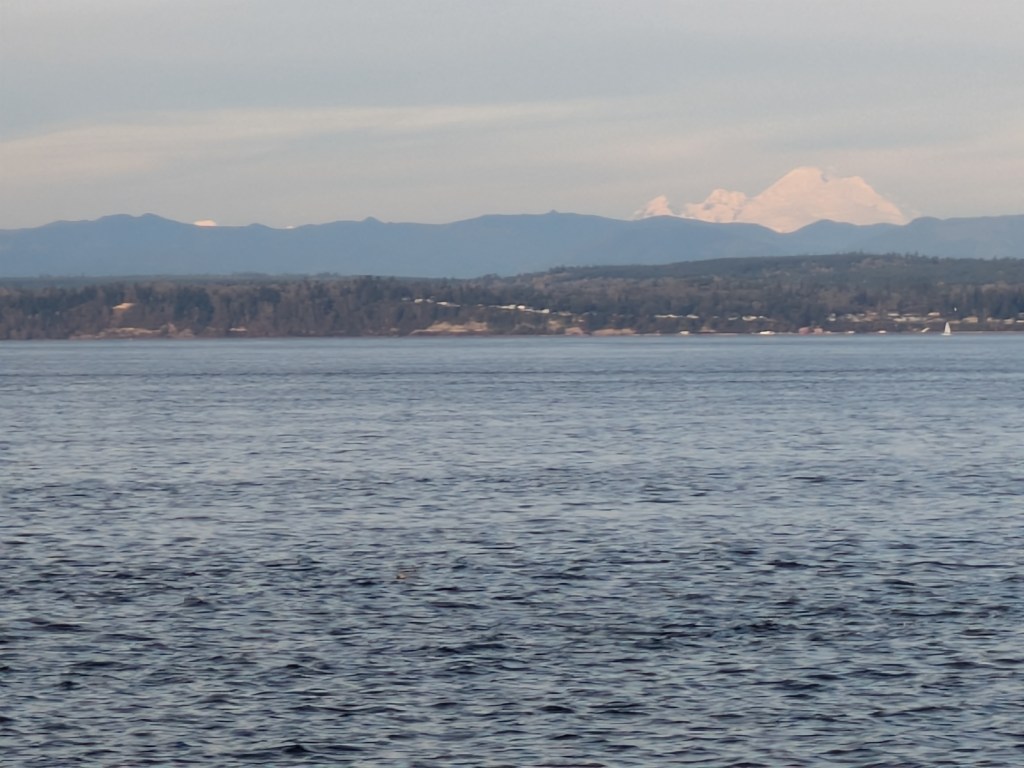
Whidbey was an important step. The community and the friends we had there will always be in our hearts. We were challenged in so many ways, both individually and as a couple. And there is so much I am grateful for: it’s where I became an artist. We left behind pieces of our hearts, especially for our families of deer and families of orca. And the beauty of the land, beyond compare.



























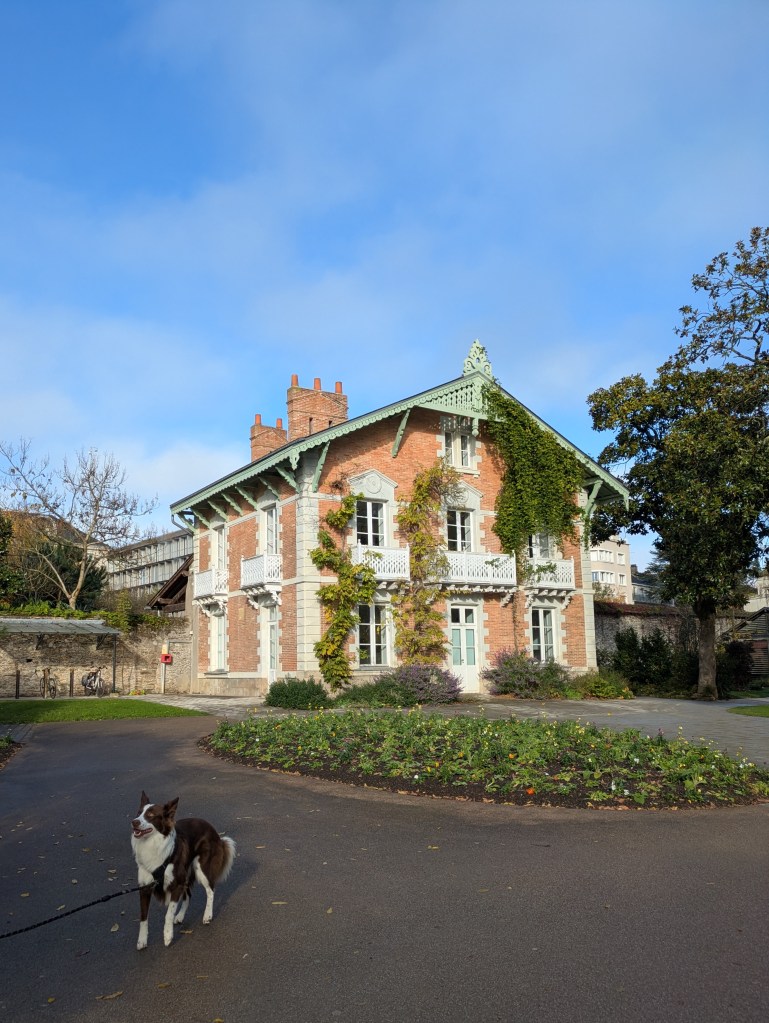
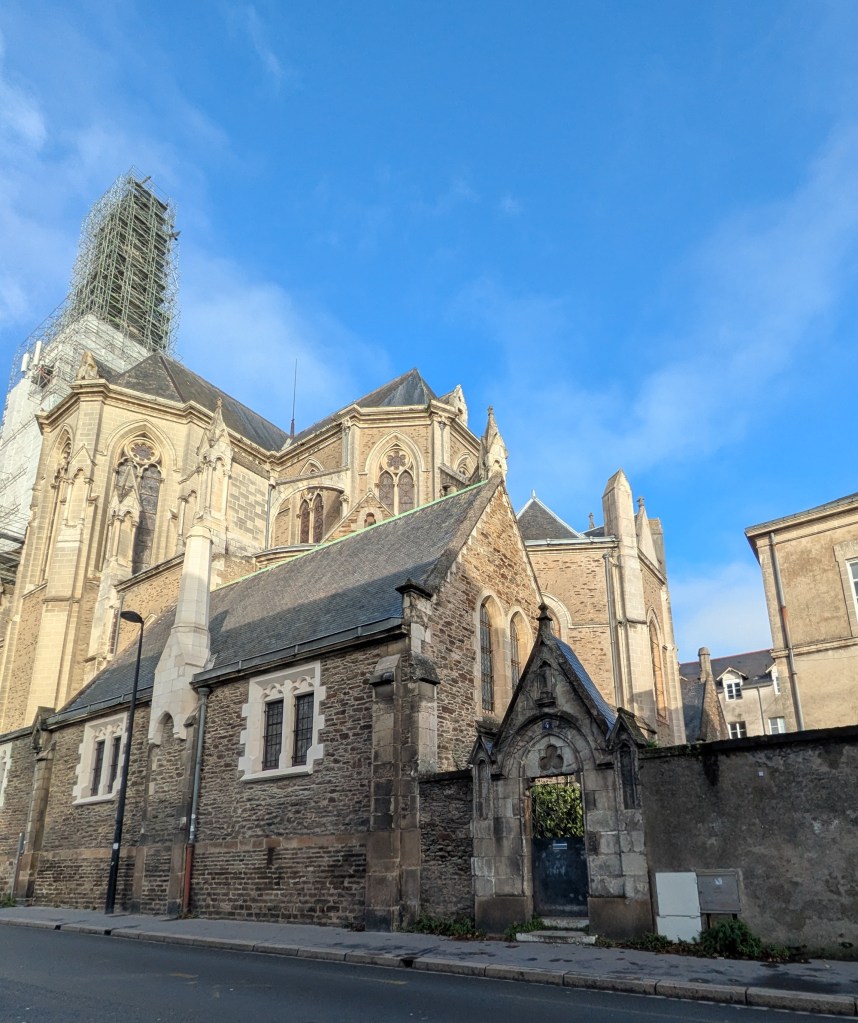
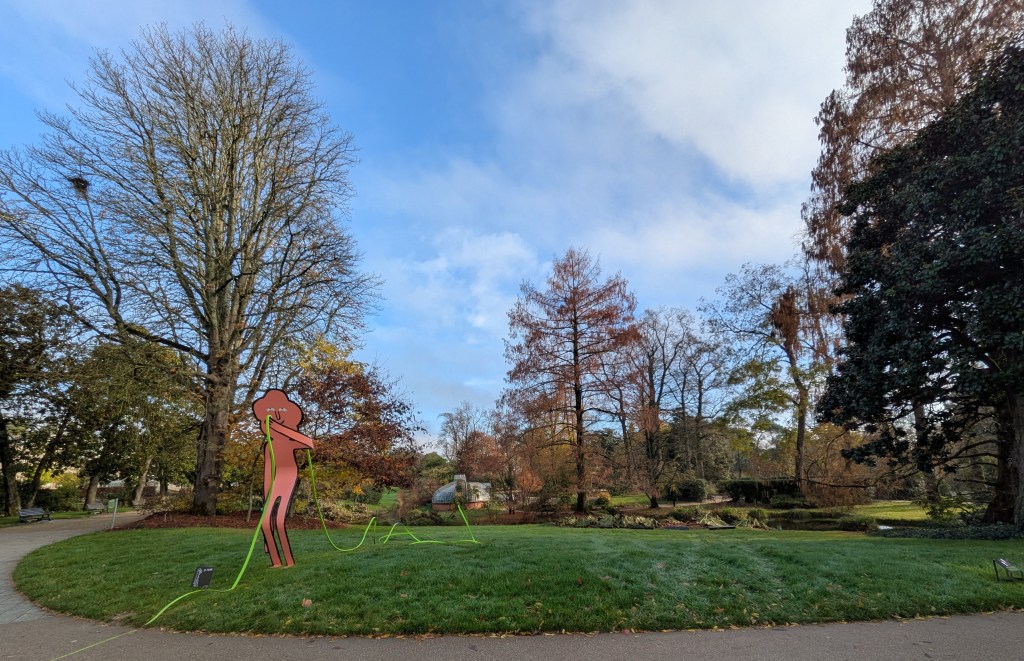
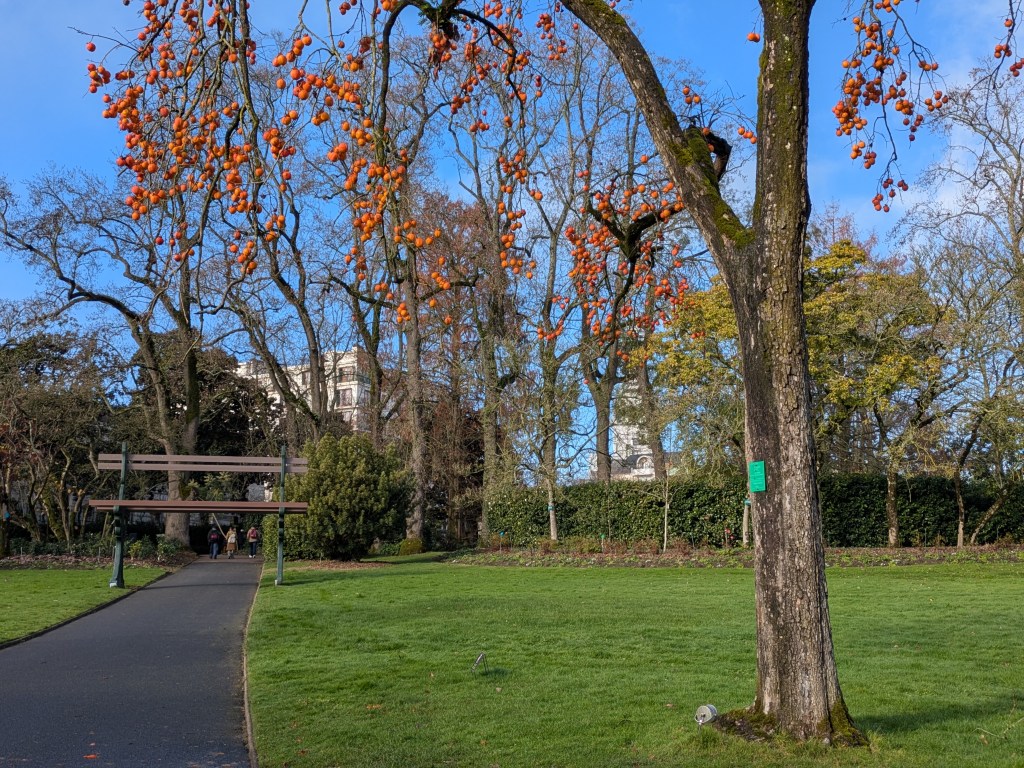




 Our Big Move To France