We took the train to Le Mans, city of the famed 24 hour car race.
We went to continue our trail of Norman kings and queens of England, in an area named Citê Plantagenêt. This part of the city was built within a Roman wall which was constructed between the 3rd and 4th centuries CE.
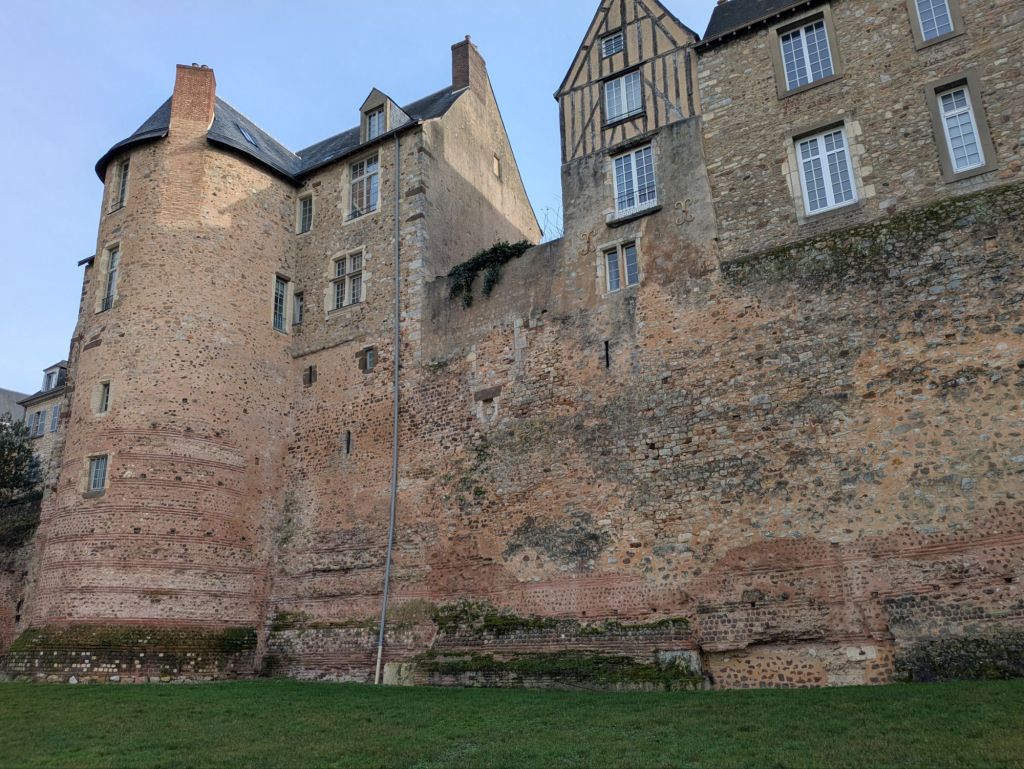
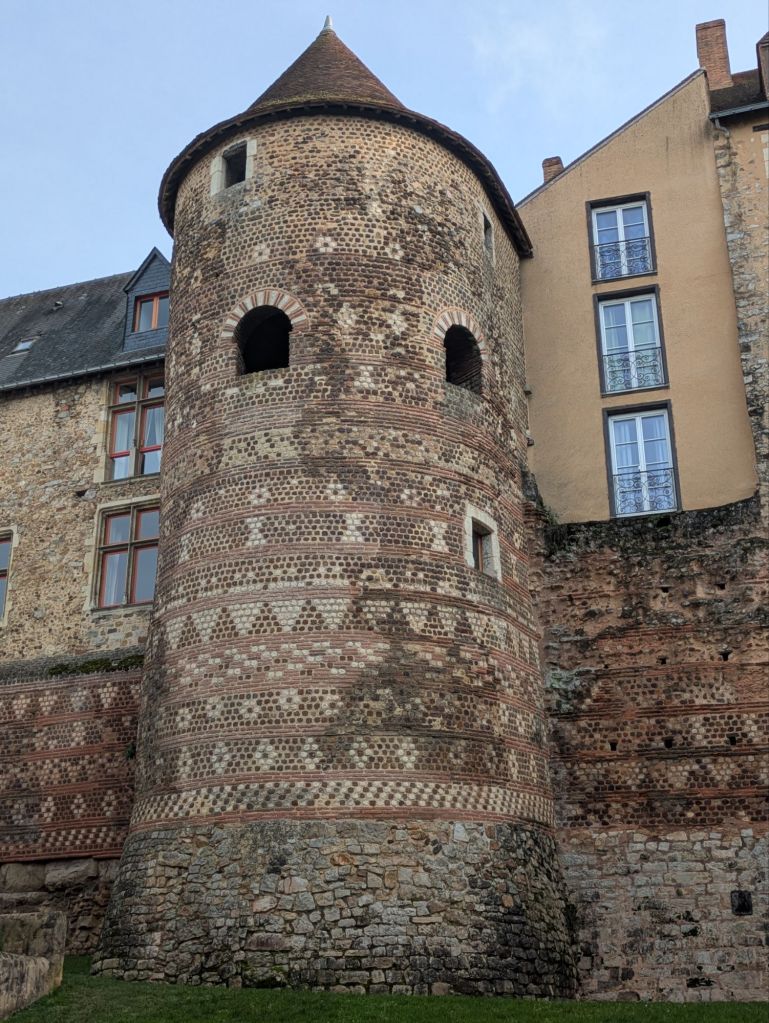

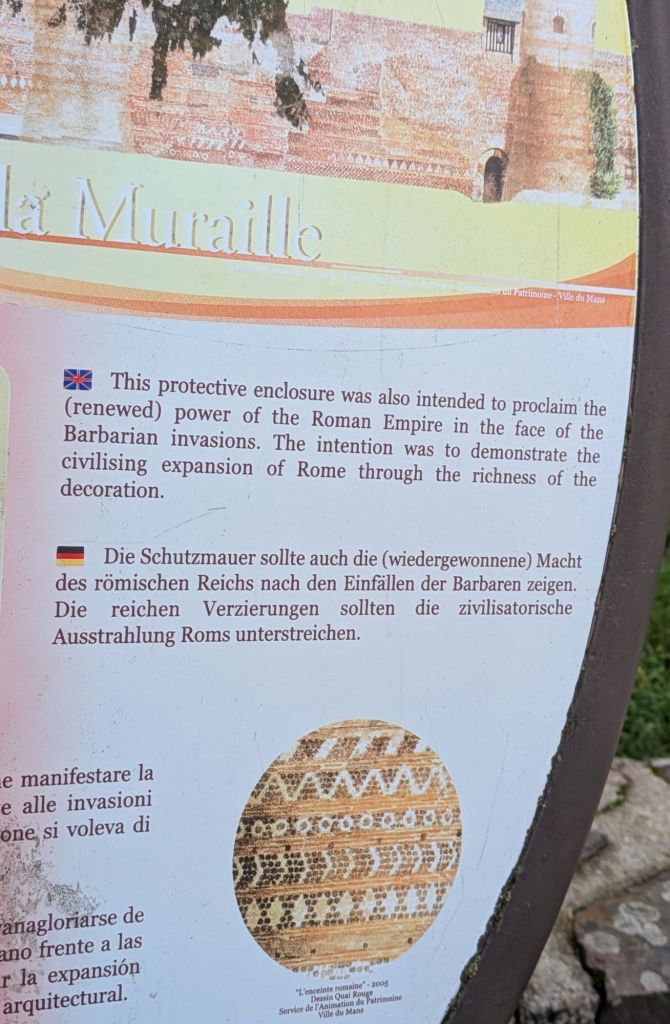
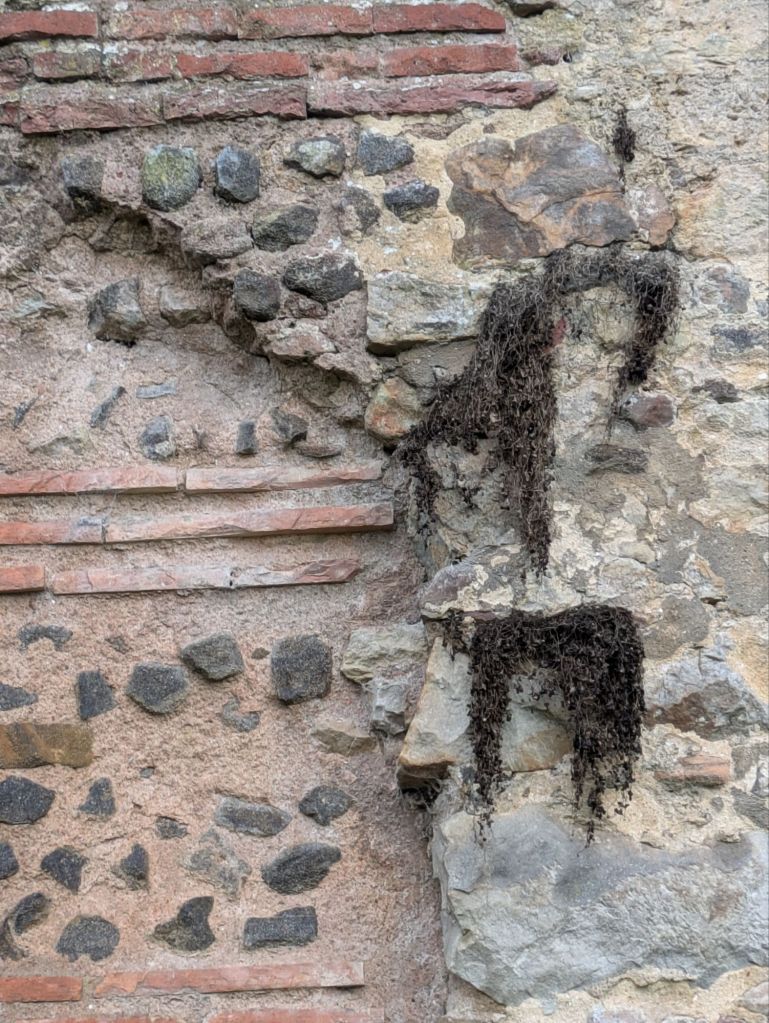

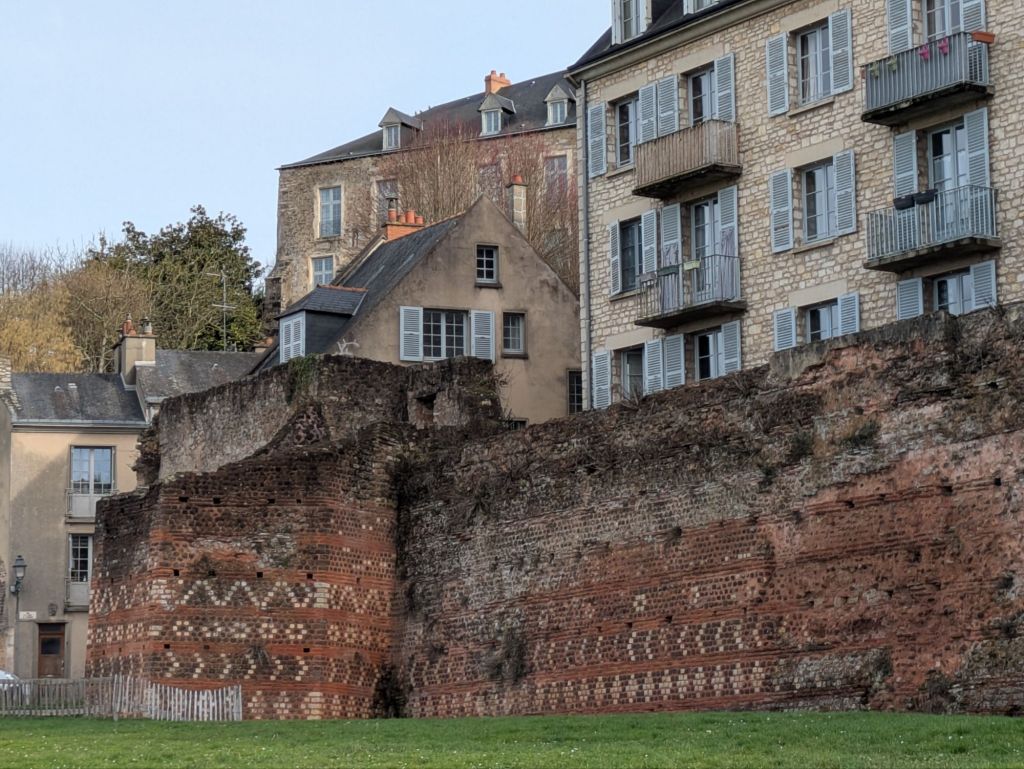
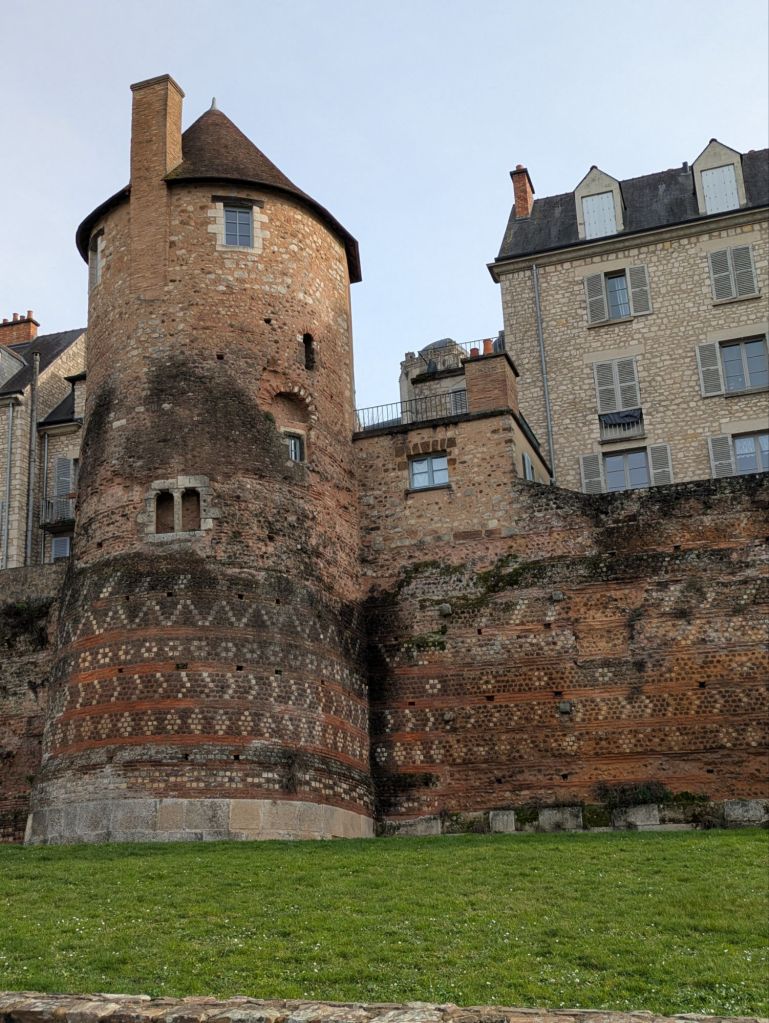
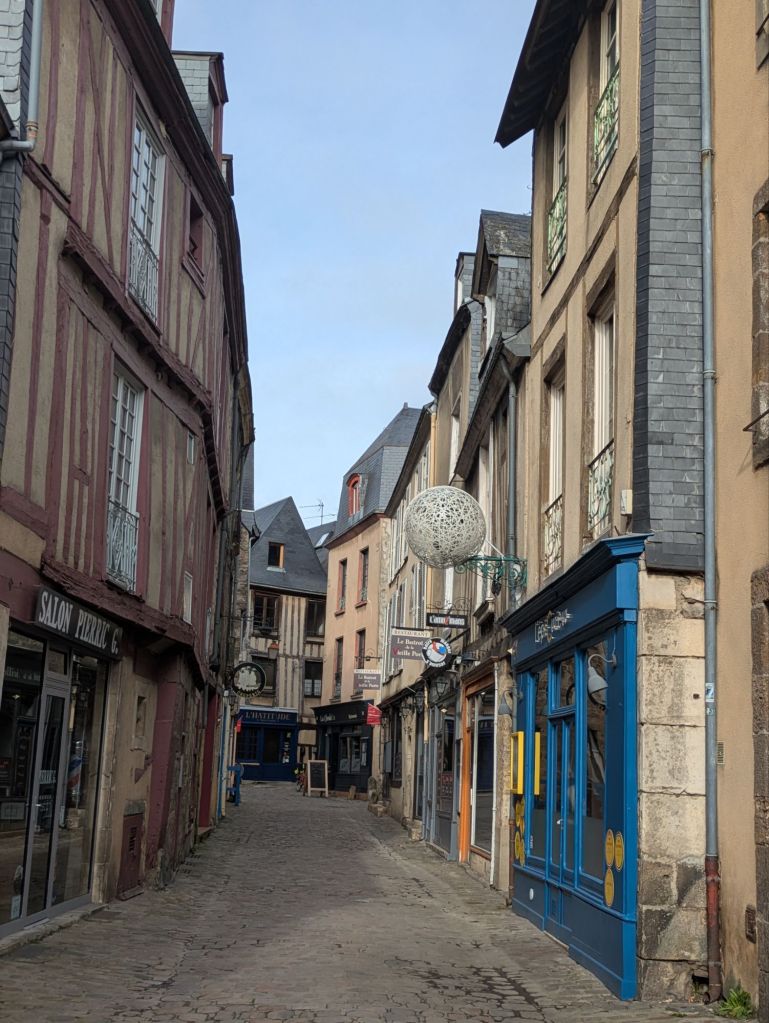
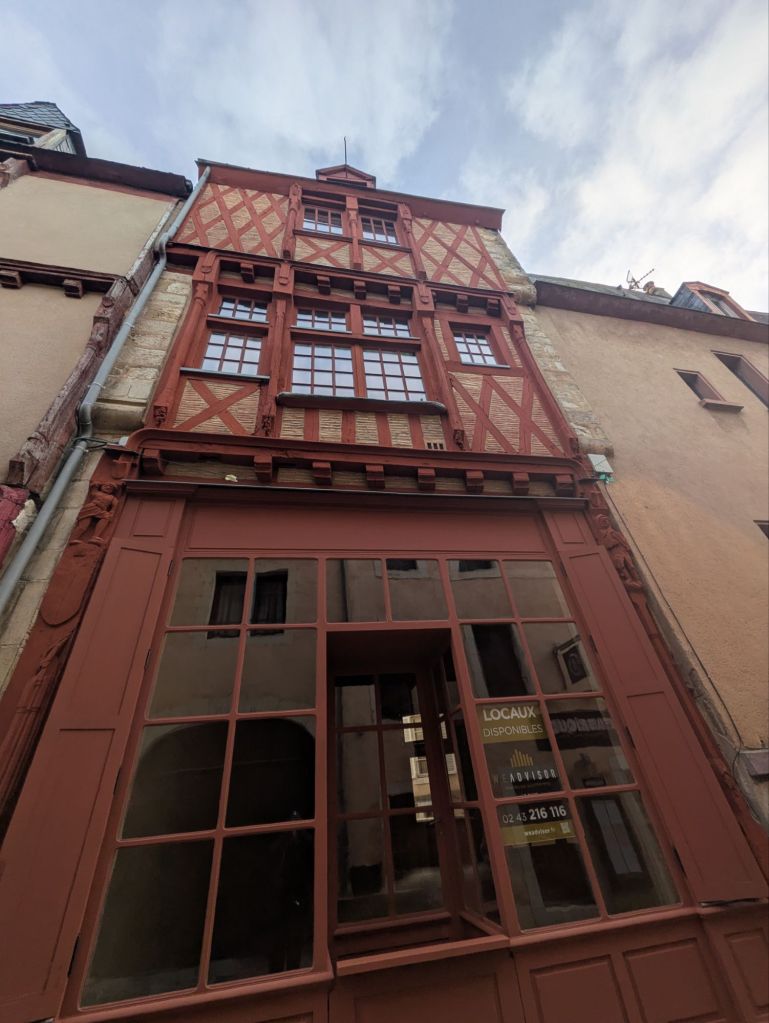
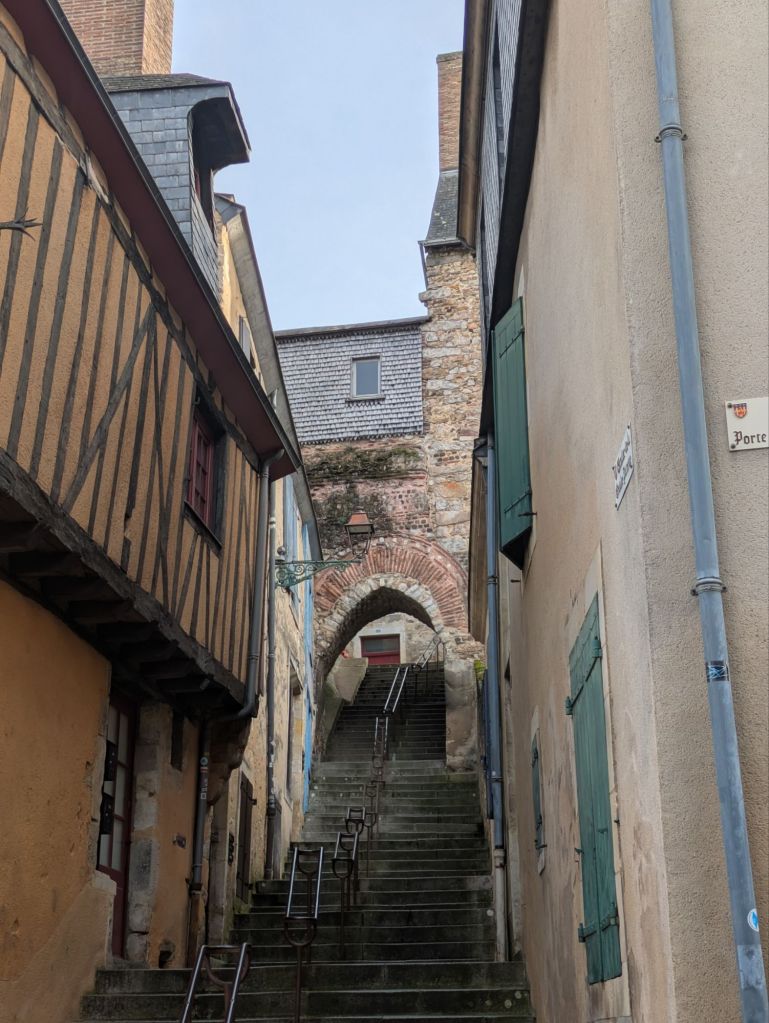
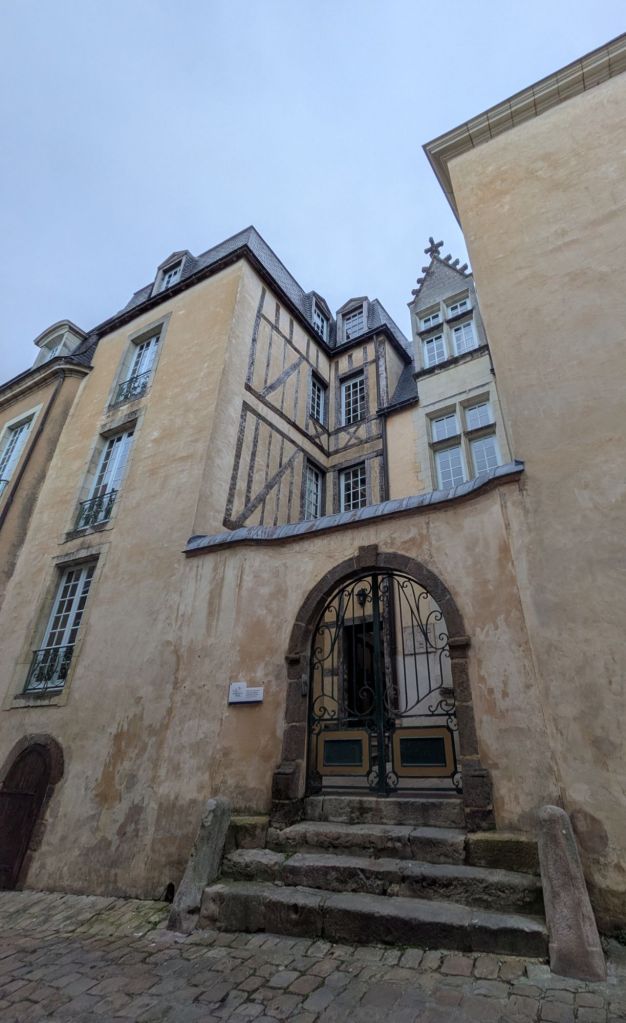
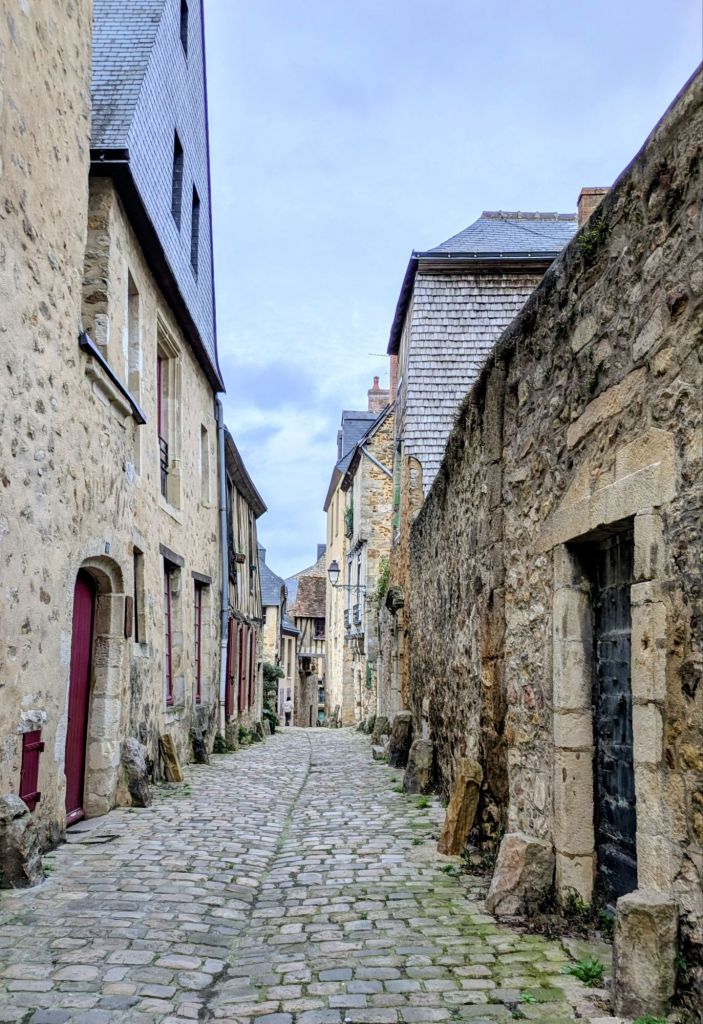
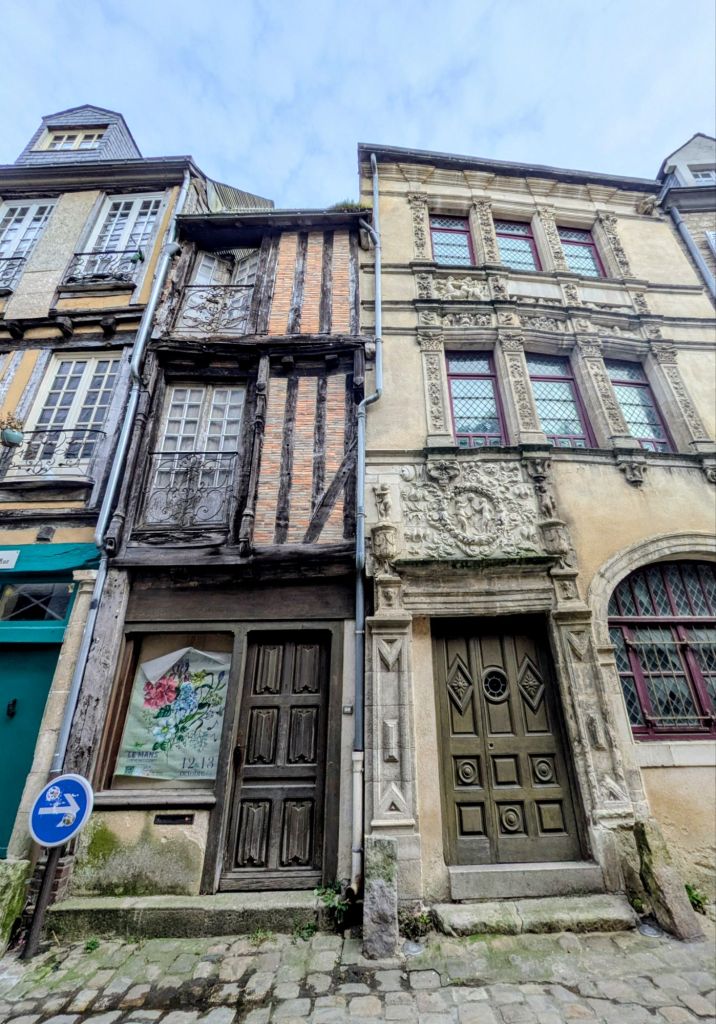
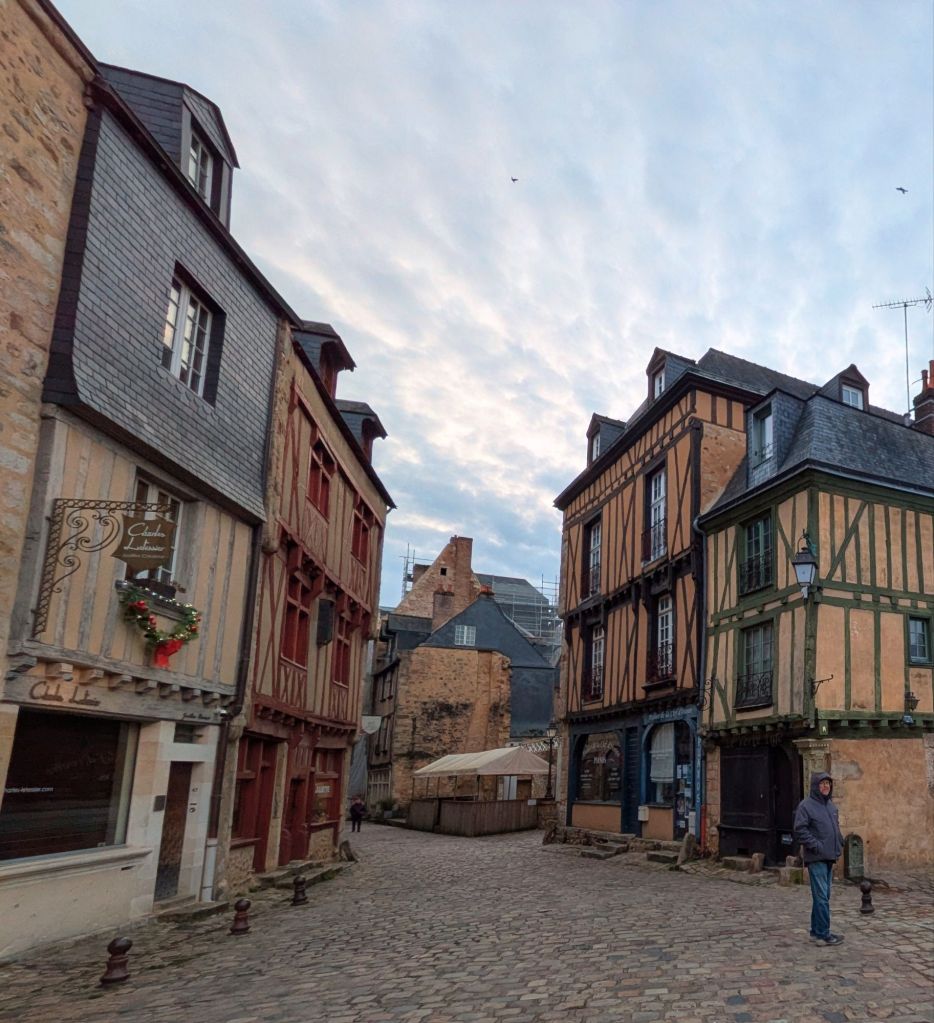
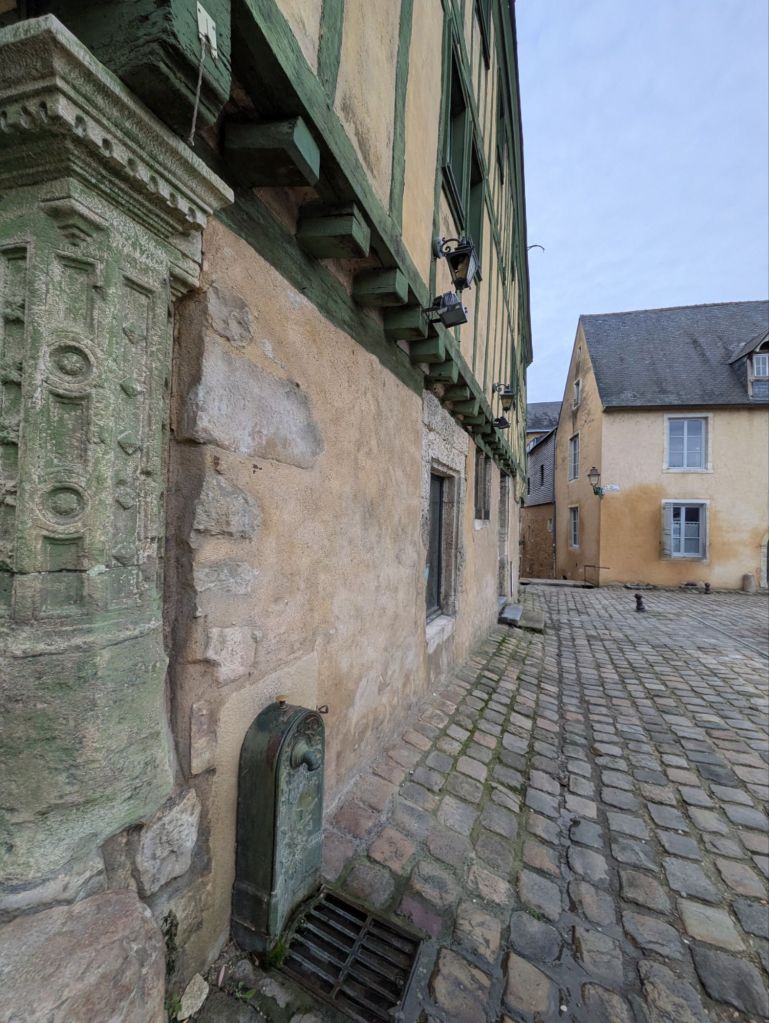
Continuing up to the Cité Plantagenêt, you step back into history- deep, rich history. Le Mans is a bit different than the other towns we’ve been to so far, as the mix of Roman, Medieval, Gothic, and 17-18th century, built up on top of each other, is just mesmerizing.
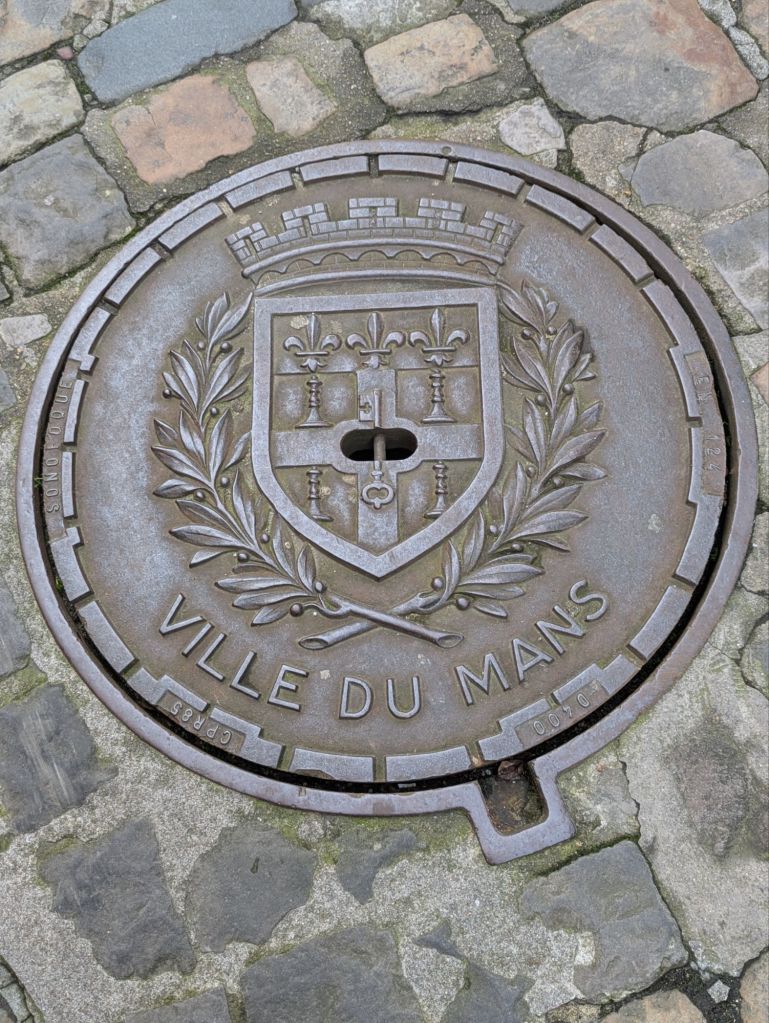
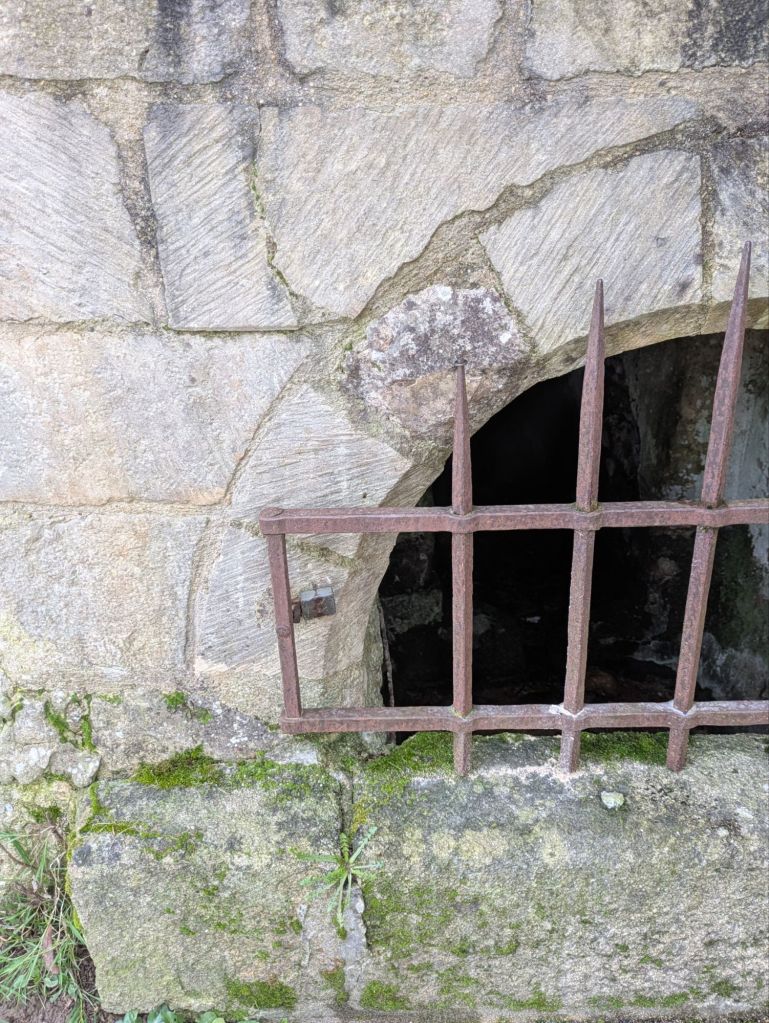
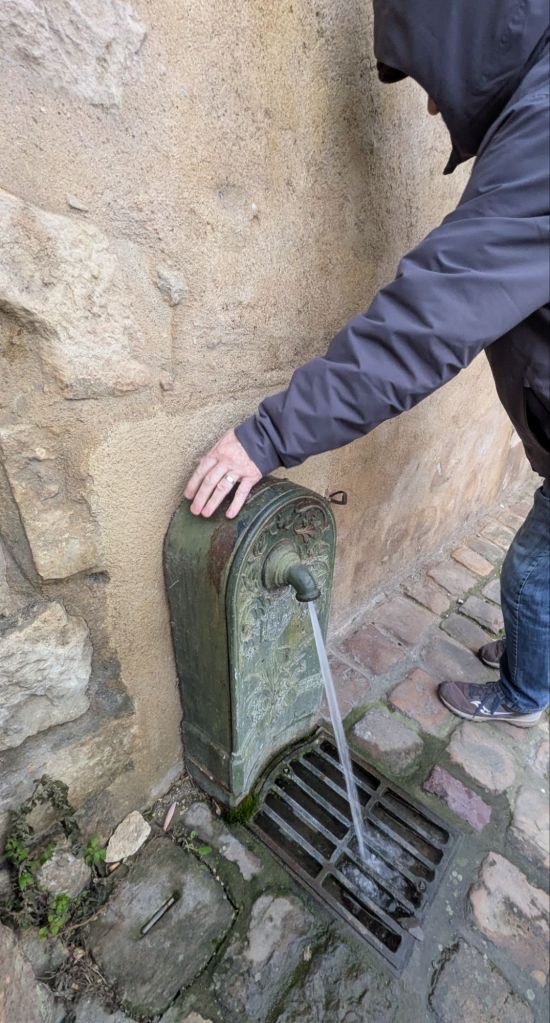
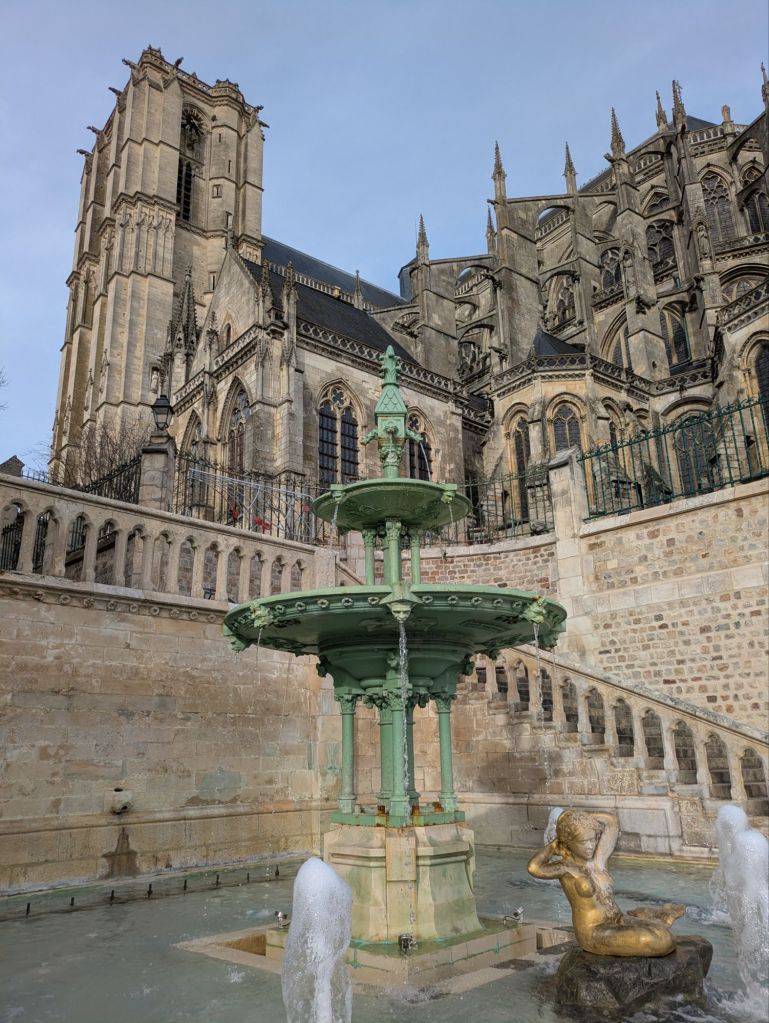
These public water pumps can be found all over the area. So far I haven’t found out much about them. And they work!
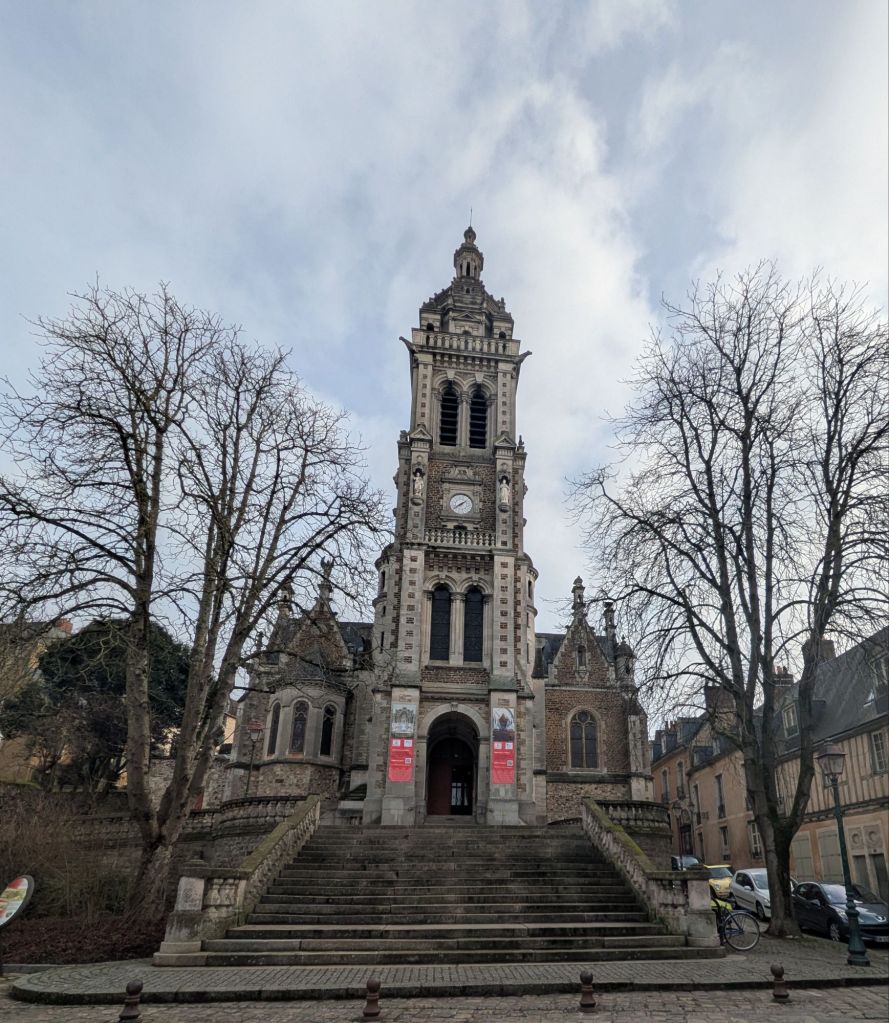
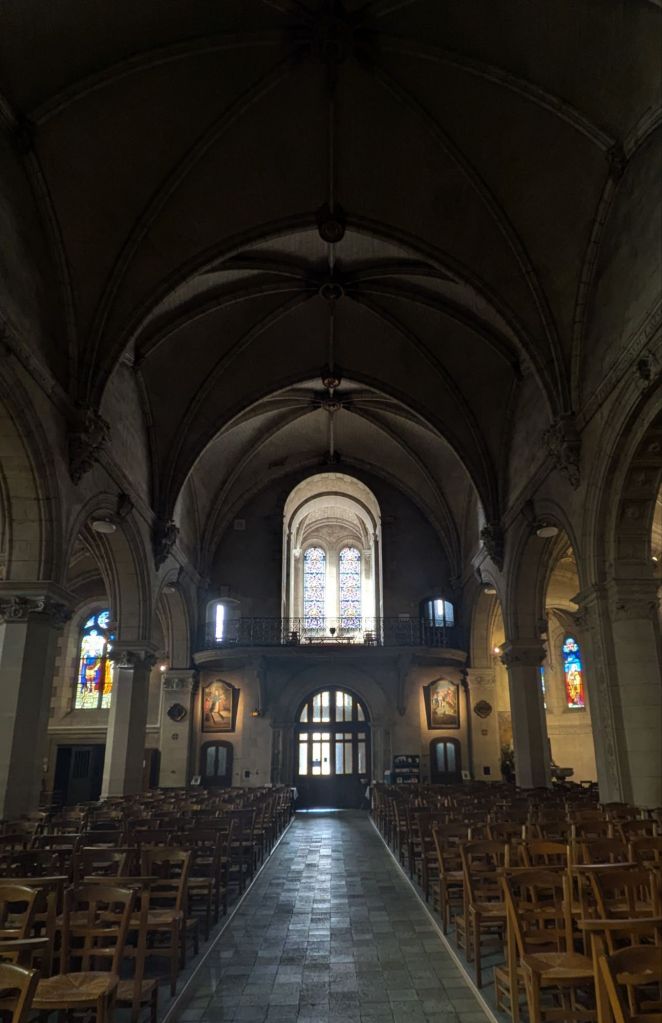
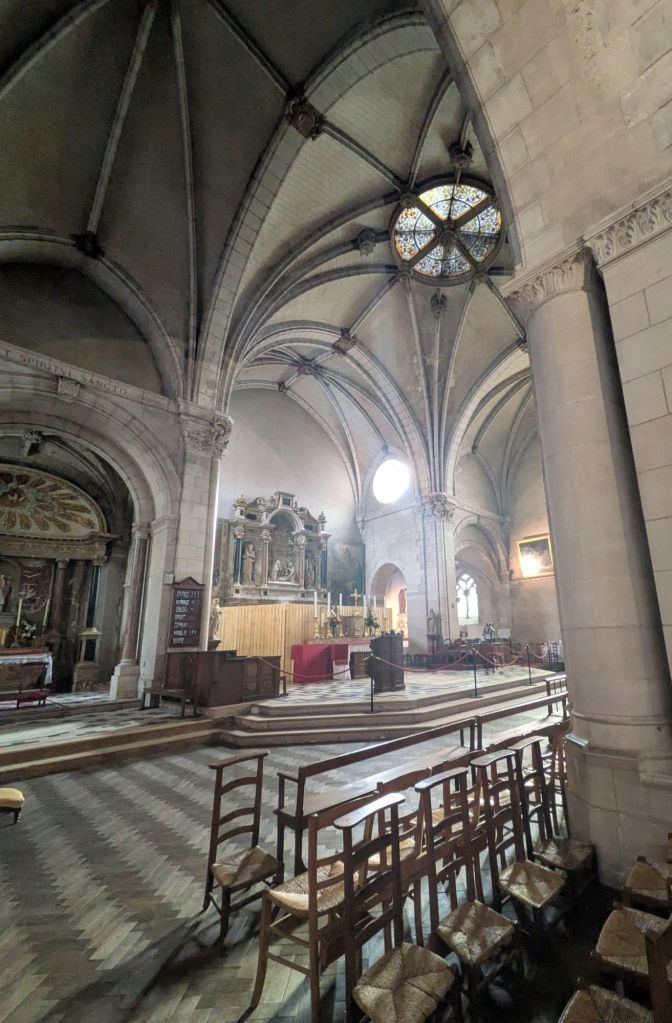
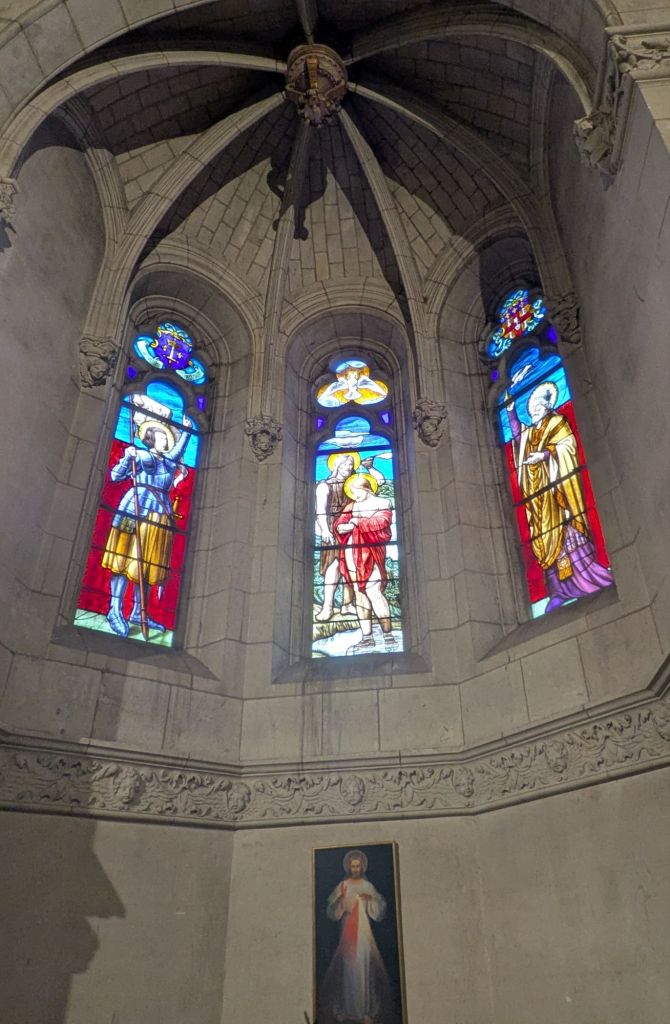
We came upon this old church, St. Benôit du Mans. First built in the 12th century, then rebuilt in the 15th and 16th, sitting on top of the Roman ruins. The most interesting thing about it was the stained glass window in the ceiling, and that it is dedicated to an Italian Saint named Scholastica, with a crypt containing her supposed humerus. All of these windows are from the 18th century.
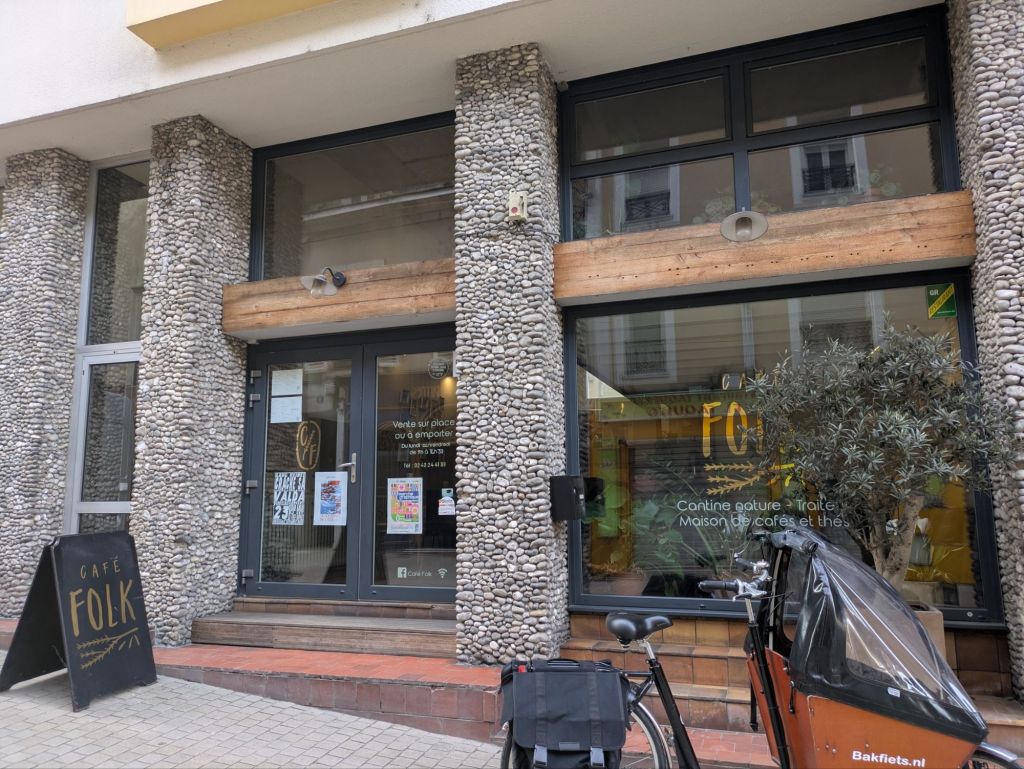
We had lunch at a really sweet, tiny vegetarian restaurant, that has a menu of two bowls each day, one vegetarian and one vegan, depending on what they buy at the market. I forgot to take a photo of the food! It was Monday, which means everything is closed until 7:00pm, so we weren’t able lucky to be able to eat here.
Next we head to the big cathedral, St. Julien. When we got there, we stumbled into a funeral. Luckily, because of that, we got to hear the magnificent organ, and all the lights were on! We stayed a bit but then left to walk around town and come back when we wouldn’t be disturbing a sacred moment.
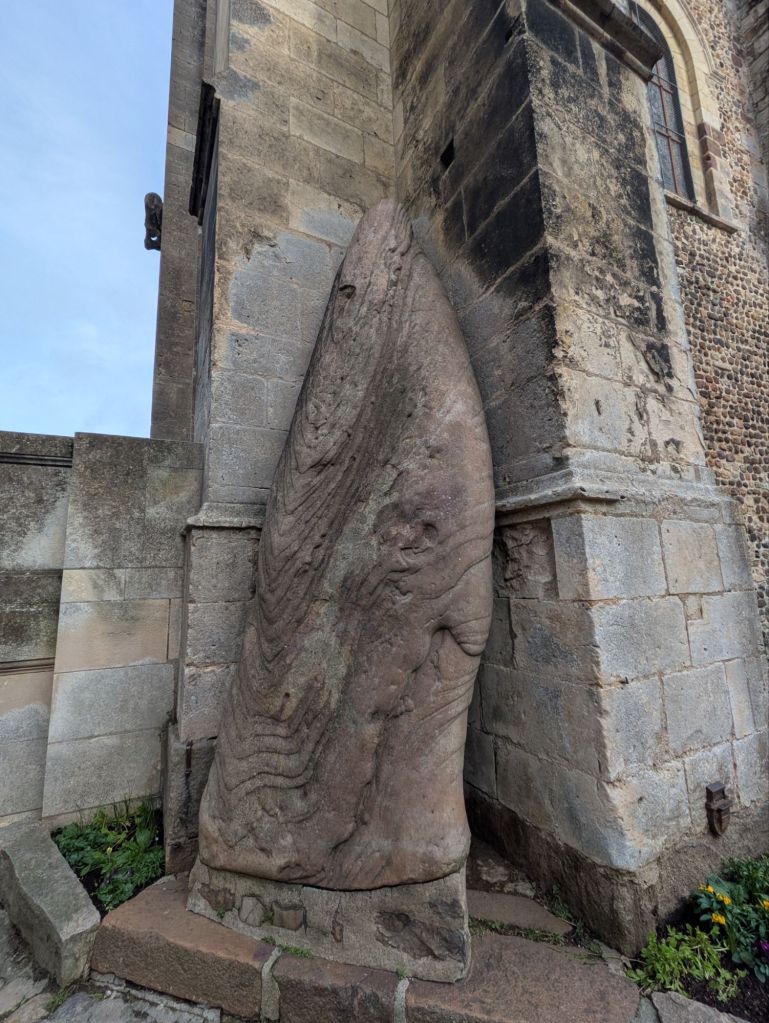
Outside the church is a famous Menhir of Le Mans. A menhir is a single standing stone. It was an important pagan symbol that was saved by St. Julian, who brought Christianity to this town in the 4th century. It was placed next to the cathedral during construction and is said to be the only remained stone of where others once stood.
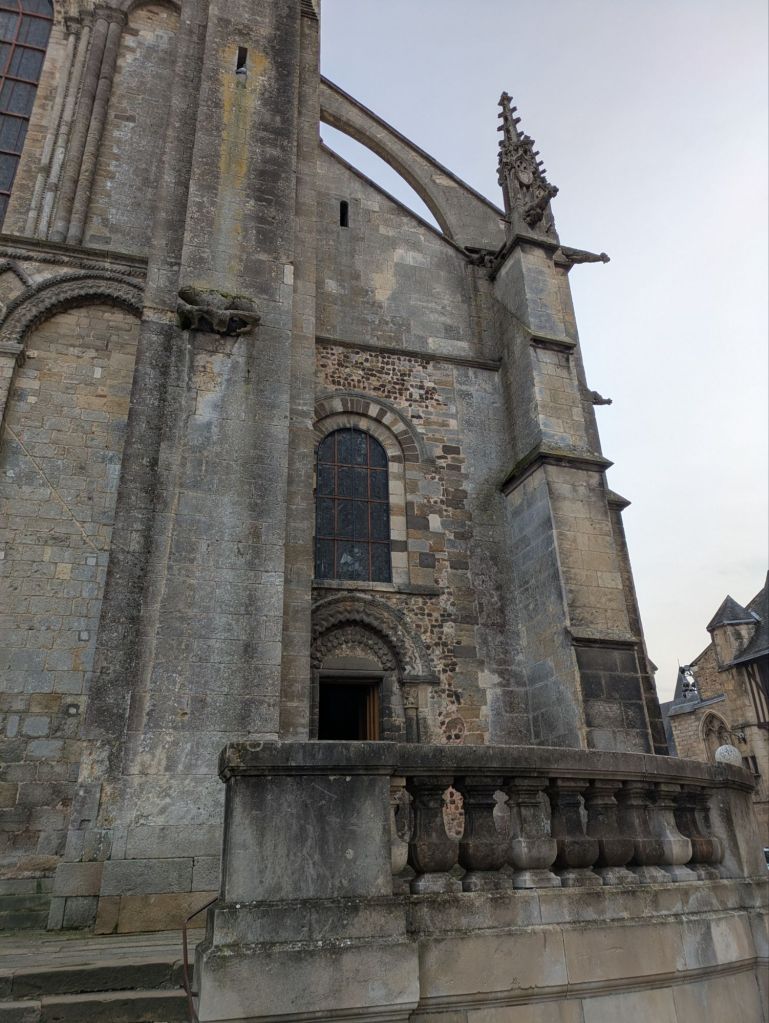
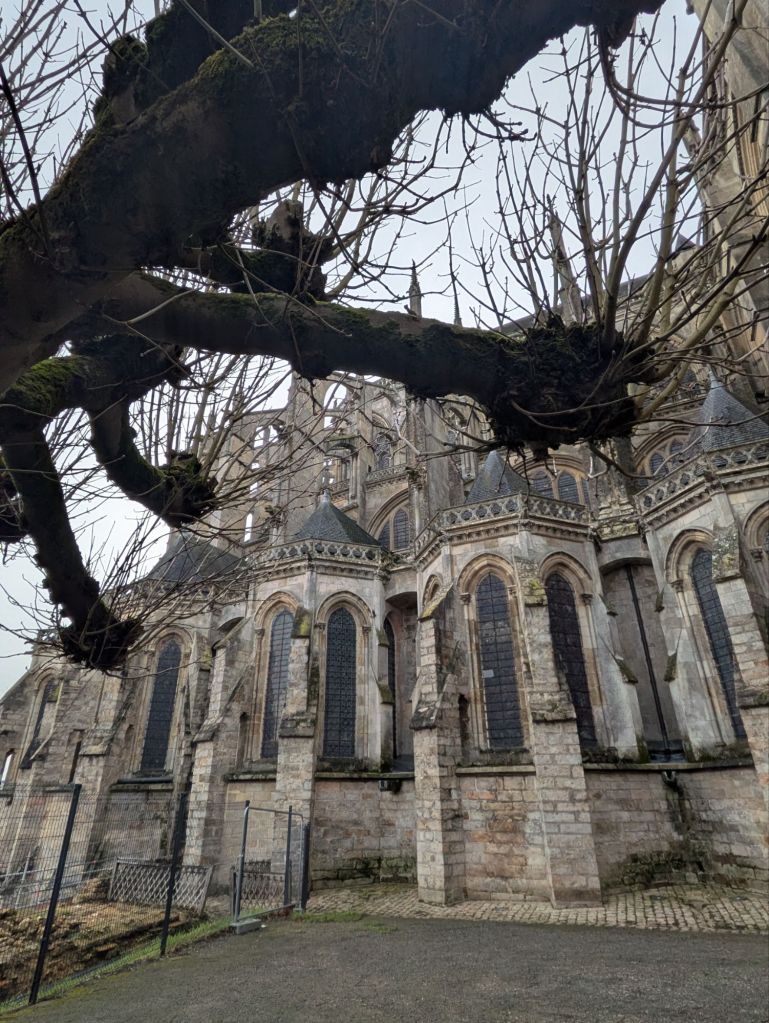
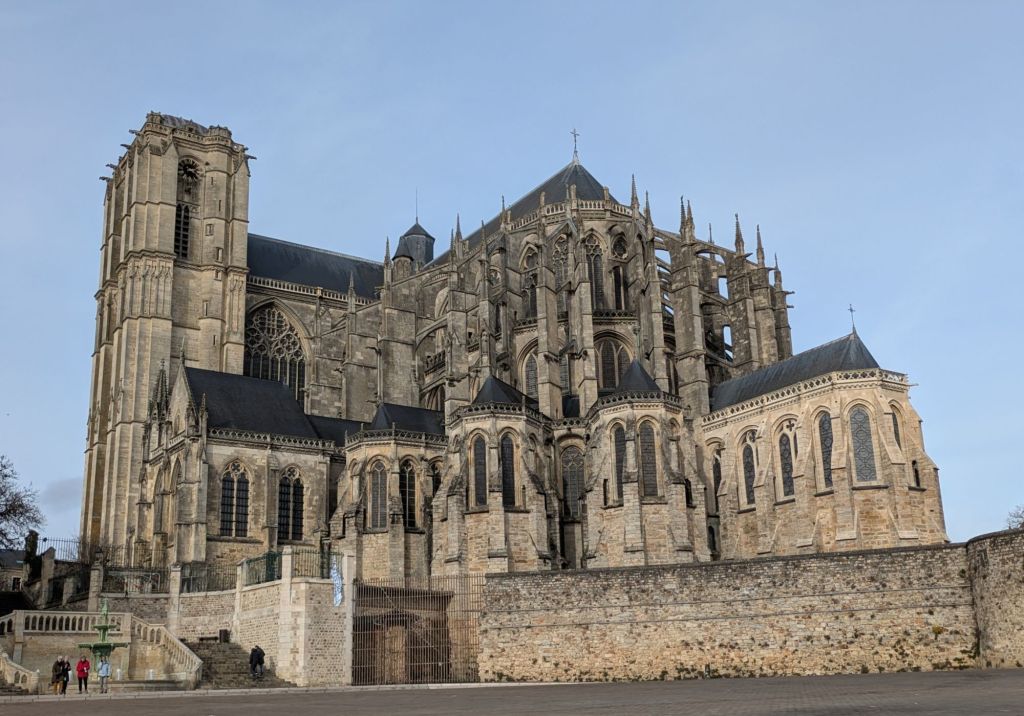
The current building was begun in the 10th century and finished in 1430. Its later work was accomplished by Henry II, and his father, Geoffrey Plantagenet is buried here. The church is indeed amazing and we got to hear the bells chiming a couple of times. It really is amazing.
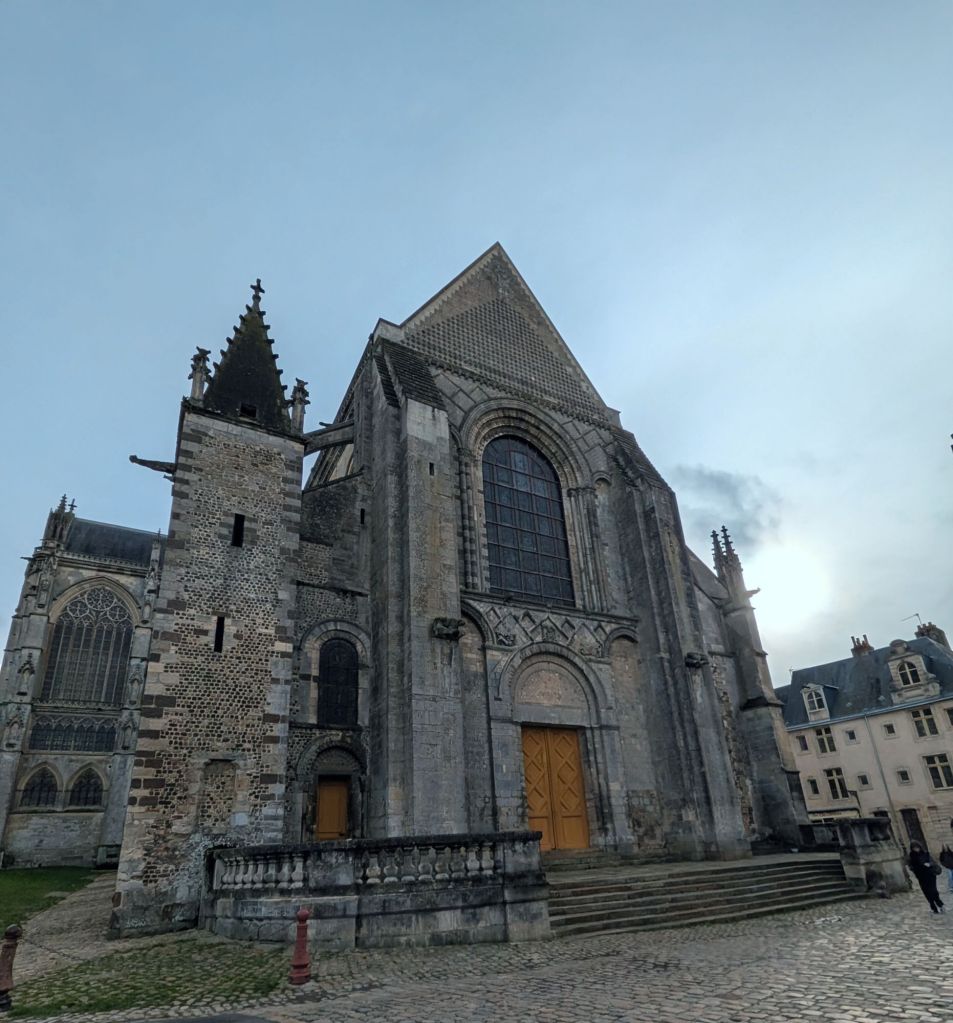
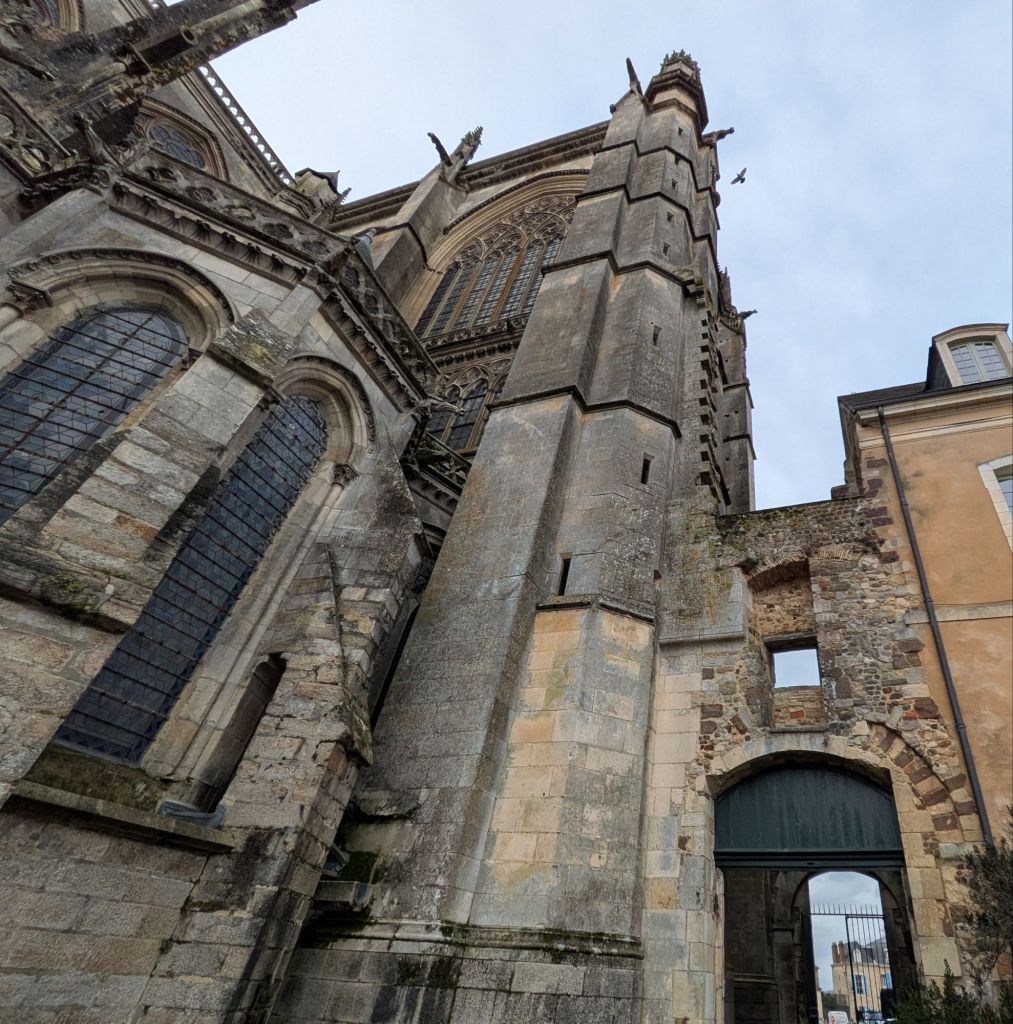
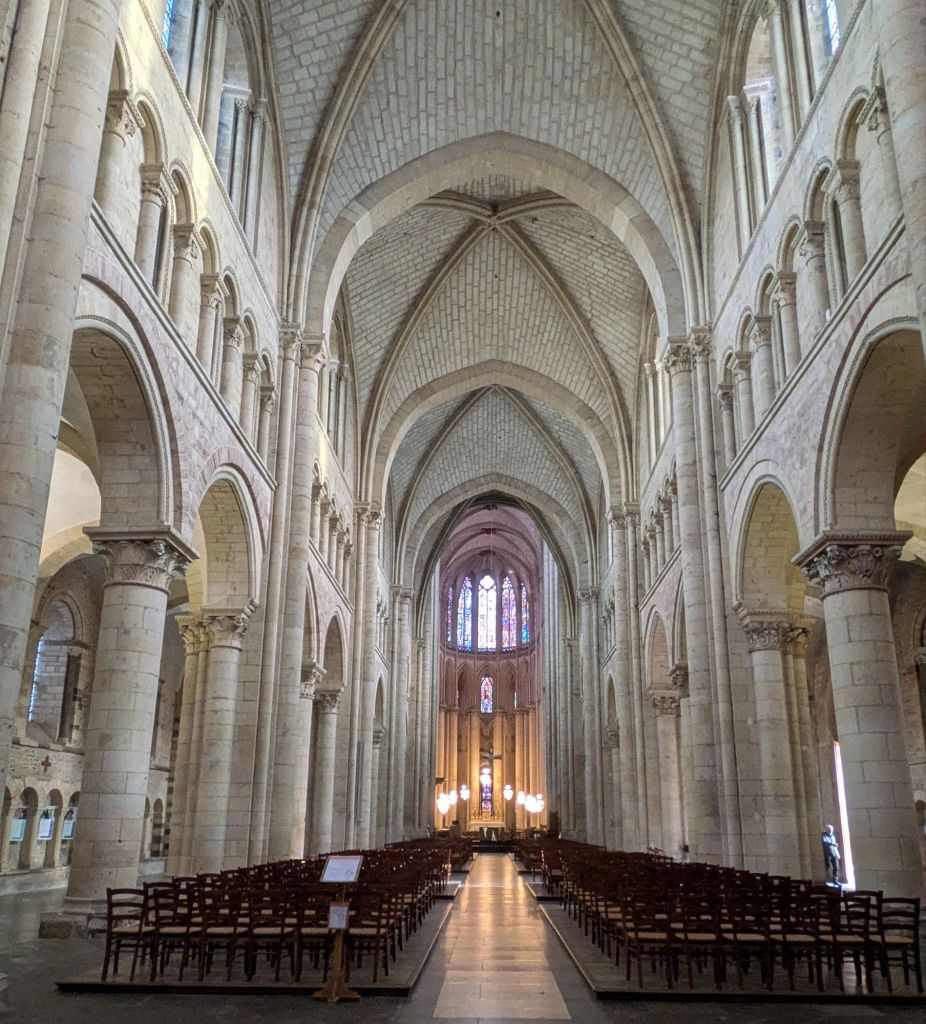
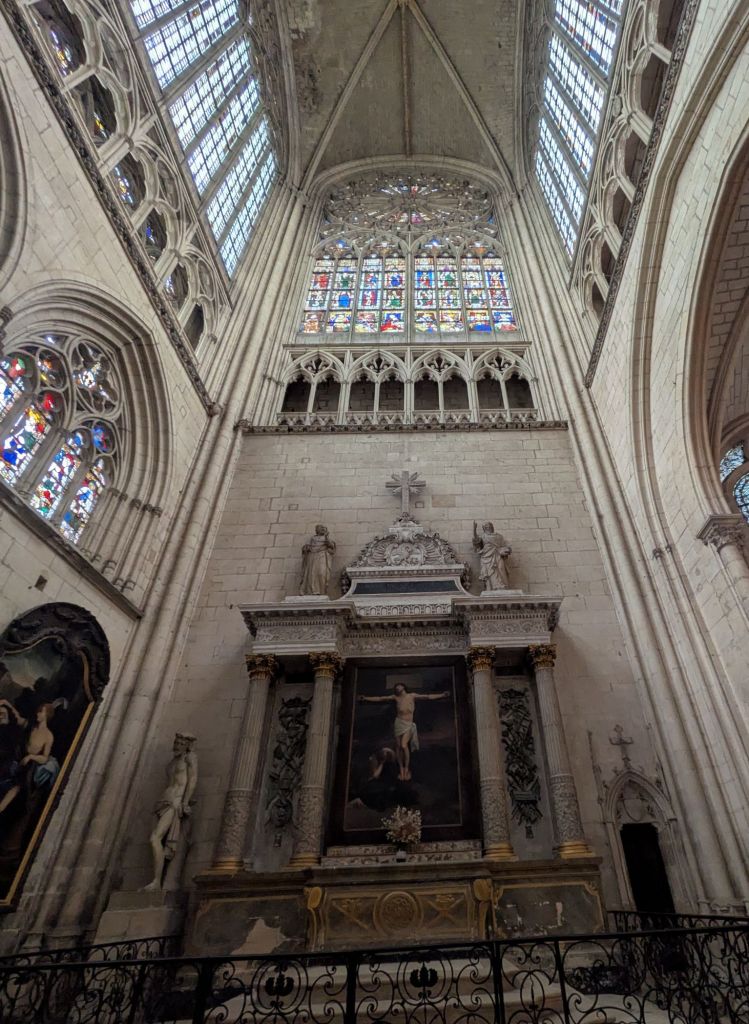
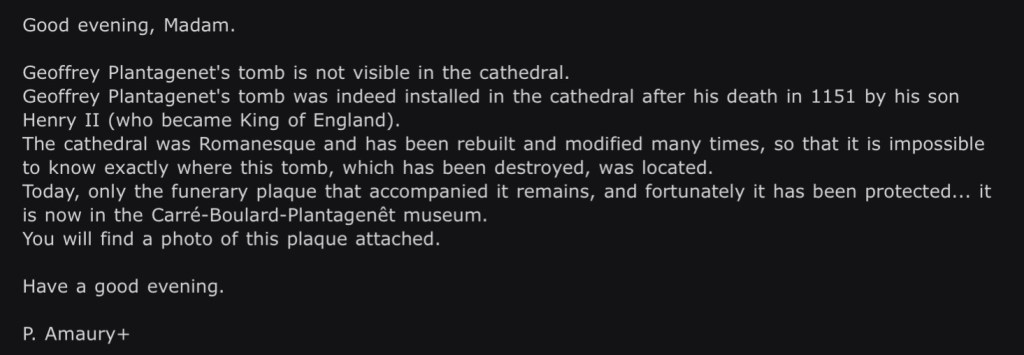
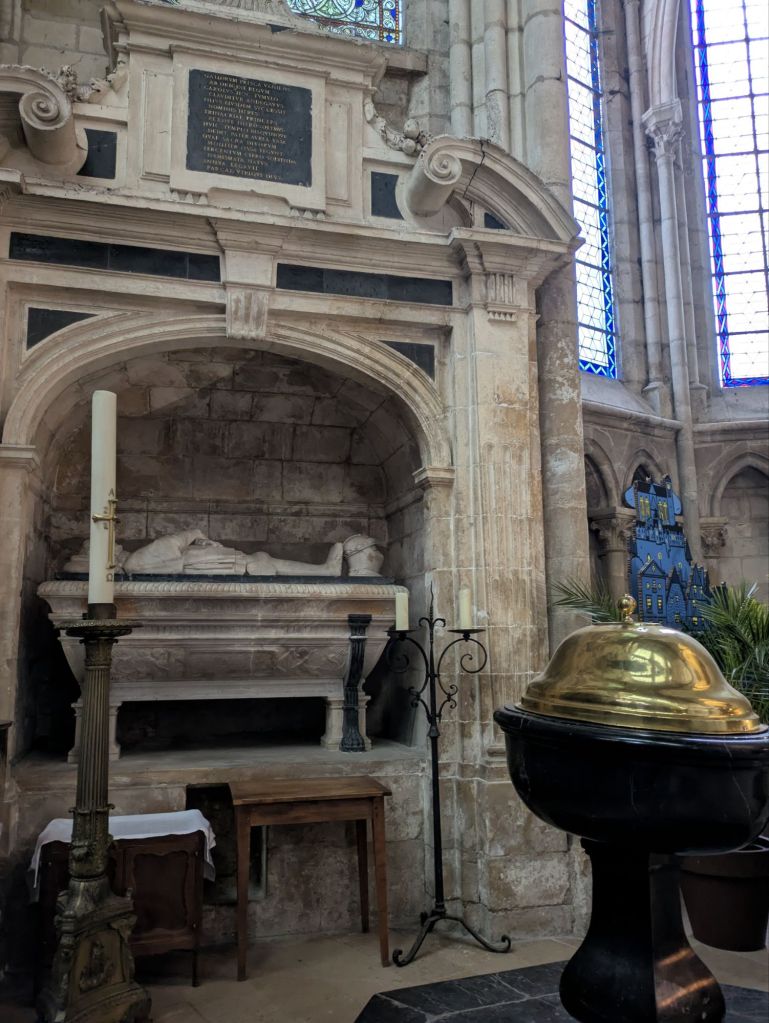
Geoffrey Plantagenet buried somewhere here. I emailed the church to see if they can tell me exactly where, and got a reply.
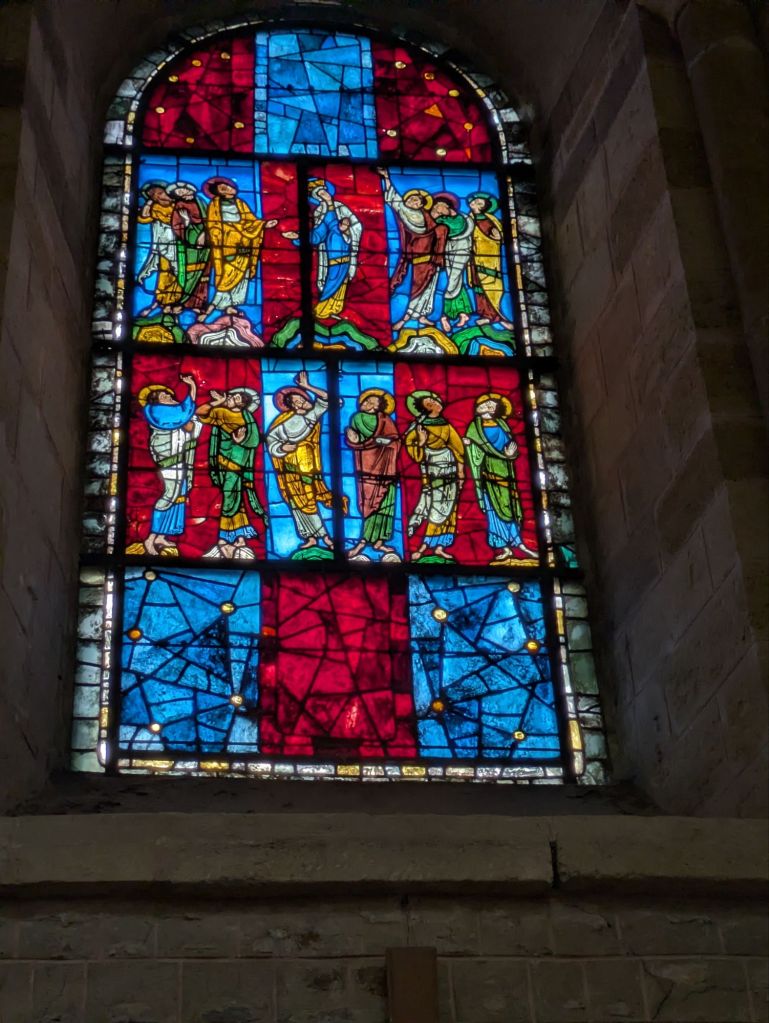
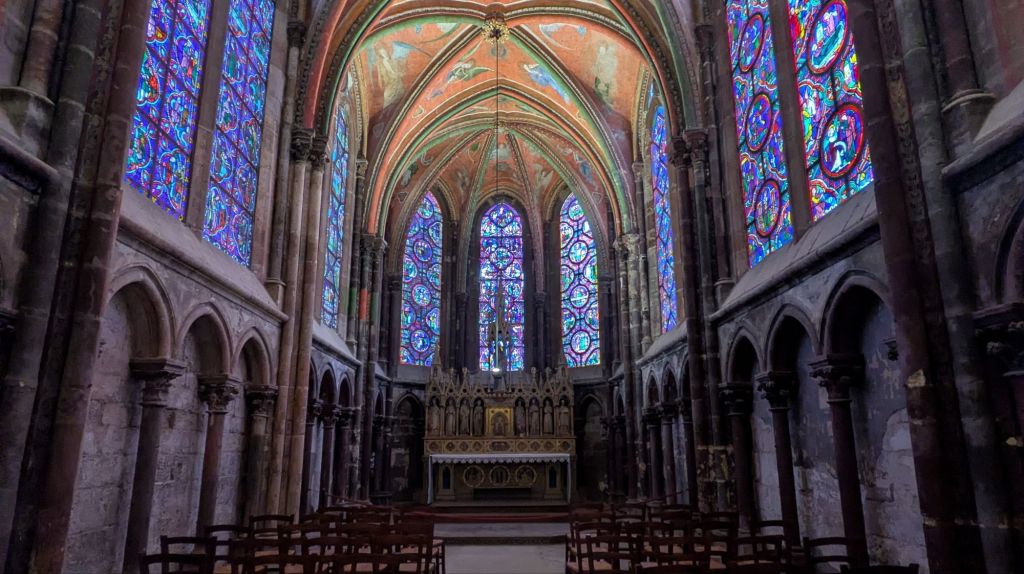
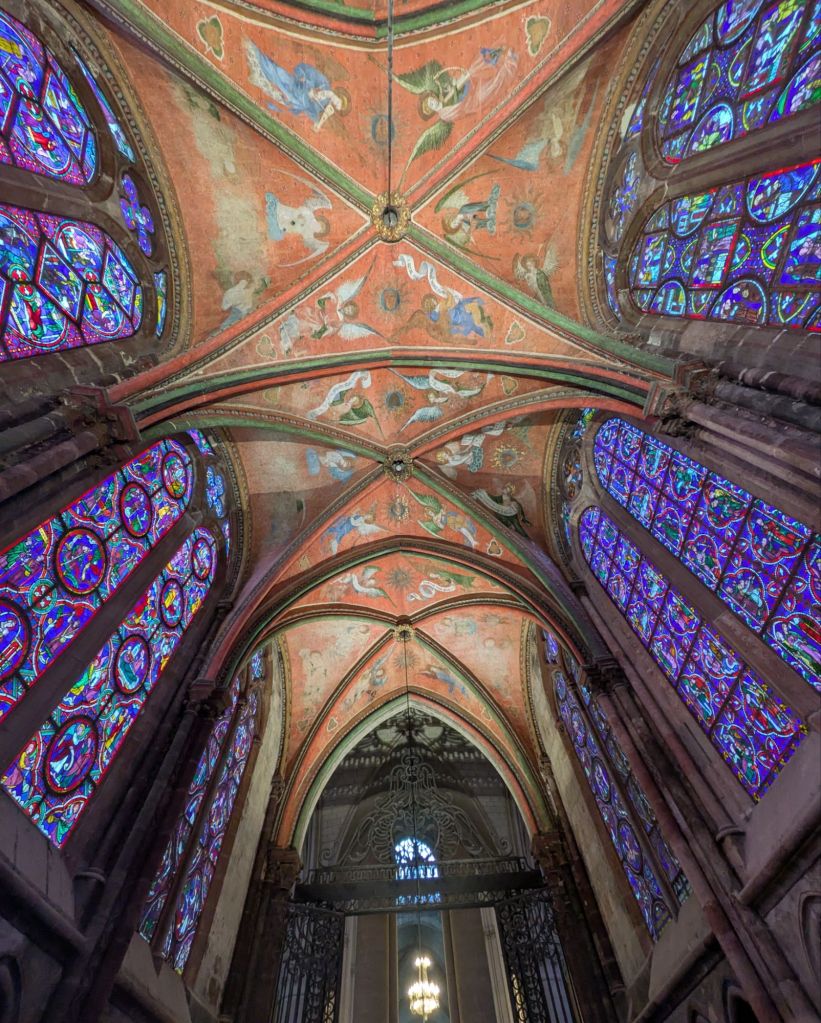
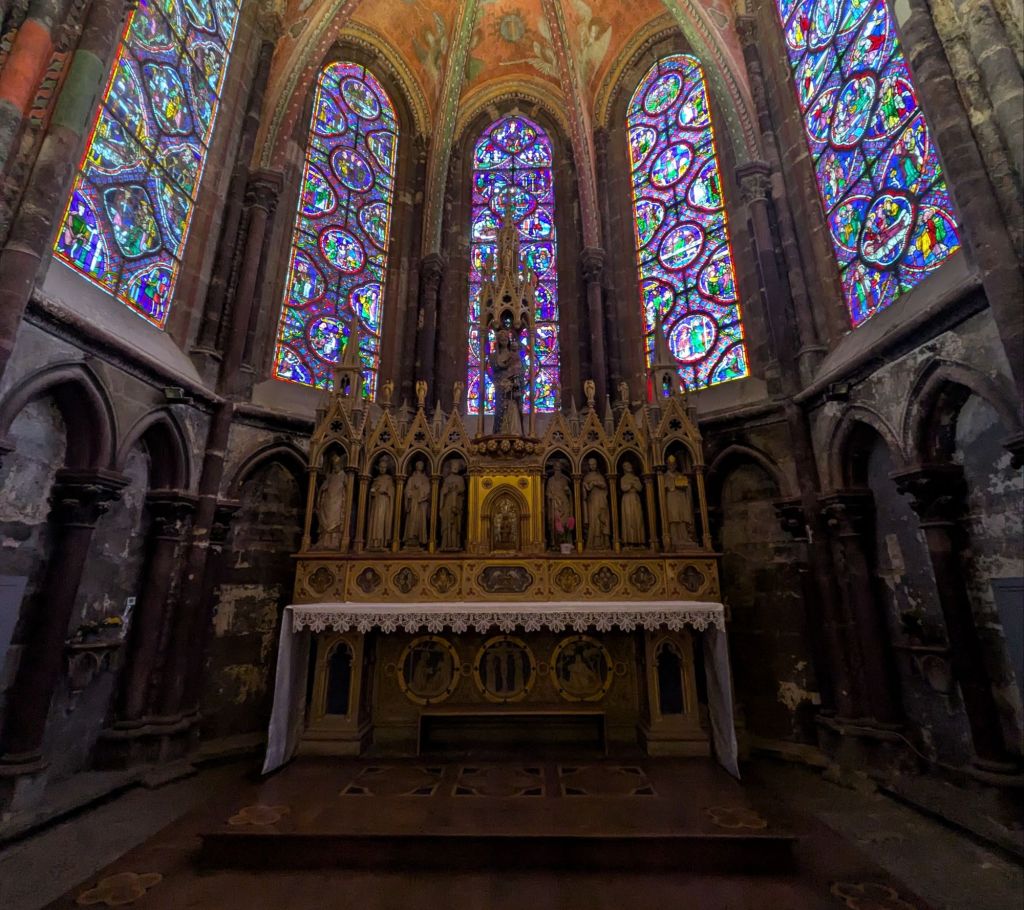
The greatest feature of the cathedral is that it holds the oldest, intact, stained glass window in its original position, in the world. Close by is the second oldest in France. We stared at it for quite a long time, just soaking it in. Simply awe inspiring to be in the presence of this artistry.
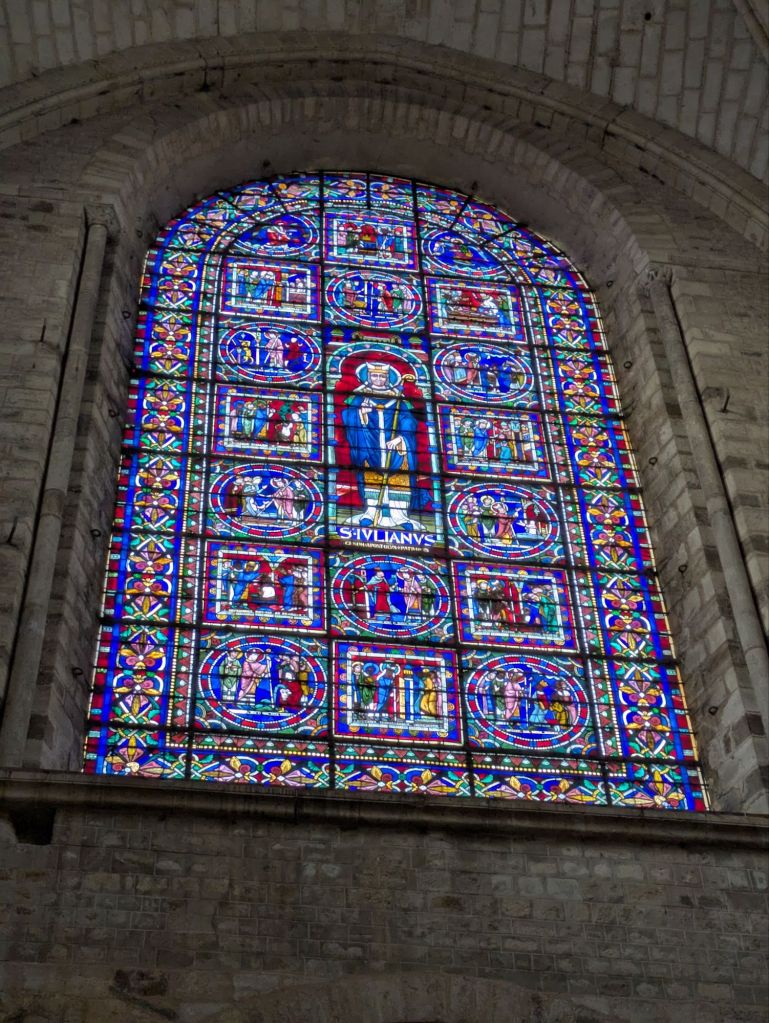
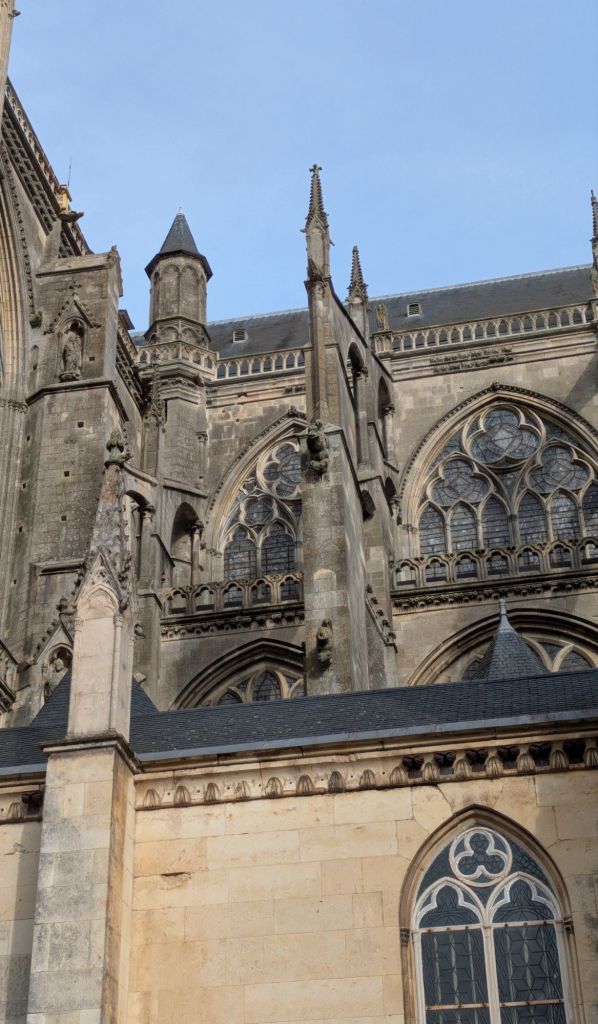
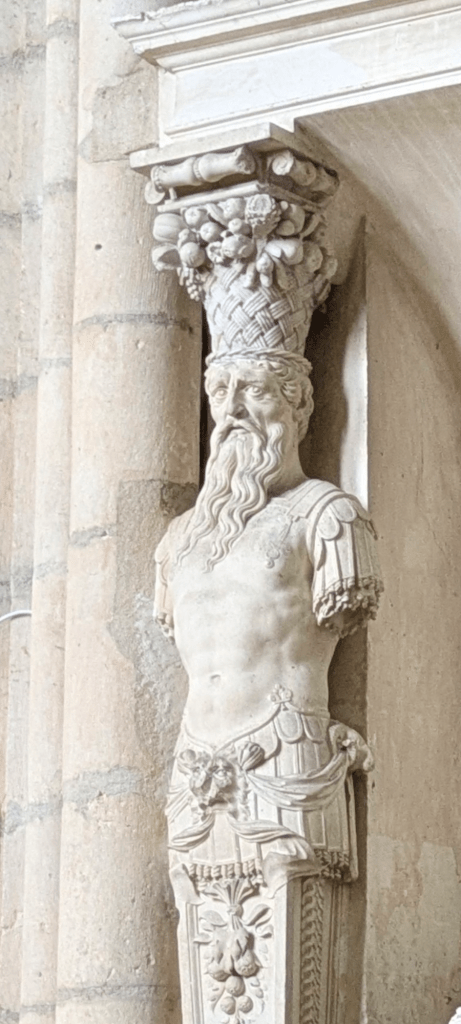
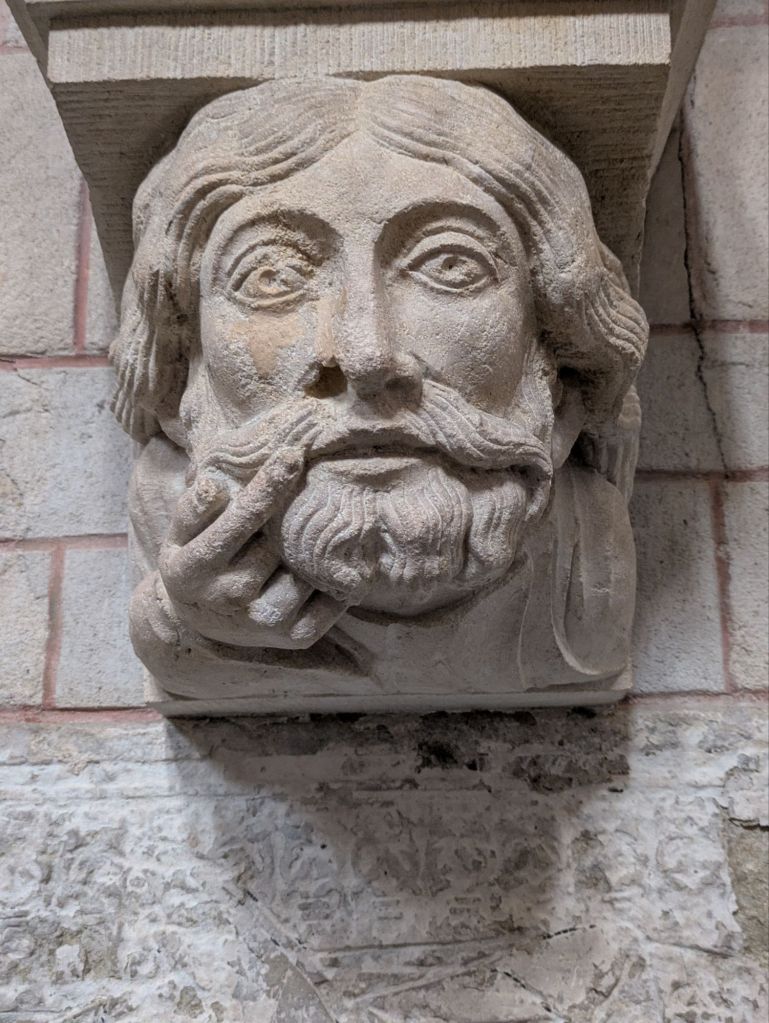
Some more details from the cathedral
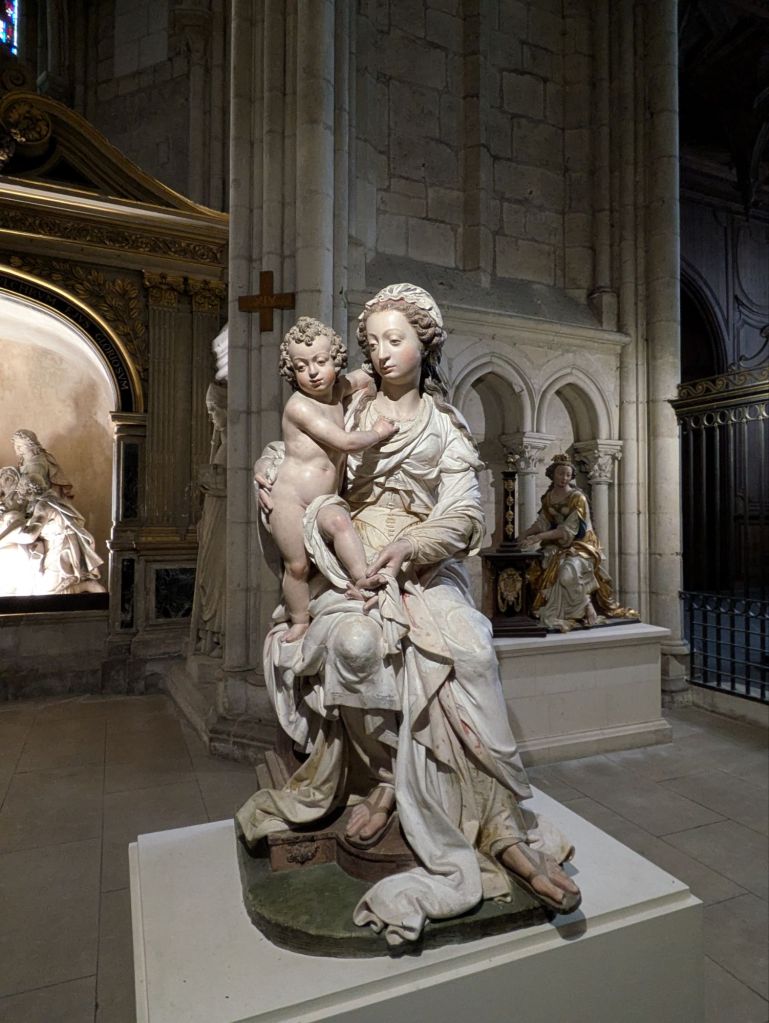
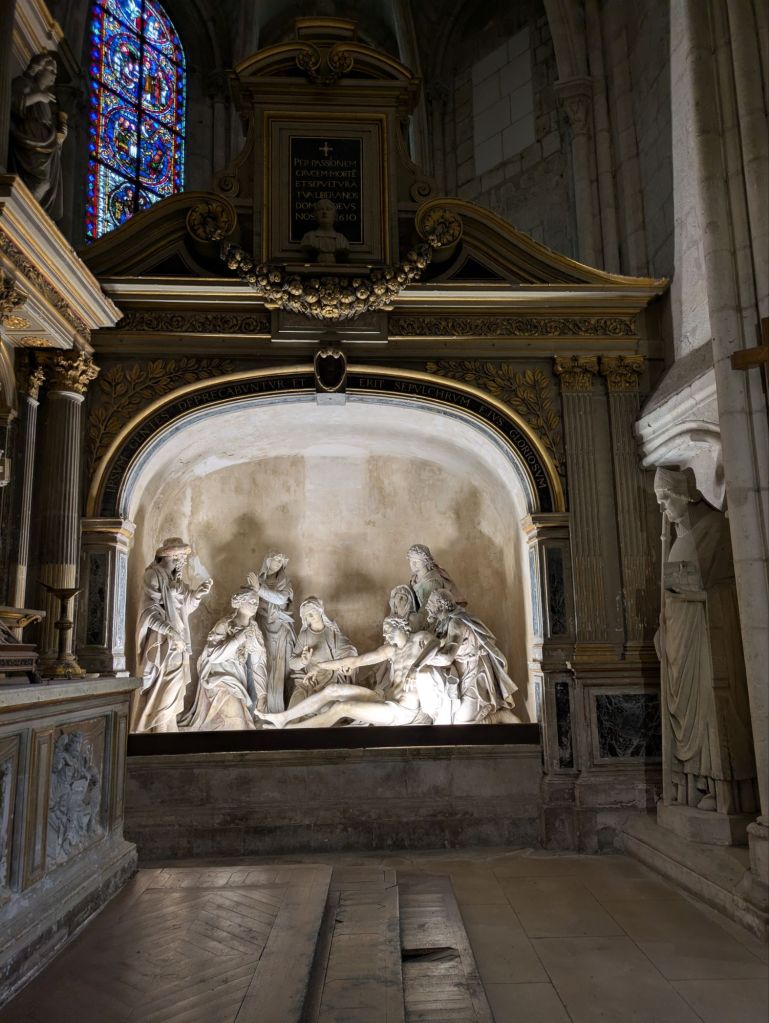
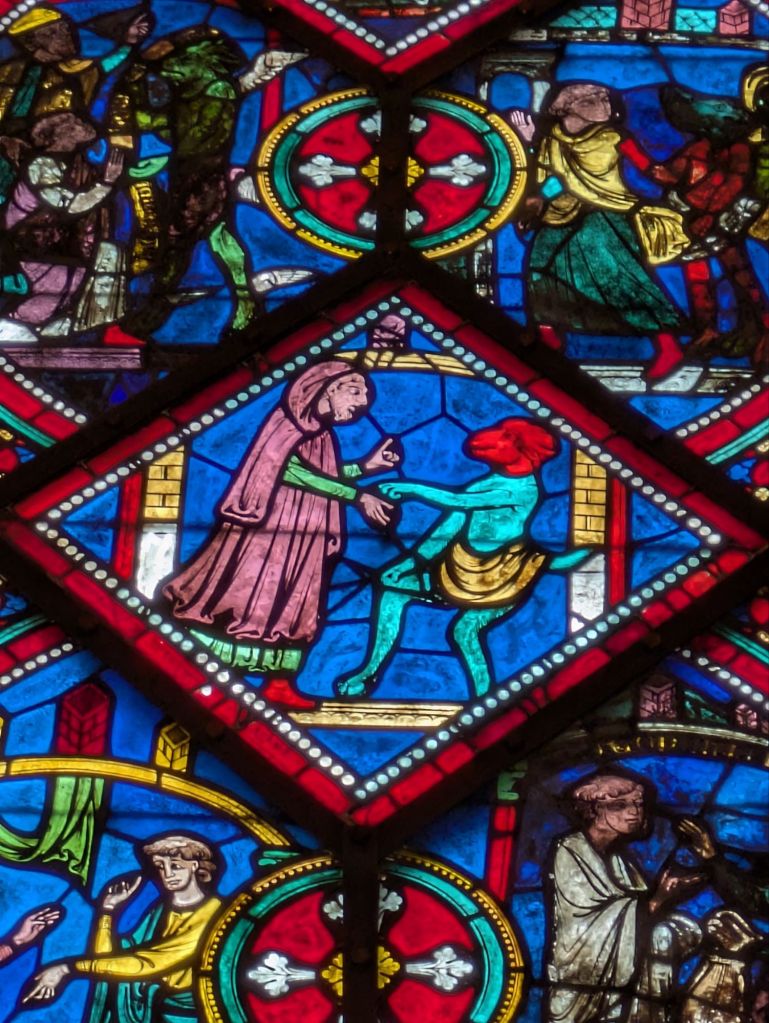
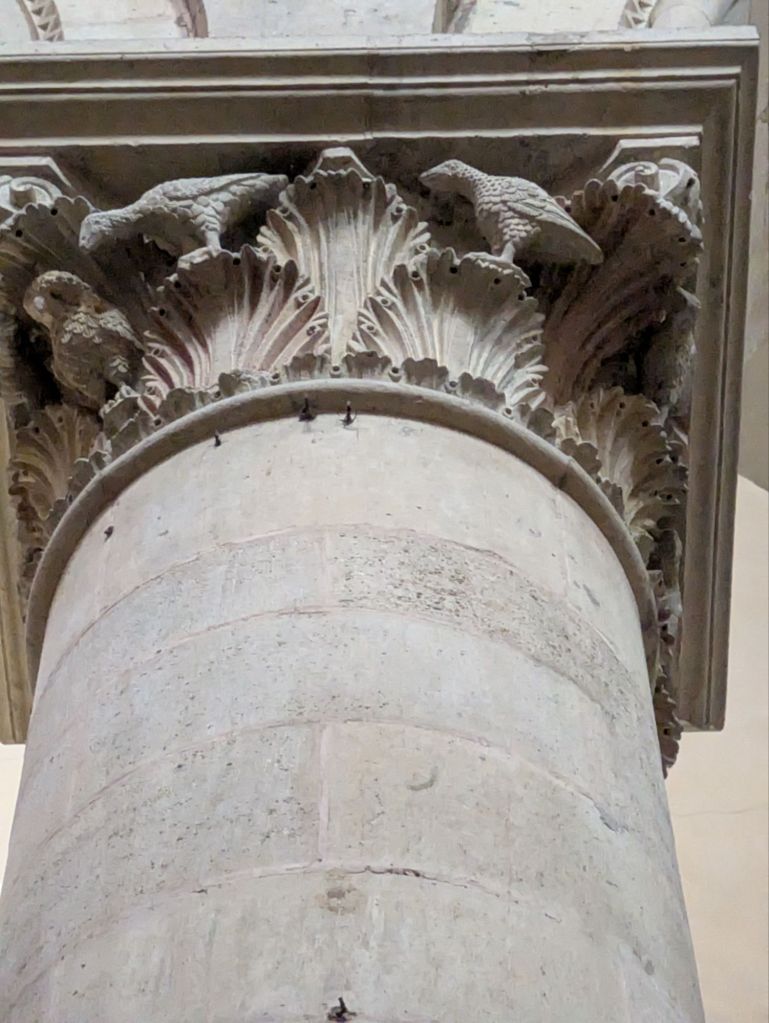
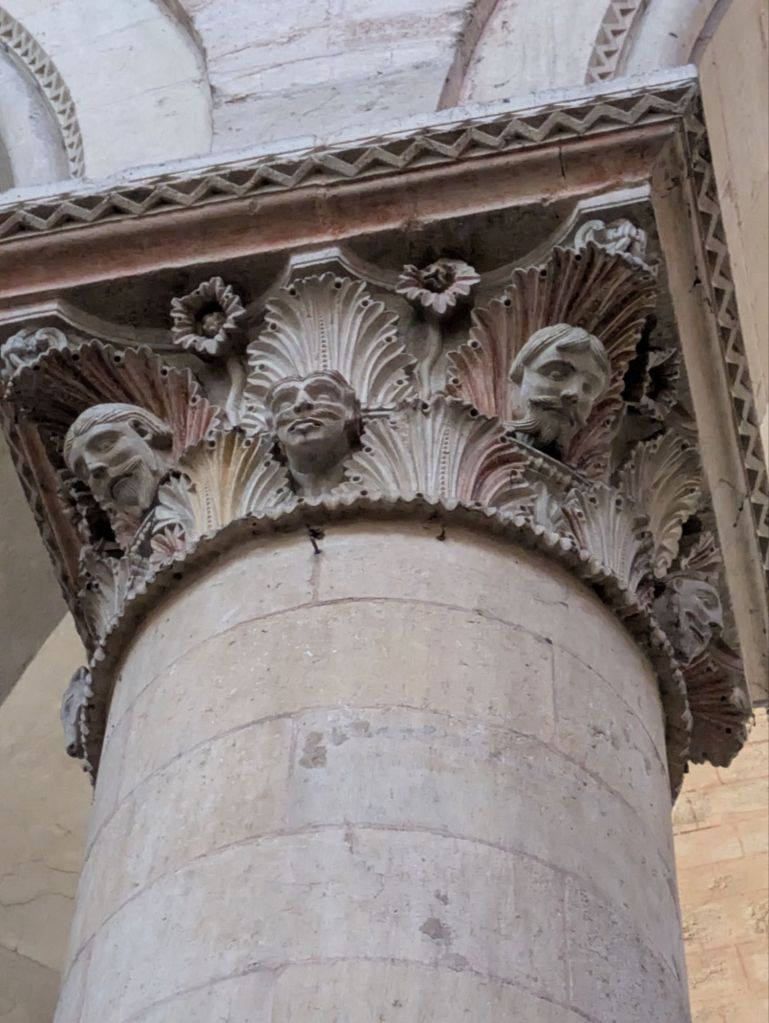
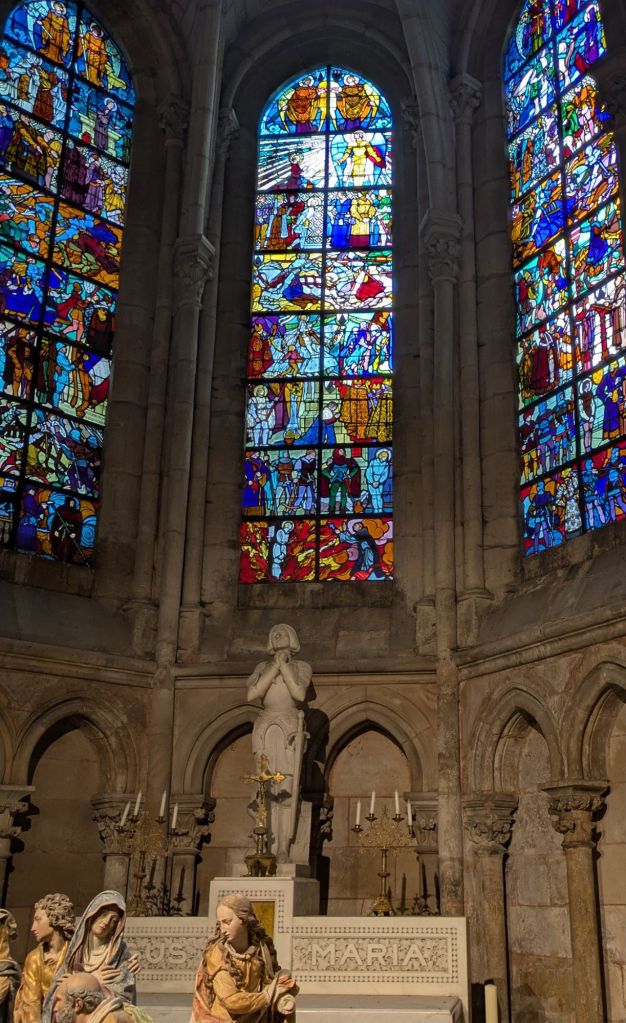
A chapel built by the commission of Queen Berengaria just feels like the oldest part of the chapel even though it was consecrated in 1254. She was the wife of Richard the Lionheart, son of Eleanor of Aquitaine. She also founded and died at an abbey near here. That’s where she’s buried. It is closed until April, so we weren’t able to go there.
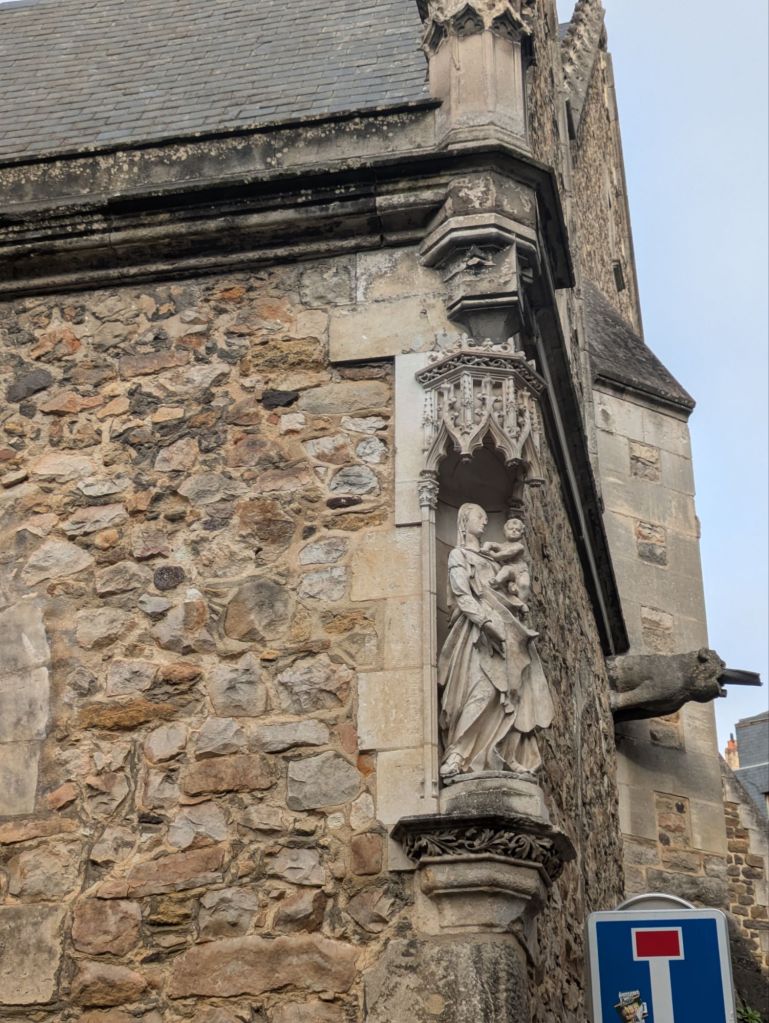
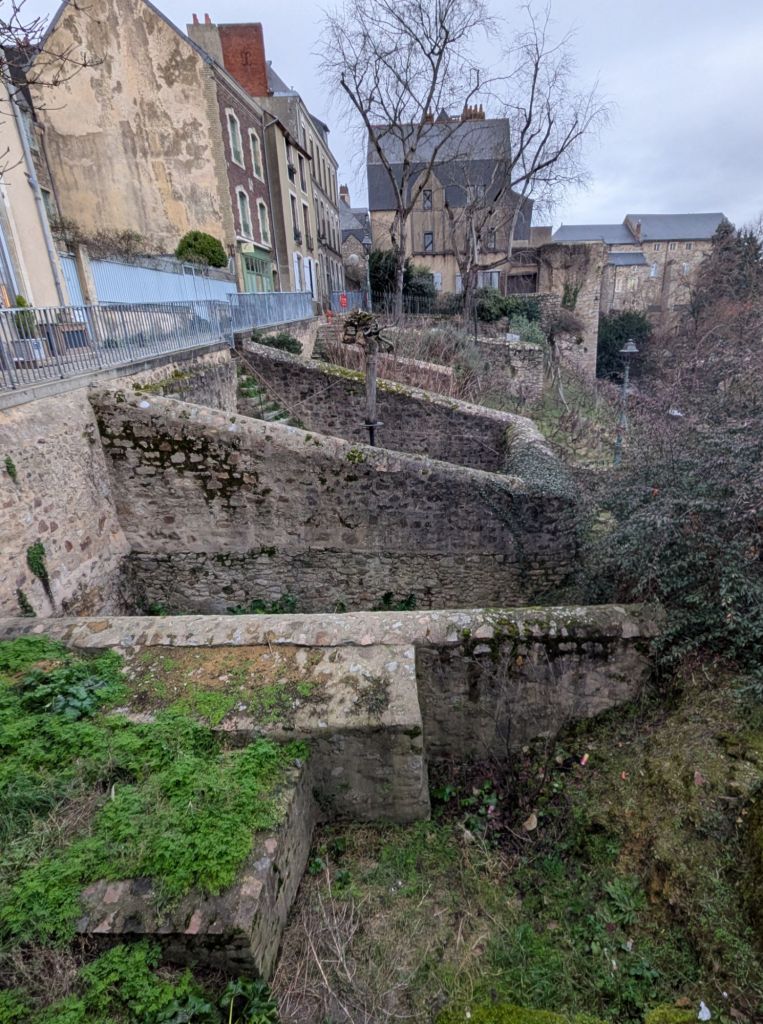
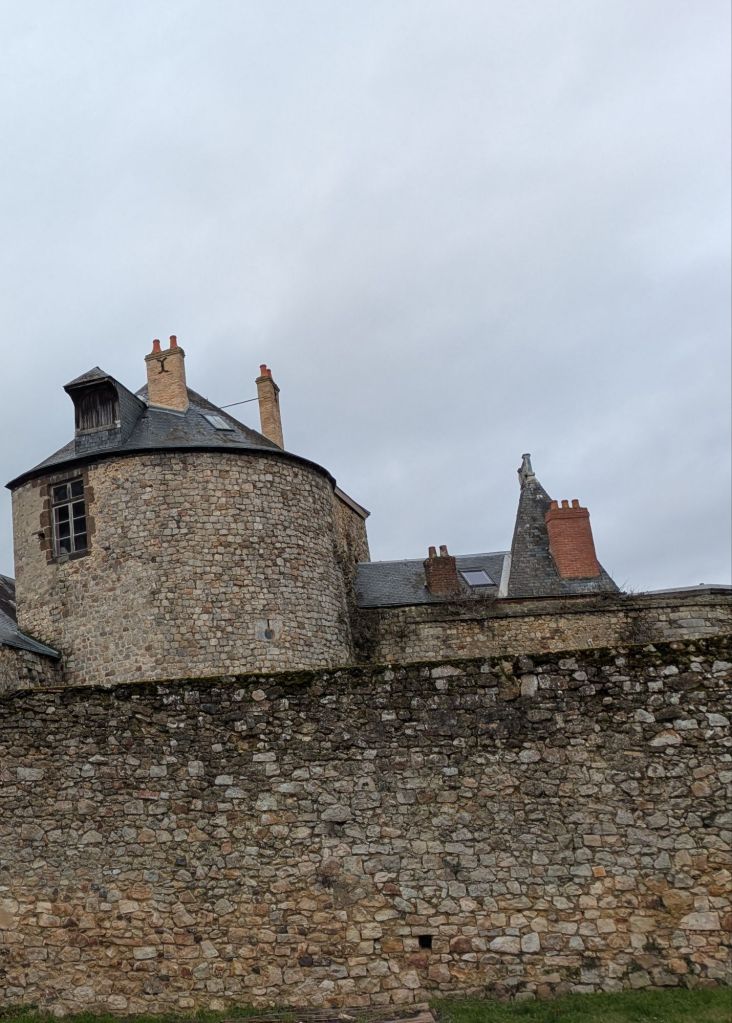
And now, finally, we walked all around the outside. The old Roman wall passes right through the body of the cathedral, or under it, I should say. Again, I find the side-by-side builds between different centuries just so interesting and beautiful.

Le Mans is another surprising city. We had no problem wandering the beautiful cobblestone roads and exploring the nooks and crannies of a medieval city. We left just as it was getting dark and all the beautiful lights were turning on. We stopped into a market for a bottle of wine and some snacks to enjoy on our train ride home.
 Our Big Move To France
Leave a comment