Getting settled in a new country is not the same as a vacation! There is a lot of hard work, paperwork, legal hurdles, money worries and loneliness that are just natural byproducts of relocation to a new country with new customs and traditions. It has taken a toll on energy levels, both mental and physical. But thanks to my French language classes, I have stumbled upon a new obsession with the history of my adopted hometown.
When first visiting Lille, you might ask what attracts someone here? Lille is not as historically as most towns across Normandy or Brittany, not as quaint or sun-soaked as those in the south of France. But if you ask yourself why that is, and start to delve into those questions, you come across a history rich, layered and complex. A history that has led Lille through wars, conquests, sieges, bombs and eventually out of an economic collapse in the 70’s and into a bright shining future!
I’ve begun a project, researching into just what happened to the immense fortifications that once encircled Lille. there are just a handful of small remnants of what was once the most glorious ramparts in all of France. I am developing two tours that will take us through ambitions, war and growth of this city, across centuries, revealing a very surprising history to most people who have chosen this place as home.
But while my research continues, I stumble across surprising tidbits of information that I want to show you. Yesterday it was the Palace Rihour. So I jumped on the tram and headed to the streets of Lille to do a little sleuthing. Come along with me!
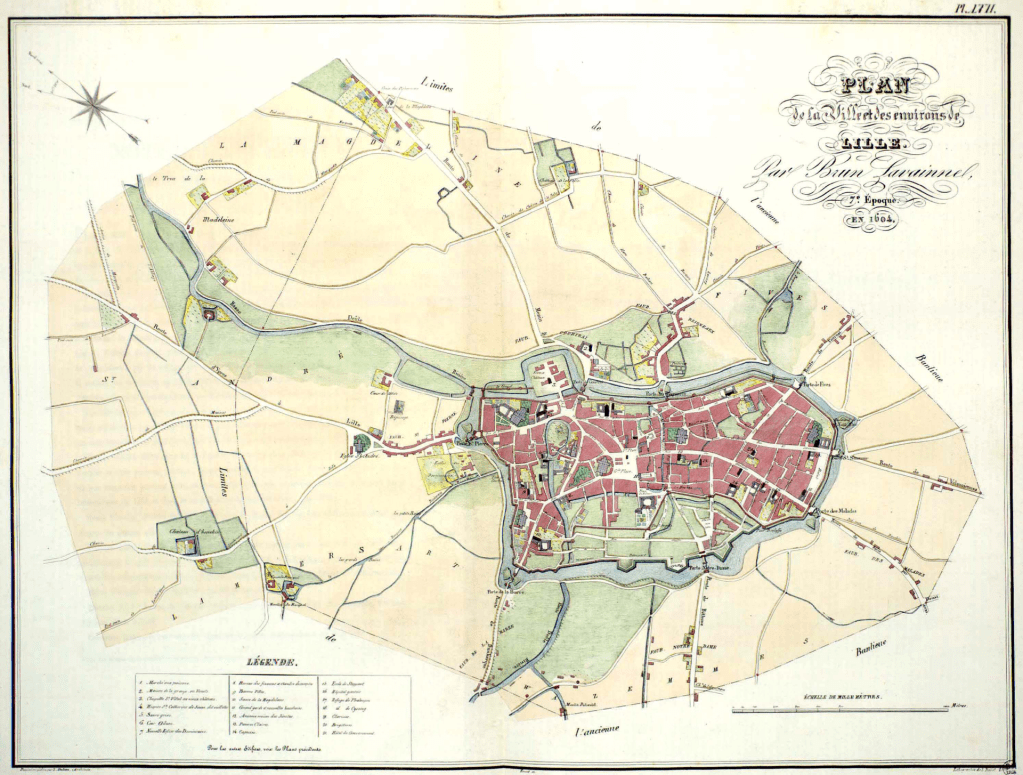
In 1453, Lille would have looked something like this map. Lille has always been a part of Flanders, and people would have spoken either Picardy or Flemish. Due to a political marriage, Lille became a part of the Burgundian duchy, a vassal to the French king, in 1385. When Philippe de Bon (Good) inherited the duchy, the population would have been around 20,000 and an important center of the textile industry. By 1477 control would shift to the Hapsburgs and soon, Lille would become part of the Spanish Netherlands.
Back to Philip the Good… he commissioned the building of a grand new palace in the center of Lille, near to the booming commerce area and financial center. Legend has it that Good Phil loved a lavish party. Building began in 1464 and upon completion looked like this:
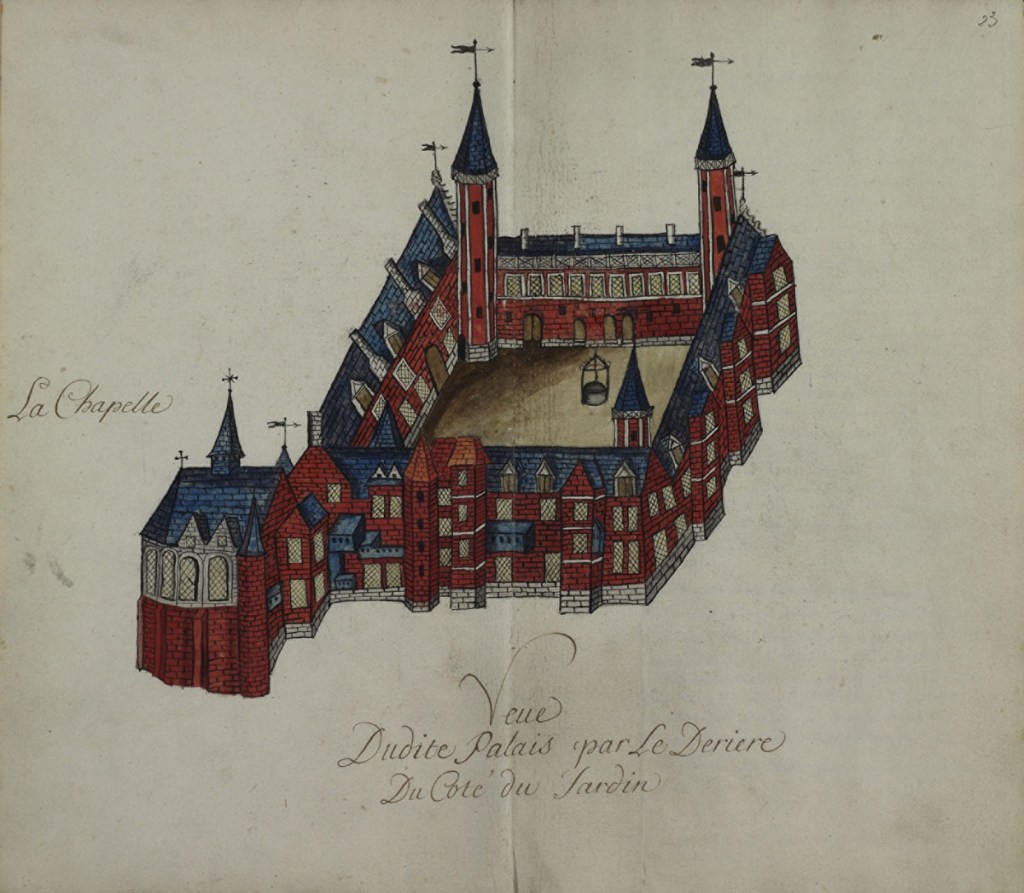
After numerous fires and wars, all that remains is the chapel, the stairs and the guardhouse.
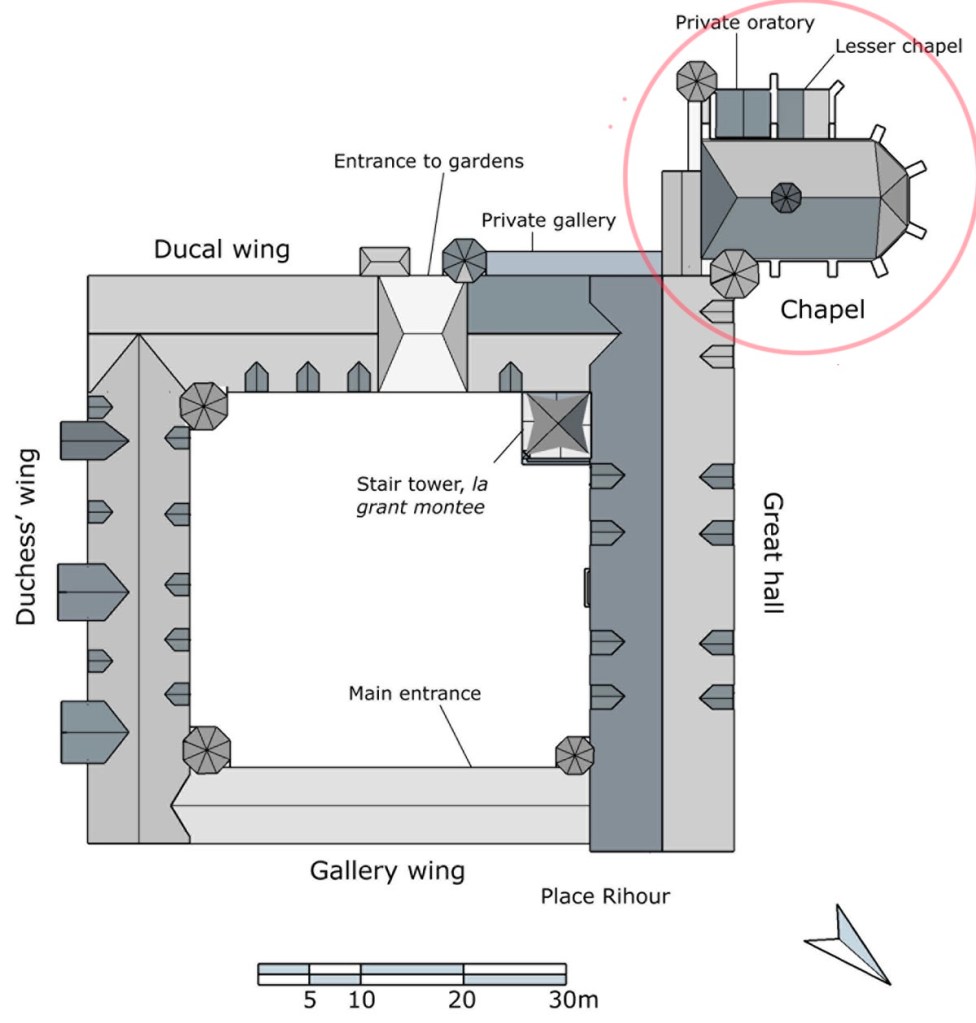
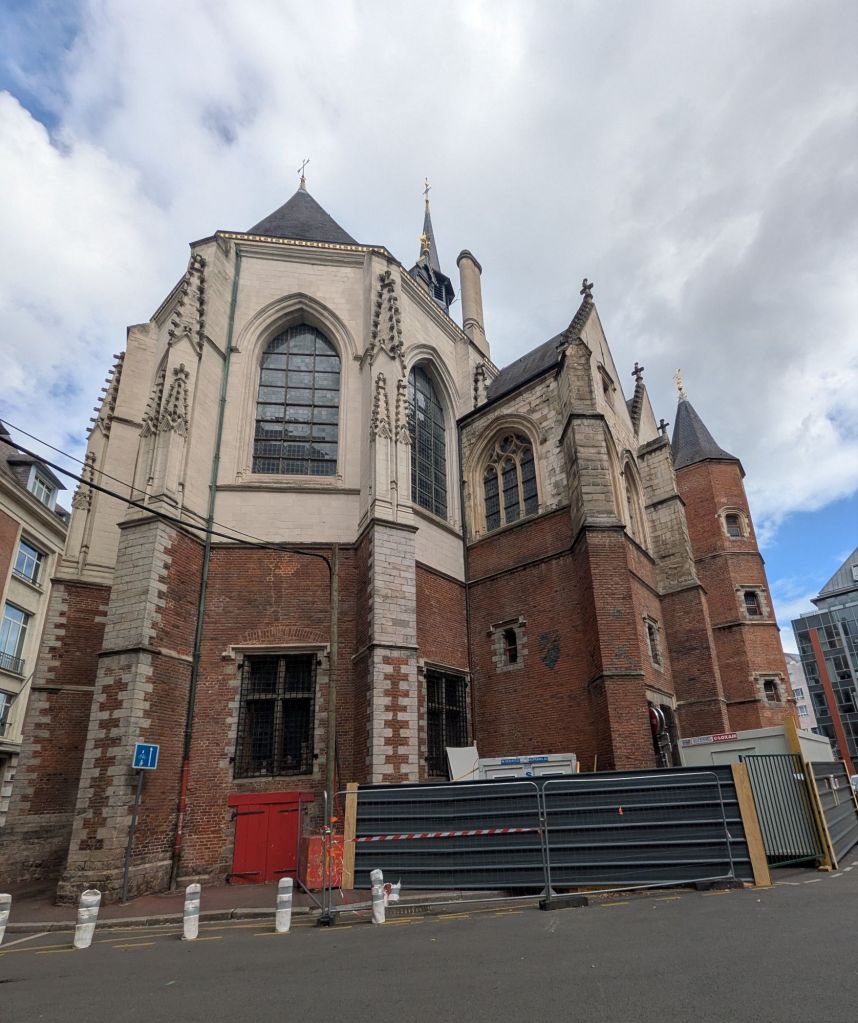
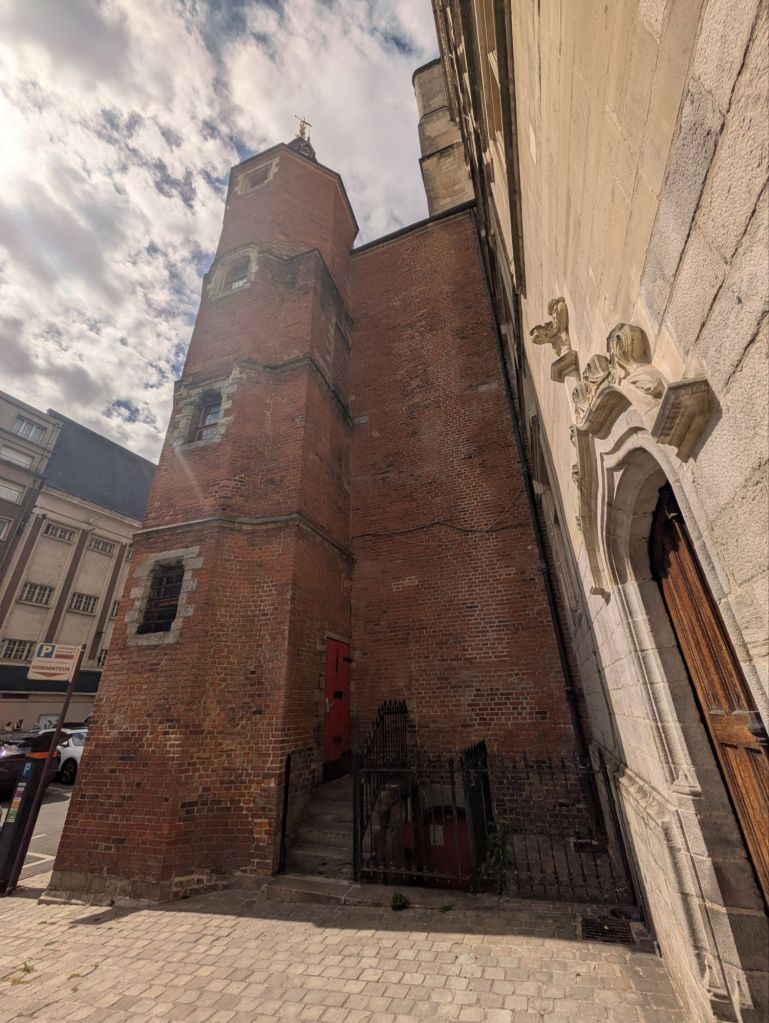
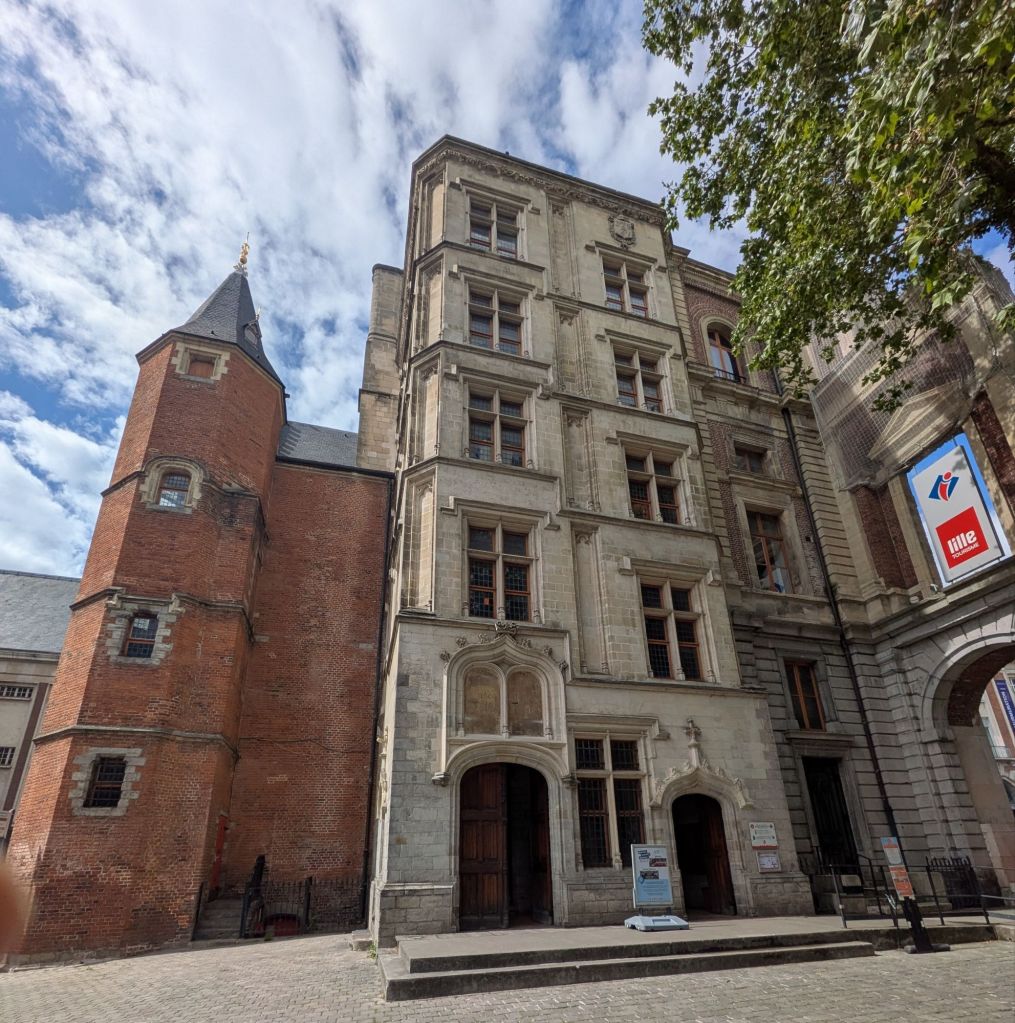
The white part of the building was added in the 1800’s when, after several engulfing fires, the townsfolk demanded the long buildings around the square be demolished. A full restoration was planned, but then ran out of money, so the only addition to the extant chapel and turret was the white building you see here.
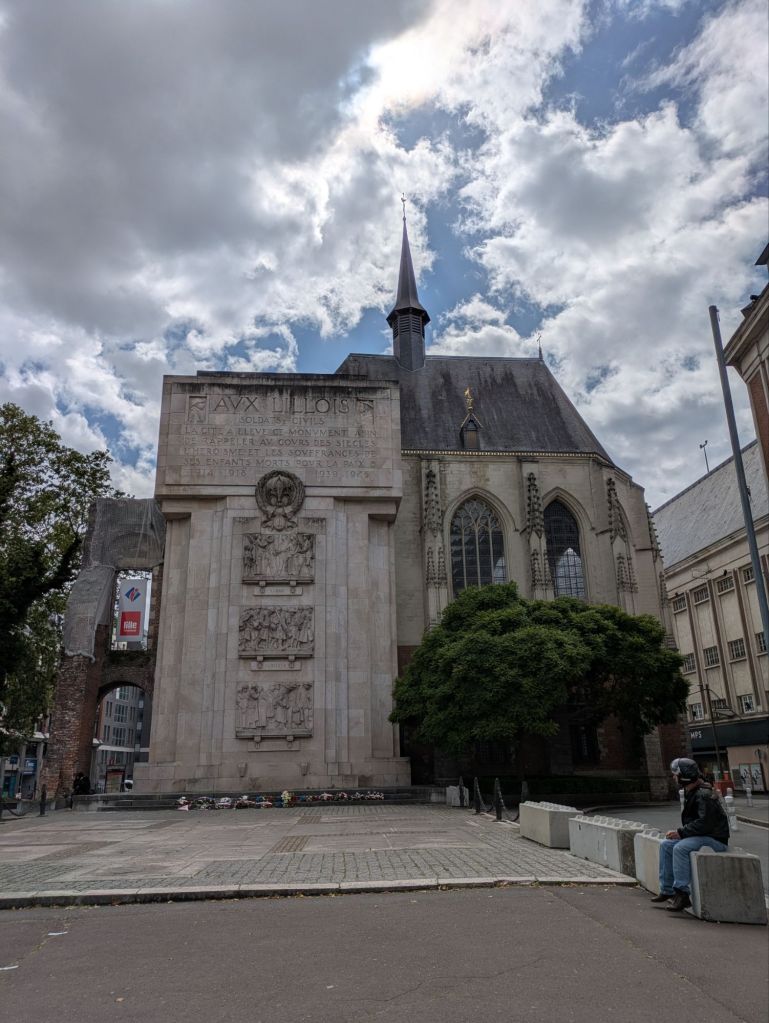
In 1929 a memorial was constructed along the north wall, commemorating those who died in the First World War. A national holiday was just celebrated on 8 May, so flowers are there in memory of wartime deaths.
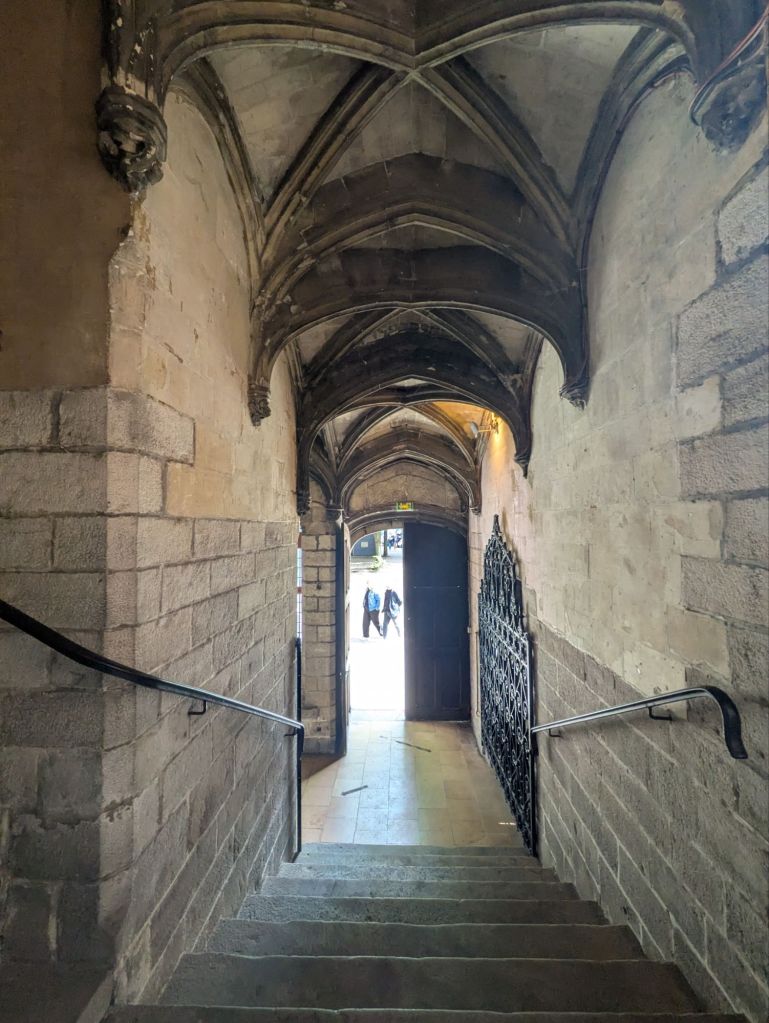
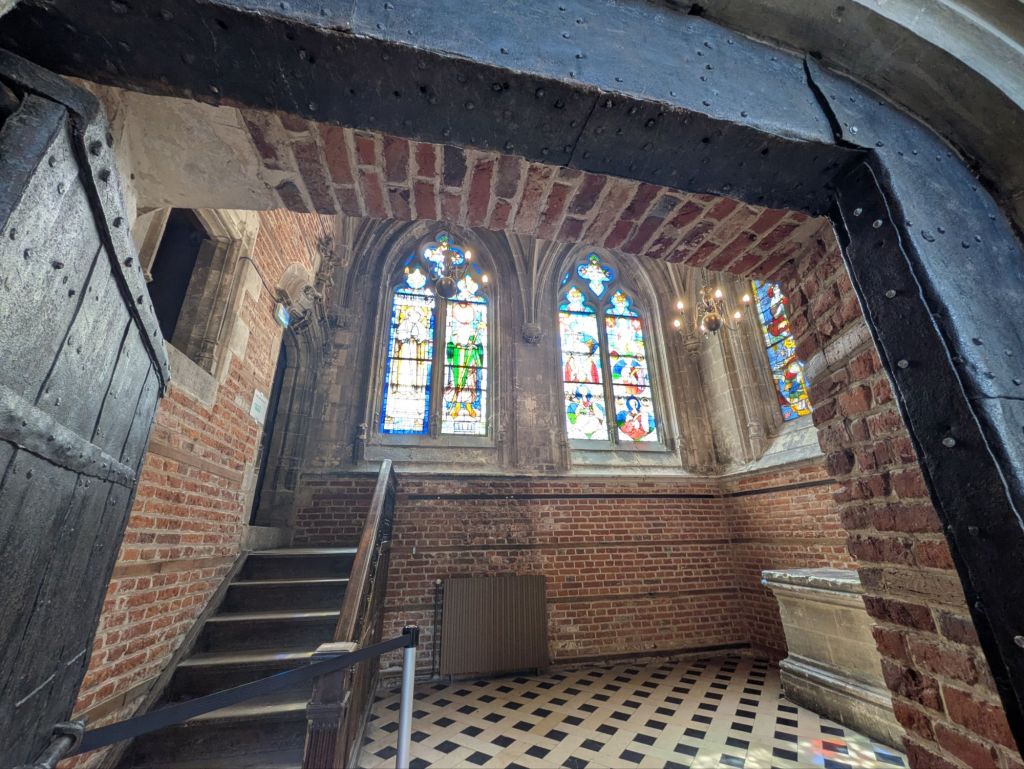
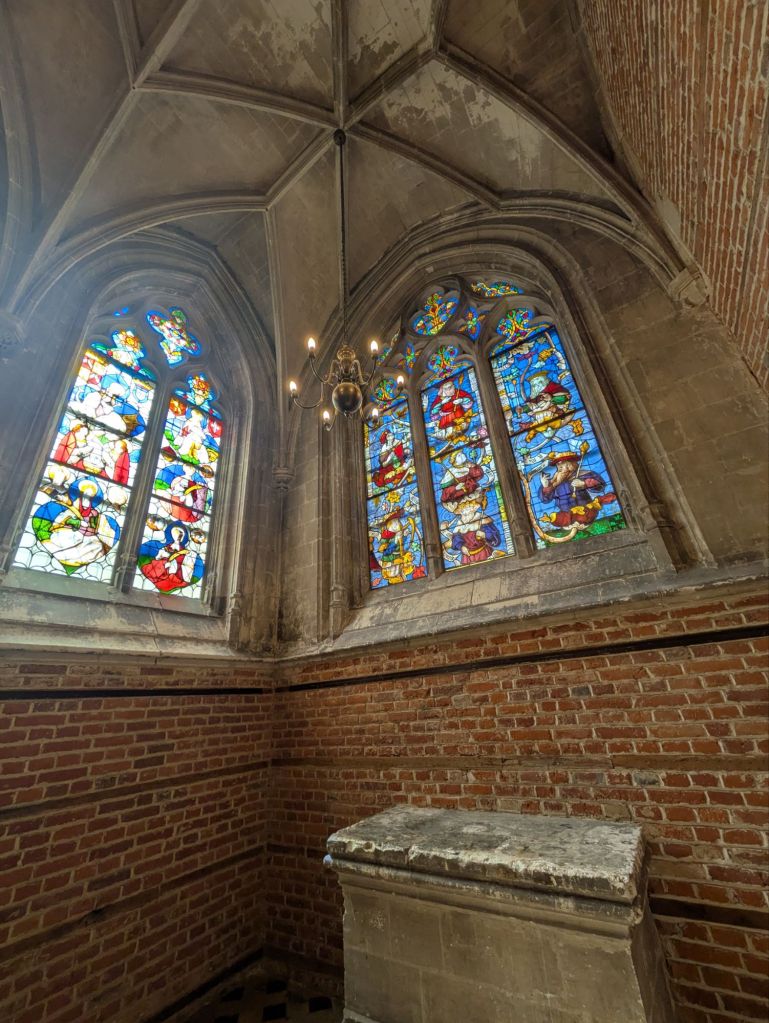
When you first enter the building, there is a nondescript set of stairs to your left. I’ve been in here a few times and never even gave it a second thought. This time I headed up the steps. What I was rewarded with is an amazing space… the original chapel!
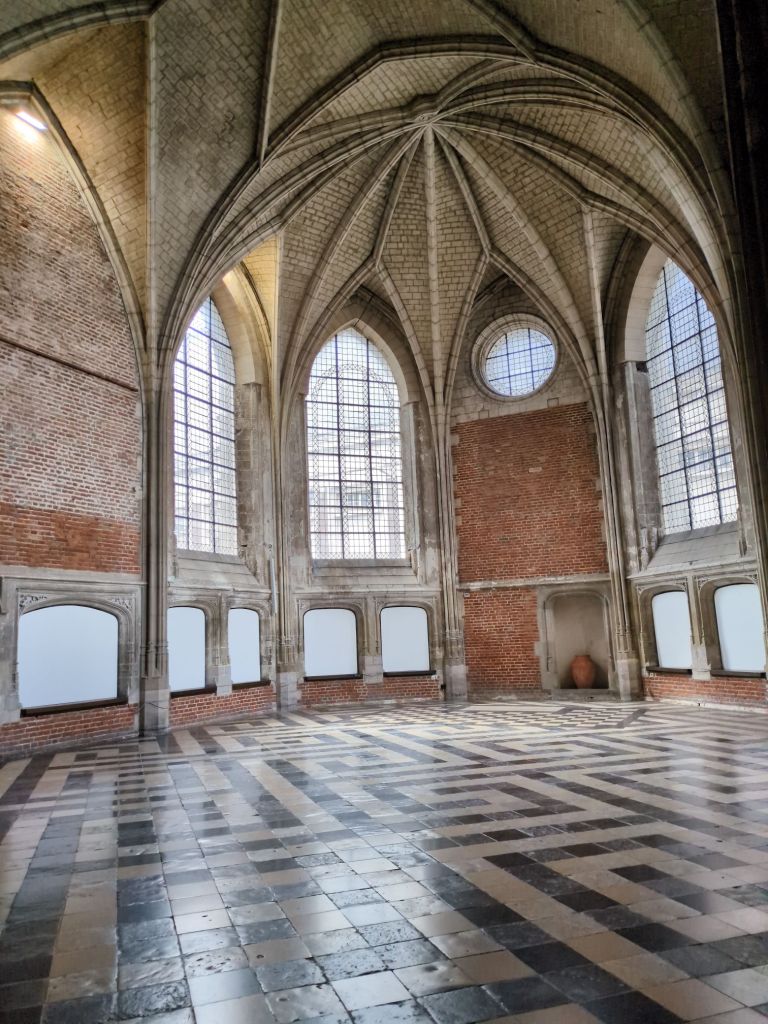
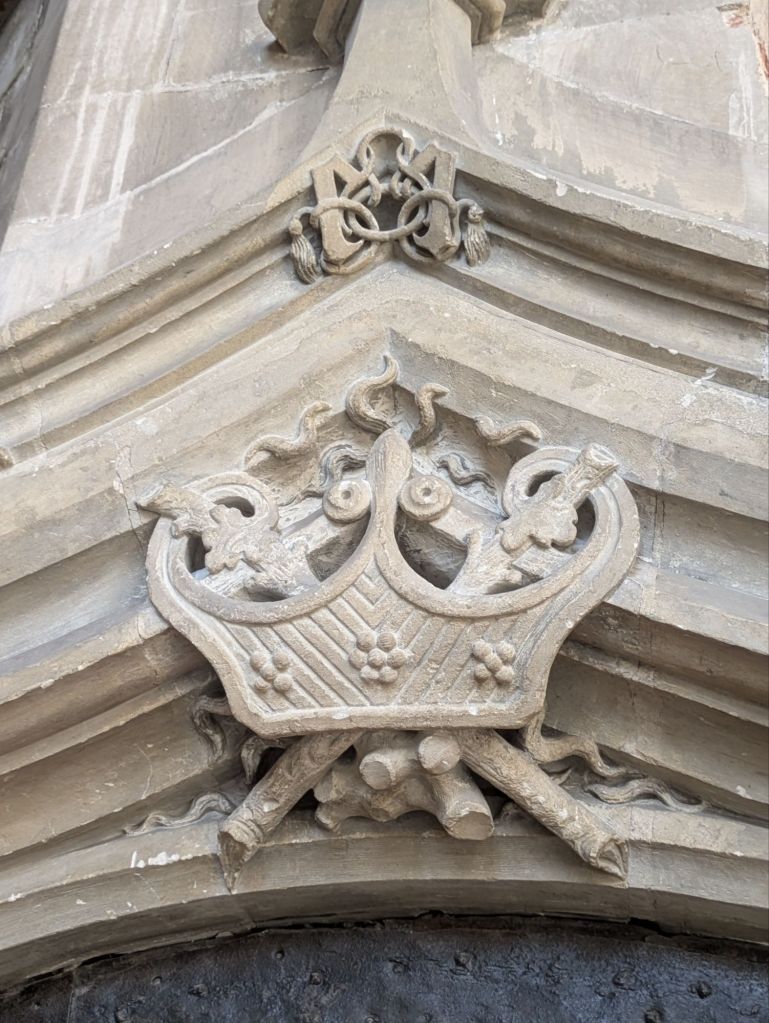
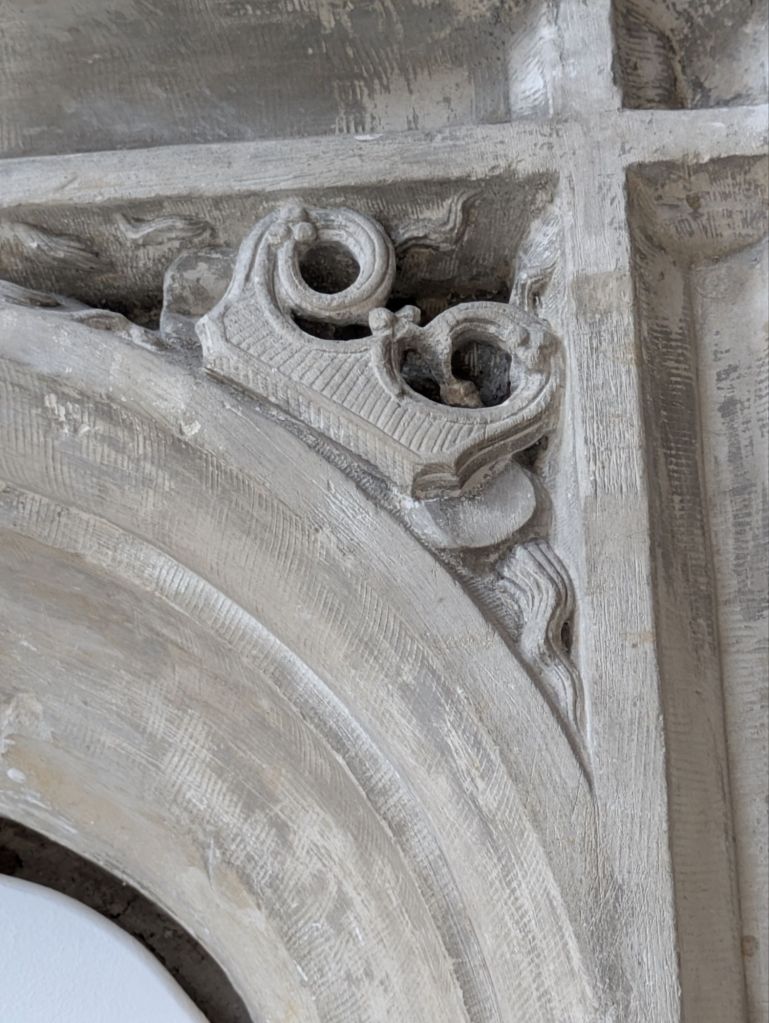
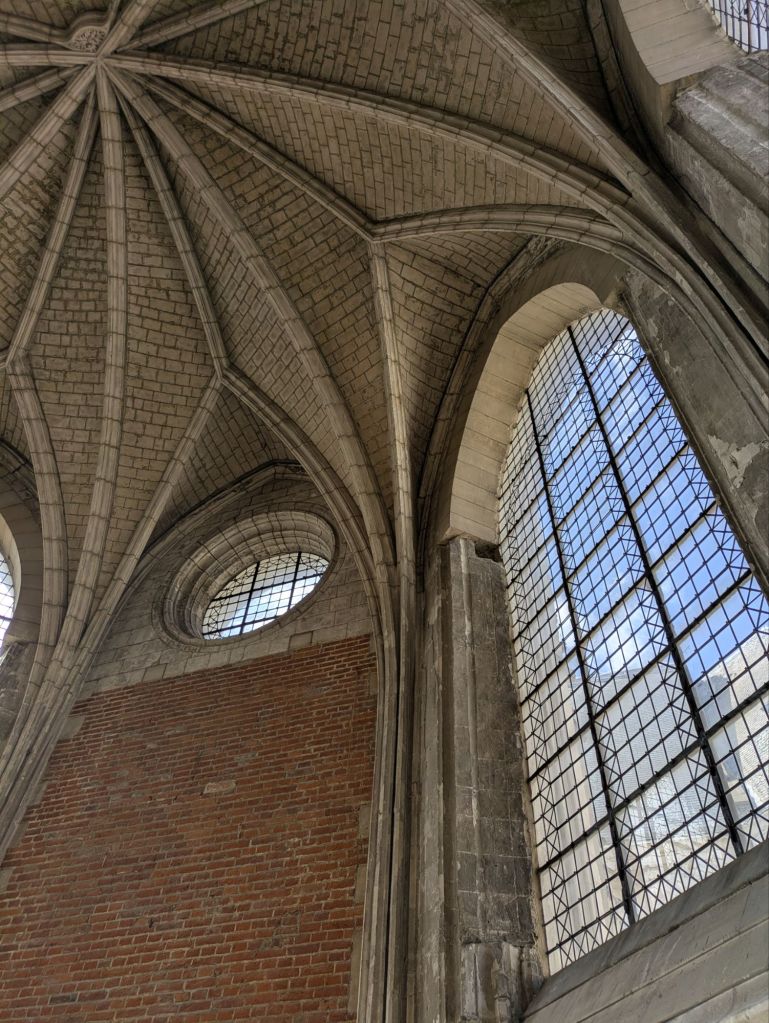
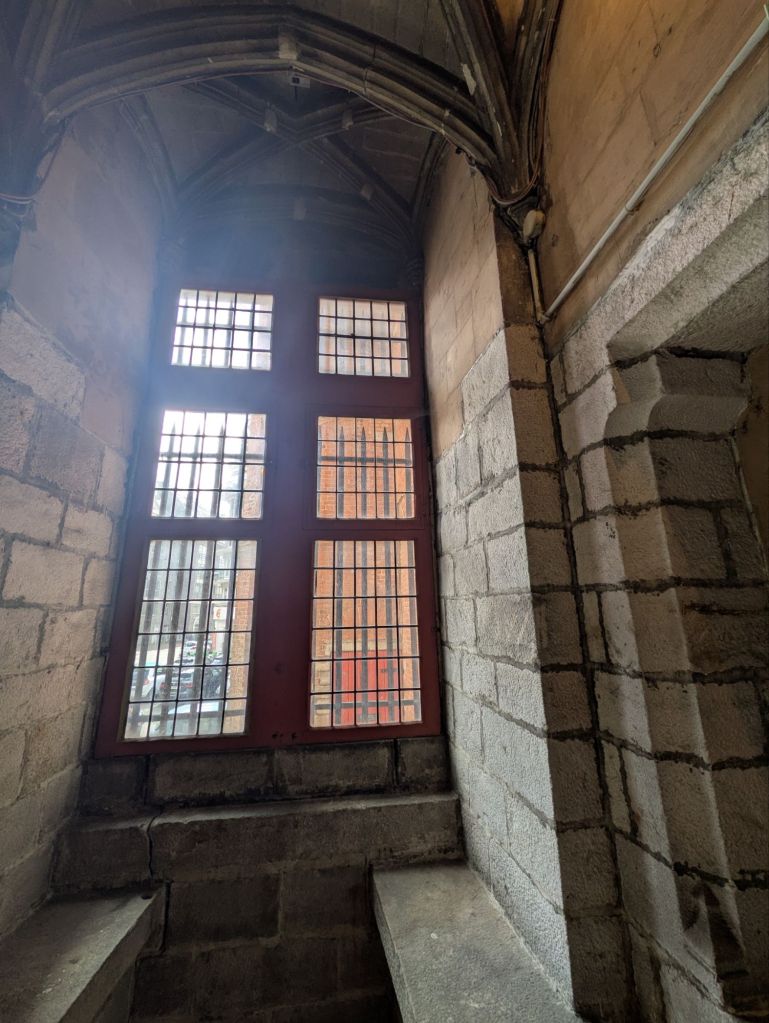
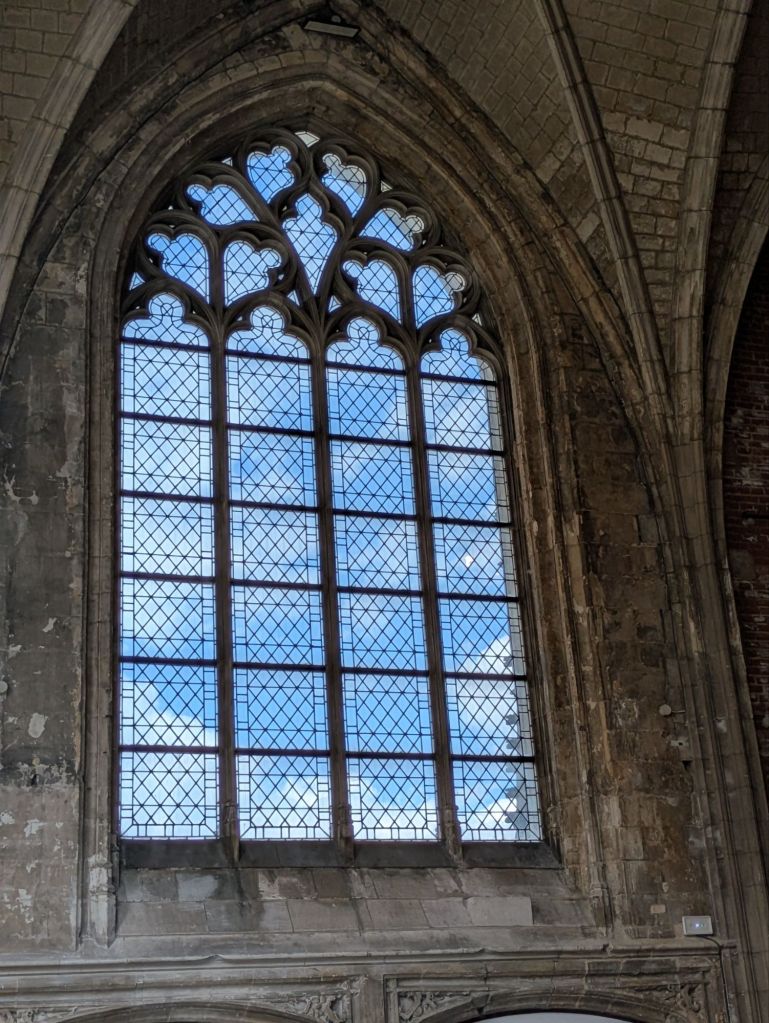
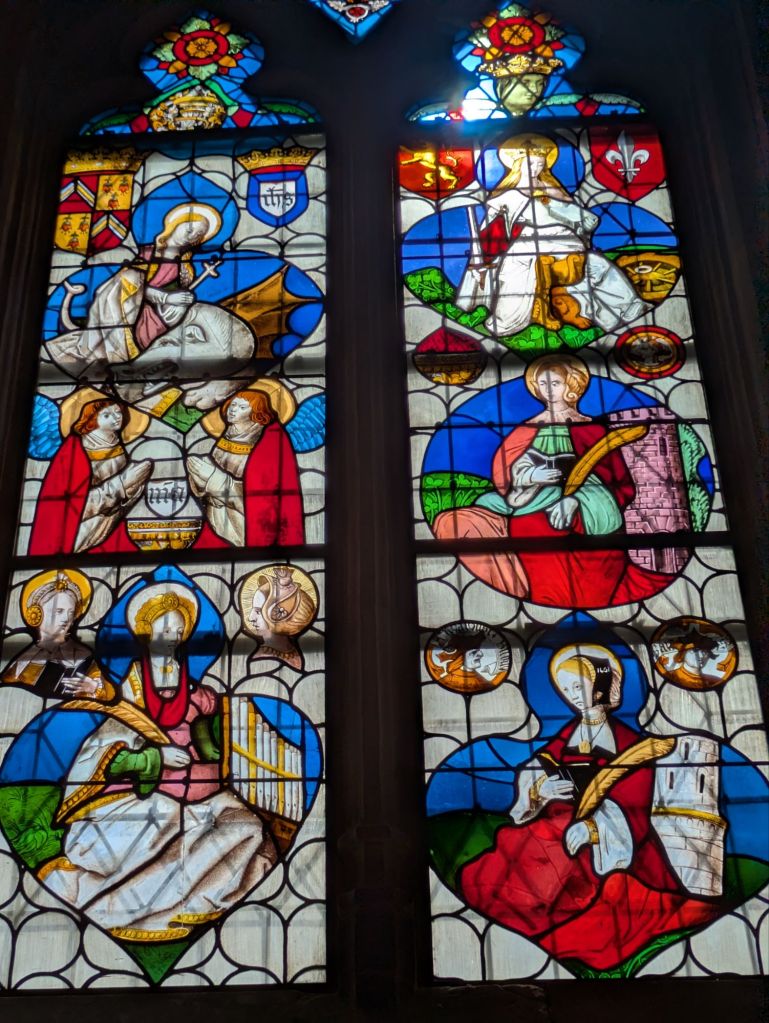
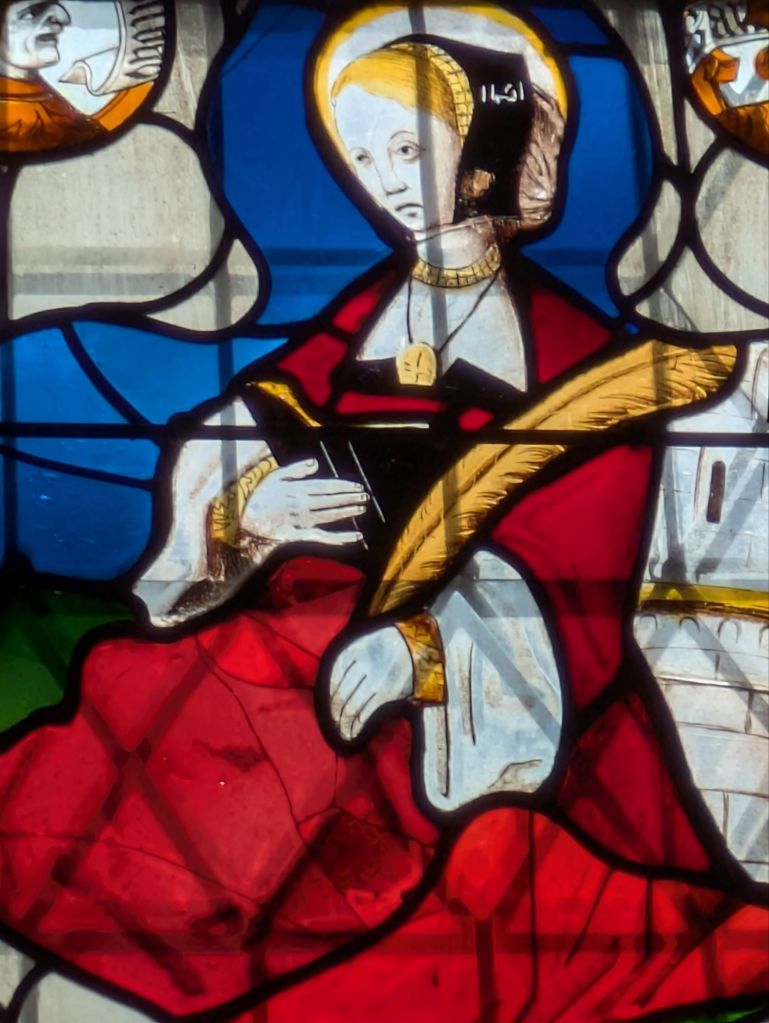
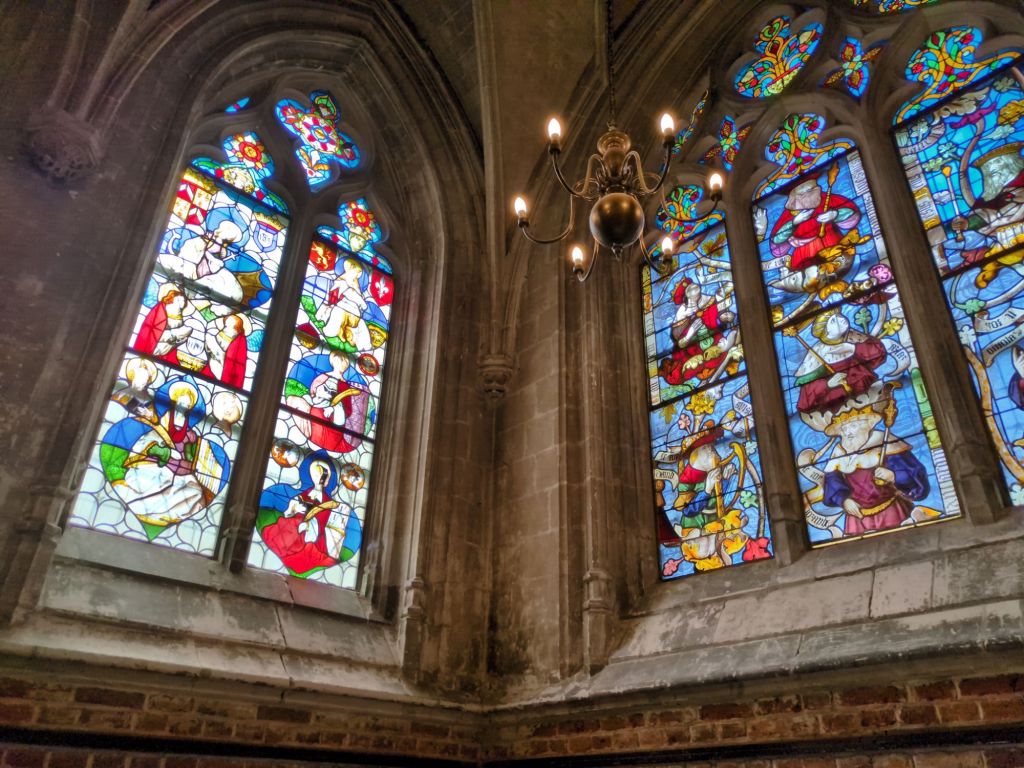
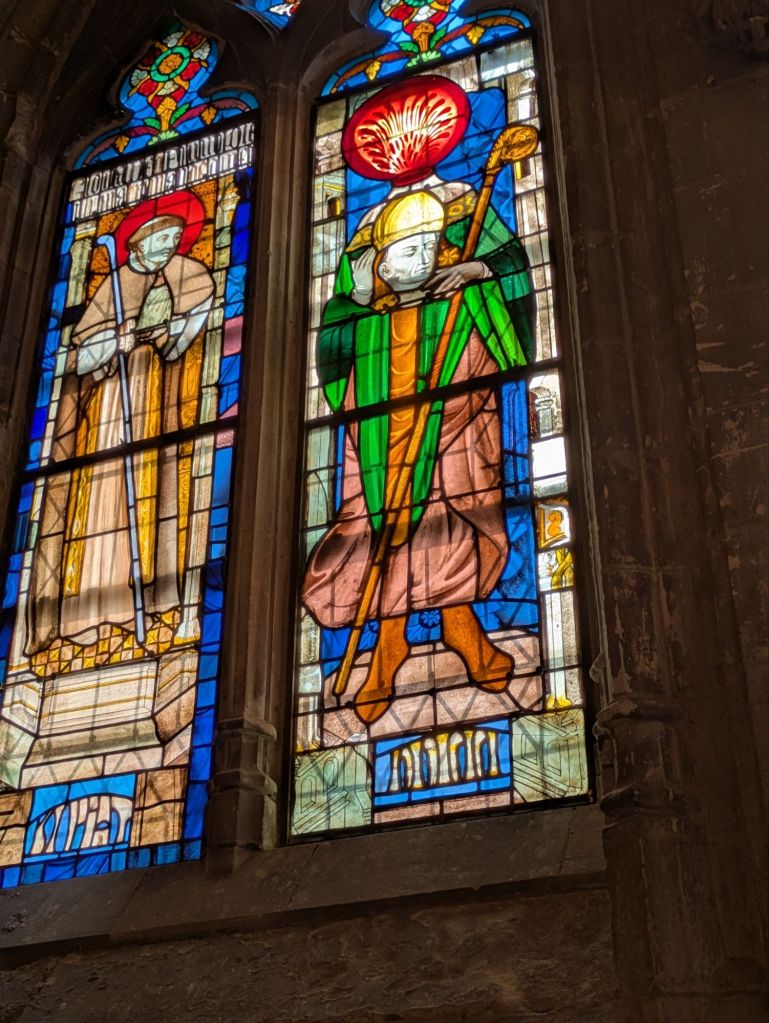
The small private chapel is filled with stain glass windows. One is quite unique in that it portrays all women. In researching these windows, I came across so much disinformation, it’s unbelievable. But if you search you can find archeological studies and according to 2 that I found, the windows came from a church in La Couture, and were restored and installed sometime later, probably in 1868. The women are, left to right and top to bottom: St. Margaret of Antioch (slaying a dragon), St. Catherine (and her symbol is the wheel she was tortured upon), under her is St. Barbara, patron of architects with her castle, and in the lower left is St. Cecelia of Rome… but sitting in the lower right corner is a lady with 1401 on her hat? I want to guess that she is Margaret III, who ruled Flanders from 1384-1405. She had 2 husbands, and she was the mother of Philip the Good! Mind you, I found nothing about this online, so it’s just an assumption on my part.
For more information: https://bm-lille.fr/Default/basicfilesdownload.ashx?itemGuid=127D6436-4AFA-40A4-91BB-7590BD720941


Leave a comment