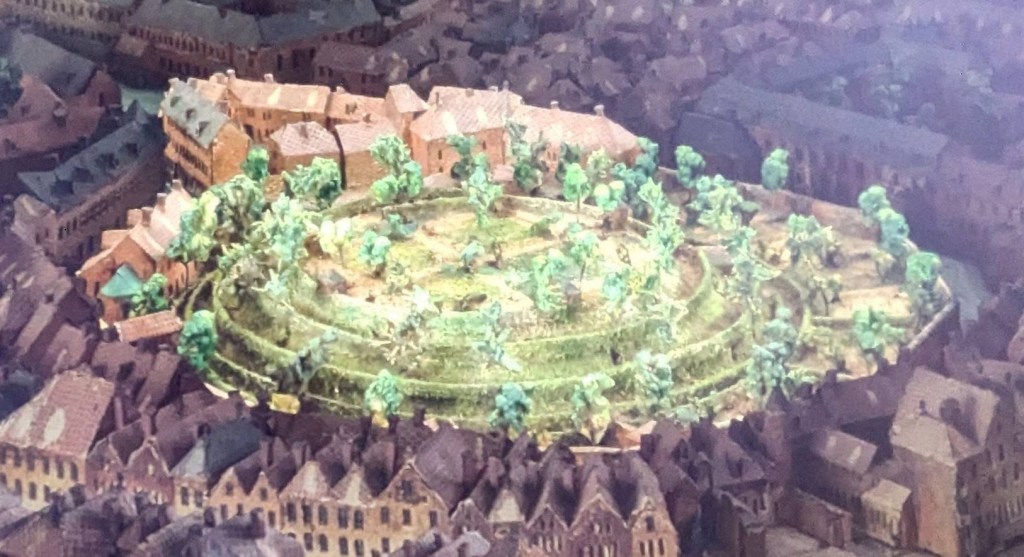
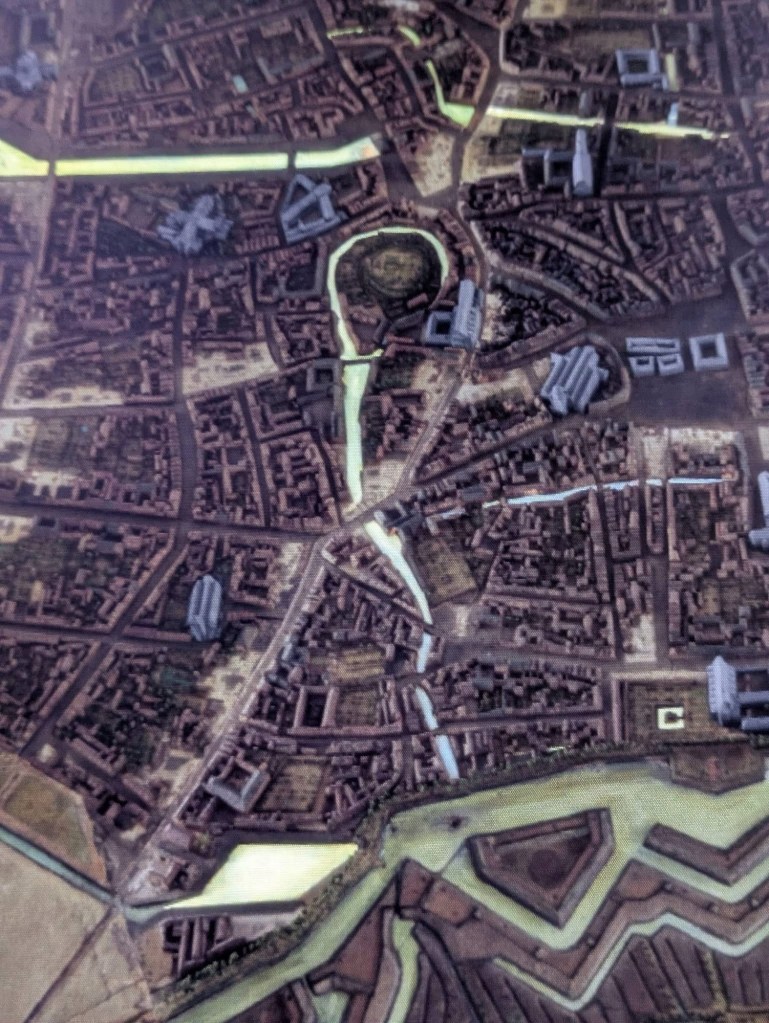
Look at these maps. What do you notice?
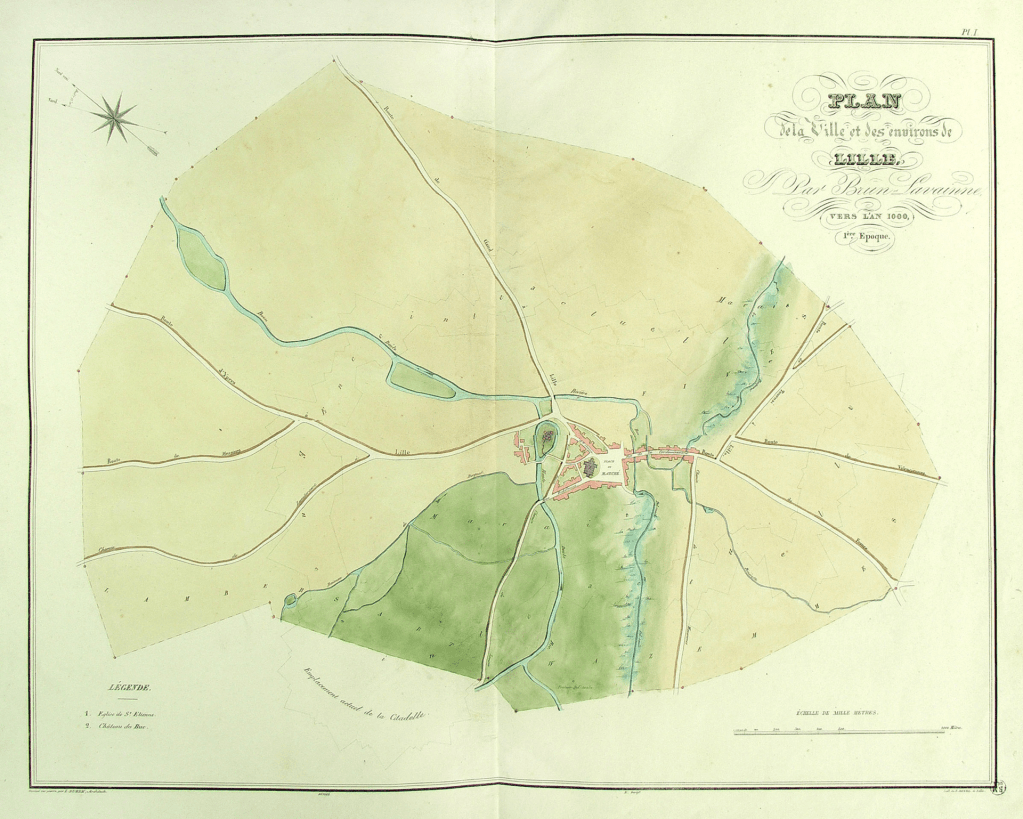
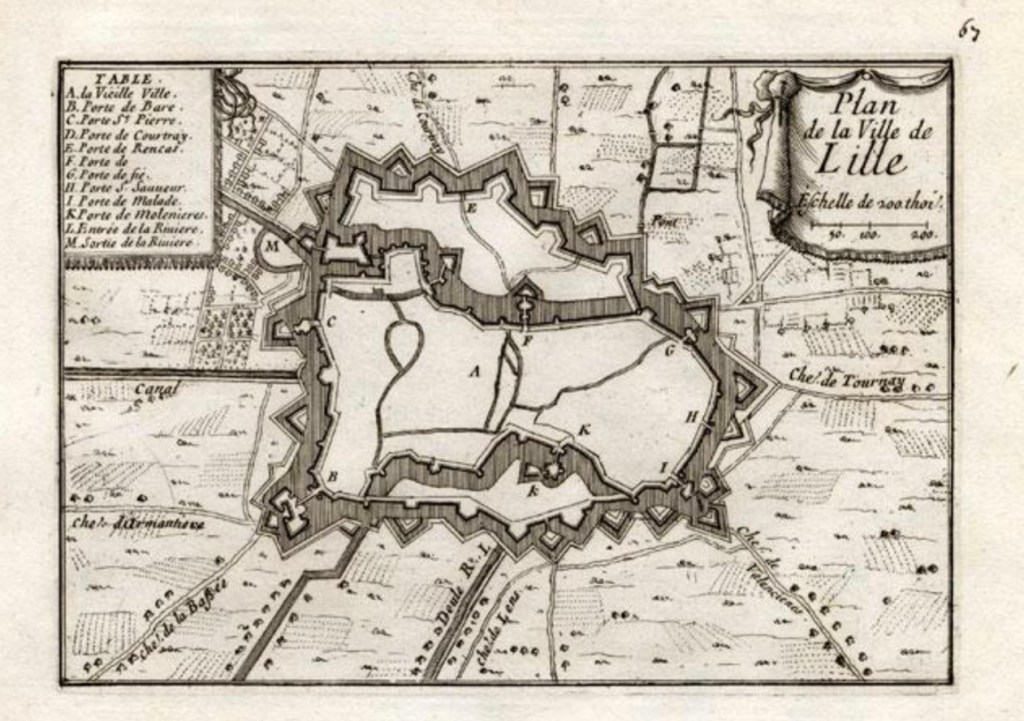
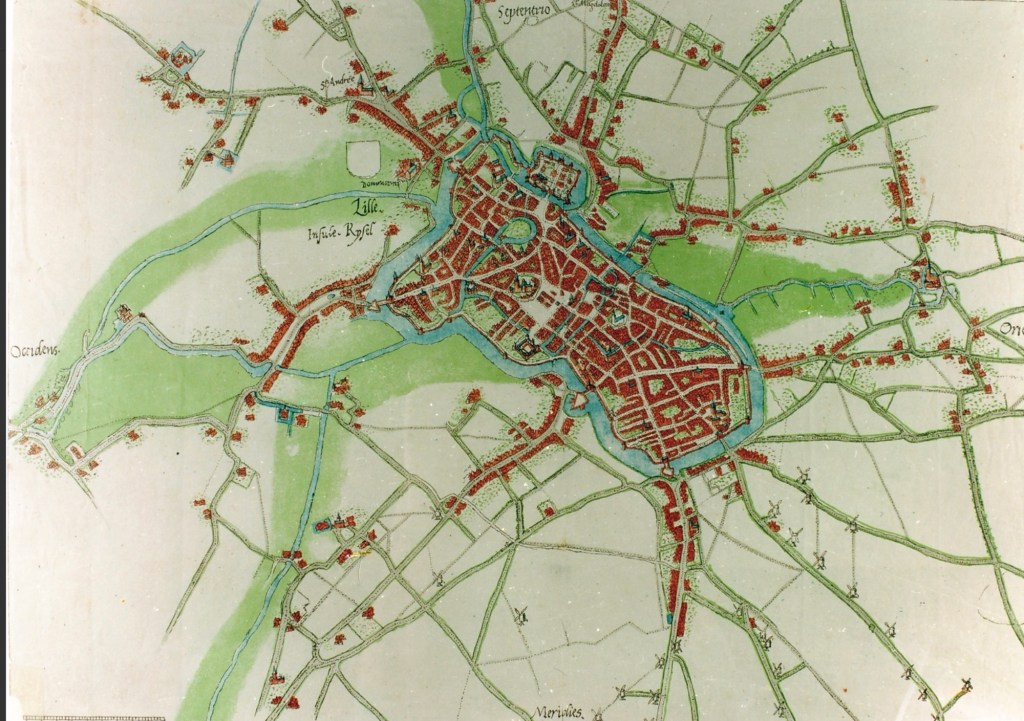
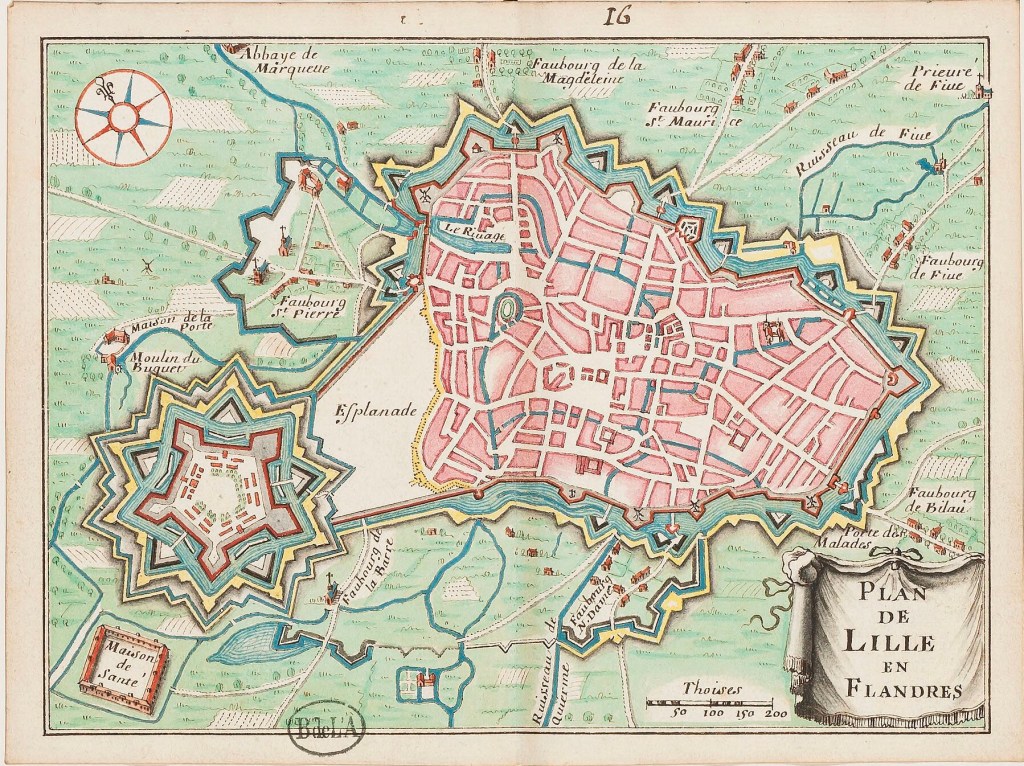
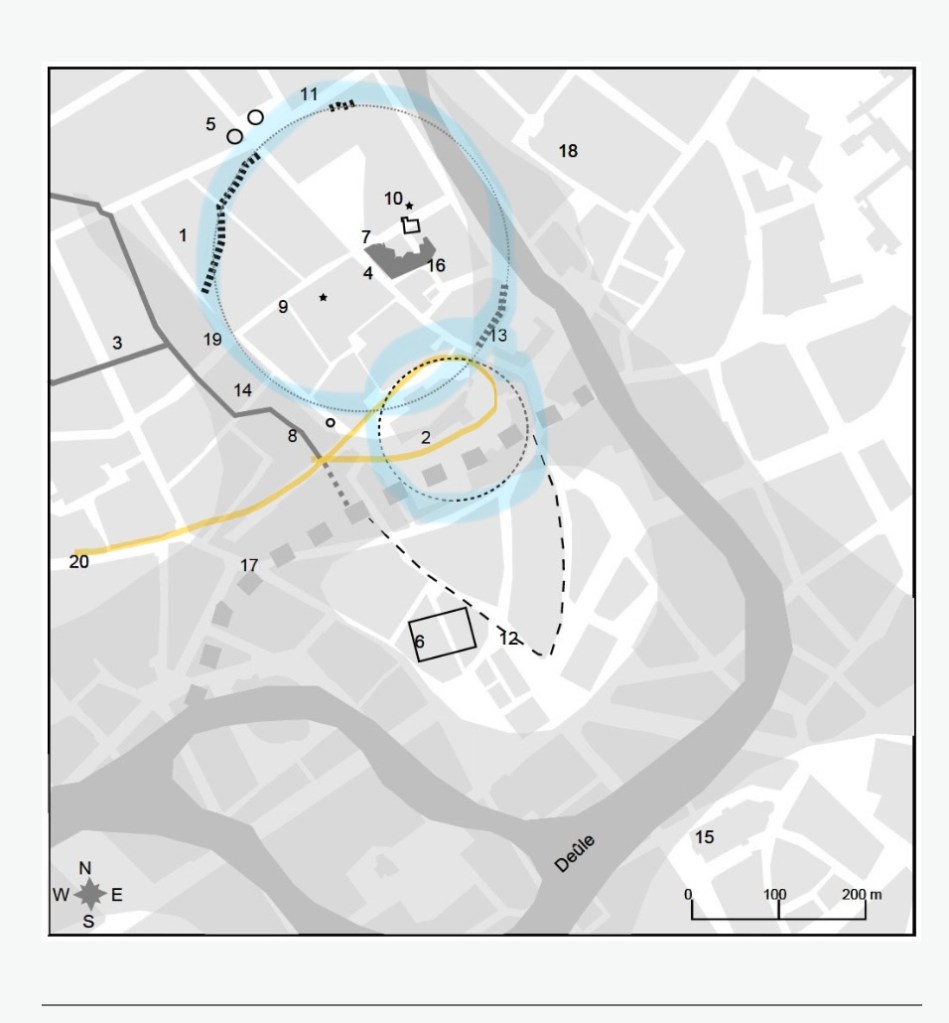
For me, it was the teardrop shaped mass in the upper left in the maps of the city. What is that? And where did it go? This is the story of the very beginnings of our city shaped by a river and how humans changed everything.
If you google the history of Lille, you will always find that the first “proof” that this city existed is a charter written in 1066, in which the Count Baldwin V of Flanders grants permission to build a grand collegiate church in this location. But people were already here: homes, vineyards, farms, graineries, a church stables. As for our little teardrop, that is the site of a castrum*– a motte-and-bailey* castle upon a hill, an an island in the center of the Deûle river. The people living here were Gauls*, but we have no idea what this castrum was called until the Romans gave it the name Insulum which over time became L’isle, then Lille.
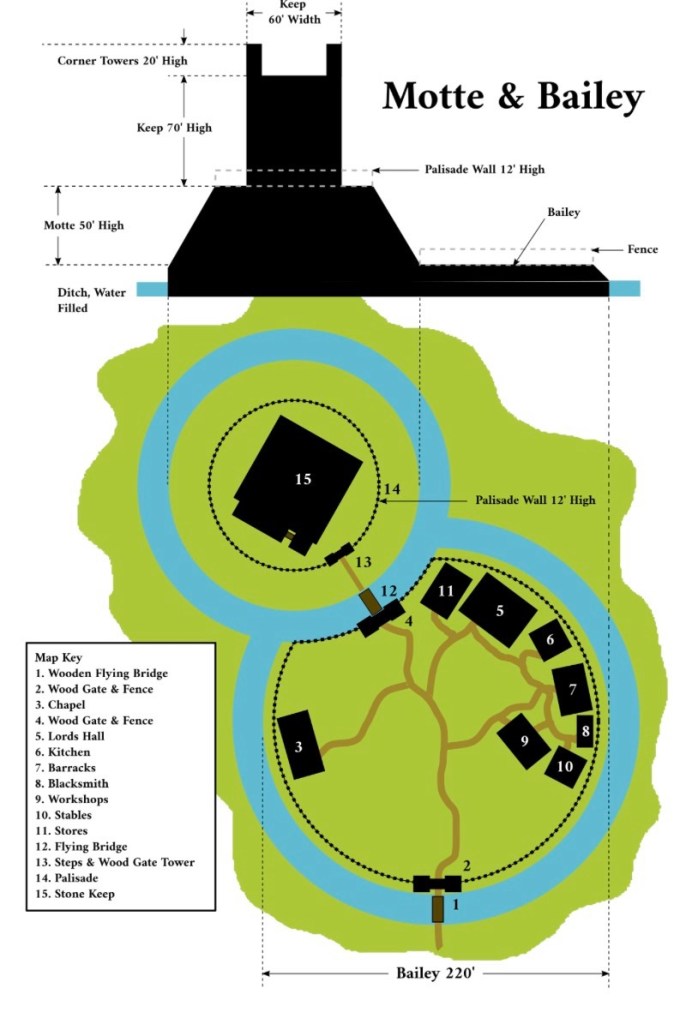
*Motte-and-bailey is a fortified wooden or stone keep situated on the crest of a raised mound, surrounded by a wall and ditch. These structures appeared all over Europe during the 10th century.
*Castrum is defined as a fortified place, a Roman camp
*Gauls were one of the original societies inhabiting France, especially the Northern areas into Belgium and Germany. Really briefly: they were a Celtic people, and after fiercely battling the Romans, fell in the first centuries CE. (the 2 languages combined and early French was created)
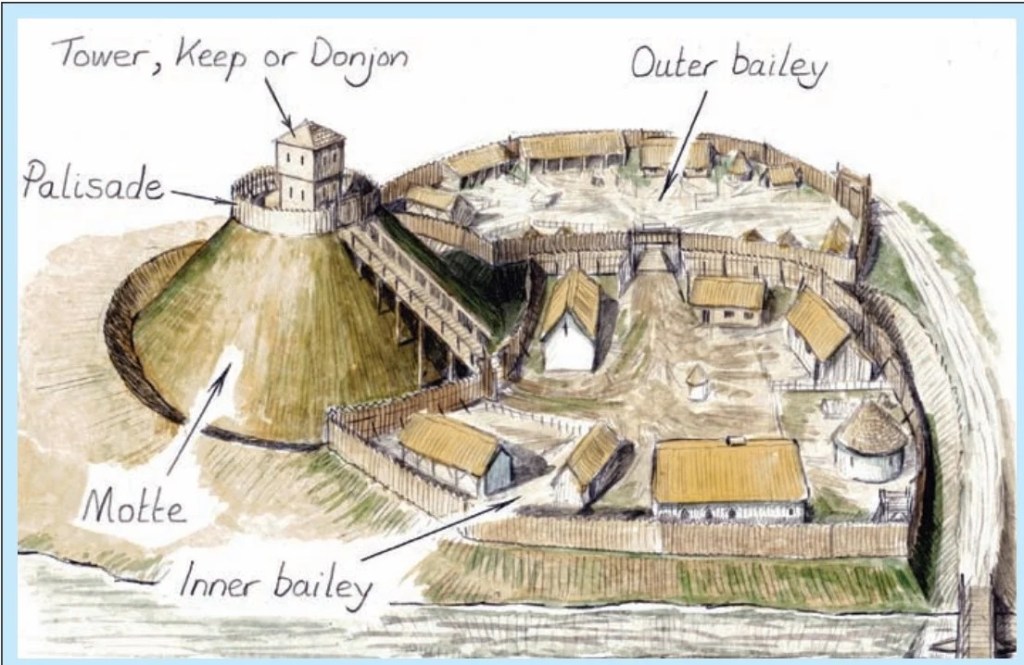
https://warhistory.org/article/motte-and-bailey-castles
What did our castrum look like? Maps referred to it as Château de Bucs*, ruins of the Bucs, Motte Madame,* but this is not helpful when searching on the webs! This motte was present and used in a number of ways by the townsfolk until 1854, when the land was sold to the Catholic diocese in order to build a new cathedral. So, where are the drawings or paintings?
Well, guess what? There is a map made in the 1700’s, based off observations made by royal surveyors, people who actually saw it and recorded what it looked like. To investigate, I ventured out to the Musée Beaux-Arts which possesses a basement full of giant 3D maps of important cities throughout Flanders. These table top relief maps are behind glass under low lighting, making photos difficult. But there is a nice interactive digital application where you can zoom in and highlight different sections.
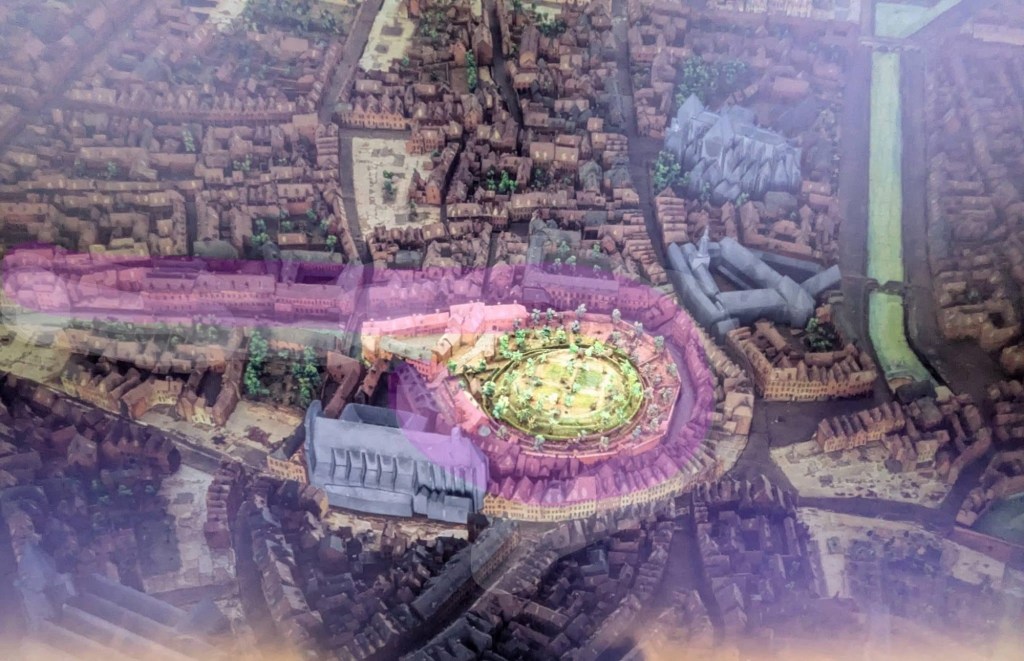
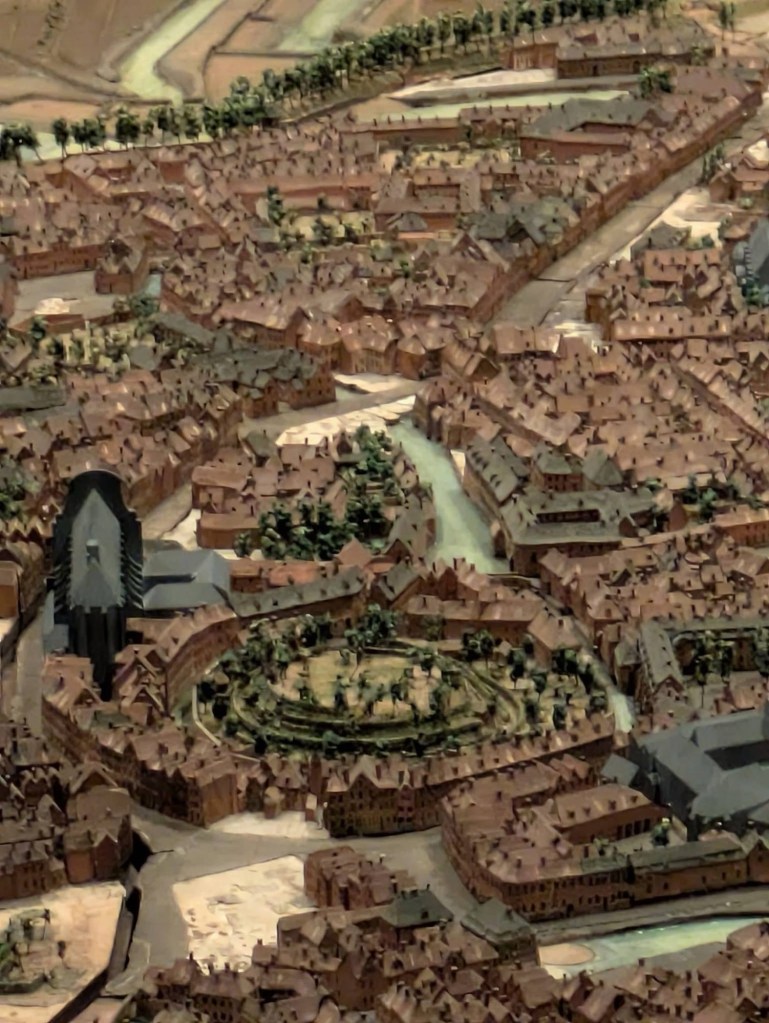
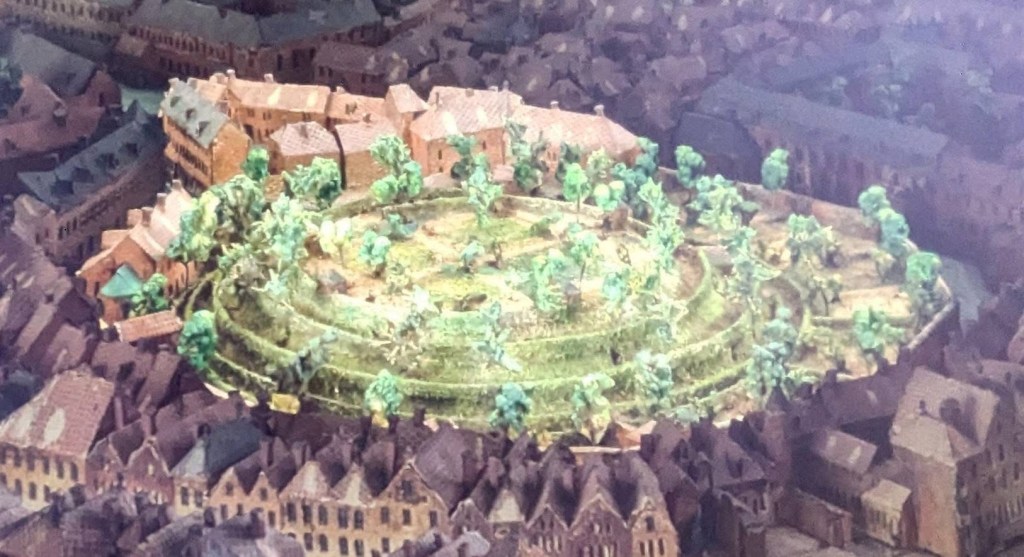
As someone wrote in 1862, “In front of us is a mound covered with greenery, whose top forms a beautiful rotunda and the sides a kind of labyrinth. Well, all this is or has been the castle of Buc, the motte châtelain, the motte Madame, the Dominican monastery, a pleasure house called the Circus, a concert hall, an inn and finally the main office of the Royal Customs which is currently established there.”
In 1853-4 the mound was leveled in order to begin construction of a new cathedral which would become the permanent home to a little statue, Our Lady of the Trielle, which was believed to have caused miracles in Lille over the previous 800 years.
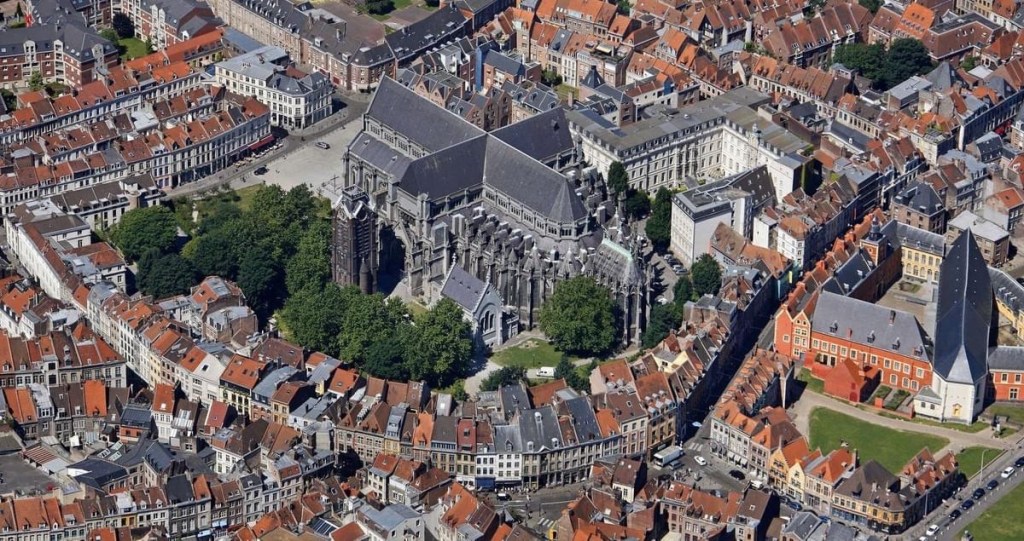
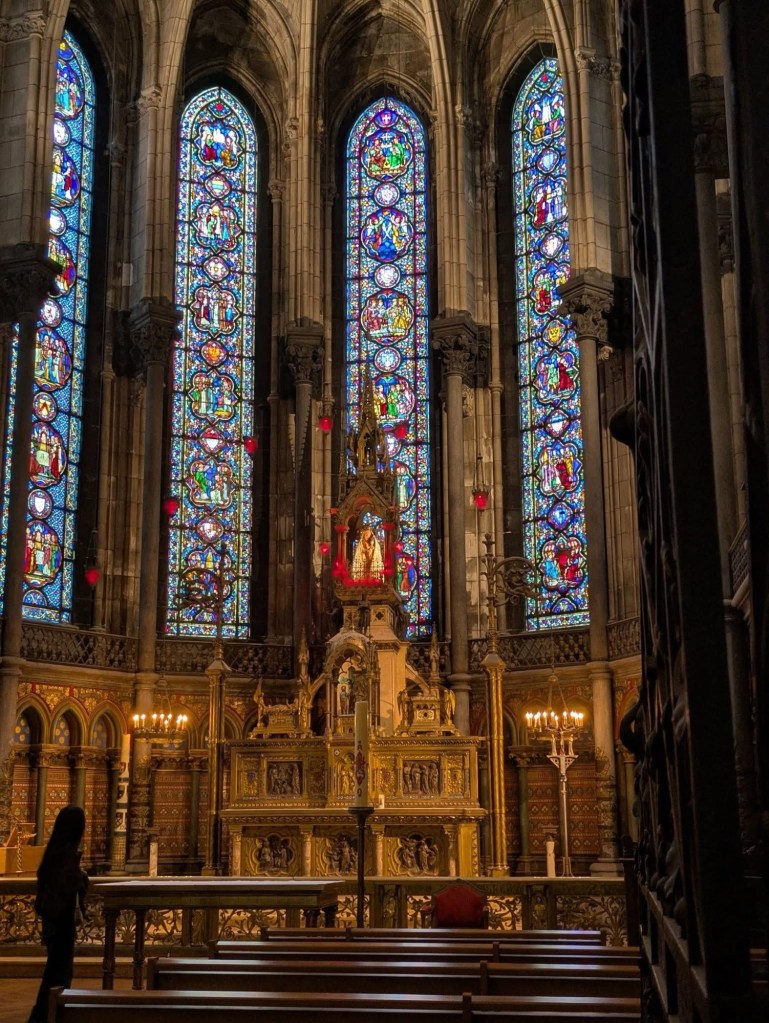
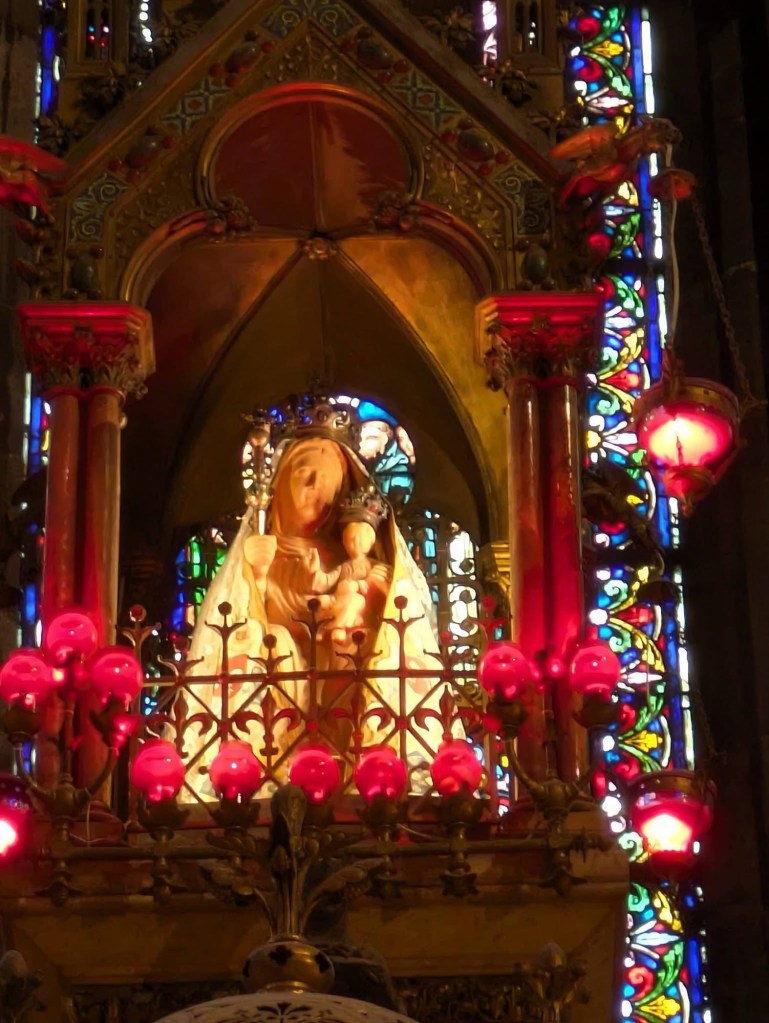
Don’t get me wrong, this cathedral is magnificent and the story it tells through wars and unrest, finally being finished in modern architectural style, is moving and the effect is emotional. But honestly, for me, I wish the Motte Madame had been preserved. It would have been a rare and naturalized tribute to the very beginnings of our city. There are plenty of cathedrals. (don’t @ me!)
Addendum: M. Gilles Blieck has given me quite a few scientific articles to read about this area, so I will update and correct any information here as I become more educated.
Lastly, you can follow my walk along the streets which used to be a channel, which used to be the original course of the river Deûle here:
*And now I answer the question… why is it called Motte Madame? That name was in honor of Marie de Luxembourg, who held the title of Lady of Lille during her widowhood until her death in 1546.
*What is a Château de Bucs? I have a partial answer. The home of Gérard de Buc, who was the chatelain, a kind of governor, of the area of Lille, which was a large county of sorts around the city, during 1097. He was the son of Godwin Buc. I haven’t been able to find out what Buc means, yet. But this Gérard de Buc was certainly an interesting guy, particularly in this story of the arm of Saint George: https://en.wikipedia.org/wiki/Sacred_Relic_of_Saint_George
Fro more information:
https://shs.cairn.info/revue-du-nord-2016-5-page-187?lang=fr&tab=texte-integral
https://nord-decouverte.fr/autour-de-notre-dame-de-la-treille-lille/


Leave a Reply