The secret is out, and we did!
Before I moved to France, I thought that a château was a fancy country estate for rich people. But in France, a château more than likely will be a real life castle. Wherever you go in northern France, where I live, every town will have its own château, and it will be what we Anglophiles think of as a castle. And since, as I have learned, Lille has been a very important financial and trade center since at least the 11th century, it seems like she would have deserved her own castle. So where is our château?
Lille sits in the area called the County (as in, ruled by a count) of Flanders, a historically prosperous area spanning northern France and most of what is now Belgium. This area was fought over by the French, the Dutch, the Burgundian dukes, a multi-National collaboration under the German Holy Roman Emperor, and even Spain. Lille was known as one of the capitals of Flanders, famous Europe-wide for its special cloth, a lightweight weave of linen and wool, and later, cotton. What is really interesting to me, is how often the city was destroyed and rebuilt, from her ramparts to her churches, both by wars and fires, and sometimes it was simply a decision made by either the current ruler or her citizens.
Musée de l’Hospice Comtesse de Lille
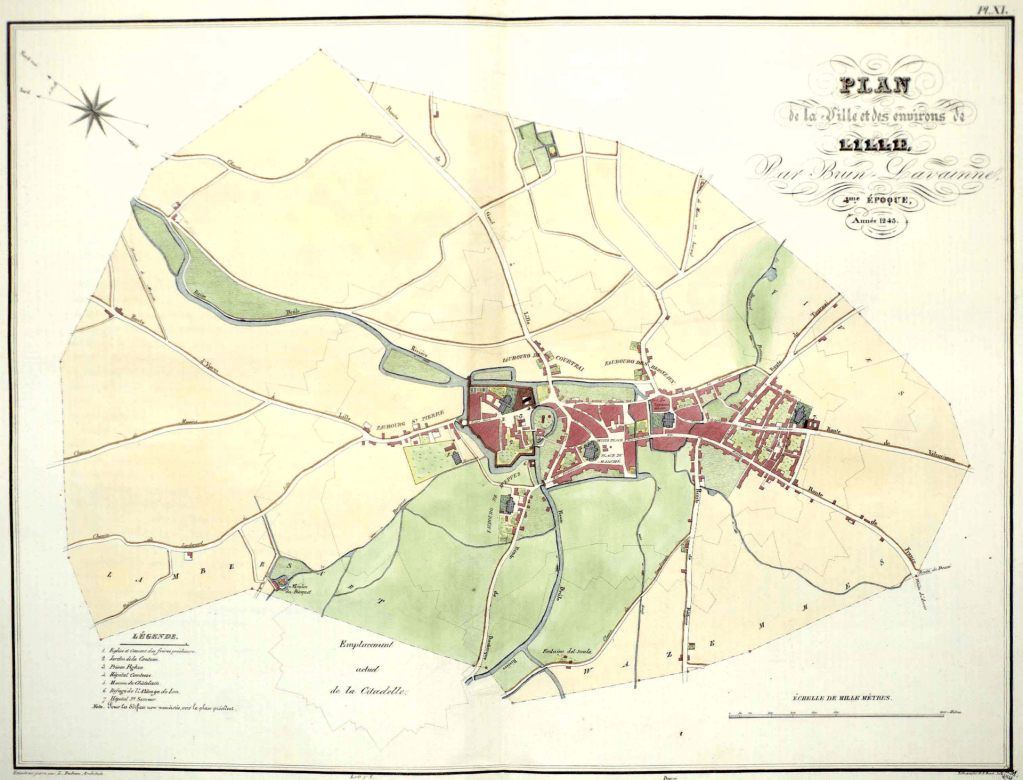
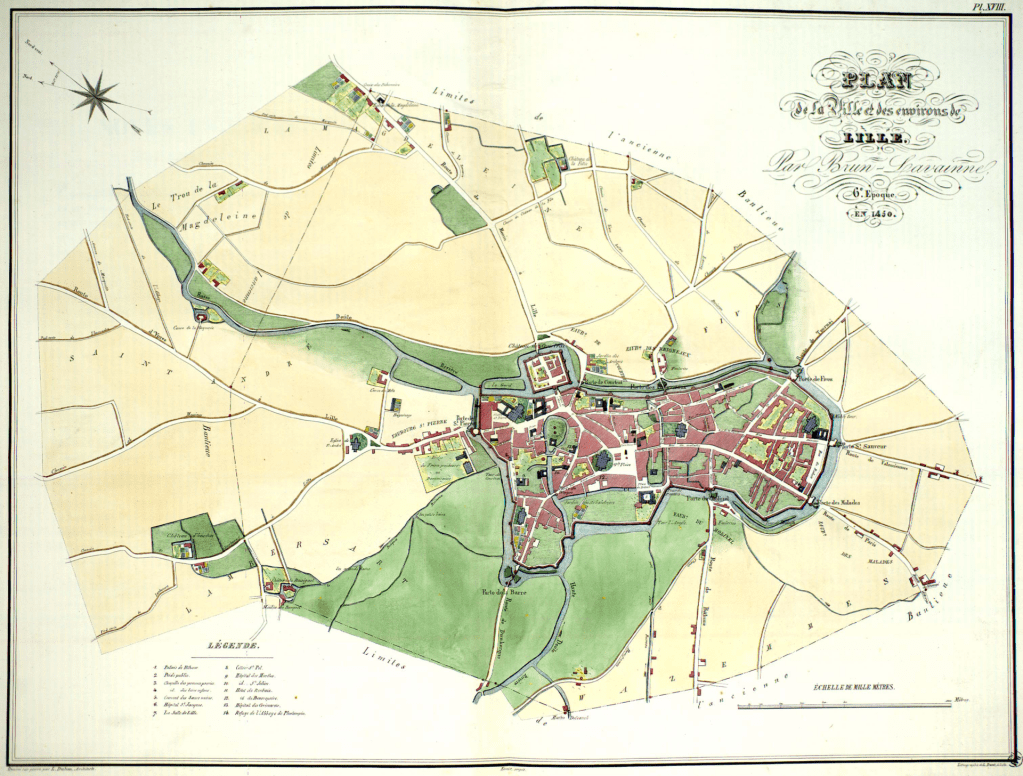
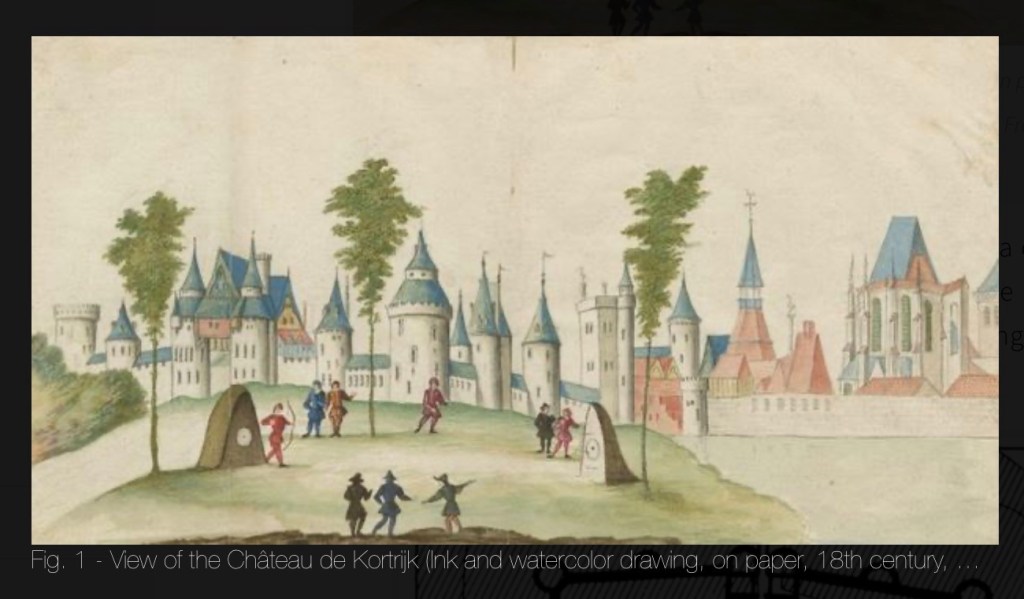
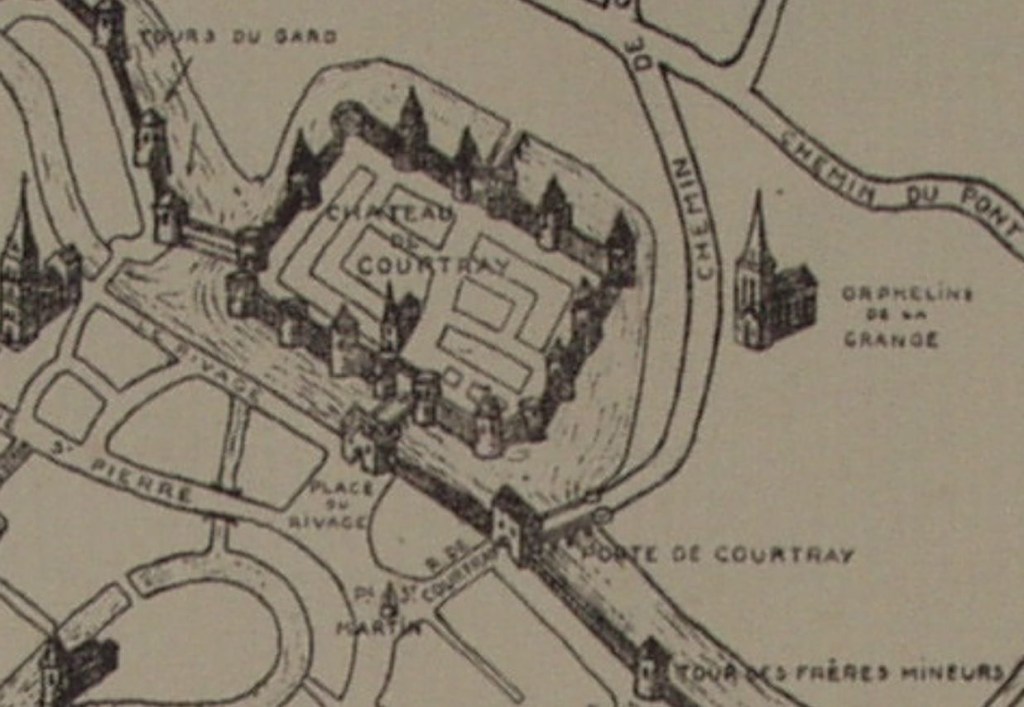
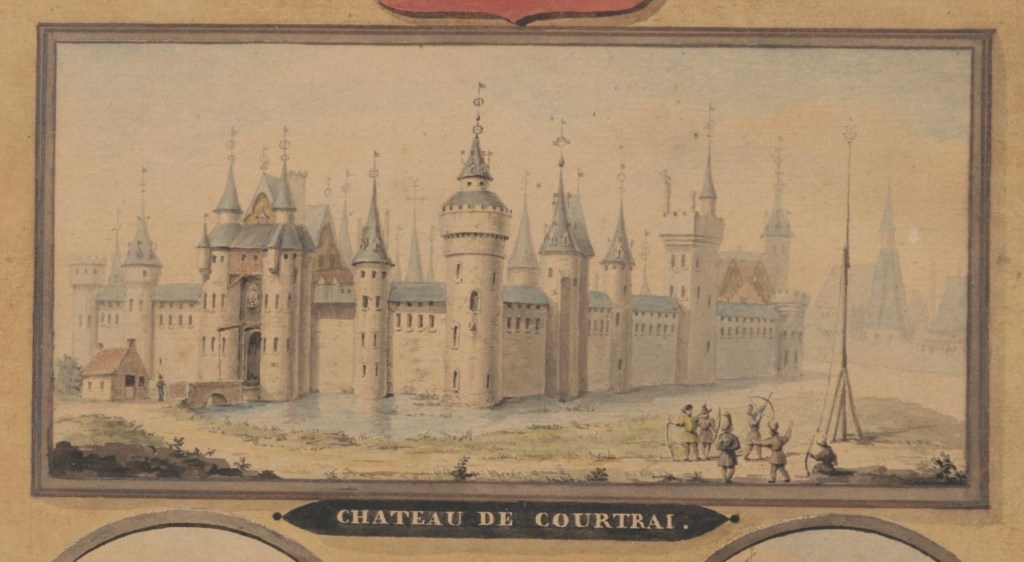
Lille’s castle, the Château Courtrai
The time is the 12th century and Lille is ruled by the latest in a great line of French counts and countesses. Flanders is a vassal of France, independent but owing fealty to King Philippe le Bel. The current Count, Gui Dampierre is the nephew of the great Jeanne Comtesse de Flanders, who ruled Flanders after the imprisonment of her husband. Part of the agreement between her and her cousin, the king, Louis VIII, was that she would not rebuild the ramparts around the city which had been razed during the latest seige, so Lille was left largely unprotected. (More on her remarkable leadership later) Gui, however, got cocky and attempted to sign an alliance with England to oust French control of the city. So he was arrested and Philippe decided to make a more permanent presence in Lille. To that end, he ordered a grand château to be built and began construction in 1289.

This was a time of great unrest in the worker classes who wanted to return to the Flemish confederation, and the upper and ruling classes who needed France’s power to maintain their wealth. Philippe realized he couldn’t just watch from Paris. He needed his army here. The château served to house a permanent garrison and massive stores of artillary.
Musée de l’Hospice Comtesse de Lille
However, Phillipe died in 1314, and after a bit of switching back and forth between France and Flanders, Lille fell into the hands of the Bourbons via a marriage, and they would rule Flanders for the next 108 years.
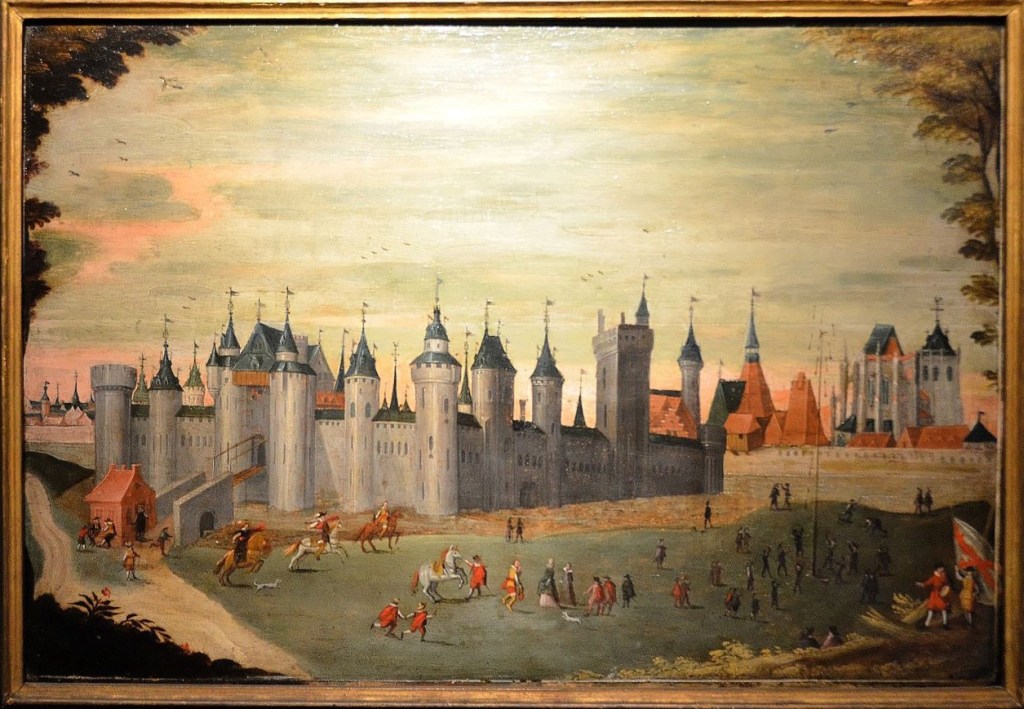
Musée de l’Hospice Comtesse de Lille
It is very interesting that no king, duc or count ever resided in this castle! It served solely as a military post. I wonder if this is why it was never really written about much nor painted in its time. It was never the place where luscious banquets were given, nor royally fêted.
Any royalty or nobles stayed nearby in the old Hôtel de la Salle, which was part of the original Collégiale Saint-Pierre, chartered in 1066. This served as royal residence until after the Palais Rihour was built in 1453.
The castle continued to house military garrisons, to function as a rest stop for the passing armies, and was crucial to the defense of the city.
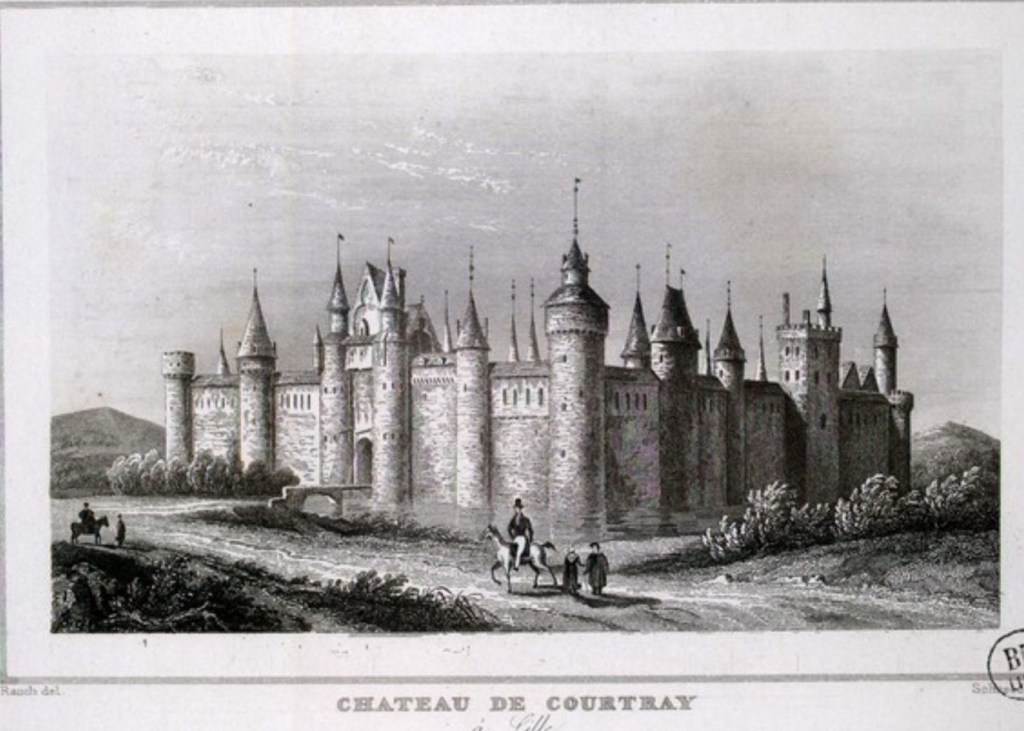
At the height of its usage, the castle enclosed;
A sumptious captains house, officers quarters in the towers, soldiers quarter in small row houses along the streets, stables, repair shops, food storage, cellars, barns, artillary hangars, dovecotes, drinking water sources, gardens and vineyards.
In 1577, having fallen into disrepair, the château had turned into an inconvenient liability as Lille sought to expand to the north and east. The new Spanish governor ordered troops to begin dismantling the castle. Materials were used for building new homes, businesses and expanded fortifications. The final remnants were gone by 1623 and the moats were filled during the early 1800’s.
A popular tale around Lille is that of Jeanne Maillotte. She worked in a cabaret, and when the city was attacked by a group of religious zealots, she led the resistance and drove them out. The paintings below depict her act of heroism in from of the castle. However, as this happened in 1582, and the dismantling began in 1577, I get the feeling these artworks aren’t completely accurate!
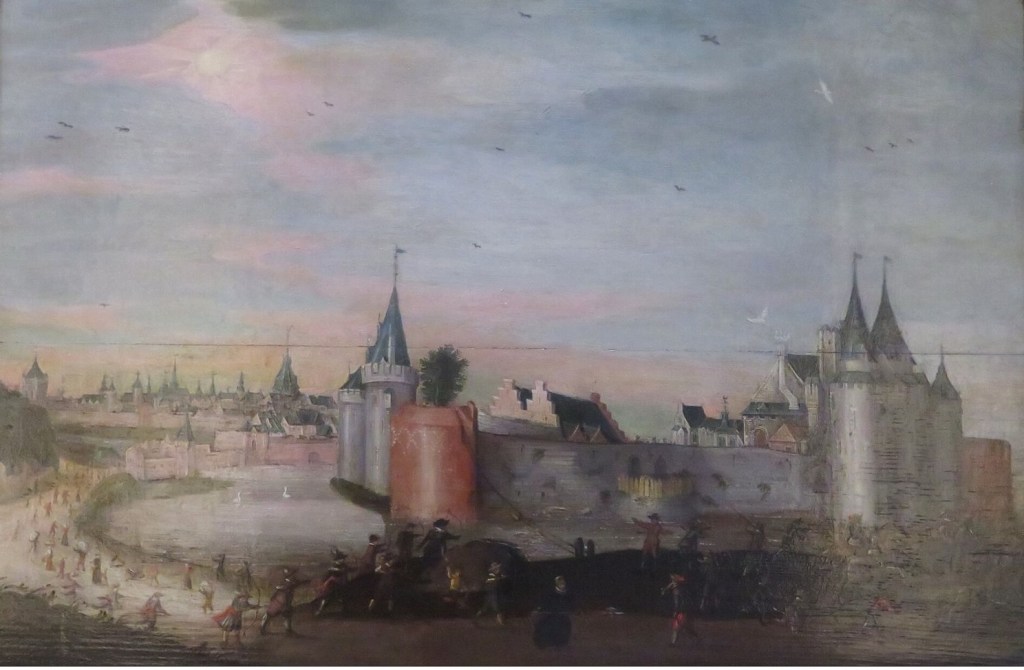
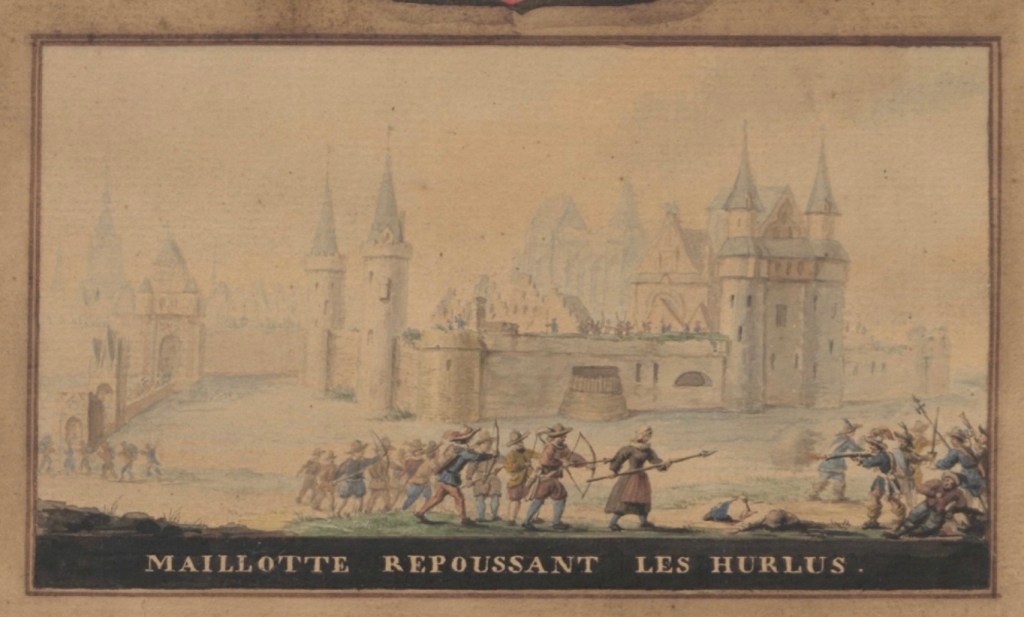
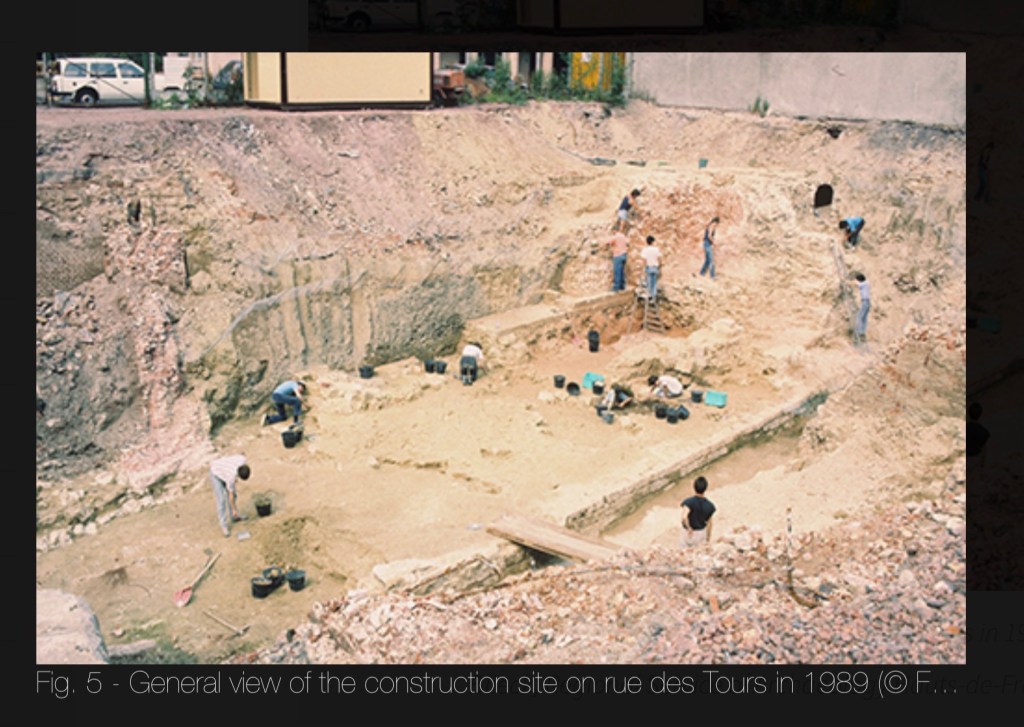
.Gone were any traces of the once beautiful structure and it disappeared gradually from memory. Today, excavations have unearthed the footings of walls and towers, as well as some artifacts. The civic archeologist and scholar, Gilles Bliek has been leading these digs, which are mandated by French law whenever any new construction is going to happen. He has kindly corresponded with me and very patiently answered all my questions!
Today , only 10 visual representations of the château have been identified, and the most visually instructive were made well after the castle had been destroyed. It is my current understanding that no one knows for sure what the castle looked like.
The chateau of Lille retains her shroud of mystery, but you can envision its placement as you explore the streets of Rue des Tours, Avenue du Peuple Belles, Rue de Thionville and Rue du Gard.
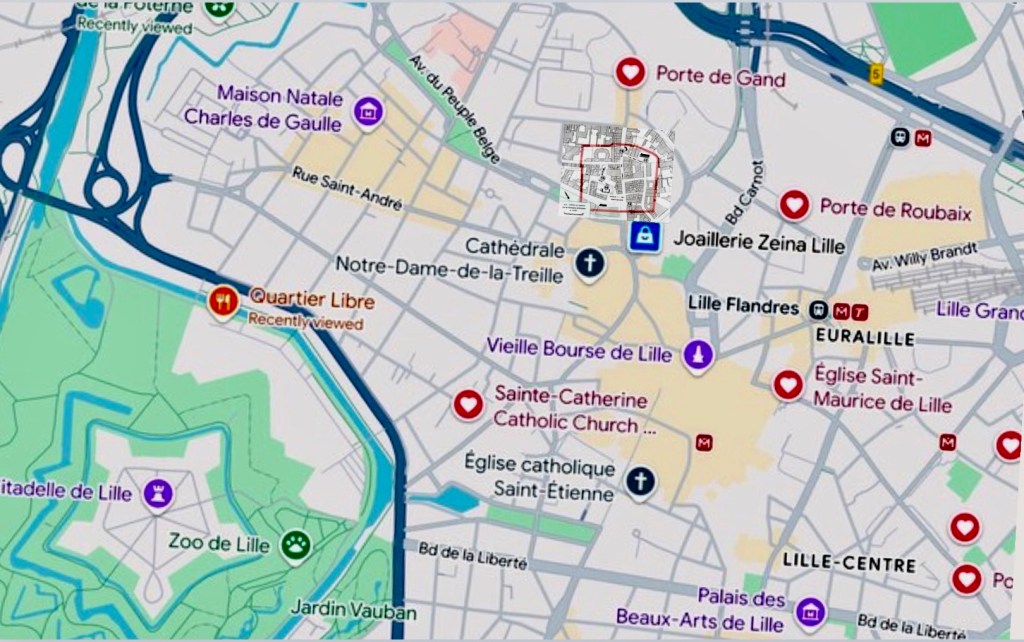
For more information see: https://nordoc.hypotheses.org/14148


Leave a Reply