Chapter 1: In the beginning
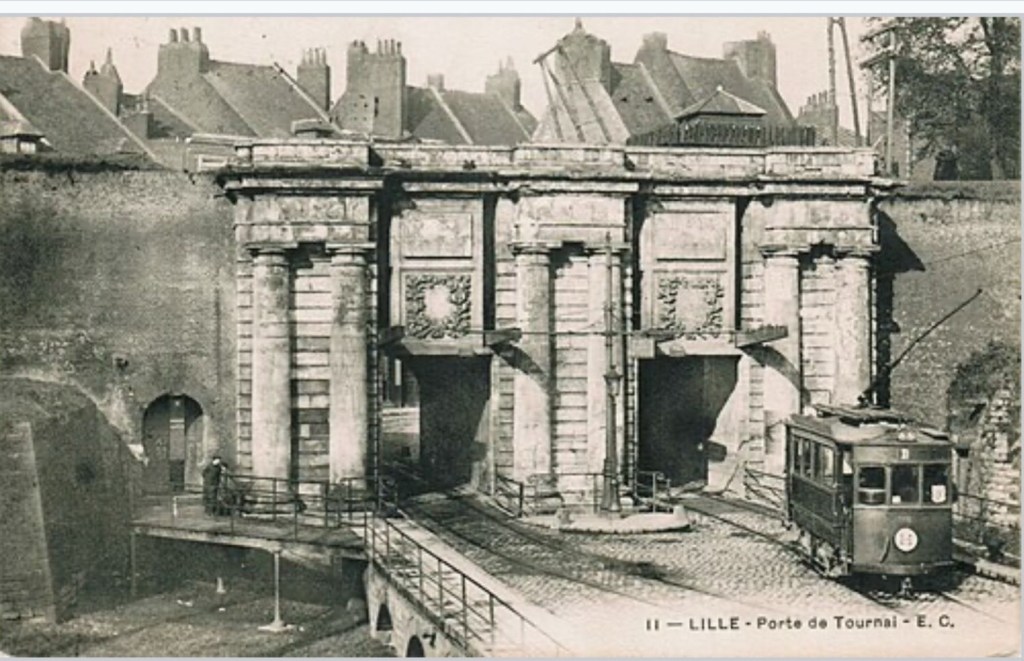
Lille was once a walled city. What happened? Where are they now? These are intriguing questions to me, and the answers are so interesting. The building and eventual demise of the ramparts surrounding Lille not only describes her history but are reflective of this city’s mindset of moving forward instead of dwelling on the past. Many who have lived here for decades don’t even think about it- but that is changing, and as I’ll talk about later, efforts have begun to restore and highlight the remains of Lille’s incredible ramparts. In this first series we will explore the history of the eastern ramparts between Porte du Roubaix, to Saint Sauveur and Porte du Paris. First up, let’s briefly summarize the history of Lille.
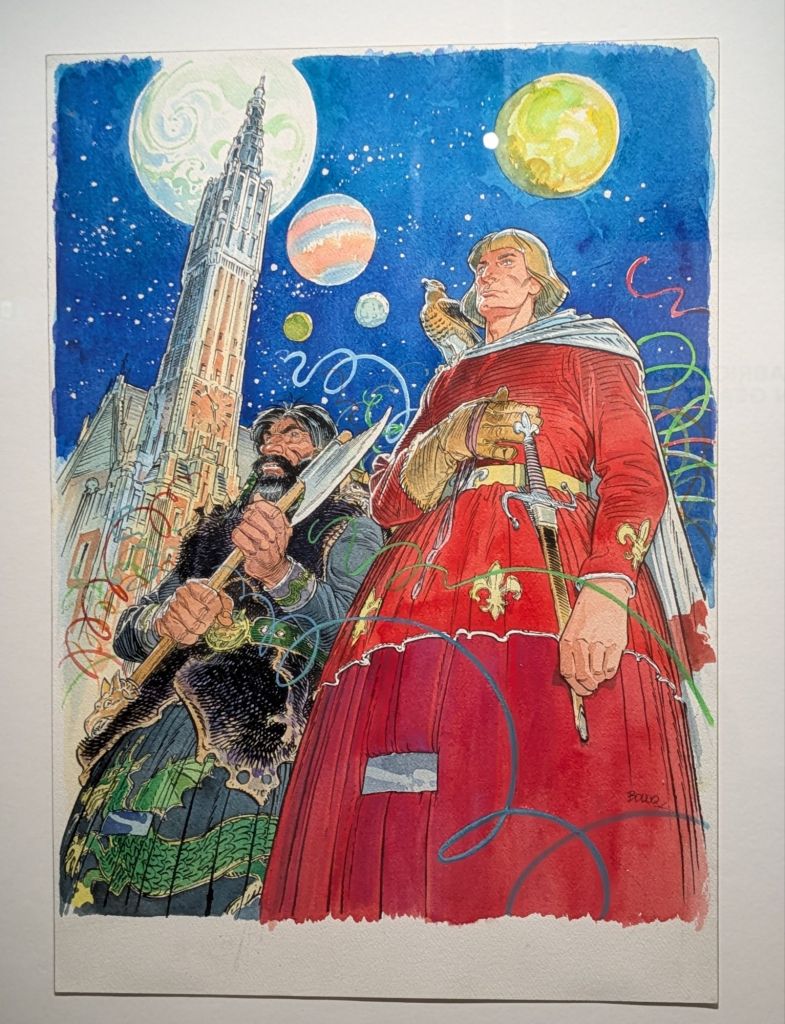
The founding of Lille is steeped in legend. As the story goes, an ancient king was traveling through the Flanders when the giant Phinaert ambushed his party, murdered the king and took his pregnant wife as prisoner. She escaped and gave birth in the forest. This child was called Lyderic. Upon his mother’s death, she entrusted him into the care of the hermit who had cared for her. When Lyderic grew up, he slayed the giant in revenge, took Flanders, and settled Lille in 640.
The name Lille comes from the Latin word for island. In Old French it became l’Isle and in Flemish, Rijsel, and still is known by both Lille and Rijsel in modern times. Indeed, Lille started as an ancient hillfort in the middle of the Deûle River. These hillforts are called motte-and-bailey castles, built by the Romans, most likely on top of an already existing Neolithic mound.
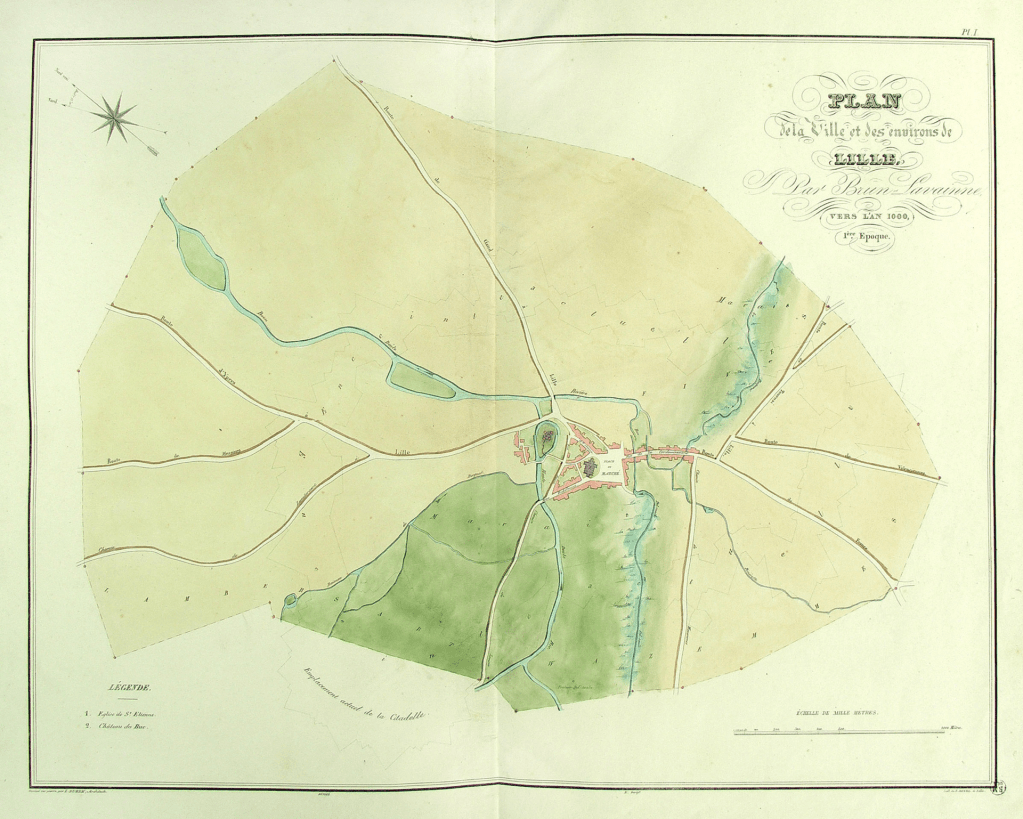
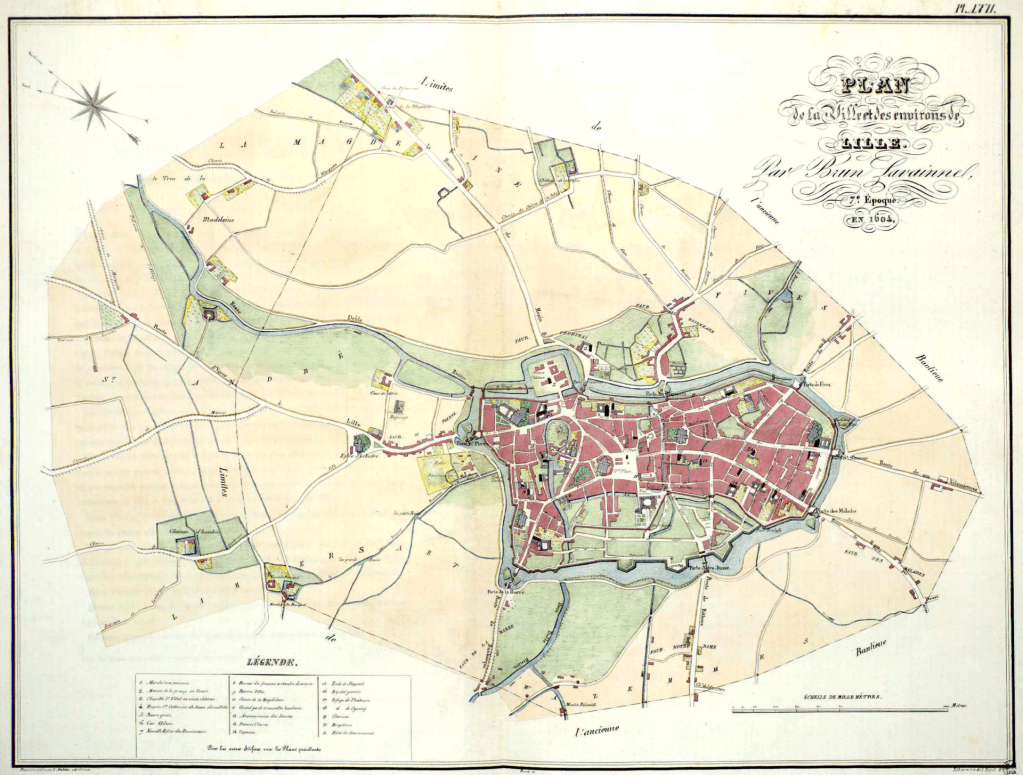
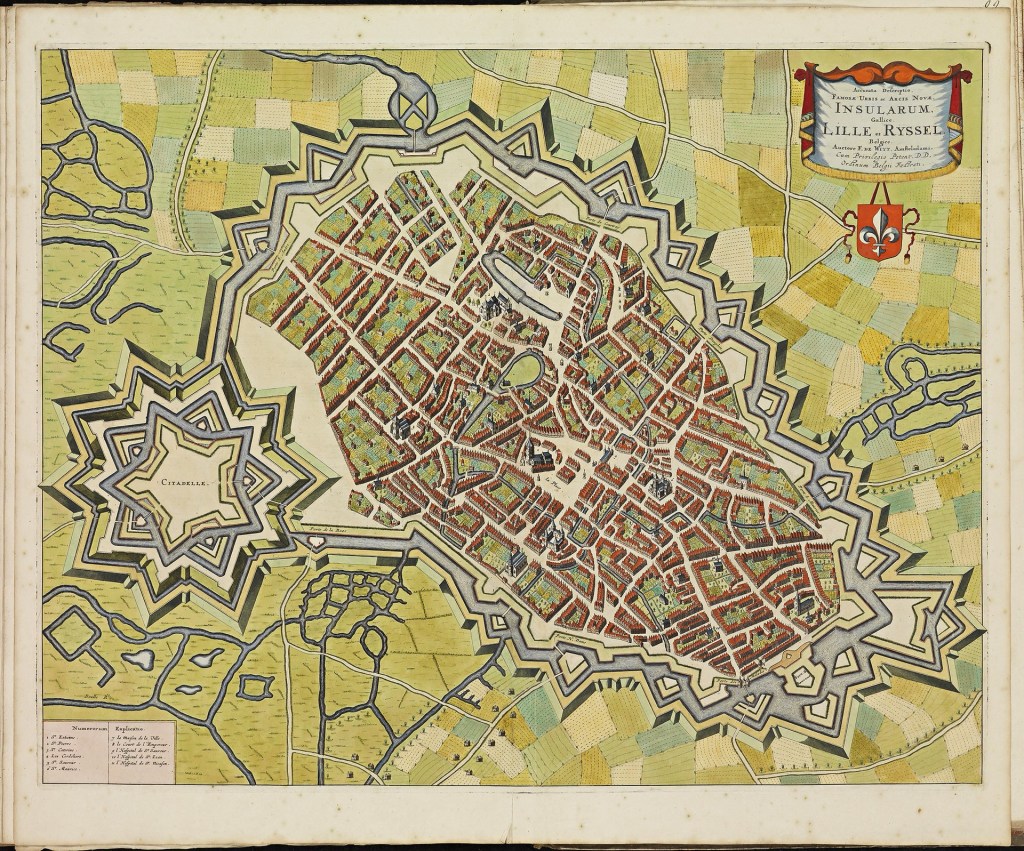
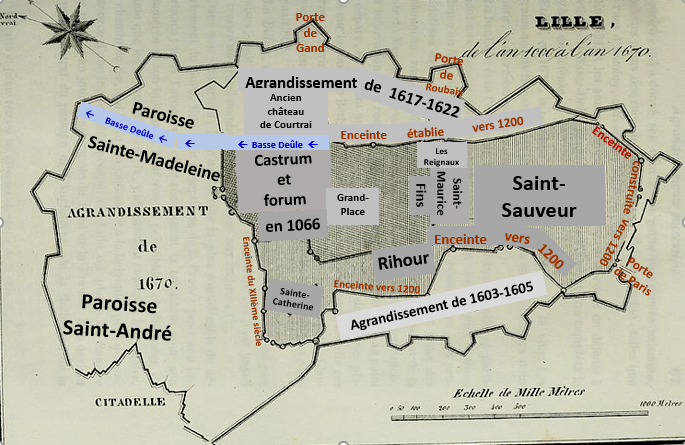
These maps come from Municipal Library of Lille.
Settlements grew up to the west and east of the hillfort and eventually became the parishes of St. Etienne and St. Pierre. Soon, the church of St. Maurice was established , and defined the western border of the community which became known as Saint Sauveur. This name will become very important as we move forward through time in this series.
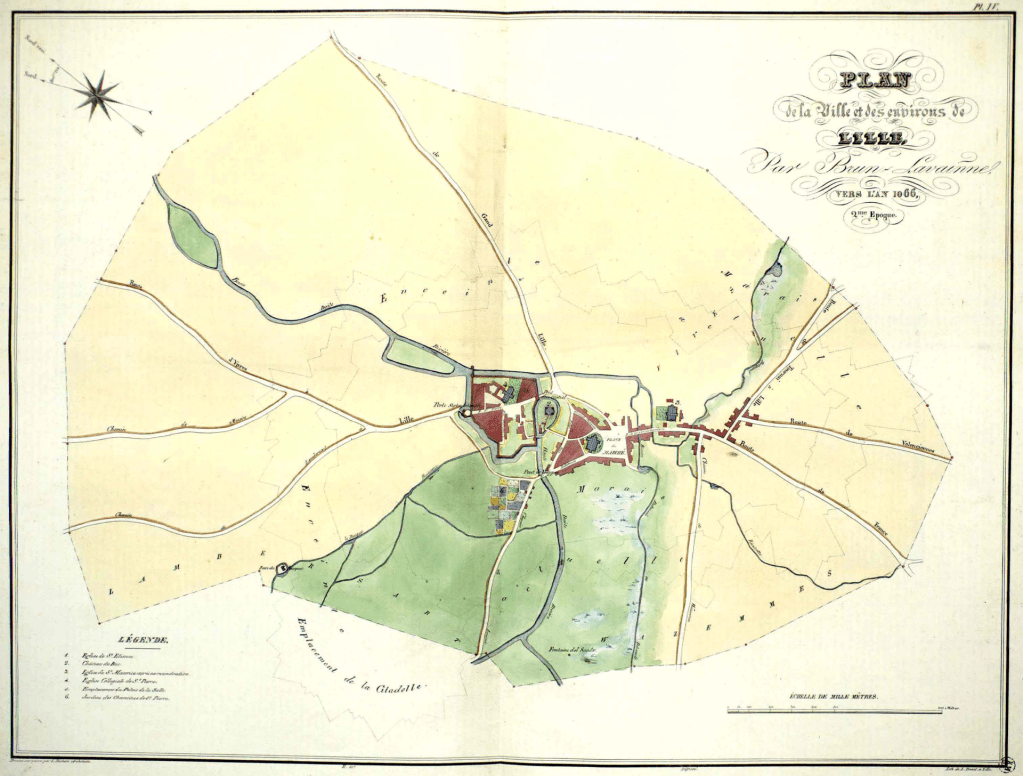
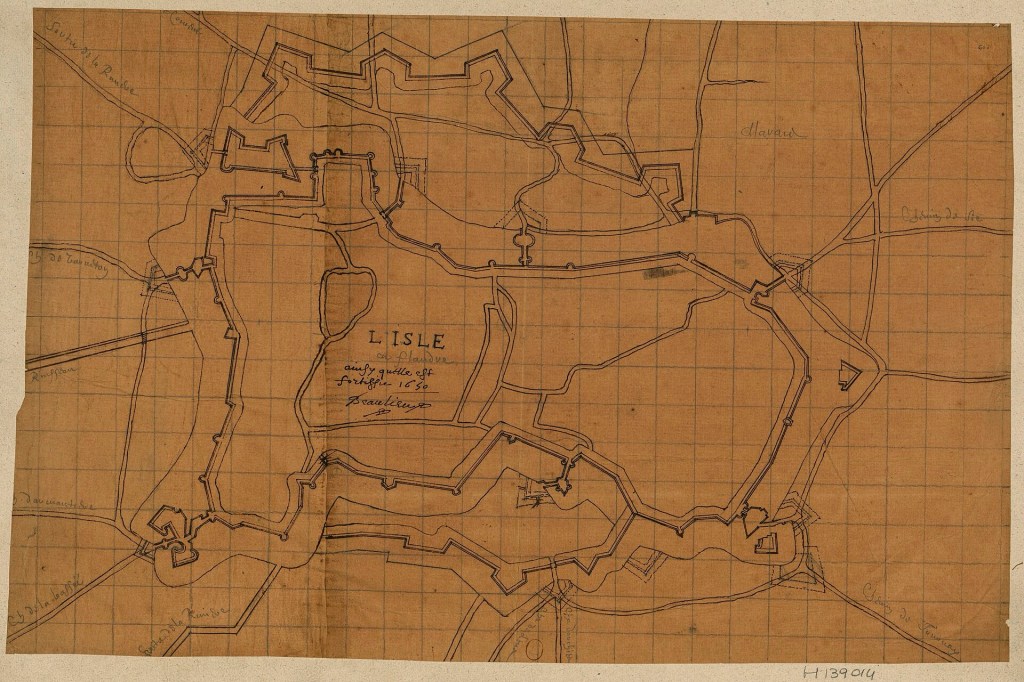
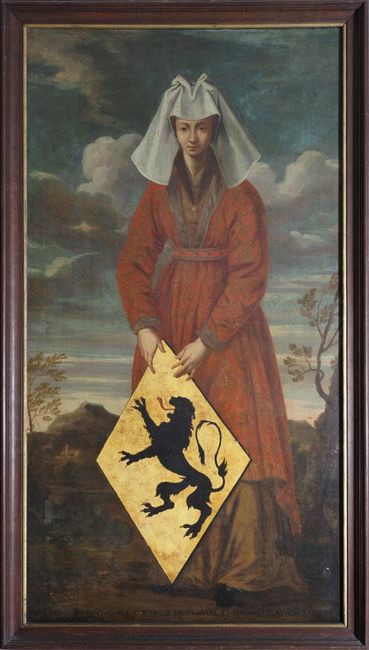
Lille switched rulers often. Rome, to the Dutch, France, Burgundy, and Spain all fought for control. By the 12th century, this bustling center of commerce had been enclosed in ramparts for protection. The inhabitants of Lille constructed a network of canals and significantly altered the natural path of the river. The walls were continuously deconstructed and rebuilt to allow expansion as the population and industry grew and more outside lands were incorporated into the city. It was during this time that Lille was ruled by a woman! Her name was Jeanne, Comptesse of Flanders, and she ruled successfully for almost 40 years. By 1338, the walls were more or less in place for the next 300 years.
The last expansion and improvements came in the 17th century when Louis XIV took the city back from Spain and set his top general, Sébastien Le Pre, Marquis of Vauban, to construct the Citadel and improve the ramparts. The canals were filled in due to sanitation problems and became streets and avenues.
Lille was already bursting at her seams due to a massive trade in Lille-cloth, a special light weight weave of wool and linen. And now cotton entered the scene and big factories were buying built on the eastern boundary. Napoleon III ordered the dismantling of the walls and the materials were used to construct new factories, houses and upgrade important infrastructure. By 1900 the walls of Lille had almost completely disappeared.
In this series we will explore the few remaining remnants of Vauban walls and discover the details of Lille’s fascinating history along the way.
C’est parti!
 An American in Lille
Leave a comment